
- Ripping with a Crosscut Blade: Dangerous and inefficient. It results in burning, a strained motor, and a high risk of kickback. The small gullets simply can't clear the long wood fibers from a rip cut.
- Expecting Perfection from a Combination Blade: A 50T combo blade is great but won’t give you the flawless rip of a dedicated 24T FTG blade or the glassy-smooth finish of an 80T ATB blade. It's a compromise.
- Ignoring Blade Maintenance: A $150 blade is worthless if it's dull or covered in pitch. Cleaning your blade is free. A professional sharpening service costs $25-$40 and will make your blade cut like new (or better).
General remodeling · Renovation planning
| Project category | General remodeling |
|---|---|
| Problem type | Renovation planning |
| Trade required | General contracting |
| Urgency | Planned project |
| Safety risk | Low safety risk |
| DIY suitability | Pro recommended |
| Cost category | Major investment |
| Typical timeline | Design and permitting often 2–4 months before work starts |
| Contractor type | General contractor |
Repair option
Phase the work and fix the building envelope first.
Replacement option
Full renovation with permits, design, and a general contractor.
Common causes
- Space no longer fits how the household lives
- Resale preparation
- Deferred maintenance stacking up
Relevant tools:project cost estimatorcompare quoteshome improvement material prices
Published June 11, 2026Last updated August 17, 2026
The shop list for this build
Hand-picked tools & materials — shop on Amazon, ships fast.
Power tools
· The heavy hitters — buy once, use for decades.- Shop on AmazonLeecraft Zero-Clearance Table Saw Insert· 1
Why it's here: Specifically matched to your saw model. This is critical for preventing bottom-side tear-out.
Hand tools & jigs
· Layout, joinery, and the everyday workbench essentials.- Shop on AmazonFreud Diablo D1050X 50T Combination Blade· 1
Why it's here: An excellent, affordable all-around blade that is a massive upgrade over any stock blade.
- Shop on AmazonForrest Woodworker II 40T Combination Blade· 1
Why it's here: Often considered the gold standard for high-end, premium combination blades. Provides exceptional cut quality.
- Shop on AmazonCMT P10024 24T FTG Ripping Blade· 1
Why it's here: A dedicated ripping blade for fast, efficient, and clean cuts with the grain in hardwoods.
- Shop on AmazonFreud LU79R010 80T Thin Kerf Ultimate Cut-Off Blade· 1
Why it's here: A specialized crosscut blade for surgically clean cuts in plywood, melamine, and hardwoods.
Materials & hardware
· Lumber, fasteners, glue, abrasives — the consumables.- Shop on AmazonCMT Formula 2050 Blade & Bit Cleaner· 1 8oz bottle
Why it's here: Essential for maintaining any blade. Removes baked-on pitch and resin that cause heat and dulling.
- Shop on AmazonTitebond III Ultimate Wood Glue 16 oz· 1
Why it's here: Mentioned in the context of achieving strong joints, which start with clean cuts.
Quick Answer
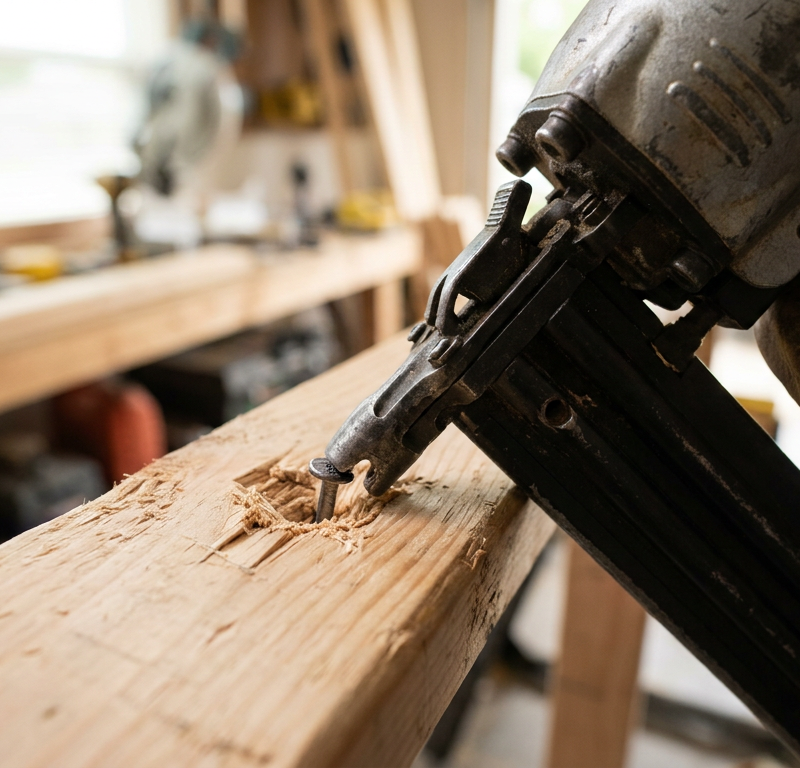
The fuzzy, splintered edges on your lumber after running it through a table saw—a phenomenon called "tear-out"—are most often a result of a blade-to-task mismatch. If you're seeing significant fuzz on a crosscut (cutting across the wood grain), you are likely using a blade with too few teeth, like a 24-tooth ripping blade. Conversely, if you try to rip a thick piece of hardwood (cutting with the grain) with an 80-tooth crosscut blade, you'll get burning and slow, labored cuts. Dullness, caked-on wood pitch, improper blade height, and lack of workpiece support from a proper zero-clearance insert are also significant contributing factors. Getting a clean cut is a game of matching the table saw blade tooth count and geometry to the material and the direction of the cut.
Why This Matters
A fuzzy cut isn't just a cosmetic issue. It has a cascading impact on the quality, strength, and safety of your woodworking projects.
-
Poor Joinery: If you're cutting pieces for a cabinet door or a tabletop, the edges need to be perfectly smooth and square to create a strong, invisible glue joint. Tear-out creates gaps and uneven surfaces that prevent wood glue from forming a powerful, lasting bond. A gappy glue line is a weak glue line, guaranteed to fail under stress. A high-quality glue-line rip blade is designed specifically to prevent this, yielding an edge that's ready for glue right off the saw.
-
Wasted Material & Time: Every time you get a fuzzy cut, you have to fix it. This means extra sanding, running the board over a jointer, or trimming off the damaged edge and losing precious material. This eats up time and can throw off the dimensions of your project, leading to frustration and mistakes down the line.
-
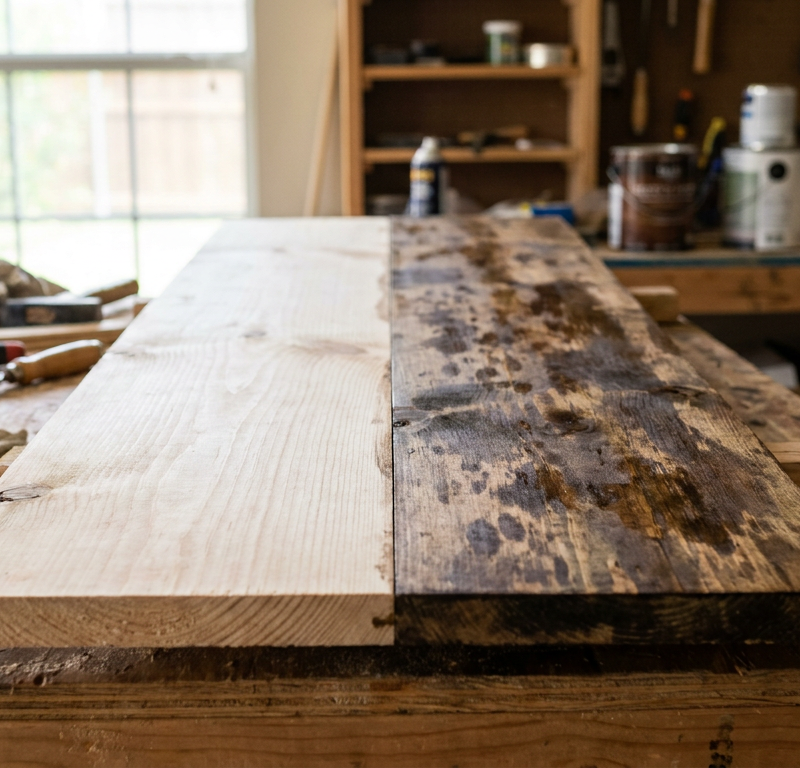
Finishing Problems: Tear-out creates deep, splintered fibers. When you apply stain or a clear finish, these damaged areas absorb the finish differently, making them stand out and look splotchy. No amount of finish will hide a poorly prepared surface. The cost is more time spent on sanding and prep, trying to repair the damage that the correct blade would have prevented in the first place.
-
Safety: Using the wrong blade can be dangerous. Ripping with a high-tooth-count crosscut blade teeth arrangement is a classic mistake. The small gullets (the space between the teeth) can't clear sawdust fast enough, leading to overheating, wood burning, and a massive increase in feed pressure required from the operator. This strain on the motor and the user dramatically increases the risk of kickback, one of the most dangerous accidents that can happen with a table saw.
How It Works: The Blade Trifecta
Understanding three key characteristics of a table saw blade is the secret to unlocking perfect cuts. It's not just about how many teeth it has.
1. Tooth Count (The What) This is the most obvious metric. More teeth equal a smoother cut, but fewer teeth equal a faster, more efficient cut for certain tasks.
- Ripping Blades (24-30 Teeth): These are for cutting with the grain. The low tooth count and large gullets act like chisels, scooping out large amounts of material quickly and efficiently. The large gullets are crucial for clearing sawdust on these fast, long cuts to prevent heat buildup. Example: CMT P10024 24T FTG Ripping Blade.
- Combination Blades (40-50 Teeth): These are the jack-of-all-trades and what most new saws come with. A 50-tooth blade like the Freud Diablo D1050X 50T Combination Blade is a massive upgrade over stock blades and can handle both ripping and crosscutting with good (though not perfect) results. They are the best table saw blade choice if you only want to own one.
- Fine-Finish Crosscut Blades (60-100 Teeth): These are for cutting across the grain. The high tooth count means each tooth takes a tiny, delicate bite, shearing the wood fibers cleanly instead of tearing them. This results in a glass-smooth edge on crosscuts and when cutting delicate materials like plywood and melamine. Example: Freud LU79R010 80T Thin Kerf Ultimate Cut-Off Blade.
2. Tooth Grind (The How) The shape of the carbide tooth tip is arguably more important than the count. It dictates how the blade shears the wood fibers.
- Flat Top Grind (FTG): The top of the tooth is perfectly flat. This is the most efficient and durable grind for ripping lumber. It chisels the wood straight on. It is not good for crosscutting, as it will tear out the wood fibers.
- Alternate Top Bevel (ATB): The teeth are angled, alternating between a left-hand and right-hand bevel. This creates a knife-like "slicing" action that cleanly severs wood fibers on crosscuts. The higher the bevel angle (e.g., 25° vs 15°), the cleaner the cut, but the quicker the blade dulls.
- Combination (ATB/R): Found on many 50-tooth combination blades. They feature a sequence of four ATB teeth followed by one FTG "raker" tooth. This design attempts to give the best of both worlds—clean slicing from the ATB teeth and efficient material clearing from the raker.
- Triple Chip Grind (TCG): This is a two-part sequence of a flat "raker" tooth followed by a lower "trapeze" tooth. The flat tooth roughs out the cut, and the beveled tooth cleans up the edges. It’s extremely durable and ideal for dense, difficult materials like melamine, MDF, plastic, and non-ferrous metals.
3. Hook Angle (The Why) This is the forward or backward lean of the tooth. It determines how aggressively the blade "pulls" the wood into the cut.
- High Positive Hook (15°-20°): This is for fast, aggressive cuts. Common on ripping blades, it pulls the wood into the blade, requiring less feed pressure from the user. It's great for ripping but can be too aggressive for crosscuts, leading to tear-out.
- Low or Negative Hook (5° to -7°): This is for control and safety. A low hook angle requires more push from the operator but results in a less aggressive, more controlled cut with less tear-out. Negative hook blades are essential for radial arm saws and miter saws to prevent the blade from "climbing" the workpiece, and they are also excellent for pristine cuts on a table saw in ultra-brittle materials.
Step-by-Step: From Fuzzy to Flawless
-
Assess Your Task: Before you even turn on the saw, be clear: are you ripping (with the grain) or crosscutting (across the grain)? This is the single most important decision.
-
Evaluate Your Material: Are you cutting 2-inch thick hard maple, 3/4-inch pine, or 3/4-inch veneered plywood? Thick hardwoods require the power of a rip blade. Plywood demands the surgical precision of a high-tooth-count crosscut blade to avoid splintering the top veneer.
-
Select the Right Blade: Based on steps 1 & 2, mount the correct blade. For a workshop that does a lot of both, having a dedicated 24T FTG rip blade and an 80T ATB crosscut blade is the gold standard.
-
ENSURE Personal Safety: Put on your safety glasses and hearing protection. A good blade is quieter than a dull one, but the saw motor is still loud.
-
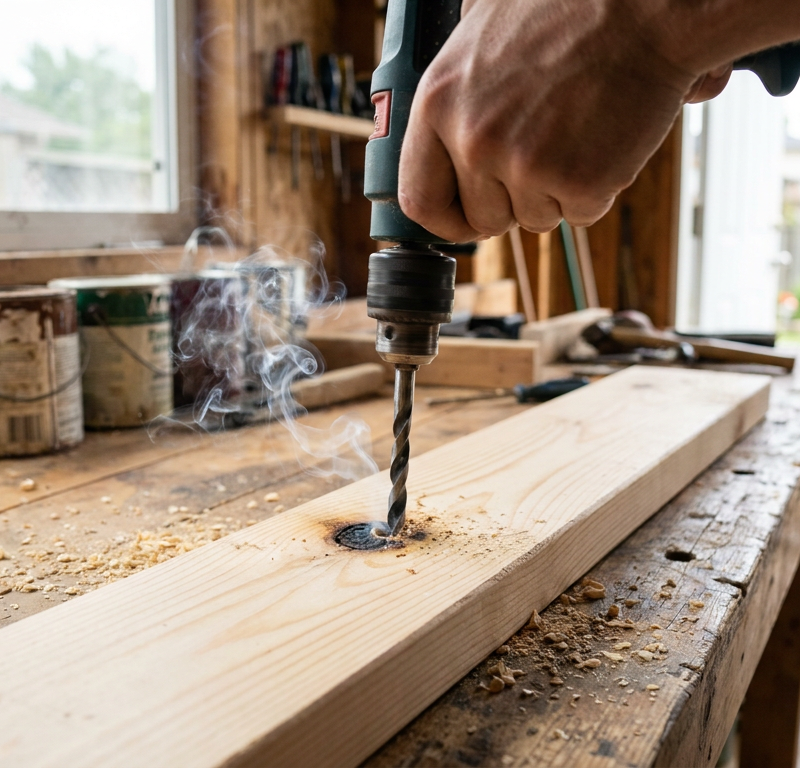
Inspect and Clean the Blade: Is the blade dull? A tell-tale sign is seeing smoke or needing to push much harder than usual. Are the teeth caked with black, burnt-on pitch? This resin insulates the teeth, causing them to overheat, dull faster, and produce rough cuts. Unplug the saw, remove the blade, and give it a 10-minute soak in a product like CMT Formula 2050 Blade & Bit Cleaner, then scrub with a brass brush.
-
Install a Zero-Clearance Insert (ZCI): A ZCI is a non-negotiable for clean cuts. It’s a replacement for the factory throat plate that has a slot perfectly matched to your blade's kerf. The Leecraft Zero-Clearance Table Saw Insert is a popular, high-quality option. This supports the wood fibers right up to the edge of the blade, preventing the descending teeth from blowing out the bottom face of your board.
-
Set Correct Blade Height: The conventional wisdom is to set the blade so one full tooth is visible above the top of the material. This minimizes the "exit angle" of the tooth, reducing tear-out on the bottom of the cut. However, some pros raise the blade higher; this makes the tooth's cutting angle more downward, which can improve the cut on the top surface. Experiment with scrap to see what works best for your setup.
-
Use a Sacrificial Backer: When crosscutting, placing a piece of scrap MDF or plywood behind your workpiece provides support and completely eliminates tear-out on the exit side of the cut. For veneered plywood, applying painter's tape along the cut line and cutting through it also helps hold the fibers down.
-
Make The Cut: Use a push stick. Feed the material at a steady, consistent rate. Don't force it. Let the blade do the work.
Common Mistakes
- Ripping with a Crosscut Blade: Dangerous and inefficient. It results in burning, a strained motor, and a high risk of kickback. The small gullets simply can't clear the long wood fibers from a rip cut.
- Expecting Perfection from a Combination Blade: A 50T combo blade is great but won’t give you the flawless rip of a dedicated 24T FTG blade or the glassy-smooth finish of an 80T ATB blade. It's a compromise.
- Ignoring Blade Maintenance: A $150 blade is worthless if it's dull or covered in pitch. Cleaning your blade is free. A professional sharpening service costs $25-$40 and will make your blade cut like new (or better).
- Confusing "Sharp" with "Good": A brand new $20 blade from a big box store is sharp, but its steel body may not be flat, the carbide may be poor quality, and the teeth may not be ground precisely. Investing in a quality brand like Forrest, Freud, CMT, or Amana is a tangible upgrade.
Cost & Time Breakdown
This breakdown covers the cost and longevity of the blades themselves, which is the primary investment in solving tear-out issues.
| Item / Service | Typical Cost | Lifespan / Time | Note |
|---|---|---|---|
| Budget Combination Blade | $30 - $50 | 50-100 cutting hours | Often a thin-kerf design. A good starting point. |
| Premium Combination Blade | $80 - $150 | 200-400 cutting hours | e.g., Forrest Woodworker II 40T Combination Blade |
| Dedicated Rip Blade | $50 - $90 | 200-500 cutting hours | Will last a long time due to efficient cutting action. |
| Dedicated Crosscut Blade | $70 - $150 | 150-300 cutting hours | The fine teeth dull slightly faster than rip blades. |
| Blade Sharpening Service | $25 - $40 per blade | N/A | A quality sharpening can be done 3-5 times per blade. |
| Blade Cleaner | $15 - $25 | 20+ cleanings | e.g., CMT Formula 2050 Blade & Bit Cleaner |
Tips & Pro Notes
- The Pro Callout at the end of this article is the most critical advice: a mid-range saw with a premium blade is a superior machine.
- For projects requiring many glue-ups, a dedicated glue-line rip blade is a worthy investment. These are often 30-tooth blades with a TCG grind designed to produce edges so clean they can be glued directly together without any further jointing or sanding. It saves an incredible amount of time.
- When you buy a good blade, keep the protective packaging it comes in. It’s perfect for sending it to the sharpener without damaging the fragile carbide tips.
- For critical cuts on expensive veneer plywood, score the cut line first with a sharp utility knife on the top and bottom. The blade will then follow this pre-cut line, resulting in zero tear-out.
- When you get a new blade, take a permanent marker and write its function on it: "RIPPING," "CROSSCUT," "PLYWOOD." This prevents you from grabbing the wrong one in a hurry.
When to Upgrade Tools
The most logical upgrade path for table saw blades follows your needs:
-
Stock Blade -> Quality Combination Blade: The blade that came with your saw is, to be blunt, a piece of junk designed to do nothing more than prove the saw turns on. Your very first purchase should be a quality combination blade like the Diablo D1050X or Forrest Woodworker II. The difference in cut quality, noise, and ease of use is night and day.
-
Combination Blade -> The Holy Trinity: As you do more serious woodworking, you'll want a dedicated ripping blade, a dedicated cross-cutting blade, and a dado stack for cutting joints. This is the setup used by almost every professional cabinet shop.
-
Full Kerf vs. Thin Kerf: Thin kerf blades (less than 1/8") are great for saws under 1.75 HP as they remove less material and require less power. Full kerf blades (1/8") are more rigid, deflect less in thick hardwoods, and produce a slightly cleaner cut. If your saw has the power (2 HP+), a full kerf blade is generally a better choice for precision work.
What should this project cost?
Enter your project details for a realistic cost range before you call anyone.
Cost depends heavily on which system turns out to be the source.
- Regional adjustment
- National average
- Labor share (typical)
- ~$1,620
- Quotes to collect
- 3 written estimates
Educational estimate based on national averages — not a binding quote. Always confirm with written local estimates.
Get the print-ready PDF of this guide
A clean, ad-free, printable version you can keep on your phone or pin to the workshop wall. Free with a FixlyGuide account.
- Print-optimized layout
- Tools, materials & every step included
- Saved to your account
Recommended for DIYers & woodworkers
Sponsored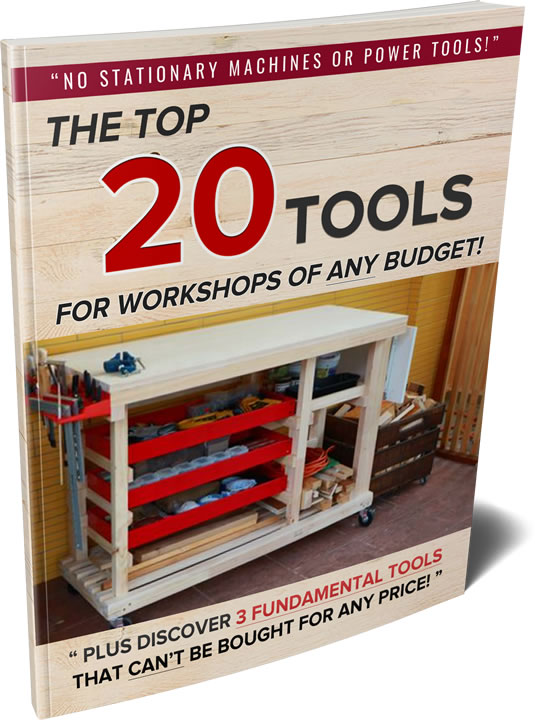
The Top 20 Tools for Workshops of Any Budget
No stationary machines or power tools required — plus 3 fundamental tools that can't be bought at any price.
Get the free guide
Ted's Woodworking — The #1 Woodworking Resource
Detailed instructions, dimensioned drawings, materials & cutting lists, and 3D schematics for every skill level.
See the plansSponsored: links above are affiliate links. FixlyGuide may earn a commission on qualifying purchases — at no extra cost to you.
Frequently asked questions
How many teeth should my table saw blade have?+
It depends on the cut. Use a 24-30 tooth blade for ripping (cutting with the grain), an 80-100 tooth blade for the cleanest crosscuts (cutting across the grain), and a 40-50 tooth blade for a good all-around combination of both.
What is a glue-line rip blade?+
A glue-line rip blade is a specialized ripping blade (typically 30-tooth with a TCG or modified FTG grind) designed to produce an edge so smooth and straight that it's ready for edge-gluing directly from the saw, without needing to be passed over a jointer.
Can I use a crosscut blade to rip wood?+
It is highly discouraged. The high number of teeth and small gullets on a crosscut blade will get clogged with sawdust, leading to excessive heat, wood burning, a heavily strained motor, and a significantly increased risk of dangerous kickback. Always use a ripping blade for ripping.
How do I know when my table saw blade is dull?+
Signs of a dull blade include: needing to push the wood much harder through the cut, burn marks appearing on the wood, increased noise and vibration from the saw, and more chipping or tear-out than you used to get with the same blade.
Discussion
Loading comments…