- Option 2: Larger Screw Method (Quick & Dirty)
- Tools: Slightly larger wood screw (e.g., if you had a 6 screw, try a 8 of the same length).
- How-to: Drive the new, larger screw into the stripped hole. Go easy. If you muscle it, you’ll strip this hole too. This one’s handy in a pinch, but the glue method lasts longer.
Kitchen · Kitchen remodel
| Project category | Kitchen |
|---|---|
| Problem type | Kitchen remodel |
| Trade required | General contracting |
| Urgency | Planned project |
| Safety risk | Low safety risk |
| DIY suitability | Pro recommended |
| Cost category | Major investment |
| Typical timeline | Design and cabinet lead time 8–16 weeks; build 4–8 weeks |
| Contractor type | Kitchen remodeler or general contractor |
Repair option
Refacing, new counters, or hardware for a fraction of a gut remodel.
Replacement option
Full remodel when layout, plumbing, or electrical needs to change.
Common causes
- Dated layout
- Failing cabinets or counters
- Adding function or resale value
Relevant tools:project cost estimatorcompare quoteshome improvement material prices
Published September 3, 2026Last updated September 3, 2026
Tools & materials you'll need
Affiliate linksAs an Amazon Associate FixlyGuide earns from qualifying purchases — at no extra cost to you. Prices and availability are accurate as of publication and subject to change.
Quick Answer
Listen, if you’ve got a cabinet door that’s gone wobbly, sagging, or just won’t stay put, chances are you’ve got a stripped screw hole where the hinge mounts to the cabinet frame or the door itself. I see it all the time. Older kitchens, busy family cabinets, cheap particleboard boxes — they all do this sooner or later. The nice part? It’s usually a simple repair, and it won’t cost you an arm and a leg. You can handle it yourself if you’re handy at all. We’re basically reinforcing that hole so the screw can grab solid material again, and I’ve got a few solid ways to get you there.
The Problem
I’ve run into this countless times: a cabinet door starts hanging crooked, rubs the frame, or feels loose every time you open it. You snug the hinge screws, and for a minute it seems fine. Then, pop — the screw just spins in the hole, or it pulls right out. That’s a stripped screw hole.
What’s going on is pretty simple. The wood fibers inside the hole have broken down from overtightening, repeated use, or plain old age. The screw was made to bite those fibers, and now there’s nothing left to grab. So it can’t hold the hinge anymore. Frustrating? Sure. End of the world? Not even close.
How It Works
A screw isn’t magic. It’s a wedge with threads that cut into the material and squeeze it tight. In wood, those threads carve a path and compress the fibers around them. That compression is what gives you holding power.
But if you crank the screw down too hard, or the door gets yanked open hard over and over, those fibers get tired. They break down. Then the hole gets bigger than the screw shaft, and the threads have nothing to bite.
It’s like trying to fasten a tiny peg into a hole that’s way too large — no dice. Modern cabinet hinges, especially those European-style concealed ones, put a lot of leverage on those mounting points, so once one hole goes bad, the door can sag fast. I pulled a pantry door in Frisco last month that had exactly this problem — one stripped hinge screw and the whole thing looked like it had been in a bar fight. You need to either fill that oversized hole with fresh material or use a fastener that can bridge the gap and create new purchase.
Step-by-Step Fix
Before you start, safety first: always wear eye protection when working with power tools or small wood pieces. If a cabinet door is really wobbly, get a second set of hands on it so it doesn’t drop on you.
-
Prep the Area & Remove the Door — Clear the decks
Start by emptying the cabinet so you’ve got room to work. If the door’s hanging loose and the hinge is really shot, it’s usually easier to pull the door off completely. Just back out the screws on the cabinet-box side of the hinge. If only one screw is stripped and the door still has some support, you might be able to leave it on, but taking it off gives you better access. -
Inspect the Damage — What’s the real story?
Take a close look at the stripped hole. Is it just a little oversized, or is it a giant mess? That’s what decides the fix. Sometimes it’s one screw. Sometimes it’s a whole hinge. If the wood around the hole is soft or crumbling, you may have a bigger problem — but most of the time, it’s just a clean hole that’s gone too wide. -
Choose Your Repair Method — Pick your poison (or solution!)
You’ve got a few ways to go here, depending on how bad the damage is and what’s in your toolbox. Don’t overthink it. Pick the one that fits the job.-
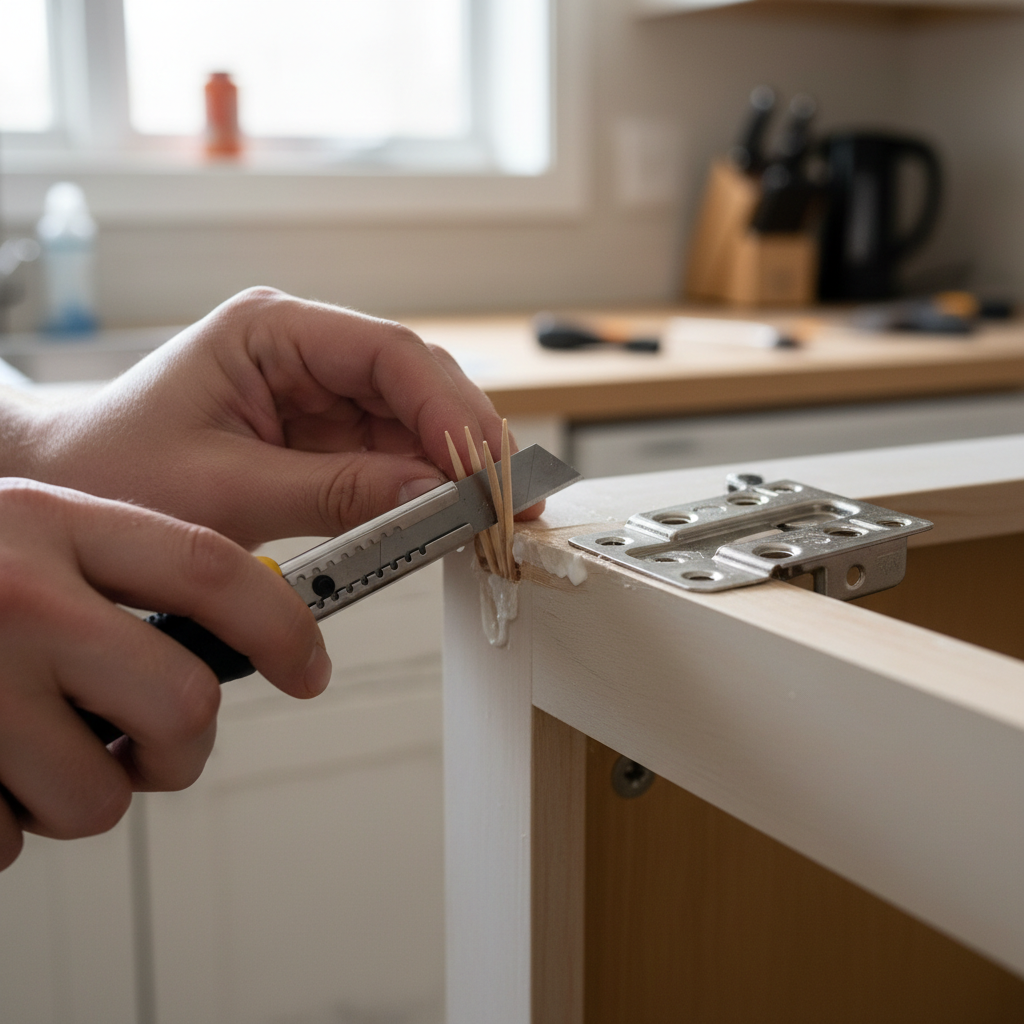
Option 1: The Toothpick/Dowel & Glue Method (Most Common & Recommended)
This is my go-to for most stripped hinge holes. Simple. Cheap. Works.- Tools: Wood glue, wooden toothpicks or small wooden dowels (like 1/8-inch or 1/4-inch depending on the hole size), utility knife or flush-cut saw.
- How-to: Squirt a good dollop of wood glue into the stripped screw hole. Then start packing in toothpicks or small dowels. Really jam them in tight until the hole’s full. Don’t be shy — the more solid fill you get, the better. Let the glue set for at least 30 minutes (check the bottle for exact cure time; some Titebond glues grab faster) before trimming the excess flush with the cabinet surface using your utility knife or flush-cut saw. Now you’ve got a fresh plug of wood for the screw to bite into.
-
Option 2: Larger Screw Method (Quick & Dirty)
If the hole’s only a little stripped and you need a fast fix, a slightly larger screw can sometimes save the day. You’re just trying to find fresh wood.- Tools: Slightly larger wood screw (e.g., if you had a #6 screw, try a #8 of the same length).
- How-to: Drive the new, larger screw into the stripped hole. Go easy. If you muscle it, you’ll strip this hole too. This one’s handy in a pinch, but the glue method lasts longer.
-
Option 3: Plastic Anchor Method (For Serious Strips)
For really blown-out holes, a plastic drywall anchor can actually work pretty well. You’re basically giving the screw a new threaded home.- Tools: Small plastic wall anchors (the kind you'd use for lightweight pictures), drill with a bit sized for the anchor.
- How-to: Carefully drill the stripped hole to the diameter needed for the anchor. If you’re not sure, test the anchor in a scrap piece first. Push the anchor in flush with the surface, then drive your original hinge screw into it. It’s a strong fix, but yeah, you are committing to a larger hole.
-
-
Reattach the Hinge — Put it back together
Once your repair’s set — and if you used glue, give it enough time — line the hinge back up over the repaired hole. Start the original screw, or a new screw that fits properly, and drive it in slow. You want to feel it biting into the new material. Don’t overtighten. That’s how we got here in the first place. -
Test & Adjust — The final tweak
If you pulled the door off, hang it back on the cabinet. Open it. Close it. A few times. Does it feel solid? Does it shut right? If it’s still not lining up perfect, tweak the other hinge screws — not the repaired one — until the door sits where it should. Most cabinet hinges have adjustment screws for vertical, horizontal, and depth alignment, which is a lifesaver when you’re trying to get everything dialed in.
Common Causes
- Overtightening: Probably the biggest culprit. Folks crank down on screws thinking tighter means better, but all they do is crush the wood fibers. Snug is enough.
- Repeated Stress: Constantly yanking open a heavy door puts a lot of strain on those little screws. Over the years, that wear adds up.
- Soft Wood: Some cabinet boxes and doors are made from particleboard or MDF, and those materials strip a lot easier than solid hardwood or plywood. No mystery there.
- Incorrect Screws: Screws that are too short or too thin for the door weight or material can fail early.
- Pre-drilled Holes: Sometimes the factory hole’s just too big to begin with, so the screw never had much to bite into.
Common Mistakes
- Ignoring the Problem: A slightly wobbly door won’t fix itself. The longer you wait, the worse that stripped hole gets.
- Using Too Much Force: If the screw isn’t threading in smoothly, don’t just muscle it. Back it out, check the alignment, and make sure the repair material’s cured. Forcing it just strips the hole again.
- Not Letting Glue Dry: Patience matters here. Wood glue needs time to cure and bond. If you load it too soon, the repair won’t hold.
- Only Using Larger Screws: Sure, that can work short-term, but it doesn’t really fix the damaged wood. The glue and toothpick method gives you a tougher, longer-lasting repair.
- Overfilling with Toothpicks: Pack them in tight, yes. But don’t leave a big mound that keeps the hinge from sitting flat. Trim it flush.
- Drilling Without Pilot Holes: If you’re moving to a new screw spot or a much larger screw, drill a pilot hole. It helps keep the wood from splitting and makes the screw track straight. For a simple repair, though, you’re usually just reusing the original hole with the plug.
Cost & Time Breakdown
| Task | DIY Cost | Pro Cost | Time |
|---|---|---|---|
| Basic Repair (toothpick/glue) | $5-$10 (glue) | $75-$150 (min service fee) | 15-30 min (active) |
| Repair with Plastic Anchor | $10-$20 (anchors) | $75-$150 (min service fee) | 20-45 min (active) |
| Multiple Hinges/Doors | $10-$25 | $150-$300+ | 1-2 hours |
| New Hinge (if damaged) | $10-$30 per hinge | Included in repair | Add 5-10 min |
| Professional Assessment | Included in repair | $75-$150 (inspection only) | 15-30 min |
Tips & Prevention
- Don't Overtighten: I can’t say this enough. Snug is enough. If you’re using a drill/driver, finish with a hand screwdriver so you don’t strip the hole.
- Regular Checks: Every six months or so, give those cabinet doors a little wiggle. If you feel looseness, snug the hinge screws up before they strip. Catch it early and you save yourself a headache.
- Use the Right Screws: If you’re replacing hinges or installing new ones, use screws made for cabinet hinges — they’re often beefier than regular wood screws.
- Pilot Holes for New Screws: Anytime you’re putting in something new, drill a pilot hole. It makes the screw drive smoother and cuts down on splitting.
- Consider Soft-Close Dampers: If your doors slam shut, soft-close dampers take a lot of the shock off the hinges over time. Cheap upgrade. Big payoff.
- Proper Door Handling: Tell everybody in the house to open and close cabinet doors gently, especially big pantry doors or ones packed full of dishes.
When to Call a Professional
Look, fixing a stripped hinge screw is usually a DIY job, but sometimes it makes sense to call a pro. If you’ve got multiple stripped holes across several cabinets, especially if the wood itself is crumbling or badly damaged, you may be looking at a bigger cabinet-box issue. If the hinge plate itself is bent or broken, or if you’re dealing with expensive custom cabinetry where you can’t risk making it worse, a cabinet maker or skilled carpenter can make a cleaner, more invisible repair. And if you’ve tried the usual fixes and the door still sags or won’t close right, that’s a pretty good sign there’s an alignment problem or some deeper structural issue going on — and that’s where an experienced set of eyes helps.
Related Articles
Keep troubleshooting with these hand-picked guides from FixlyGuide:
- That Annoying Sawhorse Wobble: The Simple Fix Your Shop Needs — Don't let a wobbly sawhorse ruin your cuts or—worse—cause an accident. I'll walk you through the real reasons your sawhorses are unstable a…
- Why Your Freestanding Shelf Wobbles Like a Drunk Sailor (and the 5-Minute Fix) — Don't let a shaky shelf ruin your organization or your peace of mind. I'll show you how to stabilize that wobbly unit in minutes, no matter…
- The 4-Inch Drywall Hole Fix: Why Most DIY Patches Fail (And How to Do It Right) — Don't let a small drywall hole become a recurring nightmare – discover the secret to a seamless, lasting repair that disappears into your w…
- The $10 Shower Fix Plumbers Don't Want You to Know — Stop that annoying drip! I'll show you how to fix a leaky shower faucet yourself, saving you money and preventing water waste.
- That Pull-Out Shelf’s Sticky? It’s One Cheap Part. — Don't toss that sticky pull-out shelf or drawer! Often, it's just a cheap, worn-out part in the drawer slide causing the problem, not the w…
- Why Your Dishwasher Leaves Dishes Soaking Wet (And It's Not Your Rinse Aid) — Discover the real reasons your dishwasher isn't drying dishes and how to fix them, from blocked vents to faulty heating elements. Don't let…
Should you do this yourself?
Answer five quick questions before you start. Safety outranks savings every time.
Your experience with work like this
How high do you have to work?
Does the job involve any of these?
Will it need a permit?
Specialty tools
Free and instant. Educational guidance only — not a quote, inspection, or professional diagnosis.
What should this project cost?
Enter your project details for a realistic cost range before you call anyone.
Cost depends heavily on which system turns out to be the source.
- Regional adjustment
- National average
- Labor share (typical)
- ~$1,620
- Quotes to collect
- 3 written estimates
Educational estimate based on national averages — not a binding quote. Always confirm with written local estimates.
Get the print-ready PDF of this guide
A clean, ad-free, printable version you can keep on your phone or pin to the workshop wall. Free with a FixlyGuide account.
- Print-optimized layout
- Tools, materials & every step included
- Saved to your account
Recommended for DIYers & woodworkers
Sponsored
The Top 20 Tools for Workshops of Any Budget
No stationary machines or power tools required — plus 3 fundamental tools that can't be bought at any price.
Get the free guide
Ted's Woodworking — The #1 Woodworking Resource
Detailed instructions, dimensioned drawings, materials & cutting lists, and 3D schematics for every skill level.
See the plansSponsored: links above are affiliate links. FixlyGuide may earn a commission on qualifying purchases — at no extra cost to you.
Frequently asked questions
Why do cabinet hinge screws strip?+
Cabinet hinge screws usually strip because of overtightening, which damages the wood fibers, or from repeated stress on the door over time, especially with heavy or frequently used doors. Soft woods like particleboard are more prone to this issue.
Can I just use a longer screw for a stripped hinge hole?+
Sometimes, a slightly longer or wider screw can bite into untouched wood and provide a temporary fix. However, for a more durable and lasting repair, reinforcing the hole with wood glue and toothpicks or a dowel is generally more effective, as it rebuilds the integrity of the hole.
How long does wood glue need to dry for a hinge repair?+
Most wood glues need at least 30 minutes to an hour to set before you can reattach the hinge and apply light pressure. For full strength, it's best to wait several hours, or even overnight, depending on the specific product's instructions and humidity levels.
What if the stripped hole is in the cabinet door, not the frame?+
The repair methods are the same whether the stripped hole is in the cabinet door or the frame. The toothpick and wood glue method works equally well in both locations to create new material for the screw to grip.
Are plastic anchors a good long-term solution for stripped hinges?+
Plastic anchors can be a good long-term solution for severely damaged or blown-out holes where the wood is too compromised for glue and toothpicks. They provide a strong, new receiver for the screw, but require drilling a larger, precise hole for installation.
How can I prevent cabinet hinge screws from stripping again?+
To prevent future stripping, avoid overtightening screws—make them snug, not overly tight. Regularly check hinges for looseness and tighten them gently at the first sign of a wobble. Also, consider adding soft-close dampers to reduce stress on the hinges.
Can I use wood filler instead of toothpicks and glue?+
Yes, wood filler can be used, but it's often less durable than wood glue mixed with toothpicks or small dowels. Wood filler alone might not provide the same structural strength for a heavily stressed hinge point over the long term. If using filler, choose a strong, epoxy-based type.
My cabinet door still sags after I fixed the stripped screw. What now?+
If your door still sags after fixing the stripped screw, check if other hinge screws are loose or stripped. Also, modern European-style hinges have adjustment screws for vertical, horizontal, and depth alignment. A slight tweak to these can often resolve minor sagging or alignment issues.
Is it better to pre-drill for new hinge screws?+
Absolutely. If you're installing new hinges or moving a hinge to a new spot, always pre-drill a pilot hole. This prevents wood splitting, guides the screw straight, and ensures a cleaner, stronger installation. The pilot hole should be slightly smaller than the screw's shank.


Discussion
Loading comments…