- Locate the filter slot: It's usually in the return air duct right before the furnace/air handler, or sometimes in a dedicated wall or ceiling return vent. Note the arrow indicating airflow direction (it should point towards the furnace).
- Remove the old filter: Pull it straight out. Note the size printed on its frame (e.g., 20x25x1).
- Insert the new filter: Ensure the airflow arrow on the new filter points in the correct direction (away from the return duct, towards the furnace/air handler).
- Safety Note: Turn off your HVAC system at the thermostat before changing the filter to prevent accidental startup and potential injury from the blower fan.
HVAC · High energy usage
| Project category | HVAC |
|---|---|
| Problem type | High energy usage |
| Trade required | HVAC |
| Urgency | Planned project |
| Safety risk | Low safety risk |
| DIY suitability | DIY for experienced homeowners |
| Cost category | High cost |
| Typical timeline | Assessment within weeks; replacement planned off-season |
| Contractor type | Licensed HVAC technician |
Repair option
Duct sealing, insulation, and a tune-up before touching the equipment.
Replacement option
High-efficiency replacement sized by a load calculation, not a rule of thumb.
Common causes
- Aging, low-efficiency equipment
- Leaking ducts losing conditioned air
- Insufficient attic insulation
- Oversized system short-cycling
Relevant tools:project cost estimatorrepair or replace
Published May 30, 2026Last updated August 17, 2026
Tools & materials you'll need
Affiliate linksAs an Amazon Associate FixlyGuide earns from qualifying purchases — at no extra cost to you. Prices and availability are accurate as of publication and subject to change.
Quick Answer
Many homeowners overlook basic HVAC maintenance, mistakenly believing their system is self-sufficient or that 'if it ain't broke, don't fix it.' This common oversight, particularly regarding air filter replacement and condenser coil cleaning, is the primary reason for increased energy bills, reduced cooling/heating efficiency, and ultimately, premature system breakdowns. The good news is that preventing these issues is incredibly simple, requiring minimal time and cost. Regular filter changes, annual coil cleaning, and a professional tune-up every year will significantly extend your HVAC system's life, ensure optimal performance, and keep your energy costs in check. Addressing these simple tasks proactively can save you hundreds, if not thousands, of dollars in repairs and energy over the lifespan of your unit.
The Problem
Your HVAC system, whether it's a central air conditioner, furnace, or heat pump, is arguably the hardest working appliance in your home. It's constantly moving air, heating, cooling, and dehumidifying to maintain a comfortable indoor environment. However, this relentless operation takes a toll. Over time, dust, dirt, and debris accumulate within the system, precisely in the areas critical for its function: the air filter, the evaporator coil (indoors), and the condenser coil (outdoors).
When these components become dirty, your HVAC system has to work significantly harder to achieve the desired temperature. Imagine trying to breathe through a thick, dusty cloth – that's what your system experiences with a clogged air filter. Similarly, dirty coils act like an insulating blanket, preventing efficient heat transfer. This increased workload translates directly to higher electricity or gas consumption, leading to inflated utility bills. Beyond the financial impact, the sustained overwork puts immense strain on the system's vital components, accelerating wear and tear. This often results in expensive repairs, reduced lifespan of the unit, and a frustrating loss of comfort during peak heating or cooling seasons. The core problem is usually a lack of understanding regarding basic, preventative maintenance that can avert these larger, more costly issues.
How It Works
To understand why maintenance is crucial, let's briefly look at how a typical split-system HVAC (air conditioning and furnace) operates. The process begins with the thermostat, which senses the room temperature and signals the system when heating or cooling is needed.
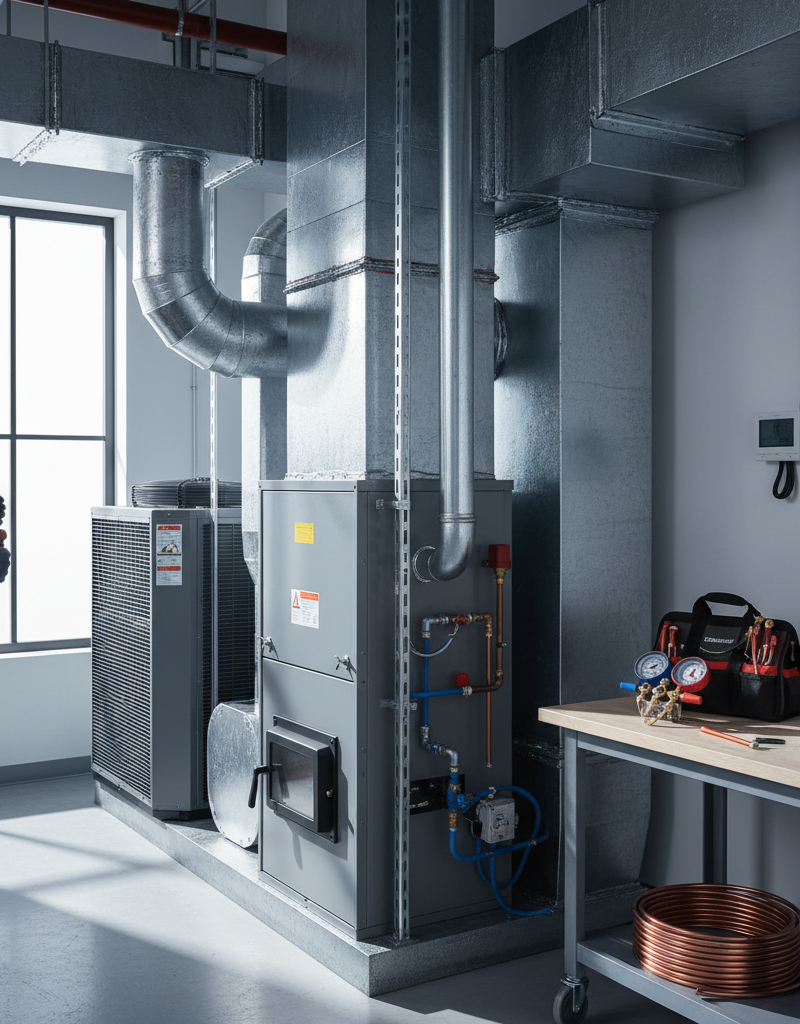
For cooling, the indoor unit (often called the 'air handler' or 'furnace' when paired with AC) contains the evaporator coil and a blower motor. The blower motor pulls warm indoor air through the return air ducts and across the air filter. This filter catches dust, pet dander, and other airborne particles, preventing them from accumulating on the evaporator coil. The now-filtered air then passes over the cold evaporator coil, which contains a low-pressure refrigerant. The refrigerant absorbs heat from the air, causing it to evaporate and turn into a gas. This cooled, dehumidified air is then pushed by the blower through the supply ducts back into your rooms.
Meanwhile, the now-gaseous, hot refrigerant travels via copper lines to the outdoor unit, known as the condenser. Here, a compressor increases the pressure and temperature of the refrigerant. It then flows through the condenser coil, releasing its heat to the outdoor air with the help of a fan. As it loses heat, the refrigerant condenses back into a high-pressure liquid and flows back to the indoor evaporator coil to repeat the cycle.
For heating (with a furnace), the process changes. Natural gas or propane is ignited in a combustion chamber, heating a heat exchanger. The blower motor pulls return air across this hot heat exchanger, warming it, and then pushes it through the supply ducts. The combustion byproducts are safely vented out through a flue. For a heat pump, the refrigerant cycle reverses, absorbing heat from the outside air (even cold air has heat) and releasing it indoors.
When the air filter is clogged, airflow is restricted, forcing the blower motor to work harder and reducing the system's ability to heat or cool effectively. When coils are dirty, they can't exchange heat efficiently, causing the compressor (the 'heart' of your AC) to strain, leading to higher energy consumption and potential burnout. Regular maintenance directly addresses these critical points, ensuring smooth operation and longevity.
Step-by-Step Fix
1. Replace Your Air Filter Annually (But Check Monthly!) – This is the easiest and most impactful DIY task.
*   **Locate the filter slot:** It's usually in the return air duct right before the furnace/air handler, or sometimes in a dedicated wall or ceiling return vent. Note the arrow indicating airflow direction (it should point towards the furnace).
*   **Remove the old filter:** Pull it straight out. Note the size printed on its frame (e.g., 20x25x1).
*   **Insert the new filter:** Ensure the airflow arrow on the new filter points in the correct direction (away from the return duct, towards the furnace/air handler).
*   **If it doesn't fit:** Double-check the size you purchased. Air filters are generally replaced every 1-3 months, depending on pets, allergies, and household activity. A dirty filter restricts airflow, making your system work harder and reducing air quality.
*   **Safety Note:** Turn off your HVAC system at the thermostat before changing the filter to prevent accidental startup and potential injury from the blower fan.
2. Clean the Outdoor Condenser Coils – This improves cooling efficiency dramatically.
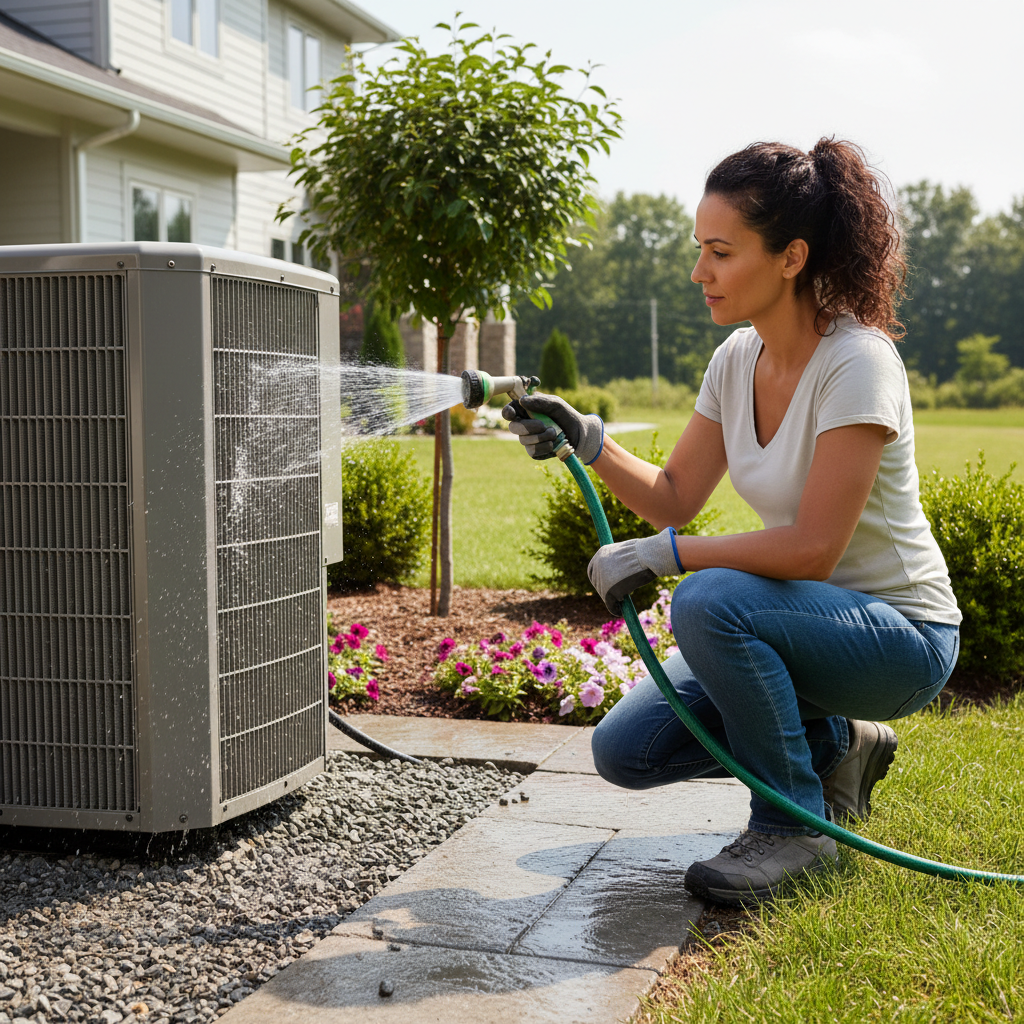
*   **Safety First:** IMPORTANT: Turn off power to the outdoor unit. Locate the disconnect box (usually a small gray box mounted on the wall near the condenser) and pull the disconnect handle out. If no disconnect box is present, flip the appropriate breaker for your outdoor unit in your main electrical panel. Verify power is off.
*   **Clear debris:** Use a stick or gloved hand to remove leaves, grass clippings, and other large debris from around the unit.
*   **Spray down:** Using a garden hose with moderate pressure (NEVER a pressure washer, which can bend delicate fins), spray the condenser coil fins from the *inside out* if possible, pushing dirt outwards. Then, spray from the *outside in*. Focus on flushing out accumulated dirt and grime from between the fins.
*   **Clean the top grill/fan blades:** Wipe down the top grill and fan blades with a damp cloth if easily accessible and dirty.
*   **If coils are heavily caked:** You might need a specialized foaming coil cleaner (available at hardware stores). Follow product instructions carefully. This task should be done once a year, preferably in spring before heavy AC use.
3. Inspect and Clear the Condensate Drain Line – Prevents water damage and system shutdown.
*   **Locate the drain line:** This is a PVC pipe (typically 3/4-inch diameter) usually exiting from the side of your indoor air handler/furnace unit and leading to a floor drain, utility sink, or outside. It often has a P-trap.
*   **Check for clogs:** Look for standing water in the drain pan (if visible) or a sluggish drip from the external discharge point. If your AC suddenly stops cooling and the indoor pan is full of water, this is likely the culprit.
*   **Clear with vinegar:** If you suspect a clog, you can pour 1 cup of distilled white vinegar into the access point (sometimes a vertical standpipe with a cap, or directly into the P-trap if it has a cleanout). Let it sit for 30 minutes to dissolve algae/sludge. Follow with a flush of plain water.
*   **If vinegar doesn't work:** A wet/dry shop vac can sometimes be used to suction out clogs from the outdoor end of the drain line. Apply firm pressure with the shop vac hose around the drain pipe to create a seal and run for a minute or two.
*   **Safety Note:** Ensure the power to the indoor unit is off before attempting to clear the drain line to prevent electrical shock or system damage. This should be part of annual maintenance.
4. Consider a Professional Tune-Up – Ensures everything is running optimally.
* While not a DIY
Related Articles
Keep troubleshooting with these hand-picked guides from FixlyGuide:
- The #1 Mistake Homeowners Make With Their AC (and the $50 Fix) — Discover the most common and costly mistake homeowners make with their AC system and how a simple, affordable fix can prevent expensive rep…
- The #1 HVAC Mistake Costing You Hundreds (and 2 Easy Fixes) — Discover the most common HVAC mistake homeowners make that leads to higher bills and breakdowns, plus two simple maintenance steps to preve…
- The Hidden Reason Your AC Freezes — And Why Most Homeowners Get It Wrong — Discover the surprising truth behind why your outdoor AC unit is freezing up and the common mistake homeowners make when trying to fix it.
- The HVAC Maintenance Myth: Why "Annual Service" Can Cost You More (and 3 Things to Check Instead) — Discover why strict annual HVAC servicing isn't always necessary and learn the essential checks that can save you money and extend your sys…
- The Secret Reason Your AC Isn't Drying Your Home (And 5 Things to Check Now) — If your AC is running but your house still feels sticky, it's likely battling an underlying humidity issue that simple adjustments can fix.
- The Hidden Reason Your AC Isn't Cooling (And Why Most Homeowners Get It Wrong) — Is your central AC blowing warm air or struggling to cool your home? The culprit is often a silent but serious issue many homeowners overlo…
Your seasonal maintenance checklist
The small jobs that prevent the expensive repairs. Tick them off — progress saves on this device.
Free, no signup. Skip anything that requires roof access or working near live electrical.
Estimate your own project cost
National averages are a starting point. Enter your details for a range that fits your house.
HVAC replacement cost
- Equipment$2,200 – $3,800
- Installation labor$1,200 – $2,500
Always insist on a Manual J load calculation — sq-ft sizing is only a rough check. Federal heat-pump rebates may reduce cost significantly.
Educational estimate only — always confirm with written local bids.
What should this project cost?
Enter your project details for a realistic cost range before you call anyone.
Service calls and common repairs run $150–$900; full system replacement typically $6,000–$12,000.
- Regional adjustment
- National average
- Labor share (typical)
- ~$1,935
- Quotes to collect
- 3 written estimates
Educational estimate based on national averages — not a binding quote. Always confirm with written local estimates.
Fixly Project Decision Box
- DIY difficulty
- Advanced
- Estimated time
- Homeowner checks 20–30 minutes
- Cost level
- Moderate
Main tools / materials
- Clean air filter
- Garden hose for condenser coils
- Shop vac for the condensate line
When to stop and call a pro
- Burning smell, smoke, or a tripping breaker
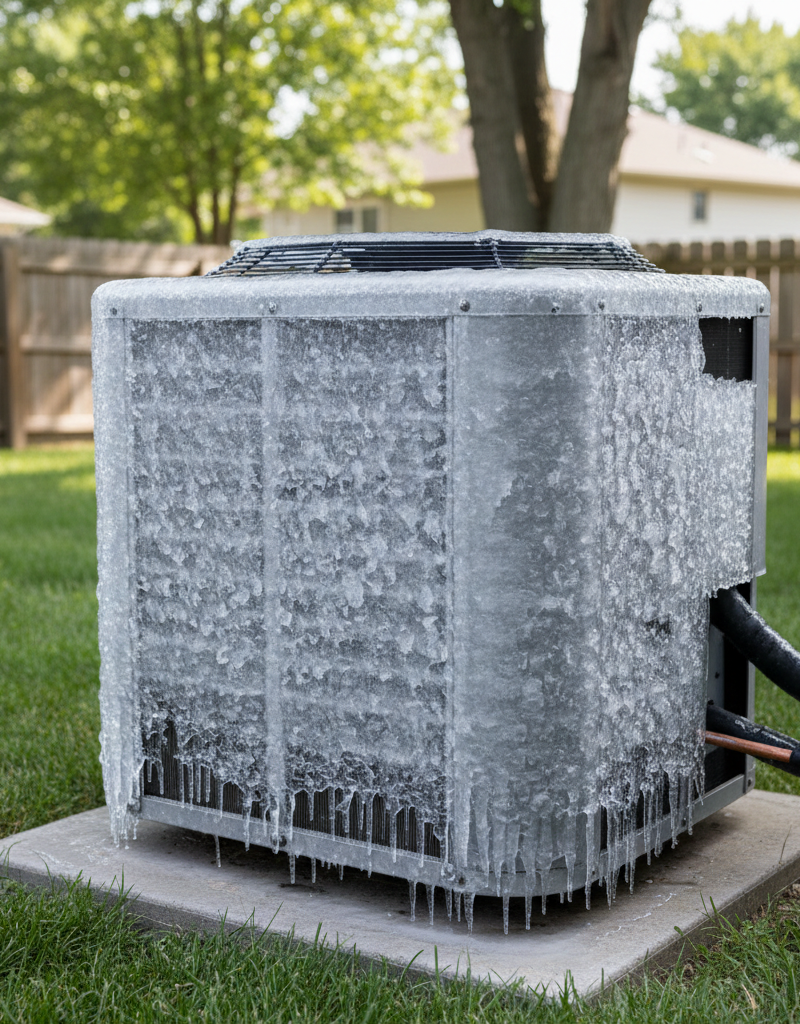
- Refrigerant lines iced over or hissing
- Any work inside the sealed refrigerant circuit (EPA-licensed only)
- Gas smell near a furnace — leave and call the utility
Need professional help?
Find an HVAC Pro Near YouBefore you start
Check the difficulty, permits, and safety risk — then decide whether to call a pro.
- Is this a safe DIY job?Check permits, tools, and risk before you start the steps below.Open
- Get local estimatesSend one request and compare written estimates from vetted pros.Open
Free, no signup required. Estimates are educational guidance, not a quote or an inspection.
Frequently asked questions
How often should I have my HVAC system professionally serviced?+
Most HVAC manufacturers and professionals recommend having your system professionally serviced once a year. For systems that run year-round (like heat pumps), a twice-yearly check-up (spring for cooling, fall for heating) is often advised. Annual tune-ups help identify minor issues before they become major problems, ensure optimal efficiency, and extend the lifespan of your unit.
What happens if I don't service my HVAC system?+
Neglecting HVAC service leads to several negative consequences: significantly higher energy bills due to reduced efficiency, increased wear and tear on components resulting in expensive repairs, decreased indoor air quality, and a shorter overall lifespan for your system. It also increases the likelihood of a breakdown during peak demand periods.
Can I service my HVAC system myself?+
Many basic maintenance tasks can be safely performed by a homeowner, such as changing air filters, cleaning the outdoor condenser coils, and clearing the condensate drain line. However, complex tasks like checking refrigerant levels, cleaning the indoor evaporator coil, or inspecting electrical components require specialized tools and expertise. It's best to leave these to a licensed HVAC professional.
How much does professional HVAC service cost?+
The cost of a professional HVAC tune-up typically ranges from $79 to $200, depending on your location, the type of system, and the service provider. Many HVAC companies offer service agreements that include annual tune-ups at a reduced rate, sometimes bundled with other benefits like priority service or discounts on repairs.
What are the signs my HVAC system needs service?+
Key signs your HVAC system needs service include: unusual noises (grinding, squealing, banging), strange odors (musty, burning, gas), inconsistent heating or cooling, weak airflow from vents, increased energy bills without a change in usage, frequent on/off cycling, or the system failing to turn on altogether. Don't ignore these warning signs; addressing them early can prevent larger problems.
Discussion
Loading comments…