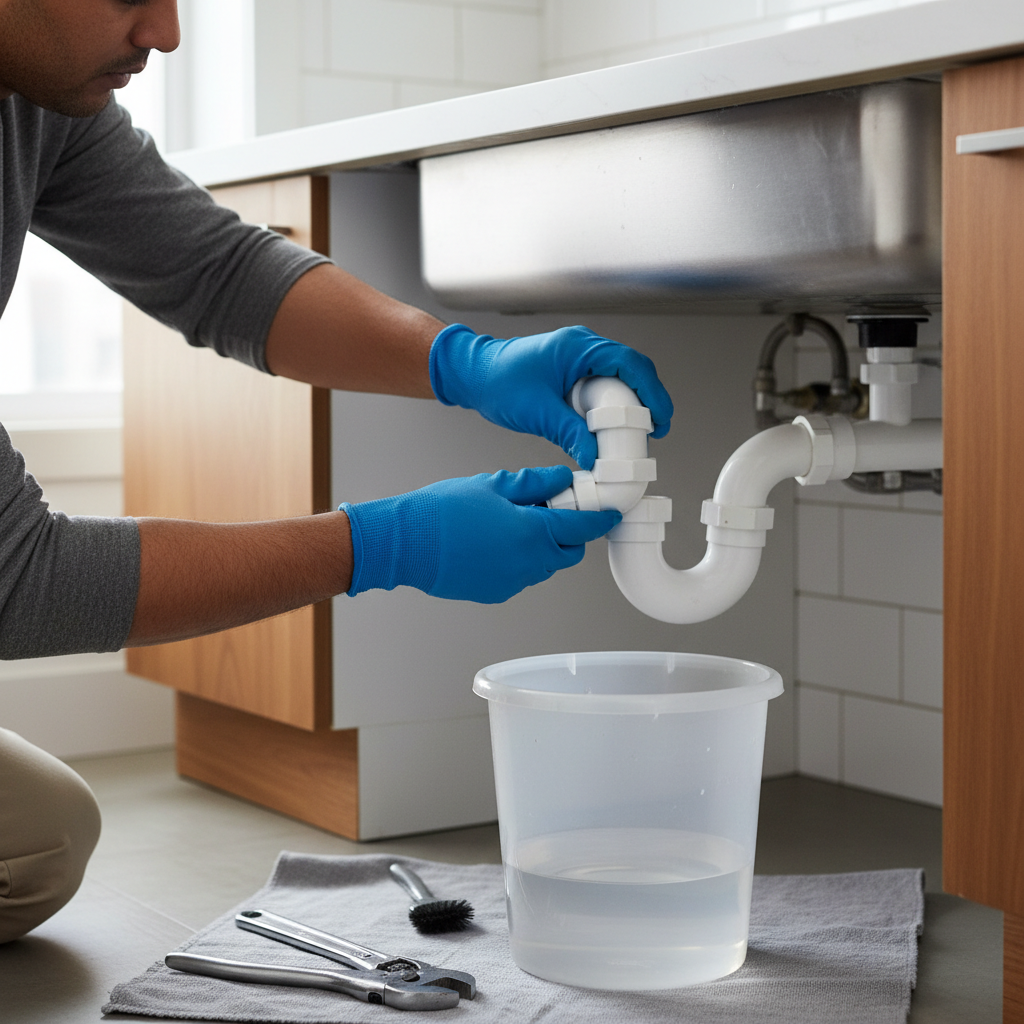
- Preparation and Initial Assessment — Clear the area and look for clues.
- Remove everything from under your kitchen sink. Place a large bucket directly under the P-trap to catch water and debris. Keep old towels handy.
- Look for any obvious leaks or cracks in the visible pipes. A compromised pipe could be contributing to slow drainage or even causing hidden water damage.
Plumbing · Clog
| Project category | Plumbing |
|---|---|
| Problem type | Clog |
| Trade required | Plumbing |
| Urgency | Soon — within weeks |
| Safety risk | Low safety risk |
| DIY suitability | DIY friendly |
| Cost category | Low cost |
| Typical timeline | Same-day DIY attempt; pro visit within a day or two |
| Contractor type | Licensed plumber |
Repair option
Plunger, hand auger, or trap cleanout before chemicals.
Replacement option
Line replacement when clogs return in the same spot repeatedly.
Common causes
- Hair and soap buildup in the trap
- Grease cooling in the branch line
- Flushed wipes or foreign objects
Relevant tools:diy difficultydiy or hire a pro
Published July 21, 2026Last updated August 17, 2026
Tools & materials you'll need
Affiliate linksAs an Amazon Associate FixlyGuide earns from qualifying purchases — at no extra cost to you. Prices and availability are accurate as of publication and subject to change.
Quick Answer
A slow-draining kitchen sink is most often caused by a buildup of grease, food particles, and soap scum in the P-trap or drainpipe. This common issue can usually be resolved by a homeowner using basic tools to clear the obstruction, either by disassembling and cleaning the P-trap or by using a plumbing auger (snake) to remove clogs further down the drain line. Immediate action can prevent a complete blockage and potential water damage.
The Problem
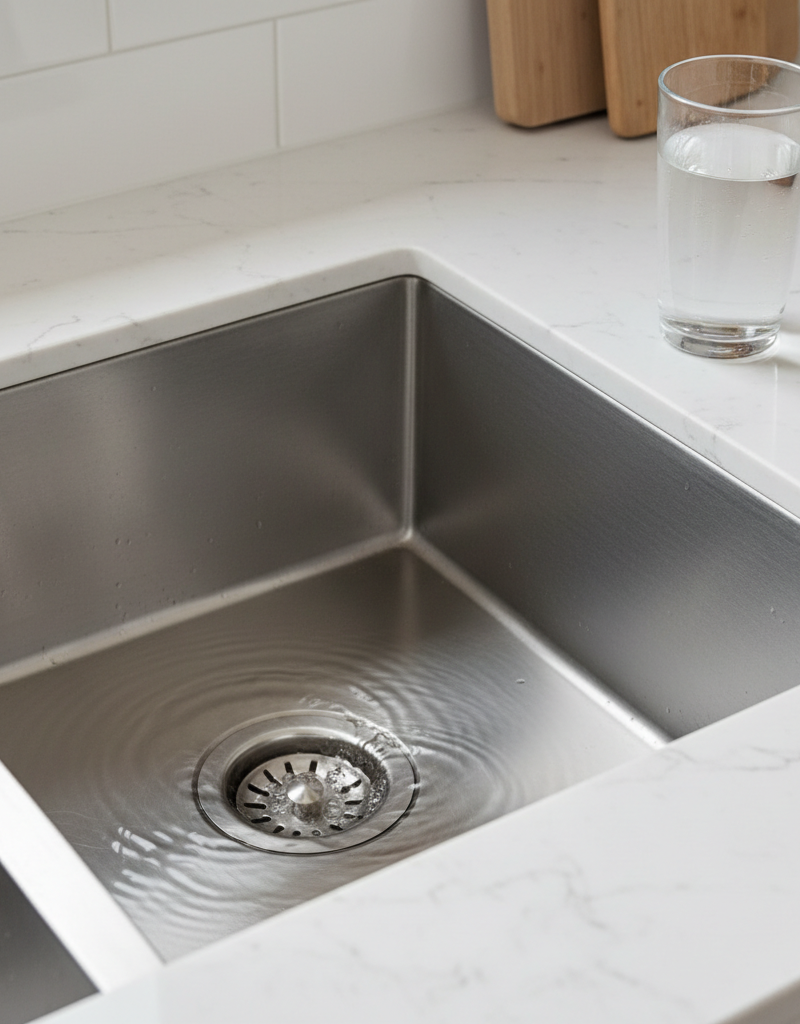
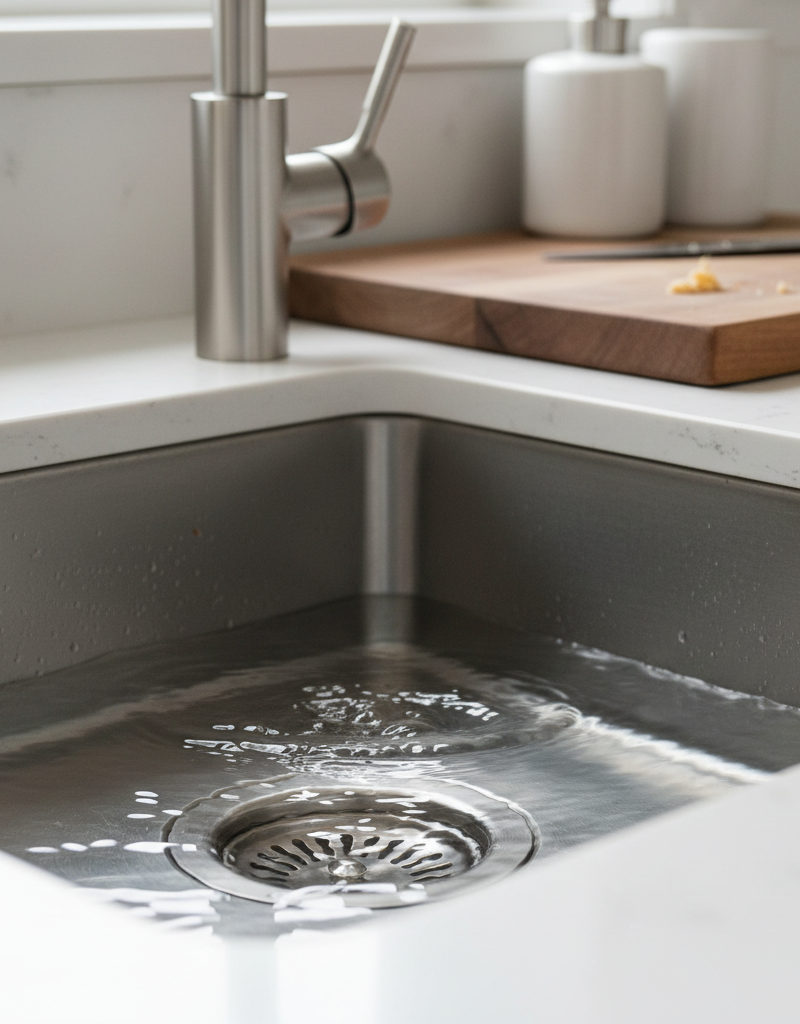
You're washing dishes, and the water just sits there, slowly spiraling down the drain. It's not completely blocked, but it's certainly not draining at the speed it should. This frustrating slow drain in your kitchen sink is more than just an annoyance; it's a warning sign. Left unaddressed, a slow drain will inevitably become a complete blockage, potentially leading to overflowing water, unpleasant odors, and even costly plumbing issues down the line. The culprit is almost always an accumulation of organic matter, fats, oils, and grease (FOG) combining with soap scum and food debris, gradually narrowing the drainpipe's diameter until water flow is severely restricted. Understanding where and how these clogs typically form is the first step to effectively tackling the problem without calling a professional.
How It Works
To understand why your kitchen sink drains slowly, it helps to know how the drainage system works. When you pour water down your sink, it travels through the sink basket strainer, down the tailpiece, and then into the P-trap. The P-trap is the U-shaped section of pipe directly under your sink. Its primary purpose isn't just to catch dropped items, but to create a water seal that prevents sewer gases from entering your home. From the P-trap, the water continues into a branch drain line, which connects to the main house drain system and eventually to the municipal sewer or septic tank.
Slow draining typically occurs when material accumulates within these pipes, especially in high-friction areas or where the flow changes direction. The P-trap is a common culprit because its curve naturally slows water and allows heavy particles to settle. Over time, cooking grease cools and solidifies within the pipes, acting like a sticky magnet for food particles, coffee grounds, hair, and soap scum. This sticky, greasy residue builds up on the inner walls of the pipe, gradually constricting the clear passage for water. As the opening shrinks, the water flow rate decreases, resulting in a slow drain. Air pressure also plays a role; a restricted drain can create a vacuum effect, further impeding the smooth flow of water and contributing to the sluggish drainage you observe.
Step-by-Step Fix
Safety First — Before you begin, put on old clothes and lay down towels or a bucket to catch any spilled water. Turn off your garbage disposal if you have one, and unplug it if you plan to work near it.
-
Preparation and Initial Assessment — Clear the area and look for clues.
- Remove everything from under your kitchen sink. Place a large bucket directly under the P-trap to catch water and debris. Keep old towels handy.
- Look for any obvious leaks or cracks in the visible pipes. A compromised pipe could be contributing to slow drainage or even causing hidden water damage.
-
Boiling Water Flush (Initial Attempt) — Sometimes, simple heat is enough.
- Carefully pour 4-6 cups of boiling water (not scalding, just hot from the tap, to avoid damaging PVC pipes) directly down the drain. Let it sit for 5-10 minutes.
- If you have PVC pipes, use very hot tap water instead of boiling water to prevent damage.
- Repeat this process 2-3 times. If the draining improves, you might have cleared a minor grease build-up.
- If this doesn't work: Proceed to the next step, as the clog is likely more substantial.
-
Baking Soda and Vinegar Treatment — A natural fizz to break down clogs.
- Pour 1/2 cup of baking soda down the drain, followed immediately by 1/2 cup of white vinegar. You'll hear fizzing.
- Quickly cover the drain opening with a stopper or a rag to contain the reaction and force it downwards into the clog.
- Let it sit for at least 30 minutes, or even overnight for tough clogs.
- Follow up by pouring several cups of very hot water (or boiling water for metal pipes) to flush the softened clog away.
- Safety Note: Never mix vinegar and baking soda with commercial drain cleaners. The resulting chemical reactions can produce dangerous fumes.
-
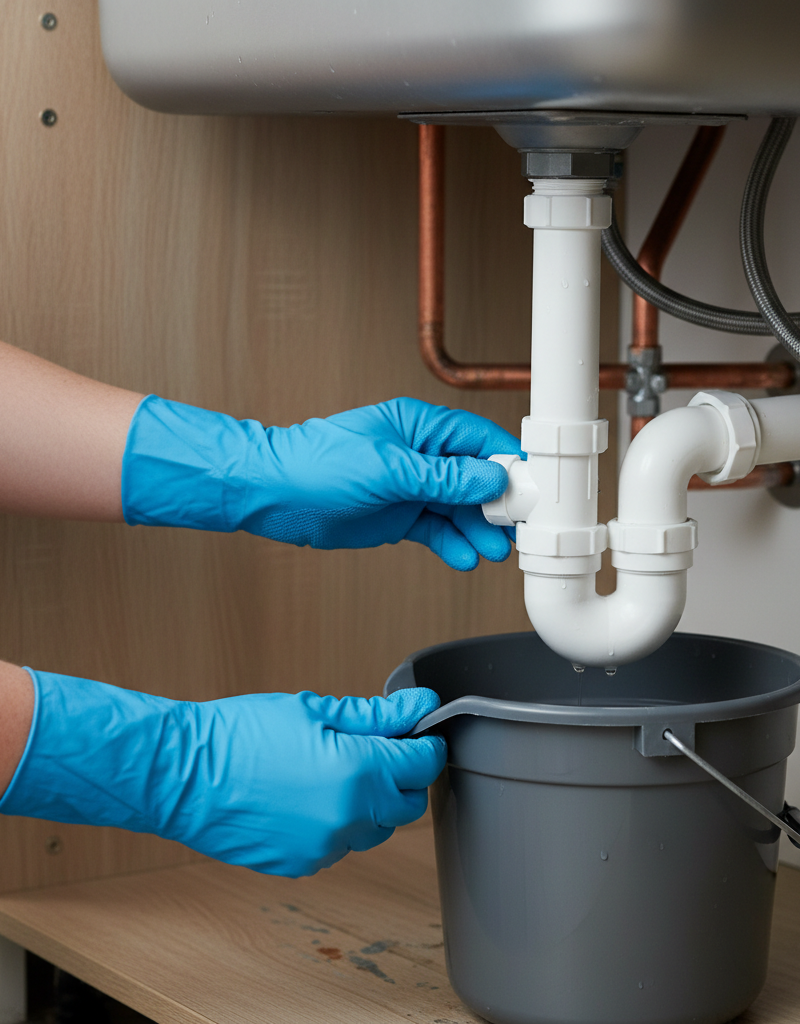
Disassemble the P-Trap — The most common clog location.
- Safety Note: Wear gloves and eye protection. Have a bucket ready!
- Loosen the slip nuts on both sides of the P-trap using channel-lock pliers or an adjustable wrench. Most P-traps are hand-tightened or secured with easily adjustable nuts.
- Carefully remove the P-trap, allowing any water and debris to fall into your bucket.
- Use a stiff brush, coat hanger, or old rag to thoroughly clean the inside of the P-trap and the connecting drainpipes as far as you can reach.
- Inspect rubber washers for damage and replace if necessary (a common source of leaks after reassembly).
- Reassemble the P-trap, ensuring all connections are snug but not overtightened (this can crack PVC).
- Run hot water for several minutes to check for leaks and confirm improved drainage.
- If the drain is still slow after cleaning the P-trap: The clog is further down the drain line.
-
Use a Plumbing Auger (Drain Snake) — Reaching deeper into the pipe.
- Safety Note: Wear gloves and eye protection. Use caution when handling the snake.
- If your P-trap is clean and the sink still drains slowly, the clog is deeper. You'll need a handheld plumbing auger (drain snake).
- Feed the auger cable into the drain opening where the P-trap was connected, or through a clean-out plug if your system has one.
- Push the auger until you feel resistance. This indicates you've hit the clog.
- Rotate the handle of the auger clockwise to allow the tip to bore into or grab the clog. Continue feeding and rotating.
- Once you feel the clog breaking up or snagged, slowly pull the auger back, hopefully bringing the obstruction with it.
- Repeat the process several times until the drain seems clear. You may need to dispose of nasty debris from the auger.
- Flush the drain with plenty of hot water to clear any remaining loosened material.
- If you encounter significant resistance or cannot clear the clog: The blockage might be too far, too dense, or indicate a more serious issue requiring professional help.
-
Check the Vent Pipe (Advanced) — *Sometimes, it
Related Articles
Keep troubleshooting with these hand-picked guides from FixlyGuide:
- The Secret Culprit Behind Your Slow Sink Drain (It's Not Always Hair) — Uncover the surprising reasons your kitchen sink drains slowly and learn actionable steps to fix common clogs yourself.
- The #1 Mistake Homeowners Make When Their Kitchen Sink Drains Slowly — A slow draining kitchen sink is a common problem, often caused by grease and food buildup, but many homeowners make a crucial mistake attem…
- The #1 Mistake Homeowners Make with a Slow Kitchen Drain (And the Easy Fix) — A slow kitchen sink drain is frustrating, but often it's a simple fix homeowners overlook by focusing on the wrong culprits.
- The #1 Mistake Homeowners Make with a Slow Kitchen Sink (And Its Dead Simple Fix) — Before you reach for harsh chemicals, learn the most common, easily fixable reason your kitchen sink is draining slowly and how to fix it y…
- The Dirty Secret KITCHEN SINKS DRAIN SLOWLY — And It’s NOT Always a Clog — Discover the often-overlooked culprits behind a slow-draining kitchen sink that aren't always a simple clog, and learn how to fix them.
- The Secret Reason Your Thermostat Lies (And How to Fix It in Minutes) — Discover why your thermostat isn't hitting its set temperature and learn simple, actionable steps to diagnose and fix the most common culpr…
Should you do this yourself?
Answer five quick questions before you start. Safety outranks savings every time.
Your experience with work like this
How high do you have to work?
Does the job involve any of these?
Will it need a permit?
Specialty tools
Free and instant. Educational guidance only — not a quote, inspection, or professional diagnosis.
What should this project cost?
Enter your project details for a realistic cost range before you call anyone.
Common repairs run $150–$650; repipes and water-heater replacements reach $1,500–$4,500.
- Regional adjustment
- National average
- Labor share (typical)
- ~$754
- Quotes to collect
- 3 written estimates
Educational estimate based on national averages — not a binding quote. Always confirm with written local estimates.
Fixly Project Decision Box
- DIY difficulty
- Moderate
- Estimated time
- 30 minutes – half a day
- Cost level
- Moderate
Main tools / materials
- Adjustable wrench
- Plunger or drain auger
- Bucket and towels
- Thread tape
When to stop and call a pro
- Water you cannot shut off at the fixture or main
- Sewage backing up into more than one fixture
- Water near electrical panels or outlets
- Gas water heater work beyond relighting a pilot
Need professional help?
Get a Licensed PlumberBefore you start
Check the difficulty, permits, and safety risk — then decide whether to call a pro.
- Estimate this projectGet a cost range for your scope and ZIP before you call anyone.Open
- Get local estimatesSend one request and compare written estimates from vetted pros.Open
Free, no signup required. Estimates are educational guidance, not a quote or an inspection.
Get the print-ready PDF of this guide
A clean, ad-free, printable version you can keep on your phone or pin to the workshop wall. Free with a FixlyGuide account.
- Print-optimized layout
- Tools, materials & every step included
- Saved to your account
Frequently asked questions
Why is my kitchen sink draining slowly but not completely clogged?+
A slow drain usually indicates a partial blockage, often a gradual buildup of grease, food particles, and soap scum narrowing the pipe. It hasn't fully sealed off the flow yet, but it's on its way to becoming a complete clog.
Can pouring hot water down the drain fix a slow sink?+
Yes, pouring very hot or boiling water (careful with PVC) can sometimes soften grease clogs enough to allow them to break apart and flush away. It's often effective for minor, fresh blockages, but less so for established, dense clogs.
Should I use chemical drain cleaners for a slow kitchen sink?+
FixlyGuide generally advises against chemical drain cleaners for kitchen sinks. While they might offer a temporary fix, they can be corrosive to pipes, especially older ones, and dangerous to handle. Manual methods like cleaning the P-trap or using an auger are safer and more effective for most kitchen clogs.
How often should I clean my kitchen sink drain to prevent slow draining?+
Regular maintenance is key. Flushing your drain with hot water after doing dishes and occasionally using baking soda and vinegar can help. A thorough cleaning of the P-trap every 6-12 months, or as soon as you notice a reduced flow rate, can prevent major clogs.
When should I call a professional plumber for a slow kitchen sink?+
You should call a professional if you've attempted the DIY fixes (like cleaning the P-trap and snaking the drain) and the issue persists, if you suspect a blockage in the main drain line, if multiple drains in your home are slow, or if you notice foul odors or sewage backing up.
Discussion
Loading comments…