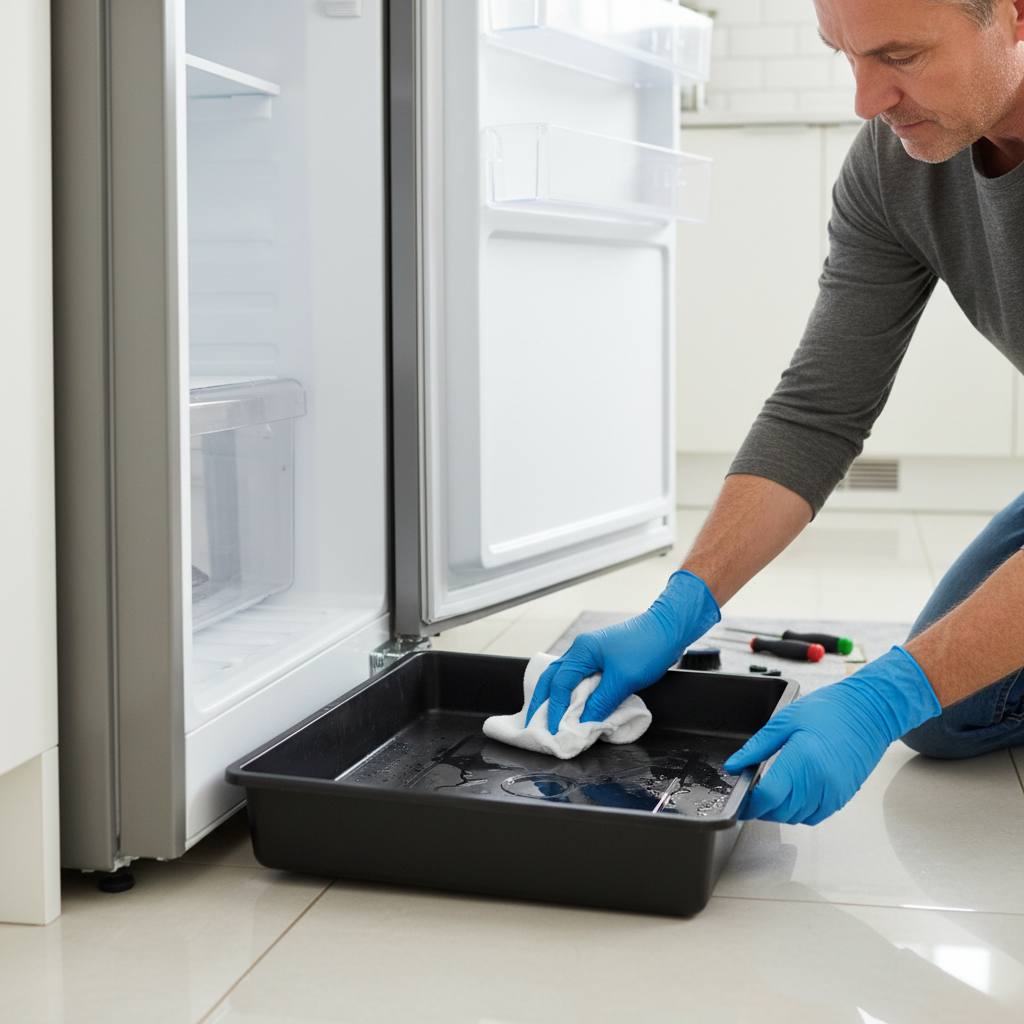
- Empty and Unplug the Refrigerator — Clear everything out
- Remove all food from the freezer and refrigerator compartments. Store perishable items in a cooler with ice.
- Unplug the refrigerator from the wall outlet. If the outlet is difficult to reach, turn off the circuit breaker that supplies power to the refrigerator.
Plumbing · Leak
| Project category | Plumbing |
|---|---|
| Problem type | Leak |
| Trade required | Plumbing |
| Urgency | Emergency — act now |
| Safety risk | High safety risk |
| DIY suitability | DIY for experienced homeowners |
| Cost category | Low cost |
| Typical timeline | Shut water off now; repair usually same or next day |
| Contractor type | Licensed plumber |
Repair option
Isolate at the shutoff, replace the failed component, and dry the cavity fully.
Replacement option
Repipe the run or the branch when corrosion is widespread.
Common causes
- Failed supply line or shutoff valve
- Worn washers, cartridges, or P-trap connections
- Pinhole corrosion in older copper
Relevant tools:emergency checklistdiy or hire a pro
Published May 21, 2026Last updated August 17, 2026
Tools & materials you'll need
Affiliate linksAs an Amazon Associate FixlyGuide earns from qualifying purchases — at no extra cost to you. Prices and availability are accurate as of publication and subject to change.
Quick Answer
Most refrigerator water leaks on the floor are caused by a clogged or frozen defrost drain line. This crucial line, often overlooked, is responsible for channeling meltwater from the evaporator coils to the drain pan located at the bottom of your refrigerator. When debris or ice obstructs this pathway, water overflows the internal collection pan and spills out onto your kitchen floor, creating an annoying mess and potential slip hazard.
The Problem
Imagine walking into your kitchen only to find a puddle of water slowly spreading from under your refrigerator. It's a common and frustrating problem for many homeowners. While a leaking refrigerator might immediately suggest a faulty water line or ice maker, the most frequent culprit is far less dramatic and often easily fixable without professional help. The issue typically originates within the defrost system, specifically the defrost drain line, which ensures that the melted frost from the evaporator coils safely reaches the drain pan. When this line becomes clogged with food particles, ice, or mold, the water has nowhere to go but out, onto your floor.
How It Works
Understanding how your refrigerator handles frost is key to diagnosing a leak. Modern frost-free refrigerators work by periodically warming the evaporator coils to melt any ice buildup. This 'defrost cycle' is typically initiated by a timer or a thermistor and occurs several times a day.
Here's the journey of that meltwater:
-
Evaporator Coils: Located in the freezer compartment, these coils get very cold, extracting heat from the air and causing moisture to freeze onto their surface as frost.
-
Defrost Heater: During the defrost cycle, an electric heater (often a bare metal rod or a ceramic element) warms up, melting the accumulated frost on the evaporator coils.
-
Defrost Drain Pan (Internal): Below the evaporator coils, a small, typically plastic, trough or pan collects this meltwater.
-
Defrost Drain Line: Connected to the internal drain pan, this narrow tube (usually made of plastic or rubber) runs down through the back wall of the refrigerator cabinet, often through an insulated channel.
-
Drain Hole/Grommet: The drain line empties through a small hole at the bottom back of the freezer compartment, often into a larger, flexible tube.
-
External Drain Pan: This large, shallow pan is located beneath the refrigerator, usually near the compressor. The defrost drain line drips into this pan, where the water then evaporates due to the heat generated by the compressor and condenser coils.
When the defrost drain line becomes blocked, either by a buildup of ice (due to a faulty defrost heater or simply very cold ambient temperatures) or by food particles, mold, or debris, the meltwater cannot reach the external drain pan. Instead, it backs up in the internal drain pan, overflows, and begins to seep out from under the freezer floor or directly from the back of the refrigerator, eventually forming puddles on your kitchen floor. This problem is particularly common in refrigerators that are several years old, as debris has had more time to accumulate.
Step-by-Step Fix
Safety First: Always unplug your refrigerator before attempting any repairs. This prevents electrical shock and injury from moving parts.
-
Empty and Unplug the Refrigerator — Clear everything out
- Remove all food from the freezer and refrigerator compartments. Store perishable items in a cooler with ice.
- Unplug the refrigerator from the wall outlet. If the outlet is difficult to reach, turn off the circuit breaker that supplies power to the refrigerator.
-
Locate the Freezer Evaporator Cover — Find the back wall
- Open the freezer door. You'll need to remove shelves and possibly the ice maker to expose the rear access panel. This panel typically covers the evaporator coils.
- Use a nut driver or screwdriver to remove the screws holding the evaporator cover in place. Some models may have clips or latches. Carefully remove the cover, being mindful of any attached wires (e.g., for the fan motor). You might need to gently disconnect these wires if they impede cover removal.
-
Identify the Defrost Drain Hole — Spot the small opening
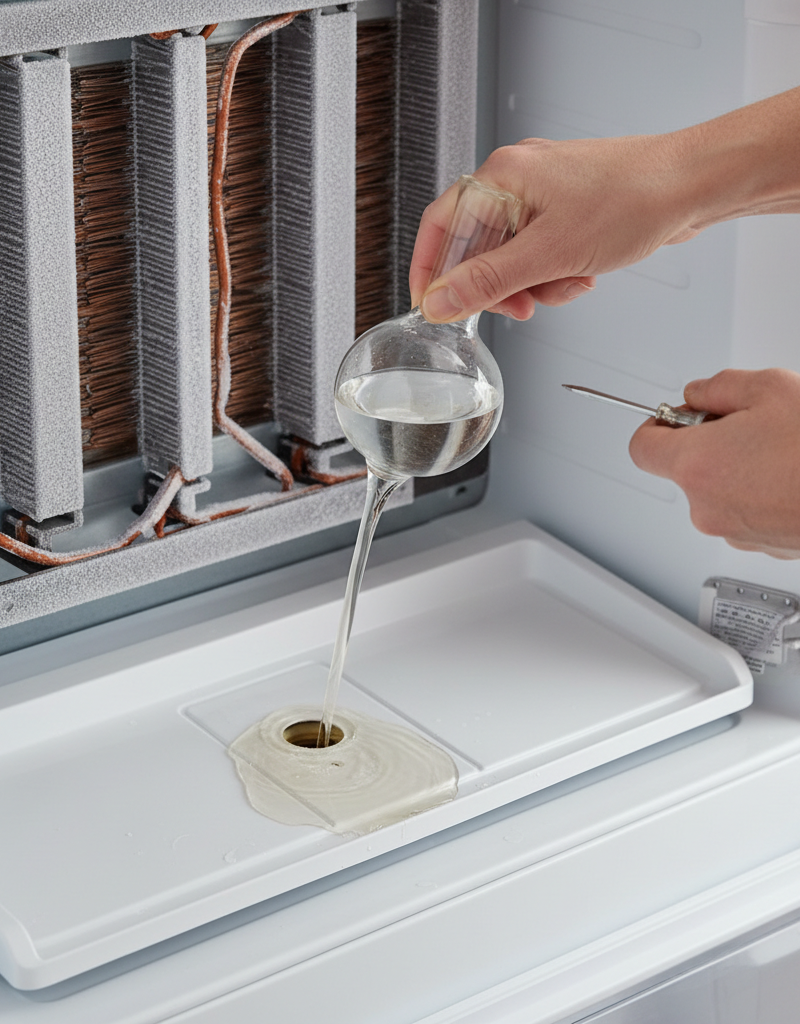
- Once the evaporator cover is off, you'll see the evaporator coils and, usually underneath them, a small trough or pan. At the lowest point of this trough, you'll find the drain hole. It's often no larger than a dime and might be partially or completely obscured by ice or debris.
- If frozen: Use a hairdryer on a low setting or a turkey baster filled with warm water to carefully melt any ice obstructing the drain hole. Avoid using sharp objects that could puncture the coils or the drain pan.
-
Clear the Drain Line from Above — Flush it out
- Once the drain hole is clear of visible ice, use a small, flexible brush (like a refrigerator drain brush or a bottle brush) to gently push down into the drain hole and clear any debris. You might also try pouring a mixture of hot water and a tablespoon of baking soda down the drain to help dissolve clogs. A long piece of stiff, insulated wire (like from an old coat hanger, but ensure it has no sharp edges) can also be used to probe the line.
- Listen for the drip: If successful, you should eventually hear water dripping into the external drain pan beneath the refrigerator.
-
Access the External Drain Pan — Pull out the fridge
- Carefully pull the refrigerator away from the wall to access its rear. If it has leveling feet, you might need to slightly loosen them or tilt the refrigerator back onto its rear rollers.
- On most models, the external drain pan is a shallow plastic tray located at the bottom rear, above the compressor. It usually slides out or is held by a few screws/clips. Remove the pan.
-
Clear the Drain Line from Below — Push up the gunk
- Locate the end of the defrost drain line, which typically empties into the external drain pan. Sometimes there's a rubber grommet or duckbill valve on the end of the tube, which can also become clogged.
- Using the flexible brush or a pipe cleaner, push up into the drain line from below to dislodge any remaining blockages. You can also use a mixture of warm water and a small amount of bleach (1 teaspoon per gallon of water) to clean out mold or mildew that may be growing in the line. This can deter future clogs.
-
Clean the External Drain Pan — Sanitize thoroughly
- Thoroughly clean the external drain pan with warm, soapy water and a splash of bleach. This will remove any accumulated mold, mildew, or debris, preventing odors and further blockages. Rinse it well.
-
Reassemble and Test — Put it all back together
- Replace the external drain pan, ensuring it's securely seated. Reconnect any wires to the evaporator cover if you disconnected them. Replace the evaporator cover and all freezer shelves/ice maker components.
- Carefully push the refrigerator back into its original position, making sure not to crimp any water lines or power cords. Plug the refrigerator back in or flip the circuit breaker.
- Wait a few hours for the refrigerator to run a defrost cycle and monitor for any new leaks. Placing a paper towel under the refrigerator can help detect small drips.
Common Causes
- Clogged Defrost Drain Line: This is by far the most common cause. Food particles, dust, mold, or ice can accumulate inside the drain tube, preventing meltwater from reaching the external pan. This is especially true for models where the drain exits directly into a duckbill valve.
- Frozen Defrost Drain Line: If the defrost heater isn't functioning correctly, or if food items are blocking airflow near the drain opening, the meltwater inside the drain line can refreeze, causing a blockage. This often results in a solid ice blockage within the tube itself.
- Blocked External Drain Pan: While less common for leaks into the house, a severely overflowing external drain pan (e.g., if the drain line is constantly dripping and the water isn't evaporating fast enough due to high humidity or a faulty compressor fan) can sometimes lead to water seeping out around the base of the refrigerator.
- Cracked or Misaligned Drain Pan (Internal or External): Physical damage to either the internal collection pan below the evaporator coils or the external pan can cause leaks. A misaligned external pan might fail to catch all the drips from the drain tube.
- Faulty Defrost Heater or Thermistor: If the defrost heater doesn't activate or the thermistor (which senses temperature) fails, ice can build up excessively on the evaporator coils, eventually overwhelming the internal drain pan capacity and leading to leaks when the ice finally melts unevenly.
- Leaking Water Inlet Valve or Water Lines (Ice Maker/Dispenser): While less common for generalized leaks under the fridge, a loose connection, cracked hose, or faulty water inlet valve (which supplies water to the ice maker and dispenser) can certainly cause a leak. This usually produces a more consistent, non-defrost-cycle-dependent drip.
Common Mistakes
- Ignoring the Safety Note: Many DIYers forget to unplug the refrigerator. Always disconnect power to avoid electrical shock and injury.
- Using Sharp Objects to Clear Ice: Poking at ice in the drain hole with screwdrivers or ice picks can easily puncture the evaporator coils or the internal drain pan, leading to much more expensive repairs (refrigerant leak or parts replacement).
- Not Checking Both Ends of the Drain Line: A common mistake is only clearing the drain from the freezer side. Clogs often form at the duckbill valve or the lowest point of the line near the external drain pan due to gravity and bacterial growth (mold).
- Forgetting to Clean the External Drain Pan: This pan accumulates dust, debris, and sometimes mold. If not cleaned, it can become a source of odors or, in rare cases of severe overflow, contribute to minor leaks.
- Assuming it's a Water Line Issue Immediately: While water lines can leak, the defrost drain is by far the most frequent culprit for water puddles under the fridge. Always rule out the drain line first before troubleshooting the more complex water supply system.
- Not Allowing Enough Time for Defrost: After clearing a blockage, the refrigerator needs time to complete one or two full defrost cycles to confirm the fix. A quick check after a few minutes might not reveal success.
Cost & Time Breakdown
| Task | DIY Cost | Pro Cost | Time |
|---|---|---|---|
| Diagnose & Clear Drain Line | $0–$10 | $100–$250 | 30–60 minutes |
| Replace Drain Pan (External) | $20–$50 | $150–$200 | 30 minutes |
| Replace Defrost Heater | $50–$150 | $200–$400 | 1–2 hours |
| Replace Water Inlet Valve | $30–$80 | $180–$350 | 1 hour |
| Replace Water Line (Ice Maker) | $10–$30 | $120–$200 | 30–60 minutes |
Tips & Prevention
- Regular Cleaning: Routinely clean the external drain pan every 6-12 months. This reduces the buildup of dust and debris that can get into the drain line.
- Inspect the Drain Hole: When you defrost or deep clean your freezer, take a moment to look at the defrost drain hole. If you see visible ice or debris, clear it proactively.
- Keep Food Away from Vents: Ensure food items in the freezer aren't pushed against the back wall, blocking the return air vent or the defrost drain opening. This can cause localized ice buildup.
- Use a Drip Tray: If your refrigerator is prone to minor leaks, consider placing a shallow, wide drip tray (like a boot tray) under the front feet as a temporary measure to catch small spills.
- Check Humidity Levels: High ambient humidity can sometimes increase frost buildup. While not a direct cause of a clogged drain, it can exacerbate existing issues.
- Consider a Drain Line Heater Kit: For refrigerators with chronic freezing drain lines, some manufacturers offer small heating elements that can be installed directly into the drain tube to prevent ice formation.
When to Call a Professional
While clearing a clogged defrost drain is a common DIY fix, there are several situations where calling a licensed appliance repair technician is the safest and most efficient course of action. If, after following the steps above, your refrigerator continues to leak, or if you suspect a more complex internal component failure, it's time to call in the pros. Specifically, if you find that the defrost heater isn't working (meaning the coils are consistently covered in thick ice), or if the problem is rooted in a faulty thermistor or control board, these repairs require specific diagnostic tools and replacement parts that are beyond typical DIY scope. Additionally, if the leak appears to be coming from the main water inlet valve, a punctured refrigerant line (which would also cause cooling issues), or if you detect significant electrical issues or burning smells, immediately unplug the unit and contact a professional. An experienced technician can quickly diagnose these intricate problems, ensuring the repair is done correctly and safely, and often comes with a warranty on parts and labor.
Related Articles
Keep troubleshooting with these hand-picked guides from FixlyGuide:
- The Surprising Culprit Behind Your Refrigerator's Water Leak (It's Not Always the Ice Maker) — Discover the most common, often overlooked reason your refrigerator is leaking water and how to fix it with simple steps.
- The Secret Culprit Behind Your Leaky Refrigerator (It’s Not Always the Water Line) — Discover the most common, often overlooked, reasons your refrigerator is leaking water and how to fix them with simple DIY steps.
- The Secret Culprit Behind Your Leaking Refrigerator (It’s Not Always a Big Fix) — Discover the most common and often overlooked reasons why your refrigerator is leaking water on the floor, and how to fix them yourself.
- The Secret Culprit Behind Your Leaky Refrigerator (It's Not What You Think) — Discover the often-overlooked reason your refrigerator is leaking water and how a simple, inexpensive fix can prevent costly damage.
- The Secret Culprit Behind Your Leaking Refrigerator (It’s Not Always a Big Repair) — Discover the most common, often overlooked reason your refrigerator is leaking water onto your kitchen floor and how to fix it yourself.
- The #1 Reason Your Interior Door Sticks (It's Not Humidity) — Before you blame humidity, understand the real culprit behind a sticking interior door and learn how to fix it with simple tools.
Should you do this yourself?
Answer five quick questions before you start. Safety outranks savings every time.
Your experience with work like this
How high do you have to work?
Does the job involve any of these?
Will it need a permit?
Specialty tools
Free and instant. Educational guidance only — not a quote, inspection, or professional diagnosis.
Questions to ask before you sign
Ask every contractor the same questions and the cheapest bid stops looking cheapest. Check them off as you go — your progress is saved on this device.
Free, no signup. Bring this to every walkthrough so you compare bids on the same terms.
What should this project cost?
Enter your project details for a realistic cost range before you call anyone.
Common repairs run $150–$650; repipes and water-heater replacements reach $1,500–$4,500.
- Regional adjustment
- National average
- Labor share (typical)
- ~$754
- Quotes to collect
- 3 written estimates
Educational estimate based on national averages — not a binding quote. Always confirm with written local estimates.
Fixly Project Decision Box
- DIY difficulty
- Moderate
- Estimated time
- 30 minutes – half a day
- Cost level
- Moderate
Main tools / materials
- Adjustable wrench
- Plunger or drain auger
- Bucket and towels
- Thread tape
When to stop and call a pro
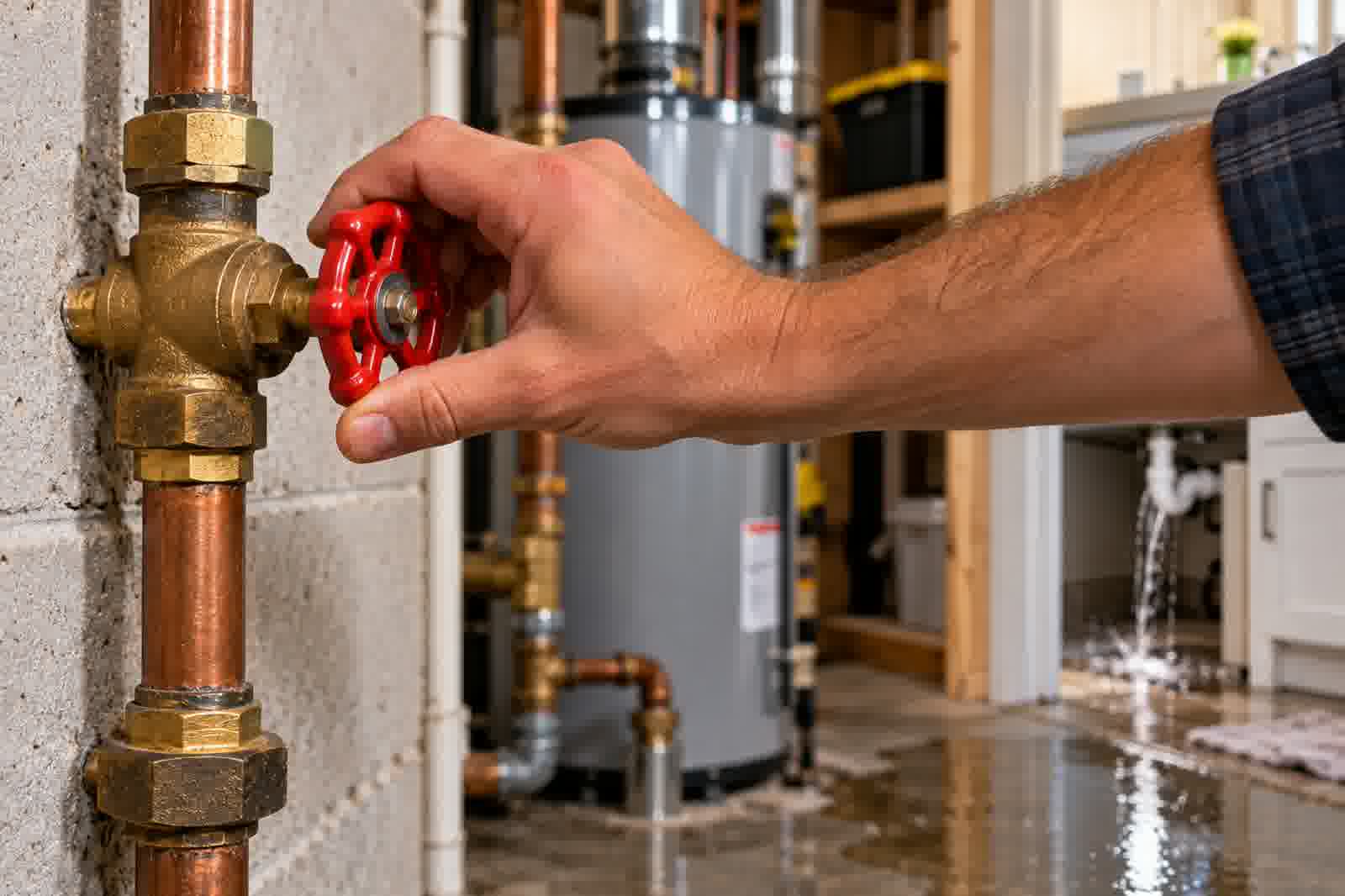
- Water you cannot shut off at the fixture or main
- Sewage backing up into more than one fixture
- Water near electrical panels or outlets
- Gas water heater work beyond relighting a pilot
Need professional help?
Get a Licensed PlumberHandle this before it gets worse
First steps that limit damage, then a way to reach a qualified pro.
- Emergency repair checklistThe first steps that limit damage before a pro arrives.Open
- Get local estimatesSend one request and compare written estimates from vetted pros.Open
- Estimate this projectGet a cost range for your scope and ZIP before you call anyone.Open
Free, no signup required. Estimates are educational guidance, not a quote or an inspection.
Get the print-ready PDF of this guide
A clean, ad-free, printable version you can keep on your phone or pin to the workshop wall. Free with a FixlyGuide account.
- Print-optimized layout
- Tools, materials & every step included
- Saved to your account
Frequently asked questions
Why is my new refrigerator leaking water on the floor?+
Even new refrigerators can develop a clogged defrost drain line if food particles or manufacturing debris block the tube. It could also be a loose water line connection if it's a new installation with an ice maker or water dispenser.
What happens if I don't fix a refrigerator water leak?+
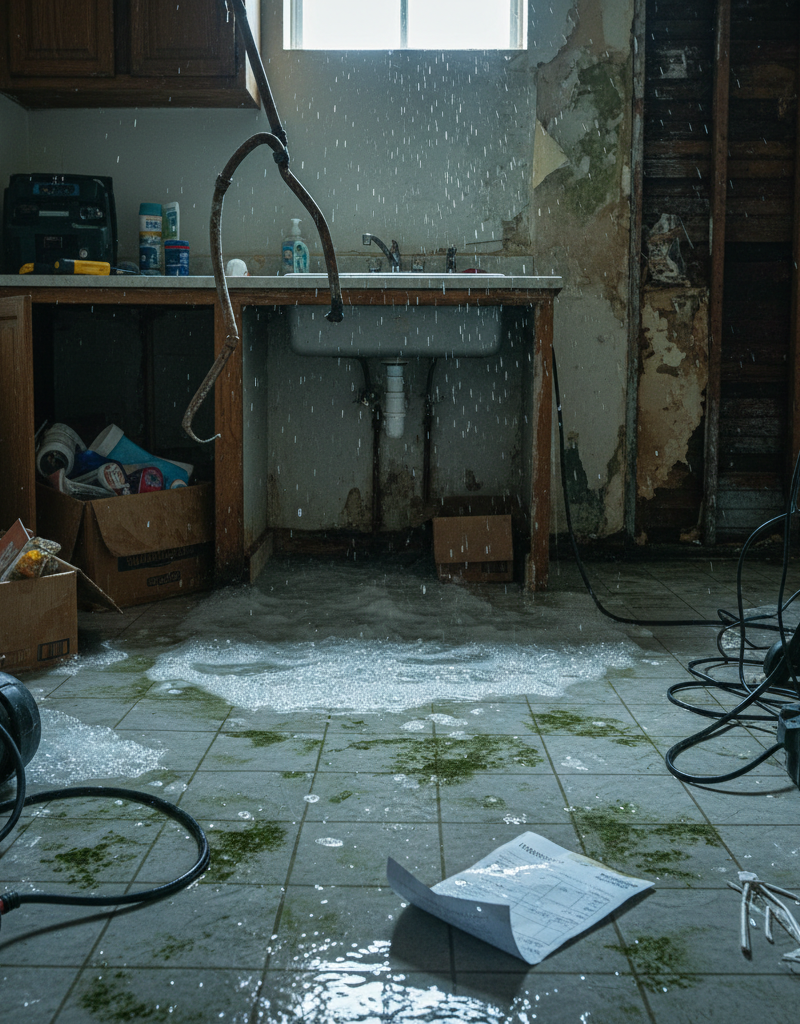
Ignoring a refrigerator water leak can lead to several problems: floor damage (warping, rot), mold and mildew growth under and behind the appliance, unpleasant odors, and potential slip hazards. Continued leaks can also indicate a larger underlying problem in the refrigerator's defrost or water supply system.
Can a clogged refrigerator drain cause bad smells?+
Yes, absolutely. The warmth from the compressor combined with stagnant water in a clogged drain pan or line creates an ideal breeding ground for mold, mildew, and bacteria, leading to foul, musty odors emanating from under or behind your refrigerator.
How often should I clean my refrigerator drain pan?+
It's a good practice to clean your refrigerator's external drain pan at least once every 6 to 12 months. This helps prevent the buildup of dust, debris, and mold that can contribute to clogs and odors.
Discussion
Loading comments…