- Tools: Screwdriver (for thermostat cover or battery compartment), level (to check mounting).
- Materials: AA or AAA batteries (for battery-powered thermostats).
- If this doesn't work: Consider that the thermostat itself might be faulty and needs replacement.
HVAC · High energy usage
| Project category | HVAC |
|---|---|
| Problem type | High energy usage |
| Trade required | HVAC |
| Urgency | Planned project |
| Safety risk | Low safety risk |
| DIY suitability | DIY for experienced homeowners |
| Cost category | High cost |
| Typical timeline | Assessment within weeks; replacement planned off-season |
| Contractor type | Licensed HVAC technician |
Repair option
Duct sealing, insulation, and a tune-up before touching the equipment.
Replacement option
High-efficiency replacement sized by a load calculation, not a rule of thumb.
Common causes
- Aging, low-efficiency equipment
- Leaking ducts losing conditioned air
- Insufficient attic insulation
- Oversized system short-cycling
Relevant tools:project cost estimatorrepair or replace
Published May 19, 2026Last updated September 4, 2026
Tools & materials you'll need
Affiliate linksAs an Amazon Associate FixlyGuide earns from qualifying purchases — at no extra cost to you. Prices and availability are accurate as of publication and subject to change.
Quick Answer
Furnace short cycling occurs when your heating system repeatedly turns on and off very quickly, failing to complete a full heating cycle. This isn't just annoying; it can significantly increase your energy bills, put undue stress on your furnace components, and lead to premature system failure. The most common culprits are a dirty air filter, an incorrectly sized furnace, a malfunctioning thermostat, or an overheating safety limit switch. Fortunately, many of these issues are straightforward for a homeowner to diagnose and fix with basic tools and a bit of HVAC knowledge.
The Problem
You've noticed your furnace kicking on, running for only a few minutes, and then shutting off, only to repeat the process a short time later. This is what's known as short cycling. Instead of smoothly heating your home to the set temperature over a sustained period, your furnace is struggling, operating inefficiently, and potentially damaging its internal components. Each start-up is the most energy-intensive part of the heating cycle, so frequent short cycles mean higher energy consumption and more wear on the ignitor, blower motor, and heat exchanger. Over time, this can lead to costly repairs or even the need for a full system replacement. It can also leave your home feeling unevenly heated, with cold spots persisting despite the furnace's constant efforts.
How It Works
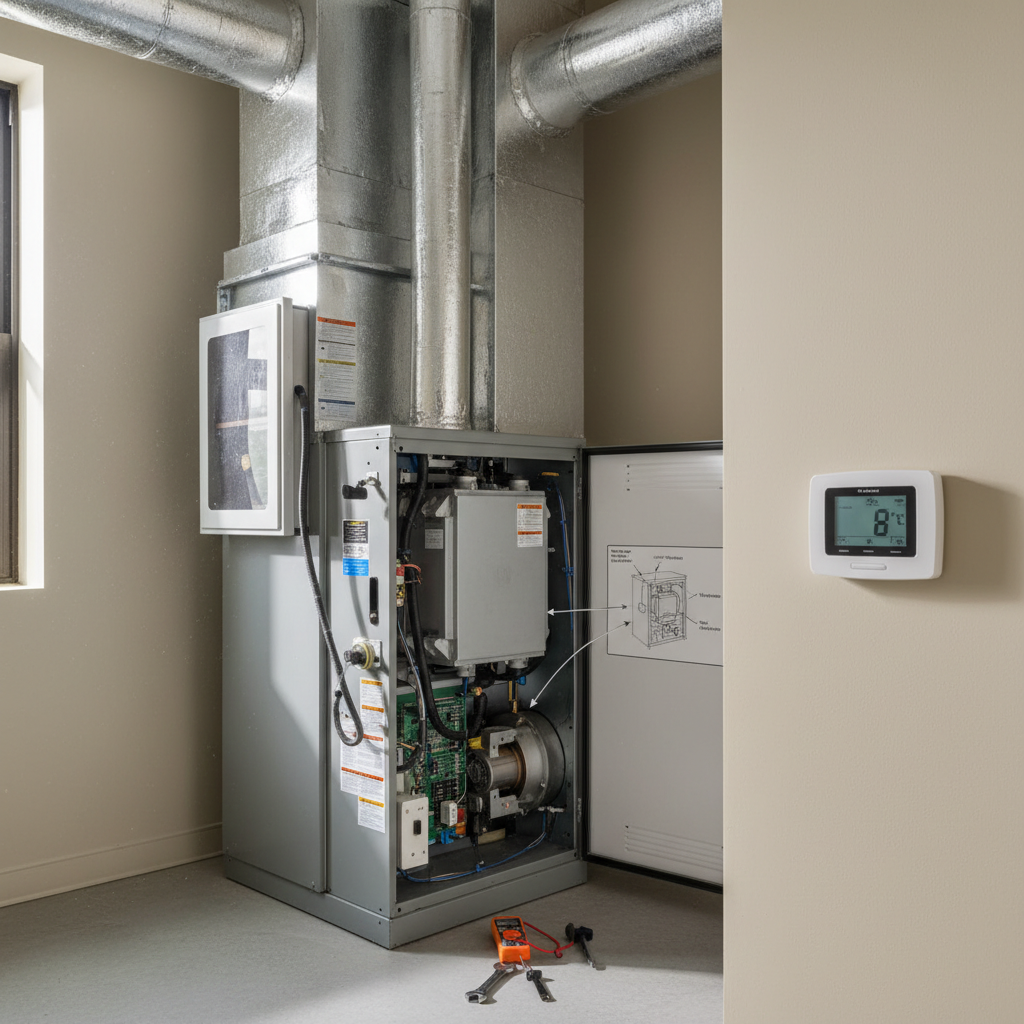
To understand short cycling, it helps to understand how a normal furnace heating cycle operates. When your thermostat signals a need for heat, it closes a circuit, sending a low-voltage signal to the furnace's control board. The control board then initiates a sequence of events: first, the inducer motor starts, pulling exhaust gases out of the heat exchanger and creating a negative pressure. A pressure switch monitors this, ensuring proper venting. Once safe, the ignitor (either a hot surface ignitor or pilot light) activates, followed by the opening of the gas valve. Gas flows to the burners, ignites, and heats the heat exchanger. As the heat exchanger warms up, a sensor (usually a limit switch) detects a safe operating temperature, signaling the main blower motor to turn on. The blower pushes air across the hot heat exchanger, distributing the warmed air through your home's ductwork. This continues until the thermostat's set temperature is reached, at which point the gas valve closes, the burners extinguish, and the blower motor continues to run for a short period to dissipate residual heat before the entire system powers down, waiting for the next call for heat. Short cycling disrupts this delicate balance, often failing at one of these critical stages or due to external factors like sensor miscalibration or airflow obstruction. A typical heating cycle should last at least 10-15 minutes, sometimes longer, to efficiently distribute heat and prevent undue strain on components. When it's significantly shorter, it indicates a problem that needs attention.
Step-by-Step Fix
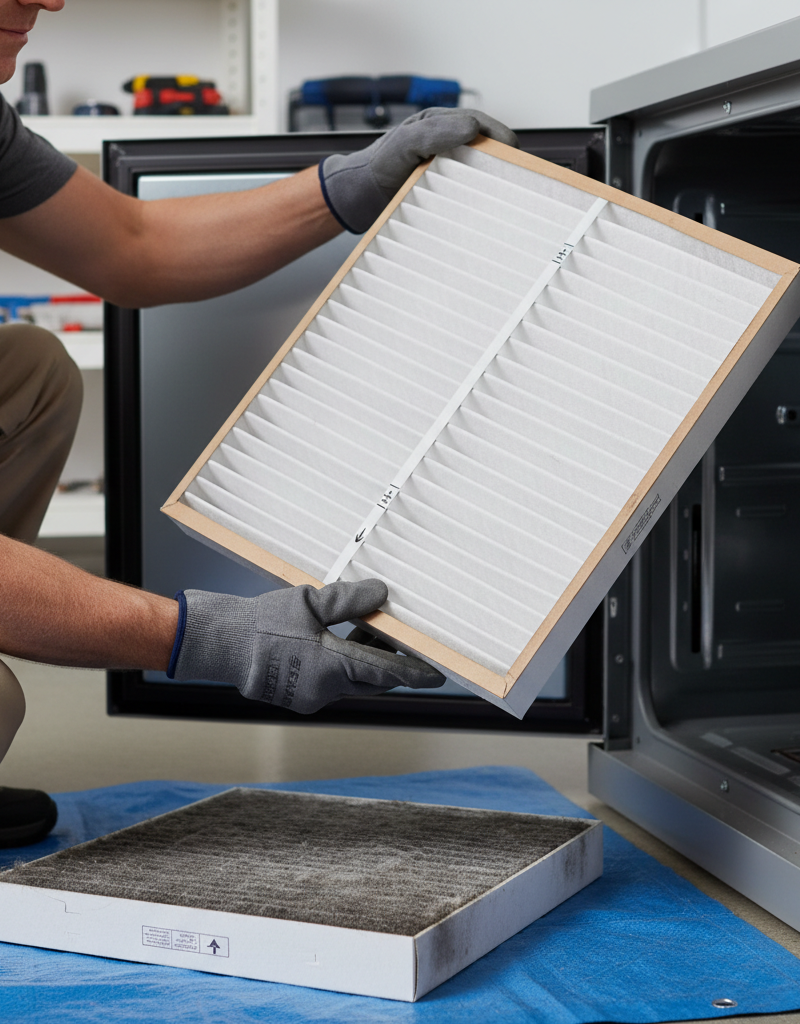
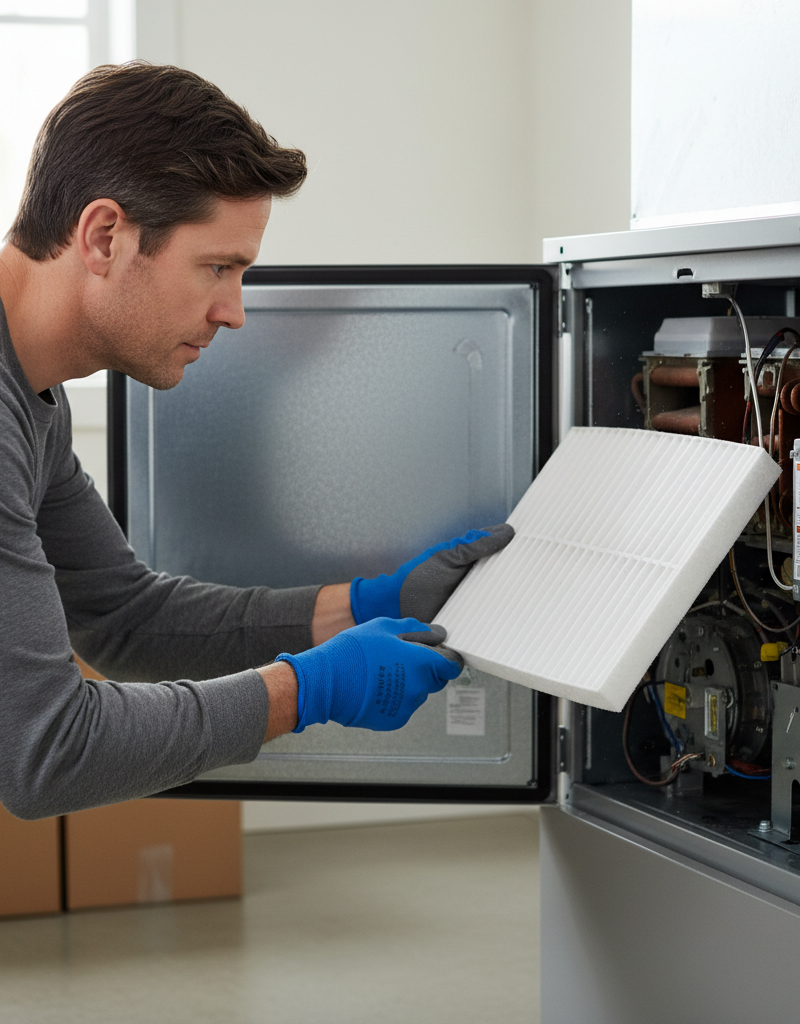
1. Check the Air Filter — A clogged air filter is the most common cause of short cycling.
Locate your furnace's air filter slot, usually found where the return air duct meets the furnace or in a separate return air vent. Pull out the existing filter. Hold it up to a light source; if you can't see light through it, or if it's visibly caked with dust and debris, it's severely restricted. A dirty filter chokes airflow, causing the heat exchanger to overheat rapidly. The furnace's high-limit switch will then trip, shutting down the burners as a safety measure. This thermal overload protection is a critical safety feature, but its frequent activation suggests an underlying airflow issue. * Tools: N/A * Materials: New MERV-rated air filter (check your furnace manual for the correct size and recommended MERV rating, typically MERV 8-11 for residential use). * If this doesn't work: Even with a clean filter, check for other airflow blockages in return or supply vents.
2. Examine the Thermostat Settings and Location — An improperly set or positioned thermostat can confuse your furnace.
Ensure your thermostat is set to 'HEAT' and the desired temperature is appropriate. If your thermostat has a fan setting, make sure it's on 'AUTO' instead of 'ON' (unless you specifically want continuous fan operation). Check if the temperature differential setting is too narrow. Some programmable thermostats allow you to adjust the temperature swing, meaning how far the temperature can drop below the set point before the furnace kicks on. A very narrow swing (e.g., 0.5°F) can lead to more frequent, shorter cycles. Also, verify that the thermostat isn't located near a heat source (like a lamp, sunny window, or heat vent) or a draft, which could cause it to register an inaccurate room temperature. Calibrate or replace an old, inaccurate thermostat if necessary. An electronic thermostat might need fresh batteries. * Tools: Screwdriver (for thermostat cover or battery compartment), level (to check mounting). * Materials: AA or AAA batteries (for battery-powered thermostats). * If this doesn't work: Consider that the thermostat itself might be faulty and needs replacement.
3. Inspect and Clear Blocked Vents and Return Air Grilles — Restricted airflow impacts heat distribution and can trigger safety limits.
Walk through your home and ensure all supply registers (where warm air comes out) and return air grilles (where cool air is pulled in) are fully open and unobstructed. Furniture, rugs, or even drapes can block airflow, creating pressure imbalances and forcing the furnace to work harder. Close no more than 20-30% of your supply vents if you're trying to zone your heating. Too many closed vents can increase static pressure and lead to overheating. Use a vacuum cleaner to remove dust and debris from grilles. * Tools: Vacuum cleaner with brush attachment. * Materials: N/A * If this doesn't work: Consider professional duct cleaning or an inspection for collapsed ductwork.
4. Reset the High-Limit Switch — If tripped, this safety feature needs a manual reset in some older units.
SAFETY NOTE: Before touching any internal components, turn off power to your furnace at the thermostat and the electrical service panel. The high-limit switch is a safety device designed to prevent the heat exchanger from overheating. If it trips repeatedly, it's a strong indicator of an airflow problem. On some older furnaces, the high-limit switch might have a small red or black reset button. Locate the ceramic limit switch, usually near or on the blower housing, and gently press the button. Many modern furnaces have auto-resetting limit switches, so a manual reset won't be an option or necessary if it's the auto-resetting type, but if yours has a button, try it once. Remember, if it keeps tripping, the underlying airflow issue must be resolved. * Tools: N/A (requires careful observation) * Materials: N/A * If this doesn't work: Do NOT bypass the high-limit switch. Call a professional HVAC technician; constant tripping indicates a serious problem.
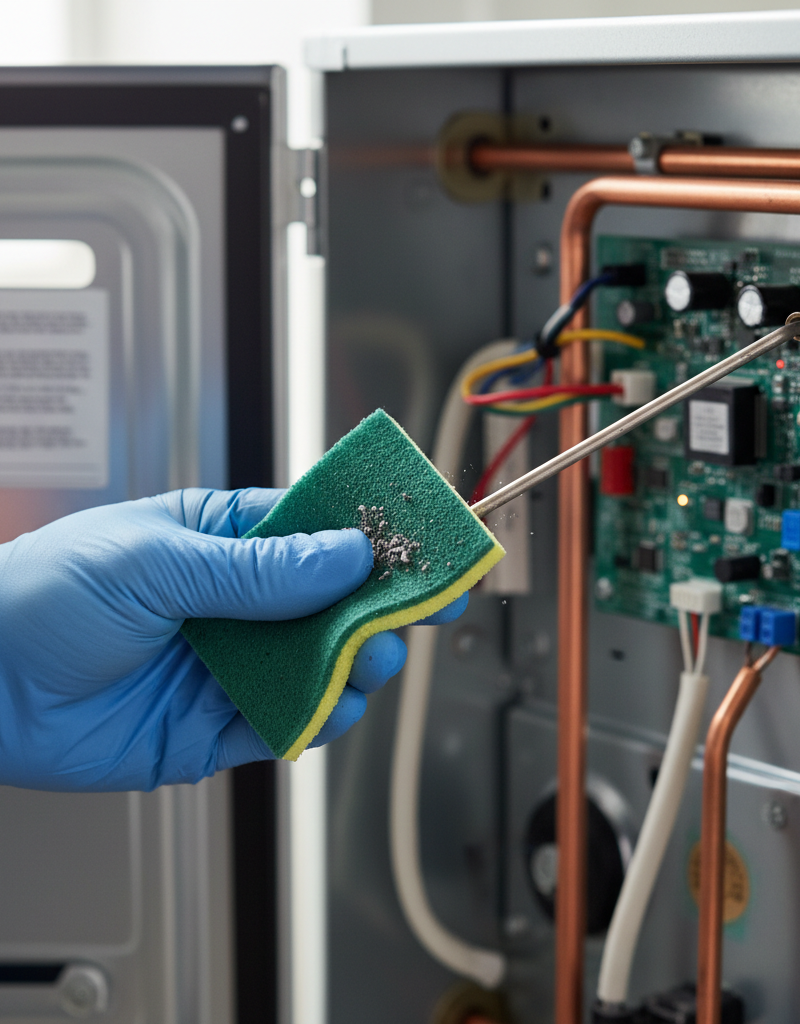
5. Clean the Flame Sensor — A dirty flame sensor can incorrectly detect no flame, causing the furnace to shut off.
SAFETY NOTE: Turn off power to the furnace at the service panel before beginning. The flame sensor is a thin, metallic rod typically located in the path of the burner flames, opposite the ignitor. Its job is to confirm that a flame has ignited. Over time, carbon buildup can insulate the sensor, preventing it from detecting the flame's presence, even when one exists. When the control board doesn't get a
Related Articles
Keep troubleshooting with these hand-picked guides from FixlyGuide:
- The Secret Reason Your Furnace Turns On and Off So Much (It's Not What You Think) — Short cycling strains your furnace and wastes energy. Learn the most common surprising causes and how to fix them to restore efficient heat…
- The 3 Hidden Reasons Your Furnace Short Cycles (and What to Do) — Discover the surprising reasons your furnace might be short cycling and learn actionable steps to diagnose and fix the problem, saving you…
- The 3 Hidden Reasons Your Furnace Short Cycles (and What to Do) — Furnace short cycling wastes energy and causes uneven heating. Learn the hidden reasons it happens and how to fix it yourself.
- Furnace Keeps Turning On and Off? Here's Why. — Is your furnace running in short, frequent bursts instead of steady cycles? This is called short cycling. Discover the common causes, like…
- Why Your Thermostat Lies: The Real Reason Your Home Won't Hit the Set Temperature — Discover why your thermostat struggles to reach the set temperature and learn actionable steps to diagnose and fix common HVAC issues.
- The Secret Reason Half Your Wall Outlet Dies (And It's Not What You Think) — Discover why only half of your electrical outlet might be working and how to diagnose and fix the common culprit, saving you from a costly…
Should you do this yourself?
Answer five quick questions before you start. Safety outranks savings every time.
Your experience with work like this
How high do you have to work?
Does the job involve any of these?
Will it need a permit?
Specialty tools
Free and instant. Educational guidance only — not a quote, inspection, or professional diagnosis.
Estimate your own project cost
National averages are a starting point. Enter your details for a range that fits your house.
HVAC replacement cost
- Equipment$2,200 – $3,800
- Installation labor$1,200 – $2,500
Always insist on a Manual J load calculation — sq-ft sizing is only a rough check. Federal heat-pump rebates may reduce cost significantly.
Educational estimate only — always confirm with written local bids.
What should this project cost?
Enter your project details for a realistic cost range before you call anyone.
Service calls and common repairs run $150–$900; full system replacement typically $6,000–$12,000.
- Regional adjustment
- National average
- Labor share (typical)
- ~$1,935
- Quotes to collect
- 3 written estimates
Educational estimate based on national averages — not a binding quote. Always confirm with written local estimates.
Fixly Project Decision Box
- DIY difficulty
- Advanced
- Estimated time
- Homeowner checks 20–30 minutes
- Cost level
- Moderate
Main tools / materials
- Clean air filter
- Garden hose for condenser coils
- Shop vac for the condensate line
When to stop and call a pro
- Burning smell, smoke, or a tripping breaker
- Refrigerant lines iced over or hissing
- Any work inside the sealed refrigerant circuit (EPA-licensed only)
- Gas smell near a furnace — leave and call the utility
Need professional help?
Find an HVAC Pro Near YouFrequently asked questions
How long should a furnace run in a cycle?+
A healthy furnace heating cycle typically lasts between 10 to 20 minutes, sometimes longer in very cold weather, to ensure even heat distribution throughout your home and efficient operation.
Is it bad for a furnace to short cycle?+
Yes, short cycling is detrimental to your furnace. It increases wear and tear on components, consumes more energy with frequent start-ups, and can lead to premature system failure and higher utility bills.
Can a dirty filter cause short cycling?+
Absolutely. A dirty air filter severely restricts airflow, causing the furnace's heat exchanger to overheat rapidly. To prevent damage, the high-limit switch activates, shutting off the furnace, leading to short cycling.
Can a bad thermostat cause short cycling?+
Yes, a faulty thermostat can cause short cycling. If its sensor is inaccurate, it might mistakenly signal that the desired temperature has been reached, or if the temperature differential is set too narrowly, it will trigger frequent, short heating cycles.
When should I call a professional for furnace short cycling?+
If you've checked the common issues like filters, vents, and thermostat settings, and your furnace continues to short cycle, it's time to call a professional. Issues could include an improperly sized furnace, severe ductwork problems, or internal component failures that require expert diagnosis and repair.
Discussion
Loading comments…