- Using the Wrong Tools. The anode rod hex head is 1-1/16 inches. An adjustable wrench or the wrong socket will round it off and make removal a pain in the rear. Spend the $10 on the right socket. You’ll be glad you did.
- Forgetting to Turn the Power/Gas Back On. Happens all the time. You finish the job, turn the water on, and then wonder why you’ve got no hot water an hour later. Make restoring power your last step.
- Not Using Teflon Tape. Those threads need a seal. Skip the plumber's tape and you’re begging for a slow leak right on top of the heater. No dice.
Plumbing · Water heater problem
| Project category | Plumbing |
|---|---|
| Problem type | Water heater problem |
| Trade required | Plumbing |
| Urgency | Urgent — within days |
| Safety risk | Moderate safety risk |
| DIY suitability | Pro recommended |
| Cost category | Moderate cost |
| Typical timeline | Diagnosis same day; replacement typically a half-day install |
| Contractor type | Licensed plumber |
Repair option
Element, thermostat, or thermocouple replacement on a tank still in good condition.
Replacement option
Full replacement once the tank leaks or passes roughly a decade of service.
Common causes
- Failed heating element or thermocouple
- Sediment buildup reducing capacity
- Tank corrosion at end of service life
Relevant tools:repair or replaceproject cost estimator
Published October 12, 2026Last updated October 12, 2026
Tools & materials you'll need
Affiliate linksAs an Amazon Associate FixlyGuide earns from qualifying purchases — at no extra cost to you. Prices and availability are accurate as of publication and subject to change.
The Problem
You turn on the hot water to wash your hands or start a shower, and right away you get smacked with that unmistakable rotten egg smell. Sulfur. Nasty stuff. You check the drain, but it’s clean. Cold water smells fine. It’s only the hot side, and it’s coming out of every faucet in the house. That’s not just annoying — it’s embarrassing, especially when you’ve got people over.
This isn’t some random quirk. That smell is hydrogen sulfide gas, and it’s coming from a chemical reaction happening inside your water heater tank. The gas itself, at those low levels, isn’t usually dangerous. But it does tell you something inside that heater needs attention.
How It Works
I like to think of a water heater tank as a steel box that’s always on defense. It stays full of water, so rust is always trying to move in. To slow that down, manufacturers put in a sacrificial anode rod. Simple part. Big job.
That rod is usually magnesium or aluminum, both of which are more reactive than the steel tank. Water acts like the electrolyte in the corrosion process. So the more reactive metal — the anode rod — gives itself up first and protects the steel lining, which is the cathode. That little rod can add years to the life of the heater. Without it, the tank can rust through a whole lot faster than folks expect.
The rotten egg smell kicks in when sulfate-reducing bacteria move into the tank. You’ll see that more often with well water, but I’ve seen it in city water too. Those bacteria “breathe” sulfate and spit out hydrogen sulfide gas. The standard magnesium anode rod can make it worse, because it feeds the whole mess and helps the gas build faster. So now you’ve got bacteria, sulfate in the water, and a reactive rod all working against you. That’s why the smell keeps showing up in the hot water.
Step-by-Step Fix
Ready to knock that smell out? You’re looking at replacing the anode rod and flushing the tank. It’s a pretty manageable DIY job, and most folks can knock it out in 1-2 hours.
Safety First: Before you touch anything, shut off the power or gas to the water heater. For electric units, flip the breaker off at the main panel. For gas units, turn the gas control knob on the heater to the "OFF" position.
-
Turn Off the Water — Find the cold-water inlet shutoff valve, usually a handle or knob on the pipe going into the top of the heater. Turn it clockwise until it stops. Then open a hot water faucet somewhere in the house — a tub works fine — to relieve pressure and let air in.
-
Locate the Anode Rod — Most anode rods sit on top of the water heater under a plastic cap. You’ll usually see a hex head, often the same size as the hot and cold water connections. Sometimes it’s built into the hot water outlet nipple. If you can’t spot it, crack open the owner’s manual.
-
Attempt to Loosen the Rod — This is the part that usually makes people swear. You’ll want a 1-1/16 inch socket and a long breaker bar or an impact wrench. These rods are torqued down hard and can be frozen in place from corrosion. Have somebody hold the tank steady so you don’t twist the plumbing. Give it some muscle. If it won’t budge, an impact wrench is your best friend here. If you feel like you’re about to snap the plumbing, stop and call a pro.
-
Drain Some Water — If the rod breaks loose, don’t yank it yet. It’s probably 3 to 4 feet long. Drain some water out first. Hook a garden hose to the drain valve at the bottom of the tank and run it to a floor drain or outside. Open the valve and let about 5-10 gallons out. That drops the water level enough to pull the old rod without making a mess.
-
Remove the Old Rod and Inspect It — Once you’ve drained enough, unscrew the old rod and pull it out. It’ll probably be pitted, eaten up, and maybe look like a string of metal beads on a wire core. If there’s hardly any metal left on that core wire, well — that thing’s toast and it’s been that way for a while.
-
Prepare the New Rod — Go with a Zinc-Aluminum alloy rod. That’s the one I use for this smell problem. If you’ve got low ceiling clearance, you can buy a flexible, chain-like anode rod and feed it in piece by piece. Wrap the threads with 3-4 wraps of Teflon tape (plumber's tape) in a clockwise direction. That gives you a watertight seal.
-
Install the New Rod — Thread it in by hand first so you don’t cross-thread the port. Once it’s hand-tight, use your socket and wrench to snug it another half to three-quarters of a turn. Don’t overdo it, but don’t leave it sloppy either.
-
Flush the Tank (Optional but Recommended) — Since you’re already in there, this is the time to flush the tank and get rid of stale smelly water and sediment. Close the drain valve, turn the cold water back on, and let the tank fill fully. Then, with the water supply on, reopen the drain valve for a full power flush for 10-15 minutes to stir up and wash out sediment. For a more detailed guide, see our article on flushing a water heater.
-
Refill the System — Close the drain valve for good. Turn the cold water shutoff valve back on all the way. Let the tank fill. You’ll know it’s full when water starts running steady from the hot water faucet you left open earlier. Let it run a few minutes to purge the air, then shut it off.
-
Check for Leaks — Look over the new anode rod and the drain valve for drips. If you see any, snug the connection a bit more.
-
Restore Power/Gas — Once you know the tank’s full and there aren’t any leaks, go ahead and turn the breaker back on or relight the pilot on the gas heater. The smell should fade out within a day or so as that new zinc rod gets to work.
Common Causes
So what’s really making that smell? Nine times out of ten, it’s one of these.
- Sulfate-Reducing Bacteria (SRBs): This is the big one 99% of the time. These harmless little bacteria live in the water and feed on sulfates. The warm, dark, low-oxygen tank is basically a five-star hotel for them. Their waste product is hydrogen sulfide gas, and that’s your rotten egg smell.
- Reactive Anode Rod: A standard anode rod is magnesium or aluminum. Those metals react hard with sulfates in the water, which gives the SRBs more to work with and ramps up the stinky gas production. A depleted rod — or one that’s just too reactive — can make the problem worse.
- Well Water: If your home runs on well water, you’re a lot more likely to deal with this. Wells often carry more dissolved sulfates and tend to have the kind of conditions bacteria like.
- A New or Rarely Used Water Heater: Sometimes you’ll smell it in a brand new heater while it’s settling in. Other times it shows up in a vacation home where nobody’s used the water in a long time. Stagnant water gives bacteria time to multiply and lets the gas concentrate.
- Water Softener Setting: Sometimes a softener can help create the right conditions for the bacteria. Softeners that use sodium to strip minerals can change the water chemistry enough to nudge the smell problem along.
Common Mistakes
This job’s pretty straightforward, but a few bad moves can turn it into a headache real quick.
- Mistaking the Smell for a Gas Leak. Natural gas and propane have an odorant called mercaptan added to them, and that can smell a lot like sulfur or rotten eggs. If you’ve got a gas water heater and you catch that smell, first figure out whether it’s coming from the water itself or the air around the heater. Fill a glass with hot water and carry it into another room. If the water smells, you’re dealing with plumbing. If the smell is in the air near the heater, leave the house immediately and call your gas company’s emergency line.
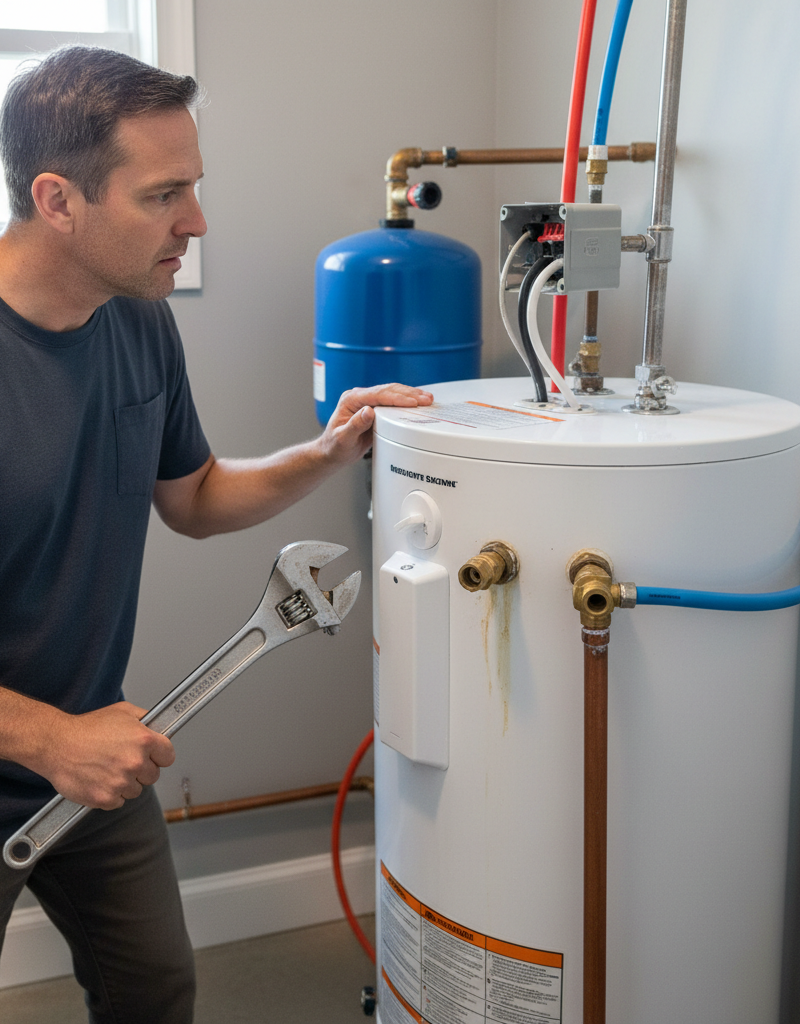
- Using the Wrong Tools. The anode rod hex head is 1-1/16 inches. An adjustable wrench or the wrong socket will round it off and make removal a pain in the rear. Spend the $10 on the right socket. You’ll be glad you did.
- Forgetting to Turn the Power/Gas Back On. Happens all the time. You finish the job, turn the water on, and then wonder why you’ve got no hot water an hour later. Make restoring power your last step.
- Not Using Teflon Tape. Those threads need a seal. Skip the plumber's tape and you’re begging for a slow leak right on top of the heater. No dice.
- Thinking Chlorine Bleach is a Permanent Fix. I’ve seen people try this after reading something online. Bleach might knock the smell down for a bit, but it’s a band-aid at best. The bacteria come back. Worse, bleach is rough on the steel tank and the metal parts inside, and it can speed up failure. Just replace the rod; that’s the real fix.
Cost & Time Breakdown
Here’s a straight look at what you’re likely to spend in time and money to get this done.
| Task | DIY Cost | Pro Cost | Time |
|---|---|---|---|
| Anode Rod Replacement | $30 - $60 (for a zinc-aluminum rod) | $200 - $350 | 1-2 hours |
| Required Tools | $25 - $50 (if you need a socket/wrench) | Included in labor | - |
| Full Tank Flush | $0 (just water) | $150 - $250 (if done as a separate service) | 30-60 minutes |
| Complete Job (Rod + Flush) | $30 - $110 | $250 - $450 | 1.5 - 3 hours |
Tips & Prevention
Once you’ve beat the smell, how do you keep it from coming back?
- Always Use a Zinc-Aluminum Anode Rod. When it’s time to replace the rod again — every 3-5 years as part of normal maintenance — stick with a zinc-aluminum alloy rod. That’s the best shot you’ve got at stopping the rotten egg smell before it starts.
- Flush Your Tank Annually. I tell folks to flush the heater once a year. It knocks out sediment and keeps bacterial colonies from getting established. Around North Texas, that matters even more because our hard water leaves behind a lot of scale and sludge.
- Check the Anode Rod Every 2-3 Years. You don’t have to replace it every time, but you should take a look. If it’s more than 75% corroded, swap it out. A healthy anode rod helps the tank live a long, clean life.
- Don't Turn the Temperature Down Too Low. Saving energy is great, sure, but if you drop the water heater below 120°F, you’re rolling out the welcome mat for bacteria. Most manufacturers like 120-125°F — hot enough to discourage growth, safe enough for everyday use.
When to Call a Professional
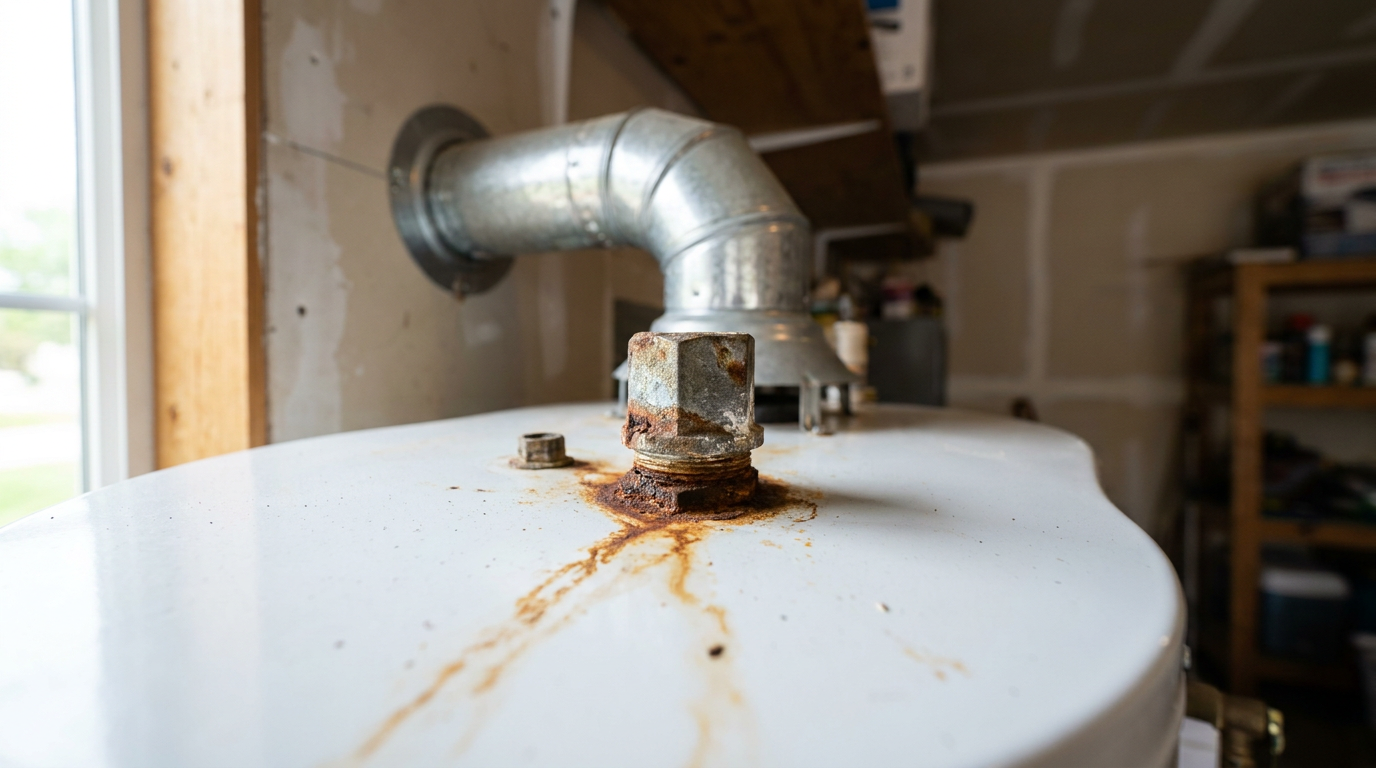
This is a pretty DIY-friendly project, but there are times you should set the wrench down and call a licensed plumber. If the anode rod is seized solid and you can’t crack it loose with a breaker bar or impact wrench, a pro’s got the gear to get it out without wrecking the tank. Same deal if you see heavy rust or corrosion on the top of the tank, or if the plumbing connections look fragile or already weeping. I pulled a water heater in Frisco last month that had exactly this leak, and the top fitting was one hard twist away from turning into a flood. A stuck rod or broken pipe can turn a $50 fix into a multi-thousand-dollar mess in a hurry. When in doubt, call for backup.
Related Articles
Keep troubleshooting with these hand-picked guides from FixlyGuide:
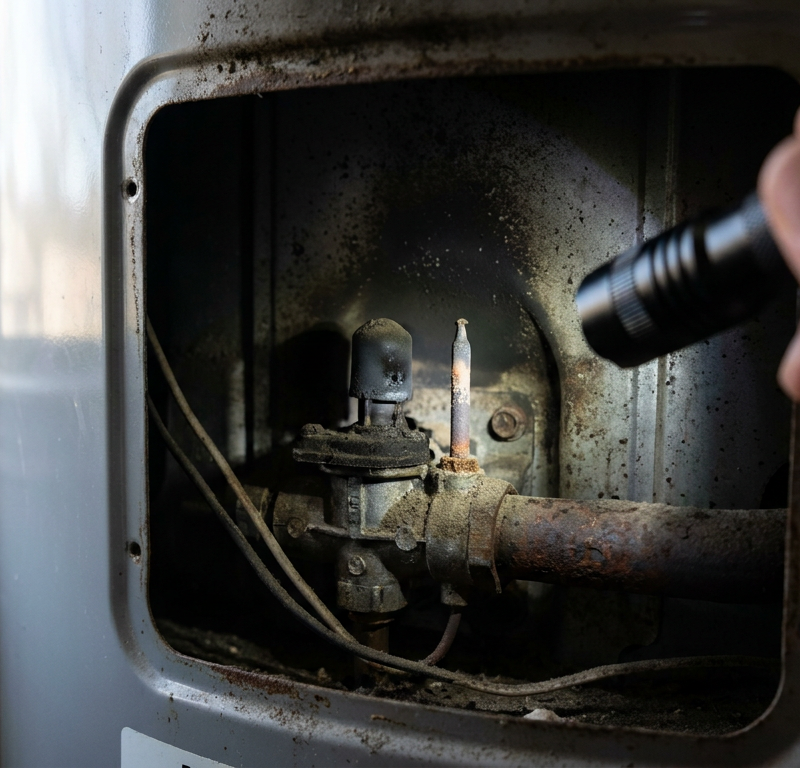
- Water Heater Pilot Light Won't Stay Lit? 5 Causes and How to Fix It — Your water heater's pilot light won't stay lit? It's usually a dirty or failing thermocouple. This guide walks you through the five most co…
- Why Your Hot Water Only Lasts 5 Minutes (And How to Fix It FAST) — If your hot showers are cut short, it's likely a simple issue with your water heater's dip tube, heating elements, or thermostat. Most home…
- Your shower's cold? 3 sneaky reasons your hot water vanishes — Tired of your hot shower turning lukewarm unexpectedly? We uncover the three most common culprits, from a hidden part in your water heater…
- That Annoying Water Heater Popping Sound? It's Trying to Tell You This One Thing — A popping water heater usually signals a common issue: sediment buildup. Learn why it happens and how to fix it with a simple flush.
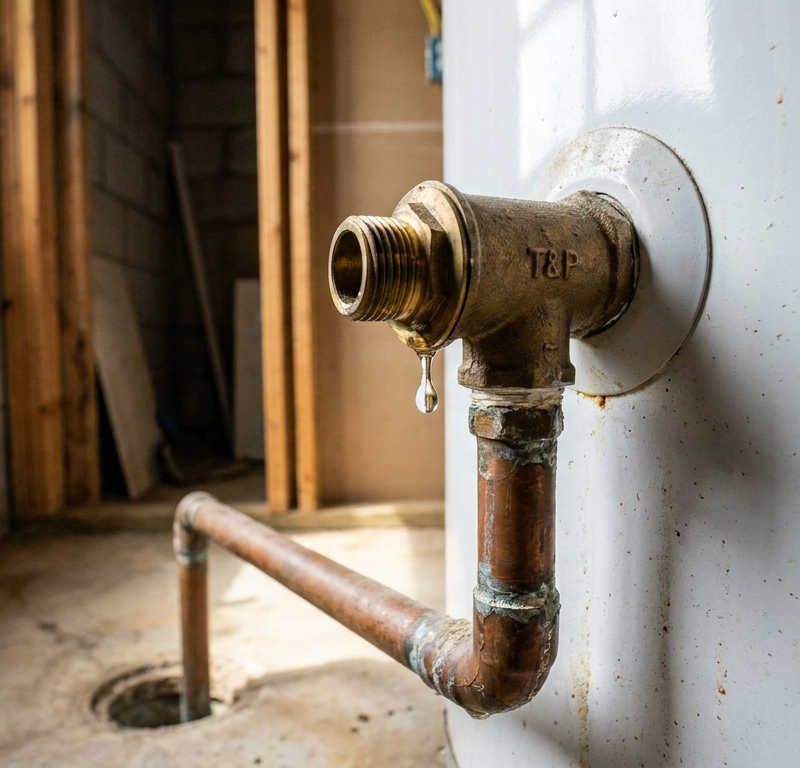
- Water Heater T&P Valve Leaking? 3 Causes and a 30-Minute Fix — A leaking T&P valve on your water heater is an urgent warning sign. Here are the three main causes and the steps to diagnose and replace it…
- The Secret to Endless Hot Showers? It's Not Your Water Heater's Age — Inconsistent hot water or no hot water at all often points to a single, often overlooked culprit: the thermostat. Understanding its role is…
Should you do this yourself?
Answer five quick questions before you start. Safety outranks savings every time.
Your experience with work like this
How high do you have to work?
Does the job involve any of these?
Will it need a permit?
Specialty tools
Free and instant. Educational guidance only — not a quote, inspection, or professional diagnosis.
Estimate your own project cost
National averages are a starting point. Enter your details for a range that fits your house.
Water heater replacement cost
- Unit$550 – $1,400
- Installation labor$350 – $900
- Removal & disposal$60 – $150
- Permit & inspection$50 – $200
These estimates reflect typical US installed costs. Get 2–3 written quotes before committing.
Educational estimate only — always confirm with written local bids.
What should this project cost?
Enter your project details for a realistic cost range before you call anyone.
Common repairs run $150–$650; repipes and water-heater replacements reach $1,500–$4,500.
- Regional adjustment
- National average
- Labor share (typical)
- ~$754
- Quotes to collect
- 3 written estimates
Educational estimate based on national averages — not a binding quote. Always confirm with written local estimates.
Fixly Project Decision Box
- DIY difficulty
- Moderate
- Estimated time
- 30 minutes – half a day
- Cost level
- Moderate
Main tools / materials
- Adjustable wrench
- Plunger or drain auger
- Bucket and towels
- Thread tape
When to stop and call a pro
- Water you cannot shut off at the fixture or main
- Sewage backing up into more than one fixture
- Water near electrical panels or outlets
- Gas water heater work beyond relighting a pilot
Need professional help?
Get a Licensed PlumberBefore you start
Check the difficulty, permits, and safety risk — then decide whether to call a pro.
Free, no signup required. Estimates are educational guidance, not a quote or an inspection.
Get the print-ready PDF of this guide
A clean, ad-free, printable version you can keep on your phone or pin to the workshop wall. Free with a FixlyGuide account.
- Print-optimized layout
- Tools, materials & every step included
- Saved to your account
Frequently asked questions
Why does only my hot water smell like rotten eggs, not the cold?+
This happens because the smell is generated inside your water heater. A specific bacteria reacts with the anode rod in the warm tank to create smelly hydrogen sulfide gas, which then dissolves into the hot water.
Is the rotten egg smell from my hot water harmful?+
No, the hydrogen sulfide gas produced in a water heater is at very low concentrations and is not dangerous to your health. However, it can be corrosive to plumbing fixtures over time and is very unpleasant.
How long does it take for the rotten egg smell to go away after replacing the anode rod?+
After replacing a standard magnesium rod with a zinc-aluminum one and flushing the tank, the smell should be noticeably better within a few hours and completely gone within a day or two as the new rod neutralizes the reaction.
Can I just remove my anode rod to stop the smell?+
You should never remove the anode rod without replacing it. It's a critical safety component that protects your tank from rusting through. Removing it will void your warranty and cause your water heater to fail prematurely.
Will flushing my water heater get rid of the rotten egg smell?+
Flushing alone will not solve the problem permanently. While it will temporarily remove the smelly water, the bacteria and the reactive anode rod are still there, so the smell will come back. You must replace the anode rod with a zinc-aluminum one.
What is a zinc-aluminum anode rod and how does it work?+
It's a special type of sacrificial anode rod that contains zinc. The zinc counteracts the chemical reaction that the bacteria use to produce hydrogen sulfide gas, effectively stopping the smell at its source.
My water heater is brand new. Why does the hot water already smell?+
This can happen if you have a high concentration of sulfates and bacteria in your water supply. The brand new, highly reactive magnesium anode rod in your new heater can kickstart the smell production very quickly. The fix is the same: replace it with a zinc-aluminum rod.
Is it hard to replace a water heater anode rod?+
The most difficult part is often just breaking the old rod loose, as it can be very tight or corroded. With the right tool (a 1-1/16" socket and a breaker bar or impact wrench), the rest of the job is quite straightforward for a DIYer.
Discussion
Loading comments…