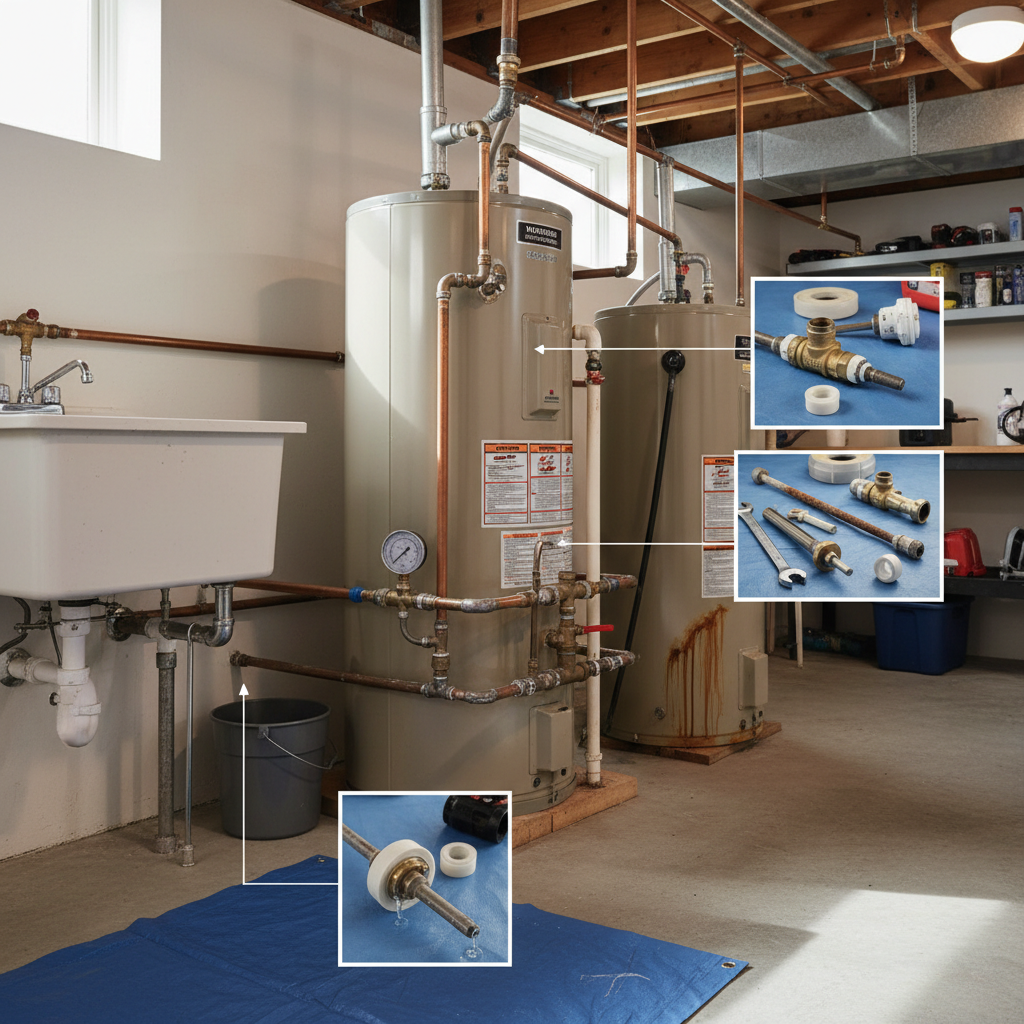
- Flush sediment — drain a few gallons from the bottom drain valve into a bucket or hose until it runs clear. Sediment insulates the burner and makes the unit work harder.
- Test the T&P relief valve — lift the lever briefly and confirm it discharges and reseats. If it drips afterward, it needs attention.
- Check the anode rod every few years. It corrodes so the tank doesn't.
- Set the thermostat to about 120°F — hot enough for use, low enough to reduce scald risk and sediment buildup.
- Keep the area clear — nothing flammable near a gas unit, and clear access to the shutoff.
Plumbing · Water heater problem
| Project category | Plumbing |
|---|---|
| Problem type | Water heater problem |
| Trade required | Plumbing |
| Urgency | Urgent — within days |
| Safety risk | Moderate safety risk |
| DIY suitability | Pro recommended |
| Cost category | Moderate cost |
| Typical timeline | Diagnosis same day; replacement typically a half-day install |
| Contractor type | Licensed plumber |
Repair option
Element, thermostat, or thermocouple replacement on a tank still in good condition.
Replacement option
Full replacement once the tank leaks or passes roughly a decade of service.
Common causes
- Failed heating element or thermocouple
- Sediment buildup reducing capacity
- Tank corrosion at end of service life
Relevant tools:repair or replaceproject cost estimator
Published September 4, 2026Last updated September 4, 2026
Tools & materials you'll need
Affiliate linksNo materials required.
As an Amazon Associate FixlyGuide earns from qualifying purchases — at no extra cost to you. Prices and availability are accurate as of publication and subject to change.
Quick Answer
A water heater is a simple appliance with a short list of failure points: the heating source, the controls, the anode rod, the relief valve, and the tank itself. Everything but the tank is generally repairable. A tank that is leaking from the body is not — and it should not be nursed along, because it holds and handles a lot of water.
The Two Common Types
- Tank (storage) — 40 to 80 gallons kept hot, gas or electric. Cheaper to install, finite hot water, larger footprint.
- Tankless (on demand) — heats as water flows. Higher install cost, continuous hot water, needs annual descaling in hard water and correct gas or electrical capacity.
Neither is universally better. The right answer depends on household demand, fuel type, existing venting and capacity, and how long you plan to stay.
Annual Maintenance
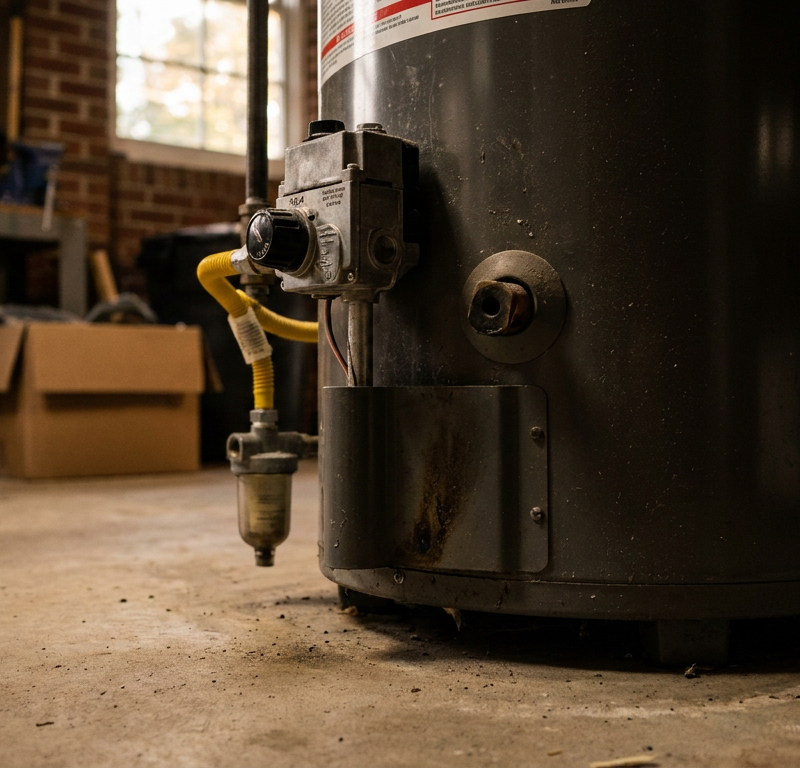
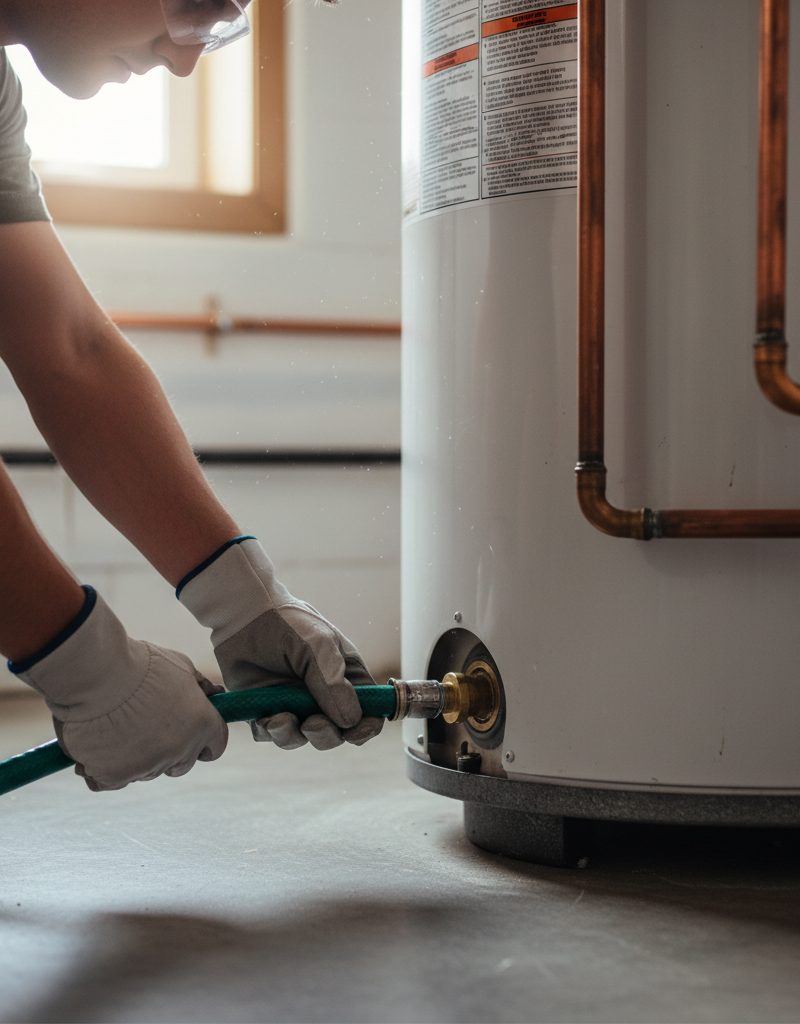
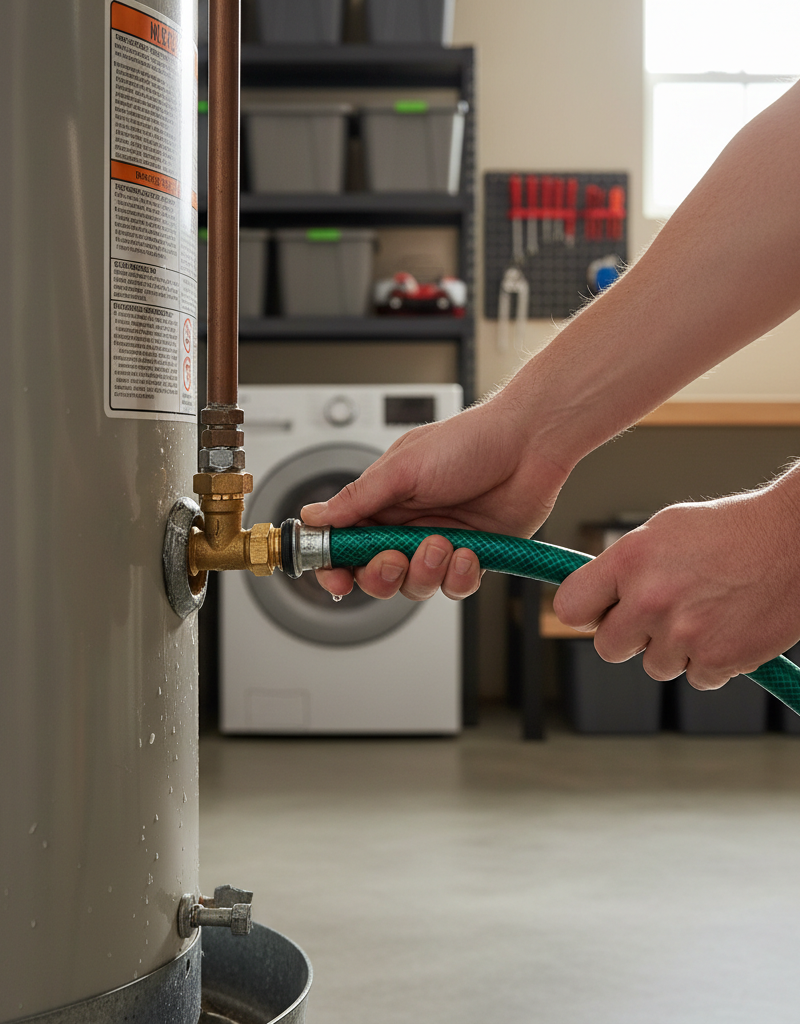
- Flush sediment — drain a few gallons from the bottom drain valve into a bucket or hose until it runs clear. Sediment insulates the burner and makes the unit work harder.
- Test the T&P relief valve — lift the lever briefly and confirm it discharges and reseats. If it drips afterward, it needs attention.
- Check the anode rod every few years. It corrodes so the tank doesn't.
- Set the thermostat to about 120°F — hot enough for use, low enough to reduce scald risk and sediment buildup.
- Keep the area clear — nothing flammable near a gas unit, and clear access to the shutoff.
Symptoms and What They Usually Point To
| Symptom | Common causes | Urgency |
|---|---|---|
| No hot water at all | Pilot/igniter, thermostat, heating element, breaker | Same day |
| Hot water runs out quickly | Sediment, failed lower element, undersized unit | Schedule |
| Rumbling or popping sounds | Sediment on the tank bottom | Flush, then evaluate |
| Rusty or metallic hot water | Anode rod spent or tank corroding | Evaluate now |
| Water pooling under the tank | Tank failure or fitting leak | Shut off water and fuel, call |
| Relief valve discharging | Overpressure or overtemperature | Call now |
| Gas smell | Possible gas leak | Leave and call the gas utility now |
Repair or Replace
Repair generally makes sense when the tank is sound and the failure is a thermostat, element, igniter, valve, or fitting. Replacement generally makes sense when the tank body leaks, corrosion is advanced, the unit is well past typical service life with repeated repairs, or capacity no longer matches the household.
Ask any plumber quoting a replacement to identify where the leak originates — tank body versus fitting — because the answer decides the project.
When to Stop and Call a Pro
Gas connections, venting, and combustion air are licensed work, as is electrical work on the unit. Flushing, thermostat setting, and visual checks are safely yours. If you see water on the floor, close the cold inlet valve and shut off the fuel or breaker before calling.
Find a Pro Through Fixly Guide
If the next step is a professional, don't start with a phone book. Start with a diagnosis and a short list.
- Find a local pro — pick your trade and ZIP code to see vetted contractors serving your area.
- DIY or hire a pro? — a two-minute check that tells you which jobs are safe to handle yourself.
- Repair or replace? 12 expensive home decisions — how to judge a big-ticket quote.
- Home problem guides — start with the symptom, get likely causes and safety guidance.
- 15 house problems you shouldn't ignore — warning signs homeowners get used to.
Fixly Guide provides educational guidance only. Nothing here is a professional diagnosis or an inspection.
Repair or replace your water heater?
Plug in four numbers and see which choice holds up financially.
Free and instant. Educational guidance only — not a quote, inspection, or professional diagnosis.
Estimate your own project cost
National averages are a starting point. Enter your details for a range that fits your house.
Water heater replacement cost
- Unit$550 – $1,400
- Installation labor$350 – $900
- Removal & disposal$60 – $150
- Permit & inspection$50 – $200
These estimates reflect typical US installed costs. Get 2–3 written quotes before committing.
Educational estimate only — always confirm with written local bids.
What should this project cost?
Enter your project details for a realistic cost range before you call anyone.
Common repairs run $150–$650; repipes and water-heater replacements reach $1,500–$4,500.
- Regional adjustment
- National average
- Labor share (typical)
- ~$754
- Quotes to collect
- 3 written estimates
Educational estimate based on national averages — not a binding quote. Always confirm with written local estimates.
Fixly Project Decision Box
- DIY difficulty
- Moderate
- Estimated time
- 30 minutes – half a day
- Cost level
- Moderate
Main tools / materials
- Adjustable wrench
- Plunger or drain auger
- Bucket and towels
- Thread tape
When to stop and call a pro
- Water you cannot shut off at the fixture or main
- Sewage backing up into more than one fixture
- Water near electrical panels or outlets
- Gas water heater work beyond relighting a pilot
Need professional help?
Get a Licensed PlumberRepair or replace?
Run the age, cost ratio, and repair history through the calculator before you commit.
Free, no signup required. Estimates are educational guidance, not a quote or an inspection.
Frequently asked questions
How long does a water heater last?+
Service life varies with water quality, maintenance, and equipment type. Rather than relying on age alone, judge by condition, corrosion, repair history and whether the tank itself is sound.
Why do I have no hot water?+
On gas units, the pilot, igniter, thermocouple, or gas valve; on electric units, a tripped breaker, a failed element, or a thermostat. Most are repairable components rather than reasons to replace the unit.
Is a leaking water heater an emergency?+
Treat it as one. Shut off the cold water inlet and the fuel or breaker, then call a plumber. Water pooling from the tank body generally means the tank has failed.
Should I switch to tankless?+
It depends on household demand, fuel type, venting, and electrical or gas capacity. Get an installer to confirm the house can support it before comparing prices.
Discussion
Loading comments…