- Tripped Breaker or Blown Fuse: The 1 issue on electric heaters. A power surge or a failing part can trip it.
- Pilot Light Out: The 1 issue on gas heaters. A draft, a dirty orifice, or a weak thermocouple can knock it out.
- Failed Heating Element: Very common in electric models, especially if sediment’s been working it over or it’s just old.
- Bad Thermocouple: A frequent, fairly cheap fix on gas heaters that keeps the pilot from staying lit.
- Incorrect Thermostat Setting: Somebody may have dialed it down to "vacation" or just set it too low by mistake.
Plumbing · Water heater problem
| Project category | Plumbing |
|---|---|
| Problem type | Water heater problem |
| Trade required | Plumbing |
| Urgency | Urgent — within days |
| Safety risk | Moderate safety risk |
| DIY suitability | Pro recommended |
| Cost category | Moderate cost |
| Typical timeline | Diagnosis same day; replacement typically a half-day install |
| Contractor type | Licensed plumber |
Repair option
Element, thermostat, or thermocouple replacement on a tank still in good condition.
Replacement option
Full replacement once the tank leaks or passes roughly a decade of service.
Common causes
- Failed heating element or thermocouple
- Sediment buildup reducing capacity
- Tank corrosion at end of service life
Relevant tools:repair or replaceproject cost estimator
Published October 16, 2026Last updated October 16, 2026
Tools & materials you'll need
Affiliate linksAs an Amazon Associate FixlyGuide earns from qualifying purchases — at no extra cost to you. Prices and availability are accurate as of publication and subject to change.
Quick Answer
No hot water usually comes down to one of two things: you’ve lost power, or the heater’s got a bad part inside. On an electric water heater, I’d start with a tripped breaker or the reset button on the unit. On a gas water heater, check whether the pilot light’s out. If power isn’t the issue, you’re probably looking at a bad thermostat, a failed heating element on electric units, or a thermocouple that’s quit on gas units.
The Problem
You turn the shower knob to "H" and... nothing. Just cold water. Or maybe you get a quick burst of warm water and then it goes icy on you. When a water heater stops making hot water altogether, that’s not a little annoyance — it throws your whole day off. A slow drip or a rattly noise is one thing. This is a hard stop. No hot shower, dishes don’t get clean, laundry’s a pain, and nobody’s happy.
The good news? A lot of the time, it’s a fix you can handle yourself in under an hour. The trick is figuring out why it quit heating. It usually falls into one of two buckets: either the heater isn’t getting the power it needs — electricity or gas — or one of the parts that actually makes the heat has failed.
How It Works
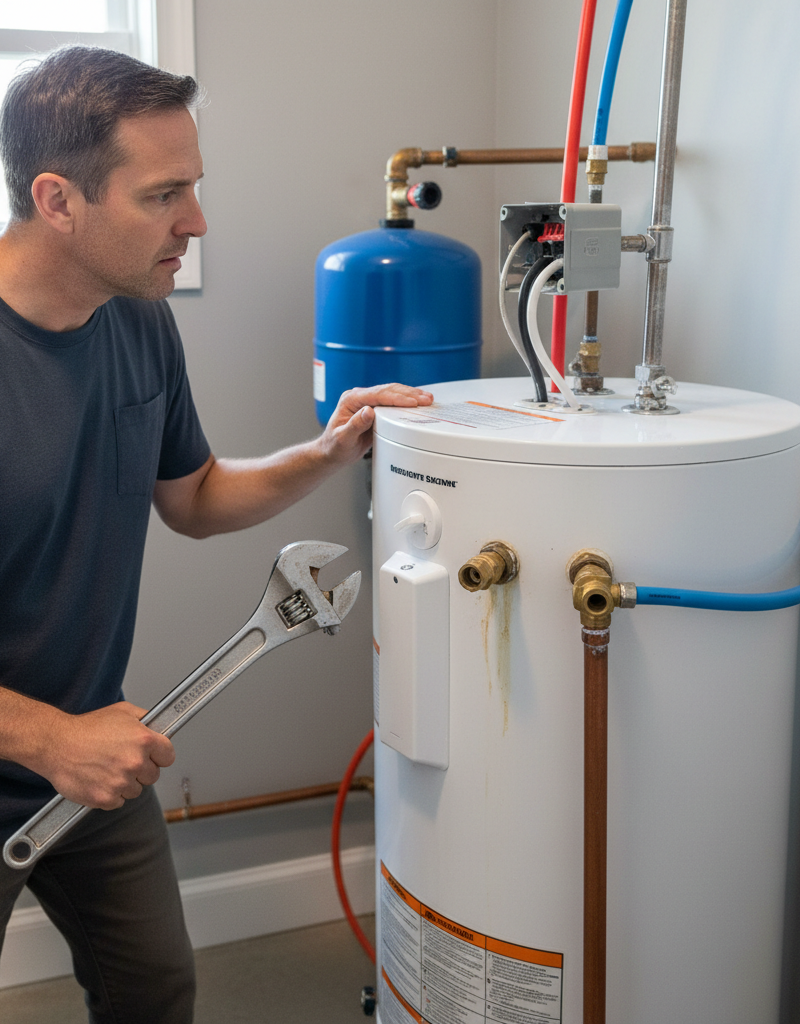
Your water heater’s a pretty plain-Jane machine. You’ve got a tank, insulation around it, a water inlet, a water outlet, and some kind of heating setup. For an electric water heater, that setup is one or two heating elements, kind of like the coils in an oven, plus thermostats that tell them what to do. When you use hot water, cold water comes in at the bottom of the tank, the thermostat notices the temp drop, and it sends power to the elements. Those elements sit in the water and heat up to whatever temperature the thermostat’s set for, usually between 120°F and 140°F. Once the water gets there, the thermostat shuts the power off.
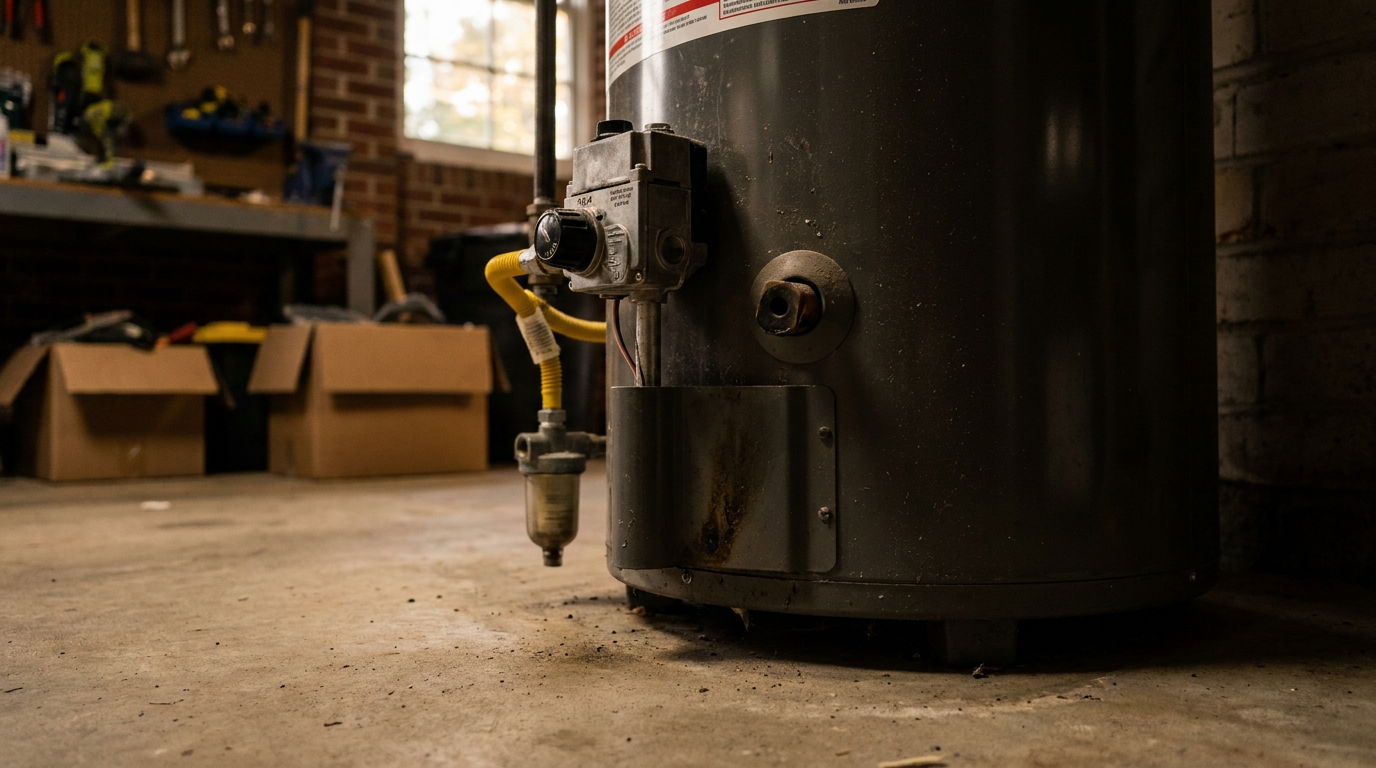
A gas water heater works the same basic way, just with a different heat source. There’s a gas burner at the bottom of the tank. When the thermostat calls for heat, it opens the gas valve, and a pilot light — or an electronic igniter — lights the burner. That flame heats the bottom of the tank, and the water gets hot from there. The exhaust goes up through a flue that runs through the center of the tank and out of the house. There’s also a safety part called a thermocouple that keeps an eye on the pilot flame; if the flame goes out, it cools off and shuts the gas off so you don’t end up with a gas leak. Know which kind you’ve got, and you’re halfway there.
Step-by-Step Fix
I always start with the easy stuff first. Don’t skip around. You’ll just make more work for yourself.
1. Check the Power Source (Electric & Gas)
- For electric heaters: Head to your main electrical panel and find the breaker marked "Water Heater." It’s usually a double-pole breaker — two switches tied together by a bar. If it’s sitting in the middle or "off" position, flip it all the way to "off" and then back to "on." Breakers can trip and still look half-normal, so don’t trust a quick glance.
- For gas heaters: Make sure the gas shutoff valve on the pipe going into the heater is open. The handle should run parallel with the pipe. Then check a couple other gas appliances, like the stove or furnace, to make sure you’ve actually got gas service. If those work, the problem’s staying right at the water heater.
2. Look for a Reset Button (Electric)
- A lot of electric water heaters have a high-temperature cutoff switch — the reset button. It trips if the water gets too hot. You’ll usually find it behind a little removable panel on the side of the tank, close to the upper thermostat. Safety First: shut the power off at the breaker before you pull that panel. Once you’ve got it open, look for a red button. Push it firmly. If it clicks, it reset. Put the panel back on, turn the power back on, and give it 30-60 minutes to see if you’ve got hot water again.
3. Check the Pilot Light (Gas)
- Look for the access opening or little viewing window at the bottom of the gas water heater. You want to see a small, steady blue flame — that’s the pilot. If it’s out, there’s your culprit. Follow the instructions on the side of the tank to relight it. Usually that means turning the gas control knob to "PILOT," holding down a button to let gas flow, and lighting it with a long lighter or the built-in igniter. Once it’s lit, keep holding that button for about 60 seconds so the thermocouple gets hot enough to keep the valve open.
4. Test the Thermocouple (Gas)
- If the pilot won’t stay lit after you let go of the button, I’d put my money on a bad thermocouple. That’s a very common failure. It’s a copper probe that sits in the pilot flame. When it goes bad, it can’t tell the gas valve to stay open. Swapping one out is a pretty common DIY job, but you’re working around gas and the burner assembly, so if that makes you nervous, call a plumber and call it a day.
5. Test the Thermostats (Electric)
- If the reset button didn’t do the trick, a thermostat may be bad. With the power OFF, grab a multimeter and set it to resistance, or ohms. Disconnect one wire from each thermostat terminal — take a picture first so you don’t wonder where it all goes later. Touch the meter probes to the two screw terminals on the thermostat. You should get a reading close to zero ohms, which shows continuity. Then test the high-limit reset the same way. If either one reads infinite resistance, that part’s open and needs replacing. They’re cheap, usually under $25.
6. Test the Heating Elements (Electric)
- This is the one I see a lot once the power issue gets ruled out. With the power OFF, pull the wires off the screws on the heating element. Set the multimeter to the lowest resistance setting, like RX1. Touch the probes to the element’s screw terminals. A good element should read between 10 and 30 ohms. If it reads infinite resistance, that thing’s toast. Also check for a grounded element by touching one probe to a screw terminal and the other to the metal tank. You want an infinite reading there too. Anything else means the element has shorted and needs to go.
7. Check for a Broken Dip Tube
- The dip tube is that long plastic pipe that sends cold water down to the bottom of the tank where it can get heated. Sometimes those things crack, break, or just fall apart. When that happens, cold water dumps in at the top, mixes right away with the hot water, and goes straight out to your faucet. You’ll get lukewarm water at best, and it’ll run out fast. I pulled a water heater in Frisco last month that had exactly this issue — little plastic bits were clogging the faucet aerators. Replacing the tube means disconnecting the cold water inlet and threading in a new one.
8. Inspect the Gas Control Valve (Gas)
- If the pilot’s lit but the main burner never kicks on when the water cools, the gas control valve — the box with the temp dial and pilot knob — may have failed. That’s a pricier part and a more involved repair. With the thermostat turned up high, you ought to hear a whoosh or see the main burner light after you run hot water for a few minutes. If you hear a click but nothing ignites, or there’s dead silence, the valve’s probably the problem. This one’s usually a pro job because of the gas line connection.
9. Is the Tank Full of Sediment?
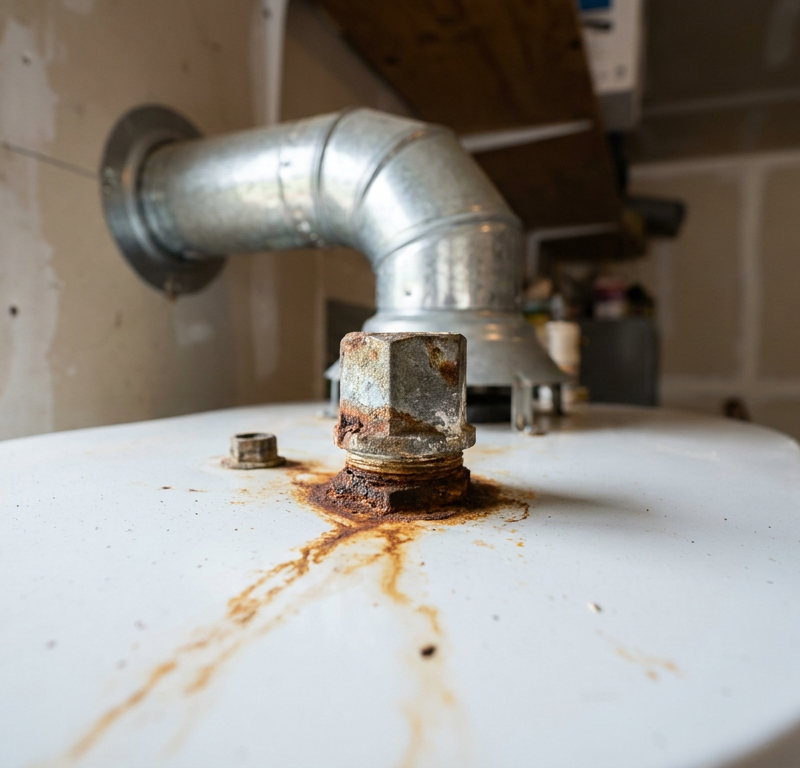
- In places with hard water, like North Texas, sediment — calcium and magnesium scale — can pile up so thick at the bottom of the tank that it basically insulates the water from the heat source. On a gas heater, that can overheat the bottom of the tank and do permanent damage. On an electric heater, it can bury the lower element and burn it out. If you hear popping or rumbling, that’s a big clue. A full flush might buy you some time, but if the buildup’s bad enough, the heater may be too far gone.
Common Causes
- Tripped Breaker or Blown Fuse: The #1 issue on electric heaters. A power surge or a failing part can trip it.
- Pilot Light Out: The #1 issue on gas heaters. A draft, a dirty orifice, or a weak thermocouple can knock it out.
- Failed Heating Element: Very common in electric models, especially if sediment’s been working it over or it’s just old.
- Bad Thermocouple: A frequent, fairly cheap fix on gas heaters that keeps the pilot from staying lit.
- Incorrect Thermostat Setting: Somebody may have dialed it down to "vacation" or just set it too low by mistake.
- Failed Thermostat: Not as common as a bad element, but it can stop sending power where it needs to go.
- Tripped High-Temperature Cutoff: A safety feature that usually means something else went sideways, often a thermostat stuck on and overheating the water.
Common Mistakes
- Not turning off the power: Never mess with an electric water heater without killing power at the breaker. 240 volts will ruin your day fast.
- Not turning off the gas: On a gas heater, shut the gas valve to the "off" position before you touch the burner assembly or thermocouple.
- Mismatched parts: If you’re swapping a thermostat or element, bring the old one with you so you get an exact match. Saves a headache.
- Forgetting to refill the tank: After replacing an electric heating element, you MUST fill the whole tank with water before you turn the power back on. Dry firing a new element will wreck it in seconds.
- Overtightening connections: Thermocouple and gas fittings need to be snug, not gorilla-tight. You can strip the soft brass threads if you get carried away.
- Ignoring a gas smell: If you smell gas at any point, stop right there. Shut off the main gas supply to the house, leave the building, and call your gas utility or a licensed plumber from a safe spot.
Cost & Time Breakdown
| Task | DIY Cost | Pro Cost | Time |
|---|---|---|---|
| Reset breaker / pilot light | $0 | $100–$150 (trip fee) | 5 minutes |
| Replace Thermocouple (Gas) | $10–$20 | $150–$250 | 30-45 minutes |
| Replace Heating Element (Elec) | $15–$50 | $200–$350 | 1-2 hours |
| Replace Thermostat (Elec) | $20–$40 | $180–$300 | 1 hour |
| Replace Gas Control Valve | $150–$300 (part) | $400–$600+ | Pro job |
| Full Water Heater Replacement | $500–$1,500+ | $1,200–$3,000+ | 4-8 hours |
Tips & Prevention
- Flush your tank annually. This is the best thing you can do to keep sediment from building up, which is the #1 killer of water heaters. It keeps the unit running efficiently and helps keep elements from burning out.
- Test the T&P valve. Once a year, test the temperature and pressure relief valve to make sure it hasn’t seized up. Put a bucket under the discharge pipe and pull the lever. You should get a burst of hot water. If it only drips or won’t reseal, replace it.
- Check the anode rod. Every 2-3 years, take a look at the anode rod. That “sacrificial” rod is supposed to corrode instead of your tank. If it’s thinner than a pencil or covered in heavy scale, swap it out. A $30 anode rod can add years to the tank.
- Set the temperature to 120°F. Most heaters come set at 140°F, but that bumps up sediment buildup and raises the scalding risk. 120°F is plenty for most homes and usually gives the heater an easier life.
- Know where your shutoffs are. Everybody in the house ought to know where the water, gas, and electrical shutoffs are for the water heater. If something goes sideways, you won’t want to go hunting around for them.
When to Call a Professional
A lot of these fixes are fair game for a determined DIYer, but some signs mean you should stop and bring in a licensed plumber right away. If you see water pooling around the base of the heater, the tank itself has probably rusted through and could fail any minute — shut off the water supply to the tank now. If you smell gas, don’t touch any electrical switches or anything else that could spark, and call for emergency help. And if you’ve gone through the electrical tests with a multimeter and the results still don’t make sense, or you’re not confident in the repair, that’s a good time to hand it off. A pro can figure it out safely and a whole lot faster than guessing.
Related Articles
Keep troubleshooting with these hand-picked guides from FixlyGuide:
- Why Your Hot Water Only Lasts 5 Minutes (And How to Fix It FAST) — If your hot showers are cut short, it's likely a simple issue with your water heater's dip tube, heating elements, or thermostat. Most home…
- Your shower's cold? 3 sneaky reasons your hot water vanishes — Tired of your hot shower turning lukewarm unexpectedly? We uncover the three most common culprits, from a hidden part in your water heater…
- Water Heater T&P Valve Leaking? 3 Causes and a 30-Minute Fix — A leaking T&P valve on your water heater is an urgent warning sign. Here are the three main causes and the steps to diagnose and replace it…
- That Annoying Water Heater Popping Sound? It's Trying to Tell You This One Thing — A popping water heater usually signals a common issue: sediment buildup. Learn why it happens and how to fix it with a simple flush.
- That 5-Minute Shower? Your Water Heater's Secret Problem — Your hot water is likely running out quickly due to a broken internal dip tube, a massive buildup of mineral sediment, or a failing heating…
- The Secret to Endless Hot Showers? It's Not Your Water Heater's Age — Inconsistent hot water or no hot water at all often points to a single, often overlooked culprit: the thermostat. Understanding its role is…
Should you do this yourself?
Answer five quick questions before you start. Safety outranks savings every time.
Your experience with work like this
How high do you have to work?
Does the job involve any of these?
Will it need a permit?
Specialty tools
Free and instant. Educational guidance only — not a quote, inspection, or professional diagnosis.
Estimate your own project cost
National averages are a starting point. Enter your details for a range that fits your house.
Water heater replacement cost
- Unit$550 – $1,400
- Installation labor$350 – $900
- Removal & disposal$60 – $150
- Permit & inspection$50 – $200
These estimates reflect typical US installed costs. Get 2–3 written quotes before committing.
Educational estimate only — always confirm with written local bids.
What should this project cost?
Enter your project details for a realistic cost range before you call anyone.
Common repairs run $150–$650; repipes and water-heater replacements reach $1,500–$4,500.
- Regional adjustment
- National average
- Labor share (typical)
- ~$754
- Quotes to collect
- 3 written estimates
Educational estimate based on national averages — not a binding quote. Always confirm with written local estimates.
Fixly Project Decision Box
- DIY difficulty
- Moderate
- Estimated time
- 30 minutes – half a day
- Cost level
- Moderate
Main tools / materials
- Adjustable wrench
- Plunger or drain auger
- Bucket and towels
- Thread tape
When to stop and call a pro
- Water you cannot shut off at the fixture or main
- Sewage backing up into more than one fixture
- Water near electrical panels or outlets
- Gas water heater work beyond relighting a pilot
Need professional help?
Get a Licensed PlumberFrequently asked questions
How long does it take for water to heat up after a fix?+
Typically, you should wait about 30 to 60 minutes after resetting a breaker or relighting a pilot. For a full tank of cold water, a gas heater might take 30-40 minutes to recover, while an electric heater can take 60-80 minutes.
Why do I have hot water in some faucets but not others?+
This is almost never a water heater issue. The problem is likely a clogged faucet aerator, a faulty mixing valve in a single shower, or a failing plumbing fixture. The water heater just sends hot water to the main pipes; it doesn't control individual outlets.
Can I shower if my hot water heater is broken?+
Yes, you can shower, but the water will be cold as it's coming directly from your main water supply without being heated. It's perfectly safe, just not very comfortable.
My water gets lukewarm but not hot. What's the cause?+
This is often a sign of a bad lower heating element in an electric heater, as the top element is still working. It can also be caused by a broken dip tube, which allows cold and hot water to mix at the top of the tank.
Is it worth repairing an old water heater?+
It depends on the age and the repair cost. If your water heater is over 10-12 years old, and the repair is more than a few hundred dollars, it's often more cost-effective to replace the unit. A new heater will be more efficient and reliable.
How do I know if I have a gas or electric water heater?+
Look at the unit. An electric heater will have a thick electrical cable running to it and one or two panels on the side covering the elements. A gas heater will have a gas pipe, a control valve at the bottom, and a metal vent pipe (flue) coming out of the top.
What is that red button on my water heater?+
That is the high-temperature cutoff reset button. It's a safety feature on electric water heaters that trips if the water temperature exceeds a safe limit, usually around 170°F. If it keeps tripping, you have a problem that needs a professional diagnosis, like a stuck thermostat.
What does a "grounded" heating element mean?+
It means the element has developed a crack in its outer sheath, allowing the electrical coil inside to make contact with the water. This creates an electrical short to the tank (which is grounded), and it will usually trip the circuit breaker immediately. The element must be replaced.

Discussion
Loading comments…