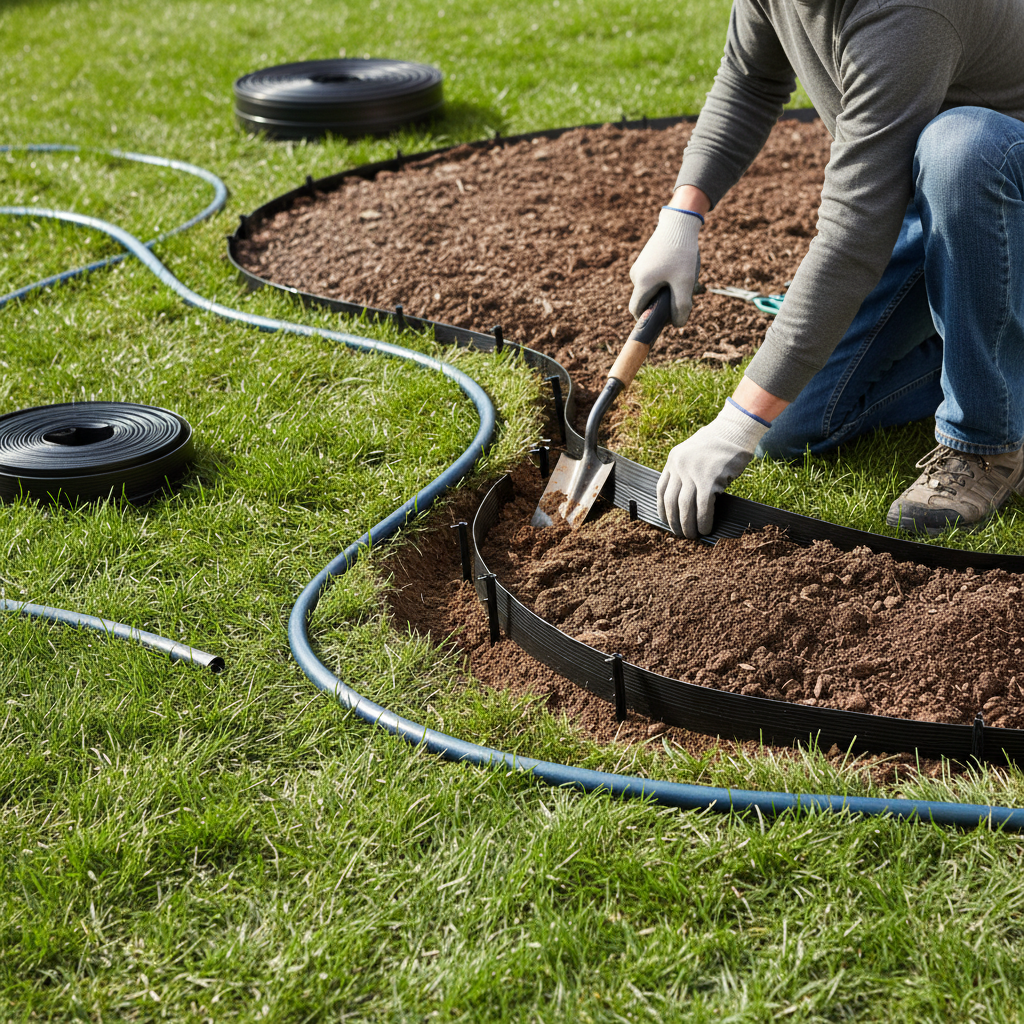
- Insufficient Trench Depth: Edging installed too shallowly lacks the necessary lateral support and is easily dislodged by foot traffic, lawnmowers, or soil expansion.
- Lack of Proper Anchoring: Many DIYers skip or skimp on stakes, rebar, or edge restraints, leading to flexible or heavy edging shifting, separating, or popping out of the ground.
- Poor Soil Compaction: Loose, uncompacted soil around the edging allows it to move easily, especially after rain or during freeze-thaw cycles. Air pockets beneath the edging are culprits.
- Uneven Base: An unlevel trench bottom or an inconsistent gravel/sand base for heavier edging materials results in slumping or an overall uneven appearance that will worsen over time.
- Aggressive Root Growth: Tree and shrub roots can exert significant pressure, pushing up or distorting edging, especially flexible plastic types, if not accounted for during planning.
Landscaping · Deck or fence project
| Project category | Landscaping |
|---|---|
| Problem type | Deck or fence project |
| Trade required | Landscaping |
| Urgency | Planned project |
| Safety risk | Moderate safety risk |
| DIY suitability | DIY for experienced homeowners |
| Cost category | High cost |
| Typical timeline | Most builds 3–10 days depending on size |
| Contractor type | Landscaping contractor |
Repair option
Replace failed boards, posts, and hardware; reseal the surface.
Replacement option
Rebuild when framing or the ledger connection is unsafe.
Common causes
- Rot at posts and ledger
- Storm damage
- Adding outdoor living space
Relevant tools:home improvement material pricesproject cost estimator
Published May 26, 2026Last updated August 17, 2026
Tools & materials you'll need
Affiliate links- AmazonGarden hose or spray paintFor outlining the bed shape
- AmazonSpade or trenching shovelFor digging the trench
- AmazonWheelbarrowFor moving soil or gravel
- AmazonMeasuring tapeFor checking depths and lengths
- AmazonLevel (4-foot)For ensuring even installation
- AmazonRubber malletFor tapping in stakes or pavers
- AmazonUtility knife or snipsFor cutting flexible edging
As an Amazon Associate FixlyGuide earns from qualifying purchases — at no extra cost to you. Prices and availability are accurate as of publication and subject to change.
Quick Answer
Installing landscape edging that truly lasts around your flower beds requires careful preparation and technique. Instead of simply pressing it into the soil, you’ll dig a proper trench, utilize appropriate anchoring methods for your chosen material, and consider the underlying soil and slope. By following these essential steps, you can create a durable, attractive border that prevents grass invasion and keeps mulch contained, elevating the look of your home's landscaping.
The Problem
Many homeowners struggle with landscape edging that warps, heaves out of the ground, or fails to create a lasting barrier against grass and weeds. This often leads to a perpetually messy landscape, where mulch spills onto the lawn and turf creeps into carefully cultivated flower beds. The frustration of constantly resetting or replacing poorly installed edging can detract from the joy of gardening and maintaining a beautiful yard. Without a stable, well-installed edge, the clean lines that define a professional-looking landscape quickly disappear, making the entire garden appear unkempt and requiring constant, tedious maintenance. The core of the problem lies in underestimating the forces of soil expansion and contraction, root growth, and the simple shifting of loose materials over time.
How It Works
Landscape edging functions as a physical barrier between distinct landscape elements, most commonly a lawn and a flower bed. Its primary job is to contain mulch or decorative stones within the bed and prevent turf grass from growing into the planting area. For edging to work effectively, it needs to be stable and rooted in the ground.
Most edging materials – from flexible plastic and rigid aluminum to stone pavers or timber – rely on an adequate subsurface trench and anchoring mechanism. A trench provides a stable foundation, allowing the edging to be set at a specific depth, usually with 1 to 2 inches above ground level to create a subtle lip. This lip is crucial for retaining mulch and deflecting mower wheels. Without a well-defined trench, the edging has no lateral support and is prone to shifting, leaning, or popping out of the ground due to soil movement, frost heave, or accidental kicks.
Anchoring mechanisms vary by material. Plastic and aluminum edging often use stakes driven through pre-drilled holes or flanges. Stone or brick edging relies on the weight of the material itself, often combined with a compacted gravel or sand base for stability, and sometimes edge restraints (invisible plastic or metal strips) for long linear runs. Wood timbers are usually stacked and secured with rebar stakes. The goal is to make the edging an integral, immovable part of the landscape, resisting the natural forces that would otherwise push it out of alignment. Soil conditions play a significant role; loose, sandy soils offer less natural support than compacted clay, necessitating more robust anchoring. Water drainage is also key; standing water can undermine the base, especially for heavier materials, leading to slumping.
Step-by-Step Fix
1. Plan Your Design — Outline precisely where your edging will go.
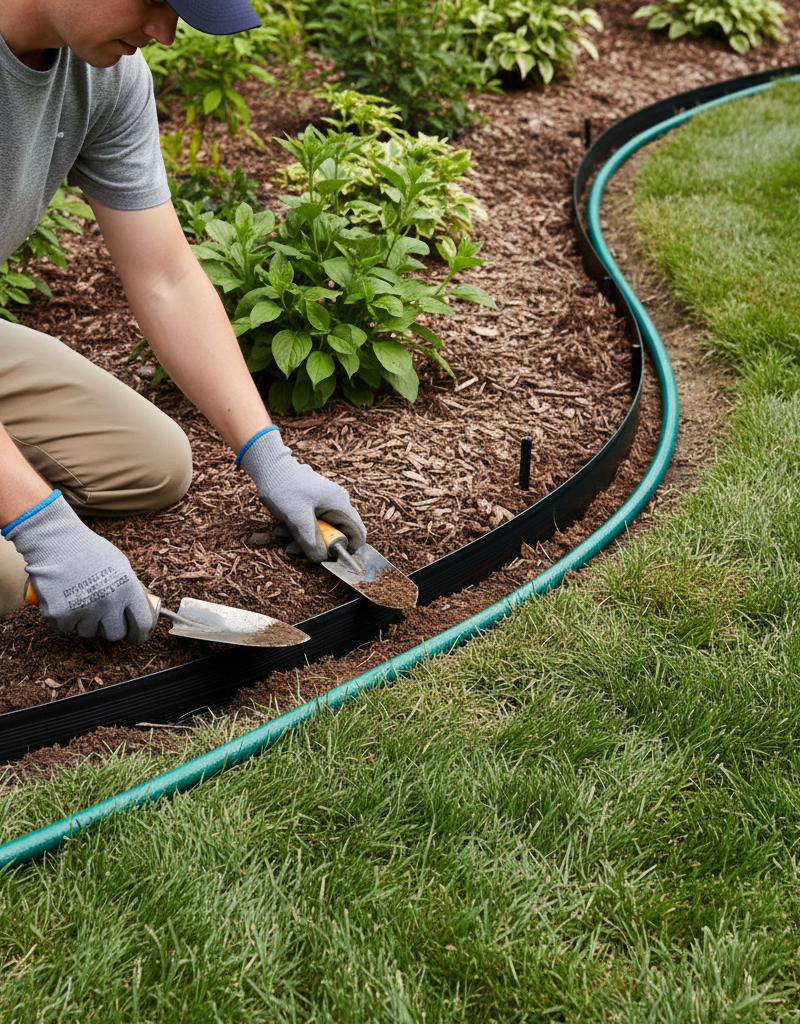
Before digging, use a garden hose, rope, or spray paint to lay out the exact shape of your flower bed. Step back and view it from different angles to ensure the curves are graceful and the lines are straight. Consider where hardscape like patios or walkways meet the bed. This preliminary step ensures you won't make costly adjustments after you start trenching.
2. Clear the Area — Remove any obstacles for a clean slate.
Weed and clear any debris, rocks, or existing vegetation from the intended path of your edging. If you have an existing lawn, use a spade or half-moon edger to cut a clean line along your marked path, removing any turf where the trench will be. This makes digging easier and ensures a smooth, uninterrupted installation.
3. Dig the Trench — Create a stable foundation for your edging.
Using a spade or trenching tool, dig a trench along your marked line. The depth and width of the trench depend on your edging material. For most plastic, metal, or interlocking stone edging, aim for a trench that is at least 4-6 inches deep and slightly wider than the edging material. The goal is to set the edging so that its top edge is about 1 inch above the finished grade (the top of the soil in the flower bed). For heavier materials like pavers, you might need a deeper, wider trench for a gravel base. Ensure the bottom of the trench is level and compacted.
-
- Pro Tip: For flexible edging, dig the trench a little straighter than your desired curve initially, as the material will want to straighten out slightly when unrolled.
-
- If your soil is very soft: Consider adding a 1-inch layer of compacted gravel (paver base) to the bottom of the trench for extra stability before installing the edging.
4. Install the Edging Material — Place your chosen edging securely.
Carefully place your chosen edging material into the trench.
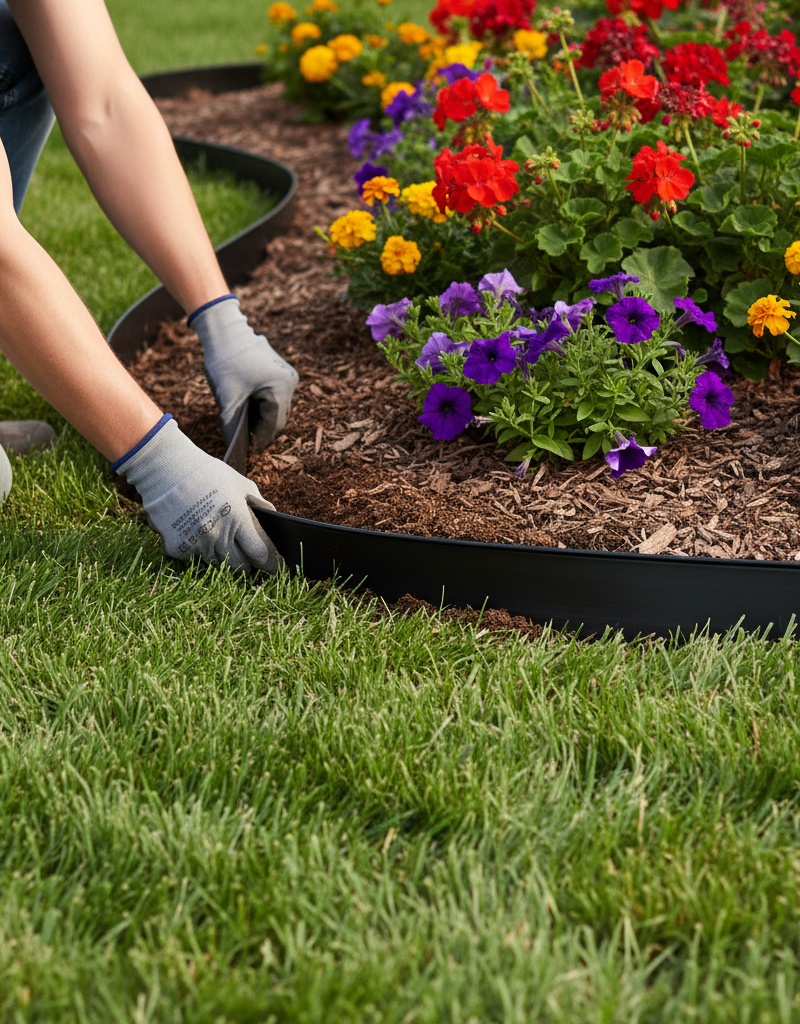
- For flexible plastic/metal edging: Unroll and position it. Ensure the top edge is consistent, typically 0.5 to 1 inch above the lawn level. Overlap ends by a few inches and use connectors if provided. Drive stakes through the pre-drilled holes or flange, typically every 2-3 feet, and at both sides of any joints. Use a rubber mallet to gently tap stakes flush with the top of the edging.
- For rigid metal/aluminum edging: These often come in straight sections. Connect them as per manufacturer instructions, usually with interlocking clips or sleeves. Drive stakes as needed.
- For stone/brick/timber edging: These require precise placement. For stone or brick, lay a 1-2 inch base of coarse sand or paver base in the trench, level it, then set the stones/bricks, tapping them gently with a rubber mallet for a snug fit. Use a level frequently to ensure evenness. For timbers, stack and secure them with rebar stakes driven through pilot holes.
5. Check Level and Alignment — Verify a professional finish.
After placing a section of edging, step back and check its level and alignment. For straight runs, use a string line stretched taut between two stakes. For curves, eyeball it or use a flexible measuring tape to check the radius. Make adjustments by gently pushing, pulling, or using a mallet to tap the edging further into the trench. Ensure consistent exposure above the ground.
6. Backfill and Compact — Stabilize the edging with soil.
Once the edging is perfectly aligned and level, backfill the trench. Push soil from both sides, up against the edging, taking care not to push the edging out of alignment. For the lawn side, bring the soil up to the level of the existing turf. For the flower bed side, fill it up to the desired mulch height, leaving the 0.5 to 1-inch lip of the edging exposed. Lightly compact the soil along both sides of the edging using your feet or the back of a shovel. This compaction is crucial for preventing future shifting.
7. Water Thoroughly — Settle the soil around the edging.
After backfilling and compacting, give the newly disturbed soil around the edging a thorough watering. This helps to settle the soil further and eliminate any remaining air pockets, increasing the stability of your installation. Monitor for a few days; if any sections settle unevenly, add more soil and re-compact.
8. Add Your Finishing Touches — Mulch and enjoy!
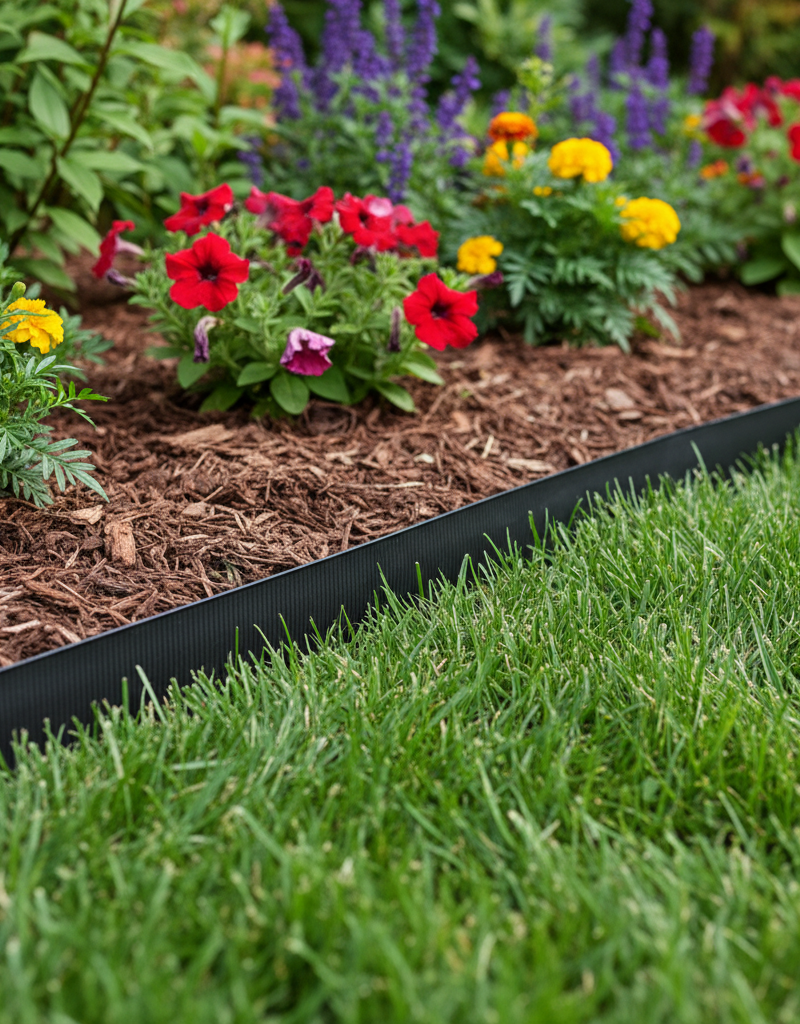
Once the edging is secure, apply your mulch or decorative stone to the flower bed, ensuring it comes up to, but not over, the exposed lip of the edging. This final step not only completes the aesthetic but also helps to further lock the edging into place and provides the barrier against weeds and moisture retention for which it's intended. Stand back and admire your clean, well-defined flower beds!
Common Causes
- Insufficient Trench Depth: Edging installed too shallowly lacks the necessary lateral support and is easily dislodged by foot traffic, lawnmowers, or soil expansion.
- Lack of Proper Anchoring: Many DIYers skip or skimp on stakes, rebar, or edge restraints, leading to flexible or heavy edging shifting, separating, or popping out of the ground.
- Poor Soil Compaction: Loose, uncompacted soil around the edging allows it to move easily, especially after rain or during freeze-thaw cycles. Air pockets beneath the edging are culprits.
- Uneven Base: An unlevel trench bottom or an inconsistent gravel/sand base for heavier edging materials results in slumping or an overall uneven appearance that will worsen over time.
- Aggressive Root Growth: Tree and shrub roots can exert significant pressure, pushing up or distorting edging, especially flexible plastic types, if not accounted for during planning.
- Frost Heave: In colder climates, repeated freezing and thawing of saturated soil can lift or shift improperly anchored edging out of the ground.
Common Mistakes
- Not Digging a Proper Trench: Simply forcing edging into the ground with a hammer is a common pitfall. A proper trench provides the crucial stability and allows for consistent height.
- Skipping the Planning Phase: Guessing the layout instead of outlining it with a hose or paint often leads to uneven curves, awkward angles, and wasted material or rework.
- Ignoring Soil Conditions: Installing in overly loose or wet soil without amendments (like gravel base) will inevitably lead to shifting. Don't assume all soil is equally stable.
- Inconsistent Edging Height: Failing to maintain a uniform height above the ground creates a choppy, unprofessional look and compromises the edging's ability to retain mulch.
- Not Overlapping or Connecting Sections Correctly: Poorly joined sections are weak points where grass can sneak through or the edging can buckle. Always use manufacturer-recommended connectors or sufficient overlap.
- Using the Wrong Edging for the Job: Trying to use flimsy plastic edging for a high-traffic area or heavy stone pavers on a steep slope without proper base preparation is asking for trouble. Match the material to the site and purpose.
Cost & Time Breakdown
| Task | DIY Cost ($) | Pro Cost ($) | Time (hours) |
|---|---|---|---|
| Planning & Layout | 0–5 | 0 | 0.5–1 |
| Trenching & Site Prep | 0–10 | 50–100 | 1–3 |
| Edging Material (per 100 ft) | 50–300 | 50–300 | N/A |
| Installation & Anchoring | 0 | 100–300 | 2–6 |
| Backfill & Compaction | 0 | 50–100 | 0.5–1 |
| Total (per 100 ft) | 50–315 | 200–800 | 4–11 |
Note: Edging material costs vary widely based on type (plastic, metal, stone, timber). Pro costs include labor and may vary regionally.
Tips & Prevention
- Regular Inspections: Periodically walk along your edging, especially after heavy rains or the freeze-thaw cycle. Look for sections that have lifted, shifted, or separated.
- Keep Beds Clear: Promptly remove any grass or weeds that try to grow over or under the edging. Early intervention prevents them from establishing strong root systems that can disrupt the barrier.
- Consider Root Barriers: If installing edging near large trees or shrubs, consider a deeper root-barrier-specific product to prevent invasive roots from disturbing your edging and bed.
- Proper Drainage: Ensure your flower beds have good drainage. Standing water can soften the soil around your edging, making it more prone to shifting. Correct any low spots.
- Mower Maintenance: Teach anyone mowing your lawn to use the mower wheels strategically along the hard edge of the edging, rather than running over it, to prevent damage or shifting.
- Winter Protection: In areas with harsh winters, avoid piling heavy snow directly onto fragile edging, as the weight can cause damage when the snow melts and refreezes.
When to Call a Professional
While installing landscape edging is a rewarding DIY project, certain situations warrant professional help. If your project involves extensive grading changes or the creation of retaining walls (which act as tall edging), a landscape contractor can ensure proper structural integrity and drainage. Significant projects on sloped terrain, where erosion is a concern, also benefit from professional design and installation to prevent costly failures. Additionally, if you're dealing with very rocky soil that's difficult to trench or need to integrate complex curves using rigid materials, a professional can provide the expertise and specialized tools to achieve a flawless, long-lasting result without back-breaking labor or potential aesthetic compromises. For high-end materials like natural stone or custom concrete curbing, the precision required often justifies the investment in a skilled craftsperson.
Related Articles
Keep troubleshooting with these hand-picked guides from FixlyGuide:
- The #1 Secret to Edging Flower Beds That Last Years (and Resist Weeds) — Discover the crucial, often-skipped step that ensures your landscape edging stays put and keeps weeds out for years, transforming your flow…
- The #1 Mistake Homeowners Make with Landscape Edging (and How to Fix It) — Discover the most common error in landscape edging installation and a simple, step-by-step fix to achieve a professional, long-lasting bord…
- The #1 Mistake Homeowners Make with Landscape Edging (and How to Fix It) — Discover the most common error in landscape edging installation that leads to weeds and an uneven look, and learn the easy fix for a clean,…
- The 3 Hidden Reasons Your Sprinkler Head Won't Pop Up (And How to Fix It FAST) — Discover the most common reasons your sprinkler head isn't popping up and follow our step-by-step guide to quickly diagnose and fix the iss…
- The #1 Mistake Homeowners Make with Landscape Edging (and How to Fix It) — Discover the most common error in landscape edging installation, leading to instability and an untidy appearance, and learn how to correct…
- The 3 Hidden Reasons Your Gas Burner Won't Light (Beyond a Clog) — Before you call a technician, discover the most common culprits behind a gas stove burner that refuses to ignite and learn how to fix them…
Should you do this yourself?
Answer five quick questions before you start. Safety outranks savings every time.
Your experience with work like this
How high do you have to work?
Does the job involve any of these?
Will it need a permit?
Specialty tools
Free and instant. Educational guidance only — not a quote, inspection, or professional diagnosis.
What should this project cost?
Enter your project details for a realistic cost range before you call anyone.
Cost depends heavily on which system turns out to be the source.
- Regional adjustment
- National average
- Labor share (typical)
- ~$1,620
- Quotes to collect
- 3 written estimates
Educational estimate based on national averages — not a binding quote. Always confirm with written local estimates.
Before you start
Check the difficulty, permits, and safety risk — then decide whether to call a pro.
- Estimate this projectGet a cost range for your scope and ZIP before you call anyone.Open
- Get local estimatesSend one request and compare written estimates from vetted pros.Open
Free, no signup required. Estimates are educational guidance, not a quote or an inspection.
Frequently asked questions
How deep should landscape edging be installed?+
Most landscape edging should be installed with 0.5 to 1 inch of its top edge exposed above the finished ground level. This usually means a trench depth of 4-6 inches, depending on the height of your specific edging material. The goal is to set it securely in the ground while creating a subtle barrier.
What is the best material for landscape edging?+
The 'best' material depends on your aesthetic preference, budget, and the specific needs of your landscape. Flexible plastic or metal edging is great for curves and DIY friendliness. Stone, brick, or concrete pavers offer a more formal, durable, and permanent look but require more intensive installation. Timber edging provides a natural, rustic appeal. Each has its pros and cons in terms of cost, durability, and ease of installation.
How do you keep landscape edging from shifting?+
To prevent shifting, dig a proper trench with a flat, compacted bottom, use adequate anchoring stakes (typically every 2-3 feet for flexible edging), and thoroughly backfill and compact the soil on both sides. For heavier materials like stone, a compacted gravel or sand base is crucial. Consistent height and well-connected sections also prevent movement.
Can I install landscape edging without digging a trench?+
While some lightweight, shallow edging products might claim
How do you connect landscape edging sections?+
Most flexible plastic or metal edging comes with built-in connectors or requires separate splice pieces to join sections. For more rigid materials like aluminum or steel, look for connecting sleeves or interlocking tabs. For stone or brick, the pieces interlock or are tightly butted against each other within a continuous base layer. Always follow the manufacturer's instructions for secure connections.
Discussion
Loading comments…