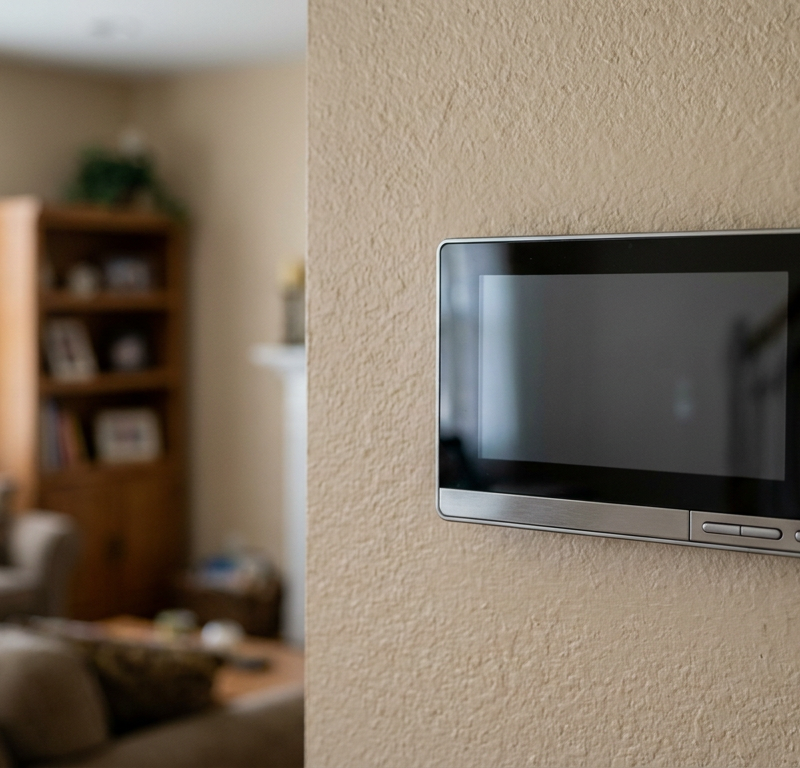
- Check the Thermostat — Your AC's control center
- First, confirm your thermostat's setting. Is it set to 'Cool' and the desired temperature below the current room temperature?
- Pro Tip: For a quick test, some digital thermostats have a 'Fan ON' setting. If the fan can be forced on, the thermostat likely has power and can communicate, narrowing the problem down to the cooling cycle.
HVAC · High energy usage
| Project category | HVAC |
|---|---|
| Problem type | High energy usage |
| Trade required | HVAC |
| Urgency | Planned project |
| Safety risk | Low safety risk |
| DIY suitability | DIY for experienced homeowners |
| Cost category | High cost |
| Typical timeline | Assessment within weeks; replacement planned off-season |
| Contractor type | Licensed HVAC technician |
Repair option
Duct sealing, insulation, and a tune-up before touching the equipment.
Replacement option
High-efficiency replacement sized by a load calculation, not a rule of thumb.
Common causes
- Aging, low-efficiency equipment
- Leaking ducts losing conditioned air
- Insufficient attic insulation
- Oversized system short-cycling
Relevant tools:project cost estimatorrepair or replace
Published June 26, 2026Last updated August 17, 2026
Tools & materials you'll need
Affiliate linksAs an Amazon Associate FixlyGuide earns from qualifying purchases — at no extra cost to you. Prices and availability are accurate as of publication and subject to change.
Quick Answer
When your air conditioner refuses to kick on, the most frequent, and fortunately simplest, cause is a tripped circuit breaker. This can happen at your home's main electrical panel or at a smaller disconnect box located near your outdoor condenser unit. A quick flip of the breaker switch from 'OFF' to 'ON' often resolves the issue. Don't overlook checking your thermostat's batteries, as a dead battery will prevent it from communicating with the AC system. Another often-missed culprit is a full condensate drain pan, which triggers a safety switch to shut down the unit.
The Problem
It's a hot day, and you walk over to your thermostat, turn it to 'Cool,' set the temperature down, and... nothing. No whirring, no fan spinning up, just silence. Your air conditioner isn't turning on. This isn't just an inconvenience; it can quickly become a serious comfort issue, especially during peak summer temperatures. The frustration grows as you wonder if it's a minor hiccup you can fix or an expensive repair requiring a professional. While an AC problem can be complex, many instances of a non-starting unit stem from a few common, easily diagnosable, and often DIY-fixable issues. The key is to approach the problem systematically, ruling out the simplest causes before moving to more involved diagnostics.
How It Works
To understand why your AC isn't turning on, it helps to understand the basic sequence of operation. Your air conditioning system is a closed-loop refrigeration cycle that relies on several components working in harmony. When you set your thermostat to 'Cool,' it sends a low-voltage signal (typically 24 volts AC) to the indoor air handler and the outdoor condenser unit.
Inside, the air handler contains the evaporator coil, which absorbs heat from your home's air, and a blower fan that circulates the cooled air. Outside, the condenser unit houses the compressor, which pumps refrigerant, and the condenser coil, which releases heat to the outside air, along with a fan to aid in heat dissipation.
Critical to the 'turning on' process are several safety mechanisms. Every AC unit has dedicated circuit breakers in your home's main electrical panel to protect the high-voltage components (the outdoor unit's compressor and fan, and the indoor unit's blower motor). There's often a separate disconnect switch near the outdoor unit, providing a convenient way to cut power for servicing.
Another crucial safety feature is the condensate drain line and its associated safety switch. As the evaporator coil cools the air, it also dehumidifies it, causing condensation. This water collects in a drain pan and flows out through a PVC pipe. If this drain line gets clogged, the pan can overflow, and a float switch, often located in the pan or inline with the drain, will trip. When tripped, this switch cuts power to the entire AC system to prevent water damage to your home, effectively making your AC appear 'dead.' The thermostat itself, while low-voltage, is the brain, receiving input from you and sending commands. If its power source (usually batteries, or sometimes hardwired) fails, it can't communicate, and the AC won't respond.
Step-by-Step Fix
Remember, always prioritize safety when dealing with electrical components. If at any point you feel unsure or uncomfortable, call a licensed HVAC professional.
-
Check the Thermostat — Your AC's control center
- First, confirm your thermostat's setting. Is it set to 'Cool' and the desired temperature below the current room temperature?
- Many thermostats are battery-powered. If the screen is blank or flashing a low-battery indicator, replace the batteries. Even if it looks fine, try fresh batteries. This is the number one overlooked issue homeowners make. If your thermostat is hardwired, check for loose connections behind the faceplate, but be cautious with wiring.
- Pro Tip: For a quick test, some digital thermostats have a 'Fan ON' setting. If the fan can be forced on, the thermostat likely has power and can communicate, narrowing the problem down to the cooling cycle.
-
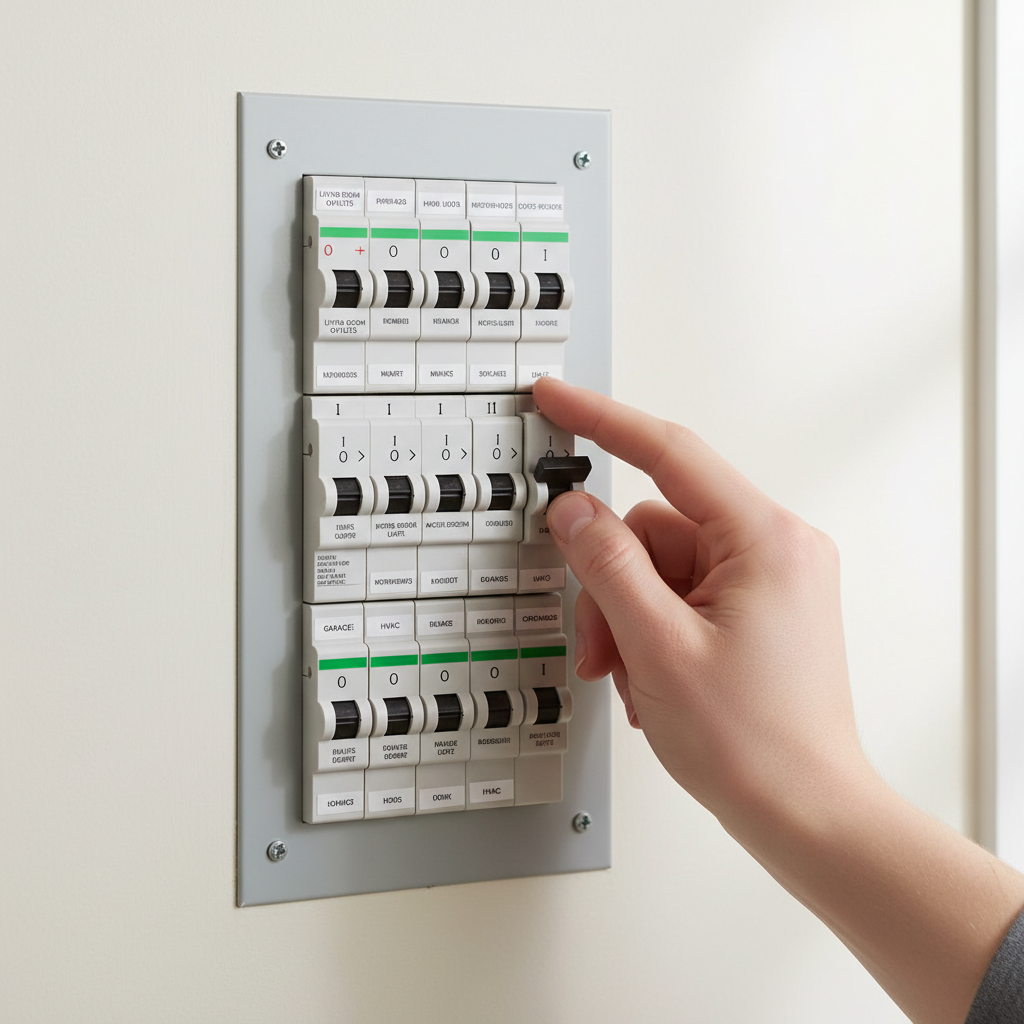
Inspect the Circuit Breaker — The power's gatekeeper
- Safety first: Turn off the AC system at the thermostat before touching the electrical panel.
- Locate your home's main electrical panel. Inside, find the circuit breakers labeled 'AC,' 'Furnace,' 'Air Handler,' or 'Condenser Unit.' There are often two dedicated breakers for the AC system – one for the indoor unit and one for the outdoor unit, or a large double-pole breaker for the outdoor unit.
- Look for any breaker that is in the 'tripped' position (often midway between 'ON' and 'OFF' or fully 'OFF'). Firmly push it completely to 'OFF,' wait a few seconds, then push it back to the 'ON' position. If it immediately trips again, there's a serious electrical fault, and you should call a professional immediately. Do not attempt to reset it repeatedly.
-
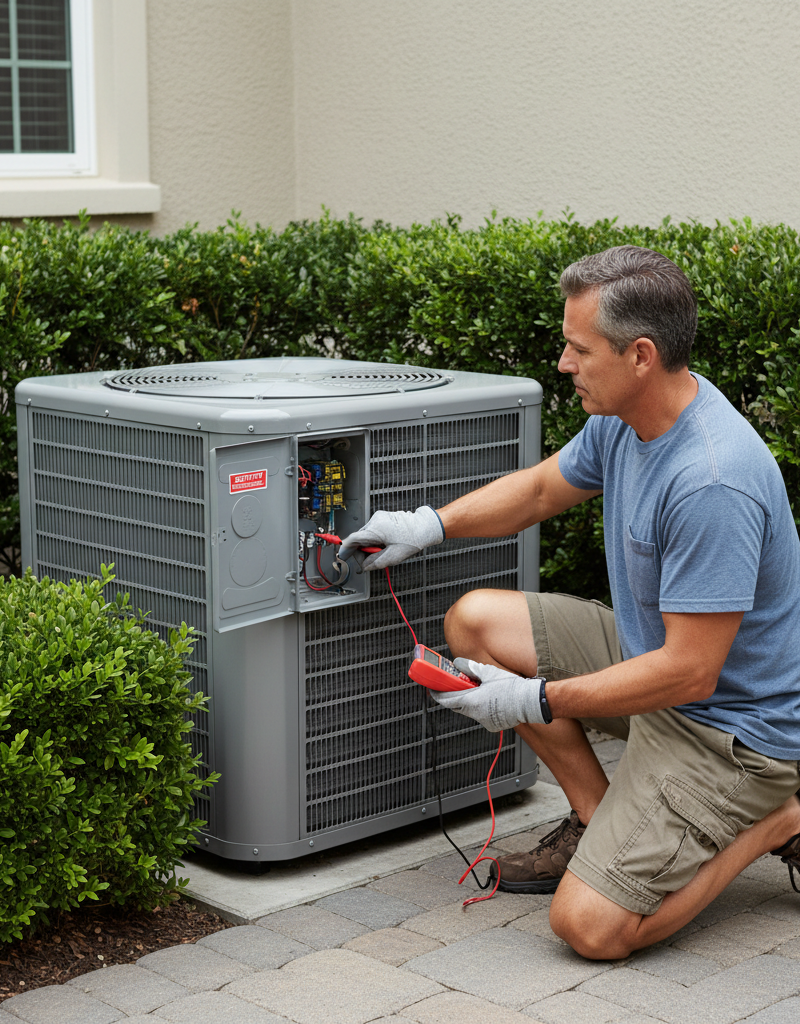
Check the Outdoor Disconnect Switch — A forgotten outdoor switch
- Walk to your outdoor condenser unit. Near it, usually mounted on the wall of your house, you'll find a small metal or plastic box – this is the AC disconnect.
- Safety first: Open the cover. Inside, you'll typically find a pull-out block or a lever switch. If it's a pull-out block, ensure it's firmly seated in position. If it's a lever, ensure it's in the 'ON' position. Sometimes, this switch can be accidentally pulled or jostled, cutting power.
- Many older disconnects contain fuses. If your unit doesn't turn on after checking the breaker, and you have an older pull-out block, carefully inspect the fuses for a broken filament. If a fuse is blown, it will need to be replaced with a new one of the exact same amperage rating. Always replace fuses with the power off at the main breaker panel first.
-
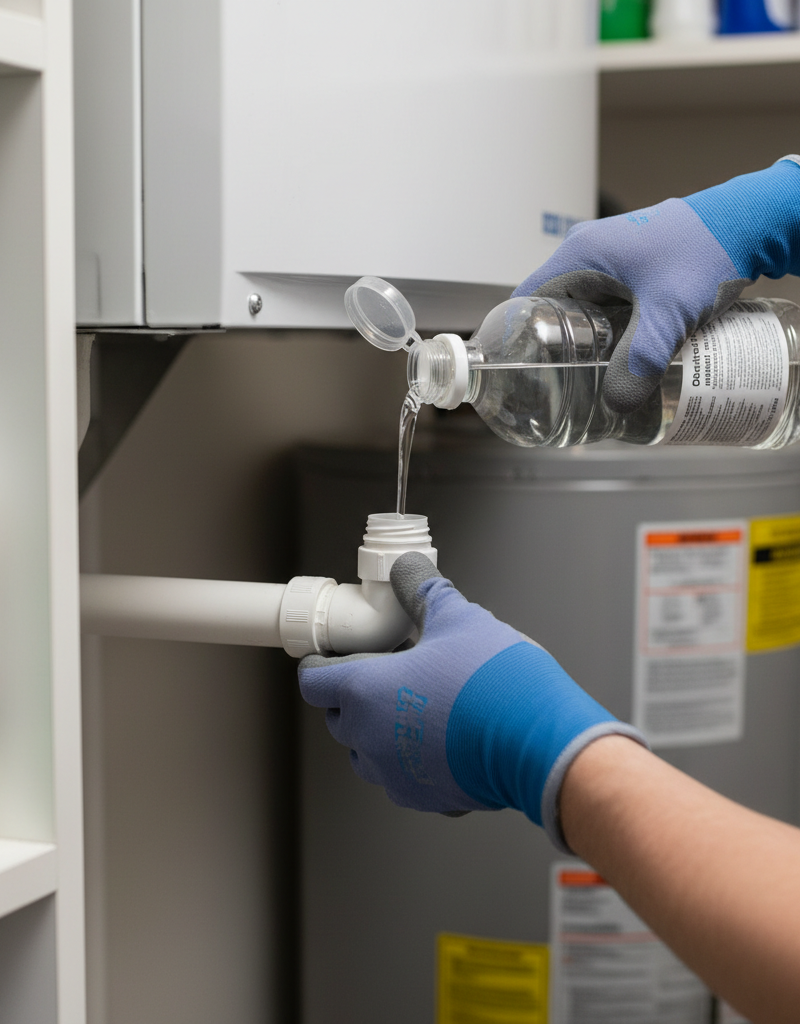
Examine the Condensate Drain Line & Pan — The water safety shut-off
- Go to your indoor air handler (typically in the attic, basement, or a utility closet). Locate the condensate drain pan, usually a shallow plastic pan underneath the unit.
- Check if the pan is full of water. If it is, it means the condensate drain line is clogged, triggering a float safety switch.
- Carefully clear any standing water. Then, locate the PVC drain line (usually a 3/4-inch pipe) exiting the unit. You can often clear a minor clog by attaching a wet/dry vacuum to the end of the drain line outside your house and sealing it tightly to create suction, or by pouring a cup of distilled vinegar mixed with water into the cleanout access (if available) near the indoor unit.
- Allow about 30 minutes for the vinegar solution to work before attempting to restart the AC. Ensure the float switch, often a small device with two wires, is not stuck in the 'off' position after the water drains.
-
Inspect for Ice Buildup — A silent killer of cooling
- If your AC unit was running but only blowing warm air before it quit, or if you suspect it ran recently, visually inspect the refrigerant lines going into the outdoor unit and the indoor evaporator coil (if accessible).
- If you see ice on the lines or coil, the unit has frozen up. This isn't a problem with the unit turning on, but rather a symptom that prevents cooling and can eventually lead to a shutdown. A frozen coil can be caused by low refrigerant, a dirty air filter restricting airflow, or a malfunctioning blower fan.
- Shut off the AC completely (at the thermostat and breaker) and let it thaw for several hours (4-24 hours, depending on the severity) before attempting to restart. Replace dirty air filters immediately.
Common Causes
- Tripped Circuit Breaker: Overloads or short circuits can cause the breaker to trip, cutting power to the unit.
- Blown Fuse in Outdoor Disconnect: Older outdoor disconnects often have fuses that can blow, especially during power surges.
- Dead Thermostat Batteries: A thermostat without power can't send signals to the AC system.
- Clogged Condensate Drain Line & Tripped Float Switch: Accumulated algae or debris blocks the drain, fills the pan, and triggers a safety shut-off.
- Loose Electrical Connections: Vibrations or poor installation can lead to wires loosening at the thermostat, air handler, or condenser unit.
- Overheated Compressor: The compressor has an internal thermal overload switch that can trip if it gets too hot, often due to low refrigerant or a dirty coil.
Common Mistakes
- Ignoring the Thermostat Batteries: This is by far the most common mistake. Always replace the batteries first, even if the screen appears to be working.
- Resetting a Tripped Breaker Repeatedly: If a breaker trips immediately after being reset, there's a serious electrical fault. Continuously resetting it can damage your electrical system or the AC unit, and poses a fire risk. Call a pro.
- Not Checking the Outdoor Disconnect: Many homeowners only check the main panel, forgetting that the outdoor unit has its own dedicated power cut-off.
- Overlooking the Condensate Drain: A clogged drain can mimic a more serious electrical problem, but it's often a simple fix.
- Assuming the Worst: Jumping to conclusions about expensive repairs before performing basic troubleshooting steps can lead to unnecessary service calls.
- Forgetting Dirty Air Filters: While not a direct
Related Articles
Keep troubleshooting with these hand-picked guides from FixlyGuide:
- The #1 Mistake Homeowners Make When Their AC Won't Turn On (And the Easy Fix) — Learn the most common reason your AC isn't turning on and how to fix it with simple troubleshooting steps, potentially saving a costly serv…
- The #1 Reason Your AC Won't Turn On (And It's Not the Thermostat) — Discover the most common, overlooked reason your AC won't power on and how a simple reset can get your cool air flowing again.
- The #1 Mistake Homeowners Make When Their AC Won't Turn On (And the Easy Fix) — Learn the most common oversight homeowners make when their AC won't turn on and how to troubleshoot basic issues to restore cooling.
- The $0 Trick to Revive Your Frozen AC Fan (Before You Call a Pro) — Before you spend money on an AC repair, try this simple, no-cost trick to get your condenser fan spinning again and cool your home.
- The #1 Mistake Homeowners Make When Their Heat Pump Stops Heating in Winter — Discover the most common reason your heat pump struggles in cold weather and how a simple homeowner fix can restore warmth to your home.
- The #1 Mistake Homeowners Make When a Gas Burner Won't Light (And the Easy Fix) — Before you call a technician, discover the most common, overlooked reason your gas stove burner isn't lighting and how to fix it yourself i…
Should you do this yourself?
Answer five quick questions before you start. Safety outranks savings every time.
Your experience with work like this
How high do you have to work?
Does the job involve any of these?
Will it need a permit?
Specialty tools
Free and instant. Educational guidance only — not a quote, inspection, or professional diagnosis.
Estimate your own project cost
National averages are a starting point. Enter your details for a range that fits your house.
HVAC replacement cost
- Equipment$2,200 – $3,800
- Installation labor$1,200 – $2,500
Always insist on a Manual J load calculation — sq-ft sizing is only a rough check. Federal heat-pump rebates may reduce cost significantly.
Educational estimate only — always confirm with written local bids.
What should this project cost?
Enter your project details for a realistic cost range before you call anyone.
Service calls and common repairs run $150–$900; full system replacement typically $6,000–$12,000.
- Regional adjustment
- National average
- Labor share (typical)
- ~$1,935
- Quotes to collect
- 3 written estimates
Educational estimate based on national averages — not a binding quote. Always confirm with written local estimates.
Fixly Project Decision Box
- DIY difficulty
- Advanced
- Estimated time
- Homeowner checks 20–30 minutes
- Cost level
- Moderate
Main tools / materials
- Clean air filter
- Garden hose for condenser coils
- Shop vac for the condensate line
When to stop and call a pro
- Burning smell, smoke, or a tripping breaker
- Refrigerant lines iced over or hissing
- Any work inside the sealed refrigerant circuit (EPA-licensed only)
- Gas smell near a furnace — leave and call the utility
Need professional help?
Find an HVAC Pro Near YouGet the print-ready PDF of this guide
A clean, ad-free, printable version you can keep on your phone or pin to the workshop wall. Free with a FixlyGuide account.
- Print-optimized layout
- Tools, materials & every step included
- Saved to your account
Frequently asked questions
Why would my AC suddenly stop turning on?+
The most common reasons are a tripped circuit breaker (at your main panel or outdoor disconnect), dead thermostat batteries, or a clogged condensate drain line that activates a safety switch.
How do I know if my AC breaker is tripped?+
Look for a circuit breaker in your electrical panel that is in the 'OFF' position or halfway between 'ON' and 'OFF.' To reset it, firmly push it to 'OFF' then back to 'ON.'
Can low thermostat batteries prevent my AC from turning on?+
Yes, absolutely. If your thermostat runs on batteries and they are dead or very low, it cannot communicate with your AC system, preventing it from starting. Always check and replace thermostat batteries first.
What does an AC condensate drain have to do with the unit not turning on?+
Your AC produces condensation. If the drain line clogs, the overflow pan fills with water, activating a safety float switch. This switch cuts power to the entire unit to prevent water damage, making it seem like the AC won't turn on.
When should I call a professional if my AC won't turn on?+
If your circuit breaker immediately trips again after resetting, if you find loose or burnt wiring, if you hear unusual noises, or if none of the basic troubleshooting steps resolve the issue, call a licensed HVAC professional immediately. Do not attempt to repair electrical faults yourself.
Discussion
Loading comments…