- Change Your Air Filter — The easiest and most impactful DIY task.
- Locate your furnace or air handler. The filter is typically in a slot where return air enters the unit or in a return air vent in the ceiling or wall. Note the direction of the airflow arrow on the filter frame and the size (e.g., 20x25x1).
- Turn off your HVAC system at the thermostat or the dedicated circuit breaker for safety.
- Slide out the old filter and dispose of it.
- Insert the new filter, ensuring the airflow arrow points in the same direction as the old one (towards the furnace/air handler).
HVAC · High energy usage
| Project category | HVAC |
|---|---|
| Problem type | High energy usage |
| Trade required | HVAC |
| Urgency | Planned project |
| Safety risk | Low safety risk |
| DIY suitability | DIY for experienced homeowners |
| Cost category | High cost |
| Typical timeline | Assessment within weeks; replacement planned off-season |
| Contractor type | Licensed HVAC technician |
Repair option
Duct sealing, insulation, and a tune-up before touching the equipment.
Replacement option
High-efficiency replacement sized by a load calculation, not a rule of thumb.
Common causes
- Aging, low-efficiency equipment
- Leaking ducts losing conditioned air
- Insufficient attic insulation
- Oversized system short-cycling
Relevant tools:project cost estimatorrepair or replace
Published May 23, 2026Last updated August 17, 2026
Tools & materials you'll need
Affiliate linksAs an Amazon Associate FixlyGuide earns from qualifying purchases — at no extra cost to you. Prices and availability are accurate as of publication and subject to change.
Quick Answer
Most homeowners should service their HVAC system annually, ideally in the spring for air conditioning and in the fall for heating, to ensure optimal performance, prevent costly breakdowns, and maintain energy efficiency. This preventative maintenance helps identify minor issues before they become major, extends the life of your unit, and ensures your home remains comfortable and your energy bills stay in check.
The Problem
Many homeowners view their heating, ventilation, and air conditioning (HVAC) system as a "set it and forget it" appliance. It’s out of sight, often in a basement, attic, or utility closet, and as long as warm air comes out in winter and cool air in summer, it's easy to assume everything is fine. However, this hands-off approach is the single biggest mistake you can make with your home's comfort system. Neglecting regular maintenance is a silent energy drain, slowly chipping away at your budget through inflated utility bills. Worse, it’s a ticking time bomb for unexpected breakdowns, often occurring on the hottest or coldest days when repair services are in high demand and prices surge. Over time, this neglect drastically reduces the lifespan of your expensive HVAC equipment, forcing premature replacement. The problem isn't just about comfort or cost; it's about the hidden inefficiencies and wear and tear that go unchecked, leading to a domino effect of issues that ultimately compromise your home's climate control and your financial well-being.
How It Works
To understand why annual servicing is crucial, it helps to grasp the basic principles of how your HVAC system operates. A central HVAC system, whether a split system (indoor furnace/air handler and outdoor condenser) or a heat pump, functions by moving heat. In cooling mode, the refrigerant in the indoor evaporator coil absorbs heat from your home's air. A fan then blows this cooled air through your ductwork. The now-heated refrigerant travels to the outdoor condenser unit, where a compressor pressurizes it, raising its temperature. A fan in the outdoor unit then blows air across the condenser coil, allowing the refrigerant to release the absorbed heat to the outside atmosphere. The cooled refrigerant then cycles back indoors to repeat the process. In heating mode (for heat pumps), this process is reversed, drawing heat from outside and releasing it indoors. A furnace, on the other hand, burns natural gas or propane to generate heat, which is then distributed by a blower fan. All these components – the compressor, condenser coils, evaporator coils, blower motors, refrigerant lines, electrical connections, and ductwork – work in concert. Over time, dust, dirt, and debris accumulate on coils, impeding heat transfer. Refrigerant levels can slowly decrease, reducing the system's ability to cool or heat effectively. Electrical connections can loosen, increasing resistance and potential fire hazards. Moving parts like blower motors and fan bearings require lubrication and can wear out. The filters, designed to protect your system and improve air quality, become clogged. Each of these small degradations compromises the system's efficiency, forcing it to work harder and consume more energy to achieve the desired temperature, ultimately accelerating wear and tear and leading to system failure.
Step-by-Step Fix
While annual professional maintenance is essential, homeowners can perform several basic tasks to keep their HVAC system running smoothly between visits. These steps focus on improving efficiency and preventing common issues.
-
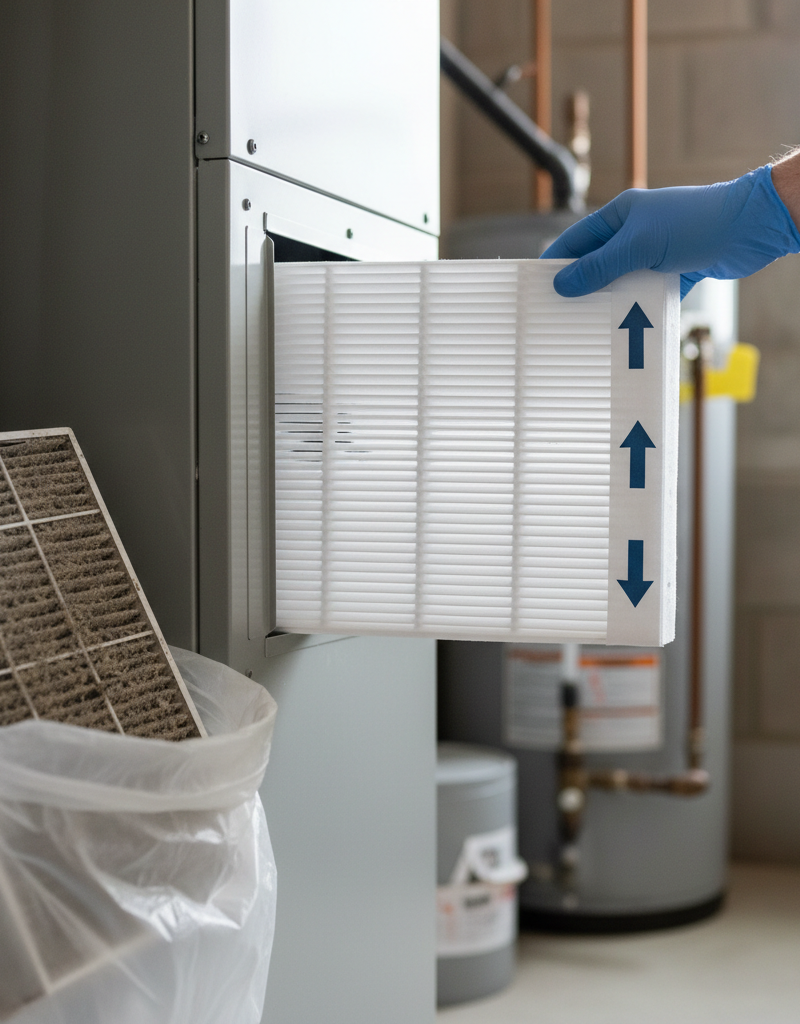
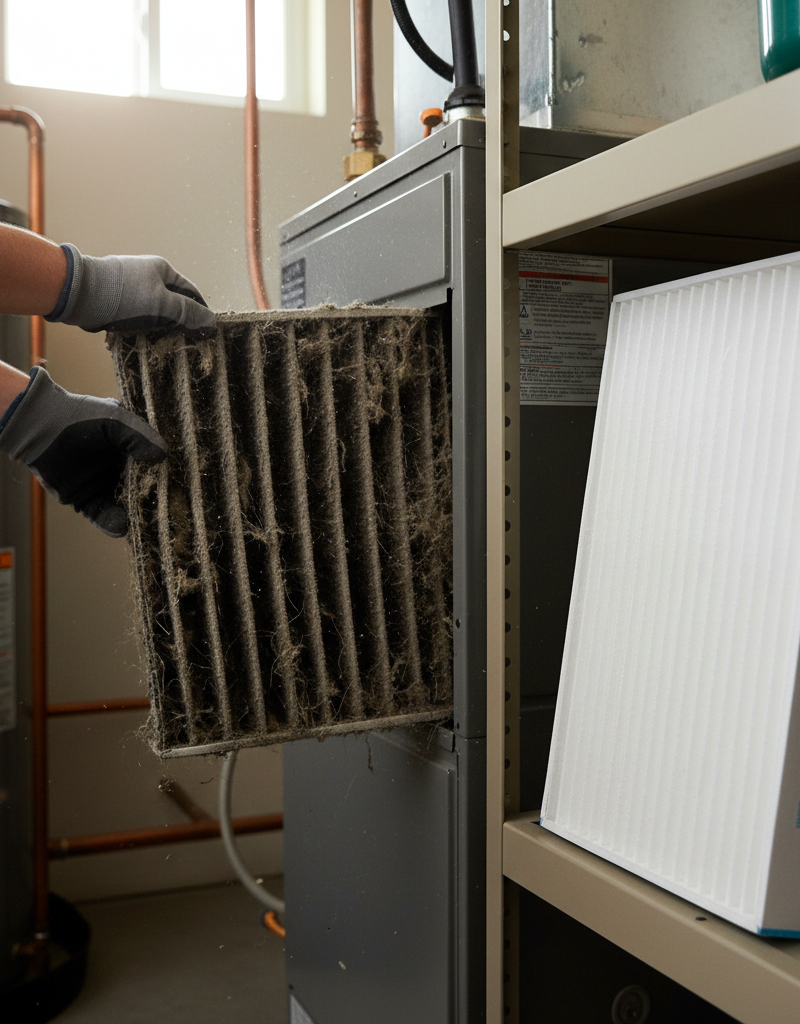
Change Your Air Filter — The easiest and most impactful DIY task.
- Locate your furnace or air handler. The filter is typically in a slot where return air enters the unit or in a return air vent in the ceiling or wall. Note the direction of the airflow arrow on the filter frame and the size (e.g., 20x25x1).
- Turn off your HVAC system at the thermostat or the dedicated circuit breaker for safety.
- Slide out the old filter and dispose of it.
- Insert the new filter, ensuring the airflow arrow points in the same direction as the old one (towards the furnace/air handler).
- Frequency: Check monthly and replace every 1-3 months, or more often if you have pets, allergies, or dusty conditions. A clogged filter restricts airflow, making your system work harder and increasing energy consumption by 5-15%.
-
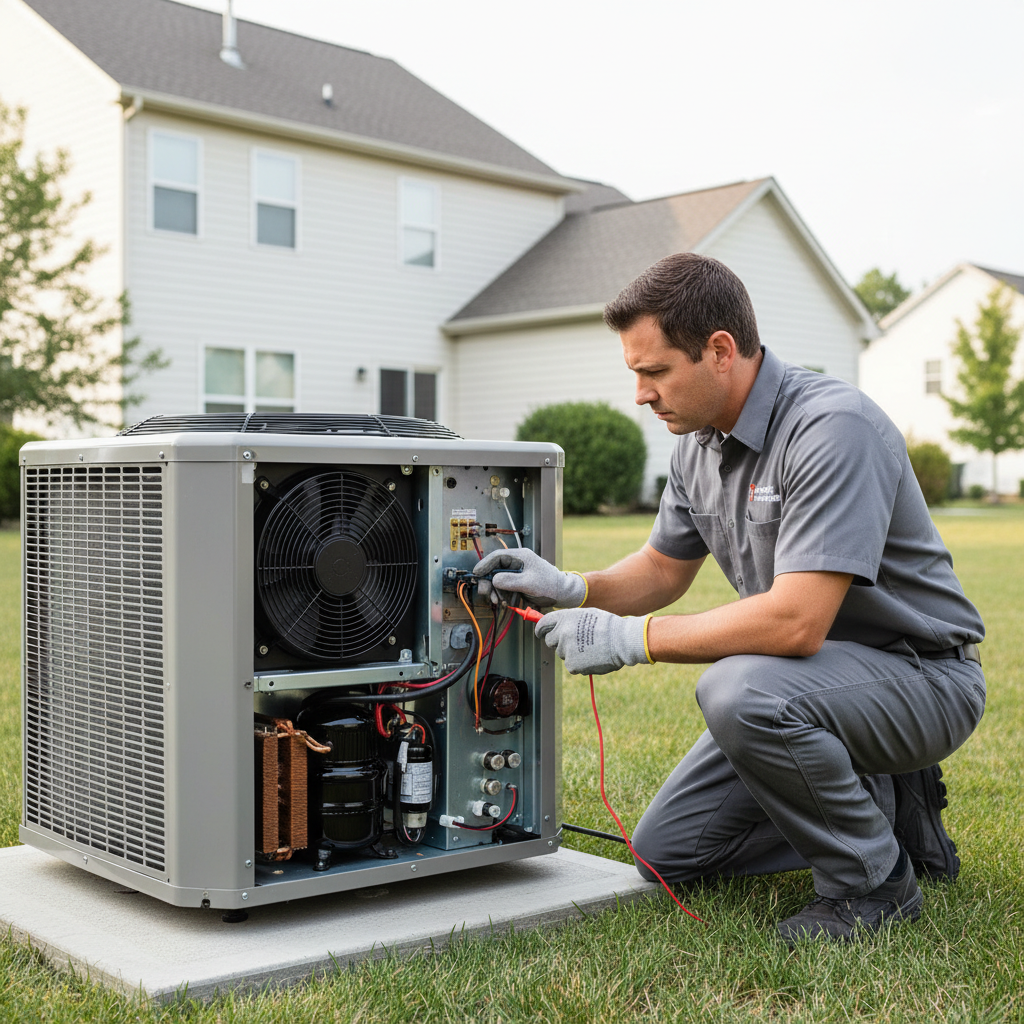
Clean Outdoor Condenser Unit — Improve heat exchange efficiency and prevent overheating.
- Safety First: Absolutely turn off all power to the outdoor unit at the HVAC disconnect switch (usually a small box mounted on the wall near the unit) and at the main electrical panel. Verify power is off by attempting to turn the unit on at the thermostat (it should not start).
- Remove any leaves, grass clippings, or debris from around the unit, maintaining a 2-foot clearance.
- Gently spray the condenser fins with a garden hose from the inside out to remove dirt and grime. Avoid high-pressure settings that could bend the delicate fins. For stubborn dirt, use a coil cleaner specifically designed for AC units, following the product instructions.
- Carefully straighten any bent fins using a fin comb (available at home improvement stores) or a thin, blunt tool like a butter knife. Do this slowly to avoid puncturing the coils.
- Allow the unit to dry completely before restoring power. Perform this task annually, typically in the spring before heavy AC use.
-
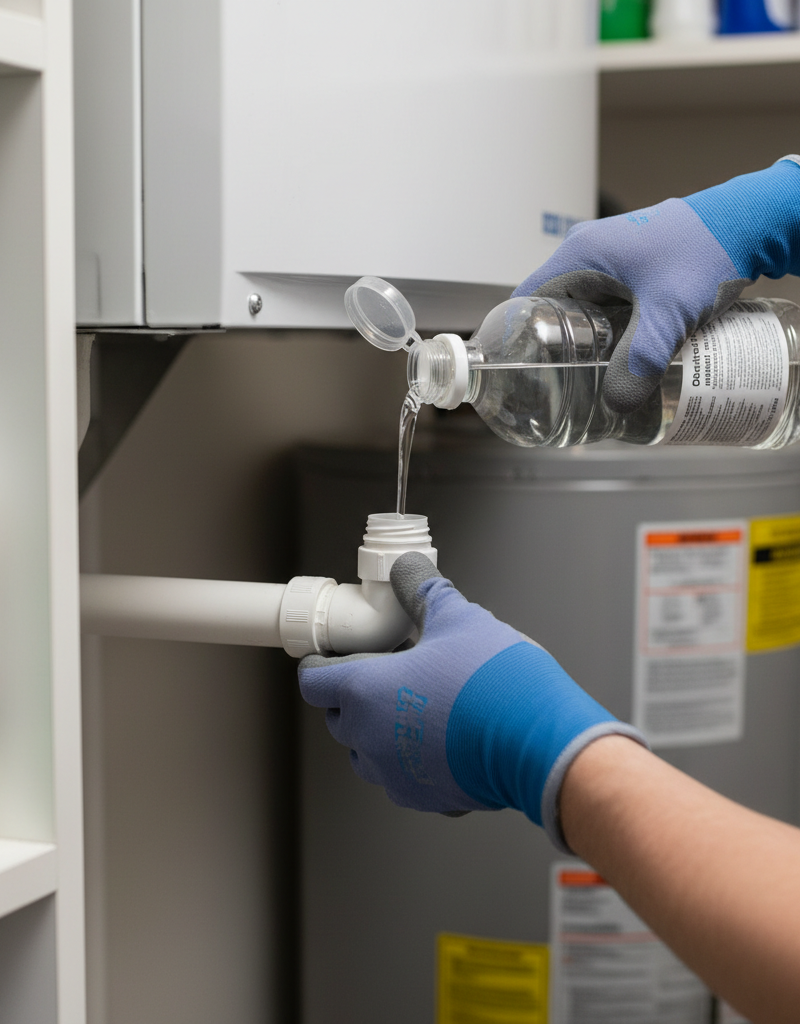
Inspect and Clean Evaporator Coil Drain Line — Prevent costly water damage and mold growth.
- Locate the condensate drain pan and line near your indoor evaporator coil (often above the furnace). The line is a PVC pipe, usually 3/4-inch diameter.
- Check the drain pan for standing water or algae growth. Clear any visible blockages.
- If you suspect a clog, you can carefully pour a cup of distilled vinegar (not bleach, as it can corrode components) down the access port of the drain line. Let it sit for 30 minutes, then flush with water.
- A wet/dry vacuum can be used to clear stubborn clogs by attaching it to the outdoor end of the drain line and creating a vacuum seal.
- Perform this quarterly during cooling season or at least annually.
-
Clear Debris from Vents and Registers — Ensure proper airflow throughout your home.
- Walk through your home and ensure all supply and return air registers are unobstructed by furniture, curtains, or rugs.
- Use a vacuum cleaner with a brush attachment to remove dust, pet hair, and debris from the grille slats of all supply and return vents.
- Consider unscrewing the covers of return air vents to vacuum inside the ductwork opening as far as you can reach.
- Check for any signs of mold or excessive dust build-up in or around the vents, which could indicate a larger ductwork issue.
- Perform this monthly or as needed.
-
Check Thermostat Settings and Calibration — Optimize comfort and energy savings.
- Ensure your thermostat is set to the correct mode (heat/cool/auto) and desired temperature.
- If you have a programmable or smart thermostat, verify the schedule is appropriate for your lifestyle. Consider using
Related Articles
Keep troubleshooting with these hand-picked guides from FixlyGuide:
- The #1 HVAC Mistake That Costs Homeowners $500 Every Year — Discover the crucial HVAC maintenance step homeowners often overlook, leading to higher energy bills, frequent repairs, and premature syste…
- The #1 HVAC Mistake Costing You Hundreds (and 2 Easy Fixes) — Discover the most common HVAC mistake homeowners make that leads to higher bills and breakdowns, plus two simple maintenance steps to preve…
- The #1 HVAC Mistake Costing You Hundreds (And How Often to Really Change Your Filter) — Discover the crucial mistake most homeowners make with HVAC filters, leading to higher energy bills, poor air quality, and system damage. L…
- The HVAC Maintenance Myth: Why "Annual Service" Can Cost You More (and 3 Things to Check Instead) — Discover why strict annual HVAC servicing isn't always necessary and learn the essential checks that can save you money and extend your sys…
- The #1 HVAC Mistake Making Your Energy Bills Soar (It's Not What You Think) — Discover the crucial HVAC filter mistake that's quietly inflating your energy bills and damaging your system, and how a simple change can s…
- The 5 Hidden Filters Costing You $300 a Year (And How to Fix It) — Ignoring these crucial household filters can silently sabotage your home's efficiency, costing you hundreds annually in wasted energy and p…
Your seasonal maintenance checklist
The small jobs that prevent the expensive repairs. Tick them off — progress saves on this device.
Free, no signup. Skip anything that requires roof access or working near live electrical.
Estimate your own project cost
National averages are a starting point. Enter your details for a range that fits your house.
HVAC replacement cost
- Equipment$2,200 – $3,800
- Installation labor$1,200 – $2,500
Always insist on a Manual J load calculation — sq-ft sizing is only a rough check. Federal heat-pump rebates may reduce cost significantly.
Educational estimate only — always confirm with written local bids.
Before you start
Check the difficulty, permits, and safety risk — then decide whether to call a pro.
- Is this a safe DIY job?Check permits, tools, and risk before you start the steps below.Open
- Get local estimatesSend one request and compare written estimates from vetted pros.Open
Free, no signup required. Estimates are educational guidance, not a quote or an inspection.
Get the print-ready PDF of this guide
A clean, ad-free, printable version you can keep on your phone or pin to the workshop wall. Free with a FixlyGuide account.
- Print-optimized layout
- Tools, materials & every step included
- Saved to your account
Frequently asked questions
How often should my HVAC system be professionally serviced?+
For optimal performance and longevity, your HVAC system should be professionally serviced once a year. Ideally, schedule an AC tune-up in the spring and a furnace inspection in the fall before you need to heavily rely on either system.
What happens if I don't service my HVAC every year?+
Skipping annual HVAC service can lead to decreased energy efficiency (higher utility bills), more frequent breakdowns, reduced system lifespan, poor indoor air quality, and potentially voiding your manufacturer's warranty. Small issues can escalate into expensive repairs.
What does a professional HVAC service include?+
A typical professional HVAC service includes cleaning coils, checking refrigerant levels, lubricating moving parts, inspecting electrical connections, verifying thermostat calibration, checking ductwork for leaks, and ensuring all safety controls are operational. The goal is to maximize efficiency and prevent future problems.
Can I perform some HVAC maintenance myself?+
Yes, homeowners can perform basic maintenance tasks like changing air filters regularly (monthly to quarterly), cleaning around the outdoor condenser unit, and ensuring all indoor vents are unobstructed. However, these DIY tasks do not replace the comprehensive inspection and tune-up provided by a certified HVAC technician.
How much does annual HVAC maintenance typically cost?+
The cost for annual HVAC maintenance, often called a 'tune-up,' typically ranges from $75 to $200 per visit, depending on your location, the type of system, and the service provider. Many companies offer service plans that include two visits per year (one for AC, one for heat) at a discounted rate.
Discussion
Loading comments…