- Tools/Materials: New HVAC filter (matching old size and MERV rating)
- Consider: If you have pets or allergies, consider a MERV 11-13 filter. However, consult your HVAC professional if you're unsure if your system can handle a higher MERV rating without compromising airflow.
- If this doesn't work: If you consistently find new filters getting clogged exceptionally fast, consider professional duct cleaning or sealing, and check for excessive dust sources in your home.
HVAC · High energy usage
| Project category | HVAC |
|---|---|
| Problem type | High energy usage |
| Trade required | HVAC |
| Urgency | Planned project |
| Safety risk | Low safety risk |
| DIY suitability | DIY for experienced homeowners |
| Cost category | High cost |
| Typical timeline | Assessment within weeks; replacement planned off-season |
| Contractor type | Licensed HVAC technician |
Repair option
Duct sealing, insulation, and a tune-up before touching the equipment.
Replacement option
High-efficiency replacement sized by a load calculation, not a rule of thumb.
Common causes
- Aging, low-efficiency equipment
- Leaking ducts losing conditioned air
- Insufficient attic insulation
- Oversized system short-cycling
Relevant tools:project cost estimatorrepair or replace
Published June 20, 2026Last updated August 17, 2026
Tools & materials you'll need
Affiliate links- AmazonNew HVAC filter1 · Ensure it matches the exact size and MERV rating of your old filter or an appropriate replacement for your system.
As an Amazon Associate FixlyGuide earns from qualifying purchases — at no extra cost to you. Prices and availability are accurate as of publication and subject to change.
Quick Answer
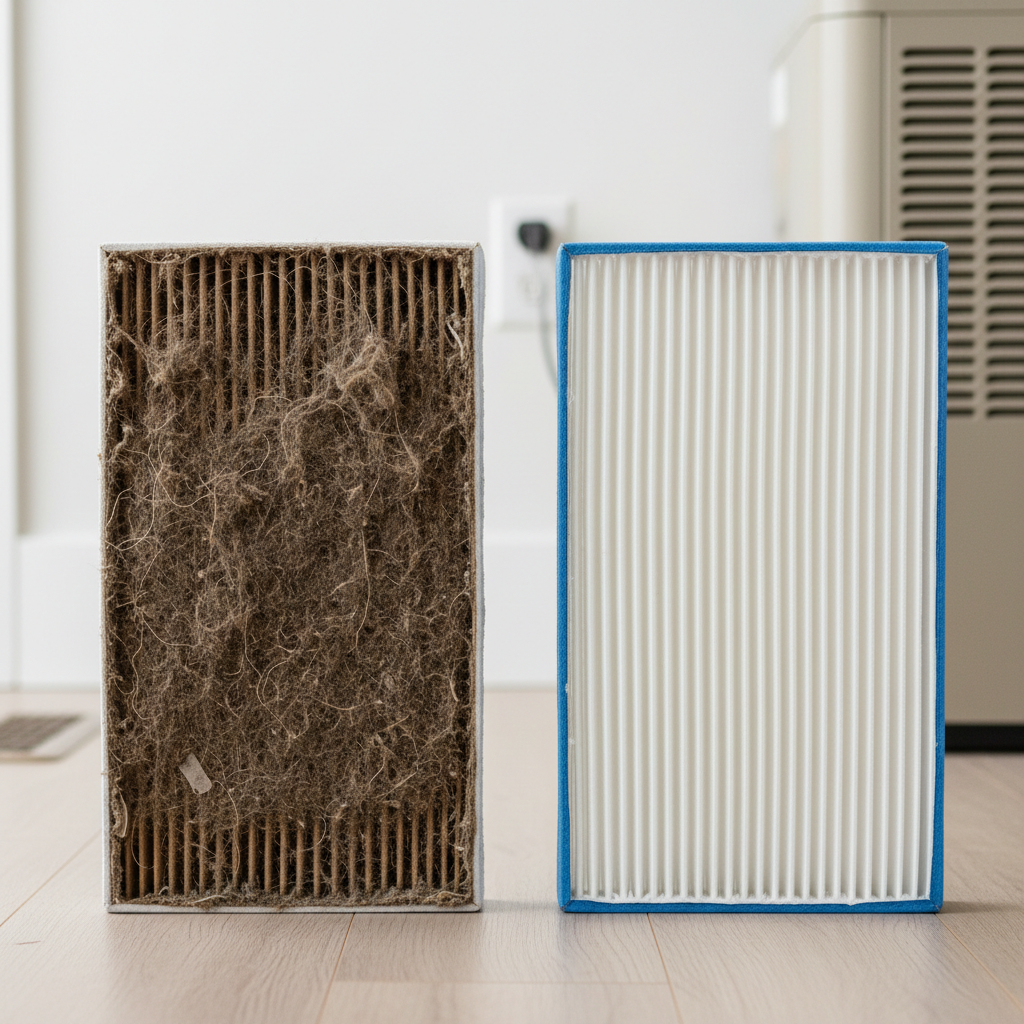
Most homeowners should replace their HVAC filter every 30-90 days, but this isn't a hard and fast rule. Factors such as the presence of pets, household inhabitants with allergies or respiratory issues, the number of people living in the home, local air quality, and the type of filter used can dramatically alter this recommended frequency. A good general guideline is to visually inspect your filter monthly and replace it when it appears dirty, rather than strictly adhering to a calendar.
The Problem
Failing to regularly change your HVAC filter is arguably the most common and costly mistake homeowners make regarding their heating and cooling systems. What seems like a minor oversight can quickly escalate into a cascade of problems: diminished air quality, skyrocketing energy bills, reduced system efficiency, and even premature equipment failure. A clogged filter acts like a suffocating blanket on your HVAC system, forcing it to work harder to pull air through, which strains the motor, increases wear and tear, and wastes significant energy. Many homeowners either forget to change it, don't know the correct frequency, or simply don't understand the profound impact a dirty filter has on their home's comfort and their budget.
How It Works
Your HVAC system operates by circulating air throughout your home, heating or cooling it to your desired temperature. The air filter is positioned at the return air duct, typically just before the air handler or furnace. Its primary job is to trap airborne particles – dust, pollen, pet dander, mold spores, and other pollutants – before they enter the system's delicate components. This not only protects your indoor air quality but also prevents these contaminants from building up on the evaporator coil (in an AC) or heat exchanger (in a furnace).
When air passes through a clean filter, it flows freely. However, as the filter accumulates debris, the tiny pores become blocked. This restriction creates what's known as static pressure within the ductwork. The fan motor, designed to move a specific volume of air at a certain pressure, now has to exert more effort to overcome this resistance. Imagine trying to breathe through a thick cloth versus taking a clear breath – the effort required is dramatically different. This increased effort translates directly into higher electricity consumption and undue stress on the blower motor. If the airflow becomes severely restricted, the evaporator coil in an air conditioner can freeze over because not enough warm air is passing over it to absorb the refrigerant's coldness. For furnaces, a restricted filter can lead to overheating and even cause the system to shut down safety features for protection. Understanding this delicate balance between airflow, filtration, and system health is key to appreciating why consistent filter changes are non-negotiable.
Step-by-Step Fix
1. Locate Your Filter — Begin by finding where your HVAC filter is installed.
Most filters are located either in the return air vent grill in a wall or ceiling, or right at the air handler/furnace unit itself. Common locations include the attic (for an attic-mounted unit), a dedicated filter slot at the furnace, or a large central return vent. Open the latch or grill to access the filter compartment.
2. Check the Size and MERV Rating — Note the dimensions and MERV rating of the existing filter.
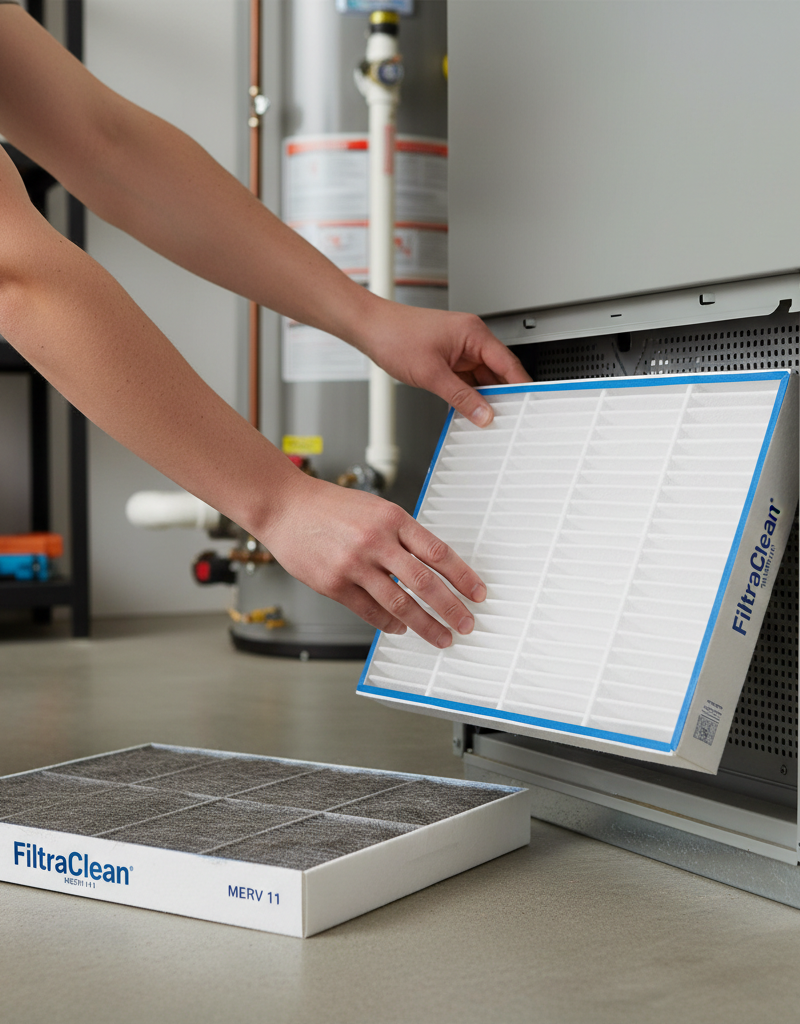
The size is usually printed on the cardboard frame of the filter (e.g., 20x25x1). The MERV (Minimum Efficiency Reporting Value) rating indicates how effectively the filter traps particles; higher MERV ratings (up to 12-13 for residential use) mean better filtration but can sometimes restrict airflow more if your system isn't designed for it. Most residential systems are fine with MERV 8-11. Never try to force a filter that is the wrong size, as this will leave gaps for air to bypass the filter.
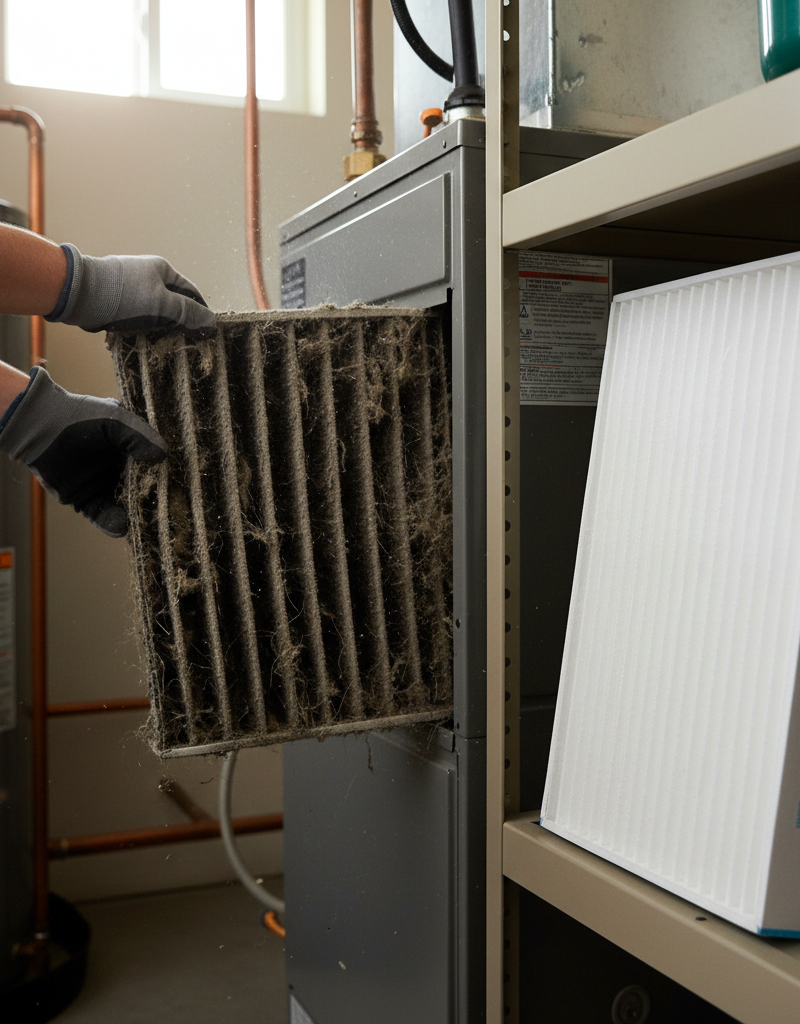
3. Inspect the Old Filter — Assess the condition of the current filter.
Remove the old filter and hold it up to a light source. If you can't see light passing through it, or if it's visibly caked with dust and debris, it's definitely time for a change. Pay attention to the direction of the airflow arrow on the filter's frame compared to the system's airflow.
4. Get the Right Replacement — Purchase a new filter with the correct size and an appropriate MERV rating.
- Tools/Materials: New HVAC filter (matching old size and MERV rating)
- Consider: If you have pets or allergies, consider a MERV 11-13 filter. However, consult your HVAC professional if you're unsure if your system can handle a higher MERV rating without compromising airflow.
- If this doesn't work: If you consistently find new filters getting clogged exceptionally fast, consider professional duct cleaning or sealing, and check for excessive dust sources in your home.
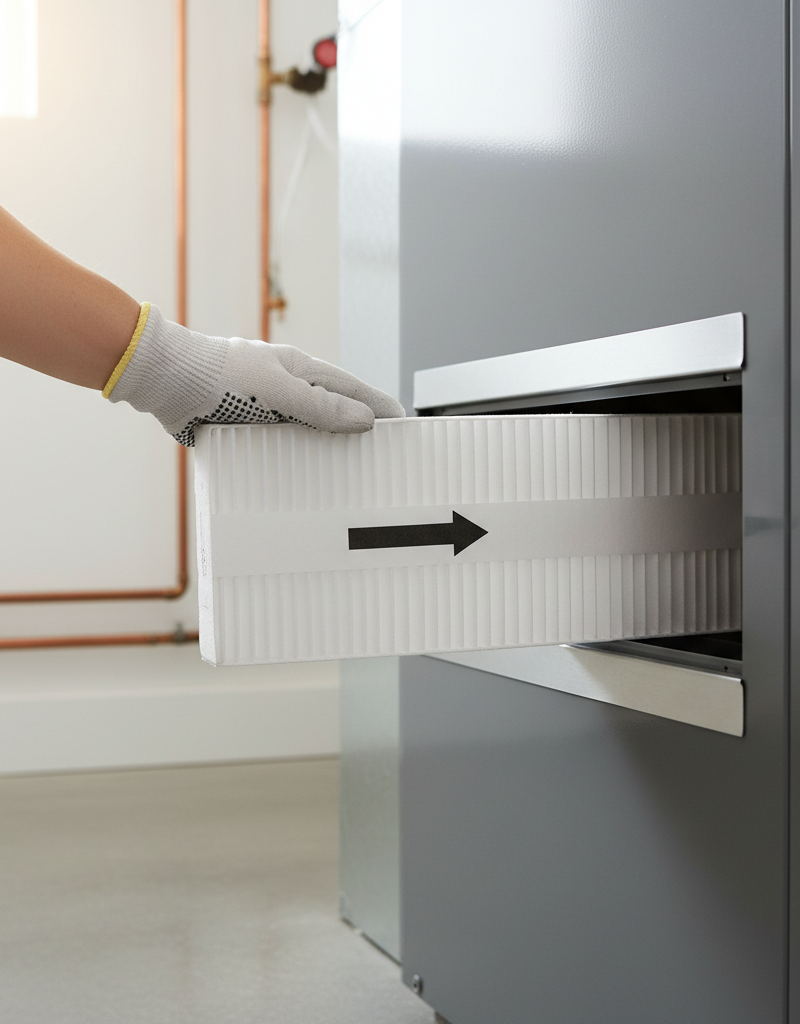
5. Install the New Filter — Insert the fresh filter correctly into the slot.
Orient the new filter so the airflow arrow on its frame points in the direction of the air moving towards the furnace/air handler. This is crucial for proper filtration. Close the filter compartment door or re-secure the return air grill.
6. Set a Reminder — Establish a consistent schedule for future filter replacements.
Mark it on a calendar, set a recurring reminder on your phone, or consider smart thermostats that can send reminders. The initial 30-90 day guideline is a good starting point, but adjust based on your home's unique conditions.
7. Test Your System — Briefly run your HVAC system to confirm everything is working.
Turn your thermostat to either heat or cool for a few minutes. Listen for any unusual noises and ensure air is flowing from your vents. This quick check confirms the filter is seated properly and hasn't interfered with system operation.
Common Causes
- Pet Dander: Homes with pets, especially shedding ones, introduce significantly more dander and hair into the air, clogging filters faster.
- Allergies & Respiratory Issues: To maintain better indoor air quality for sufferers, filters often need more frequent changes or higher MERV ratings, which can accumulate particles quicker.
- Construction or Renovation: Nearby or in-home construction kicks up large amounts of dust and debris, rapidly taxing filters.
- High Occupancy: More people in a home equate to more dust, skin cells, and tracked-in outdoor particles.
- Poorly Sealed Ducts: Leaky ductwork can pull in unfiltered air from attics, crawlspaces, or wall cavities, introducing extra dust and contaminants.
- Dusty Environment: Living near unpaved roads, in agricultural areas, or homes with extensive carpeting and upholstery can naturally generate more airborne dust.
- Infrequent System Use: While less use might seem to extend filter life, extended periods can still allow dust to settle and be picked up upon startup.
Common Mistakes
- Using the Wrong Size Filter: A filter that's too small leaves gaps for unfiltered air to bypass the system. One that's too large won't fit at all, or will bend and compromise its integrity. Always match the exact dimensions (Length x Width x Depth).
- Installing the Filter Backwards: All filters have an arrow indicating the direction of airflow. Installing it against the airflow direction can reduce efficiency and even damage the filter media, making it less effective.
- Choosing Too High a MERV Rating for Your System: While higher MERV filters capture more particles, they also restrict airflow more. Older or less powerful HVAC systems might struggle with a MERV rating that's too high (e.g., MERV 16+), leading to reduced efficiency, increased strain on the blower motor, and potential system damage. Consult your HVAC manual or a pro.
- Ignoring Visual Inspection: Relying solely on a calendar without a visual check can lead to premature filter changes (wasted money) or overdue changes (system damage). The filter's appearance is your best indicator.
- Forgetting About Other Filters: Some homes have supplementary filters in return vents or air purifiers. Don't just focus on the main furnace filter; remember all filtration points.
- Not Sealing the Filter Area Properly: After changing, ensure the filter compartment door or return vent cover is sealed snugly. Gaps allow unfiltered air to enter the HVAC system.
Cost & Time Breakdown
| Task | DIY cost | Pro cost | Time |
|---|---|---|---|
| Purchase Filter (standard) | $10–$30 | $10–$30 (part cost) | 5 minutes |
| Filter Replacement (DIY) | $0 | $0 (part of service) | 5–10 minutes |
| Professional Filter Replacement | $0 | $75–$150 (as part of tune-up) | N/A |
| Duct Cleaning (if needed) | $0 | $300–$800 | N/A |
Tips & Prevention
- Monthly Visual Check: Make it a habit to quickly inspect your filter once a month. This is the most reliable way to determine if it's dirty enough to necessitate a change.
- Stock Up on Filters: Purchase several filters at once, especially when they're on sale, to ensure you always have the correct size and MERV rating readily available.
- Write the Date on the Filter: Use a marker to write the installation date directly on the cardboard frame of the new filter. This helps track its lifespan.
- Vacuum Around Return Vents: Periodically vacuum the areas around your return air vents to minimize the amount of dust and debris that gets pulled into the system.
- Consider a Smart Thermostat: Many modern smart thermostats offer filter replacement reminders, which can be a valuable tool for consistent maintenance.
- Professional Tune-Ups: Schedule annual HVAC tune-ups with a qualified technician. They will inspect your filter, coils, and overall system health, catching potential issues early.
When to Call a Professional
While changing an HVAC filter is a simple DIY task, there are specific situations where calling a licensed HVAC professional is warranted. If you notice a significant decrease in airflow after changing a dirty filter, or if your system is making unusual noises (grinding, squealing, banging) even with a clean filter, it could indicate a more serious underlying issue like a failing blower motor or a frozen evaporator coil. If your energy bills remain unusually high despite regular filter changes and no other obvious causes, a professional can conduct diagnostics to identify inefficiencies. Furthermore, if you're unsure which MERV rating is appropriate for your specific HVAC unit without restricting airflow excessively, or if you consistently find your filters getting clogged in less than 30 days, a technician can assess your home's air quality, ductwork, and system capacity. Issues like mold growth within the ductwork, persistent strange odors from the vents, or a freezing outdoor AC unit often stem from deeper problems that a filter change alone cannot fix and require expert diagnosis and repair. Do not attempt to diagnose or repair issues that involve refrigerant lines, electrical components beyond the thermostat, or gas lines; these tasks pose significant safety risks and require specialized training and equipment.
Related Articles
Keep troubleshooting with these hand-picked guides from FixlyGuide:
- The #1 Mistake Homeowners Make with HVAC Filters (And How Often to REALLY Change Yours) — Discover the crucial mistake most homeowners make with HVAC filters and learn the real factors that determine how often you should change y…
- The #1 Reason Your AC Blows Warm Air (And It's Not What You Think) — A dirty air filter is often the overlooked culprit behind an air conditioner blowing warm air, hindering its ability to cool your home effi…
- The #1 Reason Your AC Fan Won't Spin (And the 20-Minute Fix) — Diagnose and fix a non-spinning AC condenser fan with our step-by-step guide, saving you money and restoring your home's cool air.
- The #1 HVAC Mistake Costing You Hundreds (And How Often to Really Change Your Filter) — Discover the surprising truth about how often you should change your HVAC filter and prevent common problems that can cost you hundreds in…
- The $5 Trick to Fix a Frozen AC Fan (and Why It Stops Spinning) — A non-spinning AC condenser fan can lead to system overheating and no cold air. Often, a simple, inexpensive fix can restore function.
- The #1 Mistake Homeowners Make When Diagnosing Low Water Pressure (It's Not Your Pipes!) — Discover the most common, often overlooked culprit behind low water pressure impacting your entire home and how to easily fix it.
Repair or replace your HVAC system?
Plug in four numbers and see which choice holds up financially.
Free and instant. Educational guidance only — not a quote, inspection, or professional diagnosis.
Estimate your own project cost
National averages are a starting point. Enter your details for a range that fits your house.
HVAC replacement cost
- Equipment$2,200 – $3,800
- Installation labor$1,200 – $2,500
Always insist on a Manual J load calculation — sq-ft sizing is only a rough check. Federal heat-pump rebates may reduce cost significantly.
Educational estimate only — always confirm with written local bids.
What should this project cost?
Enter your project details for a realistic cost range before you call anyone.
Service calls and common repairs run $150–$900; full system replacement typically $6,000–$12,000.
- Regional adjustment
- National average
- Labor share (typical)
- ~$1,935
- Quotes to collect
- 3 written estimates
Educational estimate based on national averages — not a binding quote. Always confirm with written local estimates.
Fixly Project Decision Box
- DIY difficulty
- Advanced
- Estimated time
- Homeowner checks 20–30 minutes
- Cost level
- Moderate
Main tools / materials
- Clean air filter
- Garden hose for condenser coils
- Shop vac for the condensate line
When to stop and call a pro
- Burning smell, smoke, or a tripping breaker
- Refrigerant lines iced over or hissing
- Any work inside the sealed refrigerant circuit (EPA-licensed only)
- Gas smell near a furnace — leave and call the utility
Need professional help?
Find an HVAC Pro Near YouRepair or replace?
Run the age, cost ratio, and repair history through the calculator before you commit.
Free, no signup required. Estimates are educational guidance, not a quote or an inspection.
Frequently asked questions
How often should I change my HVAC filter if I have pets?+
If you have pets that shed, especially multiple pets, you should plan to change your HVAC filter every 30-45 days. Pet dander and hair can clog filters much more quickly than general household dust.
Can a dirty HVAC filter increase my energy bill?+
Yes, absolutely. A dirty filter restricts airflow, forcing your HVAC system to work harder to pull air through. This increased strain means the system uses more energy, leading to higher electricity or gas bills.
What is a MERV rating and what's best for my home?+
MERV stands for Minimum Efficiency Reporting Value and indicates how effectively a filter removes particles from the air. For most residential homes, a MERV 8 to 11 filter offers a good balance of filtration and airflow. Higher MERV ratings (13+) filter more particles but can restrict airflow, potentially straining older or less powerful systems. Consult your HVAC manual or a professional if unsure.
How can I tell if my HVAC filter needs changing?+
The easiest way to tell is by visual inspection. Remove the filter and hold it up to a light. If you can't see light passing through it, or if it's visibly caked with dust, dirt, or pet hair, it's time for a replacement. A good habit is to check it monthly.
Can I wash and reuse my HVAC filter?+
Most standard disposable HVAC filters are not designed to be washed and reused. Attempting to wash them can damage the filter media, making them ineffective. There are, however, some washable filters available, but they are clearly marketed as such and have specific cleaning instructions. Always check your filter type before attempting to wash it.
Discussion
Loading comments…