- Tool: New air filter (matching your furnace size)
- Safety: Always turn off your HVAC system at the thermostat and the circuit breaker before handling components inside your furnace or air handler.
- If this doesn't work: A severely clogged filter can cause the evaporator coil to freeze even if you replace the filter. Turn off your AC (fan only for 4-6 hours, or completely off for 24 hours) to allow the coil to thaw.
HVAC · High energy usage
| Project category | HVAC |
|---|---|
| Problem type | High energy usage |
| Trade required | HVAC |
| Urgency | Planned project |
| Safety risk | Low safety risk |
| DIY suitability | DIY for experienced homeowners |
| Cost category | High cost |
| Typical timeline | Assessment within weeks; replacement planned off-season |
| Contractor type | Licensed HVAC technician |
Repair option
Duct sealing, insulation, and a tune-up before touching the equipment.
Replacement option
High-efficiency replacement sized by a load calculation, not a rule of thumb.
Common causes
- Aging, low-efficiency equipment
- Leaking ducts losing conditioned air
- Insufficient attic insulation
- Oversized system short-cycling
Relevant tools:project cost estimatorrepair or replace
Published June 20, 2026Last updated August 17, 2026
Tools & materials you'll need
Affiliate linksAs an Amazon Associate FixlyGuide earns from qualifying purchases — at no extra cost to you. Prices and availability are accurate as of publication and subject to change.
Quick Answer
Your AC blowing warm air is a frustrating, but often fixable, problem. The most prevalent culprits are easily overlooked issues like a clogged air filter, incorrect thermostat settings, or a tripped circuit breaker. Before panicking about a refrigerant leak or compressor failure, systematically check these common, simple causes. A little diagnostic work can save you hundreds, if not thousands, of dollars in unnecessary professional repairs.
The Problem
You turn on your air conditioner, expecting a blast of refreshing cool air, but instead, you're met with a gentle, disappointing stream of warm, stale air. The house isn't cooling down, the outdoor unit is running, and you're left wondering what went wrong. This common scenario can quickly lead to discomfort and anxiety, especially during hot summer months. While many homeowners immediately fear a major failure like a refrigerant leak, the reality is often much less dire. This guide will walk you through the most common, easily fixable reasons your AC might be blowing warm air, focusing on issues you can tackle yourself before resorting to a costly professional.
How It Works
To understand why your AC might be blowing warm air, it helps to grasp the basic principles of how an air conditioning system cools your home. An AC system doesn't create cold air; instead, it removes heat and humidity from your indoor air and transfers it outside. This process relies on a closed-loop refrigeration cycle involving several key components:
Refrigerant: A chemical compound that can easily change between a liquid and a gas state, absorbing and releasing heat.
Evaporator Coil (Indoor Unit): Located inside your furnace or air handler, this coil contains the refrigerant. Warm indoor air is blown across this cold coil, causing the refrigerant to absorb the heat and evaporate into a low-pressure gas. As the air loses heat, it cools down and is then circulated back into your home.
Compressor (Outdoor Unit): This is the heart of the outdoor unit. It compresses the low-pressure refrigerant gas, increasing its temperature and pressure. This superheated gas then moves to the condenser coil.
Condenser Coil (Outdoor Unit): The high-pressure, hot refrigerant gas passes through this coil. As outdoor air is blown across it by the condenser fan, the refrigerant releases its heat to the outside air and condenses back into a high-pressure liquid.
Expansion Valve/Metering Device: As the high-pressure liquid refrigerant leaves the outdoor unit and returns to the indoor evaporator coil, it passes through this device, which reduces its pressure and temperature, preparing it to absorb heat again.
Fan Motors: The indoor blower motor circulates air across the evaporator coil and throughout your home. The outdoor fan motor pulls air across the condenser coil to dissipate heat.
If any part of this delicate heat exchange process is disrupted—whether it's reduced airflow preventing heat absorption, a lack of refrigerant to transfer heat, or an electrical issue preventing a component from activating—your system will struggle to cool, resulting in warm air blowing from your vents.
Step-by-Step Fix
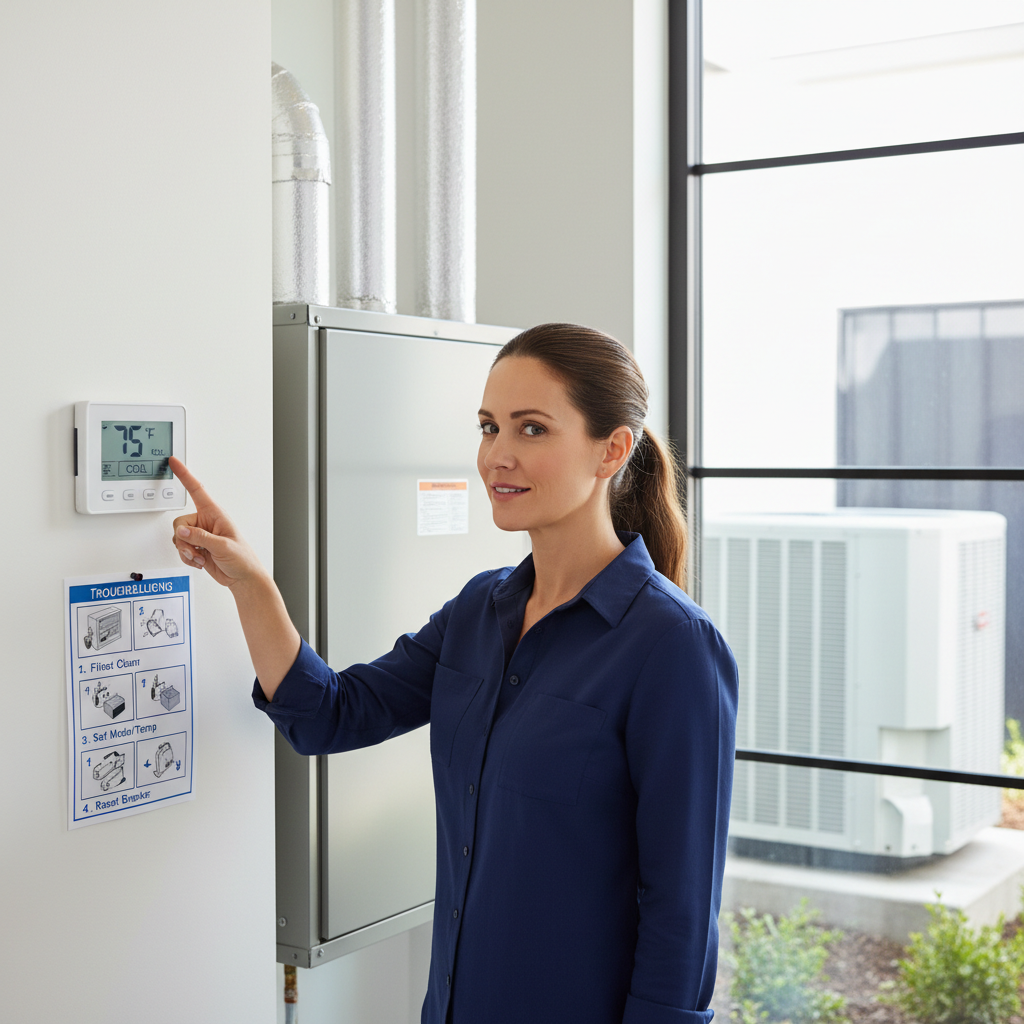
1. Check Your Thermostat Settings — *Ensure it's set to 'Cool' and a low temperature.
Sometimes, the simplest solutions are the most overlooked. Your thermostat might be set incorrectly, preventing the AC from engaging properly. Ensure it's not set to 'Heat' or 'Fan Only'. * Tool: Your finger * If this doesn't work: Move to the next step.
2. Inspect and Replace the Air Filter — *A dirty filter chokes airflow and causes cooling issues.
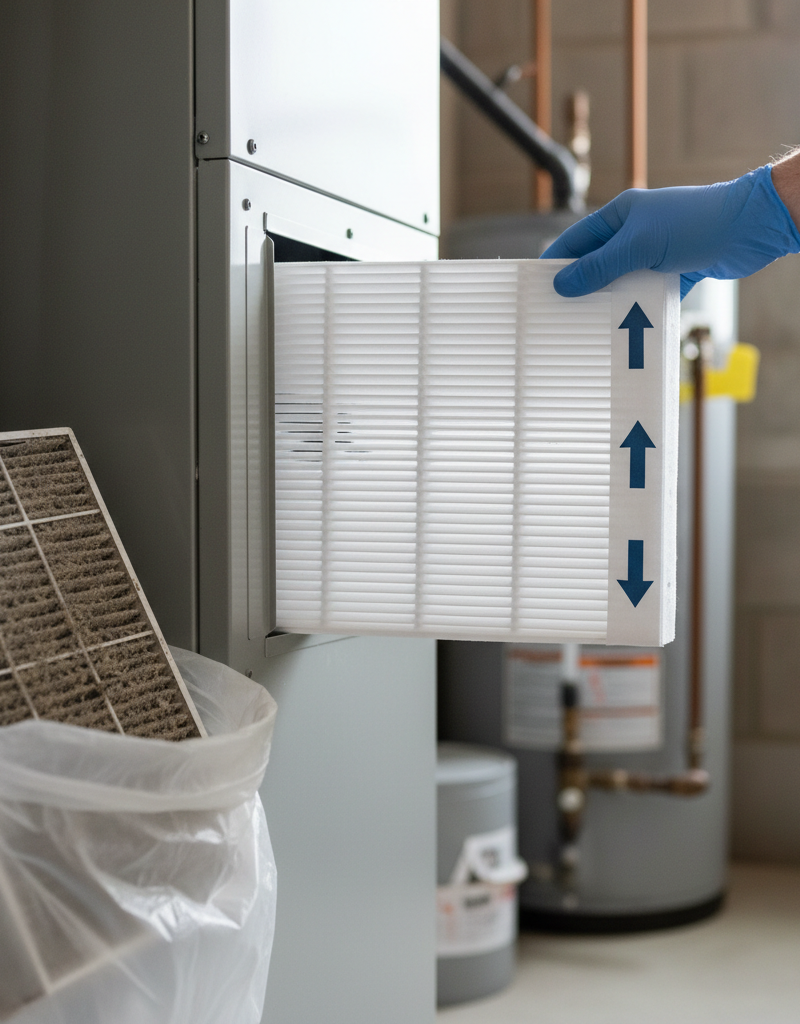
This is the most common culprit for an AC blowing warm air. A clogged filter restricts airflow, making your system work harder and often leading to the evaporator coil freezing up. Aim to check and replace your filter every 1-3 months. * Tool: New air filter (matching your furnace size) * How to: Locate your filter (usually in the return air vent or at the air handler/furnace). Note the arrow indicating airflow direction. Slide out the old filter and replace it with a new one, ensuring the arrow points towards the furnace. Dispose of the old filter appropriately. * Safety: Always turn off your HVAC system at the thermostat and the circuit breaker before handling components inside your furnace or air handler. * If this doesn't work: A severely clogged filter can cause the evaporator coil to freeze even if you replace the filter. Turn off your AC (fan only for 4-6 hours, or completely off for 24 hours) to allow the coil to thaw.
3. Reset Your Circuit Breaker — *Restore power to your indoor and outdoor units.
Circuit breakers trip to prevent electrical overloads. If either your indoor air handler or outdoor condenser unit has lost power, it won't operate correctly. Look for a tripped breaker, which will be in the 'off' position or halfway between 'on' and 'off'. * Tool: Your hand * How to: Go to your electrical panel. Locate the breakers labeled for your 'AC', 'Furnace', or 'Air Handler'. If you find one tripped, firmly push it to the 'off' position, then back to the 'on' position. Wait a few minutes before calling for cooling. * Safety: Never touch wiring inside the panel. If breakers trip repeatedly, call an electrician.
4. Clear Debris from the Outdoor Condenser Unit — *Ensure proper heat dissipation for efficient cooling.
The outdoor unit (condenser) needs to dissipate heat effectively. If it's covered in leaves, grass clippings, or other debris, it can't release heat efficiently, leading to warm air indoors. * Tools: Work gloves, stiff brush, garden hose * How to: Turn off power to the outdoor unit at the dedicated disconnect switch (usually on the wall near the unit) and at the main electrical panel. Using gloves, carefully remove any large debris from around and on top of the unit. Gently brush off the condenser fins, making sure not to bend them. For stubborn dirt, you can lightly spray the fins with a garden hose from the inside out (important: ensure power is completely OFF and avoid spraying electrical components). * Safety: Always ensure power is completely disconnected before touching the outdoor unit. The fan blades are sharp, and electrical components can be dangerous.
5. Check Your Condensate Drain Line — *A clogged line can trigger a safety shut-off.
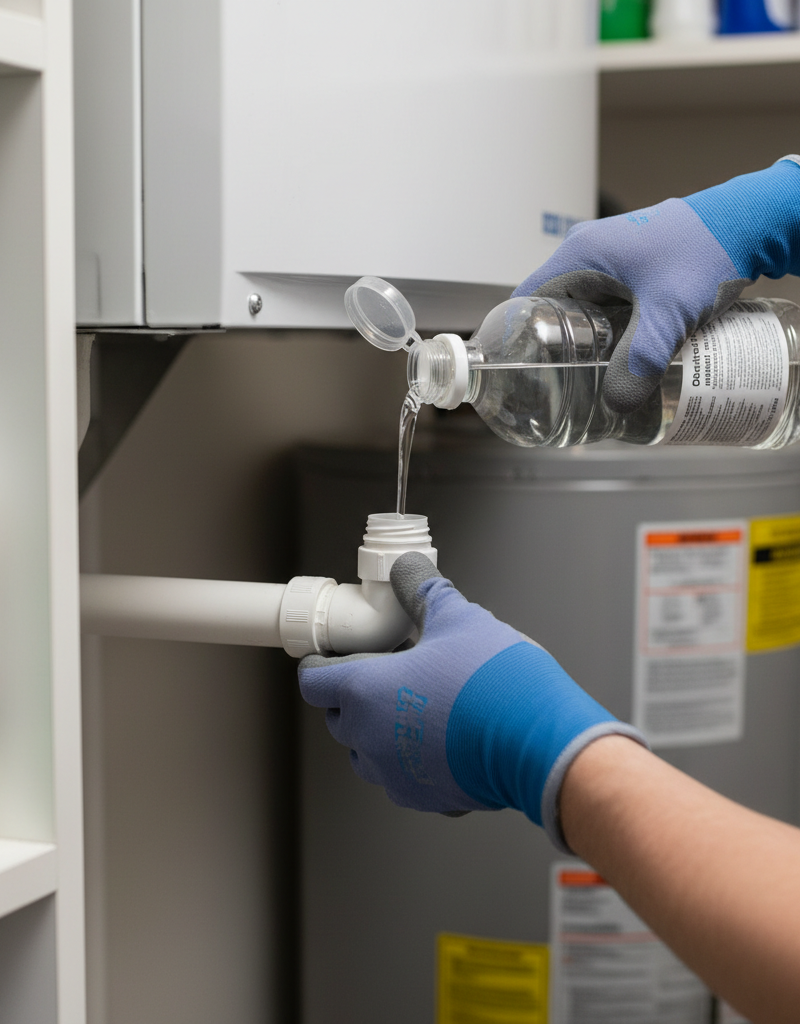
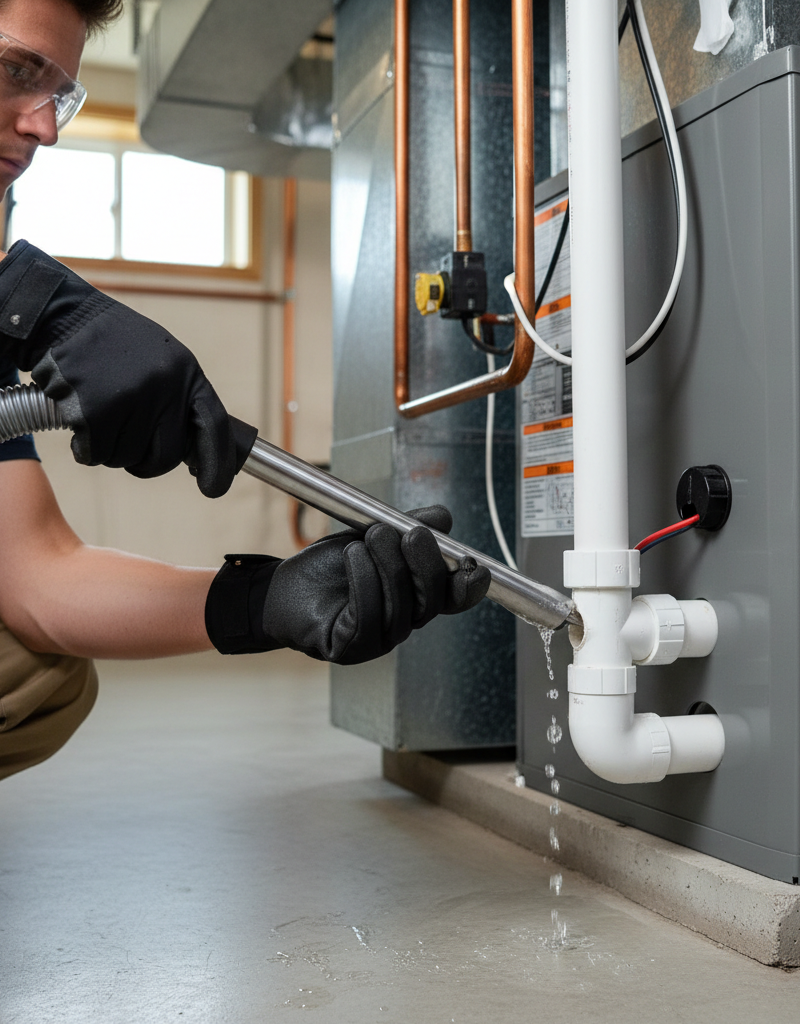
Your AC removes humidity, which creates condensation. This water drains out through a condensate line. If the line gets clogged with algae or debris, water can back up, tripping a float switch that shuts down the system to prevent overflowing, or allowing the system to run inefficiently without properly dehumidifying. * Tools: Wet/dry vac, white vinegar, old towel * How to: Locate the condensate pan and drain line, typically near the indoor unit. If you see standing water in the pan, the line is likely clogged. You can try to clear it using a wet/dry vac at the outdoor end of the drain line, or by pouring a cup of distilled white vinegar into the access port on the line near the indoor unit (if available) to kill algae. Wait 30 minutes, then flush with water. * Caution: If you don't find a clog but the pan is full, the float switch may be faulty, requiring a professional.
Common Causes
- Dirty Air Filter: Restricts airflow, leading to overworked components and potential coil freeze-up.
- Incorrect Thermostat Settings: Set to 'Fan Only', 'Heat', or too high a temperature.
- ** tripped Circuit Breaker:** Cuts power to either the indoor or outdoor unit, preventing operation.
- Clogged Condenser Coils: Debris prevents the outdoor unit from releasing heat effectively.
- Frozen Evaporator Coil: Caused by restricted airflow (dirty filter, blocked return vent) or low refrigerant, leading to a block of ice that prevents heat absorption.
- Clogged Condensate Drain Line: Standing water can trip a safety switch, shutting down the AC.
- Low Refrigerant (Refrigerant Leak): This is a serious issue that indicates a leak somewhere in the sealed system. Low refrigerant means the system can't properly absorb or release heat, causing it to blow warm air. This is NOT a DIY fix.
- Malfunctioning Fan Motor (Indoor or Outdoor): If either fan isn't blowing, airflow is compromised, affecting heat exchange.
Common Mistakes
- Ignoring the Air Filter: Many homeowners neglect to change their air filter regularly, leading to the most common AC problems. Change it monthly during heavy use.
- Jumping to Conclusions about Refrigerant: Assuming a refrigerant leak is the first step when warm air blows is a mistake. Most often, it's something simpler. Only a licensed professional can diagnose and fix refrigerant issues.
- Not Clearing Outdoor Unit Debris: Allowing foliage, leaves, or grass clippings to accumulate around the condenser unit severely impedes its ability to dissipate heat, reducing efficiency and lifespan.
- Setting the Thermostat Too Low: While not directly causing warm air, setting your thermostat excessively low (e.g., below 70°F) can cause the system to constantly run and even freeze up the evaporator coil, especially if airflow is already restricted.
- Leaving Vents Closed: Closing too many vents to
Related Articles
Keep troubleshooting with these hand-picked guides from FixlyGuide:
- The #1 Reason Your AC Blows Warm Air (And It's Not What You Think) — A dirty air filter is often the overlooked culprit behind an air conditioner blowing warm air, hindering its ability to cool your home effi…
- The #1 Mistake Homeowners Make When Heat Pumps Stop Heating in Winter — Discover the crucial mistake most homeowners make when their heat pump struggles in cold weather and how to fix it, potentially saving hund…
- The Hidden Reason Your AC Freezes — And Why Most Homeowners Get It Wrong — Discover the surprising truth behind why your outdoor AC unit is freezing up and the common mistake homeowners make when trying to fix it.
- The #1 HVAC Mistake Costing You Hundreds (and 2 Easy Fixes) — Discover the most common HVAC mistake homeowners make that leads to higher bills and breakdowns, plus two simple maintenance steps to preve…
- The Secret Reason Your AC Isn't Drying Your Air (And What to Check First) — Your AC should cool and dehumidify, but if your house feels muggy, there's a specific, often overlooked culprit preventing it from doing it…
- The Hidden Reason Your AC Isn't Cooling (And Why Most Homeowners Get It Wrong) — Is your central AC blowing warm air or struggling to cool your home? The culprit is often a silent but serious issue many homeowners overlo…
What should this project cost?
Enter your project details for a realistic cost range before you call anyone.
Service calls and common repairs run $150–$900; full system replacement typically $6,000–$12,000.
- Regional adjustment
- National average
- Labor share (typical)
- ~$1,935
- Quotes to collect
- 3 written estimates
Educational estimate based on national averages — not a binding quote. Always confirm with written local estimates.
Fixly Project Decision Box
- DIY difficulty
- Advanced
- Estimated time
- Homeowner checks 20–30 minutes
- Cost level
- Moderate
Main tools / materials
- Clean air filter
- Garden hose for condenser coils
- Shop vac for the condensate line
When to stop and call a pro
- Burning smell, smoke, or a tripping breaker
- Refrigerant lines iced over or hissing
- Any work inside the sealed refrigerant circuit (EPA-licensed only)
- Gas smell near a furnace — leave and call the utility
Need professional help?
Find an HVAC Pro Near YouFrequently asked questions
How do I know if my AC is low on Freon?+
You can't directly check your Freon (refrigerant) level. Signs of low refrigerant include loud hissing or bubbling noises, ice on the copper lines or outdoor unit, and the AC blowing warm air. If you suspect low refrigerant, contact an HVAC professional, as handling refrigerant requires specialized tools and licensing.
Why is my AC running but not cooling the house?+
If your AC is running but not cooling, common culprits include a dirty air filter blocking airflow, a frozen evaporator coil (often due to a dirty filter or low refrigerant), incorrect thermostat settings, or a clogged outdoor condenser coil preventing heat dissipation. Start by checking your filter and thermostat.
How often should I change my AC filter?+
The frequency of changing your AC filter depends on several factors: the type of filter, pets, allergies, and household activity. General recommendations range from every 30 days for 1-inch filters in homes with pets or allergies, to every 3-6 months for standard homes with 1-inch filters. Thicker filters (4-5 inches) can last 6-12 months.
Discussion
Loading comments…