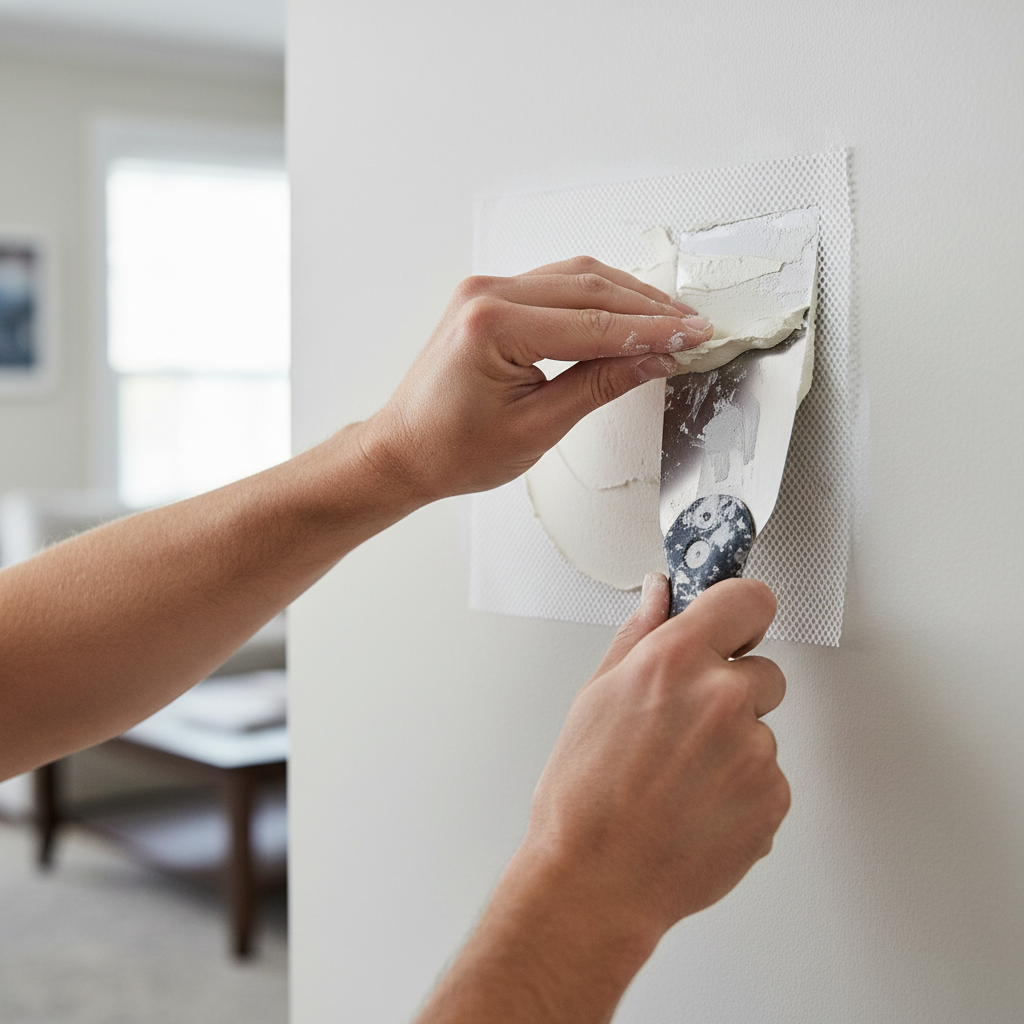
- Nail/Screw Hole up to 1/2 inch: A dab of spackle may suffice, or a small mesh patch for slightly larger ones.
- Small Hole (1/2 inch to 3 inches): Self-adhesive fiberglass mesh patch or a "California patch" is ideal.
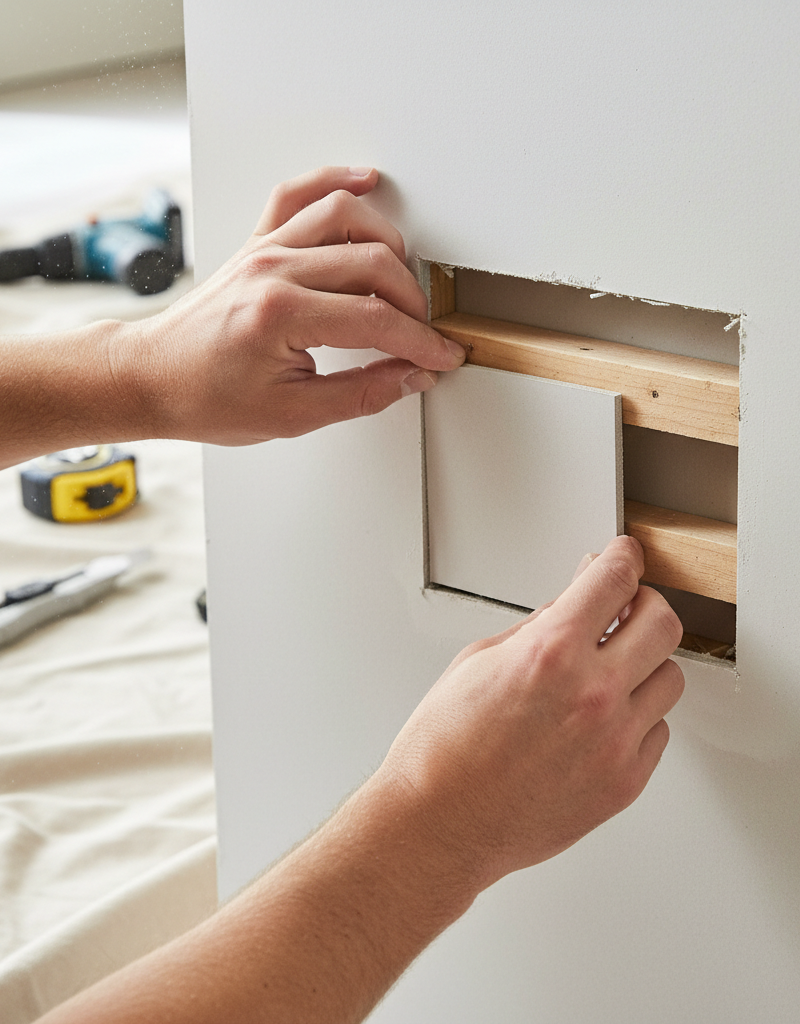
- Medium Hole (3 inches to 6 inches): A larger mesh patch with a metal backing or a more robust California patch. If larger than 6 inches, consider cutting out a square and inserting a new piece of drywall.
General remodeling · Renovation planning
| Project category | General remodeling |
|---|---|
| Problem type | Renovation planning |
| Trade required | General contracting |
| Urgency | Planned project |
| Safety risk | Low safety risk |
| DIY suitability | Pro recommended |
| Cost category | Major investment |
| Typical timeline | Design and permitting often 2–4 months before work starts |
| Contractor type | General contractor |
Repair option
Phase the work and fix the building envelope first.
Replacement option
Full renovation with permits, design, and a general contractor.
Common causes
- Space no longer fits how the household lives
- Resale preparation
- Deferred maintenance stacking up
Relevant tools:project cost estimatorcompare quoteshome improvement material prices
Published May 21, 2026Last updated August 17, 2026
Tools & materials you'll need
Affiliate linksAs an Amazon Associate FixlyGuide earns from qualifying purchases — at no extra cost to you. Prices and availability are accurate as of publication and subject to change.
Quick Answer
Patching a small hole in drywall is a common home repair, but doing it correctly is crucial for a smooth, invisible finish. The most frequent error homeowners make is applying too much joint compound too quickly, or not providing adequate backing for the patch. For holes up to 6 inches, a simple mesh patch with a backer or a "California patch" offers a durable repair. The process involves cleaning the area, securing the patch, applying multiple thin layers of joint compound, and feathering the edges seamlessly into the existing wall texture.
The Problem
Small holes in drywall are an inevitable part of homeownership. They can result from carelessly moved furniture, anchor bolts pulled from the wall, or even an enthusiastic child's toy. While a minor imperfection, an improperly repaired hole stands out like a sore thumb, detracting from the aesthetics of a room. A poor patch might crack, bulge, or simply remain visible due to uneven texture or a lack of proper feathering. This guide addresses holes ranging from a nail pop up to about 6 inches in diameter – the sweet spot for a DIY repair that, when done right, becomes completely undetectable.
How It Works
Drywall, essentially gypsum plaster pressed between two sheets of heavy paper, provides the smooth, flat surface for our interior walls and ceilings. When a hole occurs, the integrity of this surface is compromised. The goal of patching is to restore that smooth, continuous plane. For small holes, the repair relies on creating a stable substrate (either the existing drywall, a small wooden backer, or the mesh of a specialized patch) onto which new drywall material – in the form of joint compound – can be applied. Joint compound, often called "mud," is a gypsum-based paste that hardens as it dries. It bonds to the paper facing of the drywall and, when applied in thin, tapering layers, can fill discrepancies and blend seamlessly with the surrounding wall. The successful feathering relies on ensuring the patch material gently slopes down to meet the original wall surface, avoiding any abrupt edges or humps. Sanding between coats is essential to achieve this gradual transition and remove any imperfections before the next layer is applied, building up the repair gradually to match the existing wall plane.
Step-by-Step Fix
1. Assess the Damage — Determine the size and type of hole.
- Nail/Screw Hole up to 1/2 inch: A dab of spackle may suffice, or a small mesh patch for slightly larger ones.
- Small Hole (1/2 inch to 3 inches): Self-adhesive fiberglass mesh patch or a "California patch" is ideal.
- Medium Hole (3 inches to 6 inches): A larger mesh patch with a metal backing or a more robust California patch. If larger than 6 inches, consider cutting out a square and inserting a new piece of drywall.
2. Prepare the Area — Clean and cut away any loose material.
- Use a utility knife to carefully trim any jagged edges or loose paper from around the hole. Ensure the edges are clean and firm. For smaller holes, you might simply wipe away dust.
- Lightly sand the area around the hole (about 6 inches out) if there are any old paint drips or slight textures you want to smooth for better adhesion.
3. Apply a Self-Adhesive Mesh Patch (for holes up to 3 inches) — Cover the hole with a backing.
- Peel the backing off the mesh patch. Center it directly over the hole, ensuring it completely covers the damaged area and extends at least 1 inch beyond the hole edges in all directions.
- Press it firmly onto the wall, ensuring good adhesion. These patches often have a metal plate in the center providing rigidity.
- If using a wooden backer for a larger hole (3-6 inches): Cut a piece of scrap wood (e.g., a paint stir stick) slightly longer than the hole. Insert it into the hole horizontally, then secure it by driving two small drywall screws through the existing drywall into the ends of the wood backer. This creates a solid anchor point.
4. Apply the First Coat of Joint Compound — Start filling the patch.
- Using a 6-inch drywall knife, scoop a small amount of all-purpose joint compound onto the blade. Apply a thin, even layer directly over the mesh patch.
- Press firmly, forcing the compound through the mesh to fully embed it. Extend the compound about 2-3 inches beyond the edges of the patch.
- Common Mistake Alert: Don't glob it on! A thin, feather-edged coat is far better than a thick one. Remove any excess compound.
5. Allow to Dry Completely — Patience is key.
- Let the first coat dry thoroughly. Depending on humidity and thickness, this can take 2-4 hours, or even overnight. It should be light in color and firm to the touch.
- Pro Tip: Rushing this step will lead to cracks and an uneven finish.
6. Lightly Sand the First Coat — Smooth out imperfections.
- Using a fine-grit sanding sponge (120-150 grit), lightly sand the patched area. The goal is to smooth any ridges, humps, or knife marks. Do not sand through the compound to the patch or bare wall.
- Wipe away sanding dust with a damp cloth.
7. Apply the Second Coat of Joint Compound — Build up the repair.
- Using a wider 8-inch or 10-inch drywall knife, apply a second, slightly wider, and very thin layer of joint compound.
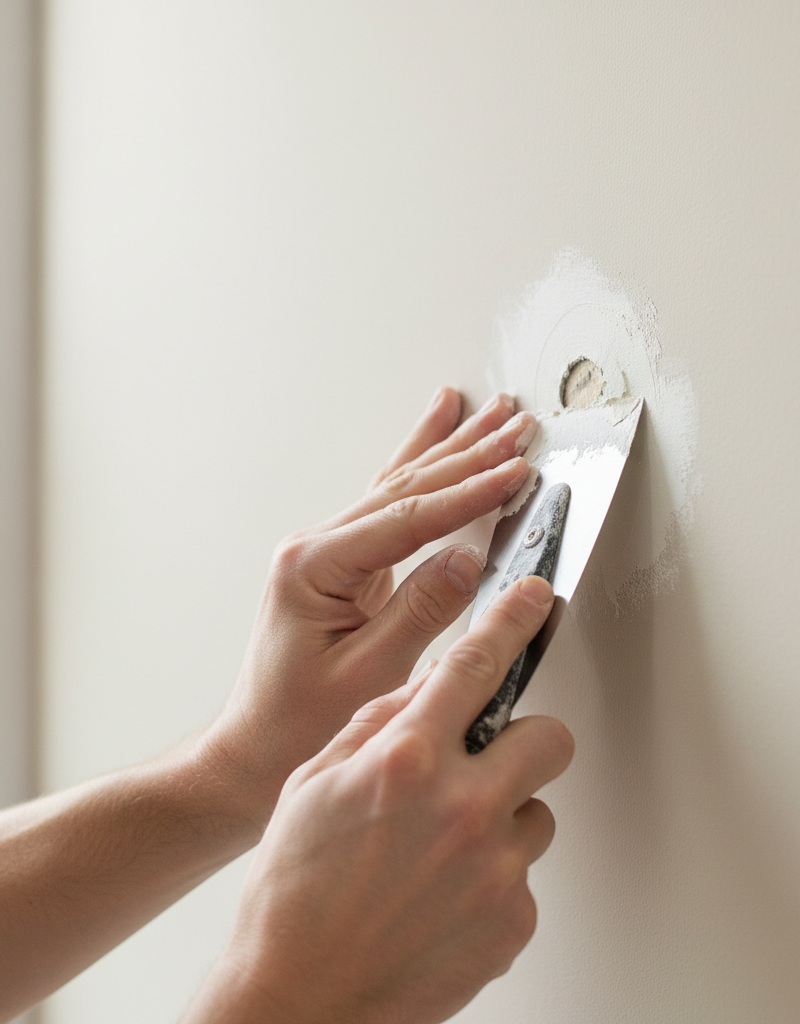
- Feather the edges even further into the surrounding wall. This helps blend the patch seamlessly. The wider knife helps achieve a flatter, more even application.
- If you are repairing a texture: This might be the coat where you lightly dab or stipple the compound to mimic existing texture, if applicable. However, for most smooth walls, just focus on a flat finish.
8. Allow to Dry and Sand Again — Refine the surface.
- Let the second coat dry completely (another 2-4 hours or overnight).
- Lightly sand with a fine-grit sanding sponge, focusing on achieving a perfectly flat and smooth surface. The goal is for the patch to be indistinguishable from the surrounding wall when running your hand over it.
- Wipe away dust.
9. Apply a Third (Optional) Finish Coat — Achieve perfection.
- For a truly professional finish, especially on smooth walls or if there are any minor imperfections, apply a final, extremely thin skim coat using a 10-inch or 12-inch knife.
- This coat is all about feathering the edges out even further and correcting any minor low spots or knife marks.
10. Final Sanding and Cleaning — Prepare for paint.
- Once the final coat is dry, perform a very light sanding with a very fine-grit sanding sponge (180-220 grit) or a fine-grit sandpaper. Run your hand over the patch in various directions; you shouldn't feel any bumps or ridges.
- Wipe down the entire patched area thoroughly with a damp sponge or cloth to remove all dust. This is critical for good paint adhesion.
11. Prime and Paint — The finishing touch.
- Apply a good quality primer (PVA drywall primer is excellent) over the entire patched area, extending slightly beyond the patch onto the original wall. This helps seal the joint compound and prevents "flashing" (where the paint dries differently on the patch than the wall).
- Once the primer is dry, paint the area, making sure to feather the paint into the surrounding wall or paint the entire wall if necessary for a perfect match.
Common Causes
- Loose Fasteners: Drywall screws or nails can work loose over time, creating "nail pops" where the fastener head pushes out the joint compound.
- Impact Damage: From moving furniture, door handles swinging into the wall, or accidental bumps during daily activities.
- Anchoring Mistakes: Unscrewing Wall anchors without proper technique can leave larger, messier holes.
- Settlement: Minor house settling can sometimes cause small cracks or stress points leading to small holes, especially around door frames and windows.
Common Mistakes
- Applying Too Much Joint Compound at Once: This is the most common mistake. Thick layers dry slowly, shrink, crack, and are very difficult to sand smooth. Instead: Apply multiple thin layers, allowing each to dry completely.
- Not Sanding Between Coats: Skipping sanding leaves ridges and bumps from previous coats, making the final patch visible. Instead: Lightly sand with a fine-grit sponge after each coat to ensure a perfectly smooth surface.
- Using the Wrong Tools: Trying to patch with a putty knife designed for wood filler or a too-narrow drywall knife. Instead: Use proper drywall knives (6-inch, 8-inch, 10-inch) for smooth, feather-edged applications.
- Not Feathering the Edges: Leaving distinct edges where the joint compound meets the existing wall creates a noticeable lump or line. Instead: Extend each successive coat further out from the center, tapering it thinly to blend seamlessly.
- Skipping Primer: Joint compound is porous. Painting directly over it without priming causes the paint to absorb unevenly, resulting in a dull or "flashed" appearance compared to the surrounding wall. Instead: Always use a quality drywall primer, especially a PVA-based one, before painting.
- Ignoring Loose Bits: Not cutting away loose paper or crumbly drywall before patching. Instead: Trim all loose material to ensure the patch has a solid, stable base to adhere to.
Cost & Time Breakdown
| Task | DIY cost | Pro cost | Time |
|---|---|---|---|
| Mesh patch & joint compound | $10–$25 | N/A | N/A |
| Small tools (knives, sponge) | $15–$30 | N/A | N/A |
| Primer & paint (small amount) | $10–$20 | Included | N/A |
| Total Patching (DIY) | $35–$75 | N/A | 2–4 hours |
| Pro Patch & Paint | N/A | $150–$300+ | 1–2 days (incl. drying) |
Tips & Prevention
- Use Corner Guards: Install plastic or metal corner guards on vulnerable external wall corners to prevent impact damage.
- Door Stops: Attach rubber door stops to baseboards to prevent doorknobs from puncturing walls.
- Pilot Holes for Anchors: Always pre-drill pilot holes for picture hangers or anchors to minimize drywall tear-out.
- Furniture Pads: When moving heavy furniture, use furniture pads or seek assistance to avoid scrapes and dents.
- Regular Inspections: Periodically check walls, especially behind doors or in high-traffic areas, for minor damage that can be easily repaired before it worsens.
- Store Touch-Up Paint: Keep small amounts of original wall paint for quick, minor spot repairs after a patch.
When to Call a Professional
While patching small holes is a homeowner-friendly task, there are instances where calling a professional drywall contractor is advisable. If you're dealing with multiple large holes (greater than 6 inches in diameter), extensive water damage that has compromised the drywall integrity, or significant cracks extending across walls or ceilings, a professional will ensure the structural soundness and a quality finish. Additionally, if the damage is in a high-traffic area where a perfectly invisible repair is paramount, or if you simply lack the time or confidence to achieve a smooth, paint-ready surface, don't hesitate to call. Professionals have specialized tools and techniques for seamless repairs, especially when dealing with textured walls that require intricate matching. For any damage involving potential structural issues or electrical components behind the wall, always consult a licensed professional immediately.
Related Articles
Keep troubleshooting with these hand-picked guides from FixlyGuide:
- The 1 Common Drywall Patching Mistake (and The Right Way to Fix a Hole) — Discover the biggest mistake homeowners make when patching drywall holes and learn the correct, long-lasting method for seamless repairs.
- The 15-Minute Drywall Patch Secret (No Mudding Skills Required) — Discover how to quickly and easily patch a small hole in drywall using a simple method that doesn't require advanced mudding skills.
- The 4-Inch Drywall Hole Fix: Why Spackle Alone Always Fails — Fix a small drywall hole (up to 4 inches) properly with a simple patch kit and avoid common mistakes that lead to visible repairs.
- The 1 Common Mistake That Makes Drywall Patches Obvious (And How to Fix It) — Learn the common pitfall in drywall repair that leaves unsightly patches and how to achieve a seamless, invisible fix every time.
- The 15-Minute Drywall Hole Fix Plumbers Don't Want You to Know — Discover the surprisingly simple, super-fast method for patching small drywall holes that avoids messy muds and sanding.
- The Secret Reason Your Baseboards Pull Away (And the Easy Fix) — Discover why your baseboards are separating from the wall and learn surprisingly simple fixes that restore a polished look to your home.
What should this project cost?
Enter your project details for a realistic cost range before you call anyone.
Cost depends heavily on which system turns out to be the source.
- Regional adjustment
- National average
- Labor share (typical)
- ~$1,620
- Quotes to collect
- 3 written estimates
Educational estimate based on national averages — not a binding quote. Always confirm with written local estimates.
Recommended for DIYers & woodworkers
Sponsored
The Top 20 Tools for Workshops of Any Budget
No stationary machines or power tools required — plus 3 fundamental tools that can't be bought at any price.
Get the free guide
Ted's Woodworking — The #1 Woodworking Resource
Detailed instructions, dimensioned drawings, materials & cutting lists, and 3D schematics for every skill level.
See the plansSponsored: links above are affiliate links. FixlyGuide may earn a commission on qualifying purchases — at no extra cost to you.
Frequently asked questions
How big of a drywall hole can I patch myself?+
You can typically patch holes up to 6 inches in diameter yourself. For anything larger, it's often more efficient to cut out a square and replace it with a new piece of drywall, or call a professional.
Why does my drywall patch keep cracking?+
Cracking usually indicates that the joint compound was applied too thickly, dried too quickly, or wasn't given enough time to dry between coats. It can also happen if the patch didn't have a stable backing. Always apply thin layers and allow ample drying time.
Do I need to prime after patching drywall?+
Yes, absolutely. Joint compound is very porous. Priming seals the patch, prevents uneven paint absorption (known as 'flashing'), and ensures that the final paint coat has a uniform finish and color matching the rest of the wall.
Can I use spackle instead of joint compound?+
Spackle is generally better for very small nail holes or minor imperfections as it dries quickly and is easy to sand. For holes larger than a dime, joint compound is recommended because it's more durable, less prone to cracking in thicker applications, and easier to feather for a seamless finish over a larger area.
How long does joint compound take to dry?+
Drying time varies based on thickness, humidity, and temperature, but typically a thin coat will dry in 2-4 hours. Thicker applications or high humidity can extend drying time to 12-24 hours. Always ensure each coat is completely dry before sanding or applying the next layer.
Discussion
Loading comments…