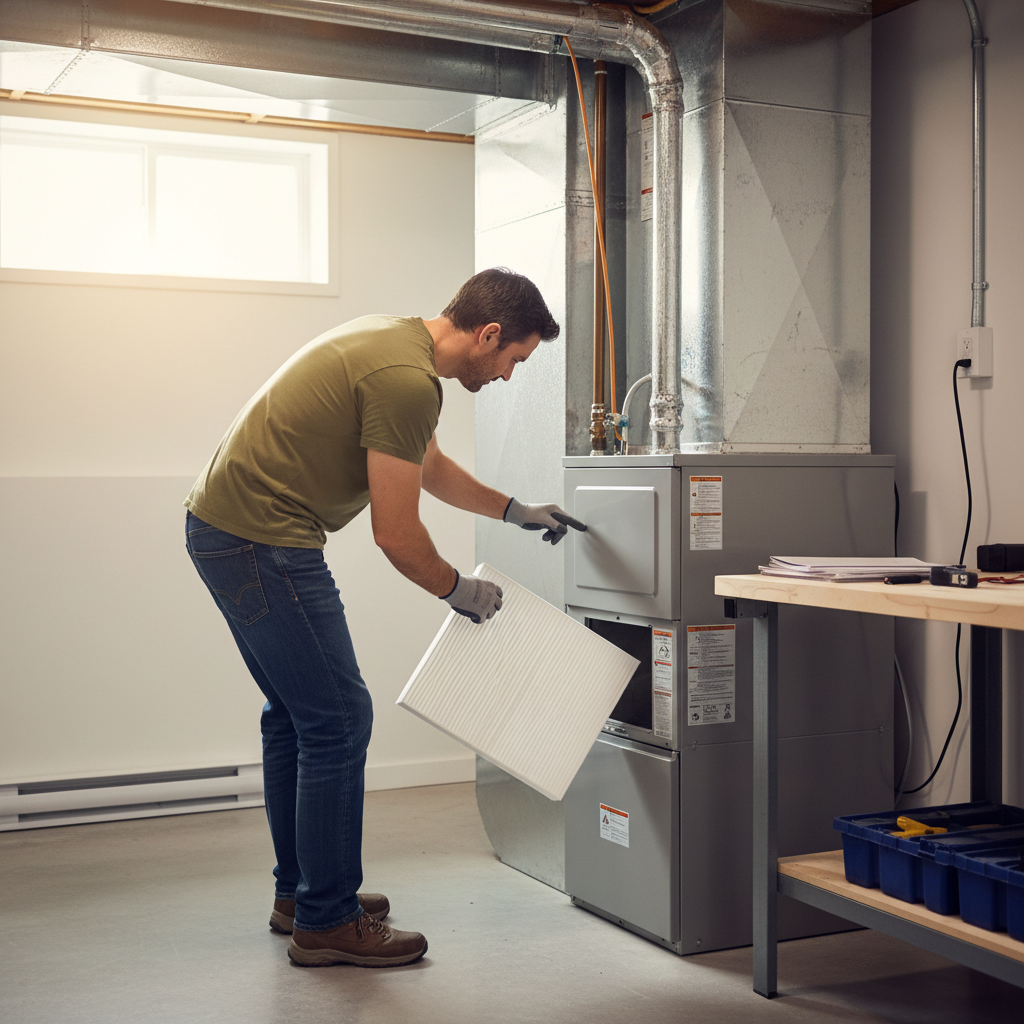
- Check and Change the Air Filter — The 1 culprit for poor airflow.
- Locate your furnace's air filter slot, usually at the return air duct or within the furnace cabinet itself. Filters are typically 1-inch, 2-inch, or 4-inch thick. Note the size printed on the filter.
- If this doesn't work: Proceed to checking your thermostat settings and sensors.
HVAC · High energy usage
| Project category | HVAC |
|---|---|
| Problem type | High energy usage |
| Trade required | HVAC |
| Urgency | Planned project |
| Safety risk | Low safety risk |
| DIY suitability | DIY for experienced homeowners |
| Cost category | High cost |
| Typical timeline | Assessment within weeks; replacement planned off-season |
| Contractor type | Licensed HVAC technician |
Repair option
Duct sealing, insulation, and a tune-up before touching the equipment.
Replacement option
High-efficiency replacement sized by a load calculation, not a rule of thumb.
Common causes
- Aging, low-efficiency equipment
- Leaking ducts losing conditioned air
- Insufficient attic insulation
- Oversized system short-cycling
Relevant tools:project cost estimatorrepair or replace
Published June 25, 2026Last updated August 17, 2026
Tools & materials you'll need
Affiliate linksAs an Amazon Associate FixlyGuide earns from qualifying purchases — at no extra cost to you. Prices and availability are accurate as of publication and subject to change.
Quick Answer
Furnace short cycling is when your heating system turns on and off too frequently, often running for only a few minutes at a time instead of completing a full heating cycle. This common issue often points to readily diagnosable problems such as a dirty air filter restricting airflow, a malfunctioning thermostat failing to accurately read room temperature, or even an incorrectly sized furnace for your home's heating needs. Addressing these issues can often be a simple, DIY fix, preventing premature wear on your system and improving energy efficiency.
The Problem
Imagine your furnace as a marathon runner. It's designed to start, warm up, run a good distance, and then cool down. Short cycling is like that runner sprinting for 100 yards, stopping, sprinting again, and stopping. This stop-and-go behavior prevents your home from reaching a stable, comfortable temperature, leads to higher energy bills because the furnace constantly restarts (which uses more energy than continuous running), and significantly increases wear and tear on critical components like the heat exchanger, igniter, and blower motor. Over time, this accelerates the need for costly repairs or even premature system replacement. The problem isn't just an inconvenience; it's a symptom of deeper system inefficiencies that, if left unaddressed, can drastically shorten the lifespan of your furnace.
How It Works
To understand short cycling, let's briefly review how a typical forced-air furnace operates. When your thermostat calls for heat, it sends a low-voltage signal to the furnace control board. The control board initiates a sequence: first, the inducer motor starts, pulling exhaust gases out and proving proper ventilation through a pressure switch. Next, the igniter (either a hot surface igniter or a pilot light) heats up or sparks. Once the igniter is ready, the gas valve opens, and the burners ignite. As the combustion chamber heats up, a component called the flame sensor proves the presence of a flame. After a short delay, once the heat exchanger reaches a sufficient temperature, the blower motor kicks on, pushing warm air through your ductwork and into your home. The furnace continues to operate until the thermostat's temperature sensor registers that the desired temperature has been reached, at which point the gas valve closes, the igniter shuts off, and the blower motor typically runs for a short period (fan delay) to extract any remaining heat from the heat exchanger before shutting down completely. This entire process, from call for heat to full shutdown, constitutes a 'heating cycle'. Short cycling disrupts this sequence, often shutting down prematurely due to a safety limit being tripped or the thermostat prematurely satisfying.
Step-by-Step Fix
Before attempting any repairs, always turn off the power to your furnace at the main electrical panel and at the furnace's service switch. This prevents accidental startup and electrical shock.
-
Check and Change the Air Filter — The #1 culprit for poor airflow.
- Locate your furnace's air filter slot, usually at the return air duct or within the furnace cabinet itself. Filters are typically 1-inch, 2-inch, or 4-inch thick. Note the size printed on the filter.
- Inspect the filter. If it's grey or black with accumulated dust and debris, it's restricting airflow. A clogged filter makes your furnace work harder, can cause the heat exchanger to overheat, and trigger the high-limit switch, leading to short cycling.
- Replace a dirty filter with a new one of the correct size and MERV rating (we recommend MERV 8-11 for a good balance of filtration and airflow). A clean filter significantly improves airflow, allowing the furnace to heat efficiently without overheating.
- If this doesn't work: Proceed to checking your thermostat settings and sensors.
-
Inspect and Recalibrate Your Thermostat — Sometimes it's just a communication breakdown.
- Tools needed: Small Phillips head screwdriver, soft brush (e.g., paintbrush), level.
- Safety: Ensure the thermostat's power is off (some thermostats are low-voltage, but it's good practice).
- Remove the thermostat cover. Dust and debris inside can interfere with its sensors. Gently clean with a soft brush.
- Check if the thermostat is level. An unlevel mercury-switch thermostat can read incorrectly. Modern digital thermostats are less affected but can still benefit from a level mounting.
- Verify the thermostat settings. Ensure it's set to 'Heat' mode and not 'Auto' if you're trying to diagnose heating issues. Check the temperature setting – if it's set very high and the room never reaches it, it won't short cycle, but it won't ever shut off either. If it's set too close to the ambient temperature, it might satisfy too quickly.
- Troubleshooting: Some digital thermostats have a calibration or offset feature in their advanced settings. Consult your thermostat's manual for specific instructions on how to check and adjust its temperature sensor or cycle rate. Setting a wider temperature differential (e.g., 2-3 degrees instead of 1 degree) can sometimes reduce short cycling if the furnace is slightly oversized for the space.
- If this doesn't work: Consider that the thermostat itself might be faulty and unable to accurately sense temperature or send consistent signals. A simple test involves temporarily bypassing the thermostat by jumping the R and W wires (consult a professional if unsure, as this can damage your system if done incorrectly).
-
Clear Blockages in Vents and Registers — Air needs to flow freely.
- Walk through your home and ensure all supply registers (where warm air comes out) and return air grilles (where cold air goes in) are fully open and unobstructed by furniture, rugs, or drapes.
- Blocked vents create back pressure in the ductwork, reducing airflow across the heat exchanger, similar to a dirty filter. This can cause the furnace to overheat and trip the high-limit switch.
- Do a quick check of your return air filter grille – sometimes this also gets neglected with dust buildup. Gently vacuum any surface dust.
- If this doesn't work: The issue could be deeper in the ductwork, requiring professional inspection, or related to the furnace itself.
-
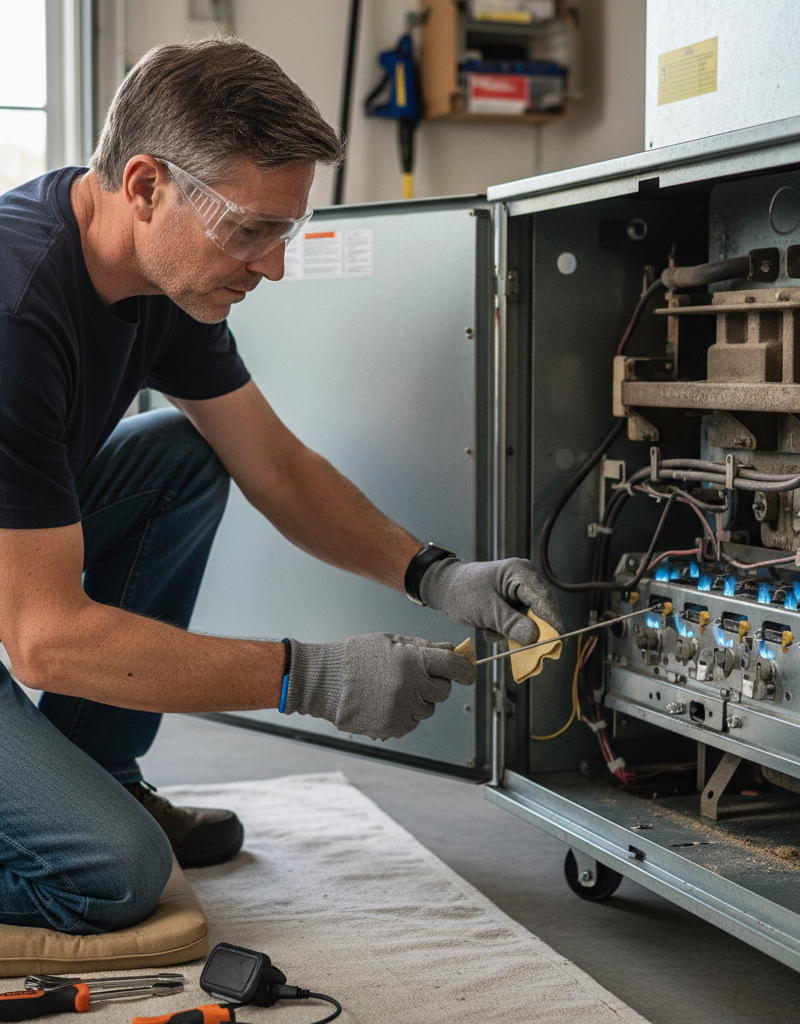
Inspect the Flame Sensor — A common, easy-to-fix part.
- Tools needed: Fine-grit emery cloth or steel wool, screwdriver.
- Safety: Ensure main power to the furnace is OFF. The flame sensor is usually a thin metal rod, often with a white porcelain base, positioned directly in the path of the flame.
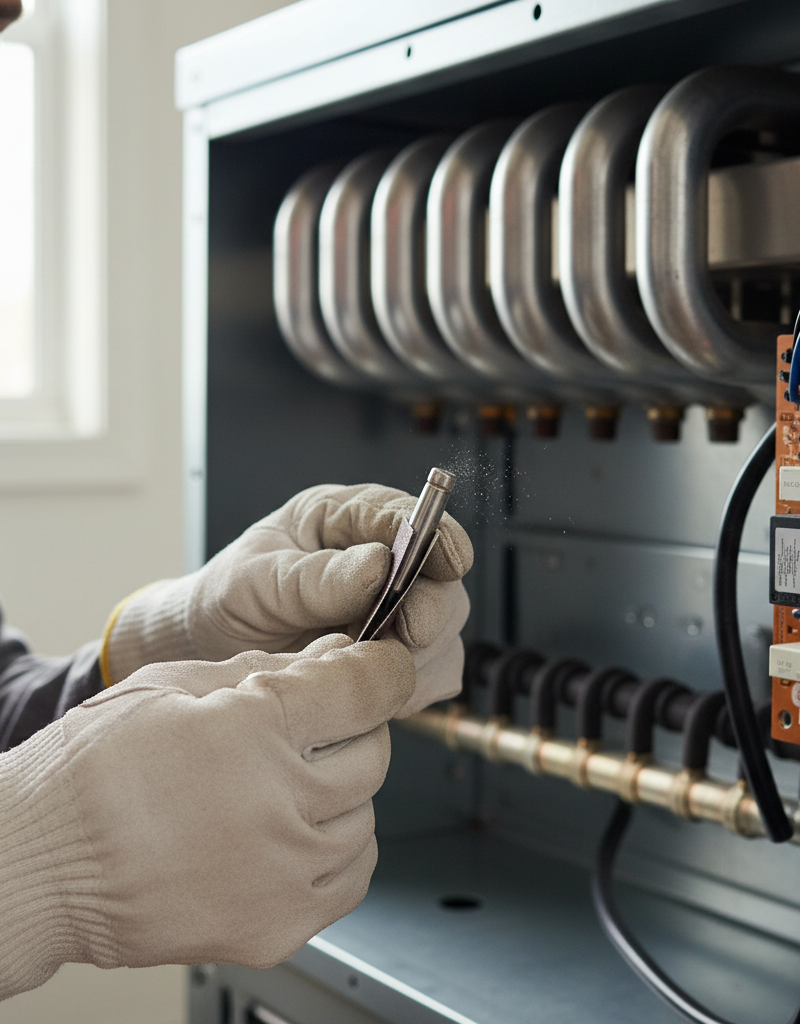
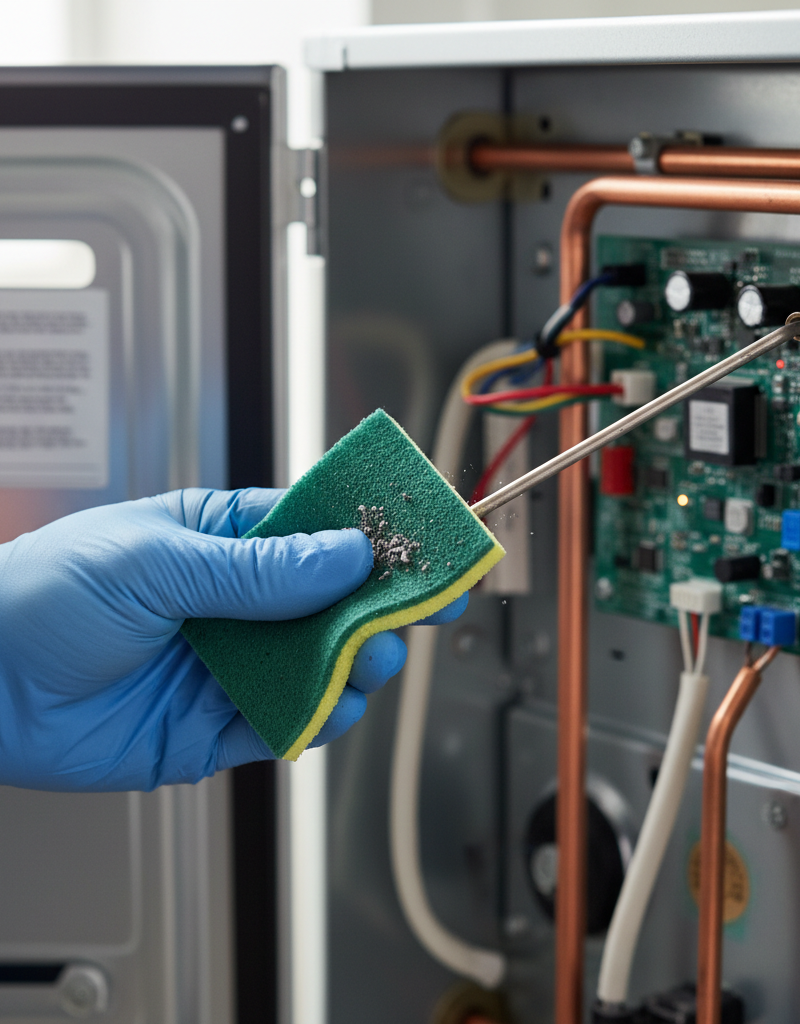
- Over time, carbon buildup on the flame sensor can prevent it from properly detecting the flame, causing the furnace to ignite, run for a few seconds, and then shut off because it thinks there's no flame. This is a very common cause of short cycling.
- Gently remove the flame sensor (usually held by one screw). Using the emery cloth or steel wool, lightly sand off any carbon buildup until the metal is shiny again. Do not bend the sensor.
- Reinstall the sensor securely.
- If this doesn't work: The flame sensor itself might be internally faulty, requiring replacement. They are relatively inexpensive parts.
-
Check for Restricted Exhaust or Intake Vents — Crucial for safe operation.
- Safety: Carbon monoxide is a serious risk. Ensure your CO detectors are working.
- For high-efficiency condensing furnaces, check the PVC intake and exhaust pipes outside your home. Snow, ice, leaves, or even bird nests can block these vents.
- Clear any obstructions. Blocked vents can trigger pressure switches, causing the furnace to shut down prematurely.
- For older, natural draft furnaces, ensure the flue pipe (metal vent from the top of the furnace) is clear and not corroded or disconnected. Check the draft hood too.
- If this doesn't work: Your pressure switch or draft inducer motor might be faulty, requiring professional diagnosis.
-
Assess Your Furnace's Capacity — Is your furnace too big for your house?
- An oversized furnace heats your home too quickly, satisfies the thermostat, and shuts off before completing a full, efficient cycle. This is particularly noticeable in milder weather.
- There's no DIY fix for this beyond potentially adjusting your thermostat's cycle differential (if available) or living with slightly shorter cycles in shoulder seasons. If you suspect an oversized unit, discuss it with an HVAC professional during your next service appointment or if considering replacement.
- If this doesn't work: If the furnace is properly sized, then the problem lies elsewhere, likely a failing component.
Common Causes
- Dirty Air Filter: The most frequent cause. Restricts airflow, causing the furnace to overheat and trip the high-limit safety switch.
- Faulty Thermostat: Malfunctioning sensors, incorrect settings, or poor calibration can lead to inaccurate temperature readings and premature shutdowns.
- Clogged Flame Sensor: Carbon buildup prevents the sensor from detecting the flame, causing the furnace to ignite and immediately shut off as a safety measure.
- Restricted Airflow (Vents/Ductwork): Closed registers, blocked return air grilles, or duct leaks/obstructions reduce airflow, leading to overheating.
- Oversized Furnace: A furnace that's too powerful for the home will heat the space too quickly, satisfy the thermostat, and shut off before efficiently distributing heat, especially in moderate weather.
- Faulty High-Limit Switch: This safety device is designed to prevent overheating. If it's constantly tripping, it could be doing its job due to another problem (like a dirty filter), or the switch itself could be faulty.
- Blocked Exhaust/Intake Vents (High-Efficiency Furnaces): Obstructions can prevent proper combustion air supply or exhaust venting, triggering pressure switches and causing shutdowns.
Common Mistakes
- Ignoring the Air Filter: Many homeowners neglect to change their air filter regularly, assuming it's a minor detail. A dirty filter is the leading cause of furnace inefficiencies and short cycling.
- Blaming the Thermostat First: While a faulty thermostat can be the culprit, it's often an underlying furnace issue. Always check simpler, cheaper fixes like the air filter and flame sensor first.
- Not Cleaning the Flame Sensor Properly: Simply wiping the flame sensor with a rag won't remove carbon buildup effectively. Use fine-grit emery cloth or steel wool to properly clean the metallic rod.
- Closing Too Many Vents: Homeowners sometimes close vents in unused rooms to
Related Articles
Keep troubleshooting with these hand-picked guides from FixlyGuide:
- The 3 Hidden Reasons Your Furnace Short Cycles (and What to Do) — Furnace short cycling wastes energy and causes uneven heating. Learn the hidden reasons behind this common problem and how to fix it yourse…
- The Secret Reason Your Furnace Turns On and Off So Much (It's Not What You Think) — Short cycling strains your furnace and wastes energy. Learn the most common surprising causes and how to fix them to restore efficient heat…
- Why Your Heat Pump Auxiliary Heat Won't Turn Off — Discover why your heat pump's auxiliary heat keeps running, driving up your energy bills. Learn to troubleshoot common issues and know when…
- The #1 HVAC Mistake Making Your Energy Bills Soar (It's Not What You Think) — Discover the crucial HVAC filter mistake that's quietly inflating your energy bills and damaging your system, and how a simple change can s…
- The #1 HVAC Mistake Costing You Hundreds (And How Often to Really Change Your Filter) — Discover the crucial mistake most homeowners make with HVAC filters, leading to higher energy bills, poor air quality, and system damage. L…
- The 3 Hidden Reasons Your Door Won't Latch (And the Easy DIY Fixes) — Frustrated by a door that refuses to latch? Discover the common culprits behind this annoying problem and learn simple, effective DIY fixes…
Should you do this yourself?
Answer five quick questions before you start. Safety outranks savings every time.
Your experience with work like this
How high do you have to work?
Does the job involve any of these?
Will it need a permit?
Specialty tools
Free and instant. Educational guidance only — not a quote, inspection, or professional diagnosis.
Estimate your own project cost
National averages are a starting point. Enter your details for a range that fits your house.
HVAC replacement cost
- Equipment$2,200 – $3,800
- Installation labor$1,200 – $2,500
Always insist on a Manual J load calculation — sq-ft sizing is only a rough check. Federal heat-pump rebates may reduce cost significantly.
Educational estimate only — always confirm with written local bids.
What should this project cost?
Enter your project details for a realistic cost range before you call anyone.
Service calls and common repairs run $150–$900; full system replacement typically $6,000–$12,000.
- Regional adjustment
- National average
- Labor share (typical)
- ~$1,935
- Quotes to collect
- 3 written estimates
Educational estimate based on national averages — not a binding quote. Always confirm with written local estimates.
Fixly Project Decision Box
- DIY difficulty
- Advanced
- Estimated time
- Homeowner checks 20–30 minutes
- Cost level
- Moderate
Main tools / materials
- Clean air filter
- Garden hose for condenser coils
- Shop vac for the condensate line
When to stop and call a pro
- Burning smell, smoke, or a tripping breaker
- Refrigerant lines iced over or hissing
- Any work inside the sealed refrigerant circuit (EPA-licensed only)
- Gas smell near a furnace — leave and call the utility
Need professional help?
Find an HVAC Pro Near YouGet the print-ready PDF of this guide
A clean, ad-free, printable version you can keep on your phone or pin to the workshop wall. Free with a FixlyGuide account.
- Print-optimized layout
- Tools, materials & every step included
- Saved to your account
Frequently asked questions
How long should a furnace run in one cycle?+
A healthy furnace heating cycle typically lasts between 10 to 15 minutes, and sometimes up to 20 minutes in very cold weather or larger homes. If your furnace is frequently running for less than 10 minutes, especially under normal conditions, it's likely short cycling.
Can a dirty filter cause a furnace to short cycle?+
Yes, absolutely. A dirty air filter severely restricts airflow through the furnace. This lack of airflow can cause the heat exchanger to overheat, triggering the furnace's high-limit safety switch to shut down the system prematurely, leading to short cycling.
How do I know if my furnace is short cycling?+
You'll notice your furnace turning on, running for only a few minutes (less than 10 minutes), and then shutting off before your home reaches the desired temperature. It will then restart again shortly after. This rapid on-off pattern is the key indicator.
Can an oversized furnace cause short cycling?+
Yes, an oversized furnace is a common cause, especially in milder weather. It heats the house too quickly, satisfies the thermostat's temperature setting before completing a full, efficient cycle, and then shuts off. While it keeps your home warm, it's less energy-efficient and puts more wear on components.
Is short cycling bad for my furnace?+
Yes, frequent short cycling puts excessive strain on critical furnace components like the heat exchanger, igniter, and blower motor. The constant starting and stopping cause more wear and tear than continuous operation, leading to premature breakdowns, higher repair costs, and a shorter overall lifespan for your furnace.
Discussion
Loading comments…