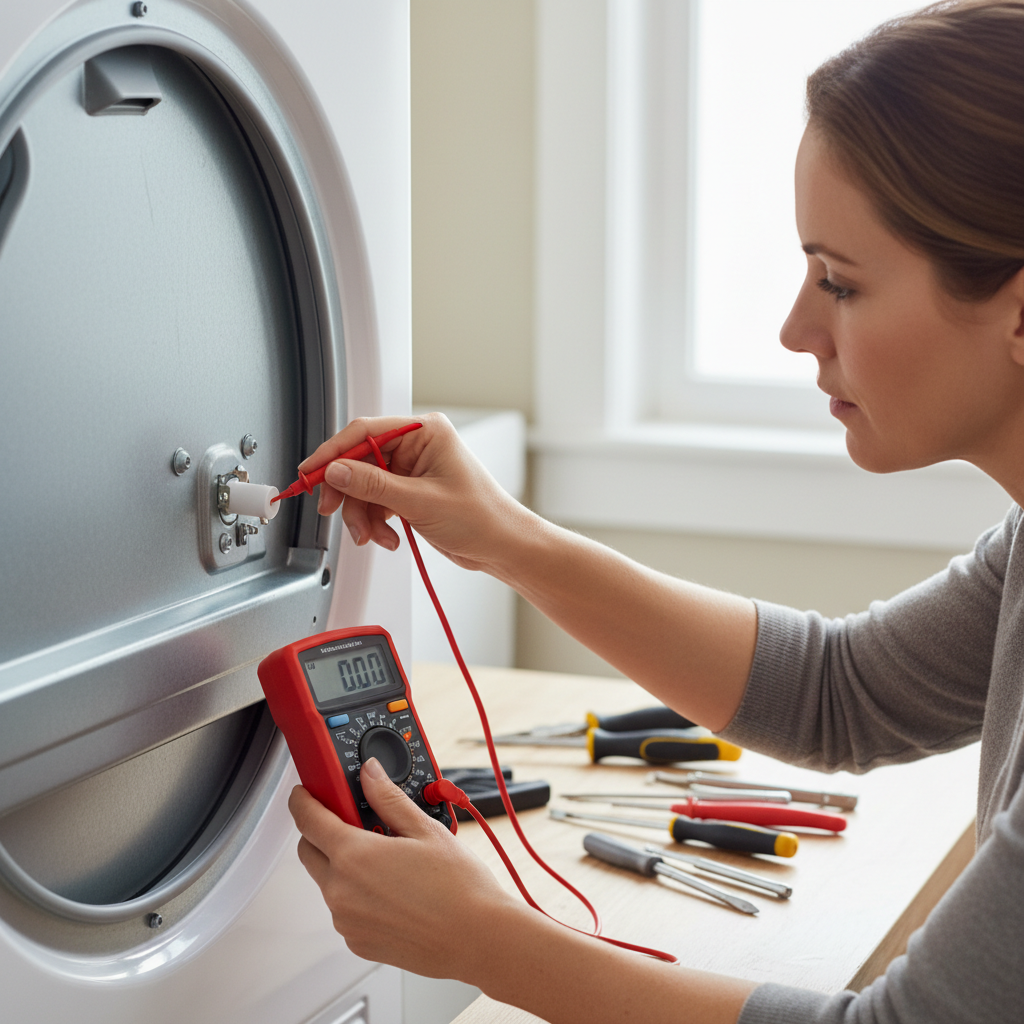
- Blown Thermal Fuse: Designed as a safety mechanism, this fuse will trip and permanently break continuity if the dryer's internal temperature exceeds safe limits, often due to a clogged vent.
- Failed Heating Element (Electric Dryers): Over time, the nichrome coil can break due to repeated heating and cooling cycles, or from overheating caused by restricted airflow.
- Faulty Thermostats: Both cycling and high-limit thermostats can fail, either sticking open (no heat) or closed (overheating). Wear and tear or power surges are common causes.
- Faulty Gas Valve Solenoids or Igniter (Gas Dryers): In gas dryers, the solenoids that open the gas valve can fail, or the glow bar igniter can break, preventing the gas from igniting.
- Worn Drum Seals: While less common for no heat, worn drum seals can allow hot air to escape, reducing drying efficiency and sometimes triggering safety cutoffs if temperatures become erratic.
HVAC · High energy usage
| Project category | HVAC |
|---|---|
| Problem type | High energy usage |
| Trade required | HVAC |
| Urgency | Planned project |
| Safety risk | Low safety risk |
| DIY suitability | DIY for experienced homeowners |
| Cost category | High cost |
| Typical timeline | Assessment within weeks; replacement planned off-season |
| Contractor type | Licensed HVAC technician |
Repair option
Duct sealing, insulation, and a tune-up before touching the equipment.
Replacement option
High-efficiency replacement sized by a load calculation, not a rule of thumb.
Common causes
- Aging, low-efficiency equipment
- Leaking ducts losing conditioned air
- Insufficient attic insulation
- Oversized system short-cycling
Relevant tools:project cost estimatorrepair or replace
Published June 13, 2026Last updated August 17, 2026
Tools & materials you'll need
Affiliate links- AmazonReplacement thermal fuse1 · Specific to your dryer's make and model
- AmazonReplacement heating element1 · Specific to your electric dryer's make and model
- AmazonReplacement thermostats (cycling/high-limit)1-2 · Specific to your dryer's make and model
- AmazonDuct tape (HVAC-rated)1 roll · For sealing vent connections, if needed
As an Amazon Associate FixlyGuide earns from qualifying purchases — at no extra cost to you. Prices and availability are accurate as of publication and subject to change.
Quick Answer
If your dryer is tumbling but producing no heat, the primary suspects are generally a blown thermal fuse, a failed heating element, a malfunctioning thermostat, or, for gas dryers, a faulty gas valve or igniter. These issues often result from restricted airflow, electrical surges, or normal wear and tear. Most of these problems can be diagnosed and resolved by a homeowner with minimal experience and common tools, typically costing less than $50 for replacement parts.
The Problem
You've loaded your laundry, set the cycle, and after a seemingly normal tumble, your clothes emerge just as damp and cold as they went in. Your dryer is running, the drum is spinning, the light comes on, but there's no heat whatsoever. This frustrating scenario points to a specific set of internal components that are directly responsible for the drying process. Ignoring the problem won't make it go away, and repeatedly running the dryer without heat wastes electricity (or gas) and time, adding wear and tear to other working components unnecessarily.
How It Works
Understanding how your dryer generates heat is key to troubleshooting. Electric dryers rely on a heating element, a coiled wire (nichrome) housed in a metal casing, which resists electrical current and converts that energy into heat. Air is drawn into the dryer by a blower fan, passes over the superheated element, and then circulates through the drum to dry your clothes before being expelled through the vent. Several safety devices monitor this process: a thermal fuse (a one-time-use safety device that blows if the dryer overheats to prevent fire), and cycling and high-limit thermostats (which regulate the internal temperature, preventing both under-drying and overheating).
Gas dryers, on the other hand, use a gas burner assembly. Natural gas or propane flows through a gas valve to the burner, where a glow bar igniter heats up and ignites the gas. A flame sensor then detects the flame, telling the gas valve to stay open. Hot exhaust gases from the burner mix with ambient air drawn in by the blower, and this warm air is circulated through the drum. Like electric dryers, gas models also have thermal fuses and thermostats, but they additionally feature a radiant sensor near the igniter to ensure proper ignition and flame presence.
Restricted airflow – often due to a clogged lint trap or blocked dryer vent – is the silent killer of both electric and gas dryers. When air can't escape efficiently, heat builds up, causing components like thermal fuses and heating elements to fail prematurely. Additionally, electrical issues can impact the heating element or control board, while mechanical failures can disrupt the gas supply or ignition in gas dryers.
Step-by-Step Fix
1. Check Power Supply & Breakers — Ensure your dryer is receiving adequate power.
For electric dryers, these typically require a dedicated 240-volt circuit, meaning two separate circuit breakers linked together. If only one breaker trips, the dryer might still tumble but won't heat. Check your electrical panel for tripped breakers. For gas dryers, ensure the gas supply valve (usually a yellow handled valve behind the dryer) is fully open. Then, unplug the dryer for 5 minutes and plug it back in to reset any internal electronics.
- Safety Note: Always turn off power at the circuit breaker before performing any electrical checks inside the dryer.
2. Inspect the Thermal Fuse — A common, inexpensive cause of no heat.
The thermal fuse is a small, white plastic cylinder, typically located on the blower housing or exhaust duct. Disconnect power to the dryer. Access the fuse by removing the top, back, or front panel of your dryer (consult your owner's manual for specific access). Use a multimeter set to continuity (Ω) to test the fuse. Place one probe on each terminal of the fuse; if you get no reading (open circuit), the fuse is blown and needs replacement. A blown fuse often indicates restricted airflow, so clean your lint trap and thoroughly inspect your dryer vent for blockages.
- Tools Needed: Screwdriver set, multimeter.
- If this doesn't work: If the fuse tests good, move on to the heating element or thermostat.
3. Test the Heating Element (Electric Dryers) — The primary heat source for electric models.
The heating element is usually a coiled metal ribbon inside a metal housing, often located in the back of the dryer behind a panel. After disconnecting power, remove the rear panel to access the element. Visually inspect it for breaks or hot spots. Use your multimeter on the resistance setting (Ω) and place probes on the element's terminals. A good element will typically show a resistance reading between 10-25 ohms. An open circuit (no reading or infinite resistance) means the element is broken and needs to be replaced. Ensure both terminals are tested, as some elements have multiple coils.
- Tools Needed: Screwdriver set, multimeter.
- Cost Savings Tip: Aftermarket heating elements are readily available online for most common dryer brands and are significantly cheaper than OEM parts.
4. Check Cycling & High-Limit Thermostats — Temperature regulators that can fail.
Both electric and gas dryers have various thermostats, typically small, coin-shaped components with two terminals, often mounted on the heating element housing, blower housing, or exhaust duct. The cycling thermostat regulates temperature, while the high-limit thermostat is a safety device that trips if the dryer overheats. Disconnect power and use a multimeter on the continuity setting (Ω). A good thermostat will show continuity (a closed circuit). If it shows an open circuit, it's faulty and needs replacement. Remember to check all thermostats, as some dryers have multiple.
- Tools Needed: Screwdriver set, multimeter.
- Pro Tip: When replacing a thermostat, ensure all wire connections are clean and secure to prevent future problems.
5. Inspect Gas Valve & Igniter (Gas Dryers Only) — Crucial for heat generation in gas models.
For gas dryers, the problem could stem from the gas supply or ignition system. After disconnecting power AND turning off the gas supply, access the burner assembly (usually by removing the front panel). First, visually inspect the glow bar igniter: it's a fragile, ceramic-coated spade-shaped component. If it's cracked or visibly damaged, it won't heat up to ignite the gas. You can also test its resistance with a multimeter; a good igniter typically reads between 50-400 ohms. Next, check the gas valve solenoids, which are coils located on the gas valve itself; these open the valve to allow gas flow. You can test them for continuity; an open circuit means they've failed. Additionally, ensure the gas supply valve is fully open.
- Safety Note: If you smell gas at ANY point, immediately shut off the gas supply, ventilate the area, and call a professional. Do not proceed with troubleshooting.
- If this doesn't work: If these components seem fine, consider issues with the flame sensor or motor centrifugal switch, which are more advanced repairs.
Common Causes
- Clogged Dryer Vent: This is by far the most common culprit. Restricted airflow leads to overheating, causing thermal fuses to blow and heating elements to fail prematurely. A long or kinked vent hose, blockages from lint, or even a bird's nest can impede airflow.
- Blown Thermal Fuse: Designed as a safety mechanism, this fuse will trip and permanently break continuity if the dryer's internal temperature exceeds safe limits, often due to a clogged vent.
- Failed Heating Element (Electric Dryers): Over time, the nichrome coil can break due to repeated heating and cooling cycles, or from overheating caused by restricted airflow.
- Faulty Thermostats: Both cycling and high-limit thermostats can fail, either sticking open (no heat) or closed (overheating). Wear and tear or power surges are common causes.
- Faulty Gas Valve Solenoids or Igniter (Gas Dryers): In gas dryers, the solenoids that open the gas valve can fail, or the glow bar igniter can break, preventing the gas from igniting.
- Worn Drum Seals: While less common for no heat, worn drum seals can allow hot air to escape, reducing drying efficiency and sometimes triggering safety cutoffs if temperatures become erratic.
Common Mistakes
- Ignoring a Clogged Vent: Many DIYers replace parts without addressing the root cause – a blocked vent. This leads to repeated component failure. Always clean your lint trap before and after every load, and clean the dryer vent tubing annually, or more often if it's long or heavily used.
- Assuming a Complete Dryer Failure: A dryer that tumbles but doesn't heat is rarely a sign of a totally dead unit. Most times, it's a single, inexpensive component. Don't rush to buy a new dryer until you've diagnosed the issue.
- Not Disconnecting Power (Electric Dryers) or Gas (Gas Dryers): Working on electrical appliances without cutting the power at the breaker is extremely dangerous. Similarly, never work on gas lines without shutting off the gas supply. Safety first – always disconnect utilities.
- **Misdiagnosing with the
Related Articles
Keep troubleshooting with these hand-picked guides from FixlyGuide:
- The 5-Minute Trick That Fixes a Dryer Not Heating (and the Real Culprit) — A dryer that tumbles but doesn't heat is a common problem, often due to a tripped thermal fuse or a power supply issue.
- The 4 Hidden Reasons Your Dryer Tumbles Cold (And How to Fix Them in 30 Minutes) — Your dryer tumbles, but clothes stay cold. Discover the four most common culprits behind a dryer that won't heat, and how to troubleshoot t…
- The #1 Mistake Homeowners Make When Heat Pumps Stop Heating in Winter — Discover the crucial mistake most homeowners make when their heat pump struggles in cold weather and how to fix it, potentially saving hund…
- The 5-Minute Trick Everyone Forgets When Their Dryer Stops Heating — Discover the often-overlooked first step that can fix a dryer that isn't heating in just five minutes, potentially saving you a costly repa…
- The #1 Dryer Heating Culprit Homeowners Miss (And the Cheap Fix) — Your dryer's not heating? Often, the culprit is a hidden component that's easy and inexpensive to replace if you know where to look.
- The 5-Minute Fix for a Dead Range Hood Fan (and When to Call a Pro) — Don't panic if your range hood fan suddenly stops working. Often, a simple circuit breaker reset or a quick filter check can restore airflo…
Should you do this yourself?
Answer five quick questions before you start. Safety outranks savings every time.
Your experience with work like this
How high do you have to work?
Does the job involve any of these?
Will it need a permit?
Specialty tools
Free and instant. Educational guidance only — not a quote, inspection, or professional diagnosis.
Estimate your own project cost
National averages are a starting point. Enter your details for a range that fits your house.
HVAC replacement cost
- Equipment$2,200 – $3,800
- Installation labor$1,200 – $2,500
Always insist on a Manual J load calculation — sq-ft sizing is only a rough check. Federal heat-pump rebates may reduce cost significantly.
Educational estimate only — always confirm with written local bids.
What should this project cost?
Enter your project details for a realistic cost range before you call anyone.
Service calls and common repairs run $150–$900; full system replacement typically $6,000–$12,000.
- Regional adjustment
- National average
- Labor share (typical)
- ~$1,935
- Quotes to collect
- 3 written estimates
Educational estimate based on national averages — not a binding quote. Always confirm with written local estimates.
Fixly Project Decision Box
- DIY difficulty
- Advanced
- Estimated time
- Homeowner checks 20–30 minutes
- Cost level
- Moderate
Main tools / materials
- Clean air filter
- Garden hose for condenser coils
- Shop vac for the condensate line
When to stop and call a pro
- Burning smell, smoke, or a tripping breaker
- Refrigerant lines iced over or hissing
- Any work inside the sealed refrigerant circuit (EPA-licensed only)
- Gas smell near a furnace — leave and call the utility
Need professional help?
Find an HVAC Pro Near YouBefore you start
Check the difficulty, permits, and safety risk — then decide whether to call a pro.
Free, no signup required. Estimates are educational guidance, not a quote or an inspection.
Frequently asked questions
How do you tell if a dryer thermal fuse is bad?+
You can test a dryer's thermal fuse for continuity using a multimeter. With the dryer unplugged, locate the thermal fuse (usually a small, white plastic cylinder) and touch one probe to each terminal. If the multimeter shows no continuity (an open circuit), the fuse is blown and needs replacement. A blown fuse often indicates a clogged dryer vent, so inspect your venting system.
What's the difference between a cycling thermostat and a high-limit thermostat?+
The cycling thermostat regulates your dryer's temperature, turning the heating element (or gas burner) on and off to maintain the selected heat setting. The high-limit thermostat is a safety device designed to shut off the heat if the dryer's internal temperature exceeds a dangerous level, preventing overheating and potential fires. Both are crucial for safe and effective dryer operation.
Can a clogged dryer vent cause my dryer to stop heating?+
Yes, absolutely. A clogged dryer vent is one of the most common reasons a dryer stops heating. When airflow is restricted, heat builds up inside the dryer. This often causes the thermal fuse to blow (a safety mechanism) or the heating element to overheat and fail prematurely. Regularly cleaning your lint trap and inspecting your dryer vent is critical for efficient and safe dryer operation.
How much does it cost to fix a dryer that's not heating?+
The cost to fix a dryer that's not heating typically ranges from $20 to $100 for parts if you do it yourself. A new thermal fuse might cost $5-$20, a heating element $20-$50, and a thermostat $15-$40. If you hire a professional, labor costs can add $100-$300 or more, in addition to the parts. The exact cost depends on the specific part that needs replacing and your dryer's make and model.
Discussion
Loading comments…