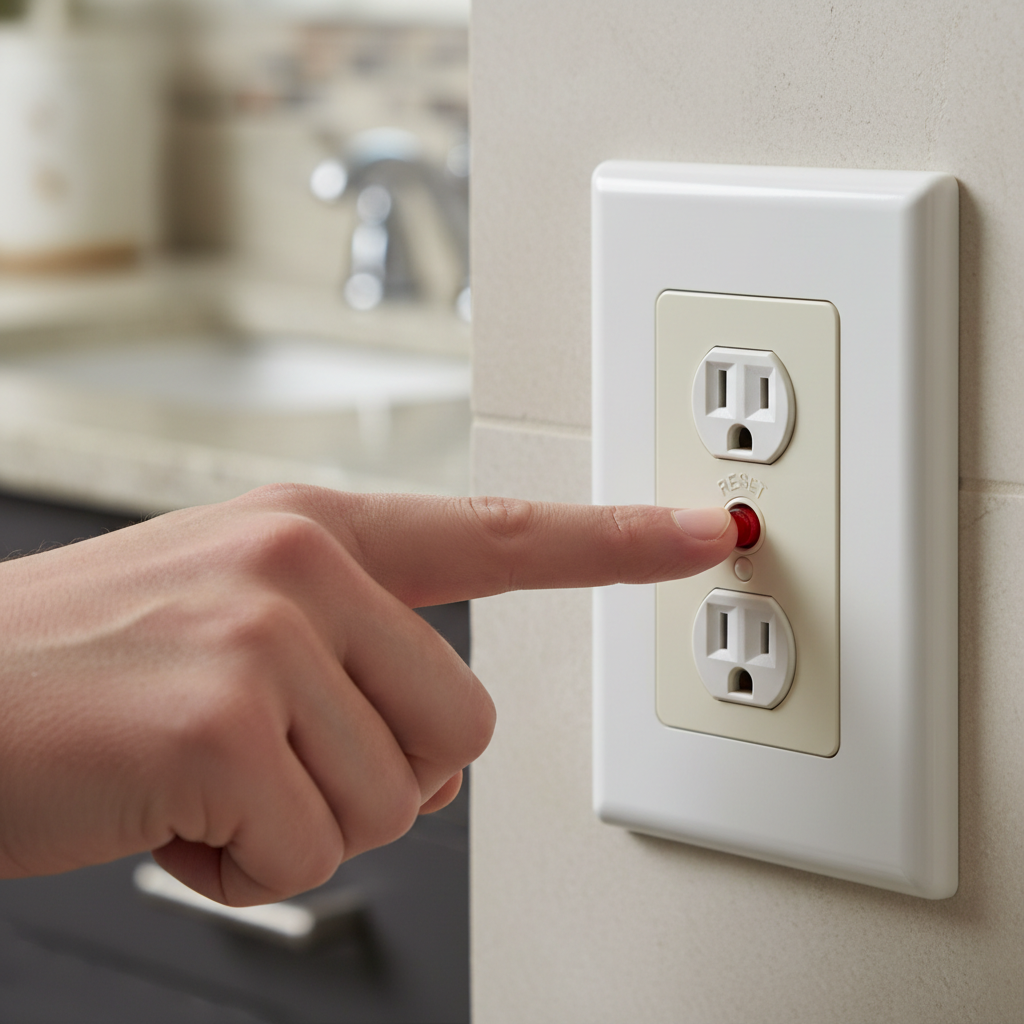
- Unplug All Appliances from the GFCI and Downstream Outlets — Is an appliance causing the problem?
- If the GFCI resets: Plug in appliances one by one. If the GFCI trips when a specific appliance is plugged in, that appliance is faulty and needs repair or replacement. Do not use a faulty appliance.
- If the GFCI still won't reset: The problem is likely with the GFCI outlet itself or the wiring.
Electrical · Panel or service upgrade
| Project category | Electrical |
|---|---|
| Problem type | Panel or service upgrade |
| Trade required | Electrical |
| Urgency | Planned project |
| Safety risk | High safety risk |
| DIY suitability | Licensed pro only |
| Cost category | High cost |
| Typical timeline | Permit plus utility scheduling, commonly 2–6 weeks |
| Contractor type | Licensed electrician |
Repair option
Add a subpanel when the main service is adequate.
Replacement option
Full service upgrade with utility coordination and permits.
Common causes
- Obsolete or recalled panel brands
- Service capacity too small for added loads
- No room for required AFCI/GFCI breakers
Relevant tools:project cost estimatorcompare quotes
Published June 14, 2026Last updated August 17, 2026
Tools & materials you'll need
Affiliate linksAs an Amazon Associate FixlyGuide earns from qualifying purchases — at no extra cost to you. Prices and availability are accurate as of publication and subject to change.
Quick Answer
When a GFCI outlet refuses to reset, it's typically signaling an underlying electrical issue rather than just a simple malfunction. The most frequent culprits are a persistent ground fault upstream or downstream from the GFCI, a tripped circuit breaker affecting the GFCI's circuit, or a damaged GFCI unit itself. Less common but still possible are loose wire connections or an overloaded circuit. A methodical diagnostic process is key to identifying and resolving the problem safely.
The Problem
You've pressed the 'Reset' button on your Ground Fault Circuit Interrupter (GFCI) outlet, but it just won't click into place, or it immediately trips again. This can be frustrating, especially if the outlet powers essential appliances in your kitchen, bathroom, garage, or outdoor areas. More than an inconvenience, a constantly tripping or non-resetting GFCI is a safety mechanism doing its job, indicating an electrical fault that needs attention. Ignoring it or continuously trying to force a reset can be dangerous, potentially leading to electrical shock or even fire. This article will guide you through the process of safely diagnosing why your GFCI isn't resetting and how to fix the most common causes.
How It Works
A Ground Fault Circuit Interrupter (GFCI) is a crucial safety device designed to protect you from severe electrical shock. Unlike a standard circuit breaker that trips when a circuit is overloaded or short-circuited, a GFCI monitors the delicate balance of electrical current flowing out to an appliance and back to the outlet. In normal operation, these currents should be precisely equal. If the GFCI detects even a minuscule imbalance—as little as 5 milliamperes (mA)—it immediately trips and cuts off power within milliseconds, faster than a heartbeat. This imbalance, known as a 'ground fault,' occurs when electricity deviates from its intended path and leaks to the ground, perhaps through a person touching a faulty appliance or a damaged wire. The GFCI is particularly effective in wet environments where the risk of electrocution is higher. Many GFCIs are 'feed-through' devices, meaning they protect not only themselves but also all standard outlets that are wired downstream on the same circuit. This protection extends to the physical wires in the wall, too. When a GFCI won't reset, it means this protective mechanism is detecting a fault, or the device itself is compromised.
Step-by-Step Fix
Always begin with safety. Before attempting any electrical work, turn off the power to the circuit at your home's main electrical panel. Verify the power is off using a non-contact voltage tester.
-
Check for a Tripped Circuit Breaker — Sometimes the simplest solutions are overlooked.
- Go to your main electrical panel. Look for a breaker that is in the 'OFF' position, or one that is 'tripped' (often halfway between ON and OFF). Reset any tripped breaker by pushing it firmly to the 'OFF' position first, then back to the 'ON' position. If the GFCI is on a circuit with other outlets, another tripping breaker might be the underlying issue, not the GFCI itself.
- If this doesn't work: Proceed to checking connected appliances.
-
Unplug All Appliances from the GFCI and Downstream Outlets — Is an appliance causing the problem?
- A ground fault is often caused by a faulty appliance plugged into the GFCI outlet or any standard outlet wired downstream from it. Unplug everything. This includes lamps, toasters, hair dryers, phone chargers, and even outdoor lights. Wait 30 seconds, then try to reset the GFCI.
- If the GFCI resets: Plug in appliances one by one. If the GFCI trips when a specific appliance is plugged in, that appliance is faulty and needs repair or replacement. Do not use a faulty appliance.
- If the GFCI still won't reset: The problem is likely with the GFCI outlet itself or the wiring.
-
Test the GFCI Outlet with its Test Button — Verify the GFCI's basic functionality.
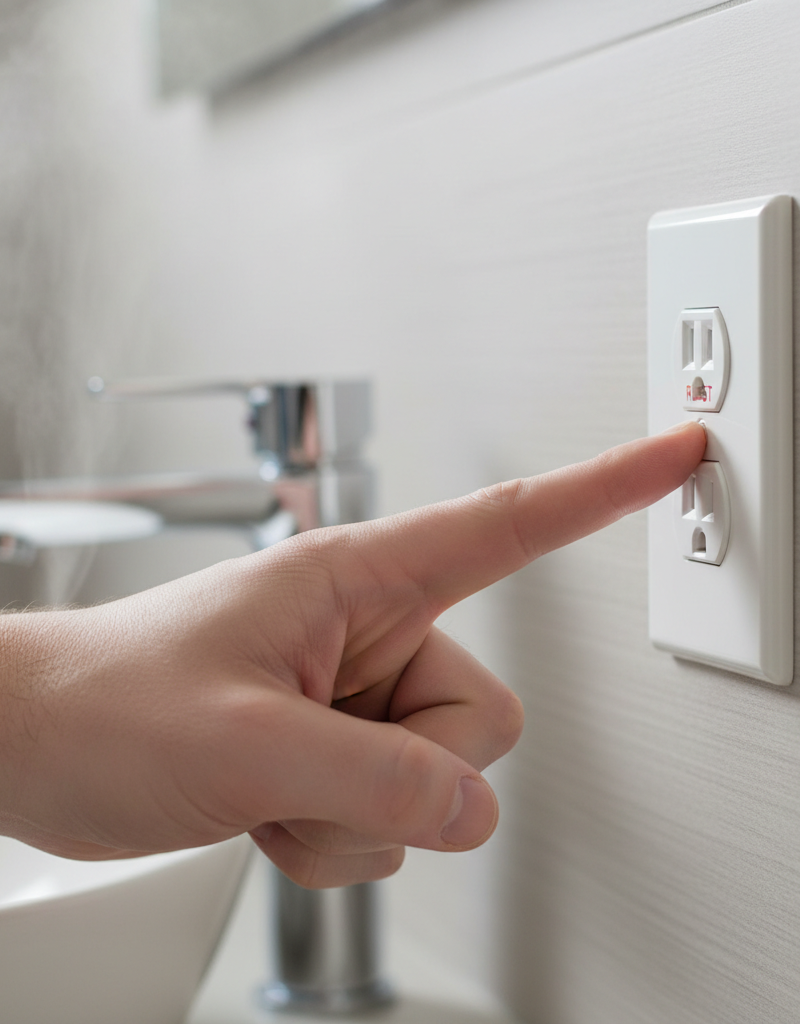
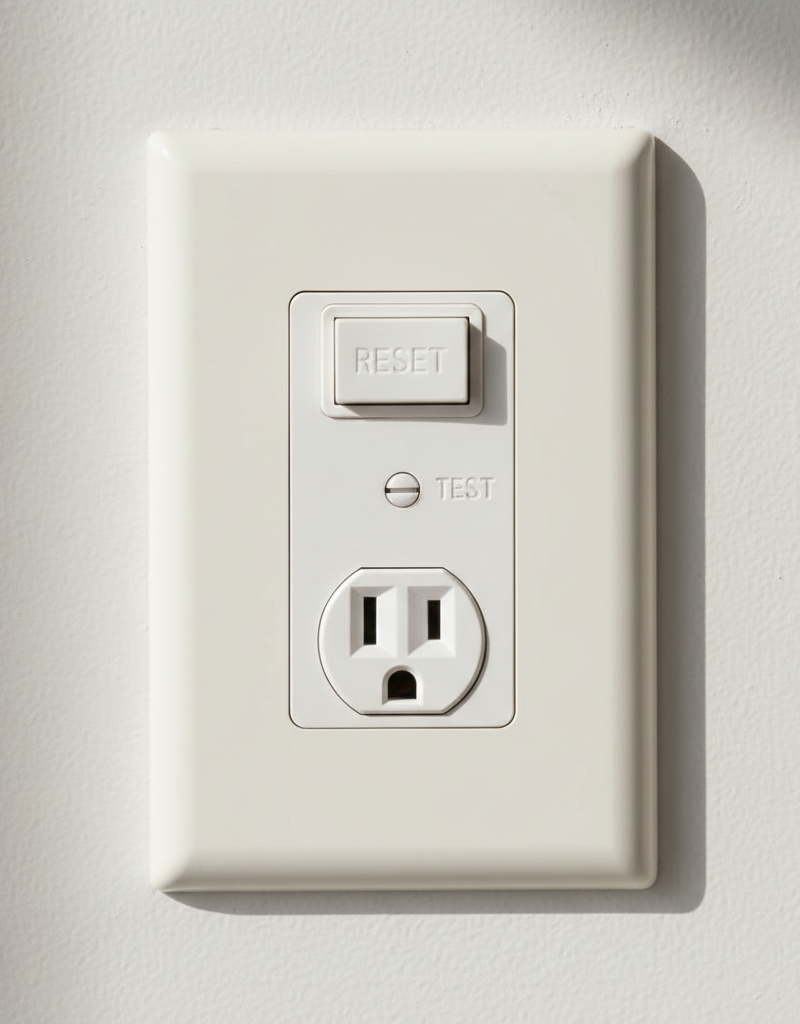
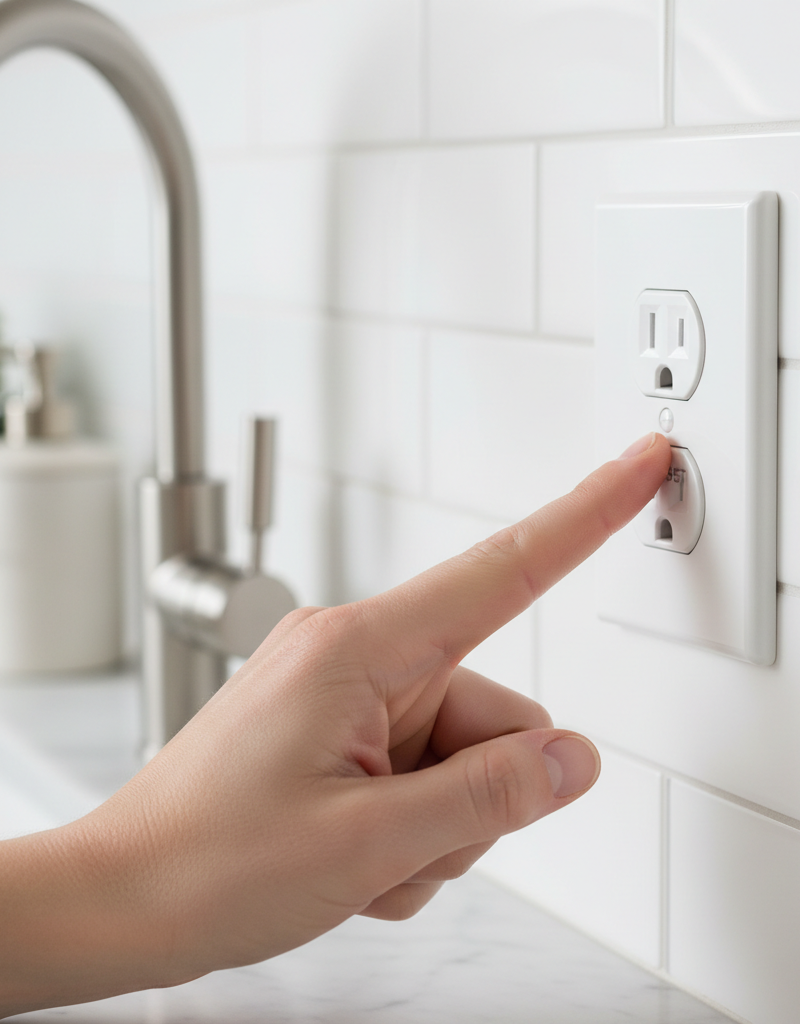
- With power restored to the circuit, press the 'TEST' button on the GFCI. The 'RESET' button should pop out, cutting power to the outlet. If it doesn't pop out, the GFCI is likely faulty and needs replacement. If it does pop out, press 'RESET' to restore power. If it immediately trips again, a ground fault still exists.
- Safety Note: This test only verifies the GFCI can trip; it doesn't confirm it will hold a reset in a fault condition.
-
Inspect the GFCI Outlet for Visible Damage — Look for obvious wear and tear.
- Turn off power at the breaker panel. Carefully remove the cover plate from the GFCI outlet. Look for signs of burning, melted plastic, loose wires, or corrosion. Any visible damage warrants replacement.
- Tools: Flathead screwdriver or Phillips head screwdriver to remove the cover plate screws.
-
Check Wiring Connections — Loose connections are a common, often overlooked cause.
- With the power OFF at the breaker, gently pull the GFCI outlet out from the electrical box. Inspect the wiring connections. Ensure all wires are firmly secured under their respective terminal screws. Wires should not be frayed or cut. Pay close attention to the 'LINE' and 'LOAD' terminals if your GFCI protects downstream outlets. The incoming power should be connected to the 'LINE' terminals, and wires leading to other outlets should be connected to the 'LOAD' terminals.
- Safety Note: Mis-wiring 'LINE' and 'LOAD' is a common DIY mistake. If the incoming power (from the breaker) is connected to the 'LOAD' terminals, the GFCI will not function correctly and may not reset.
- If you find loose wires: Tighten them securely. If the wires are pushed into backstab connectors, consider moving them to the screw terminals for a more secure connection.
- If connections are correct and tight: Proceed to the next step.
-
Replace the GFCI Outlet — If all else fails, the GFCI itself might be bad.
- If you've systematically eliminated all other possibilities, the GFCI outlet itself is likely faulty. This is a common issue, as GFCIs contain sensitive electronics that can wear out over time or be damaged by surges.
- Tools: Screwdrivers, wire strippers, new GFCI outlet.
- Steps for replacement:
- Turn OFF power at the main breaker panel.
- Unscrew and carefully pull the old GFCI from the box.
- Note how the wires are connected (LINE vs. LOAD). Take a picture if helpful.
- Disconnect the old GFCI, one wire at a time (usually black to brass, white to silver, bare copper/green to green screw).
- Connect the new GFCI, ensuring 'LINE' (incoming power) and 'LOAD' (downstream outlets) wires are correctly identified and connected to the appropriate terminals. Do NOT connect any wires to the 'LOAD' terminals if this GFCI is the end of the circuit and doesn't protect other outlets.
- Gently push the wires and new GFCI back into the electrical box. Screw it into place.
- Attach the cover plate.
- Restore power at the breaker panel and press 'RESET' on the new GFCI.
-
Isolate the Downstream Circuit — If you suspect a hidden ground fault downstream.
- If the GFCI trips immediately after reset or won't reset even after replacement, and you have confirmed good appliances, the fault is likely in the wiring downstream of the GFCI. This is where the 'LOAD' terminals come into play.
- Turn OFF power. Disconnect all wires from the 'LOAD' terminals on the GFCI. Cap these wires with wire nuts individually. Now, connect only the 'LINE' wires to the GFCI. Restore power and try to reset the GFCI.
- If the GFCI resets: The ground fault is definitely in the wiring or outlets downstream. You'll need to inspect each downstream outlet and the wiring in between to find the fault. This is more complex and might involve opening up other electrical boxes or even cutting into walls. At this point, it's often best to call a professional electrician.
- If the GFCI still won't reset: The fault is either with the GFCI itself (though you've replaced it), or in the 'LINE' side wiring leading to the GFCI—a much rarer and more serious issue.
-
Check for Overloaded Circuit — Less common for a non-reset, but worth a look.
- If numerous high-draw appliances are connected to the same circuit, it can overload. While an overload usually trips the circuit breaker, sometimes it can cause GFCI issues. Reduce the number of devices or redistribute them to other circuits. Use an amperage meter to see if the total current draw exceeds the circuit's rating (usually 15 or 20 amps).
Common Causes
- Ground Fault: The most common reason. Current is leaking from the hot wire to the ground wire or another grounded object. This can be caused by faulty appliances, damaged cords, or compromised wiring (e.g., a nail or screw penetrating a wire in the wall).
- Faulty Appliance: An appliance plugged into the GFCI outlet (or any outlet downstream) has an internal fault that creates a path to ground.
- Damaged GFCI Outlet: The sensitive internal electronics of the GFCI can wear out over time, be damaged by power surges, or fail due to internal defects, preventing it from resetting.
- Loose or Incorrect Wiring: Loose connections at the GFCI terminals, or incorrect wiring (especially mixing up 'LINE' and 'LOAD' terminals), can prevent a GFCI from resetting or cause it to continually trip.
- Moisture Intrusion: Water getting into an outdoor or bathroom GFCI outlet, or even into a junction box in the walls, can create a temporary or persistent ground fault.
- Overloaded Circuit (rare for GFCI not resetting but tripping): While more likely to trip a breaker, an overloaded circuit can sometimes manifest as GFCI issues if there are related ground fault conditions.
Common Mistakes
- Ignoring the 'Test' Button: Many homeowners forget to regularly test their GFCIs. The 'Test' button should be pressed monthly to ensure the device is functioning correctly. If it doesn't trip, it's faulty.
- Confusing LINE and LOAD: A common mistake when installing GFCIs. 'LINE' terminals receive power from the breaker. 'LOAD' terminals send power to other protected outlets downstream. If wired incorrectly, the GFCI will not function safely or properly, and may not reset.
- Not Unplugging All Appliances: Thinking only the directly plugged-in appliance matters. Remember, a GFCI often protects several downstream outlets. Any appliance on that entire circuit can cause the fault.
- Assuming a Bad GFCI Immediately: Rushing to replace the GFCI without troubleshooting appliances or checking the breaker first can lead to unnecessary costs and frustration if the original GFCI was fine.
- Using a GFCI in a Circuit with Shared Neutrals: While rare in modern wiring, older homes might have shared neutral wires across different circuits. Introducing a GFCI to such a setup will cause nuisance tripping because the GFCI itself will detect an imbalance.
- Not Verifying Power Off: Skipping the step to turn off power at the breaker before working on an outlet is extremely dangerous and can lead to severe electrical shock or electrocution.
Cost & Time Breakdown
| Task | DIY Cost | Pro Cost | Time |
|---|---|---|---|
| Diagnose GFCI (basic) | $0 | $100–$200 | 15–30 minutes |
| Replace GFCI Outlet | $15–$30 | $150–$300 | 30–60 minutes |
| Appliance Diagnosis | $0 | $0 (DIY only) | 10–20 minutes |
| Breaker Reset | $0 | $0 (DIY only) | 5 minutes |
| Wiring Repair (minor) | $0–$5 | $150–$400 | 30–90 minutes |
| Full Circuit/Hidden Fault | $0 (refer to pro) | $250–$800+ | Varies |
Tips & Prevention
- Regular Testing: Press the 'TEST' button on all GFCIs monthly. They should trip and then reset. If not, replace them.
- Prompt Appliance Repair/Replacement: If an appliance causes a GFCI to trip, have it professionally repaired or replace it immediately. Do not continue to use it.
- Identify Protected Outlets: Know which outlets are protected by which GFCI. Sometimes a GFCI in one location (e.g., a garage) protects outlets in another (e.g., an outdoor patio).
- Keep GFCIs Dry: For outdoor or bathroom GFCIs, ensure they are properly sealed and protected from moisture. Use 'weather-resistant' and 'tamper-resistant' (WR/TR) GFCIs in appropriate locations.
- Avoid Overloading: Be mindful of how many high-power appliances are plugged into a single circuit. Distribute loads evenly.
- Professional Inspection: If you experience frequent GFCI tripping without an obvious cause, consider an electrical inspection by a licensed electrician.
When to Call a Professional
You should absolutely call a licensed electrician if the GFCI still won't reset after you've followed these troubleshooting steps, particularly if you've replaced the GFCI itself and confirmed no faulty appliances. Persistent tripping or a GFCI that won't reset often indicates a hidden ground fault within the wall wiring, in junction boxes, or an issue with the circuit breaker or main electrical panel. These are complex and potentially dangerous problems that require specialized tools and expertise to diagnose and repair safely. Additionally, if you are uncomfortable identifying or working with electrical wiring, unsure about correctly wiring a new GFCI, or if you detect any burning smells, scorch marks, or hear buzzing sounds from your outlets or electrical panel, stop immediately and contact a professional. Dealing with household electricity improperly can lead to severe injury, electrocution, or fire.
Related Articles
Keep troubleshooting with these hand-picked guides from FixlyGuide:
- The Hidden Reason Your GFCI Won't Reset (And It's Not Always a Faulty Outlet) — A GFCI outlet that won't reset usually indicates an underlying electrical issue, most commonly a ground fault or overloaded circuit, not al…
- The Hidden Reason Your GFCI Won't Reset (And It's Not Always a Damaged Outlet) — A GFCI outlet that won't reset can be frustrating, but often the cause isn't the outlet itself, but a hidden electrical issue downstream th…
- The Hidden Reason Your GFCI Won't Reset (And It's Not Always a Short) — Discover the often-overlooked culprits behind a GFCI outlet that refuses to reset and learn how to safely diagnose and fix the issue yourse…
- The Hidden Reason Your GFCI Won't Reset (And It's Not Always a Short) — When your GFCI outlet refuses to reset, it's often more than a simple tripped circuit, pointing to underlying electrical issues you can saf…
- The Secret Reason Half Your Wall Outlet Dies (And It's Not What You Think) — Discover why only half of your electrical outlet might be working and how to diagnose and fix the common culprit, saving you from a costly…
- The Hidden Reason Your GFCI Trips (It’s Not Always a Bad Outlet) — A tripping GFCI outlet is a safety mechanism doing its job, often indicating a problem like moisture, a faulty appliance, or a wiring issue…
Should you do this yourself?
Answer five quick questions before you start. Safety outranks savings every time.
Your experience with work like this
How high do you have to work?
Does the job involve any of these?
Will it need a permit?
Specialty tools
Free and instant. Educational guidance only — not a quote, inspection, or professional diagnosis.
What should this project cost?
Enter your project details for a realistic cost range before you call anyone.
Outlet and switch work usually $150–$400; panel upgrades commonly $1,800–$4,200.
- Regional adjustment
- National average
- Labor share (typical)
- ~$709
- Quotes to collect
- 3 written estimates
Educational estimate based on national averages — not a binding quote. Always confirm with written local estimates.
Fixly Project Decision Box
- DIY difficulty
- Professional Recommended
- Estimated time
- Diagnosis 1–2 hours
- Cost level
- Moderate
Main tools / materials
- Non-contact voltage tester
- Outlet tester
- Flashlight
When to stop and call a pro
- Burning smell, scorch marks, or a warm outlet or switch plate
- A breaker that trips again right after being reset
- Any work inside the service panel
- Aluminum wiring or cloth-insulated wiring
Need professional help?
Talk to a Licensed ElectricianBefore you start
Check the difficulty, permits, and safety risk — then decide whether to call a pro.
- Estimate this projectGet a cost range for your scope and ZIP before you call anyone.Open
- Get local estimatesSend one request and compare written estimates from vetted pros.Open
Free, no signup required. Estimates are educational guidance, not a quote or an inspection.
Get the print-ready PDF of this guide
A clean, ad-free, printable version you can keep on your phone or pin to the workshop wall. Free with a FixlyGuide account.
- Print-optimized layout
- Tools, materials & every step included
- Saved to your account
Frequently asked questions
Why does my GFCI trip immediately after I press reset?+
If your GFCI trips immediately after pressing reset, it almost certainly means there's an ongoing ground fault somewhere in the circuit it protects. This could be a faulty appliance, damaged wiring in the wall, or moisture in an outlet or junction box. Systematically unplug all devices and inspect the outlet and wires.
Can a GFCI outlet go bad?+
Yes, GFCI outlets can and do go bad over time. Their internal electronic components can wear out due to age, power surges, or repeated tripping. If you've ruled out ground faults and circuit breaker issues, a faulty GFCI outlet is a very common reason it won't reset and will need to be replaced.
Should I call an electrician if my GFCI won't reset?+
You should call an electrician if you've followed all troubleshooting steps—including unplugging appliances, checking the breaker, and even replacing the GFCI—and it still won't reset. This indicates a more serious underlying issue like a hidden wiring fault or a problem with your electrical panel, which requires professional diagnosis and repair.
Discussion
Loading comments…