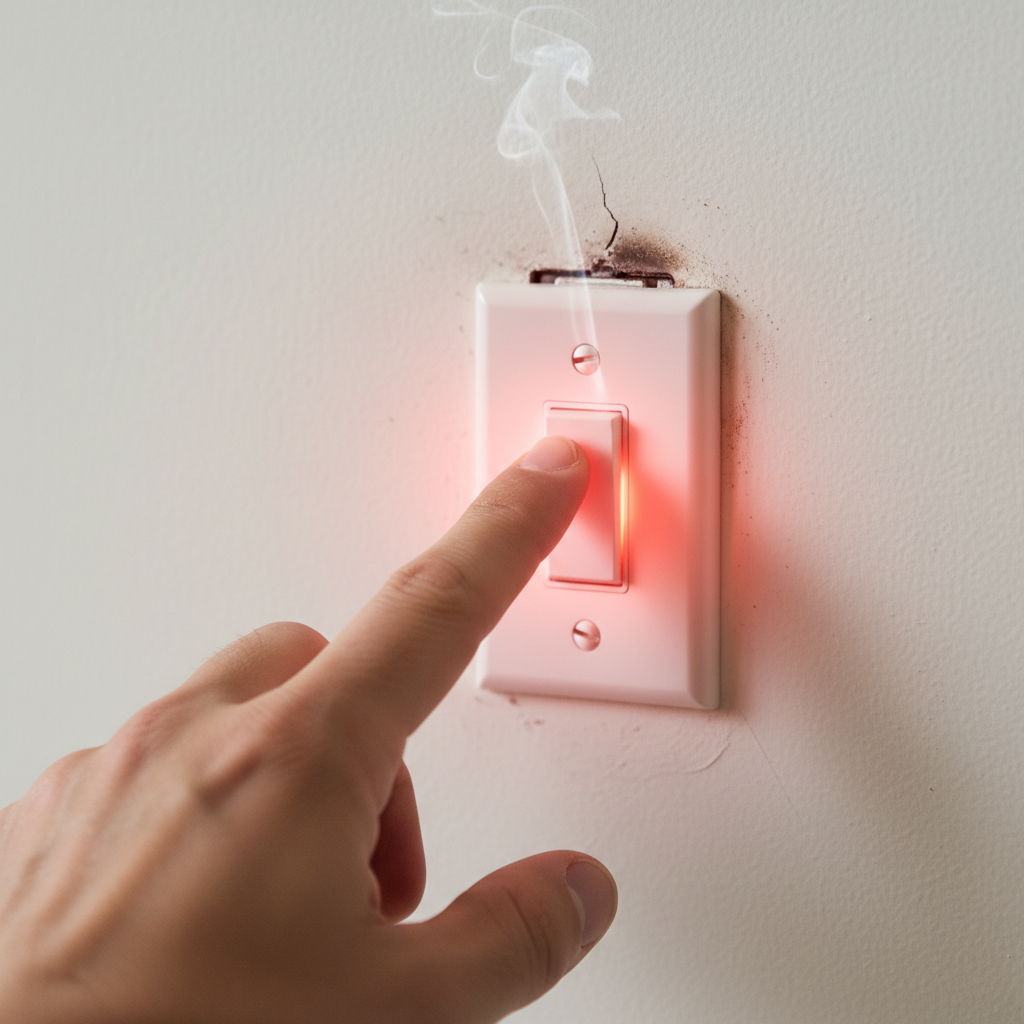
- Why Your Wall Switch Feels Hot: The Hidden Danger Most Homeowners Miss — A hot light switch isn't just uncomfortable; it's a critical warning sign of potential electrical hazards that demand immediate attention.
- Why is Your Light Switch Hot? (The Hidden Danger Most Homeowners Miss) — A hot light switch isn't just uncomfortable; it's a critical warning sign of electrical issues that should never be ignored due to fire ris…
- Why is Your Light Switch Hot? The 3 Hidden Overload Risks Explanations — A hot light switch isn't just uncomfortable; it signals potential electrical problems like overloading, loose wiring, or a failing switch.
- The Surprising Culprit Behind Your Wobbling Ceiling Fan (It's Not Always Loose Screws) — A wobbling ceiling fan is annoying and potentially dangerous. Learn how to diagnose and fix the most common causes, from imbalanced blades…
- That "Copper" Outlet Wire Might Be A Fire Hazard in Disguise — Discover the hidden fire risk lurking behind your walls—aluminum wiring was a cheap copper alternative in the 60s & 70s, but its unique pro…
Electrical · Panel or service upgrade
| Project category | Electrical |
|---|---|
| Problem type | Panel or service upgrade |
| Trade required | Electrical |
| Urgency | Planned project |
| Safety risk | High safety risk |
| DIY suitability | Licensed pro only |
| Cost category | High cost |
| Typical timeline | Permit plus utility scheduling, commonly 2–6 weeks |
| Contractor type | Licensed electrician |
Repair option
Add a subpanel when the main service is adequate.
Replacement option
Full service upgrade with utility coordination and permits.
Common causes
- Obsolete or recalled panel brands
- Service capacity too small for added loads
- No room for required AFCI/GFCI breakers
Relevant tools:project cost estimatorcompare quotes
Published June 14, 2026Last updated August 17, 2026
Tools & materials you'll need
Affiliate links- AmazonNon-contact voltage testerEssential for confirming power is off.
- AmazonScrewdriver setPhillips and flathead for faceplate and switch screws.
- AmazonWire strippersIf you need to re-strip wires or replace them.
- AmazonPliers (needle-nose or lineman's)Helpful for bending wire loops.
- AmazonUtility knifeFor scoring around faceplate if painted over.
As an Amazon Associate FixlyGuide earns from qualifying purchases — at no extra cost to you. Prices and availability are accurate as of publication and subject to change.
Quick Answer
A hot light switch is most often a sign of loose electrical connections at the switch terminals. This poor contact increases electrical resistance, which in turn generates heat. While other factors like overloading, incompatible dimmers, or a failing switch itself can contribute, loose wiring is the primary suspect and the easiest to remedy for an experienced DIYer. It's critical to address a hot switch immediately, as excessive heat is a fire hazard.
The Problem
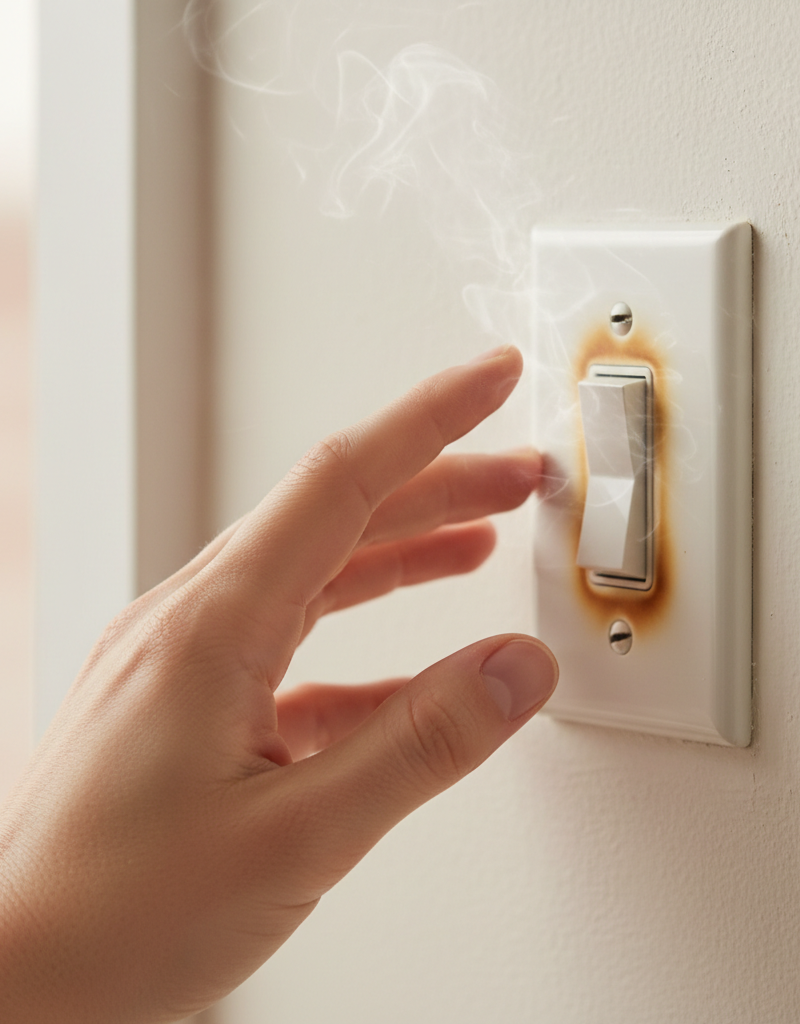
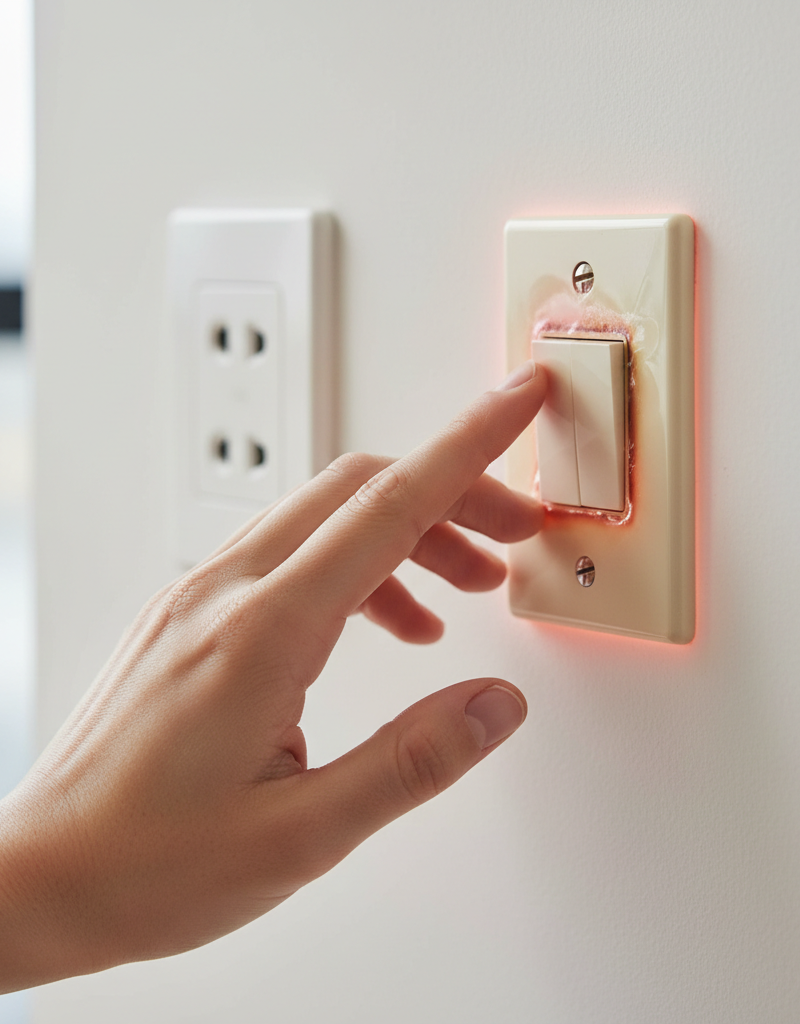
You've touched your light switch, and it feels unusually warm, or even hot. This isn't just an inconvenience; it's a warning sign from your home's electrical system. Electrical components, including light switches, should operate at or very near ambient room temperature. Any noticeable heat, especially when the switch is in use, indicates a problem that needs immediate attention. Ignoring a hot light switch can lead to melted wiring insulation, short circuits, and potentially, an electrical fire within your walls. The heat is a direct byproduct of electrical energy encountering resistance or an abnormal load, and understanding its source is key to a safe and effective repair.
How It Works
Electricity flows through the copper wires in your home to power devices and lights. A light switch acts as a gate, opening or closing a circuit to either allow or stop this flow of electricity. When you flip a switch, internal contacts either connect (completing the circuit, turning the light on) or disconnect (breaking the circuit, turning it off). These connections are designed to have very low electrical resistance, allowing current to pass through efficiently with minimal heat generation.
When a problem arises, such as a loose wire connection at the screw terminal of the switch or a faulty internal mechanism, this low resistance is compromised. A poor connection acts like a bottleneck, forcing the electrical current to work harder to pass through. This 'extra work' manifests as increased resistance. According to Joule's Law, the power dissipated as heat in a conductor is proportional to the square of the current and the resistance (P = I²R). So, even a small increase in resistance can lead to a significant increase in heat. Over time, this sustained heat can degrade wire insulation, melt plastic components of the switch, and create a dangerous fire risk within the wall cavity, hidden from view.
Step-by-Step Fix
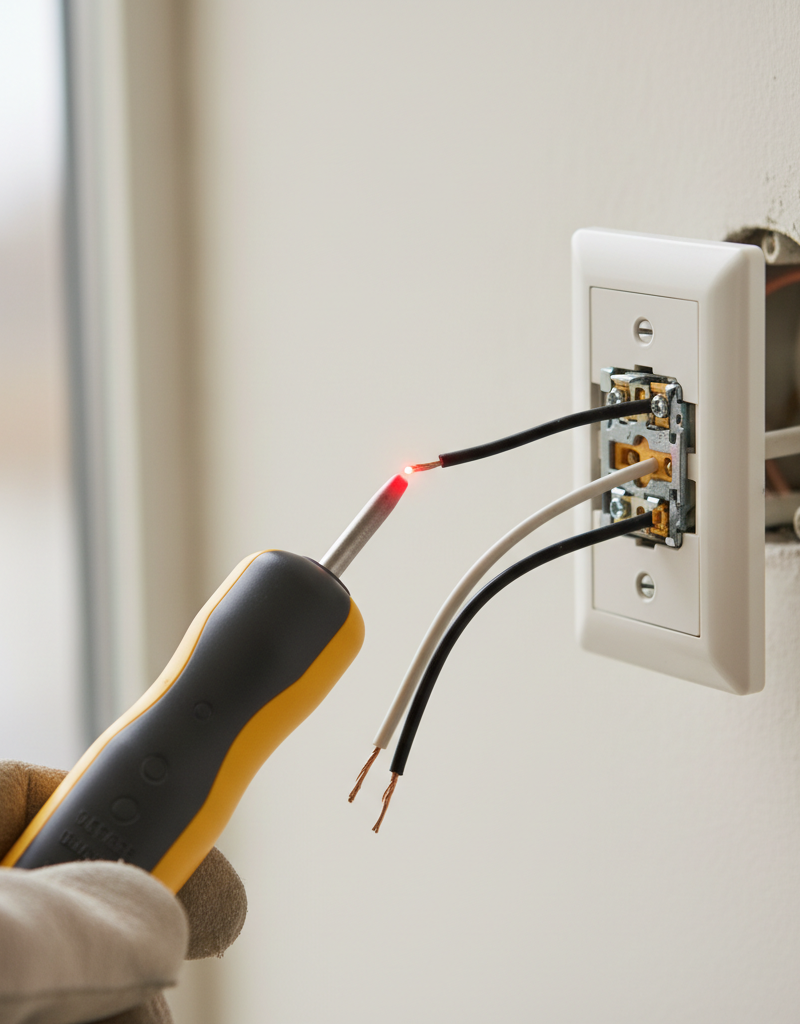
Safety First — Always turn off the power at the circuit breaker before beginning any electrical work. Verify the power is off using a non-contact voltage tester on the switch or outlet you're working on. If you are uncomfortable at any point, call a licensed electrician.
-
Cut the Power — Locate the electrical panel and identify the breaker controlling the affected light switch. Flip it to the “OFF” position. Test the switch with your non-contact voltage tester to ensure the power is completely off. Do not proceed until you're certain there's no power.
- Tools: Non-contact voltage tester
- Safety: Always assume wires are live until tested.
-
Remove the Faceplate — Carefully unscrew the faceplate from the light switch. Use a hand screwdriver, not a power drill, to avoid stripping the screws or damaging the plate. Set the screws and faceplate aside in a safe place.
- Tools: Screwdriver (flathead or Phillips, depending on screw type)
-
Gently Pull Out the Switch — Carefully unscrew the switch mounting screws that hold the switch to the electrical box. Gently pull the switch out from the electrical box, allowing about 6-8 inches of wire slack. Do not pull roughly on the wires themselves, as this can damage connections.
- Tools: Screwdriver
- Safety: Do not touch any bare wires as you pull the switch out, even if power is off.
-
Inspect Wire Connections — Examine all wire connections to the switch. Look for any loose wires, discolored insulation (brown or black, indicating overheating), or frayed strands. Wires should be securely wrapped around terminal screws (clockwise direction) or firmly inserted into backstab holes.
- If you see burnt or melted insulation: This is a serious fire hazard. Do not attempt to fix this yourself. Call a licensed electrician immediately.
-
Tighten All Screw Terminals — Using a screwdriver, firmly tighten all screw terminals on the side of the switch. Ensure the wires are securely wrapped around the screws in a clockwise direction, and no bare wire is exposed beyond the terminal. Give each wire a gentle tug to confirm it's secure. Replace any wires that appear damaged or stripped.
- Note: If your switch uses backstab connections (wires pushed into small holes on the back), it's highly recommended to convert these to screw terminal connections. Backstabbing is known for creating loose connections over time.
-
Check for Overload (If Applicable) — If the switch controls multiple high-wattage lights or a fan, consider if the circuit might be overloaded. While tightening connections is the primary fix, a persistent hot switch might indicate too much current for the switch's rating. If fixing the connections doesn't solve it, you might need to spread the load to another circuit or replace the switch with a heavy-duty model.
-
Inspect the Switch Itself — Examine the switch body for any signs of damage, melting, or discoloration. If the switch itself looks charred, warped, or smells burnt, it needs to be replaced. Even if connections are tight, an internal fault can cause heat.
- If replacing the switch: Ensure the new switch is rated for the correct amperage and voltage, and if it's a dimmer, that it's compatible with your light type (LED, incandescent, CFL).
-
Carefully Reinsert the Switch — Fold the wires gently back into the electrical box. Avoid pinching wires. Secure the switch back into the electrical box using its mounting screws. Reattach the faceplate.
-
Restore Power and Test — Flip the circuit breaker back on. Carefully test the light switch. Monitor it for a few hours. Feel the switch periodically. If it remains cool or only slightly warm (ambient temperature), the fix was successful. If it heats up again, immediately turn off the power and consult a professional electrician.
Common Causes
- Loose Wire Connections: This is by far the most common culprit. Over time, due to vibrations, temperature changes, or improper initial installation, the wire connections at the switch terminals can loosen. This creates resistance, leading to heat generation. Backstab connections are particularly prone to this.
- Overloaded Circuit/Switch: If the switch is controlling too many lights or high-wattage fixtures, it might be exceeding its rated capacity. The increased current flow through the switch can cause it to heat up, even if connections are tight. This is more prevalent with older switches or when incandescent bulbs are replaced with higher wattage versions.
- Faulty Switch: The internal components of the switch can wear out or develop a defect over time. The contacts inside the switch might corrode or become pitted, increasing internal resistance and generating heat. This is more common with older, heavily used switches or lower-quality units.
- Incompatible or Faulty Dimmer Switch: Dimmer switches are more complex than standard on/off switches and often generate a slight amount of heat during normal operation. However, excessive heat can indicate an overloaded dimmer (e.g., controlling more wattage than it’s rated for), an incompatible bulb type (trying to dim non-dimmable LEDs or CFLs), or an internal fault within the dimmer itself.
- Short Circuit: While less common for just a hot switch (often associated with tripped breakers), a partial short circuit within the switch or wiring can cause excessive current flow and heat generation without immediately tripping a breaker, especially in older installations without modern arc-fault circuit interrupters.
Common Mistakes
- Ignoring the Heat: The most dangerous mistake is dismissing a hot switch as
Related Articles
Keep troubleshooting with these hand-picked guides from FixlyGuide:
- Why Your Wall Switch Feels Hot: The Hidden Danger Most Homeowners Miss — A hot light switch isn't just uncomfortable; it's a critical warning sign of potential electrical hazards that demand immediate attention.
- Why is Your Light Switch Hot? (The Hidden Danger Most Homeowners Miss) — A hot light switch isn't just uncomfortable; it's a critical warning sign of electrical issues that should never be ignored due to fire ris…
- Why is Your Light Switch Hot? The 3 Hidden Overload Risks Explanations — A hot light switch isn't just uncomfortable; it signals potential electrical problems like overloading, loose wiring, or a failing switch.
- The Surprising Culprit Behind Your Wobbling Ceiling Fan (It's Not Always Loose Screws) — A wobbling ceiling fan is annoying and potentially dangerous. Learn how to diagnose and fix the most common causes, from imbalanced blades…
- That "Copper" Outlet Wire Might Be A Fire Hazard in Disguise — Discover the hidden fire risk lurking behind your walls—aluminum wiring was a cheap copper alternative in the 60s & 70s, but its unique pro…
- The Hidden Culprit Behind Your AC Not Cooling (and How to Find It) — If your central AC isn't cooling your home, the issue often stems from a surprisingly simple problem that's easy to overlook. Learn how to…
What should this project cost?
Enter your project details for a realistic cost range before you call anyone.
Outlet and switch work usually $150–$400; panel upgrades commonly $1,800–$4,200.
- Regional adjustment
- National average
- Labor share (typical)
- ~$709
- Quotes to collect
- 3 written estimates
Educational estimate based on national averages — not a binding quote. Always confirm with written local estimates.
Fixly Project Decision Box
- DIY difficulty
- Advanced
- Estimated time
- Homeowner checks 20–30 minutes
- Cost level
- Moderate
Main tools / materials
- Clean air filter
- Garden hose for condenser coils
- Shop vac for the condensate line
When to stop and call a pro
- Burning smell, smoke, or a tripping breaker
- Refrigerant lines iced over or hissing
- Any work inside the sealed refrigerant circuit (EPA-licensed only)
- Gas smell near a furnace — leave and call the utility
Need professional help?
Find an HVAC Pro Near YouGet the print-ready PDF of this guide
A clean, ad-free, printable version you can keep on your phone or pin to the workshop wall. Free with a FixlyGuide account.
- Print-optimized layout
- Tools, materials & every step included
- Saved to your account
Frequently asked questions
Is it normal for a light switch to be warm?+
No, a light switch should generally be cool or at ambient room temperature. Any noticeable warmth or heat indicates an electrical problem that needs immediate attention, most commonly loose wiring or an overloaded circuit.
What's the difference between a warm and a hot light switch?+
A 'warm' switch might feel slightly above room temperature, often indicating a minor issue like a dimmer working hard. A 'hot' switch feels uncomfortably warm, even painful to touch, and is a clear sign of significant resistance and a potential fire hazard. Always err on the side of caution and investigate any warmth.
Can a hot light switch cause a fire?+
Yes, absolutely. Excessive heat from a hot light switch can melt wire insulation, ignite surrounding wall materials (like wood studs or drywall), and lead to a serious electrical fire. It's crucial to address a hot switch as soon as it's noticed.
How much does it cost to fix a hot light switch?+
For a DIYer, fixing a loose connection yourself might only cost you time if you have the tools. If you need to replace the switch, a standard switch is $2-$10, and a dimmer is $15-$50. Hiring an electrician typically costs $75-$200 for a repair call, depending on the complexity and local rates.
Discussion
Loading comments…