- Cracked, curling, or buckling shingles: These are compromised and allow water to penetrate.
- Missing or slipped shingles: Obvious points of entry for water.
- Granular loss: Patches where the protective granules are worn off, often visible in gutters or downspouts.
- Safety Note: Never walk on a steep or wet roof. If you're uncomfortable on a ladder, use binoculars from the ground or hire a professional.
Plumbing · Leak
| Project category | Plumbing |
|---|---|
| Problem type | Leak |
| Trade required | Plumbing |
| Urgency | Emergency — act now |
| Safety risk | High safety risk |
| DIY suitability | DIY for experienced homeowners |
| Cost category | Low cost |
| Typical timeline | Shut water off now; repair usually same or next day |
| Contractor type | Licensed plumber |
Repair option
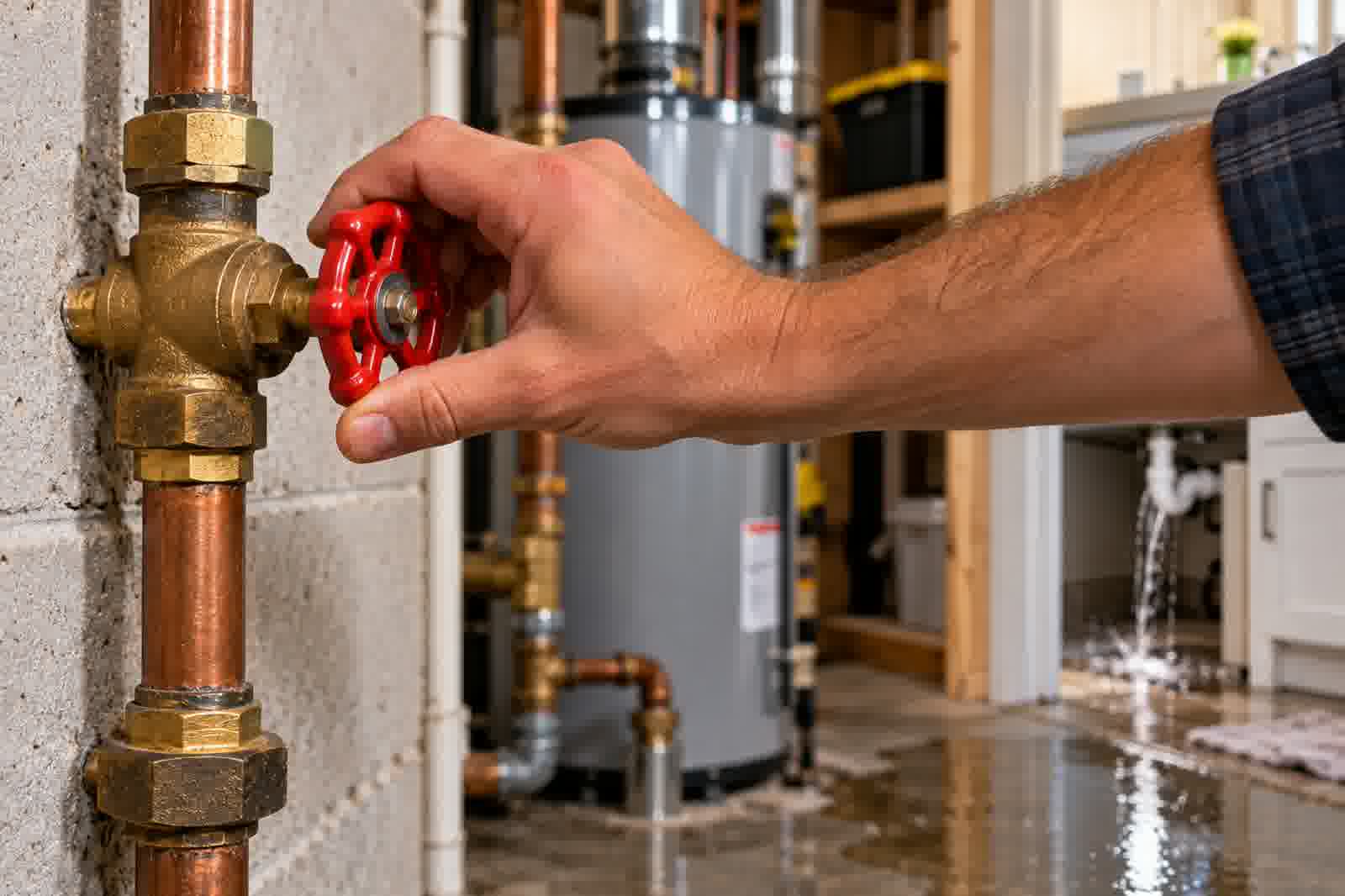
Isolate at the shutoff, replace the failed component, and dry the cavity fully.
Replacement option
Repipe the run or the branch when corrosion is widespread.
Common causes
- Failed supply line or shutoff valve
- Worn washers, cartridges, or P-trap connections
- Pinhole corrosion in older copper
Relevant tools:emergency checklistdiy or hire a pro
Published May 21, 2026Last updated August 17, 2026
Tools & materials you'll need
Affiliate links- AmazonSturdy ladderFor safe attic access and ground-level exterior inspection.
- AmazonFlashlightEssential for illuminating dark attic spaces.
- AmazonMoisture meterTo detect hidden dampness in wood or insulation.
- AmazonBinocularsOptional, for inspecting roof from the ground safely.
- AmazonGarden hoseFor a controlled water test (with a helper and extreme caution).
As an Amazon Associate FixlyGuide earns from qualifying purchases — at no extra cost to you. Prices and availability are accurate as of publication and subject to change.
Quick Answer
Catching a roof leak before catastrophic damage occurs means training your eyes for subtle clues. Most homeowners wait for the tell-tale ceiling stain, but by then, structural damage, mold, and rot have likely set in. Look for granular loss in gutters, cracked or curling shingles, unexplained attic dampness, and even musty odors in upper levels of your home. A proactive approach to these early warning signs can save you thousands in repairs, preserve your home’s structural integrity, and prevent health hazards from mold.
The Problem
Roof leaks are insidious. They start small, often unnoticed, allowing water to slowly infiltrate your home's structure. This silent intrusion can lead to a cascade of expensive problems: damaged insulation, rotted framing, ruined drywall and paint, compromised electrical wiring, and the pervasive growth of mold and mildew. By the time a visible water stain appears on your ceiling, the damage behind the scenes is often extensive, requiring far more than just a simple patch. The real pain point for homeowners is the escalating cost and the potential health risks associated with a prolonged, undetected leak.
How It Works
Your roof is a complex system designed to shed water. Shingles or other roofing materials create an overlapping barrier, preventing water penetration. Beneath these lies an underlayment, typically felt or synthetic material, which acts as a secondary waterproof layer. This system relies on gravity and proper drainage. When a shingle is damaged, lifted, or missing, it creates a vulnerability. Water can then seep under the shingle, past the underlayment (especially if the underlayment itself is old or improperly installed), and eventually penetrate the roof decking. From there, it follows the path of least resistance down rafters, insulation, and eventually to your ceiling. Factors like wind, hail, ice dams, and even prolonged sun exposure can degrade roofing materials over time, creating tiny cracks, loose flashing, or worn-out sealant that open the door for water intrusion. The attic often provides the first internal clues because it's directly beneath the roof deck, making it susceptible to early signs of dampness, wood rot, or mold development before these issues become evident in living spaces.
Step-by-Step Fix
While finding the exact entry point of a roof leak can be challenging and sometimes requires professional help, there are several diagnostic steps you can take to pinpoint where the leak originates or at least narrow down the general area. This section focuses on diagnostic steps rather than a full repair, as proper roof repair often requires specialized knowledge and safety equipment.
1. Attic Ascent – The First Clue
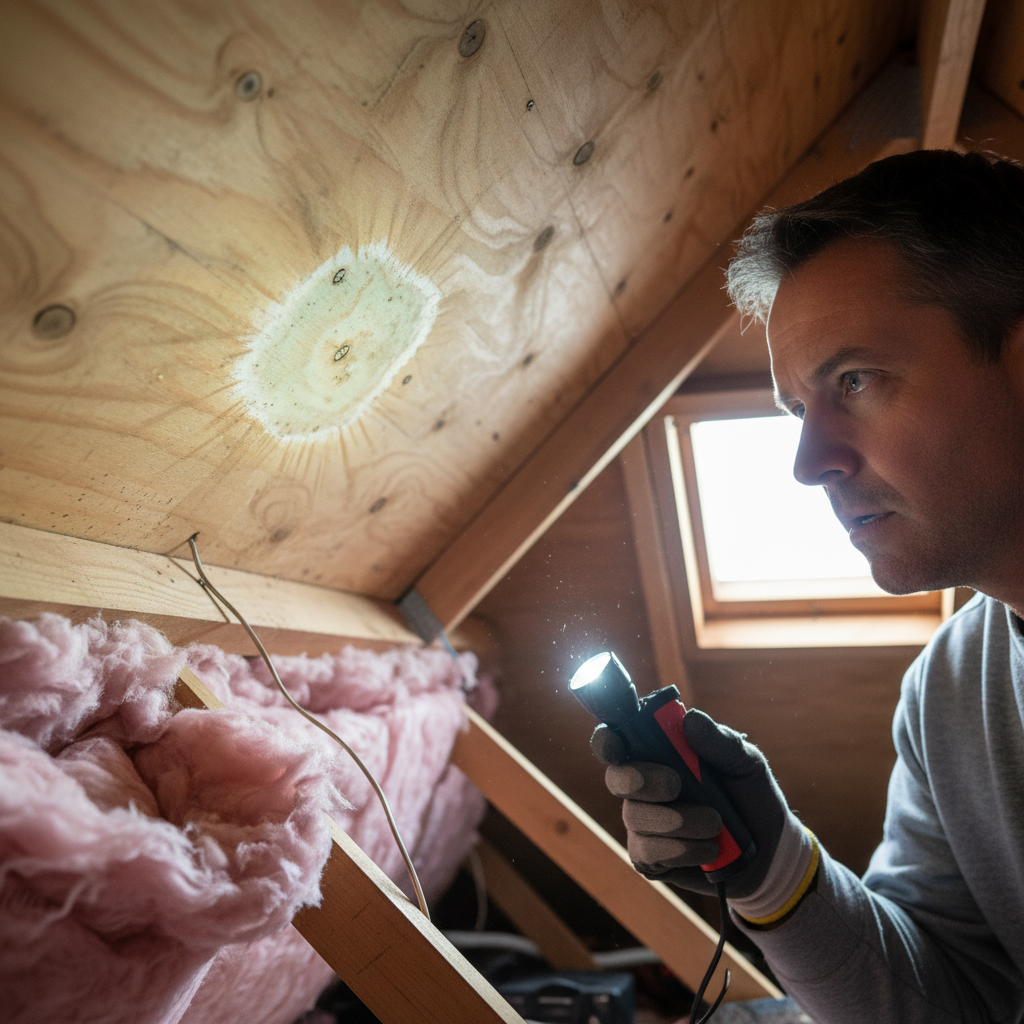
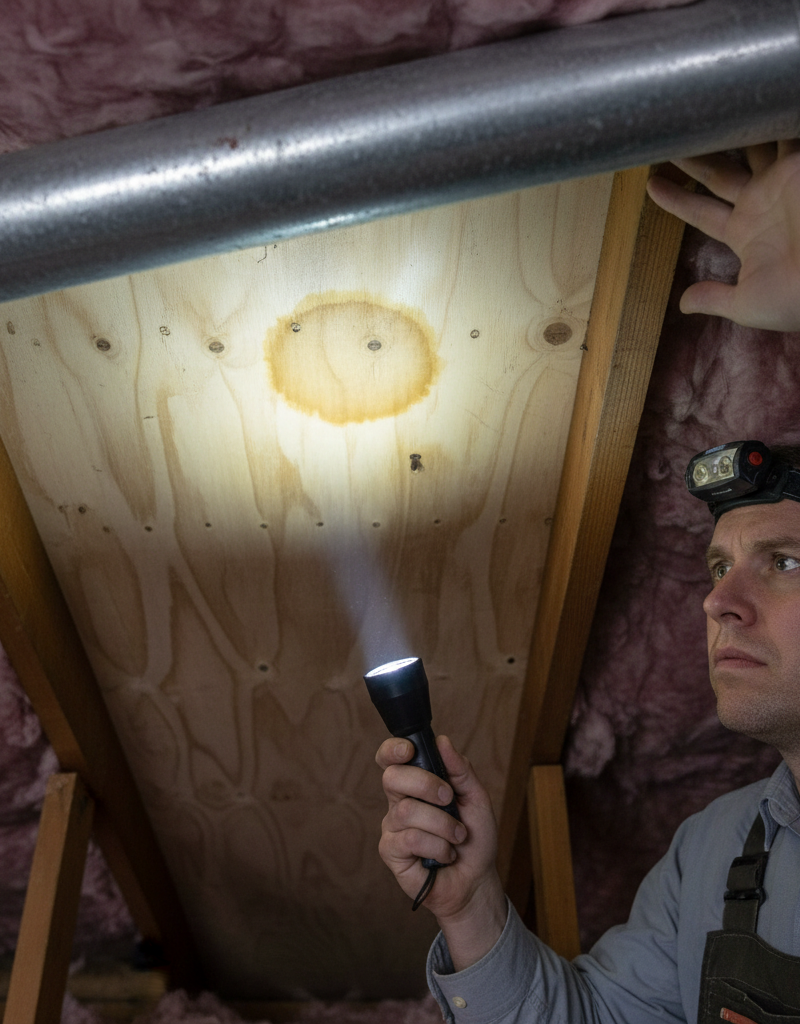
— Carefully go into your attic during daylight hours. Turn off any lights and look for natural light filtering through the roof. Even tiny pinpricks of light can indicate a breach. This is easiest on a sunny day. * Safety Note: Always use a sturdy ladder. Ensure the attic floor joists are visible and sound before stepping. Wear a dust mask and gloves. Avoid stepping directly on insulation if you can't see the joists beneath. * If this doesn't work: If you don't see light, look for water stains on the underside of the roof decking, rafters, or insulation. These stains might be old and dry, indicating a past leak, or still damp.
2. Moisture Meter Scan – The Invisible Damp
— Use a moisture meter to check roof decking, rafters, and insulation for elevated moisture levels, even if no visible water is present. Focus on areas where you suspect a leak. * Tools: Non-invasive or pin-type moisture meter. * Real Talk: A reading above 15-18% on wood generally indicates elevated moisture that warrants further investigation.
3. Exterior Shingle Scrutiny – Top Down
— From the ground or a sturdy, secured ladder (exercising extreme caution), visually inspect your roof for damaged shingles. Look for: * Cracked, curling, or buckling shingles: These are compromised and allow water to penetrate. * Missing or slipped shingles: Obvious points of entry for water. * Granular loss: Patches where the protective granules are worn off, often visible in gutters or downspouts. * Safety Note: Never walk on a steep or wet roof. If you're uncomfortable on a ladder, use binoculars from the ground or hire a professional.
4. Flashing Inspection – The Weak Points
— Examine all flashing around chimneys, skylights, vents, and valleys. Flashing creates a watertight seal where the roof meets a vertical surface. Look for: * Cracks or gaps in sealant: Old caulk dries out and cracks. * Lifted or bent flashing: Allows water to get underneath. * Rust: Can indicate deterioration of metal flashing.
5. Gutter and Downspout Check – Water Flow
— Clear any debris from gutters and downspouts. Clogged gutters can cause water to back up under shingles, especially during heavy rain or freezing conditions (ice dams), leading to leaks. * Prevention: Install gutter guards to reduce debris accumulation. * Pro Tip: Look for excessive shingle granules in the gutters, a sign of advanced shingle wear.
6. Interior Wall and Ceiling Scan – Beyond the Obvious
— Beyond ceiling stains, look for subtle signs on interior walls near the ceiling: bubbling paint, peeling wallpaper, or faint discoloration. These can indicate water migrating down inside walls. * Touch Test: Gently press on suspect areas. Is the drywall soft or spongy?
7. Water Test (Controlled Environment)
— Only perform this if you are comfortable and have a helper. With a helper inside, go up on the roof with a garden hose. Start by running water directly over a suspected area below the actual entry point, then gradually move up. The helper inside can alert you when water starts to drip. This method requires patience and careful observation. * Safety Note: Never step directly on wet shingles. Ensure your helper is in direct communication with you. * Last Resort: If you suspect a specific area but can't confirm, this targeted approach can often identify the exact entry point.
Common Causes
Roof leaks stem from various sources, often related to weather, age, or improper installation. Understanding these common culprits helps in both detection and prevention:
- Damaged or Missing Shingles: The most straightforward cause. High winds, hail, or even falling branches can crack, dislodge, or tear shingles, creating an open path for water. Over time, UV exposure degrades shingles, making them brittle and prone to damage.
- Worn-Out Flashing: Flashing, typically made of metal or rubber, protects vulnerable areas like chimneys, vents, skylights, and valleys. If flashing becomes rusted, bent, cracked, or if the sealant around it fails, water will easily penetrate.
- Clogged Gutters and Ice Dams: When gutters are blocked with leaves and debris, water can't drain properly. This standing water can back up under the roof's edge, especially when it freezes, creating ice dams that force water under shingles and into the eaves.
- Improperly Installed Skylights or Vents: If skylights, plumbing vents, or exhaust vents were installed incorrectly, or if their seals have deteriorated, they are prime locations for leaks. The gaskets or sealants around these penetrations eventually wear out.
- Age and General Wear and Tear: Even a perfectly installed roof has a lifespan. Over decades, sun exposure, rain, snow, and temperature fluctuations degrade materials. Granules on asphalt shingles wear off, protective layers thin, and materials become less resilient to water.
- Roof Deck Damage: Underlying problems with the roof decking itself, such as rotting plywood or OSB, can lead to sagging or instability that compromises the entire roofing system's integrity.
Common Mistakes
Homeowners often make several critical mistakes when dealing with or trying to diagnose roof leaks. Avoiding these can save you time, money, and further damage:
- Ignoring Subtle Signs: Waiting for a visible ceiling stain is a major error. By that point, significant damage, including mold and wood rot, has likely occurred. Pay attention to musty smells, peeling paint in upper rooms, or changes in attic insulation.
- Spot-Patching Without Proper Diagnosis: Simply slapping tar or caulk on a visible crack without understanding the true origin of the leak is a temporary fix that rarely solves the underlying problem. Water can travel far from its entry point, and the real issue might be meters away.
- Compromising Safety on the Roof: Many DIYers attempt roof inspections or repairs without proper safety gear (harness, fall arrest system) or experience. Falling from a roof can cause severe injury or death. If you're uncomfortable on a ladder or the roof, call a professional.
- Overlooking Attic Inspection: The attic is your first line of defense in leak detection. Failure to regularly inspect the underside of the roof deck, rafters, and insulation for moisture, mold, or light means missing early warning signs.
- Assuming the Leak is Directly Above the Stain: Water can travel horizontally along roof decking, rafters, or even inside wall cavities before dripping. The stain on your ceiling might be several feet away from the actual roof penetration.
- Using Improper Materials for Temporary Fixes: Applying standard caulk to flashing or using roofing cement on wet surfaces often fails quickly. Roofing requires specific, weather-resistant sealants designed for its unique demands.
Cost & Time Breakdown
Understanding the potential costs and time involved in dealing with a roof leak can help homeowners plan for repairs.
| Task | DIY Cost | Pro Cost | Time |
|---|---|---|---|
| Leak Detection (DIY) | $0–$30 | N/A | 1–2 hours |
| Leak Detection (Pro) | N/A | $150–$500 | 1–3 hours |
| Minor Shingle Repair | $10–$50 (materials) | $150–$350 | 30 min – 1 hour |
| Flashing Repair | $20–$100 (materials) | $250–$750 | 1–3 hours |
| Underlayment Damage Repair | N/A | $500–$1,500+ | 4–8 hours or more |
| Full (small area) Roof Patch | N/A | $400–$1,000+ | 2–6 hours |
| Ceiling Drywall/Paint Repair | $50–$200 (materials) | $300–$800+ (per area) | 1–2 days |
Tips & Prevention
Proactive measures and regular maintenance are your best defense against costly roof leaks:
- Annual Roof Inspection: At least once a year (preferably in spring and fall), perform a visual inspection from the ground or a safe ladder. Look for damaged shingles, flashing issues, and debris.
- Clean Gutters Regularly: Clear gutters and downspouts of leaves and debris at least twice a year to ensure proper drainage and prevent ice dams.
- Trim Overhanging Branches: Cut back tree branches that are close to or touching your roof. They can cause abrasion, drop debris, and provide access for pests.
- Check Attic Ventilation: Ensure your attic is properly ventilated. Poor ventilation can lead to excessive heat and moisture buildup, degrading roofing materials faster.
- Monitor Shingle Granular Loss: If you notice a significant amount of shingle granules in your gutters, it’s a sign that your asphalt shingles are nearing the end of their lifespan and may need replacement soon.
- Inspect Flashing Seals: Routinely check the caulk and seals around chimneys, skylights, and vents. Reapply sealant as needed with a high-quality, exterior-grade product.
When to Call a Professional
While early detection and minor gutter cleaning can be DIY tasks, several situations absolutely warrant calling a licensed roofing professional. If you suspect a major leak, see significant areas of damaged or missing shingles, or if your leak detection efforts reveal extensive damage to the roof deck or supporting structures, it's time to call in an expert. Anytime you are uncomfortable on a ladder, dealing with a steep roof, or encounter persistent leaks you can't pinpoint, a professional has the experience, safety equipment, and specialized tools to diagnose and repair the issue correctly and safely. Furthermore, if you detect a musty odor but cannot locate any visible signs of water, a professional can conduct more advanced moisture detection and mold assessments to prevent health hazards and structural damage.
Related Articles
Keep troubleshooting with these hand-picked guides from FixlyGuide:
- The Silent Destroyer: 7 Hidden Signs Your Roof Has a Leak (Before You Need a New Ceiling) — Catching roof leaks early can save your home from extensive damage and costly repairs. Learn the subtle indicators that reveal hidden water…
- The One Hidden Sign of a Roof Leak Most Homeowners Miss (And the $10 Fix) — Catching a roof leak early can save thousands in repairs. Learn the elusive signs and a simple, effective fix before minor issues become ma…
- Why Your Chimney Leaks in the Rain (It's Not Always the Roof) — Discover the hidden causes of a leaky chimney during rain, from flashing failures to damaged crowns, and how to fix them for good.
- The Secret Culprit Behind Your Leaky Refrigerator (It’s Not Always a Hose) — Discover the hidden causes of your refrigerator leaking water and how to fix them with our comprehensive troubleshooting guide.
- The 5-Minute Trick to Restore Your Kitchen Sink Sprayer's Lost Pressure — Restore your kitchen sink sprayer's low pressure with a quick, simple trick that often takes less than five minutes and requires no special…
- Is Your Gutter Sagging After Every Storm? The Hidden Flaw Most Homeowners Miss — Discover the overlooked reason your gutters sag after every storm and learn the lasting fix that most homeowners miss.
Should you do this yourself?
Answer five quick questions before you start. Safety outranks savings every time.
Your experience with work like this
How high do you have to work?
Does the job involve any of these?
Will it need a permit?
Specialty tools
Free and instant. Educational guidance only — not a quote, inspection, or professional diagnosis.
Questions to ask before you sign
Ask every contractor the same questions and the cheapest bid stops looking cheapest. Check them off as you go — your progress is saved on this device.
Free, no signup. Bring this to every walkthrough so you compare bids on the same terms.
What should this project cost?
Enter your project details for a realistic cost range before you call anyone.
Common repairs run $150–$650; repipes and water-heater replacements reach $1,500–$4,500.
- Regional adjustment
- National average
- Labor share (typical)
- ~$754
- Quotes to collect
- 3 written estimates
Educational estimate based on national averages — not a binding quote. Always confirm with written local estimates.
Fixly Project Decision Box
- DIY difficulty
- Professional Recommended
- Estimated time
- Inspection 1–2 hours · repairs 1–3 days
- Cost level
- High
Main tools / materials
- Binoculars for a ground-level look
- Flashlight for attic checks
- Moisture meter
- Roofing cement (temporary patch only)
When to stop and call a pro
- Active leak near lights, fans, or any wiring
- Sagging, bulging, or water-filled ceiling
- Steep, wet, or two-story roof — do not climb it
- Storm or hail damage you plan to claim on insurance
Need professional help?
Free roof assessment first — no phone calls until you ask for them.
Get Local Roofing HelpGet help with your roof now
Stay off the roof. These free tools help you protect the house and reach the right professional fast.
- Emergency repair checklistThe first steps that limit damage before a pro arrives.Open
- Repair or replace your roof?Answer 10 questions about age, leaks, and damage to get a clear next step.Open
- Get local estimatesSend one request and compare written estimates from vetted pros.Open
Free, no signup required. Estimates are educational guidance, not a quote or an inspection.
Frequently asked questions
How do I find a roof leak when it's not raining?+
To find a roof leak when it's not raining, start by inspecting your attic for light entering through the roof, moisture stains on wood, or musty odors. On the exterior, look for damaged or missing shingles, degraded flashing around vents or chimneys, and excessive shingle granules in gutters. If you suspect a specific area, a controlled water test with a helper can pinpoint the entry point.
What are the earliest signs of a roof leak?+
The earliest signs of a roof leak include unusual moss or algae growth on parts of the roof (indicating trapped moisture), granular loss from asphalt shingles accumulating in gutters, subtle musty odors in upper floor rooms or the attic, and soft or spongy areas on interior walls or ceilings near the roofline, even without visible water stains.
Can a roof leak without a visible water stain?+
Yes, a roof can absolutely leak without a visible water stain on your ceiling. Water can travel along rafters, inside wall cavities, or be absorbed by insulation for a long time before saturating drywall enough to cause a visible stain. Early signs are often felt (dampness, cold spots) or smelled (musty odor) before they are seen.
How often should I inspect my roof for potential leaks?+
You should inspect your roof for potential leaks at least twice a year, ideally in the spring after winter storms and in the fall before winter sets in. Additionally, perform a quick visual inspection after any major storm involving high winds, hail, or heavy rain that could cause immediate damage.
Is it safe to go on my roof to find a leak?+
It is generally not safe for an untrained homeowner to go on a roof, especially if it's steep, wet, or icy. If you must inspect your roof, use a sturdy ladder, have a spotter, and exercise extreme caution. For anything beyond a ground-level visual inspection, it's safer to use binoculars or hire a professional roofer who has the proper safety equipment and expertise.
Discussion
Loading comments…