- Egg Laying: In the early evening, female moths fly low over the turf and drop eggs randomly onto the grass and into the thatch layer. Those eggs are tiny. You’ll never spot them with the naked eye.
- Hatching Larvae: Depending on temperature, the eggs hatch in about 7 to 10 days. Out come the larvae—tiny caterpillars, usually light green or brownish with dark spots. That’s when the trouble starts.
- Pupation: Once a larva is fully grown (about 3/4 to 1 inch long), it spins a cocoon in its tunnel and pupates. This stage lasts about one to two weeks.
Landscaping · Deck or fence project
| Project category | Landscaping |
|---|---|
| Problem type | Deck or fence project |
| Trade required | Landscaping |
| Urgency | Planned project |
| Safety risk | Moderate safety risk |
| DIY suitability | DIY for experienced homeowners |
| Cost category | High cost |
| Typical timeline | Most builds 3–10 days depending on size |
| Contractor type | Landscaping contractor |
Repair option
Replace failed boards, posts, and hardware; reseal the surface.
Replacement option
Rebuild when framing or the ledger connection is unsafe.
Common causes
- Rot at posts and ledger
- Storm damage
- Adding outdoor living space
Relevant tools:home improvement material pricesproject cost estimator
Published October 15, 2026Last updated October 15, 2026
Tools & materials you'll need
Affiliate linksAs an Amazon Associate FixlyGuide earns from qualifying purchases — at no extra cost to you. Prices and availability are accurate as of publication and subject to change.
Quick Answer
Sod webworms are the larvae of small, tan-colored moths that lay their eggs in your lawn. Once those eggs hatch, tiny caterpillars get to work chewing on grass blades, and that’s how you end up with thin, yellowing, then brown patches that look dead. Want to check for them? Mix two tablespoons of dish soap into a gallon of water and pour it over a 3-foot-square section of damaged turf. If sod webworms are the culprit, those irritated larvae will wriggle to the surface within about 10 minutes. For a light infestation, beneficial nematodes or a product with Bacillus thuringiensis (Bt) can take care of them the natural way. If the damage is spread out across a big chunk of lawn, you may need a lawn insecticide made for sod webworms to knock them back and save the grass.
The Problem
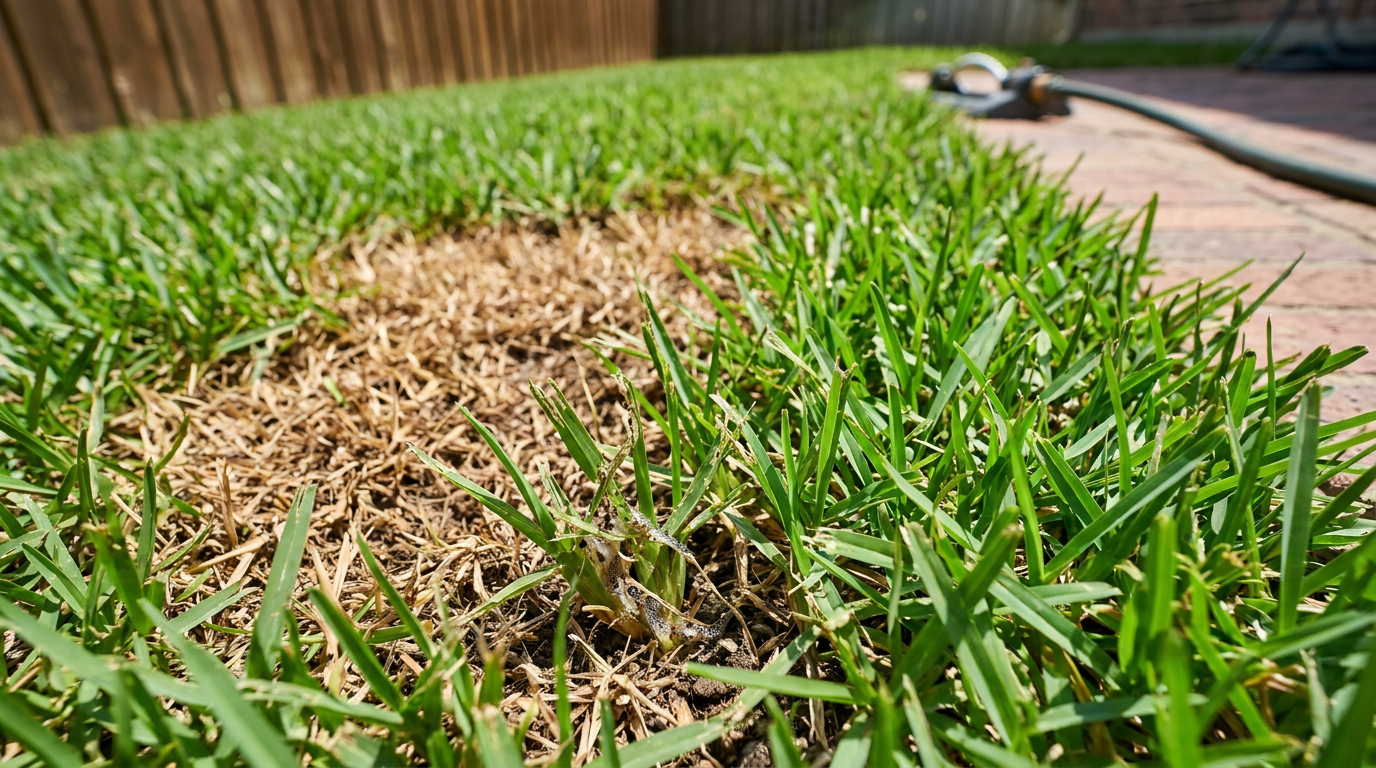
You put time and money into your lawn, then out of nowhere you’re staring at ugly, irregular brown patches creeping through the turf. The grass blades look chewed up and ragged, and the damaged spots seem to grow by the day. You might also spot little tan moths making that jerky, zigzag flight across the yard, especially at dusk. That’s a big clue. Those are the adult sod webworm moths.
But the moths aren’t the ones wrecking the place. Their larvae are the real problem. They live down in the thatch layer, spinning silky little tunnels and coming out at night to feed on your grass. I pulled a section of turf in Frisco last month that had exactly this kind of damage, and it looked like the lawn had been scalped in patches. Left alone, a bad infestation can tear up big sections of a lawn in just a few weeks, especially in hot, dry North Texas summers. No dice if you wait too long.
How It Works
Sod webworms have a simple life cycle, but it’s a nasty one. It starts with the adult moths. They don’t eat your grass, but they do lay the eggs that kick off the next round of pests. One female can lay up to 200 eggs over her short life.
- Egg Laying: In the early evening, female moths fly low over the turf and drop eggs randomly onto the grass and into the thatch layer. Those eggs are tiny. You’ll never spot them with the naked eye.
- Hatching Larvae: Depending on temperature, the eggs hatch in about 7 to 10 days. Out come the larvae—tiny caterpillars, usually light green or brownish with dark spots. That’s when the trouble starts.
- Feeding and Growth: The larvae are hungry little things. They live in the thatch—the layer of dead grass and organic matter between the soil and the green blades. They build silk-lined tunnels for cover and come out at night to feed. They chew grass blades off near the thatch level, then drag the pieces back into their tunnels to eat. As they grow over several weeks, they get even more destructive, and the lawn damage becomes obvious fast. You’ll see small, pencil-sized holes in the thatch where they’ve been working. Folks call those "aeration holes," but they’re really feeding tunnels.
- Pupation: Once a larva is fully grown (about 3/4 to 1 inch long), it spins a cocoon in its tunnel and pupates. This stage lasts about one to two weeks.
- Adult Moths Emerge: A new adult moth crawls out of the cocoon, and the whole thing starts again. In a warm climate like North Texas, you can have two, three, or even four generations of sod webworms in a single year. That’s why a little problem turns into a big one so fast.
A lot of folks mistake the damage for drought stress, but if you look close, you’ll notice the grass isn’t just brown—it’s been chewed off.
Step-by-Step Fix
Ready to take your lawn back? Here’s how I’d handle it. The big thing is to move fast once you’ve confirmed webworms are the issue.
1. Confirm the Culprit
- Before you treat anything, be dead sure you’ve got sod webworms. Use the soap-water flush test. Mix two tablespoons of liquid dish soap in a gallon of water and pour it over a 3-foot by 3-foot square of damaged lawn, right where the brown grass meets the green. Wait 10-15 minutes. If webworms are in there, the soapy water irritates them and they’ll come wriggling to the surface. If you see more than 10-15 larvae in that small area, it’s treatment time.
2. Choose Your Weapon: Natural or Chemical
- For small spots or a natural approach: Bacillus thuringiensis (Bt) is a soil-dwelling bacterium that makes a toxin that only hits caterpillars. It comes as a liquid concentrate or powder (look for the kurstaki strain). It’s safe for people, pets, and beneficial insects like bees and ladybugs. Beneficial nematodes (Steinernema carpocapsae) are another solid option. These microscopic worms hunt down and kill webworm larvae in the soil. They’re harmless to everything except the pests.
- For widespread damage: If the soap test shows a heavy infestation across the lawn, you may have to step up to a targeted insecticide. Look for products with bifenthrin, carbaryl, or deltamethrin that are specifically labeled for sod webworms on lawns. Read the label. Every time.
3. Time Your Application Correctly
- Sod webworm larvae feed at night. So the best time to apply anything—natural or chemical—is late afternoon or early evening. That way the product’s fresh and waiting for them when they come out for dinner.
4. Prepare the Lawn
- Don’t treat bone-dry soil. Lightly water your lawn about an hour before applying the treatment. That helps the product move down into the thatch layer where the larvae live. Don’t mow right before application, either. You want enough grass blade surface for the treatment to hang on.
5. Apply the Treatment (Bt or Nematodes)
- Tools: Hose-end sprayer or pump sprayer, bucket (for nematodes).
- For Bt liquid concentrate, follow the label directions and mix it with water in your sprayer. For nematodes, they usually come packed in a sponge or gel. Mix them with cool water in a bucket per the package directions, then apply with a sprayer or watering can. Cover the damaged spots evenly and overlap a little into the healthy green grass.
6. Apply the Treatment (Insecticide)
- Tools: Hose-end sprayer or broadcast spreader (for granules).
- Safety: Wear gloves, long sleeves, and pants. Keep pets and kids off the lawn until the product has dried completely.
- If you’re using a liquid, hook the bottle to your hose and spray evenly. I’d walk backward so I’m not tromping through wet product. If you’re using granules, set the broadcast spreader to the rate on the bag. Make consistent passes across the yard so you don’t miss strips.
7. Water It In (or Don't)
- This part matters, and it depends on the product. Read the label. Some insecticides, like granules, need to be watered in right away with about 1/4 inch of water so the chemical gets down into the thatch. Other products, especially liquid Bt, work better if they are not watered in, because they need to dry on the grass blades the webworms will eat. Mess this up and you’ll think the product failed, when really the application was off.
8. Monitor and Re-Apply if Needed
- Give the treatment about a week to do its thing. You should see the damage stop spreading. If the infestation’s heavy, especially if there are multiple generations moving through, a second application may be needed 2-3 weeks after the first. Run another soap flush test to see where you stand.
9. Help Your Lawn Recover
- Once the pests are gone, you’re not quite done. Rake out the dead brown grass so the soil can breathe. Water the area deeply to push new growth from the roots and runners. Then put down a balanced lawn fertilizer so the turf’s got the nutrients it needs to fill back in.
Common Causes
Why’d you end up with sod webworms in the first place? Usually it’s a mix of things.
- A Thriving Moth Population: The problem starts with a healthy population of adult moths in your area. If your neighbors have them, odds are pretty good you’ll get them too.
- Thick Thatch Layer: A thatch layer thicker than 1/2 inch is prime hiding and breeding ground for webworms. It gives them moisture, shelter, and easy access to grass crowns.
- Drought-Stressed Lawn: Lawns that are underwatered or stressed from high heat are less resilient. They can’t bounce back fast enough, so the brown patches look worse and spread more. Healthy, vigorous turf can often handle a small number of webworms without major damage.
- Monoculture Lawns: Lawns made up of only one type of grass, especially Kentucky bluegrass or fine fescue, can be more vulnerable than mixed-grass lawns.
Common Mistakes
Don’t make these mistakes when you’re trying to clear out webworms.
- Misdiagnosing the Problem: A lot of homeowners see brown patches and assume it’s fungus or not enough water. They burn time and money on fungicides or keep watering, while the larvae keep chewing the lawn up. The soap flush isn’t optional. It’s step one.
- Applying Treatment at the Wrong Time: Spraying in the bright midday sun is a waste. UV rays can break down products like Bt, and the larvae are tucked deep in their tunnels, not feeding. Late afternoon is the sweet spot.
- Ignoring the Thatch: If your thatch is severe, over 1/2 inch thick, treatments may not get through well. Dethatching in spring or fall can make the lawn a whole lot less inviting to pests.
- Using the Wrong Product: Grabbing any old bug killer might not help. You need something specifically labeled for sod webworms. Broad-spectrum insecticides can also wipe out beneficial insects that help keep pest numbers down.
- Not Reading the Label: This is the big one. If you skip watering in a product that needs it, or water in one that should dry on the blades, you’ve basically flushed your effort down the drain.
Cost & Time Breakdown
Here’s what you’re looking at for time and money to deal with a sod webworm problem.
| Task | DIY Cost | Pro Cost | Time |
|---|---|---|---|
| Soap Flush Test | $1 (Dish Soap) | $75–$125 (Visit) | 15 minutes |
| Natural Treatment (Bt) | $20–$35 for concentrate | $150–$250+ | 30–45 minutes |
| Natural Treatment (Nematodes) | $30–$50 per package | $180–$300+ | 30–45 minutes |
| Chemical Insecticide | $25–$40 for liquid or granules | $150–$250+ | 30–60 minutes |
| Lawn Recovery (Fertilizer) | $30–$60 per bag | Included in plan | 30 minutes |
Tips & Prevention
An ounce of prevention is worth a pound of cure, and a whole lot of grass seed.
- Dethatch Regularly: If your thatch is over 1/2 inch thick, rent a power rake or hire somebody in the fall or spring. That knocks out the webworms’ favorite hideout.
- Water Deeply, Not Daily: Deep, infrequent watering builds deeper roots, which makes your lawn tougher and more resistant to pest damage. A short daily sprinkle just makes a weak, shallow-rooted lawn.
- Keep an Eye Out for Moths: See little tan moths fluttering over your lawn at dusk? That’s your early warning system. It means eggs are being laid, and larvae will show up in a week or two. Start checking for damage then.
- Fertilize Appropriately: A well-fed lawn is a stronger lawn. Stick to a regular fertilization schedule for your grass type so it can outgrow minor feeding damage.
- Raise Your Mower Height: Mowing a little higher (around 3-4 inches) helps shade the soil, cuts stress on the grass, and makes the lawn less attractive to moths looking for a place to lay eggs.
When to Call a Professional
Treating sod webworms is usually a pretty manageable DIY job, but sometimes it’s smarter to bring in a licensed lawn care company. If the infestation is massive and covers more than half of your lawn, a pro’s got access to stronger products and better application equipment to get a clean knockdown fast. They can also figure out whether you’ve got more than one issue going on, like a fungal disease mixed with grubs. If you’ve treated it twice on your own and you’re still seeing fresh damage, it’s time to get a professional opinion before the lawn gets so far gone that you’re looking at a full re-sod, which can cost thousands.
Related Articles
Keep troubleshooting with these hand-picked guides from FixlyGuide:
- The Grassy Secret: Why Your Lawn Has Brown Patches (Even After Watering) — Discover the real culprit behind mysterious brown lawn patches—it might not be drought. Learn to identify and eliminate lawn grubs before t…
- The One Weed Killer Mistake That Makes Your Weeds Grow Back Stronger — You've sprayed and pulled, but those persistent weeds keep popping up. The real problem isn't the weed itself; it's a common mistake in how…
- The Invisible Lawn Invaders: How to Erase Fire Ant Mounds for Good — Fire ant mounds can turn your beautiful lawn into a minefield of painful stings. Discover why these pests are so resilient and my pro-teste…
- The Secret Reason Your Lush Lawn Mysteriously Dies (It's Not Drought) — Grubs can secretly destroy a healthy lawn from underground, causing dead patches that look like drought damage. Learn to diagnose and treat…
- The #1 Mistake Homeowners Make with Dandelions (and How to Fix It) — Most homeowners battle dandelions all wrong, making the problem worse instead of getting rid of those stubborn yellow invaders for good.
- The Caulk Stain That Won't Quit: Why Your Shower Stays Grimy — Is that stubborn, discolored caulk making your clean shower look perpetually dirty? It's not just surface grime; it's often mold or mildew,…
Should you do this yourself?
Answer five quick questions before you start. Safety outranks savings every time.
Your experience with work like this
How high do you have to work?
Does the job involve any of these?
Will it need a permit?
Specialty tools
Free and instant. Educational guidance only — not a quote, inspection, or professional diagnosis.
What should this project cost?
Enter your project details for a realistic cost range before you call anyone.
Cost depends heavily on which system turns out to be the source.
- Regional adjustment
- National average
- Labor share (typical)
- ~$1,620
- Quotes to collect
- 3 written estimates
Educational estimate based on national averages — not a binding quote. Always confirm with written local estimates.
Before you start
Check the difficulty, permits, and safety risk — then decide whether to call a pro.
- Estimate this projectGet a cost range for your scope and ZIP before you call anyone.Open
- Get local estimatesSend one request and compare written estimates from vetted pros.Open
Free, no signup required. Estimates are educational guidance, not a quote or an inspection.
Frequently asked questions
What's the difference between grub damage and sod webworm damage?+
Sod webworm damage looks like brown, ragged patches where the grass blades are chewed off at the base. Grub damage, on the other hand, causes the turf to feel spongy and you can pull it back like a carpet because the grubs have eaten the roots.
Will sod webworms go away on their own?+
No, it's very unlikely. With multiple generations possible per year, the population will likely grow and cause more and more damage. Intervention is almost always necessary to stop them.
Is it safe to use insecticides for sod webworms if I have pets?+
It can be, but you must be careful. Always read the product label. Keep pets and children off the treated area until it has completely dried. For a safer alternative, consider using beneficial nematodes or Bt, which are non-toxic to pets and people.
When is the worst time of year for sod webworms in Texas?+
In North Texas, sod webworm activity peaks during the hot, dry months of summer—typically July and August. The stress on the lawn from the heat combined with the pests' feeding can cause rapid and severe damage.
Can I prevent sod webworms from coming back next year?+
Proper lawn care is the best prevention. Dethatching your lawn, watering deeply, and maintaining a healthy turf can make your yard less attractive to them. Also, keep an eye out for the adult moths in early summer as a sign to be vigilant.
How long does it take for my lawn to recover after sod webworm treatment?+
With proper watering and fertilizing after the pests are gone, you should see new growth starting within 2-3 weeks. It may take a full growing season for the lawn to completely fill in and look uniform again.
Does dethatching my lawn get rid of sod webworms?+
Dethatching helps significantly by removing the webworms' habitat—the thick layer of dead grass where they live and hide. While it may physically remove some larvae, it's not a treatment on its own. It's best used as a preventative measure to make your lawn less hospitable to them in the future.
What do adult sod webworm moths look like?+
They are small, slender moths, typically light tan or grey. You'll see them flying in a jerky, zigzag pattern close to the ground, especially in the late afternoon and evening. When they land, they often fold their wings up tightly, making them look like a small tube or cigar.


Discussion
Loading comments…