- Dead Batteries: Simple and common. Plenty of thermostats still use batteries for backup, and once they die, the screen can go dark.
- Tripped Circuit Breaker: A surge, thunderstorm, or fault inside the HVAC unit can pop the breaker and cut power.
- Clogged Condensate Drain Line: In cooling mode, a backed-up drain line trips the float switch, which is there to stop water damage before it starts.
- Furnace Overheating: A filthy air filter can choke off airflow, make the furnace overheat, and trip the high-limit safety switch.
- Blown Control Board Fuse: A short in the low-voltage wiring, often from a frayed wire or bad install, can blow the 3A or 5A fuse on the control board.
HVAC · High energy usage
| Project category | HVAC |
|---|---|
| Problem type | High energy usage |
| Trade required | HVAC |
| Urgency | Planned project |
| Safety risk | Low safety risk |
| DIY suitability | DIY for experienced homeowners |
| Cost category | High cost |
| Typical timeline | Assessment within weeks; replacement planned off-season |
| Contractor type | Licensed HVAC technician |
Repair option
Duct sealing, insulation, and a tune-up before touching the equipment.
Replacement option
High-efficiency replacement sized by a load calculation, not a rule of thumb.
Common causes
- Aging, low-efficiency equipment
- Leaking ducts losing conditioned air
- Insufficient attic insulation
- Oversized system short-cycling
Relevant tools:project cost estimatorrepair or replace
Published September 29, 2026Last updated September 29, 2026
Tools & materials you'll need
Affiliate linksAs an Amazon Associate FixlyGuide earns from qualifying purchases — at no extra cost to you. Prices and availability are accurate as of publication and subject to change.
The Problem
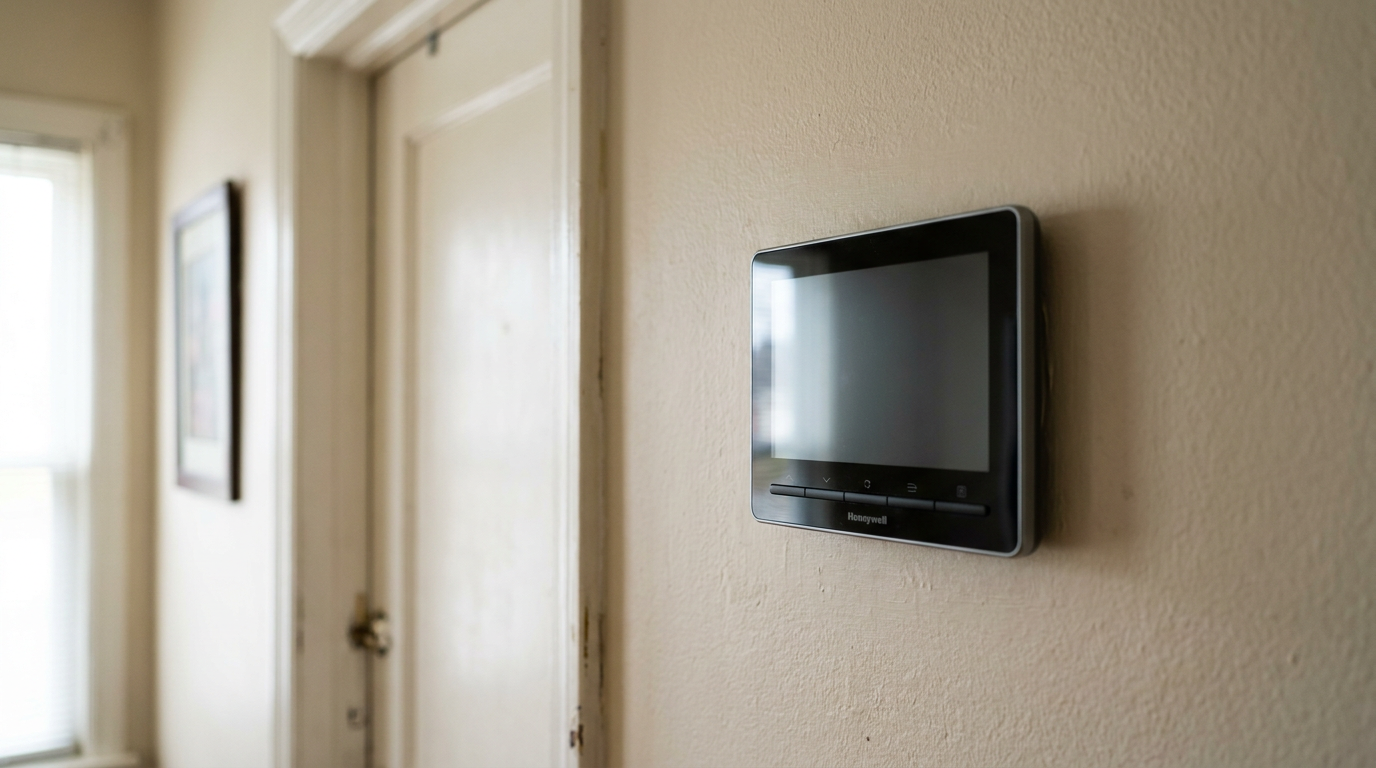
You walk up to the thermostat to bump the temperature, and... nothing. Blank screen. No numbers, no glow, just a dead black or gray rectangle on the wall. Your AC or furnace isn’t kicking on, and the house is getting sticky or chilly fast. So what gives?
A blank thermostat screen isn’t just annoying—it usually means the brain of your HVAC system lost power or quit talking to the equipment. Without that little box, you can’t call for heat or cool, and the whole system sits there doing squat. The good news? A lot of the time, this is a simple fix you can handle yourself in under an hour.
How It Works
Think of your thermostat like a smart light switch for a pretty expensive HVAC setup. It tells your furnace (or air handler) and your AC when to run based on the temperature you set. Inside, it’s watching the room temp with a tiny sensor called a thermistor. When the room drifts away from your setpoint, the thermostat closes a low-voltage electrical circuit.
Most digital thermostats run on 24-volt AC power, usually fed by a transformer in the furnace or air handler. That common wire, or C-wire, keeps things powered up so the screen, Wi-Fi, and all the little bells and whistles don’t have to lean on batteries. Some thermostats also use AA or AAA batteries for backup. On older systems without a C-wire, those batteries may be the main power source. No batteries, no juice.
When the screen goes blank, power’s been interrupted somewhere. Maybe it’s dead batteries. Maybe a safety switch tripped somewhere else in the HVAC equipment and cut power to keep things from cooking itself. Your job is to chase that power from the wall back to the source and find where it stopped.
Step-by-Step Fix for a Blank Thermostat
Work through these in order. Nine times out of ten, you’ll catch the problem pretty quick.
1. Check the Batteries
- A lot of these “dead thermostat” calls are just dead batteries. Don’t skip this, even if you’re sure the thing’s hardwired. Pull the thermostat body off the wall plate gently. Some slide up, some pop straight off. On the back, you’ll usually find a slot for AA or AAA batteries. Swap in a fresh, name-brand set. Cheap batteries can leak and corrode the contacts—seen it plenty. If you spot crusty white junk in there, clean it off with a Q-tip and a little vinegar before you drop the new batteries in. Snap the thermostat back on and wait a minute. Some models take 30-60 seconds to boot.
2. Check the Circuit Breaker
- Still dead? Go to the electrical panel and look for a breaker labeled “HVAC,” “Furnace,” “Air Handler,” or “AC.” Even if the handle doesn’t look tripped, flip it hard to “OFF,” then back to “ON.” Breakers can trip internally without looking obvious. Happens a lot after a thunderstorm or power surge—especially around North Texas. If that breaker keeps tripping, don’t keep forcing it. That’s a bigger electrical issue, and you’ll want an electrician in the mix.
3. Find the HVAC Cutoff Switch
- Your furnace or air handler has its own power switch. It often looks like a regular light switch mounted on the side of the unit or nearby on the wall. Sometimes it’s tucked inside a gray metal box. Code says it’s gotta be within sight of the unit. Folks flip these off by accident all the time—kids, storage boxes, routine cleaning, whatever. Make sure it’s in the “ON” position.
4. Check the Furnace Door Switch
- For safety, furnaces and air handlers use a little interlock switch that gets pressed when the main service panel or blower door is shut. If that door’s not seated right, the switch pops out and kills power to the unit—including the 24 volts feeding your thermostat. Make sure the panel is on correctly and the thumbscrews, if there are any, are snug. You should hear a click when it engages. No click? That thing’s not happy.
5. Inspect the Condensate Drain Pan and Safety Switch
- This one gets me a lot in our hot, muggy DFW summers. The indoor evaporator coil pulls gallons of water out of the air every day. That water drips into a pan and runs out through a drain line. If that line gets clogged with algae and sludge, the pan fills up. To keep you from flooding a ceiling, there’s a little safety float switch—looks like a tiny boat or a small L-shaped PVC gadget—in the pan or on the drain line. When the water rises, the float lifts and shuts power off to the control board. That cuts the AC and, a lot of times, the thermostat too. If your unit’s in the attic, check the secondary drain pan underneath it for standing water. I pulled a water heater in Frisco last month that had exactly this kind of backup nearby, and the homeowner thought the thermostat was dead. Nope—water issue all day. If you see water, your drain line’s clogged. Clear it with a shop vac and the right attachment, or flush it from the outside termination point. Once the water drops and the float falls back down, power should come back after you reset the breaker.
6. Look for a Tripped High-Limit Switch
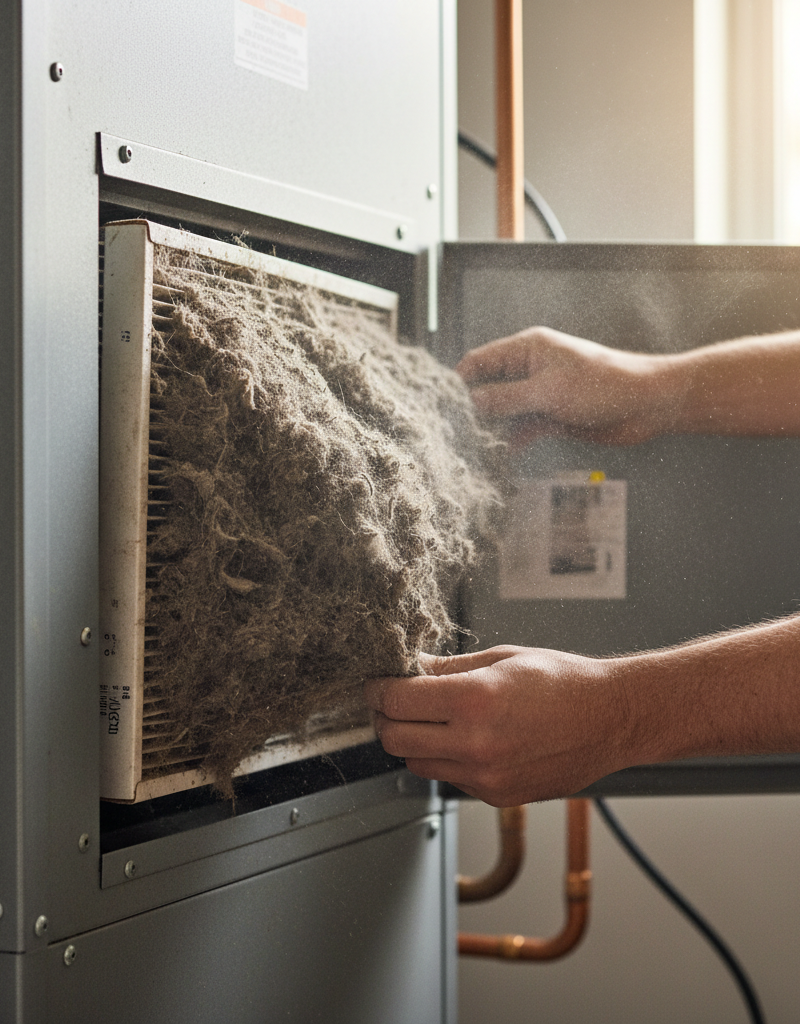
- Your furnace has a safety device called a high-limit switch that keeps it from overheating. It’s a small rectangular or round part, usually with two wires, mounted on the furnace housing near the burners. A dirty air filter is the #1 reason this thing trips. Restricted airflow makes heat build up inside the furnace until the switch shuts everything down. Some high-limit switches reset on their own once the furnace cools off. Others have a little red or black button in the center that you press to reset. Always turn off power to the furnace at the breaker before reaching inside. If it trips again, you’ve got an airflow problem that needs a pro to sort out.
7. Check for a Blown Fuse on the Control Board
- Behind the service panel inside the furnace or air handler, you’ll find the control board. It’s the circuit board with a mess of low-voltage wires connected to it. Most boards have a small automotive-style fuse—usually a 3-amp or 5-amp blade fuse (purple or yellow/tan, respectively). Pull it out carefully with your fingers or needle-nose pliers. Hold it up to the light. If the thin metal strip inside is broken, the fuse is blown. You can grab a replacement at any auto parts store. Usually, a blown fuse means the low-voltage wiring shorted somewhere—maybe a pinched thermostat wire or a bad connection. If the new fuse pops right away, you’ve got a short that needs tracking down.
8. Verify 24V Power at the Thermostat
- This one’s for the more comfortable DIY crowd, and you’ll need a multimeter. If nothing else has turned up, you need to see whether power is making it to the thermostat at all. Set your meter to AC volts, the V~ setting. Remove the thermostat from the wall plate carefully. You’ll see terminals labeled R (or Rc/Rh), C, G, Y, and W. The R wire is the 24-volt hot wire, and the C wire is the common. Put one probe on the R terminal and the other on the C terminal. You should read between 22 and 28 volts AC. If you do, and the screen’s still blank, the thermostat itself is probably toast. If you read 0 volts, then you’ve confirmed there’s a break somewhere between the furnace and the wall—it could be the transformer, a safety switch, or a damaged wire.
Common Causes
A blank thermostat screen doesn’t just happen for no reason. It’s a symptom, and these are the usual troublemakers.
- Dead Batteries: Simple and common. Plenty of thermostats still use batteries for backup, and once they die, the screen can go dark.
- Tripped Circuit Breaker: A surge, thunderstorm, or fault inside the HVAC unit can pop the breaker and cut power.
- Clogged Condensate Drain Line: In cooling mode, a backed-up drain line trips the float switch, which is there to stop water damage before it starts.
- Furnace Overheating: A filthy air filter can choke off airflow, make the furnace overheat, and trip the high-limit safety switch.
- Blown Control Board Fuse: A short in the low-voltage wiring, often from a frayed wire or bad install, can blow the 3A or 5A fuse on the control board.
- Loose Furnace Door: The safety interlock switch on the furnace or air handler door has to be fully pressed in. If the door’s ajar, power gets cut.
- Failed Thermostat: Less common, but it happens. The thermostat electronics can fail, especially after a surge or once the unit gets past 10 years old.
- Bad Transformer: The transformer in the furnace steps 120-volt house power down to the 24 volts the thermostat uses. If that transformer burns out, the controls are dead.
Common Mistakes
I’ve watched homeowners make these same mistakes over and over. Skip these and you’ll save yourself some grief.
- Ignoring the Batteries: People assume the thermostat’s hardwired and never check the batteries. It takes 30 seconds and fixes the problem more than half the time. Start there.
- Just Resetting the Breaker: If it trips, don’t just flip it back on and call it a day. Find out why it tripped. Black air filter? Water in the drain pan? Resetting it without fixing the cause just sets you up for another trip, and maybe more damage.
- Using the Wrong Fuse: If the control board takes a purple 3-amp fuse, replace it with another 3-amp fuse. Don’t toss in a 5-amp, and don’t wrap the old one in foil—no dice. That’s how you fry an expensive control board. The fuse is the cheap sacrificial part; let it do its job.
- Not Seating the Furnace Door Correctly: When you change the air filter, make sure the access panel goes back on tight. If it’s loose, the safety switch won’t engage, and you’ll be standing there wondering why the power won’t come back on.
- Yanking the Thermostat Off the Wall: Go easy. Most thermostats either slide up and off or pull straight out. Prizing or yanking can snap the plastic tabs or, worse, pull the wires right out of the terminal block. Then you’ve turned a small fix into a bigger mess.
Cost & Time Breakdown
Here’s what you can expect to spend, both in money and in time, to get that screen lit back up.
| Task | DIY Cost | Pro Cost | Time |
|---|---|---|---|
| Replacing Batteries | $5–$10 | $100–$150 (service call) | 5 minutes |
| Resetting Breaker/Switch | $0 | $100–$150 (service call) | 10 minutes |
| Clearing Condensate Drain Line | $10–$25 (shop vac) | $125–$250 | 30–60 minutes |
| Replacing Control Board Fuse | $5 | $100–$180 | 20 minutes |
| Replacing a Dead Thermostat | $50–$300 (new unit) | $200–$500 | 30 minutes |
| Replacing Furnace Transformer | $150–$300 (part) | $400–$600 | 2-3 hours (Pro Only) |
Tips & Prevention
A little prevention goes a long way with HVAC.
- Change your air filter religiously. I can’t say this enough. A clogged filter causes half the trouble I see. For common 1-inch filters, check them monthly and change them at least every 90 days. For the bigger 4-5 inch media filters, change them every 6-12 months.
- Pour vinegar down your condensate line. Every spring, before you start running the AC, pour a cup of distilled white vinegar down the condensate drain line access tee near the indoor unit. It helps keep algae and gunk from building up and clogging the line.
- Use high-quality batteries in your thermostat. Don’t grab the cheapest dollar-store batteries. They die quicker and leak more often, which can corrode the contacts. Set a reminder and replace them once a year whether they seem tired or not.
- Install a surge protector. A dedicated HVAC surge protector can go at the outdoor disconnect or on the furnace to help protect the control board and thermostat from power spikes.
- Know where your switches are. Take five minutes today and find the HVAC breaker, the cutoff switch by the unit, and the furnace door. In an emergency, that’s half the battle.
When to Call a Professional
A lot of blank thermostat screens are simple DIY fixes, but there are lines you shouldn’t cross. Call a licensed HVAC technician if you run into any of these:
- A breaker that trips immediately after you reset it. That points to a serious electrical short, and it takes a pro to trace it.
- You smell burning plastic or ozone near the furnace, or you see scorch marks on the control board. Could be a failed transformer or a fried board, and neither one’s a good DIY bet.
- You’ve gone through all the steps, checked for 24V with a multimeter, and still can’t find where the power dropped out. The problem’s deeper in the system.
- You find out the bad part is a transformer or control board. Replacing those means working with both high and low voltage wiring, and that’s a job for someone who does it every day. Mess it up, and you can wipe out the whole system or create a fire hazard.
Related Articles
Keep troubleshooting with these hand-picked guides from FixlyGuide:
- The Secret Reason Your AC Isn't Drying Your Air (And What to Check First) — Your AC should cool and dehumidify, but if your house feels muggy, there's a specific, often overlooked culprit preventing it from doing it…
- The #1 Mistake Homeowners Make Installing a Smart Thermostat (and How to Fix It) — Avoid the most common pitfall when installing a smart thermostat yourself and ensure a smooth, energy-efficient setup.
- The Furnace Short Cycling Mystery: One Small Sensor You're Overlooking — Furnace short cycling is more than just annoying; it can trash your HVAC system and rack up huge energy bills. Often, the culprit is simple…
- The Mystery of the Vanishing Air: Why Your HVAC Stops Blowing After 10 Minutes — Discover the hidden culprits behind your HVAC system stopping short after just 10 minutes of operation and learn how to fix them yourself.
- That 'Energy-Saving' HVAC Trick Is Costing You Money — You've heard the advice: close HVAC vents in unused rooms to save on heating and cooling. But this common practice is a myth. It actually h…
- The #1 Mistake Homeowners Make When Diagnosing Low Water Pressure (and What to Check First) — Before you call a plumber, learn the most common overlooked cause of low water pressure affecting your entire home and how to easily check…
What should this project cost?
Enter your project details for a realistic cost range before you call anyone.
Service calls and common repairs run $150–$900; full system replacement typically $6,000–$12,000.
- Regional adjustment
- National average
- Labor share (typical)
- ~$1,935
- Quotes to collect
- 3 written estimates
Educational estimate based on national averages — not a binding quote. Always confirm with written local estimates.
Fixly Project Decision Box
- DIY difficulty
- Advanced
- Estimated time
- Homeowner checks 20–30 minutes
- Cost level
- Moderate
Main tools / materials
- Clean air filter
- Garden hose for condenser coils
- Shop vac for the condensate line
When to stop and call a pro
- Burning smell, smoke, or a tripping breaker
- Refrigerant lines iced over or hissing
- Any work inside the sealed refrigerant circuit (EPA-licensed only)
- Gas smell near a furnace — leave and call the utility
Need professional help?
Find an HVAC Pro Near YouFrequently asked questions
Why did my thermostat go blank after a power outage?+
If the power went out, your thermostat should have rebooted when it was restored. If it stayed blank, the outage may have tripped a circuit breaker or blown the small fuse on your furnace's control board. A strong power surge can also permanently damage the thermostat's sensitive electronics.
Can I replace my own thermostat if it's broken?+
Yes, replacing a thermostat is a common DIY project. Just make sure to turn off all power at the circuit breaker first. Take a picture of your current wiring before you disconnect anything so you can match the wire colors to the correct terminals on the new thermostat.
Does a blank thermostat mean I need a new furnace?+
No, almost never. A blank screen is a sign of a power interruption or a failed thermostat, not a failed furnace. It's usually caused by a minor, fixable issue like a tripped switch or a clogged drain line.
My thermostat is blank but has fresh batteries. What next?+
If the batteries are good, the next step is to check your home's electrical panel for a tripped circuit breaker labeled "HVAC" or "Furnace." If the breaker is on, check for a safety switch that may have been triggered, such as on the furnace door or in the condensate drain pan.
What is this C-wire and do I need one?+
The C-wire, or "common wire," provides continuous 24-volt power from the furnace to the thermostat. You need one for most smart thermostats to power their Wi-Fi and large screens. If your screen is blank, a problem with the C-wire circuit (or the furnace transformer that powers it) could be the cause.
Why is there water around my indoor furnace?+
That water is condensation that your air conditioner has removed from the air. It means your condensate drain line is clogged and the primary drain pan is overflowing. A safety float switch in the pan or on the line has likely cut power to your system to prevent water damage, causing the blank thermostat screen.
How much does it cost to have a pro fix a blank thermostat?+
A service call from an HVAC technician typically costs between $100 and $150. If the fix is simple like clearing a drain line or replacing a fuse, the final bill might be $125 to $250. If the thermostat itself or a furnace transformer needs replacement, the cost can rise to $400 or more.
Can a bad thermostat cause the AC to run constantly?+
Yes, though it's less common than a blank screen. A thermostat can fail with its internal switch stuck in the "closed" position, telling your AC or furnace to run nonstop. This is a clear sign the thermostat needs to be replaced immediately.
Discussion
Loading comments…