- Dirty Air Filter: It cuts airflow, which makes the furnace overheat or the AC freeze up. This is the first thing I’d check every single time.
- Poor Thermostat Location: Sunlight, vent drafts, or nearby heat sources will lie to the thermostat about the real temperature.
- Dirty Condenser or Evaporator Coils: Grime acts like a blanket and keeps the system from moving heat the way it should. Safety switches trip to keep things from cooking themselves.
- Low Refrigerant Charge (AC): A leak in the refrigerant lines makes the system inefficient and can freeze the evaporator coil, which then trips a safety switch and shuts everything down.
- Faulty Flame Sensor (Furnace): A dirty or failing sensor won’t detect the flame and will shut the furnace down a few seconds after the gas valve opens, just to be safe.
HVAC · High energy usage
| Project category | HVAC |
|---|---|
| Problem type | High energy usage |
| Trade required | HVAC |
| Urgency | Planned project |
| Safety risk | Low safety risk |
| DIY suitability | DIY for experienced homeowners |
| Cost category | High cost |
| Typical timeline | Assessment within weeks; replacement planned off-season |
| Contractor type | Licensed HVAC technician |
Repair option
Duct sealing, insulation, and a tune-up before touching the equipment.
Replacement option
High-efficiency replacement sized by a load calculation, not a rule of thumb.
Common causes
- Aging, low-efficiency equipment
- Leaking ducts losing conditioned air
- Insufficient attic insulation
- Oversized system short-cycling
Relevant tools:project cost estimatorrepair or replace
Published September 29, 2026Last updated September 29, 2026
Tools & materials you'll need
Affiliate linksAs an Amazon Associate FixlyGuide earns from qualifying purchases — at no extra cost to you. Prices and availability are accurate as of publication and subject to change.
The Problem
You hear the AC or furnace kick on, run for a few minutes, then shut right back off. A minute later, it fires again. Same story. That quick on-off-on pattern is called "short cycling," and I hear homeowners complain about it all the time.
It’s not just a nuisance. Short cycling beats the daylights out of your equipment. It runs up your power bill, wears out pricey parts like compressors and blower motors, and still doesn’t get the house where you want it. The system shuts down before it finishes a full cycle, so it never really pulls out the humidity or evens out the temperature from room to room. You end up with a clammy house, hot spots, cold spots, and a bill that makes you wince. No dice.
How It Works
Your thermostat is the brain of your HVAC system, but it’s a pretty simple one. It does one main thing: it reads the air temp right around itself and compares that to the setting you chose. If the room’s warmer than the cooling setpoint — or colder than the heat setpoint — the thermostat closes a low-voltage circuit. That signal travels through a bundle of small wires, usually 18-gauge, to your furnace or air handler and tells it to start up.
Once that cycle starts, the furnace or AC gets to work, conditioning the air and pushing it through the ductwork. The thermostat just sits there and waits. As the conditioned air moves around, the temperature near the thermostat changes. When it finally matches the setpoint, the thermostat opens the circuit, cuts the signal, and tells the system to shut down. On a hot Texas day, a healthy system should cycle 2 to 3 times per hour. Each run ought to last at least 10-15 minutes so it can cool the space and wring out some humidity.
Short cycling shows up when something breaks that rhythm and fools the thermostat into thinking the job’s done when it isn’t. Sometimes the trouble’s inside the thermostat itself. More often, it’s something else in the system causing a quick false temp change right where the thermostat lives. Or it could be a safety switch in the furnace or condenser shutting things down to protect the equipment. Our job is to figure out what’s hitting that “stop” signal too early.
Step-by-Step Fix
Before you touch a thing, kill the power to your HVAC system at the breaker box. You’ll be around electrical parts and moving equipment. No hero stuff.
-
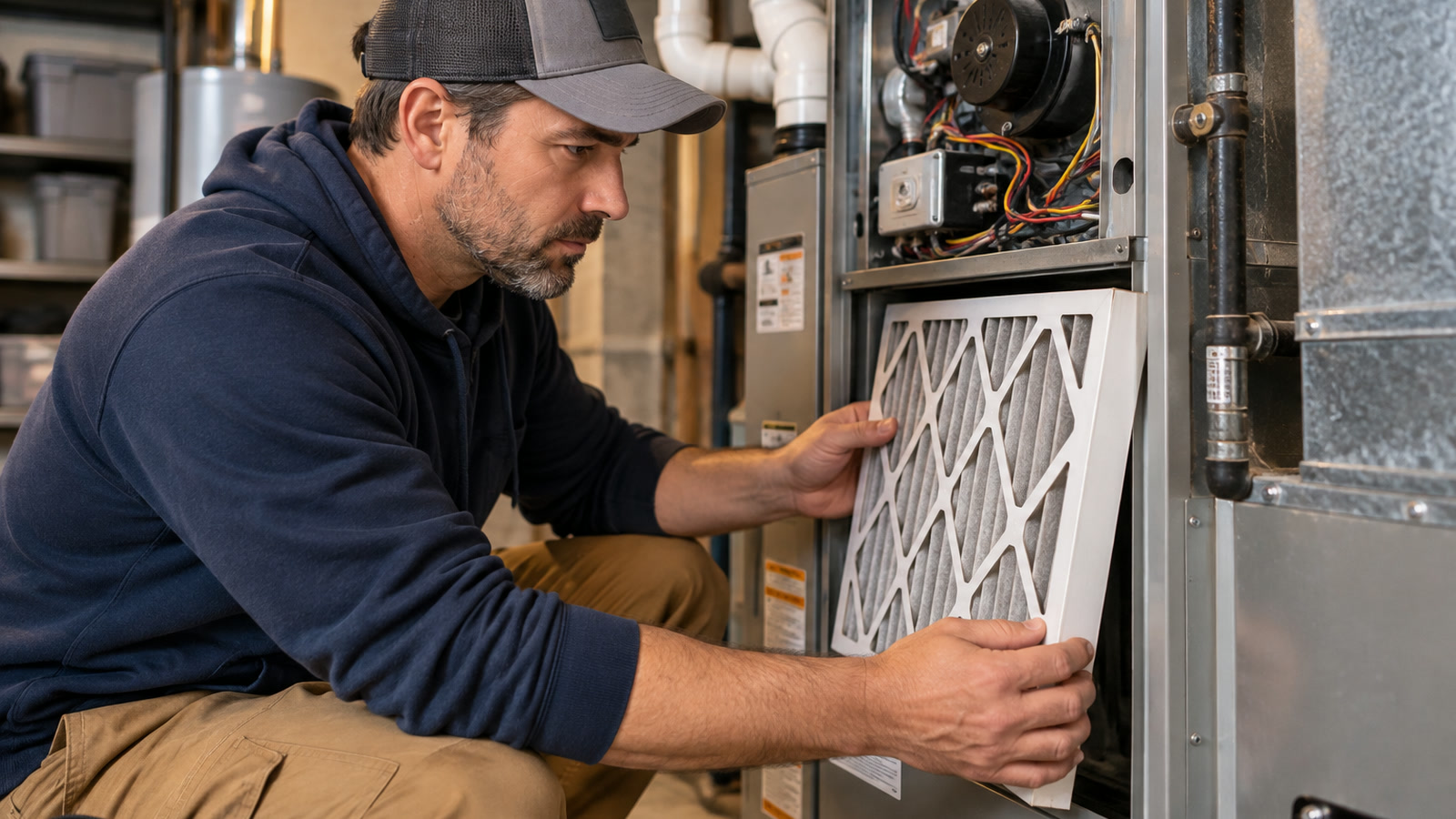
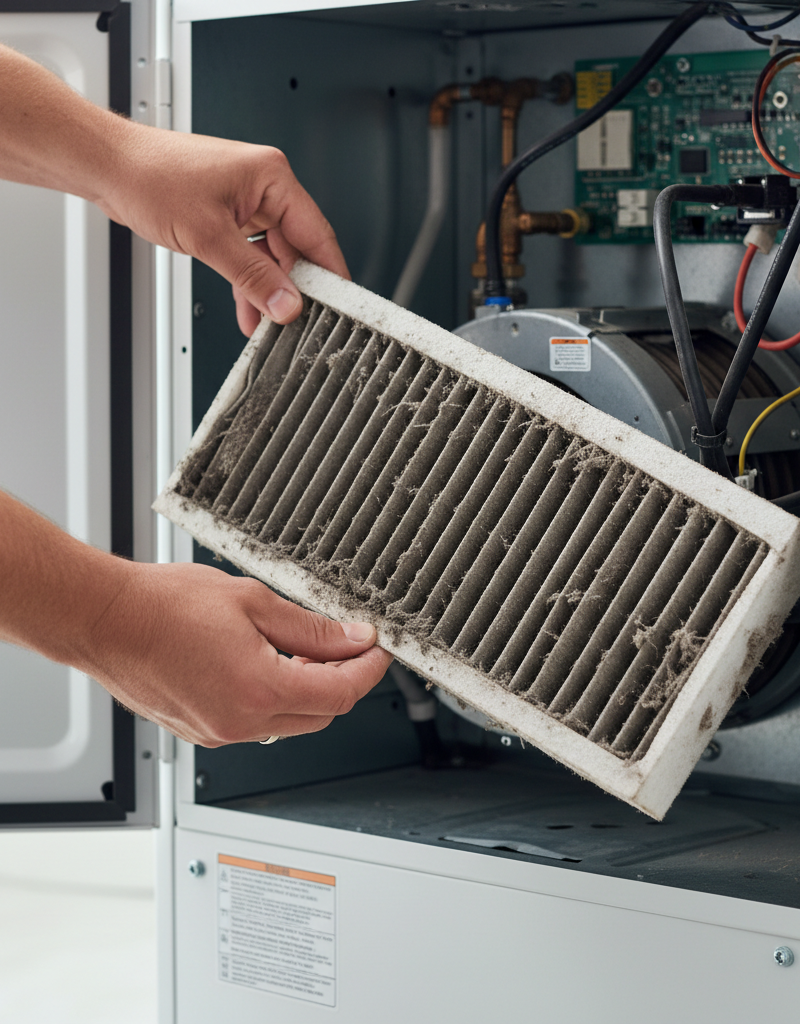
Check the Air Filter — A clogged filter is the #1 cause of short cycling, plain and simple. It strangles the system and keeps it from breathing. On an AC, that can freeze the evaporator coil into a block of ice. On a furnace, it can make the heat exchanger run too hot. Either way, a safety switch shuts the whole thing down before it hurts itself. Pull the filter out. If you can’t see light through it, it’s past due. Swap it for a new one — a basic MERV 4-8 filter is usually the sweet spot. Don’t throw in one of those thick “allergy” filters unless your system was built for it; they can choke airflow just as bad as a dirty filter.
-
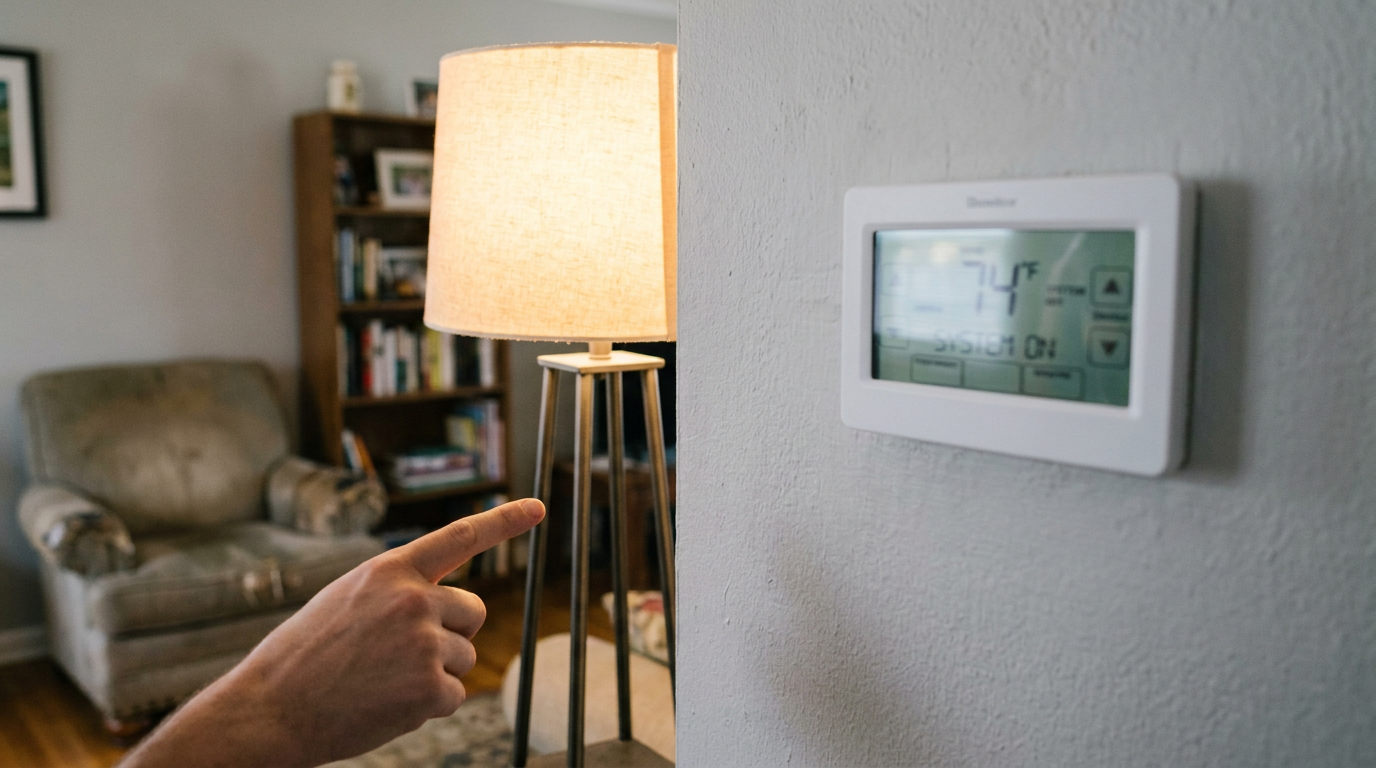
Inspect Thermostat Placement — Is the thermostat sitting in a lousy spot? If it’s getting direct sun, parked next to a lamp, or mounted over a TV console, it’ll read extra heat and shut the AC off too soon. If it’s right under a supply vent, it gets blasted with cold air and thinks the whole house is satisfied. Best spot? Interior wall, about 52-60 inches off the floor, somewhere central with decent air movement.
-
Clean the Thermostat — Dust acts like insulation. Pop the cover off the thermostat — most of them just pull straight off — and use a can of compressed air, the keyboard kind, to blow out any dust bunnies or debris around the sensors. Even a thin layer of crud can throw off the reading.
-
Check for Drafts — Air leaks behind the thermostat can fool it too. That little hole in the drywall where the wires come through can let unconditioned air from the wall cavity blow across the back of the thermostat. Gently pull it off the wall and plug that hole with a little plumber’s putty or non-expanding foam. That way it’s reading room air, not attic air, wall air, or some random pocket of nonsense.
-
Examine the Condenser Unit (for AC) — Head outside to the outdoor AC unit. The big coils around it are the condenser coils, and they dump heat into the outside air. If they’re packed with dirt, grass clippings, or cottonwood fluff, they can’t do their job. Pressure builds, the refrigerant can’t let go of its heat, and a high-pressure switch shuts the unit down. Kill the power at the outdoor disconnect first, then rinse the fins with a garden hose and a gentle spray nozzle from the inside out. Don’t use a pressure washer. You’ll bend those delicate aluminum fins faster than you can say “oops.”
-
Look at the Condensate Drain Line (for AC) — In humid North Texas, your AC pulls a lot of water out of the air. That water collects in a pan and drains out through a PVC line. If that line gets clogged with algae and muck, the pan fills up and trips a float switch, which cuts power to the thermostat and keeps you from flooding the place. A lot of units have a clear P-trap or a service port you can check for a backup. You can also use a shop vac at the outside termination point to suck the clog out. I pulled a unit in Frisco last month that had exactly this mess — looked clean from the top, but the drain line was packed solid with black sludge.
-
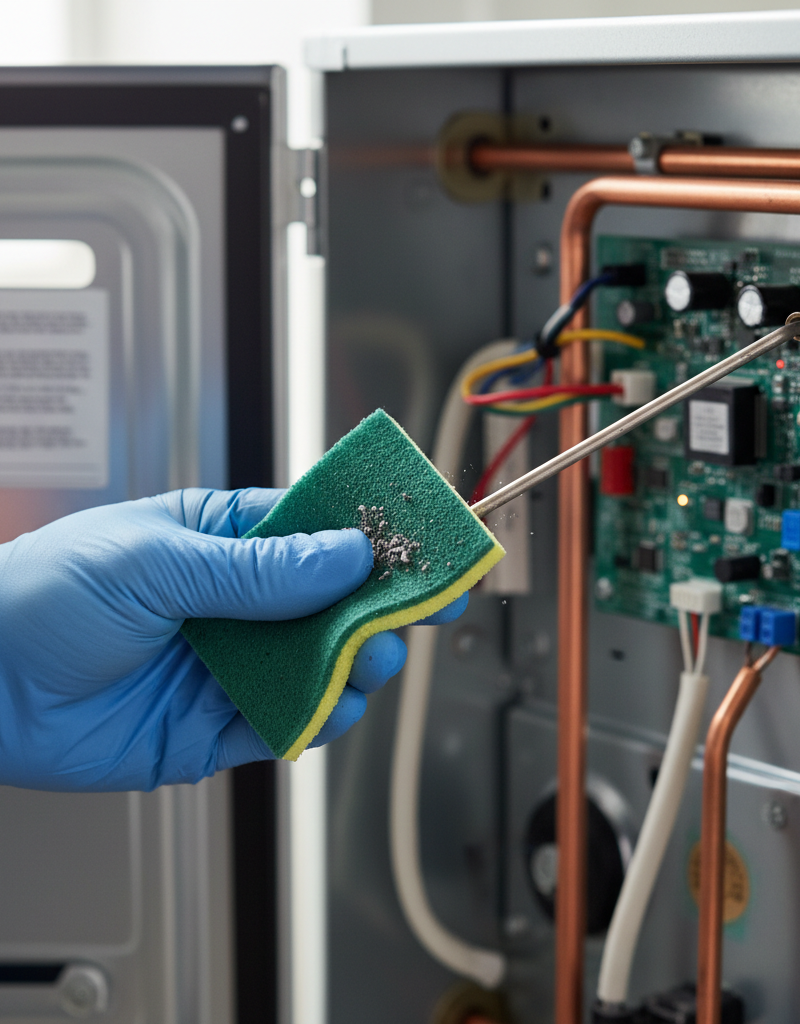
Inspect the Flame Sensor (for Furnace) — If your furnace lights for a few seconds and then shuts down, the flame sensor’s a prime suspect. It’s a small metal rod sitting in front of the burners, and its only job is to prove the flame is there. Over time, soot and carbon build up on it and insulate it from the flame. Then it can’t “see” the fire and tells the control board to close the gas valve as a safety move. After you shut off the power, you can usually pull the sensor with a 1/4-inch hex driver. Lightly clean the rod with fine sandpaper or steel wool — just enough to knock off the carbon. Put it back, fire it up, and see what happens.
Common Causes
- Dirty Air Filter: It cuts airflow, which makes the furnace overheat or the AC freeze up. This is the first thing I’d check every single time.
- Poor Thermostat Location: Sunlight, vent drafts, or nearby heat sources will lie to the thermostat about the real temperature.
- Oversized HVAC System: A furnace or AC that’s too big for the house cools or heats it too fast. Sounds nice, right? Problem is, the thermostat gets satisfied before the system has time to dehumidify the air or spread it evenly. You wind up with a house that feels sticky and uneven.
- Dirty Condenser or Evaporator Coils: Grime acts like a blanket and keeps the system from moving heat the way it should. Safety switches trip to keep things from cooking themselves.
- Low Refrigerant Charge (AC): A leak in the refrigerant lines makes the system inefficient and can freeze the evaporator coil, which then trips a safety switch and shuts everything down.
- Faulty Flame Sensor (Furnace): A dirty or failing sensor won’t detect the flame and will shut the furnace down a few seconds after the gas valve opens, just to be safe.
Common Mistakes
- Ignoring the Air Filter: I know, I know — it’s boring. But it’s the easiest thing to check and the most common problem I run into. Folks get spun up over complicated theories when the fix is a $15 filter change. Start there.
- Using High-MERV Filters in an Old System: Sure, that super-fancy allergy filter sounds great on the shelf. But if your blower and ductwork weren’t designed for that much restriction, you’ll starve the system for air and create the same overheating or freezing mess as a clogged filter.
- Setting the Thermostat Way Too Low: Cranking the AC to 65°F won’t cool the house faster. It just makes the system run longer, and on a scorcher it can freeze up — then you get short cycling. Same old song.
- Hosing Down a Hot Condenser: Spraying cold water on a condenser that’s been running full blast on a 100°F day can shock the parts. Let it sit for at least 30 minutes after you shut it off before you clean the coils.
- Misdiagnosing an Oversized Unit: If you just moved into a house and the system’s short cycling, the last guy may have installed a unit that’s too big. You’ll see it run 5-7 minutes, satisfy the thermostat, and shut off while the house still feels muggy. There’s no easy DIY fix for that. Usually you’re looking at equipment replacement, and a pro needs to do a proper “Manual J” load calculation before anything gets swapped out.
Cost & Time Breakdown
| Task | DIY Cost | Pro Cost | Time |
|---|---|---|---|
| Replace Air Filter | $5 - $30 | $75 - $150 (as part of a tune-up) | 5 minutes |
| Clean Thermostat / Seal Air Gaps | $0 - $10 | $100 - $200 | 15 minutes |
| Clean Outdoor Condenser Coils | $0 (if you have a hose) | $100 - $250 | 30-45 minutes |
| Clean Flame Sensor | $0 - $5 (for sandpaper) | $80 - $200 | 20-30 minutes |
| Clear Condensate Drain Line | $0 (if you have a shop vac) | $75 - $250 | 30 minutes |
| Refrigerant Recharge | N/A - Legally requires EPA license | $250 - $700+ (depending on leak repair) | 1-3 hours |
Tips & Prevention
- Monthly Filter Changes: Around here in North Texas, with all the dust and allergens, you ought to at least check your filter every month during peak heating and cooling seasons. Easy rule: hold it up to the light. If you can’t see light through it, change it. I like writing the date right on the filter frame with a Sharpie so nobody’s guessing later.
- Annual Professional Tune-Ups: Have a licensed HVAC tech service the system every spring for AC and every fall for heat. They’ll clean the hard-to-reach parts, check refrigerant levels, and test the electrical components before they turn into a headache.
- Keep the Outdoor Unit Clear: Don’t box in your condenser with bushes or a structure within 2 feet. It needs open airflow to do its thing. I’d also make it a habit to clear leaves and debris off it every time you mow.
- Use Your Fan Setting: On milder days, setting the thermostat fan to “On” or “Circulate” can help even out temps around the house without firing up the AC or furnace. That can cut down on how often the system has to cycle.
- Install a Programmable or Smart Thermostat: These do a better job managing the system. You can pre-cool the house before the afternoon heat peaks, which takes some strain off the equipment and helps keep short cycling at bay.
When to Call a Professional
A lot of short cycling issues are simple enough to handle yourself, but there are times you need to put the screwdriver down and call a licensed pro. If you think you’ve got a refrigerant leak — usually you’ll hear hissing or see oily residue on the copper lines — call a pro, since refrigerant work requires an EPA 608 license. Same goes for a furnace that still won’t stay lit after you’ve cleaned the flame sensor; that could be a bad gas valve or a control board problem, and that’s not a DIY repair. And if you’ve walked through all the steps above and the system still keeps short cycling, you need a real diagnosis to check for bigger issues like an oversized unit or a failing compressor. Don’t gamble with a system that costs thousands to replace.
Related Articles
Keep troubleshooting with these hand-picked guides from FixlyGuide:
- The Secret Reason Your Furnace Turns On and Off So Much (It's Not What You Think) — Short cycling strains your furnace and wastes energy. Learn the most common surprising causes and how to fix them to restore efficient heat…
- The Secret Reason Your Furnace Kicks Off Early (It’s Not What You Think) — Furnace short cycling is a common, frustrating problem that wastes energy and wears out your system. It happens when your furnace turns on…
- The Hidden Reason Your Furnace Short Cycles (and the $15 Fix) — Furnace short cycling can drive up energy bills and wear out your system prematurely; often, a simple fix like a dirty filter or miscalibra…
- The Mystery of the Vanishing Air: Why Your HVAC Stops Blowing After 10 Minutes — Discover the hidden culprits behind your HVAC system stopping short after just 10 minutes of operation and learn how to fix them yourself.
- The Furnace Short Cycling Mystery: One Small Sensor You're Overlooking — Furnace short cycling is more than just annoying; it can trash your HVAC system and rack up huge energy bills. Often, the culprit is simple…
- Why Your Hot Water Only Lasts 5 Minutes (And How to Fix It FAST) — If your hot showers are cut short, it's likely a simple issue with your water heater's dip tube, heating elements, or thermostat. Most home…
What should this project cost?
Enter your project details for a realistic cost range before you call anyone.
Service calls and common repairs run $150–$900; full system replacement typically $6,000–$12,000.
- Regional adjustment
- National average
- Labor share (typical)
- ~$1,935
- Quotes to collect
- 3 written estimates
Educational estimate based on national averages — not a binding quote. Always confirm with written local estimates.
Fixly Project Decision Box
- DIY difficulty
- Advanced
- Estimated time
- Homeowner checks 20–30 minutes
- Cost level
- Moderate
Main tools / materials
- Clean air filter
- Garden hose for condenser coils
- Shop vac for the condensate line
When to stop and call a pro
- Burning smell, smoke, or a tripping breaker
- Refrigerant lines iced over or hissing
- Any work inside the sealed refrigerant circuit (EPA-licensed only)
- Gas smell near a furnace — leave and call the utility
Need professional help?
Find an HVAC Pro Near YouGet the print-ready PDF of this guide
A clean, ad-free, printable version you can keep on your phone or pin to the workshop wall. Free with a FixlyGuide account.
- Print-optimized layout
- Tools, materials & every step included
- Saved to your account
Frequently asked questions
How long should my AC or furnace run in a single cycle?+
Ideally, your HVAC system should run for 10-20 minutes per cycle, 2-3 times an hour on a typical day. If it's running for less than 10 minutes at a time, it's likely short cycling and not properly conditioning your home.
Can a bad thermostat cause short cycling?+
Yes, though it's less common than other causes. A faulty thermostat with a bad temperature sensor or loose wiring can definitely send premature signals to your HVAC system, causing it to shut off too early.
Is short cycling an emergency?+
It's not an immediate emergency, but you should address it quickly. Continuous short cycling puts major strain on your compressor and other expensive parts, leading to premature failure and costly repairs. It also drives up your energy bills.
Why does my furnace turn on for 10 seconds then shut off?+
This classic symptom almost always points to a dirty or faulty flame sensor. The system starts, the gas valve opens, but the sensor fails to detect a flame and immediately shuts down the gas as a safety precaution. Cleaning it often solves the problem.
Can an oversized AC cause problems?+
Absolutely. An oversized unit cools the air near the thermostat so quickly that it shuts off before it has a chance to remove humidity from the air. This leads to short cycles and a home that feels cool but damp and clammy.
How do I know if my AC is low on refrigerant?+
Signs of low refrigerant include the system running constantly but not cooling well, ice forming on the refrigerant lines or the outdoor unit, and a hissing or bubbling noise. You must call a licensed professional to test and recharge the system.
Will a smart thermostat fix short cycling?+
A smart thermostat can't fix an underlying mechanical problem like a clogged filter or refrigerant leak. However, some models have settings (like minimum run time) that can help prevent short cycles caused by poor placement or minor sensor issues.
Is it cheaper to leave my AC on all day or turn it off?+
It's more energy-efficient to set your thermostat a few degrees higher (or use a programmable schedule) when you're away rather than turning it completely off. This avoids the long, hard run cycle required to cool a hot house from scratch, which uses more energy and strains the system.
Discussion
Loading comments…