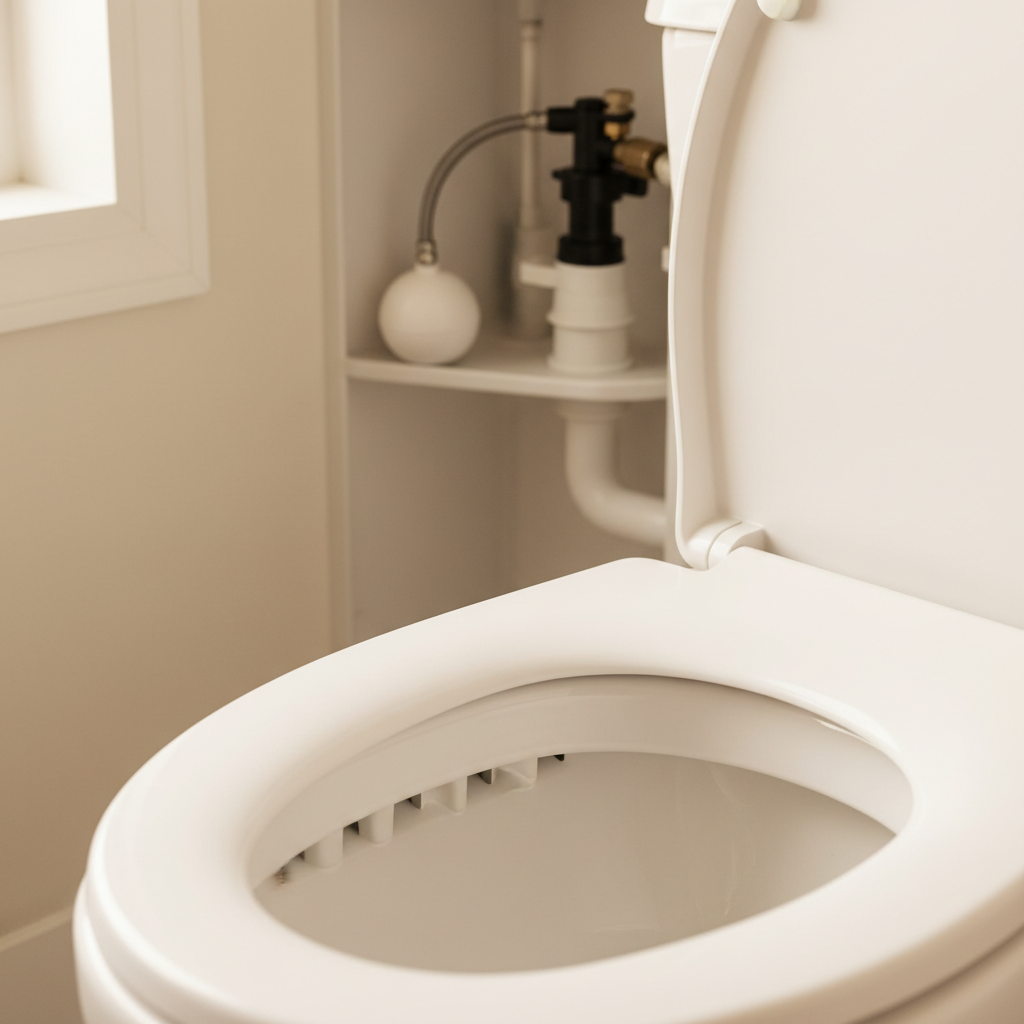
- Multiple fixtures are clogged. If sinks, showers, and toilets are all backing up or draining slowly, especially on the ground floor, this signals a blockage in your main sewer line.
- Water backs up in other drains. A clear sign of a main line clog is when flushing the toilet causes water to gurgle up or back up into a bathtub or shower drain.
- A toilet auger fails to clear the clog. If a 3- to 6-foot closet auger cannot reach or dislodge the obstruction, the clog is located further down the drainpipe, beyond the toilet itself.
- The toilet leaks from its base. If water seeps from under the toilet base, particularly during or after flushing, it could indicate a failed wax ring. A clog further down the line can also force water out at this weak point.
- You suspect a blocked vent stack. If you experience persistent gurgling and slow drains throughout the house but are not comfortable or equipped to safely access and clear the vent on your roof, a pro is necessary.
Plumbing · Clog
| Project category | Plumbing |
|---|---|
| Problem type | Clog |
| Trade required | Plumbing |
| Urgency | Soon — within weeks |
| Safety risk | Low safety risk |
| DIY suitability | DIY friendly |
| Cost category | Low cost |
| Typical timeline | Same-day DIY attempt; pro visit within a day or two |
| Contractor type | Licensed plumber |
Repair option
Plunger, hand auger, or trap cleanout before chemicals.
Replacement option
Line replacement when clogs return in the same spot repeatedly.
Common causes
- Hair and soap buildup in the trap
- Grease cooling in the branch line
- Flushed wipes or foreign objects
Relevant tools:diy difficultydiy or hire a pro
Published April 20, 2026Last updated August 17, 2026
Tools & materials you'll need
Affiliate linksAs an Amazon Associate FixlyGuide earns from qualifying purchases — at no extra cost to you. Prices and availability are accurate as of publication and subject to change.
How it works
A standard gravity-fed toilet operates on a simple but effective siphon principle. When you press the flush handle, it lifts a lever inside the tank, which in turn pulls up on a chain connected to the flapper. The flapper is a rubber seal covering a large opening—the flush valve seat—at the bottom of the tank. With the flapper lifted, the 1.0 to 1.6 gallons of water stored in the tank rapidly cascade down into the toilet bowl through two main pathways: small holes under the rim (rim jets) that wash the bowl clean, and a larger hole at the bottom (siphon jet) that provides the primary force for the flush.
This sudden surge of water raises the water level in the U-shaped pipe built into the base of the toilet, known as the P-trap or trapway. As the water level crests the top of the trapway, it creates a powerful siphoning action that pulls all the contents of the bowl down the drain. Once the tank is empty, the flapper falls back onto the flush valve seat, sealing it. The fill valve then activates, refilling the tank with fresh water. A small-diameter refill tube attached to the fill valve simultaneously directs a stream of water down the overflow pipe to refill the bowl to its proper static level, creating the water seal that blocks sewer gases from entering your home. A properly functioning plumbing vent stack allows air to enter the drain system behind the rushing water, preventing a vacuum and ensuring a smooth, complete flush.
Step-by-Step Fix
Follow these steps in order to diagnose and resolve the cause of frequent toilet clogs, moving from simple user-related issues to mechanical adjustments and more significant blockages.
-
Audit Flushing Habits — The most common cause of clogs is flushing materials not designed to disintegrate in water. Confirm that no one in the household is flushing baby wipes (even those marked "flushable"), paper towels, feminine hygiene products, cotton balls or swabs, dental floss, hair, or excessive amounts of toilet paper.
- Action: Educate all household members and guests. A small, discreet sign in the bathroom can be helpful. The only things that should be flushed are human waste and a moderate amount of toilet paper.
-
Inspect the Tank's Water Level — A weak flush is often due to insufficient water volume. Remove the tank lid and check the water level against the fill line, which is typically a mark stamped on the inside of the tank wall or on the vertical overflow tube. The water level should be about 0.5 to 1 inch below the top of the overflow tube.
- Tools: None.
- If the level is low: Proceed to the next step to adjust the fill valve. A low level means there isn't enough water weight and pressure to initiate a strong siphon.
-
Adjust the Fill Valve Float — The fill valve controls when the tank stops refilling. Adjusting its float changes the final water level.
- For older ball-style floats: Locate the screw on top of the fill valve where the float arm connects. Turning this screw clockwise will raise the float arm, allowing the tank to fill with more water. Make small, quarter-turn adjustments and flush to check the new level.
- For modern cup-style floats: These floats slide up and down the fill valve shaft. To adjust, you may need to squeeze a spring clip and slide the float up, or turn a plastic adjustment screw on the side of the shaft. Raise the float to increase the water level in the tank.
-
Evaluate the Flapper and Chain — The flapper must stay open long enough for the entire tank to empty. A chain with too much slack can cause the flapper to drop prematurely, resulting in a short, weak flush. A chain that is too tight will prevent the flapper from sealing, causing a constant, slow leak.
- Tools: Needle-nose pliers.
- Action: Check the chain connecting the flush lever to the flapper. There should be only about 0.5 inches of slack. If there is excess slack, unhook the chain from the lever arm and re-hook it on a link further down to shorten it.
-
Inspect for a Worn or Leaky Flapper — An old, hardened, or warped flapper will not create a perfect seal on the flush valve seat. This can cause a slow leak that lowers the water level between flushes and may also cause the flapper to close too quickly during a flush.
- Leak Test: Add a few drops of food coloring to the tank water. Do not flush. Wait 20-30 minutes. If any colored water appears in the bowl, the flapper is leaking and must be replaced.
- Replacement: Turn off the water supply at the wall, flush the toilet to empty the tank, unhook the chain from the lever arm, and detach the flapper from the two "ears" on the overflow tube. Install a new flapper of the same type.
-
Clean the Rim Jets and Siphon Jet — Mineral deposits from hard water can clog the small jets that direct water into the bowl, significantly weakening the flush.
- Tools: Small mirror, a piece of coat hanger or Allen wrench, white vinegar, small funnel.
- Action: Use the mirror to inspect the jets under the rim. Turn off the water supply and flush. Carefully use the wire or Allen wrench to poke into each jet and break up any visible deposits. For a deeper clean, use a funnel to pour 1-2 cups of heated (not boiling) white vinegar down the overflow tube in the tank. Let it sit for several hours or overnight to dissolve mineral buildup inside the rim channel, then flush several times to clear it out.
-
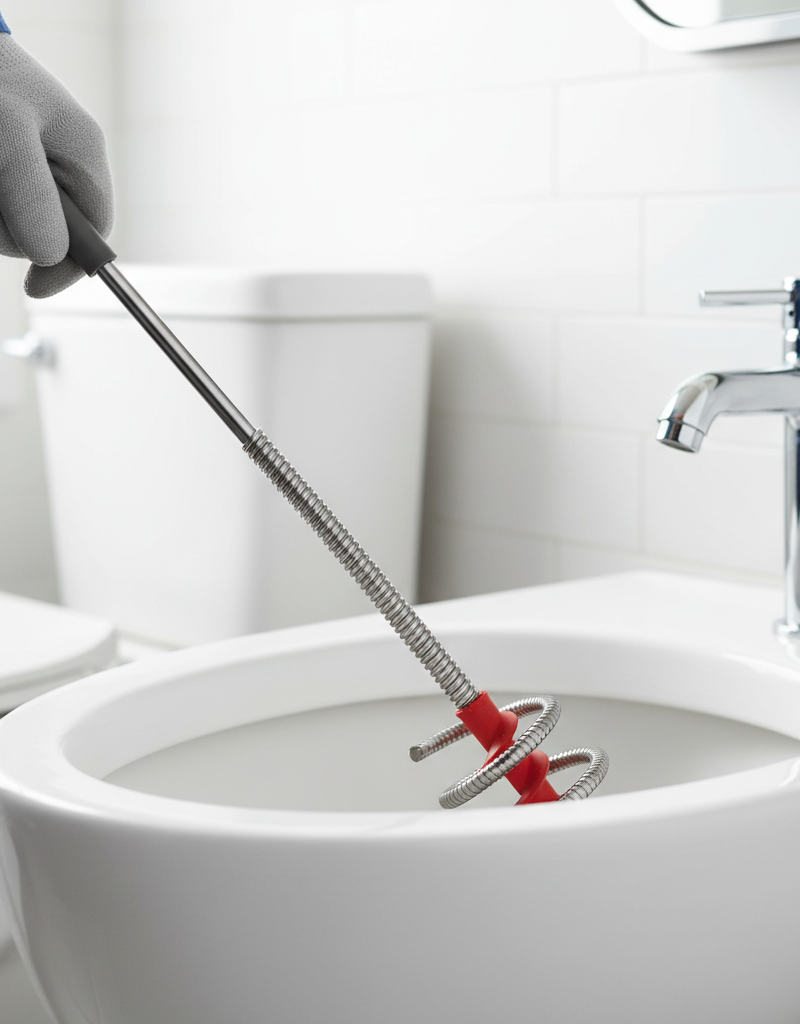
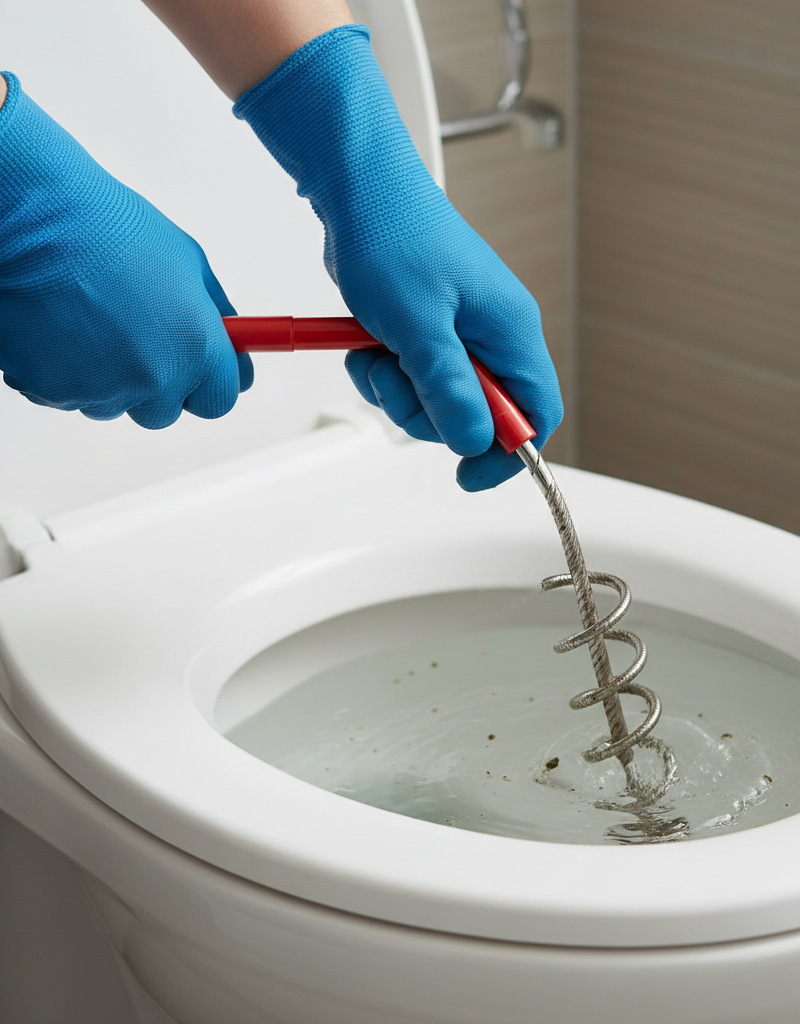
Clear the Trapway with a Toilet Auger — If you suspect an object is lodged in the toilet's built-in S-trap, a plunger may not be sufficient. A toilet auger (or closet auger) is specifically designed to navigate this trap without scratching the porcelain.
- Tools: Toilet auger, bucket, towels.
- Action: Place towels around the base of the toilet. Pull the auger handle up so the cable tip is retracted into the protective rubber boot. Insert the boot into the bowl drain opening. Crank the handle clockwise while pushing down gently. This will feed the flexible cable into the trapway. If you feel resistance, you have located the clog. You can try to break it up by cranking, or retract the cable to pull the object back out.
-
Assess Other Drains for a Deeper Blockage — If the toilet continues to clog and other fixtures in the home (like a nearby shower or sink) are also draining slowly, the problem is not in the toilet itself. This indicates a clog further down the branch line or in the main sewer line.
- Symptoms: Gurgling sounds from drains when another is used, water backing up into a tub or shower when the toilet is flushed, multiple fixtures draining slowly on the home's lowest level.
- Action: If you see these signs, proceed with caution. A main line clog is often beyond the scope of basic DIY tools. You can attempt to find and open an accessible main line cleanout to inspect for blockage, but this work is often best left to a professional.
-
Check the Plumbing Vent — A blocked plumbing vent stack prevents air from entering the drain system, creating a vacuum that slows drainage and can cause siphoning of P-traps (leading to sewer gas smells).
- Symptoms: Slow drainage in multiple fixtures, gurgling sounds from drains, faint sewer smell.
- Action: From the ground, visually inspect the vent pipe on your roof for obvious obstructions like a bird's nest, leaves, or snow/ice. Clearing a roof vent requires getting on the roof and is a high-risk activity. If you are not comfortable with heights, call a professional. A plumber can also use specialized tools to check for blockages deep within the vent system.
Common mistakes
- Using Chemical Drain Cleaners. Harsh chemical cleaners are rarely effective on the types of clogs found in toilets (paper and solid waste). More importantly, they generate heat that can crack porcelain, damage PVC pipes, and destroy the beneficial bacteria in a septic system. Always opt for mechanical removal with a plunger or auger first.
- Using the Wrong Auger or Tool. Never use a standard "drum" drain snake in a toilet bowl. The unshielded metal cable will leave permanent black scratches or even crack the porcelain. A wire coat hanger is equally damaging. Use only a closet auger, which has a protective rubber sleeve specifically for this purpose.
- Ignoring a Running Toilet. A toilet that runs constantly or intermittently ("phantom flushing") is actively telling you its internal components—often the flapper or fill valve—are failing. These are the same parts that cause weak flushes. Fixing the leak not only saves a significant amount of water but often solves the clogging problem as well.
- Over-tightening Bolts and Connections. When replacing parts like the fill valve or the tank-to-bowl gasket, there is a temptation to crank down on the nuts to prevent leaks. Porcelain is brittle and can easily crack under pressure. Tighten bolts snugly and in an alternating pattern until they are secure, but do not use excessive force. Hand-tight plus a quarter-turn with a wrench is often sufficient.
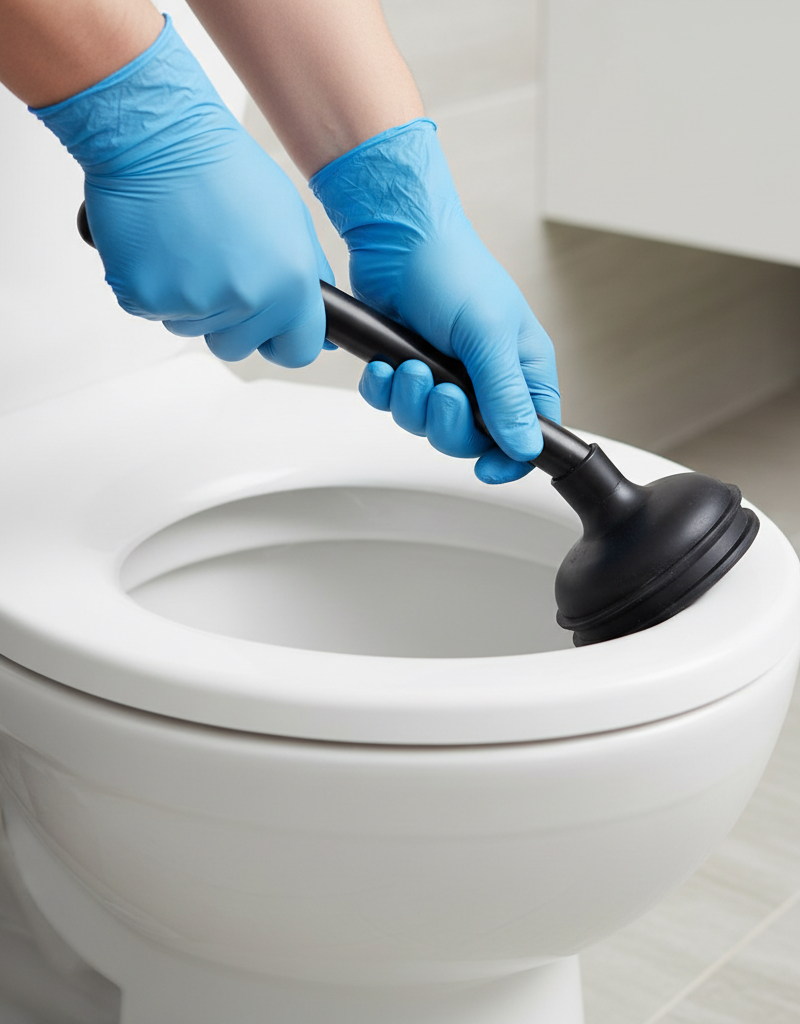
- Aggressive Plunging in a Full Bowl. If the bowl is nearly overflowing, plunging vigorously will splash contaminated water all over your bathroom. If a flush did not go down, bail out half the water from the bowl into a bucket before you begin plunging. This ensures the plunger cup is submerged in water (to apply hydraulic pressure) without the risk of overflow.
Cost & time breakdown
The cost and time for fixing a frequently clogging toilet can vary widely depending on the underlying cause. Simple adjustments are free, while major line blockages require professional intervention.
| Task | DIY Cost | Pro Cost | Time |
|---|---|---|---|
| Adjust Fill Valve & Flapper Chain | $0 | $125–$225 | 15–30 minutes |
| Replace Flapper or Fill Valve | $15–$40 | $150–$300 | 30–60 minutes |
| Clear Trap with a Toilet Auger | $30–$60 (tool purchase) | $150–$275 | 30–45 minutes |
| Replace Old Low-Flow Toilet | $200–$500+ | $400–$800+ | 2–4 hours |
| Clear Main Sewer Line | $75–$150 (auger rental) | $250–$600+ | 2–5 hours |
| Clear Blocked Vent Stack | Not recommended for DIY | $200–$500 | 1–3 hours |
When to call a pro
While many causes of a clogging toilet are simple DIY fixes, certain symptoms point to a larger problem that requires professional tools and expertise. It is time to call a licensed plumber if you encounter any of the following:
- Multiple fixtures are clogged. If sinks, showers, and toilets are all backing up or draining slowly, especially on the ground floor, this signals a blockage in your main sewer line.
- Water backs up in other drains. A clear sign of a main line clog is when flushing the toilet causes water to gurgle up or back up into a bathtub or shower drain.
- A toilet auger fails to clear the clog. If a 3- to 6-foot closet auger cannot reach or dislodge the obstruction, the clog is located further down the drainpipe, beyond the toilet itself.
- The toilet leaks from its base. If water seeps from under the toilet base, particularly during or after flushing, it could indicate a failed wax ring. A clog further down the line can also force water out at this weak point.
- You suspect a blocked vent stack. If you experience persistent gurgling and slow drains throughout the house but are not comfortable or equipped to safely access and clear the vent on your roof, a pro is necessary.
- A persistent sewer gas smell. This may indicate a problem with the vent system or a cracked drainpipe that poses a health hazard.
Prevention & maintenance
Proactive maintenance can prevent most common toilet clogs from ever happening. Integrate these habits into your home care routine.
- Enforce Flushing Rules. The single most effective prevention method is to flush only human waste and toilet paper. Keep a wastebasket in every bathroom for all other items, including wipes, cotton products, and hygiene items.
- Perform an Annual Tank Inspection. Once a year, lift the tank lid and check the internal components. Look for a discolored or warped flapper, stretched or corroded chain, and proper fill valve operation. Replacing a $10 flapper proactively can prevent clogs and leaks.
- Use Vinegar for Mineral Buildup. If you live in an area with hard water, pour one cup of white vinegar into the overflow tube every 3-4 months and let it sit for a few hours. This dissolves mineral deposits in the rim jets and helps maintain a strong flushing action.
- Consider Your Toilet Paper. Ultra-plush, multi-ply toilet papers use more material and dissolve slower than thinner or septic-safe varieties. If your home has older plumbing or you experience frequent minor clogs, switching to a more rapidly dissolving toilet paper can help.
- Use the Double Flush Method. For larger amounts of waste, don't try to force it down with one flush. Flush partway through use, and then again at the end. This is especially helpful for older, less efficient low-flow toilets.
- Address Slow Draining Immediately. A toilet that drains slowly but doesn't fully clog is providing a warning. Don't wait for a complete blockage. Use a plunger at the first sign of a slow drain to dislodge the partial clog before it gets worse.
Related Articles
Keep troubleshooting with these hand-picked guides from FixlyGuide:
- Is Your Toilet Always Clogging? End the Nightmare Tonight. — A frequently clogging toilet is a common and frustrating problem, but often has a simple solution homeowners can tackle themselves.
- Dishwasher Not Draining? Easy Fixes for a Clogged Drain — A dishwasher that won't drain at the end of a cycle is a common problem, often caused by simple clogs or blockages that homeowners can fix…
- Refrigerator Leaking Water? Easy Fixes for Common Causes — A refrigerator leaking water on the floor is a common household problem often caused by a clogged defrost drain or a misaligned drain pan,…
- Why Is My Toilet Running? 7 Quick Fixes Before Calling a Plumber — A constantly running toilet wastes up to 200 gallons of water a day. Here are the 7 most common causes and how to fix each one yourself in…
- The #1 Mistake Homeowners Make with a Slow Kitchen Drain (And the Simple Fix) — A slow kitchen sink drain is frustrating, but often an easy fix if you avoid common mistakes and know where to look first.
- Why Your Circuit Breaker Keeps Tripping: A DIY Guide — A tripping circuit breaker is a common household problem, often indicating an overloaded circuit or a short circuit. This guide helps you d…
What should this project cost?
Enter your project details for a realistic cost range before you call anyone.
Common repairs run $150–$650; repipes and water-heater replacements reach $1,500–$4,500.
- Regional adjustment
- National average
- Labor share (typical)
- ~$754
- Quotes to collect
- 3 written estimates
Educational estimate based on national averages — not a binding quote. Always confirm with written local estimates.
Fixly Project Decision Box
- DIY difficulty
- Moderate
- Estimated time
- 30 minutes – half a day
- Cost level
- Moderate
Main tools / materials
- Adjustable wrench
- Plunger or drain auger
- Bucket and towels
- Thread tape
When to stop and call a pro
- Water you cannot shut off at the fixture or main
- Sewage backing up into more than one fixture
- Water near electrical panels or outlets
- Gas water heater work beyond relighting a pilot
Need professional help?
Get a Licensed PlumberGet the print-ready PDF of this guide
A clean, ad-free, printable version you can keep on your phone or pin to the workshop wall. Free with a FixlyGuide account.
- Print-optimized layout
- Tools, materials & every step included
- Saved to your account
Frequently asked questions
Why does my toilet keep clogging every few days?+
Frequent toilet clogs are often due to flushing non-flushable items, a weak flush from low water levels or clogged rim jets, a partial blockage in the toilet's trapway, or sometimes issues with the main drain or vent pipe.
Can low water in the toilet tank cause frequent clogs?+
Yes, if the water level in your toilet tank is too low, it won't provide enough water volume or pressure for a strong flush, leading to an incomplete evacuation of the bowl and frequent clogs. Adjust your fill valve to ensure the tank fills to the appropriate line.
Are 'flushable' wipes really flushable?+
Despite their marketing, most 'flushable' wipes do not break down in water like toilet paper and are a major cause of clogs in household plumbing and municipal sewer systems. It's best to dispose of all wipes in a wastebasket.
Discussion
Loading comments…