- Run a high-volume bucket test — Fill a standard 5-gallon work bucket with about 3 gallons of tap water. Dump it fast into the center of the bowl without touching the flush handle.
- If the bowl flushes hard and clean with a loud, satisfying "gulp" at the end, your drain and trapway are clear; the trouble's in tank volume or jet delivery.
- If the water rises, swirls sluggishly, and drains slow, you've got a restriction in the trapway or farther down the drain line.
Plumbing · Clog
| Project category | Plumbing |
|---|---|
| Problem type | Clog |
| Trade required | Plumbing |
| Urgency | Soon — within weeks |
| Safety risk | Low safety risk |
| DIY suitability | DIY friendly |
| Cost category | Low cost |
| Typical timeline | Same-day DIY attempt; pro visit within a day or two |
| Contractor type | Licensed plumber |
Repair option
Plunger, hand auger, or trap cleanout before chemicals.
Replacement option
Line replacement when clogs return in the same spot repeatedly.
Common causes
- Hair and soap buildup in the trap
- Grease cooling in the branch line
- Flushed wipes or foreign objects
Relevant tools:diy difficultydiy or hire a pro
Published November 21, 2026Last updated November 21, 2026
Tools & materials you'll need
Affiliate links- AmazonHeavy-duty 3-foot toilet closet augerMust have rubber protective boot to avoid scratching porcelain
- AmazonFlange plunger with fold-out rubber coneStandard cup plungers are meant for flat sinks, not toilets
- AmazonWire coat hanger or small stiff wireFor clearing mineral buildup out of siphon and rim jets
- Amazon5-gallon utility bucket
- AmazonAdjustable wrench
- AmazonHigh-lumen pocket flashlight or inspection mirror
As an Amazon Associate FixlyGuide earns from qualifying purchases — at no extra cost to you. Prices and availability are accurate as of publication and subject to change.
Quick Answer
A toilet that clogs every few days usually isn't dealing with too much toilet paper; it's got a restriction somewhere in the water delivery, the trapway, or the venting. Most of the time, I find a partial obstruction—kid's toy, feminine hygiene product, dental floss wad, something like that—hung up inside the porcelain trapway and acting like a dam for everything going past. Low tank water, crusted-up rim jets, or a blocked vent pipe on the roof can all give you a weak, lazy flush that leaves junk behind until it stacks up into the same clog over and over.
The Problem
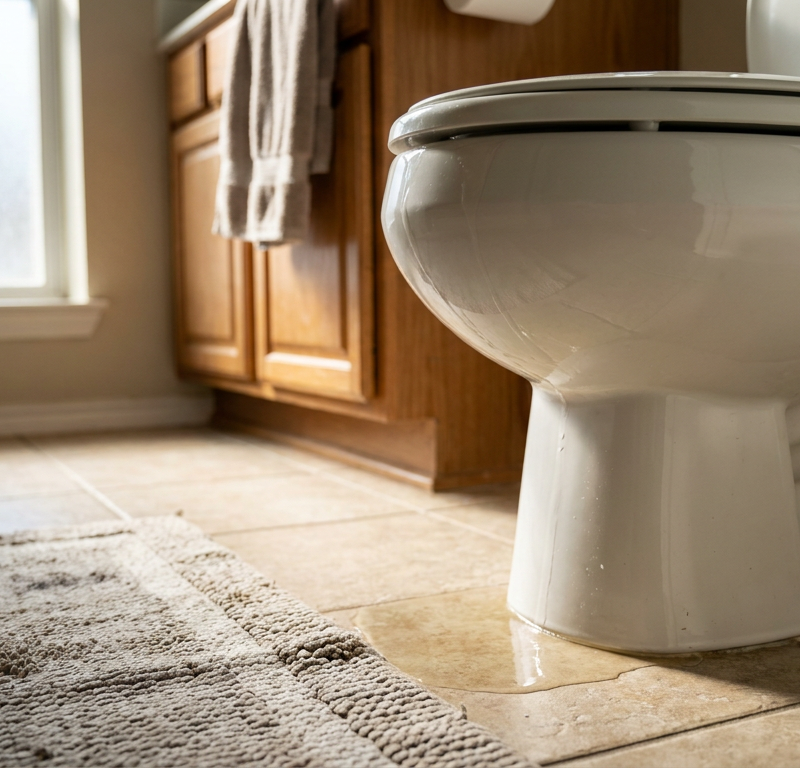
There's not much that annoys a homeowner faster than a toilet that works on Tuesday and backs up on Thursday. When it does that, you're not looking at a one-off overload; you're looking at a bottleneck in the system. The bowl rises to the brim, drains like it's half asleep, then seems fine for a day or two after a hard plunge. Funny how that works, right?
Plunging can clear the paper that's packed up against the real blockage, so it feels like you've won. Then two or three days later, the solids collect right back on the same snag point, and there you are again—socks on, plunger in hand. Leave it alone and you're rolling the dice on an overflow, blackwater on the floor, and rot in the subfloor. I've seen one go from “annoying” to “smells like death” in a hurry.
How It Works
A modern gravity-fed toilet doesn't rely on brute force or some magical blast of water—it runs on hydraulic movement and air pressure. You hit the lever, the flapper lifts, and roughly 1.28 to 1.6 gallons dumps out of the tank into the bowl in about three seconds. About 70% of that rushes through the siphon jet at the bottom of the bowl, aimed straight into the trapway, and the other 30% comes down through the rim holes under the lip to rinse the bowl and kick off the swirl.
That rush pushes water over the weir of the internal porcelain trapway, which is an S-shaped channel usually measuring between 2 and 2-1/8 inches in diameter. Once the water spills over that crest, it creates a vacuum behind it. That siphon action pulls the bowl contents down into the drain line like a shop vac with a grudge.
For the siphon to shut down cleanly, the drain has to vent displaced air through the roof stack. If the water moves too slow because the rim jets are gunked up, or if a bird nest or dead leaves are choking the vent, the siphon can't pull hard enough. Then the water just swirls around, drops by gravity alone, and leaves the heavy stuff hanging halfway through the trapway. No dice.
Step-by-Step Fix
Before you start ripping trim off or dialing some $300-an-hour emergency guy, walk through this in order. It'll save you time, and maybe a little cash too.
-
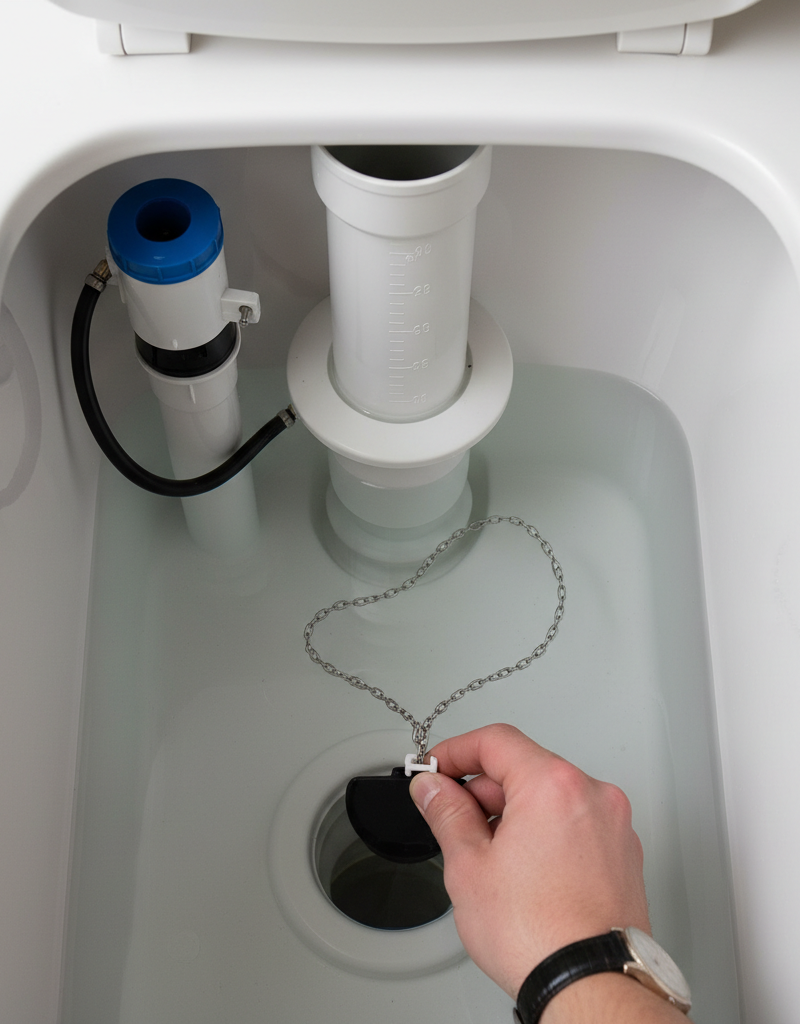
Verify and adjust the tank water line — Pop the ceramic lid off and set it on a folded towel so you don't chip it. Check where the standing water sits against the overflow tube. It needs to be 1/2 to 1 inch below the top rim of the overflow pipe (a lot of tanks have a water line etched in). If it's lower than that, you don't have enough head pressure to make a strong siphon.
- Turn the plastic screw on top of the fill valve arm clockwise to bring the water level up.
- If the fill valve won't shut off or keeps running, replace the whole fill valve assembly.
-
Inspect the flapper chain and hinge tension — Watch the flapper while you push the handle down like normal. It should open to a vertical 90-degree angle and stay out of the way until the tank empties. If the brass or plastic chain has too much slack—more than 1/2 inch of droop—the flapper can fall shut early and short the flush.
- Unclip the chain and move it up two links to take out the slack.
- If the flapper's warped, slimy, or coated with black residue, swap it for a universal chemical-resistant rubber flapper.
-
Clear the siphon jet and under-rim rinse ports — Hard municipal water, especially in lime-heavy areas, leaves calcium carbonate inside the little channels under the bowl rim and in the siphon jet. Use a small inspection mirror and look up under the rim. If you see chalky white or brown crust, water's entering the bowl at half speed.
- Pour 1 quart of warm white distilled vinegar directly down the tank's overflow tube using a small funnel, then leave it alone for two hours so it can soften the scale.
- Straighten a wire coat hanger or grab a 3/16-inch wooden dowel and ream out every rim hole, then poke clear down into the bottom siphon jet nozzle.
-
Run a high-volume bucket test — Fill a standard 5-gallon work bucket with about 3 gallons of tap water. Dump it fast into the center of the bowl without touching the flush handle.
- If the bowl flushes hard and clean with a loud, satisfying "gulp" at the end, your drain and trapway are clear; the trouble's in tank volume or jet delivery.
- If the water rises, swirls sluggishly, and drains slow, you've got a restriction in the trapway or farther down the drain line.
-
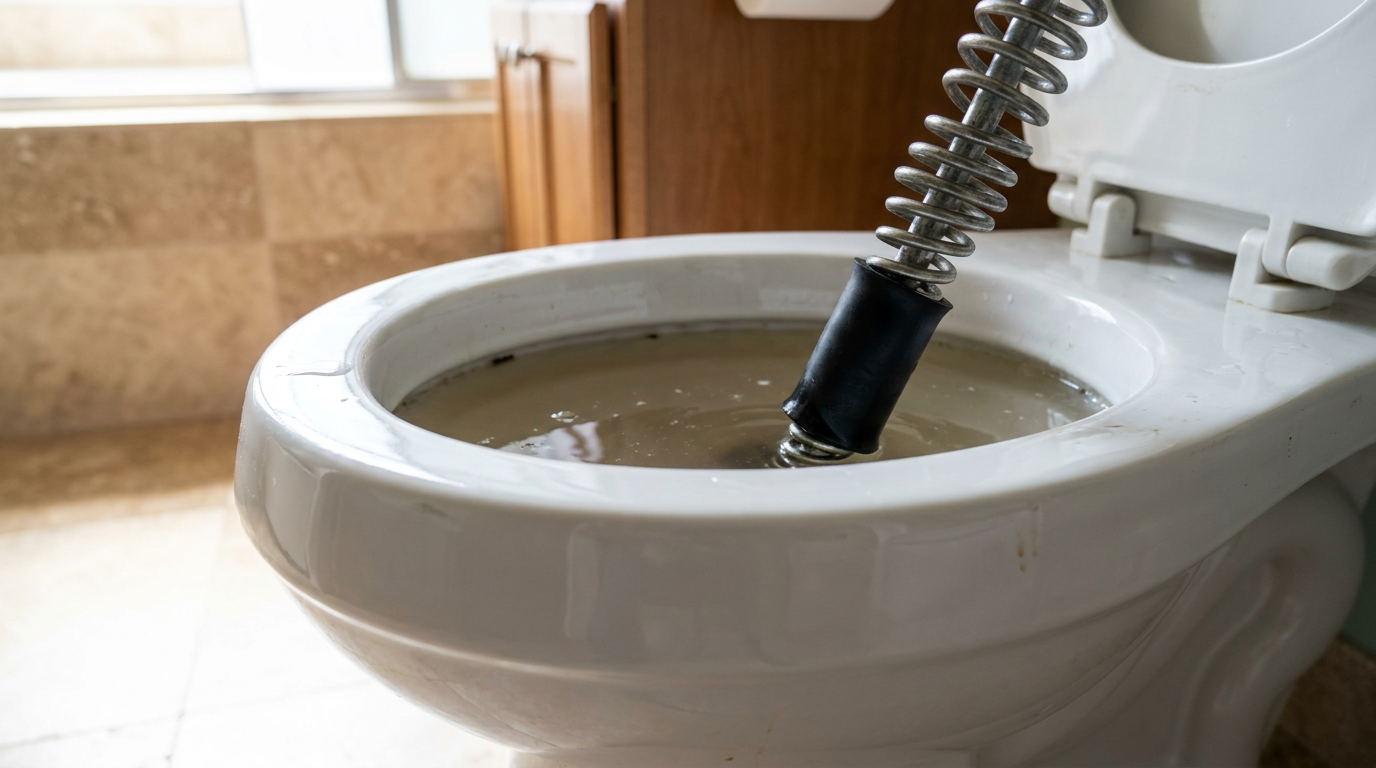
Deploy a professional-style drop-head toilet auger — Don't use a flimsy flat-wire sink snake; it'll scratch porcelain and fold back on itself. Get a heavy-duty 3-foot or 6-foot toilet closet auger with a protective rubber sleeve so you don't chew up the glaze.
- Pull the auger cable handle all the way back so the coiled end rests against the rubber elbow.
- Set the rubber elbow firmly into the bowl's exit throat, pointed upward toward the rear trap.
- Push down hard while cranking clockwise.
- Work through the whole S-curve until the cable extends 3 full feet.
- When you hit resistance, keep turning clockwise and gently work it back and forth to hook the obstruction—usually feminine pads, wipes, or toy plastic—then pull it straight into a plastic grocery bag.
-
Check the roof vent stack for blockages — If the bucket test stalls out and the auger comes back clean, the system might be gasping for air. Set up an extension ladder safely and get to the roof vent pipe right above the bathroom stack.
- Shine a high-lumen flashlight down the open PVC or lead pipe to look for bird nests, dead leaves, or wasp colonies.
- Feed a regular 25-foot plumbing drain snake down the roof vent to punch through leaf or pine needle plugs.
- Run a garden hose with a brass spray nozzle down the stack and turn it on high for two minutes; if water backs up out of the roof pipe, you've found your air choke point.
-
Inspect the downstream cleanout fitting — Head outside or down into the basement/crawlspace and find the 3-inch or 4-inch main sewer cleanout plug. Put on heavy nitrile gloves and wrap a rag around the threaded cap before you loosen it with a pipe wrench.
- If dirty water shoots out under pressure as you crack the threads, the restriction is in the main sewer line downstream, not in the toilet.
- If the cleanout pipe is dry and empty, the problem is isolated between your bathroom floor and that junction.
-
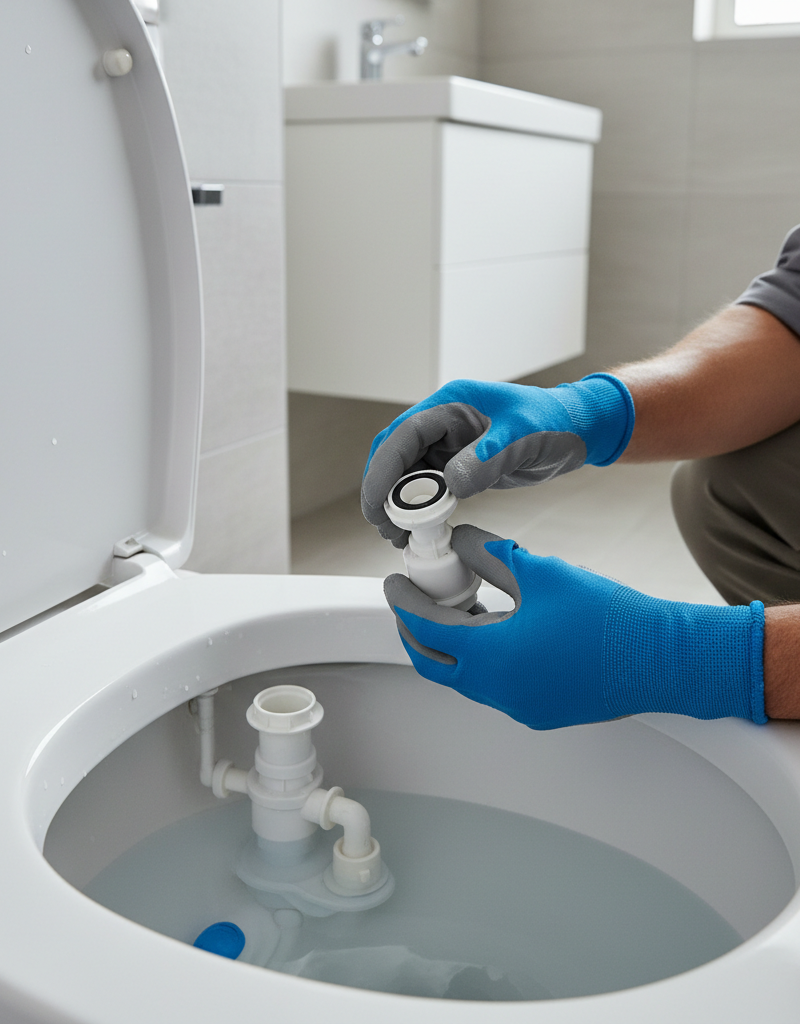
Pull the toilet off the floor flange — If augering and venting don't stop the repeat clogs, you've likely got a foreign object jammed crosswise in the toilet's unglazed porcelain horn underneath. Shut off the water supply stop valve behind the toilet.
- Flush the toilet, then sponge out the leftover water from both the tank and the bowl trapway.
- Disconnect the braided stainless supply line with an adjustable wrench.
- Pop off the floor bolt caps, back off the brass nuts with an open-end wrench, cut the silicone bead around the base with a utility knife, and lift the fixture straight up.
- Set the toilet on its side out in the yard or on an old sheet of cardboard.
- Shine a flashlight straight up through the bottom discharge horn. In 80% of stubborn cases, you'll find a toothbrush, plastic razor, or bottle cap stuck across the narrow channel, acting like a revolving door flap that catches toilet paper every two days. I pulled a water heater in Frisco last month that had exactly this kind of nonsense in the line—not the same fixture, sure, but same kind of homeowner headache.
- Fish it out through the bottom with long needle-nose pliers or run your auger in reverse from the bottom flange back up toward the bowl.
-
Replace the wax ring and reset the fixture — Scrape every bit of old sticky wax off the floor flange and porcelain horn with a stiff putty knife.
- Check the PVC or cast-iron flange for cracks; if the bolt slots are damaged, install a metal repair ring.
- Press a new extra-thick wax ring with an integrated plastic horn firmly onto the toilet bottom, or center it right over the floor flange.
- Lower the toilet straight down over the closet bolts without rocking it back and forth, because rocking blows out the wax seal.
- Hand-tighten the nuts onto the bolts, then snug them evenly with an adjustable wrench—only 1/4 turn past hand-tight so you don't snap the fragile ceramic foot.
-
Reconnect water and perform flow calibration — Reattach the flexible water supply tube and tighten it 1/4 turn past finger-tight with smooth-jaw pliers.
- Open the angle stop valve slowly to full flow.
- Check the rubber tank-to-bowl gasket and supply lines for weeping.
- Drop a dozen squares of toilet paper into the bowl and fire the flush.
- Watch for a clean, sharp siphon draw that finishes with a strong suction sound.
Common Causes
- Foreign objects wedged in the horn: Pens, air freshener clips, toys, combs—I've seen all of it. They lodge sideways in the porcelain channel where a snake can push right past them, but they snag toilet paper every 48 to 72 hours.
- Low-flow first-generation design flaws: Toilets made between 1994 and roughly 1997 met federal 1.6-gallon mandates by shrinking tank volume without really fixing the trapway geometry. Those early low-flow bowls just don't have enough hydraulic punch and clog on the regular.
- Partially blocked roof plumbing vent: If sewer gas can't move out, the incoming water traps air in the line. The water hits that air cushion, stalls, and drops solids partway down the pipe.
- Hard water calcium deposits: Lime crust inside the siphon jet at the bowl base cuts the high-speed stream that starts the siphon, so the toilet ends up relying on weak gravity drainage alone.
- "Flushable" wipes and heavy quilted tissue: Wipes don't dissolve in water. They've got synthetic fibers that knit together at the first seam, burr, or turn in the drainpipe.
- Sagging sewer lateral line (belly): Clay soil movement—common in places like North Texas—makes underground pipes settle unevenly. A low dip in the pipe holds standing water, slows the flush, and lets solids build into a repeating dam.
Common Mistakes
- Pouring boiling water down the bowl: Folks hear about clearing grease with boiling water and dump a kettle in the toilet. Boiling water can crack cold vitreous china porcelain in a heartbeat, and then you've got a flooded floor and a busted toilet. Don't use anything above 120°F.
- Over-tightening floor flange bolts: Ceramic cracks with shockingly little torque. If you crank the floor nuts down with a socket set, you can snap the base of the toilet with a loud pop and turn a $5 wax ring job into a $250 fixture replacement. Snug them with hand tools only.
- Using chemical drain cleaners: Caustic lye or acid cleaners build a lot of heat inside the porcelain trap and just sit there. They wreck rubber flappers, eat wax rings, crack the glaze, and make it dangerous for anybody who has to plunge or auger the toilet later.
- Relying on a cheap sink snake: Wire drum augers made for 1-1/2-inch sink drains have sharp bare steel ends that leave permanent gray scratch marks in the bowl glaze and bind up or fold backwards in a 2-inch toilet trap. Use a dedicated rubber-sleeved toilet auger.
- Leaving the tank water level too low: A lot of people try to save water by dropping the float ball or valve way down. Starving a gravity toilet of 1/2 gallon of design volume cripples the siphon and pretty much guarantees recurring paper clogs.
Cost & Time Breakdown
| Task | DIY Cost | Pro Cost | Time |
|---|---|---|---|
| Tank adjustment & flapper chain trim | $0–$12 | $120–$180 | 15 minutes |
| Siphon jet & rim hole descaling | $5–$10 | $150–$200 | 45 minutes |
| Heavy-duty closet auger clearance | $35–$65 | $175–$275 | 30 minutes |
| Pulling toilet to retrieve foreign object | $15–$30 | $250–$400 | 1.5–2.5 hours |
| Main drain cable / camera inspection | $75–$120 (rental) | $350–$650 | 2–4 hours |
Tips & Prevention
- Implement a strict "three-wipe" rule for kids: Teach young children to flush halfway through if they're using a lot of paper instead of balling up 15 sheets into a mess.
- Never flush wipes, dental floss, or facial tissue: Facial tissues and makeup wipes have wet-strength additives and don't break down like regular toilet paper. Floss acts like rebar and ties waste into ugly little balls.
- Clean the siphon jet biannually: Make jet cleaning part of your fall and spring maintenance. A quick shot of mild descaler and a scrub with a stiff nylon nozzle brush keeps the siphon moving like it should.
- Ditch chemical drop-in tank tablets: Blue or bleached drop-in pucks release caustic chemicals that sit against delicate rubber flappers and silicone seals while the toilet sits idle, hardening the rubber and cutting flush volume.
- Look for the 2-inch siphon drop: If your flush doesn't pull the bowl contents down within 2.5 seconds of lever activation, check the fill level and flapper chain right then before solids start building.
When to Call a Professional
If you clear the toilet trapway with a 6-foot auger, verify the tank drops a full, swift charge of water, and the water still backs up into the shower or tub every time the toilet flushes, put the tools down. That points straight to a main sewer line clog or a collapsed lateral under your yard or slab.
Same deal if you hear deep, rhythmic bubbling or gurgling from a nearby bathroom sink every time the toilet runs. Air is trapped deep in the stack. Dealing with mainline roots, cast-iron pipe breakdown, or snaking through roof vents on steep pitches brings real fall and property damage risk, and that's where you want a licensed plumber with commercial drain-cleaning gear and an inline sewer inspection camera.
Related Articles
Keep troubleshooting with these hand-picked guides from FixlyGuide:
- Toilet Keeps Clogging? 9 Common Causes and How to Fix Them for Good — A toilet that clogs every few days points to a bigger issue than a one-time blockage. We'll walk through the common causes, from simple clo…
- Why Your Toilet Clogs Every Few Days (And the #1 Mistake Homeowners Make) — A toilet that clogs frequently is a frustrating problem, often caused by easily overlooked issues like trapway obstructions or ventilation…
- Toilet Fills Every Few Minutes? 4 Reasons for That "Ghost Flush"—and How to Fix It — Notice your toilet refilling on its own when no one's used it? This phantom or 'ghost' flush is a sign of a slow, silent leak from the tank…
- No Hot Water From Your Water Heater? 9 Causes and the Fix for Each — If you have no hot water, it's a cold shower for you and a major headache. We'll show you how to diagnose the cause, from a tripped breaker…
- The Nasty Truth About Your Bathroom Sink Smell (And the $10 Fix) — Uncover the real culprit behind that foul odor from your bathroom sink drain and learn a simple, effective, and cheap DIY fix to eliminate…
- Toilet Keeps Running? 7 Causes and the Fix for Each — A running toilet is a common annoyance that wastes water and money. Most causes are easy to fix in under 30 minutes with a few basic parts…
Should you do this yourself?
Answer five quick questions before you start. Safety outranks savings every time.
Your experience with work like this
How high do you have to work?
Does the job involve any of these?
Will it need a permit?
Specialty tools
Free and instant. Educational guidance only — not a quote, inspection, or professional diagnosis.
What should this project cost?
Enter your project details for a realistic cost range before you call anyone.
Common repairs run $150–$650; repipes and water-heater replacements reach $1,500–$4,500.
- Regional adjustment
- National average
- Labor share (typical)
- ~$754
- Quotes to collect
- 3 written estimates
Educational estimate based on national averages — not a binding quote. Always confirm with written local estimates.
Fixly Project Decision Box
- DIY difficulty
- Moderate
- Estimated time
- 30 minutes – half a day
- Cost level
- Moderate
Main tools / materials
- Adjustable wrench
- Plunger or drain auger
- Bucket and towels
- Thread tape
When to stop and call a pro
- Water you cannot shut off at the fixture or main
- Sewage backing up into more than one fixture
- Water near electrical panels or outlets
- Gas water heater work beyond relighting a pilot
Need professional help?
Get a Licensed PlumberBefore you start
Check the difficulty, permits, and safety risk — then decide whether to call a pro.
- Estimate this projectGet a cost range for your scope and ZIP before you call anyone.Open
- Get local estimatesSend one request and compare written estimates from vetted pros.Open
Free, no signup required. Estimates are educational guidance, not a quote or an inspection.
Get the print-ready PDF of this guide
A clean, ad-free, printable version you can keep on your phone or pin to the workshop wall. Free with a FixlyGuide account.
- Print-optimized layout
- Tools, materials & every step included
- Saved to your account
Frequently asked questions
Can using ultra-plush toilet paper cause my toilet to clog every few days?+
Yes. While they break down in rushing water, thick three-ply or ultra-soft quilted papers do not dissolve nearly as fast as basic single- or two-ply tissues. In older homes with cast-iron drains or low-flow toilets, heavy paper gathers on rough pipe walls and causes recurring backups.
Why shouldn't I use liquid drain cleaners in a recurring toilet clog?+
Chemical drain cleaners are heavy and sit in the toilet bowl water trap, creating dangerous fumes and boiling heat that can crack the porcelain. Furthermore, the chemicals rarely dissolve wipes or plastic objects, and they present a severe burn hazard to you or a plumber who has to plunge the line later.
Why does my shower or sink gurgle whenever I flush the toilet?+
A gurgling sound in the tub or sink indicates that your plumbing system is starved for air. When the toilet flushes, it pulls air down through the nearest available water trap because the dedicated roof vent stack is restricted or blocked, creating a sluggish flush that clogs frequently.
Why does my toilet only partially flush unless I hold the handle down?+
Check the flush lever chain for excessive slack and look at the water line inside the tank. If the chain is loose, the flapper falls shut before the tank empties, starving the bowl of the water volume needed to create a strong, complete siphon pull.
How do hard water minerals make a toilet prone to clogging?+
Over time, calcium, lime, and mineral deposits from hard municipal water settle inside the jet nozzle at the bottom of the bowl and inside the rim holes. These deposits throttle back the water velocity, turning what should be an aggressive vacuum pull into a weak, swirling drain.
What causes a toilet to clog every few days like clockwork?+
If the toilet operates smoothly for two days and then backs up suddenly, an object like a small toy, comb, or plastic bottle cap is likely wedged horizontally across the internal trap. Small paper passes fine, but normal solids catch against the obstacle until flow halts completely.
Will plunging eventually fix a toilet that clogs repeatedly?+
No. Plunging only clears the soft paper built up behind the real obstruction; it almost never dislodges hard foreign objects caught in the porcelain horn, nor does it fix low water volume, clogged jets, or blocked vent stacks.
Could my recurring clog issue simply be that the toilet is too old?+
Toilets built between 1994 and 1997 had early low-flow designs that relied on small trapways and poor bowl geometry to meet water regulations. If your toilet dates to that era and clogs consistently despite clear pipes, replacing it with a modern fixture featuring a 2-1/8-inch fully glazed trapway is often the only permanent fix.
Discussion
Loading comments…