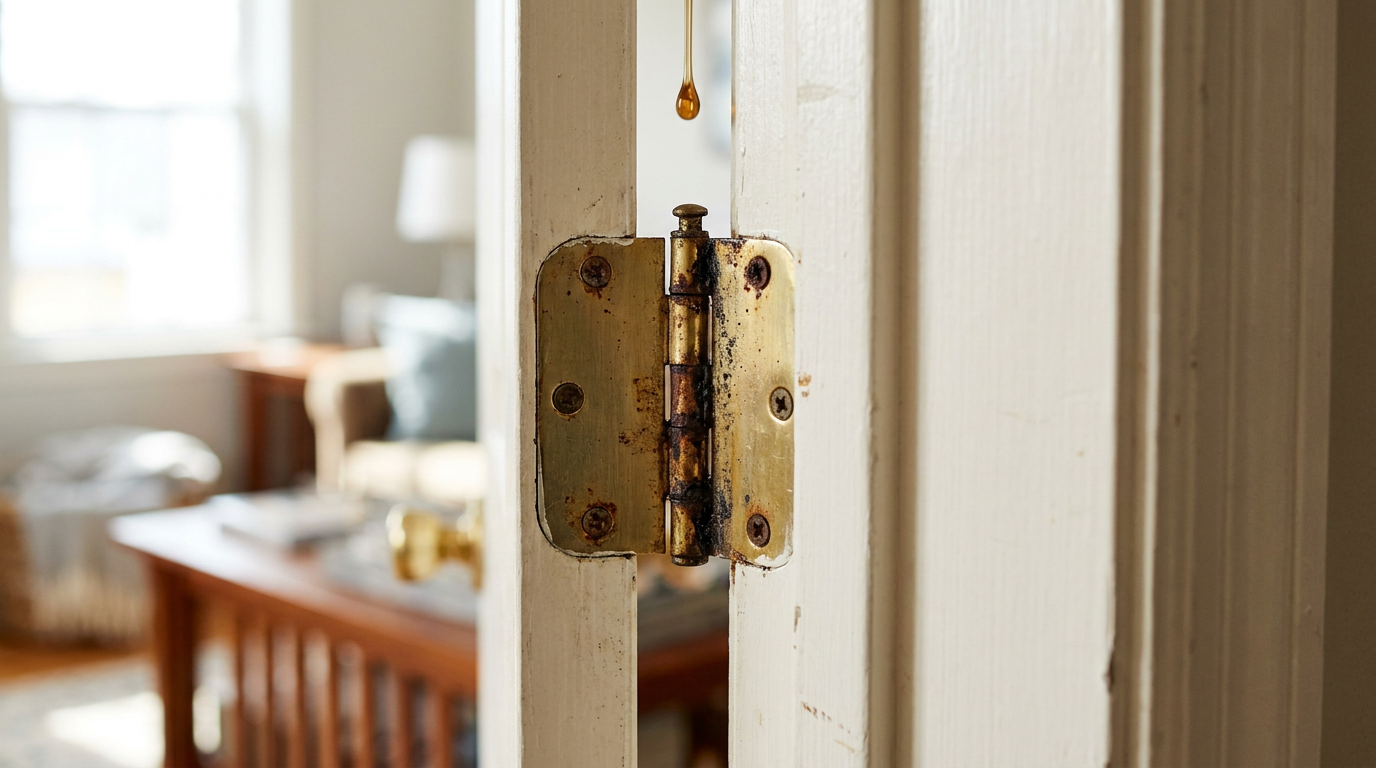
- Lack of Lubrication: The usual suspect. The factory grease has worn off or dried out after thousands of open-and-close cycles.
- Dirt and Dust: Lubrication’s ugly twin. Tiny grit works its way into the hinge and acts like sandpaper, causing friction and noise.
- Painted Hinges: Classic DIY mistake. Paint gums up the works, freezing the pin and knuckles together. Then the paint wears off and turns into a nasty squeaking mess.
- Bent Hinge Pin: If a door got slammed hard or something jammed it up, the hinge pin can bend just enough to matter. A bent pin won’t rotate smoothly, so it binds and squeaks every time.
- Worn-Out Hinge: Hinges don’t last forever. After 20-30 years, the metal can wear down and make the hinge loose, or "sloppy." That lets the door sag, which puts uneven pressure on the hinge and causes noise.
General remodeling · Renovation planning
| Project category | General remodeling |
|---|---|
| Problem type | Renovation planning |
| Trade required | General contracting |
| Urgency | Planned project |
| Safety risk | Low safety risk |
| DIY suitability | Pro recommended |
| Cost category | Major investment |
| Typical timeline | Design and permitting often 2–4 months before work starts |
| Contractor type | General contractor |
Repair option
Phase the work and fix the building envelope first.
Replacement option
Full renovation with permits, design, and a general contractor.
Common causes
- Space no longer fits how the household lives
- Resale preparation
- Deferred maintenance stacking up
Relevant tools:project cost estimatorcompare quoteshome improvement material prices
Published October 10, 2026Last updated October 10, 2026
Tools & materials you'll need
Affiliate linksAs an Amazon Associate FixlyGuide earns from qualifying purchases — at no extra cost to you. Prices and availability are accurate as of publication and subject to change.
The Problem
You know the sound. That ear-splitting SCREEEAK every time you crack open the bedroom door. Or maybe it’s a low, groaning CRREEEAK from the pantry that makes your teeth hurt. A squeaky door hinge is one of those little home headaches that can drive you straight up the wall.
And it’s not just the noise. That squeak is the hinge begging for help. Metal’s grinding on metal, plain and simple, and if you ignore it, the wear keeps stacking up. Pretty soon the door starts sagging, sticking, or not latching right. In some cases, a badly worn hinge can even turn into a security problem if it gives out. The good news? You can usually shut it up for good in about 10 minutes with stuff you might already have sitting around.
How It Works
A standard door hinge is a simple, tough little piece of hardware. It’s got two main parts called "leaves" (the plates with screw holes) and a "knuckle" (the tube-like part where the leaves meet). The knuckles on both leaves interlock, and a "hinge pin" slides down through the center to hold them together, creating a pivot point.
When you open or close the door, the knuckles rotate around that pin. In a perfect world, that motion stays smooth and quiet. But the world ain’t perfect. Over time, the factory lubrication wears off. Dust, pet hair, and tiny bits of debris get worked into the small spaces inside the knuckle. If you’re in North Texas, that fine dust gets into everything. Add a little humidity, and you’ve got rust and grime moving in rent-free.
That squeak is high-frequency vibration. It happens when the surfaces of the hinge pin and the inside of the knuckle stick, then slip, then stick again thousands of times a second. Your job is to clean out the gunk causing the friction and replace it with a lubricant that lets the parts glide like they should.
Step-by-Step Fix
Before you start, swing the door back and forth to figure out which hinge is making the racket. It’s usually the top one, since it carries the most weight and takes the most abuse. But sometimes the bottom hinge is the guilty one, especially if it’s been eating floor dust or moisture.
1. Gather Your Tools.
- Get your stuff together first so you’re not wandering around with a door half off its hinges. You’ll need a hammer, a nail set or a large nail, some paper towels, a cleaner (like WD-40 or rubbing alcohol), and your lubricant of choice. Nothing fancy.
2. Tap Out the Hinge Pin.
- Close the door so there’s no tension on the hinge. Put the tip of your nail set (or a large nail) on the bottom of the hinge pin. Gently tap upward with your hammer. The pin should start coming up out of the top. Have somebody steady the door if you’re pulling the pin all the way—solid-core doors don’t play nice.
- Pro Tip: For most squeaks, you only need to raise the pin about half an inch. That gives you enough room to clean and lube it without taking the whole door down. Easy day.
3. Clean the Pin and Hinge.
- Once the pin’s partially or fully out, grab a paper towel. Wipe off the old grease, grime, and rust from the pin. You’ll probably see black, sticky crud. Yep, that’s the problem right there.
- Next, spray a little cleaner—WD-40 works fine as a cleaner and water-displacer, but not as a long-term lubricant—into the hinge knuckle and onto a paper towel. Work the towel into the knuckle to clean the inside surfaces. Keep wiping until the pin and hinge are clean and bare.
4. Apply Your Lubricant.
- This is the money step. Don’t grab a food-based oil like olive or vegetable oil—they go rancid and get gummy. You want a real household lubricant. Put a light coat right on the hinge pin. A little goes a long way, and I mean a little.
- Here’s a quick guide to choosing the right one: | Lubricant | Best For | Why | Notes | |---|---|---|---| | White Lithium Grease | All-purpose interior hinges | Stays put, provides long-lasting lubrication, resists water. | Can be a bit messy; apply sparingly. A small tube costs about $5. | | Silicone Spray | Hinges near paint/wood | Won't harm finishes, clear, and clean. | Not as heavy-duty as lithium grease but excellent for most doors. | | 3-in-One Multi-Purpose Oil | General use | Easy to apply, cleans and lubricates. | Tends to drip over time and can attract more dust than grease. | | Graphite Lubricant | Best avoided | Messy black powder that's hard to clean. | Better for locks than hinges where appearance matters. |
5. Work the Lubricant In.
- Slide the lubricated pin back into the hinge. If you only raised it a little, tapping it down will spread the lubricant around. If you pulled it all the way out, you may need to wiggle the door a bit so the knuckles line up right.
- Once the pin’s seated, open and close the door 10-15 times. That works the lubricant through the moving surfaces inside the knuckle. The squeak oughta be gone.
6. Wipe Away Excess.
- Use a clean paper towel to wipe off any lubricant that squeezed out of the top or bottom of the hinge. Don’t skip this. Extra lube is basically a dust magnet, and before long you’re right back where you started.
7. Test and Repeat if Necessary.
- Is the squeak gone? Good. If you still hear a faint noise, you might need to do the other hinges too. Sometimes the sound you swear is coming from the top hinge is actually the middle one being the jerk.
Common Causes
What’s really behind that awful noise? It’s almost always one of these culprits.
- Lack of Lubrication: The usual suspect. The factory grease has worn off or dried out after thousands of open-and-close cycles.
- Dirt and Dust: Lubrication’s ugly twin. Tiny grit works its way into the hinge and acts like sandpaper, causing friction and noise.
- Rust and Corrosion: Humidity is rough on cheap builder-grade hinges. A little moisture, especially near a bathroom or in a damp North Texas spring, can put surface rust on the pin and inside the knuckle. That rough, flaky surface squeals like crazy.
- Painted Hinges: Classic DIY mistake. Paint gums up the works, freezing the pin and knuckles together. Then the paint wears off and turns into a nasty squeaking mess.
- Bent Hinge Pin: If a door got slammed hard or something jammed it up, the hinge pin can bend just enough to matter. A bent pin won’t rotate smoothly, so it binds and squeaks every time.
- Worn-Out Hinge: Hinges don’t last forever. After 20-30 years, the metal can wear down and make the hinge loose, or "sloppy." That lets the door sag, which puts uneven pressure on the hinge and causes noise.
- Misaligned Door: Sometimes the hinge isn’t the real problem—it’s just showing you a bigger issue. If the house has settled (hello, clay soil in DFW), the frame can drift out of square. That puts the hinges in a bind and makes them squeak under constant pressure.
Common Mistakes
I’ve seen plenty of well-meaning screw-ups on this simple repair. Skip these and save yourself the headache.
- Using WD-40 as a Lubricant: Everybody reaches for it, but it’s a short-term fix at best. WD-40 is a solid cleaner and water displacer (
WDstands for Water Displacement). It might hush a squeak for a few days, but it’s a thin solvent that evaporates fast and can pull in more dust once it’s gone. Use it to clean, then follow up with a real lubricant. - Using Cooking Oil: Don’t do it. Olive oil, canola oil, whatever’s in the cabinet—they look like a quick fix, but they’ll oxidize, get gummy, and grab a pile of dirt. You’ll have a bigger, stickier mess later.
- Applying Lubricant to a Dirty Hinge: Just squirting lube on the outside doesn’t do squat. You’ve got to get it inside the knuckle, and it won’t help much if it’s mixing with years of gritty dust. Clean it first.
- Hammering the Pin Sideways: Always tap the pin straight up from the bottom. Hitting it from the side or trying to pry it out with a screwdriver can bend the pin or chew up the hinge leaves, and then you’ve got a real mess.
- Losing Control of the Door: If you pull the pin all the way out, especially on the top hinge, the door’s only hanging on by the other two. A heavy solid-core door can tip and fall fast, damaging the door, the floor, or you. Always have a helper or prop the door securely.
Cost & Time Breakdown
This is one of the cheapest, fastest DIY repairs you can tackle. Your cost mostly depends on which lubricant you use.
| Task | DIY Cost | Pro Cost | Time |
|---|---|---|---|
| Cleaning and Lubricating One Hinge | $0–$10 | N/A (usually part of a larger service call) | 10–15 minutes |
| Replacing a Single Hinge Pin | $2–$5 | $75–$125 (minimum service fee) | 5 minutes |
| Replacing All Three Hinges on a Door | $15–$30 | $125–$200 | 30–45 minutes |
| Realigning a Sagging Door | $0 | $150–$250 | 1–2 hours |
Tips & Prevention
An ounce of prevention beats a pound of cure, especially when the “cure” is a door screaming at you every morning.
- Annual Clean & Lube: Once a year, make it a habit to clean and lubricate the busiest doors in the house—pantry, garage entry, bathrooms. Takes minutes, saves you from hearing that squeak in the first place.
- Choose the Right Replacement: If your hinges are rusted past saving, replace them with good ones. Ball-bearing hinges are great for heavy, solid-core doors. They cost a few dollars more—maybe $25 for a set of three—but they’re smoother and last longer.
- Don't Paint Hinges: Painting a room? Take 30 seconds and tape off the hinges. Better yet, pull the door. Painted-shut hinges are a future headache, guaranteed.
- Check for Sagging: Every so often, look at the gap between the top of the door and the frame. If it’s uneven—wider at the top on the handle side—your door’s sagging. That puts stress on the top hinge and usually means squeaks and sticking are coming.
- Mind the Humidity: In North Texas, the swing from dry winter air to humid spring air can make metal expand and contract. That’s prime time for hinges to start complaining. A dehumidifier in damp spots like bathrooms or basements can keep rust from moving in.
When to Call a Professional
Silencing a squeak is a classic DIY win, but sometimes you’ve got to put the hammer down and call a handyman or carpenter. If you’ve cleaned and lubricated every hinge properly and the door still squeaks or groans, the issue’s bigger. The frame is probably out of square because the house settled, and that puts the hinges in a serious bind. Fixing that takes more than a quick lube job.
Also, if the door’s extremely heavy—solid wood or steel—or the hinges are so rusted they’re flaking apart and fused together, call for help. A pro can swap the hinges safely and deal with any alignment problems without beating up your door or frame. I pulled a water heater in Frisco last month that had exactly this sort of stubborn, rusty hardware nearby, and the homeowner had already gone through two cans of spray with no dice. Sometimes you just need the right fix, not more guessing.
Related Articles
Keep troubleshooting with these hand-picked guides from FixlyGuide:
- Door Knob Loose or Wobbling? 9 Causes and the 5-Minute Fix — Have a wobbly door knob that rattles every time you use it? It's not just annoying—it's a sign of a bigger problem waiting to happen. Learn…
- The 5-Minute Trick That Often Fixes a Dead Doorbell (No Electrician Needed) — Before you call an electrician for a dead doorbell, learn the surprising common culprit homeowners overlook and how to fix it in minutes.
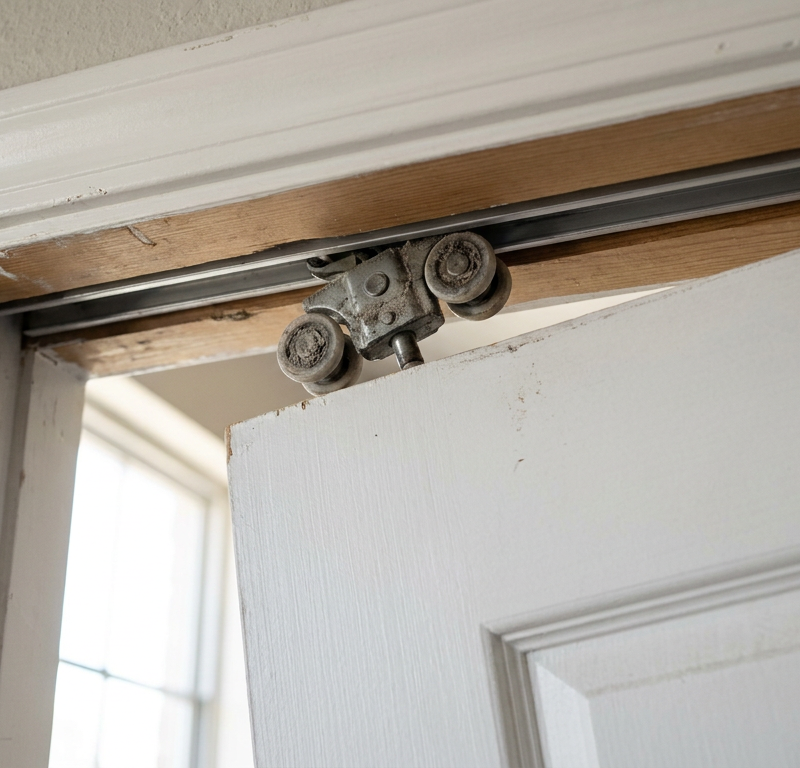
- Pocket Door Off Track? 6 Reasons It's Stuck and How to Fix It — A pocket door that's come off its track is usually caused by a loose roller bracket or a worn-out track, but it's often a straightforward f…
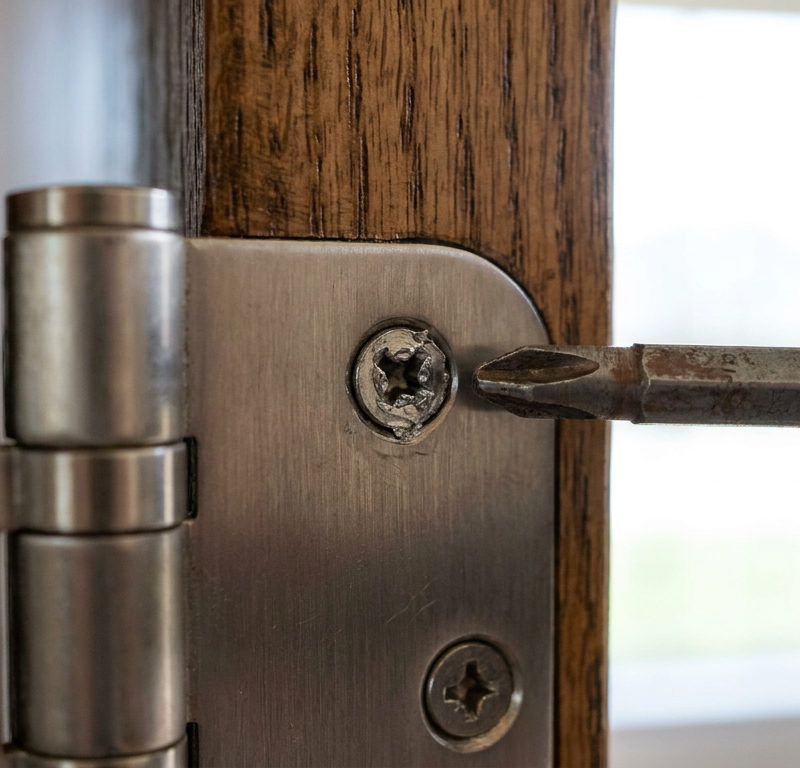
- Stripped Screw in a Door Hinge? 5 Ways to Remove It—and What to Do Next — A stripped screw in a door hinge is a frustrating roadblock for any door project. Learn five proven methods to extract that stubborn screw…
- Why Does My Trim Look Like a Snake Ate It? (The Hidden Culprit) — That wavy, crooked trim isn't just shoddy workmanship—it's often a sign of underlying issues. Learn what causes your trim to warp and how t…
- That Falling Cabinet Door? It's the 15-Minute Hinge Adjustment You're Missing — Don't let a sagging cabinet door drive you nuts—most issues stem from a simple hinge adjustment that you can fix in minutes with just a scr…
Should you do this yourself?
Answer five quick questions before you start. Safety outranks savings every time.
Your experience with work like this
How high do you have to work?
Does the job involve any of these?
Will it need a permit?
Specialty tools
Free and instant. Educational guidance only — not a quote, inspection, or professional diagnosis.
What should this project cost?
Enter your project details for a realistic cost range before you call anyone.
Cost depends heavily on which system turns out to be the source.
- Regional adjustment
- National average
- Labor share (typical)
- ~$1,620
- Quotes to collect
- 3 written estimates
Educational estimate based on national averages — not a binding quote. Always confirm with written local estimates.
Recommended for DIYers & woodworkers
Sponsored
The Top 20 Tools for Workshops of Any Budget
No stationary machines or power tools required — plus 3 fundamental tools that can't be bought at any price.
Get the free guide
Ted's Woodworking — The #1 Woodworking Resource
Detailed instructions, dimensioned drawings, materials & cutting lists, and 3D schematics for every skill level.
See the plansSponsored: links above are affiliate links. FixlyGuide may earn a commission on qualifying purchases — at no extra cost to you.
Frequently asked questions
Can I use WD-40 to fix a squeaky door hinge?+
You can use WD-40 to clean the hinge, but it's not a good long-term lubricant. It's a thin solvent that evaporates, so the squeak will return. Use it to clean off grime, then apply a thicker lubricant like white lithium grease or silicone spray.
Why did my door start squeaking all of a sudden?+
Sudden squeaking is often caused by a change in humidity, which can promote a bit of new rust, or by dust getting kicked up and settling in the hinge. It's a sign that the existing lubrication has finally failed or been contaminated.
Is it better to use oil or grease on door hinges?+
Grease, specifically white lithium grease, is generally better for door hinges. It's thicker, stays in place longer, and provides more durable lubrication than thin oils, which can drip and attract dust over time.
How do you fix a squeaky hinge without taking the pin out?+
Close the door, then use a hammer and nail to tap the pin up about half an inch. This exposes the top part of the pin and creates a gap in the hinge knuckle. You can then spray cleaner and lubricant into the gap, work the door, and tap the pin back down.
Can I use Vaseline on a door hinge?+
You can, and it's better than cooking oil, but it's not ideal. Petroleum jelly is thick and will stop a squeak, but it's sticky and attracts a lot of dirt and hair. A proper silicone or lithium-based lubricant is a much cleaner, more durable solution.
What if the hinge pin is stuck and won't come out?+
If the pin is rusted in place, spray a penetrating oil like PB B'laster or Liquid Wrench into the seams and let it sit for 15-30 minutes. Then try tapping it out again. If it's truly seized, you may have to replace the entire hinge.
Why do my new hinges already squeak?+
Cheap, new hinges sometimes have very little factory lubrication or are already slightly misaligned. The squeak could also be from paint or finish that got into the joints during installation. A quick cleaning and application of quality lubricant should solve the problem.
Does a squeaky hinge mean the door is not secure?+
Not usually, but it can be an early warning sign. A squeak means there's wear and tear happening. If left ignored for years, that wear could eventually cause the hinge to fail, which would compromise the door's security.
Discussion
Loading comments…