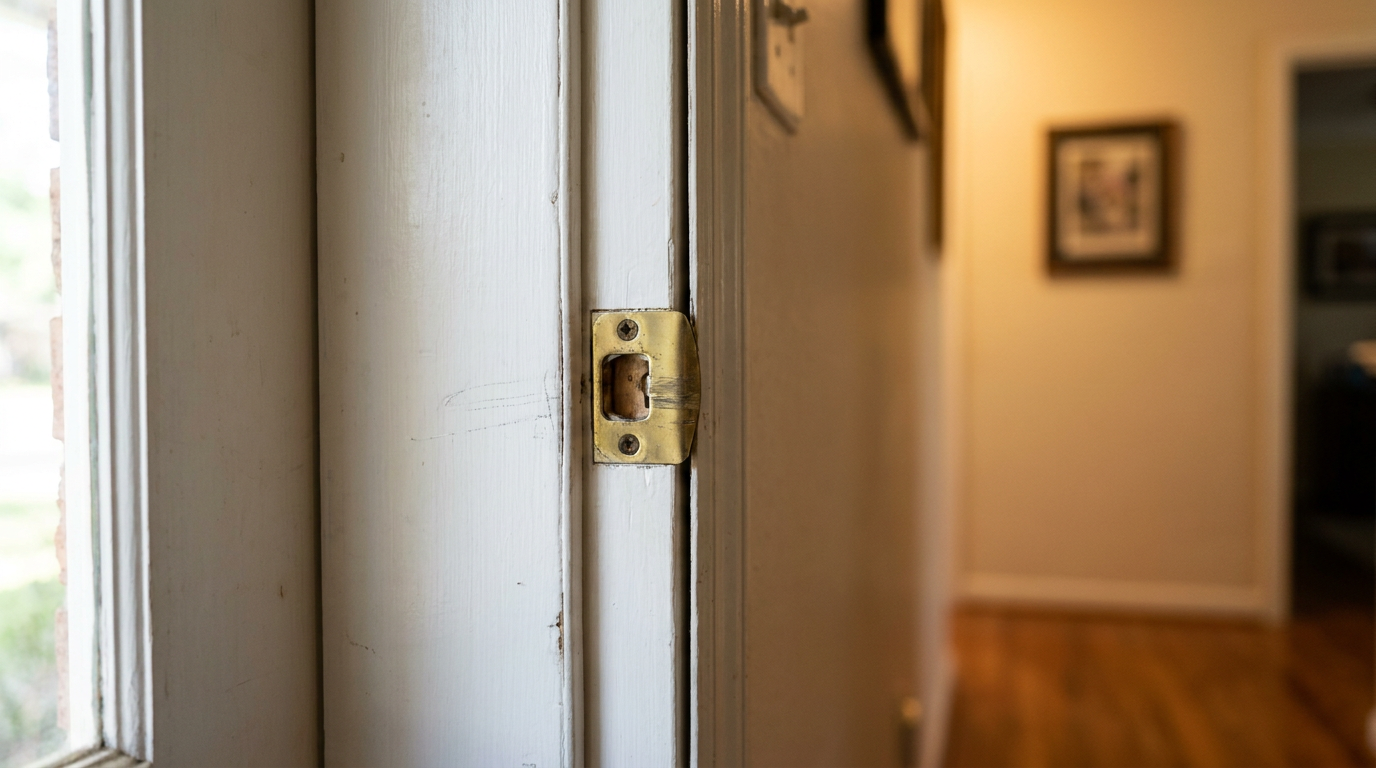
- Loose Hinges: By far the 1 cause. Over hundreds of opens and closes, the screws holding the hinges to the door and jamb work loose. The door sags, and the latch goes out of line.
- House Settling: Every house moves a little. The foundation shifts, the frame goes slightly out of square, and an eighth of an inch is enough to mess up the latch.
- Wood Swelling/Shrinking: Wood reacts to moisture. In humid North Texas summers, your door can swell just enough to bind. In the dry winter, it can shrink and leave gaps.
- Worn Latch Mechanism: After 15-20 years, the spring inside the latch can weaken or break. If the bolt feels limp and doesn’t pop out with any authority, the whole doorknob set may be on its last legs.
- Paint Buildup: Thick paint coats on the door or jamb can eat up clearance and make the latch drag on the strike plate.
General remodeling · Renovation planning
| Project category | General remodeling |
|---|---|
| Problem type | Renovation planning |
| Trade required | General contracting |
| Urgency | Planned project |
| Safety risk | Low safety risk |
| DIY suitability | Pro recommended |
| Cost category | Major investment |
| Typical timeline | Design and permitting often 2–4 months before work starts |
| Contractor type | General contractor |
Repair option
Phase the work and fix the building envelope first.
Replacement option
Full renovation with permits, design, and a general contractor.
Common causes
- Space no longer fits how the household lives
- Resale preparation
- Deferred maintenance stacking up
Relevant tools:project cost estimatorcompare quoteshome improvement material prices
Published September 30, 2026Last updated September 30, 2026
Tools & materials you'll need
Affiliate links- AmazonPhillips Head Screwdriver
- AmazonMetal FileA small, flat or half-round file is best
- AmazonWood Chisel1/2-inch or 3/4-inch · Optional, for adjusting the strike plate mortise
- AmazonDrill with Spade BitOptional, for deepening the latch bolt hole
- AmazonLipstick or Dry-Erase MarkerTo check alignment
As an Amazon Associate FixlyGuide earns from qualifying purchases — at no extra cost to you. Prices and availability are accurate as of publication and subject to change.
The Problem
You push your bedroom or bathroom door shut, but it doesn’t “click” closed. Instead, it just swings right back open. The doorknob turns fine, and you can see the latch bolt moving in and out, but it refuses to catch the strike. Annoying, right? It messes with privacy, throws off your heating and cooling, and—if it’s an exterior door—is a real security headache.
Don’t panic. You usually don’t need a new door or a whole new lock. Most of the time, this is a simple adjustment you can handle yourself in under an hour with basic tools. It all comes down to one thing: the latch has to line up with the hole in the jamb. If it’s off even a little, no dice.
How It Works
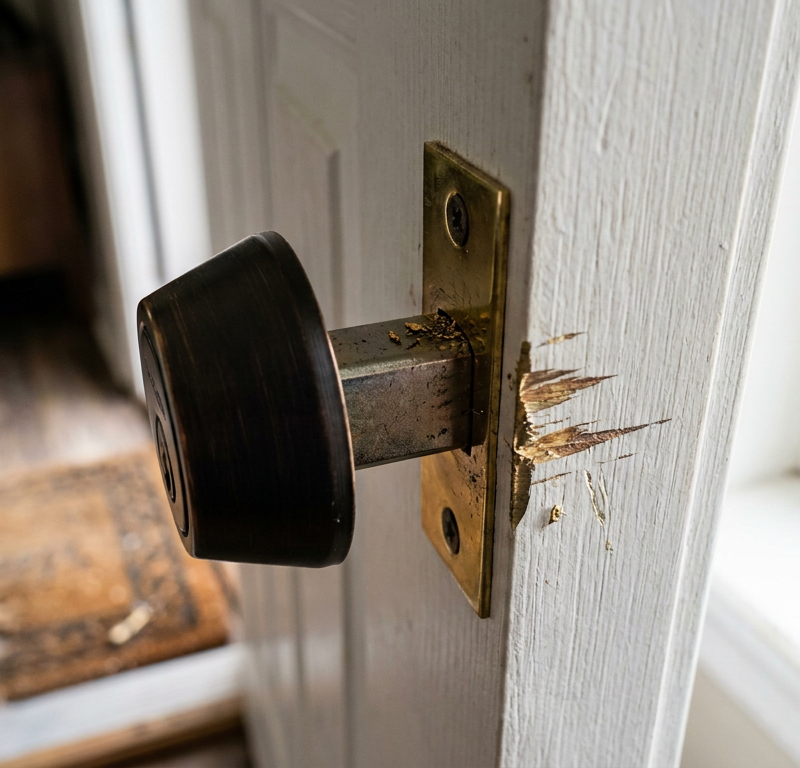
Here’s the simple version. Your doorknob controls a spring-loaded part called the “latch bolt.” That’s the angled, silver piece sticking out from the edge of the door. Turn the knob, it retracts. Let go, it springs back out.
That “back out” part only works if the latch and strike plate are playing nice. The strike plate is the metal plate screwed into the door jamb, and it’s got a hole in the middle that the latch bolt is supposed to slide into. When the angled face of the latch hits the plate, it gets pushed back into the door. Then, once it lines up with the opening, the spring snaps it forward. Click. Door’s latched.
For that to happen, the alignment’s got to be pretty close—within about 1/8 of an inch. But houses move. They settle. Especially on North Texas clay soil, where the foundation can shift just enough to throw things off. Wood swells in humid summer air and shrinks when winter dries everything out. Hinges loosen up. Before long, the latch starts smacking into the face of the strike plate instead of finding the hole. That’s when the door quits staying shut.
Step-by-Step Fix
Work through these in order. Most of the time, you’ll fix it at step 1 or 2.
-
Clean and Lubricate First.
- Sometimes the latch bolt itself is just gummy from dust and old junky oil. Extend the latch and clean it with a rag and some rubbing alcohol. Then hit the mechanism on the edge of the door with a small amount of dry lubricant—graphite or PTFE works. Turn the knob a few times so it works in. Don’t spray WD-40 in there. That stuff pulls dust like a magnet, and then you’ve got sludge on your hands later.
-
Tighten the Hinge Screws.
- This is the big one. Honestly, it’s the easiest fix too. Open the door and check every screw on all three hinges—door side and jamb side. Grab a Phillips head screwdriver and snug every single one. You’ll usually find one or two that have backed out a bit. Tightening them can pull the door back into line by a crucial 1/16 of an inch, and sometimes that’s all it takes.
-
Check the Latch and Strike Plate Alignment.
- With the door almost shut, crouch down and watch at eye level as the latch bolt comes toward the strike plate. Is it too high? Too low? Smacking the side? That tells you where the problem lives. If you want a cleaner read, smear a little lipstick or whiteboard marker on the end of the latch bolt. Close the door until it touches. The mark left on the strike plate shows you exactly where it’s landing. Handy little trick—pulled a bedroom door in Frisco last month that had exactly this issue, and that mark told me the whole story in ten seconds.
-
Try the "Long Screw" Trick.
- If tightening the hinges didn’t get it done and the door is sagging—meaning the latch is too low—you can use a longer screw to pull the whole jamb tighter to the wall stud. Take out one of the screws from the top hinge on the jamb side, specifically the one closest to the middle of the frame. Swap it with a 3-inch deck or wood screw. Run it in tight. That screw goes through the jamb and bites into the solid wood framing, which pulls the hinge side in and lifts the latch end of the door a hair.
-
Adjust the Strike Plate Position.
- If the problem is only off by a little bit—less than 1/8 inch—you can often move the strike plate instead of fighting the whole door. Take it off the jamb. If it needs to go up or down, you may be able to reinstall the screws at a slight angle in the new spot. If it needs to move left or right, you’ll probably need to chisel a little wood from the jamb mortise, which is the recessed pocket the plate sits in. Go slow. You can always take more wood off. You can’t put it back.
-
File the Strike Plate Opening.
- This is usually easier than moving the whole plate. If the latch is just kissing the top or bottom edge, use a small metal file to open up the strike plate hole a bit. File the top edge if the latch is too high, or the bottom edge if it’s too low. A few minutes of filing can make all the difference. Better to tweak the metal plate than chew up the wood behind it, because that plate protects the softer jamb from getting wrecked over time.
-
Deepen the Latch Bolt Hole.
- Sometimes the latch hits the back of the hole in the jamb. So the alignment looks right, but the bolt can’t extend all the way. That means the mortise for the latch bolt isn’t deep enough. Pull the strike plate off and use a chisel or a spade bit in a drill to take out a little more wood from the back of the hole. You probably only need about 1/4 inch deeper. Not much.
-
Check the Door Itself.
- Is the door warped? Step back and look down the edge. It ought to be flat. If the door’s bowed, humidity may be the culprit. Wood doors do that. If it’s warped badly, there isn’t a clean fix besides replacing the slab. That thing’s toast.
Common Causes
- Loose Hinges: By far the #1 cause. Over hundreds of opens and closes, the screws holding the hinges to the door and jamb work loose. The door sags, and the latch goes out of line.
- House Settling: Every house moves a little. The foundation shifts, the frame goes slightly out of square, and an eighth of an inch is enough to mess up the latch.
- Wood Swelling/Shrinking: Wood reacts to moisture. In humid North Texas summers, your door can swell just enough to bind. In the dry winter, it can shrink and leave gaps.
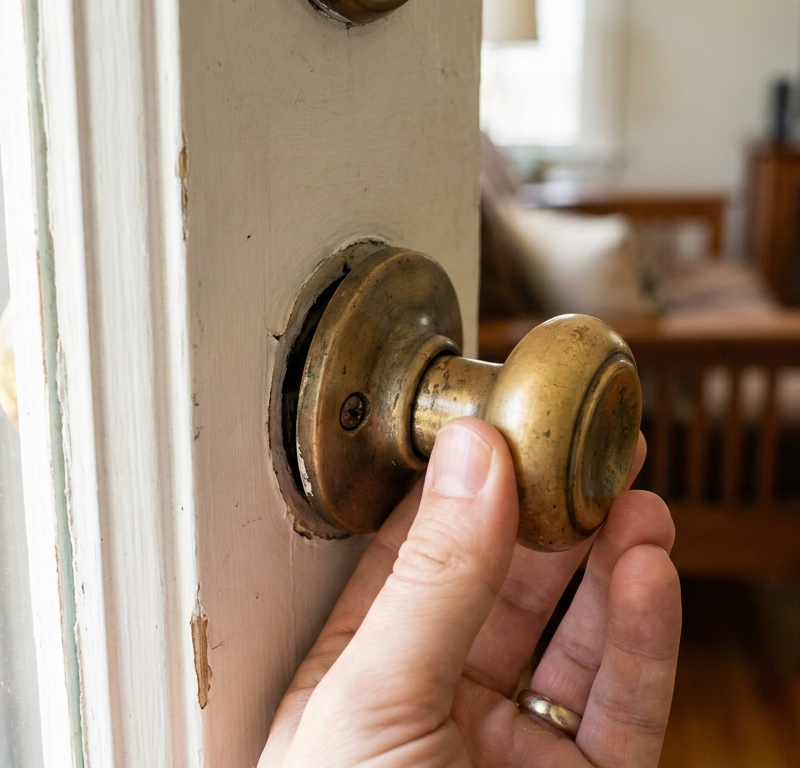
- Worn Latch Mechanism: After 15-20 years, the spring inside the latch can weaken or break. If the bolt feels limp and doesn’t pop out with any authority, the whole doorknob set may be on its last legs.
- Paint Buildup: Thick paint coats on the door or jamb can eat up clearance and make the latch drag on the strike plate.
- Stripped Screw Holes: If the hinge screws just spin and never tighten, the wood underneath is stripped. You’ll need a wood-filler-and-toothpick trick or a longer screw to get a real grip.
Common Mistakes
- Using WD-40: It feels like the easy answer, but that wet lubricant grabs dust and dirt. Before long, it turns into sticky sludge and makes things worse. Use a dry lubricant like graphite or a PTFE-based spray instead.
- Filing the Latch Bolt: Don’t file the latch bolt itself. Ever. It’s shaped for a reason. The issue is almost always the strike plate position, not the latch. Work on the cheap part you can replace easily.
- Over-chiseling the Jamb: Once you start opening up the strike plate mortise, it’s easy to get carried away and remove too much wood. Then the plate fits sloppy, looks rough, and can weaken the frame. Use a sharp chisel and take thin shavings, not chunks.
- Ignoring the Hinges: A lot of folks jump straight to the strike plate, but 90% of the time the real problem is a loose hinge screw. Check and tighten the hinges first. Every time.
- Buying a New Lock Unnecessarily: Don’t run to the store just yet. A new lock has the same dimensions as the old one, so it won’t fix an alignment problem.
Cost & Time Breakdown
Here’s what you’re usually looking at for time and money.
| Task | DIY Cost | Pro Cost | Time |
|---|---|---|---|
| Tighten Hinge Screws | $0 | $75–$125 (minimum service call) | 5 minutes |
| Long Screw Hinge Trick | $1 (for screws) | $100–$150 | 15 minutes |
| File Strike Plate | $10 (for a metal file) | $100–$150 | 20 minutes |
| Reposition Strike Plate (Minor) | $0 | $125–$175 | 30 minutes |
| Replace Worn Doorknob Set | $20–$60 | $150–$250 | 30 minutes |
Tips & Prevention
- Annual Hinge Check: Once a year, walk the house and tighten the screws on your interior door hinges. That’s the easiest prevention there is.
- Use 3-Inch Screws on New Doors: When you hang a new door, use at least one 3-inch screw in the top hinge on the jamb side. That anchors the frame right into the stud and helps keep sag out of the picture.
- Control Humidity: In the summer, running the AC helps pull moisture out of the air, which keeps wooden doors from swelling as much. Steady indoor humidity—between 30-50%—is best for the wood in your house.
- Clean, Don't Oil: If the latch gets sticky, don’t just glob on oil. Wipe it clean with a dry rag and use a puff of graphite powder. It lubricates without making a mess.
- Watch for Warning Signs: If a door starts feeling a little sticky or needs a firm push to latch, that’s your warning. The alignment’s drifting. Fix it then, before it quits altogether.
When to Call a Professional
This is a very DIY-friendly repair, sure, but there are times I’d tell you to call a locksmith or a carpenter. If you’ve tried all the alignment fixes and the door still won’t latch, or if the door itself is visibly warped or cracked, bring in a pro. They can tell if the frame is badly out of square—which can mean a structural issue—or if the slab needs to be planed or replaced. And if you’re dealing with a heavy solid-core exterior door, getting that alignment dead on can be fiddly. A pro can usually knock it out fast and make sure it’s secure.
Related Articles
Keep troubleshooting with these hand-picked guides from FixlyGuide:
- Your Door Won't Latch? The 5-Minute Fix Nobody Talks About — Tired of a door that swings open? Learn the secret 5-minute fix for a door that won't latch. This simple adjustment to your strike plate ca…
- Deadbolt Stuck or Hard to Turn? 9 Reasons and How to Fix It — A sticky or hard-to-turn deadbolt isn't just annoying; it's a security risk. Learn the common causes, from simple lubrication needs to seri…
- Door Knob Loose or Wobbling? 9 Causes and the 5-Minute Fix — Have a wobbly door knob that rattles every time you use it? It's not just annoying—it's a sign of a bigger problem waiting to happen. Learn…
- The 4 Hidden Reasons Your Window Won't Stay Up (And the Easy Fixes) — Before you blame a broken window, learn the common culprits behind window sashes that won't stay open and how to fix them yourself.
- The Mystery of the Raised Floorboards: It's Not Always Water Damage — Don't panic if your hardwood floorboards are lifting and uneven. It's often a solvable humidity problem, not major water damage. Learn how…
- The Surprising Reason Your Dishwasher Won't Start (It's Not Always the Door) — Don't rush to call a repairman when your dishwasher refuses to start; often, the culprit is a simple, overlooked issue you can fix yourself…
Should you do this yourself?
Answer five quick questions before you start. Safety outranks savings every time.
Your experience with work like this
How high do you have to work?
Does the job involve any of these?
Will it need a permit?
Specialty tools
Free and instant. Educational guidance only — not a quote, inspection, or professional diagnosis.
What should this project cost?
Enter your project details for a realistic cost range before you call anyone.
Cost depends heavily on which system turns out to be the source.
- Regional adjustment
- National average
- Labor share (typical)
- ~$1,620
- Quotes to collect
- 3 written estimates
Educational estimate based on national averages — not a binding quote. Always confirm with written local estimates.
Get the print-ready PDF of this guide
A clean, ad-free, printable version you can keep on your phone or pin to the workshop wall. Free with a FixlyGuide account.
- Print-optimized layout
- Tools, materials & every step included
- Saved to your account
Recommended for DIYers & woodworkers
Sponsored
The Top 20 Tools for Workshops of Any Budget
No stationary machines or power tools required — plus 3 fundamental tools that can't be bought at any price.
Get the free guide
Ted's Woodworking — The #1 Woodworking Resource
Detailed instructions, dimensioned drawings, materials & cutting lists, and 3D schematics for every skill level.
See the plansSponsored: links above are affiliate links. FixlyGuide may earn a commission on qualifying purchases — at no extra cost to you.
Frequently asked questions
Why does my door suddenly not latch in the summer?+
This is almost always due to humidity. Wood doors and the surrounding frame absorb moisture from the humid summer air, causing them to swell. This swelling can be just enough to misalign the latch and strike plate, preventing the door from catching.
Is it better to file the strike plate or the hole in the door frame?+
Always file the metal strike plate. The metal is designed for this and protects the softer wood of the door frame. Filing the wood directly will cause it to chip and wear out quickly, making the problem worse over time.
Can I use WD-40 to fix a sticky door latch?+
You shouldn't. While WD-40 might seem to work at first, it's a wet lubricant that attracts dust and dirt, eventually creating a gummy residue that will make the latch even stickier. Use a dry lubricant like graphite powder or a PTFE spray instead.
What's the easiest thing to try first if my door won't latch?+
The easiest and most common fix is to simply tighten all the screws on the door's hinges. Open the door, and use a Phillips head screwdriver to snug up every screw on both the door and the jamb side. This often pulls the door back into alignment.
How does putting a long screw in the hinge fix a sagging door?+
A standard hinge screw only goes into the soft wood of the door jamb. A 3-inch screw will pass all the way through the jamb and bite into the solid wall stud behind it. This allows you to pull the entire jamb tighter to the frame, effectively lifting the latch-side of the door.
The latch bolt doesn't spring out anymore. What's wrong?+
If the latch bolt seems weak or doesn't extend fully on its own, the internal spring mechanism is likely worn out or broken. This is common in older locksets (15+ years). The fix is to replace the entire doorknob or lever set.
My door latch is aligned perfectly but still won't catch. What else could it be?+
Check if the latch bolt can extend fully into the hole in the jamb. Sometimes the hole (mortise) isn't deep enough. The latch hits the back of the hole and can't engage. You may need to remove the strike plate and chisel or drill the hole about 1/4 inch deeper.
Can paint cause a door latch to fail?+
Yes, absolutely. Years of paint buildup can create a thick layer that reduces the clearance between the door and the jamb. This can prevent the latch from reaching the strike plate or cause it to bind.
Discussion
Loading comments…