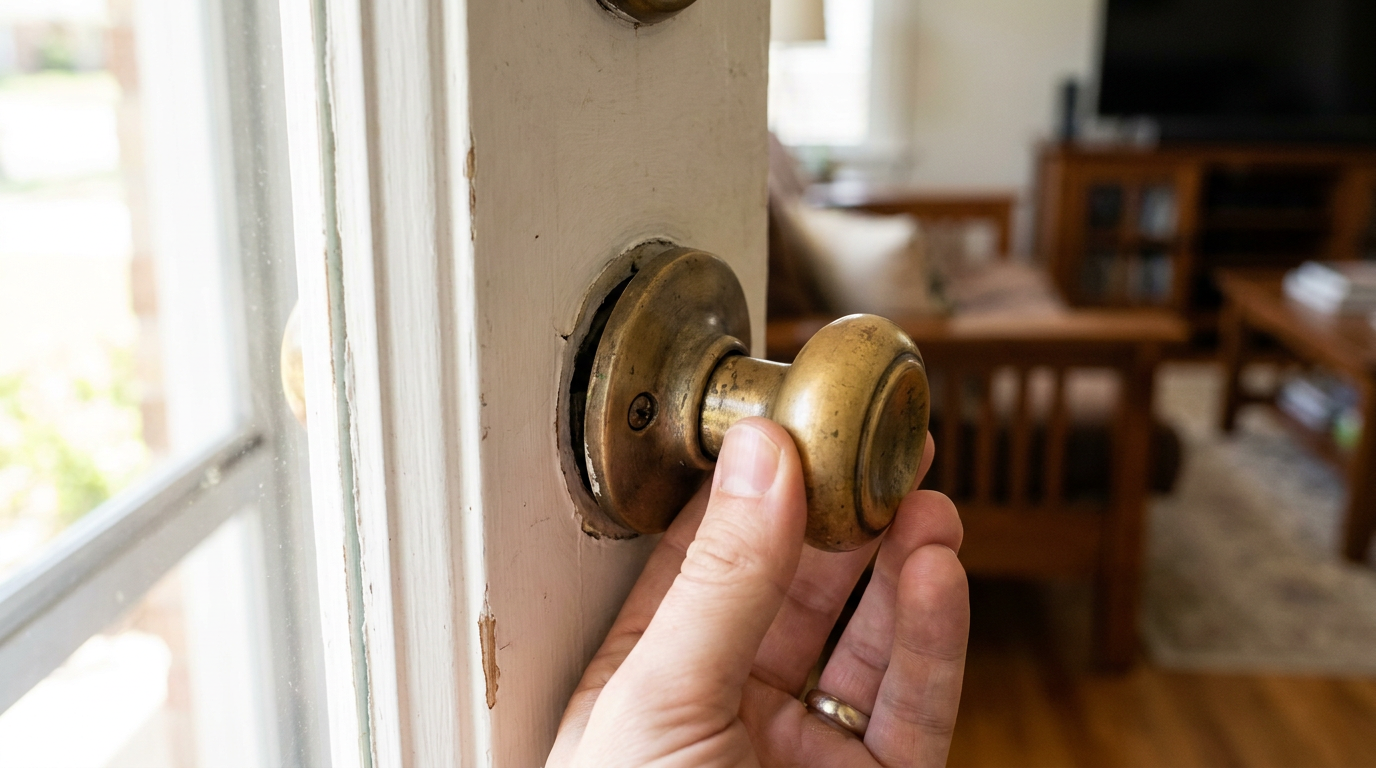
- Loose Set Screw: This is the 1 cause, especially on lever-style handles. That tiny grub screw on the side or bottom of the lever base backs out from vibration, and now the handle feels sloppy on the spindle.
- Loose Mounting Screws: The two big screws holding the whole assembly to the door are the next most common culprit. Daily use and door slamming shake them loose.
- Worn-Out Spindle: After years of use, the square spindle connecting the two knobs can round off a bit, and that gives you slop that feels like a loose knob.
- Stripped Screw Holes: On older doors, especially wood ones, the screw holes can strip out. Once that happens, the screws can’t grip worth a darn.
- Wrong Hardware: Sometimes a previous owner installed a lockset meant for a 1-3/4 inch thick door on a thinner 1-3/8 inch interior door, and that gap keeps it from ever getting truly tight.
General remodeling · Renovation planning
| Project category | General remodeling |
|---|---|
| Problem type | Renovation planning |
| Trade required | General contracting |
| Urgency | Planned project |
| Safety risk | Low safety risk |
| DIY suitability | Pro recommended |
| Cost category | Major investment |
| Typical timeline | Design and permitting often 2–4 months before work starts |
| Contractor type | General contractor |
Repair option
Phase the work and fix the building envelope first.
Replacement option
Full renovation with permits, design, and a general contractor.
Common causes
- Space no longer fits how the household lives
- Resale preparation
- Deferred maintenance stacking up
Relevant tools:project cost estimatorcompare quoteshome improvement material prices
Published September 30, 2026Last updated September 30, 2026
Tools & materials you'll need
Affiliate links- AmazonDry Lubricant (Graphite or PTFE)optional, for maintenance
As an Amazon Associate FixlyGuide earns from qualifying purchases — at no extra cost to you. Prices and availability are accurate as of publication and subject to change.
The Problem
A loose, wobbly door knob is one of those little home annoyances that’s easy to ignore. At first. Then you keep feeling that rattle every single time you open the door, and now it’s not just annoying—it’s the hardware telling you something’s off. When a knob’s loose, it puts extra strain on the latch every time you turn it. Leave it alone long enough, and you’re asking for a bigger mess: a latch that quits, a knob that comes off in your hand, or a door you can’t get open. No fun.
A wobbly knob feels cheap and sloppy, and it can chew up the door itself by enlarging the bore hole. The good news? This is almost always a quick, easy fix you can knock out in less than 10 minutes with basic tools you probably already own. You just need to know what you’re looking at.
How It Works
Your door knob is part of a pretty simple setup. You’ve got two knobs, or levers, one on each side of the door, and they’re tied together by a metal shaft called a spindle. That spindle runs through the door and through a spring-loaded latch mechanism sitting inside a bore hole in the edge of the door. Turn the knob, the spindle rotates. That rotation pulls the latch bolt back from the strike plate in the jamb, and the door opens. Simple stuff.
The whole assembly is held tight to the door by a pair of mounting screws. Those screws run through the interior mounting plate, through the door itself, and into the exterior mounting plate. The decorative covers hiding those screws are called roses. On a lot of newer knobs, one side is fastened to the spindle with a tiny hidden set screw at the base. When all those fasteners are snug—the set screw and the mounting screws—the whole thing stays rigid. But doors get used all day long. That vibration works stuff loose over time. Then the wobble starts. You know the feeling.
Step-by-Step Fix
Ready to snug it down? It shouldn’t take long. Grab your screwdriver and let’s get that knob solid again.
-
Inspect the Knob Type. First thing, figure out what you’ve got. Look at the base of the interior knob, the part closest to the door. Do you see two exposed screws on the round plate, the rose? Or is it smooth, with no visible screws at all? That’s the key difference.
-
For Knobs with Hidden Screws. If you don’t see screws, you’ve got a hidden set screw. Look for a tiny slot or hole on the side of the knob’s shaft, right near the rose. You’ll need a small flathead screwdriver or an Allen wrench that fits. Stick it in and turn counter-clockwise about a half-turn to loosen the knob. Don’t yank the screw all the way out. Once it’s loose, the knob should slide straight off the spindle.
-
Pop Off the Rose. With the knob off, you can get to the mounting plate it was covering. The decorative rose just clips on. Find the little notch along the edge, slip in a flathead screwdriver, and pry it gently. It ought to pop right off and show you the two main mounting screws underneath.
-
For Knobs with Exposed Screws. If your knob already has visible screws on the rose, skip the extra steps. Easy day. Just grab the right screwdriver—usually a Phillips head—and you’re set to tighten.
-
Tighten the Main Mounting Screws. Now you’re looking at the two screws that actually hold the whole assembly to the door. Use your Phillips head screwdriver and tighten them clockwise until they’re snug. Don’t reef on them. Over-tightening can strip the screws or warp the housing, and then the latch starts binding. Just get them firm enough so the base plate on both sides of the door sits flush and doesn’t shift around.
-
Wiggle Test. Give it a wiggle. Still moving? If the screws just spin and never bite, the internal threads may be stripped. You can try a slightly larger screw, one size up, or dab a little wood glue on a toothpick and work that into the screw hole so the threads have something to grab. I pulled a water heater in Frisco last month that had exactly this kind of “it’ll hold for now” hardware problem—same deal, loose as a goose until we gave the fasteners something to bite into.
-
Reassemble (If Necessary). If you pulled off a knob with a hidden set screw, now’s the time to put it back together. Snap the rose back over the mounting plate. Slide the knob back onto the spindle shaft until it clicks. Then tighten the set screw at the base by turning it clockwise. That’s what keeps the knob from walking off the shaft. Snug, not brutal.
-
Check Latch Operation. Open and close the door a few times. Turn the knob. Does it feel solid? Does the latch move in and out without sticking? If it feels stiff, you may have overtightened the mounting screws and caused the housing to bind. Back them off a quarter-turn and try again. A small shot of dry lubricant like graphite or PTFE in the moving parts of the latch can help a lot.
Common Causes
Most loose knobs aren’t a mystery. Here’s the usual lineup.
- Loose Set Screw: This is the #1 cause, especially on lever-style handles. That tiny grub screw on the side or bottom of the lever base backs out from vibration, and now the handle feels sloppy on the spindle.
- Loose Mounting Screws: The two big screws holding the whole assembly to the door are the next most common culprit. Daily use and door slamming shake them loose.
- Worn-Out Spindle: After years of use, the square spindle connecting the two knobs can round off a bit, and that gives you slop that feels like a loose knob.
- Stripped Screw Holes: On older doors, especially wood ones, the screw holes can strip out. Once that happens, the screws can’t grip worth a darn.
- Wrong Hardware: Sometimes a previous owner installed a lockset meant for a 1-3/4 inch thick door on a thinner 1-3/8 inch interior door, and that gap keeps it from ever getting truly tight.
- Damaged Internal Mechanism: If tightening the screws doesn’t change a thing, a plastic or metal piece inside the latch assembly may be broken, and then you’re looking at a full replacement.
Common Mistakes
Skip these rookie mistakes. They turn a 5-minute fix into a headache real fast.
- Over-tightening Screws: Cranking down the mounting screws with all your might can strip the heads, wreck the threads, or—most often—warp the thin metal housing of the latch. Then the latch binds and the knob gets stiff and hard to turn. Snug is enough.
- Using the Wrong Lubricant: Don’t spray WD-40 or any other wet, oily lubricant into a lock or latch. It grabs dust and grime and turns into sticky sludge that gums up the works. Use graphite powder or a PTFE-based spray instead.
- Losing the Set Screw: That little Allen or flathead set screw is tiny and loves to vanish into the carpet. Loosen it just enough to get the knob off; don’t remove it completely unless you absolutely have to.
- Prying Off the Wrong Part: Trying to pry off a rose that doesn’t use a hidden set screw will just scratch the finish. If you see two screws, tighten them. Don’t go hunting for a part that isn’t meant to come off.
- Ignoring a Stiff Latch: If the knob is tight but the latch still feels hard to work, don’t shrug it off. The strike plate may be out of alignment. A stiff latch puts a pile of pressure on the knob and internal parts, and that thing’s toast sooner or later.
Cost & Time Breakdown
This is one of the cheapest, fastest fixes in the house. You’re spending time, not money.
| Task | DIY Cost | Pro Cost | Time |
|---|---|---|---|
| Tightening a Loose Knob | $0 (if you have tools) | $75–$125 (minimum service call) | 5–10 minutes |
| Replacing a Stripped Screw | $1–$2 | Included in service call | 15 minutes |
| Replacing a Basic Interior Knob | $15–$40 | $125–$175 | 20–30 minutes |
| Upgrading to a Heavy-Duty Knob | $50–$100+ | $150–$225 | 20–30 minutes |
Tips & Prevention
- Annual Check-Up: Once a year, do a quick walk-through and check your high-traffic door knobs for wobble. A little tightening now keeps a bigger problem from showing up later.
- Go with Graphite: Every couple of years, give the latch a small puff of graphite powder. It keeps the moving parts working smooth without sucking in dirt.
- Close, Don’t Slam: Tell everybody to shut doors gently. Slamming is the number one enemy of door hardware—it shakes screws loose and beats up the latch and frame.
- Check the Strike Plate: If you’ve got to push or pull on the door to get it to latch, the strike plate’s probably out of line. That puts constant pressure on the latch bolt and knob. A small adjustment there can add a lot of life to the hardware.
- When Replacing, Buy Quality: If a knob’s truly broken, don’t just grab the cheapest $12 replacement. A solid ANSI Grade 2 knob will feel better in your hand and hold up way longer than the bargain-bin Grade 3 stuff.
When to Call a Professional
Honestly, this is a great DIY job. But there are a few times where you’ll want a locksmith or handyman to step in. If you’ve tightened everything and the knob still wobbles, the internal mechanism is probably broken, and the whole set needs to be replaced. If you don’t want to tackle that, a pro can knock it out quick. And if the screws spin freely and won’t tighten, you may have a stripped-out door that needs a more advanced repair, like epoxy or wood filler to rebuild the screw holes. If the door itself or the frame is split or damaged, that’s carpenter territory, not locksmith work.
Related Articles
Keep troubleshooting with these hand-picked guides from FixlyGuide:
- Deadbolt Stuck or Hard to Turn? 9 Reasons and How to Fix It — A sticky or hard-to-turn deadbolt isn't just annoying; it's a security risk. Learn the common causes, from simple lubrication needs to seri…
- The 5-Minute Trick That Often Fixes a Dead Doorbell (No Electrician Needed) — Before you call an electrician for a dead doorbell, learn the surprising common culprit homeowners overlook and how to fix it in minutes.
- The Mystery of the Spongy Floor: Is Your Subfloor Failing? — A spongy or bouncy floor can be more than just annoying; it often signals a hidden problem with your subfloor or joists that needs immediat…
- Your Door Won't Latch? The 5-Minute Fix Nobody Talks About — Tired of a door that swings open? Learn the secret 5-minute fix for a door that won't latch. This simple adjustment to your strike plate ca…
- Why Does My Trim Look Like a Snake Ate It? (The Hidden Culprit) — That wavy, crooked trim isn't just shoddy workmanship—it's often a sign of underlying issues. Learn what causes your trim to warp and how t…
- The Secret Cause of Ceiling Fan Wobble (It's Not Always What You Think) — A wobbling ceiling fan isn't just annoying; it can be a sign of a deeper issue. Learn the common culprits and how to restore balance safely.
Should you do this yourself?
Answer five quick questions before you start. Safety outranks savings every time.
Your experience with work like this
How high do you have to work?
Does the job involve any of these?
Will it need a permit?
Specialty tools
Free and instant. Educational guidance only — not a quote, inspection, or professional diagnosis.
What should this project cost?
Enter your project details for a realistic cost range before you call anyone.
Cost depends heavily on which system turns out to be the source.
- Regional adjustment
- National average
- Labor share (typical)
- ~$1,620
- Quotes to collect
- 3 written estimates
Educational estimate based on national averages — not a binding quote. Always confirm with written local estimates.
Get the print-ready PDF of this guide
A clean, ad-free, printable version you can keep on your phone or pin to the workshop wall. Free with a FixlyGuide account.
- Print-optimized layout
- Tools, materials & every step included
- Saved to your account
Recommended for DIYers & woodworkers
Sponsored
The Top 20 Tools for Workshops of Any Budget
No stationary machines or power tools required — plus 3 fundamental tools that can't be bought at any price.
Get the free guide
Ted's Woodworking — The #1 Woodworking Resource
Detailed instructions, dimensioned drawings, materials & cutting lists, and 3D schematics for every skill level.
See the plansSponsored: links above are affiliate links. FixlyGuide may earn a commission on qualifying purchases — at no extra cost to you.
Frequently asked questions
Why does my door knob keep coming loose?+
The most common reason is that the mounting screws or a hidden set screw have backed out from the constant vibration of the door opening and closing. High-traffic doors will need tightening more frequently than others.
Can a loose door knob be a security risk?+
For an interior door, it's mostly an annoyance. For an exterior door, absolutely. A loose knob can make it easier to force the lock or manipulate the latch, and it's a sign of a compromised hardware installation.
What's the difference between a door knob and a door lever?+
A door knob is round and requires you to twist your wrist to operate. A door lever is a flat handle you push down, which is generally easier to use for people with arthritis or when your hands are full. Levers are more prone to loosening over time due to leverage.
How do I know what size Allen wrench to use for my door knob?+
Unfortunately, there's no single standard. Most set screws use a hex key (Allen wrench) between 3/32" and 1/8". It's best to have a small set of both SAE (imperial) and metric wrenches on hand to find the one that fits snugly.
Is it better to repair or replace a loose door knob?+
Always try to repair it first by tightening the screws. This solves the problem 95% of the time for free. Only replace the knob if tightening doesn't work or if the internal latch mechanism is clearly broken or worn out.
What does ANSI Grade mean for door knobs?+
ANSI grades (1, 2, or 3) rate the durability and security of door hardware. Grade 1 is the highest (commercial use), Grade 2 is for heavy-duty residential use, and Grade 3 is basic residential quality. For a busy front door, Grade 2 is a smart investment.
Can I use Loctite on the door knob screws?+
You can, but be careful. Use a low-strength, removable threadlocker like Loctite Blue 242. Do not use red Loctite, or you will never get those screws out again without heat and a lot of force.
My door handle is stiff after tightening. What did I do wrong?+
You likely over-tightened the mounting screws. This can warp the housing and cause the latch mechanism to bind. Simply back the two main screws off by about a quarter-turn each until the knob operates smoothly again.

Discussion
Loading comments…