- Clean and Lubricate the Keyway — The keyhole is a magnet for dust, lint, and tiny bits of junk. It doesn’t take much grime in the pin chamber to make a lock feel rough.
- Tools: Can of compressed air, dry lock lubricant (graphite or silicone).
- Safety: Wear safety glasses so you don’t get a face full of spray-back.
General remodeling · Renovation planning
| Project category | General remodeling |
|---|---|
| Problem type | Renovation planning |
| Trade required | General contracting |
| Urgency | Planned project |
| Safety risk | Low safety risk |
| DIY suitability | Pro recommended |
| Cost category | Major investment |
| Typical timeline | Design and permitting often 2–4 months before work starts |
| Contractor type | General contractor |
Repair option
Phase the work and fix the building envelope first.
Replacement option
Full renovation with permits, design, and a general contractor.
Common causes
- Space no longer fits how the household lives
- Resale preparation
- Deferred maintenance stacking up
Relevant tools:project cost estimatorcompare quoteshome improvement material prices
Published September 29, 2026Last updated September 29, 2026
Tools & materials you'll need
Affiliate linksAs an Amazon Associate FixlyGuide earns from qualifying purchases — at no extra cost to you. Prices and availability are accurate as of publication and subject to change.
The Problem
You go to lock up for the night, and the thumbturn on your deadbolt stops dead. Or maybe you’ve got to muscle the key from the outside, wiggling it back and forth until it finally—grudgingly—slides home. Either way, a deadbolt that’s hard to turn isn’t just annoying; it’s a real security issue. If you’re fighting it, there’s a decent chance it’s not fully engaging, and that leaves your house exposed. And in a hurry? A stuck lock can turn into a safety problem fast, because you don’t want to be messing around with a stubborn bolt when you need out.
This isn’t something to shrug off. The good news is, most of the time, you don’t need to call a locksmith. Usually it comes down to one of three things: lubrication, loose screws, or alignment. With a few basic tools and a little patience, you can get that lock working like it should. I’ve fixed plenty of these over the years, and most of them aren’t scary at all once you know where to look.
How It Works
Your deadbolt is a pretty simple machine. Inside the lock cylinder where the key goes, there are a bunch of small spring-loaded pins. When the right key slides in, its cut pattern lifts those pins to the exact height needed, which makes a straight line called a shear line. Once that line clears, the cylinder can turn.
That turning motion spins a small piece inside the lock called a cam. The cam fits into the back of the deadbolt latch itself—that thick hunk of metal that shoots into the door frame. As the cam turns, it pushes an actuator bar, which slides the bolt out to lock or pulls it back to unlock. The thumbturn on the inside does the same job, just without the key and pins. It moves the cam directly.
For all that to work without a hitch, every part has to move freely. The pins need to glide in their little chambers, the cam needs to spin without drag, and the bolt needs to land cleanly in the hole in the frame, called the strike plate. Any friction, grit, or bad alignment anywhere in that chain will make the whole thing feel stiff, grindy, or just plain stuck. No dice.
Step-by-Step Fix
Follow these steps in order, from simplest to more involved. Most of the time, you’ll nail it in the first few.
-
Test the Bolt With the Door Open — Before you grab a single tool, open the door all the way and try the deadbolt. Turn the key and the thumbturn a few times to send the bolt in and out. If it works smoothly now, the lock itself probably isn’t the problem—it’s an alignment issue with the frame. Skip ahead to Step 6. If it’s still sticky with the door wide open, the trouble’s inside the lock. Keep going.
-
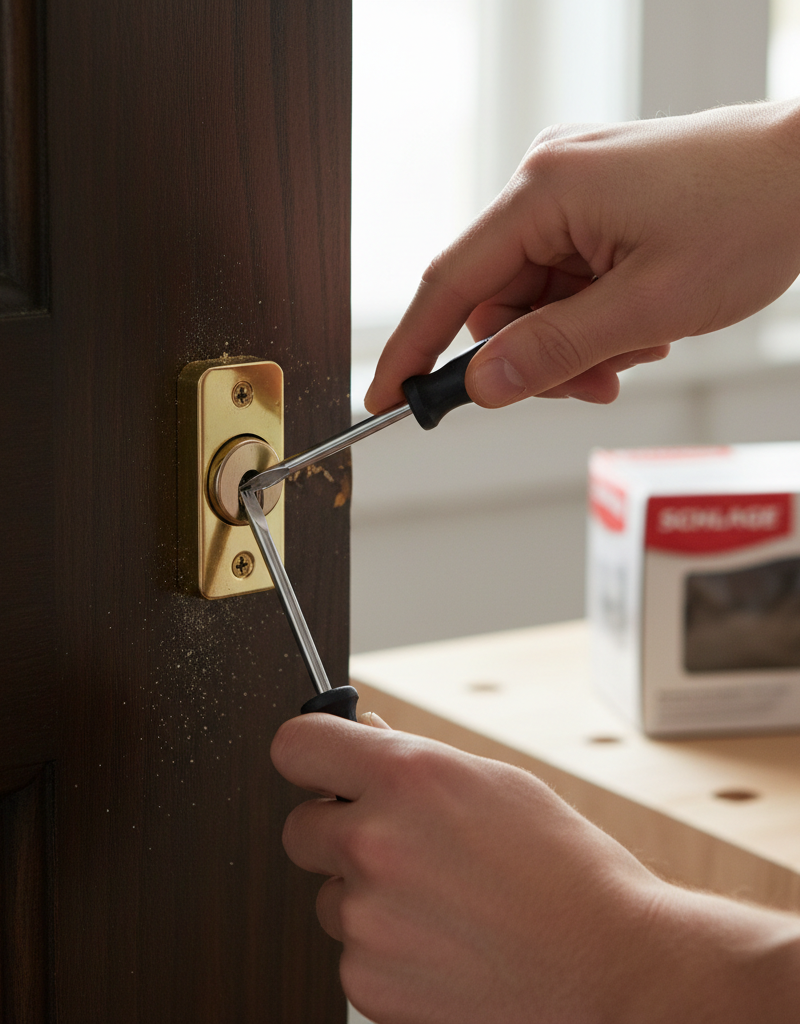
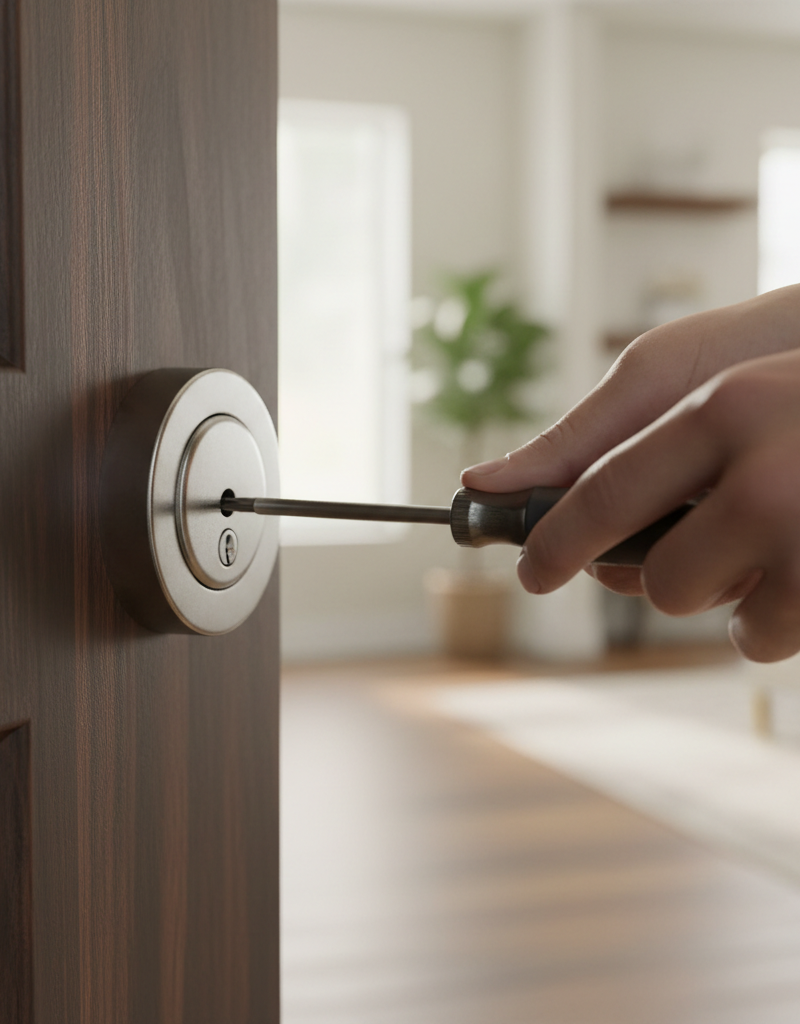
Clean and Lubricate the Keyway — The keyhole is a magnet for dust, lint, and tiny bits of junk. It doesn’t take much grime in the pin chamber to make a lock feel rough.
- Tools: Can of compressed air, dry lock lubricant (graphite or silicone).
- Safety: Wear safety glasses so you don’t get a face full of spray-back.
- Start by sticking the straw from the compressed air can into the keyway and give it a few short bursts to blow out loose debris. Then spray a small amount of dry lubricant right into the keyway. Don’t get heavy-handed here—a one-second burst is plenty.
-
Work the Lubricant In — Slide your key into the lubed keyway and pull it in and out a few times. That gets the lubricant onto the pins. Then work the lock itself, turning the key to fully extend and retract the bolt about 5-10 times. You should feel it start to smooth out. Do the same thing with the thumbturn on the inside. A lot of locks clear up right here.
-
Tighten the Mounting Screws — Over time, the two big screws that hold the interior and exterior halves of the lock together can back out a bit. Once that happens, the lock can shift and the parts start binding.
- Tools: Phillips head screwdriver.
- Find the two screws on the inside part of the door, on the thumbturn assembly. Tighten them until they’re snug. Don’t go at them with a drill, and don’t reef on them too hard—you can strip the screws or mess up the lock. Just firm hand-tight pressure is all you need. After that, test the lock again.
-
Clean the Bolt Mechanism — If lubrication and tightening didn’t fix it, the bolt latch itself may be packed with old sticky grease and wood dust. Time to pull it and clean it out.
- Tools: Phillips head screwdriver, clean rag, dry lubricant.
- First, remove the two mounting screws you just tightened. The inside and outside halves of the lock will come apart now. Let the outside side hang, or have somebody hold it. Then find the two screws on the edge of the door that hold the bolt latch in place. Back those out and slide the whole bolt assembly out of the door. Wipe it down well with a clean dry rag to get rid of the old gunk. Give the moving parts a light shot of dry lubricant, then reinstall it and put the lock back together. Test it again with the door open.
-
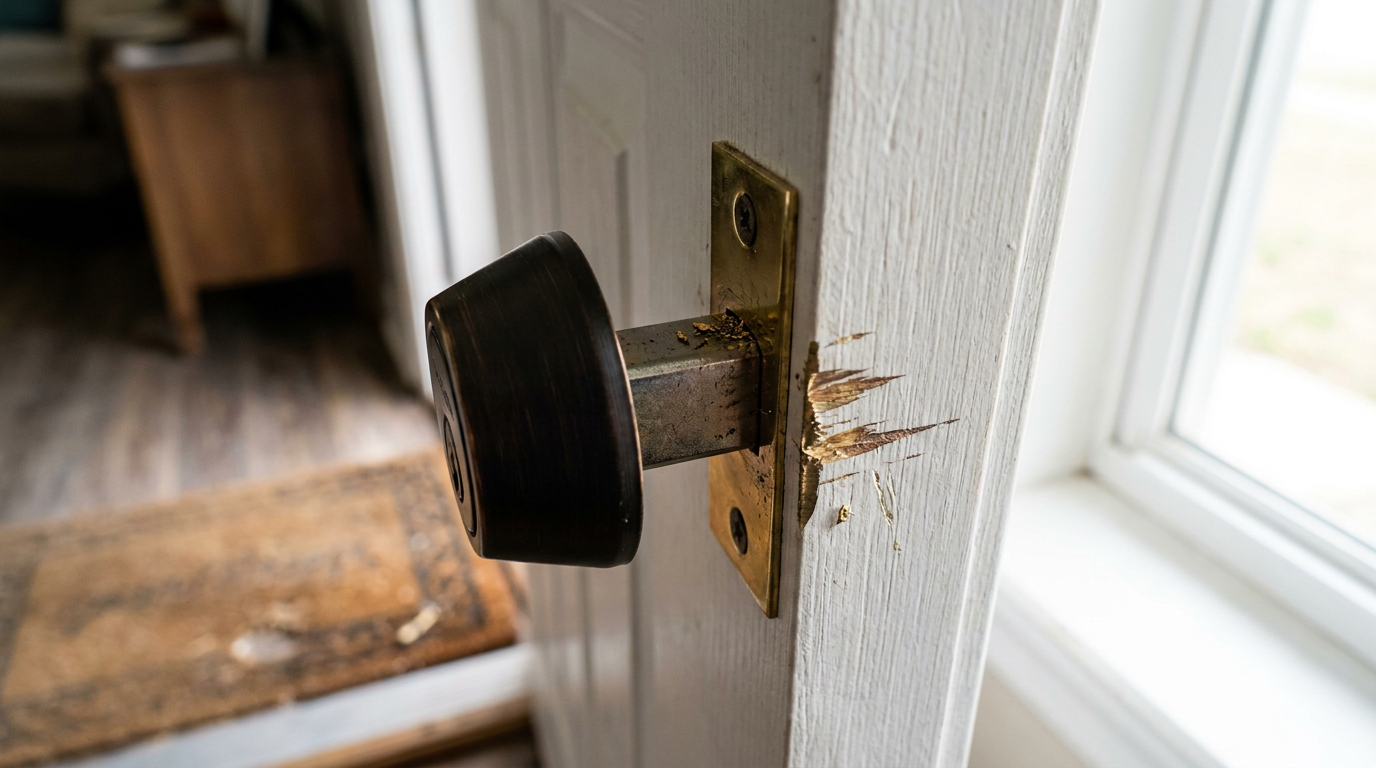
Inspect the Strike Plate Alignment — If the lock only sticks when the door is closed, this is probably the culprit. Take a close look at the metal plate on the frame. You’ll probably see scrape marks or shiny spots where the bolt’s been hitting the plate instead of sliding cleanly into the hole. The bolt shouldn’t touch the strike plate at all as it extends.
-
Adjust the Strike Plate Position — Most times, house settling makes the door sag just enough that the bolt hits the bottom of the strike plate opening. The fix is to enlarge the hole.
- Tools: Phillips head screwdriver, coarse metal file (a Dremel with a grinding bit also works great).
- Take the strike plate off. Using your file or Dremel, carefully remove a little metal from the edge of the opening where the bolt was rubbing—usually the top or bottom edge. You’re only taking off about 1/16 of an inch. Put the plate back on and test the door. If you need to, repeat it and take off a hair more until the bolt slides in and out cleanly without touching anything.
-
Deepen the Bolt Hole — If the bolt is hitting the back of the hole in the frame before it can fully extend, the hole just isn’t deep enough. I see this a lot when somebody puts a new lock with a longer 1-inch throw on an older door.
- Tools: Chisel or a large drill bit (e.g., 1-inch spade bit).
- Remove the strike plate and look into the hole in the wood frame. It should be at least 1 1/8 inches deep for a standard deadbolt. If it’s too shallow, use a chisel to carefully remove wood from the back of the hole, or use a spade bit to bore it out a bit deeper. Reinstall the strike plate and test it.
-
Check for a Swollen Door — In the humid North Texas summers, wood doors can swell up with moisture and fit too tight in the frame. That pressure can make a deadbolt bind. If your door’s snug at the top or side and the lock only sticks during humid months, that could be it. The long-term fix is sealing the door properly, especially the top and bottom edges, or sometimes planing a little wood off the side. I pulled a water heater in Frisco last month that had exactly this kind of seasonal swelling at the pantry door next to it—same story, same headache.
Common Causes
- Lack of Lubrication: This is the #1 culprit. Locks are metal-on-metal machines, and they need lubricant to cut friction, but folks almost never think to do it.
- Loose Hardware: The vibration from opening and closing a door thousands of times can back out the main mounting screws, which throws the cam and cylinder out of line.
- Strike Plate Misalignment: Houses settle. Doors sag. That’s especially true around Dallas-Fort Worth, where expansive clay soil does its thing. A shift of just 1/16 of an inch can be enough to make a deadbolt bind against the strike plate.
- Debris in Keyway: Dust, pocket lint, and even tiny metal shavings from worn keys can build up inside the cylinder and keep the pins from setting right.
- Worn or Damaged Key: An old, worn key or a lousy duplicate won’t lift the pins to the exact shear line, so the cylinder drags. Try a different key, preferably one you don’t use much.
- Internal Wear: After 15-20 years of use, the guts of the lock—the cam, actuator, and the rest of it—can just be worn out. If the lock’s old and lubricant doesn’t change a thing, replacement might be the smart move.
Common Mistakes
- Using WD-40 or Oily Lubricants. This is the big one. Wet lubricants like WD-40, oil, or grease pull in dirt like a magnet. Sure, they may help for a minute, but they’ll gum up fast and make the problem worse down the road. Always use a dry lubricant like graphite or a silicone-based product made for locks.
- Filing the Wrong Part. People sometimes file the deadbolt latch itself instead of the strike plate. Don’t do that. The bolt is made to a specific size. The adjustment belongs at the strike plate on the fixed frame.
- Overtightening the Screws. Once you find loose mounting screws, it’s tempting to crank them down like you mean it. That can warp the housing or strip the threads. Tighten until they’re snug and the lock body doesn’t wiggle. That’s it.
- Ignoring the Real Problem. Spraying lubricant into a lock that’s binding because of bad alignment is just a band-aid. If it works with the door open but not when it’s closed, the real issue is alignment. Fix that first instead of trying to bully the lock through it with spray.
Cost & Time Breakdown
Fixing a sticky deadbolt is one of the cheapest DIY repairs you can do. For most fixes, the only cost is a can of lubricant.
| Task | DIY Cost | Pro Cost | Time |
|---|---|---|---|
| Lubricating the Lock | $5 - $10 | $75 - $125 | 10 minutes |
| Tightening Hardware | $0 | $75 - $125 | 5 minutes |
| Adjusting Strike Plate | $0 - $15 (for a metal file) | $100 - $175 | 20-30 minutes |
| Replacing the Deadbolt | $30 - $75+ | $150 - $250+ | 30-45 minutes |
Tips & Prevention
- Lubricate Annually. Make it a habit. Once a year, give every keyhole in the house a quick puff of compressed air and a shot of dry lock lubricant. The start of winter’s a good time, right before temperature swings can mess with door alignment.
- Check Screws Twice a Year. Every six months, grab a screwdriver and make sure the mounting screws on your deadbolts and door knobs are snug. Takes maybe 30 seconds per door.
- Don't Force a Stuck Key. If a key’s hard to turn, don’t lean all your weight on it. You can bend the key or, worse, snap it off inside the lock. Wiggle it gently while applying light turning pressure.
- Use High-Quality Keys. Skip the cheap flimsy duplicates. Go to a decent locksmith or hardware store that uses quality brass blanks. Badly cut keys wear out the pins faster.
- Address Door Sag Promptly. If your door starts dragging on the threshold or the gap around the frame looks uneven, don’t wait around. Tighten the hinge screws—use longer 3-inch screws on the top hinge so they bite into the stud—and pull the door back into alignment before it starts messing with the lock.
When to Call a Professional
Most sticky lock problems are DIY-friendly, but there are times to bring in a locksmith. If you’ve gone through all the steps above and the lock still binds, the internal mechanism is probably worn out or broken. If a key snaps off in the lock, a pro’s got the extraction tools to get it out without trashing the cylinder. And if the real problem is a badly sagging or warped door that needs planing or major frame work, that’s usually better left to an experienced carpenter or handyman so the fit and seal end up right.
Related Articles
Keep troubleshooting with these hand-picked guides from FixlyGuide:
- Why Your Paint is Peeling (And It’s Not Always Bad Prep) — Peeling paint isn't just an eyesore; it often signals deeper issues than just a shoddy paint job. I'll walk you through the real culprits a…
- Why Does My Trim Look Like a Snake Ate It? (The Hidden Culprit) — That wavy, crooked trim isn't just shoddy workmanship—it's often a sign of underlying issues. Learn what causes your trim to warp and how t…
- The 4 Hidden Reasons Your Window Won't Stay Up (And the Easy Fixes) — Before you blame a broken window, learn the common culprits behind window sashes that won't stay open and how to fix them yourself.
- That Drywall Hole Isn't Just Ugly, It's a Bat Signal — Learn the pro-approved method for patching drywall holes of any size. We cover the surprising science behind a lasting repair and common mi…
- The Hidden Cause of Squeaky Hardwood Floors & The Real Fix — That persistent squeak from your hardwood floors isn't just an annoyance; it's a sign of movement. We'll uncover the hidden causes, from hu…
- The Secret Cause of Ceiling Fan Wobble (It's Not Always What You Think) — A wobbling ceiling fan isn't just annoying; it can be a sign of a deeper issue. Learn the common culprits and how to restore balance safely.
Should you do this yourself?
Answer five quick questions before you start. Safety outranks savings every time.
Your experience with work like this
How high do you have to work?
Does the job involve any of these?
Will it need a permit?
Specialty tools
Free and instant. Educational guidance only — not a quote, inspection, or professional diagnosis.
What should this project cost?
Enter your project details for a realistic cost range before you call anyone.
Cost depends heavily on which system turns out to be the source.
- Regional adjustment
- National average
- Labor share (typical)
- ~$1,620
- Quotes to collect
- 3 written estimates
Educational estimate based on national averages — not a binding quote. Always confirm with written local estimates.
Before you start
Check the difficulty, permits, and safety risk — then decide whether to call a pro.
- Estimate this projectGet a cost range for your scope and ZIP before you call anyone.Open
- Get local estimatesSend one request and compare written estimates from vetted pros.Open
Free, no signup required. Estimates are educational guidance, not a quote or an inspection.
Get the print-ready PDF of this guide
A clean, ad-free, printable version you can keep on your phone or pin to the workshop wall. Free with a FixlyGuide account.
- Print-optimized layout
- Tools, materials & every step included
- Saved to your account
Recommended for DIYers & woodworkers
Sponsored
The Top 20 Tools for Workshops of Any Budget
No stationary machines or power tools required — plus 3 fundamental tools that can't be bought at any price.
Get the free guide
Ted's Woodworking — The #1 Woodworking Resource
Detailed instructions, dimensioned drawings, materials & cutting lists, and 3D schematics for every skill level.
See the plansSponsored: links above are affiliate links. FixlyGuide may earn a commission on qualifying purchases — at no extra cost to you.
Frequently asked questions
What is the best lubricant for a sticky deadbolt?+
The best lubricant is a dry formula, like graphite powder or a silicone-based spray made specifically for locks. Avoid wet lubricants like WD-40 or oil, as they attract dust and will gum up the lock mechanism over time.
Why is my deadbolt suddenly hard to turn?+
A sudden change often points to an alignment issue. This can be caused by the house settling, or even significant temperature and humidity swings causing the door or frame to expand or contract slightly. Check if the lock works smoothly when the door is open to confirm an alignment problem.
Can I use WD-40 on my deadbolt lock?+
No, you should not use WD-40 on a lock. It's a solvent and water-displacer, not a true long-term lubricant. It will provide a temporary fix but then attract dirt and grime, making the problem worse in a few weeks.
How do you fix a deadbolt that is not aligned?+
Open the door and observe where the bolt hits the strike plate on the frame. Then, remove the strike plate and use a coarse metal file or a Dremel tool to enlarge the opening slightly in that direction. Reinstall and test until the bolt slides freely.
Why does my key go in but not turn?+
This usually indicates a problem with the lock cylinder's pins. It could be due to debris in the keyway, a badly worn key, or seized pins. Try cleaning the keyway with compressed air and lubricating with dry graphite before calling a locksmith.
How much does it cost to have a locksmith fix a stuck deadbolt?+
A locksmith service call typically costs between $75 and $150, just for the visit. A simple fix like lubrication or a strike plate adjustment might be on the lower end, while a full lock replacement could be $150 to $250 or more, including the new hardware.
Is a sticky deadbolt a security risk?+
Yes. If the bolt is hard to turn, it may not be extending fully into the door frame, making it easier to force open. It can also be a safety hazard in an emergency if it prevents you from exiting your home quickly.
My deadbolt only sticks in the summer. Why?+
This is a classic sign of a wood door swelling due to high humidity. The expanded wood puts pressure on the lock mechanism or causes the door to bind in the frame. Ensure the door is properly sealed on all six sides (including the top and bottom edges) to minimize moisture absorption.

Discussion
Loading comments…