- The $10 Fix for Hardwood Floor Gaps Plumbers Won't Tell You — Seasonal changes cause frustrating gaps in hardwood floors. Learn how to fix them yourself with simple tools and a clever, inexpensive tric…
- The Cupped Hardwood Secret: What Your Floor’s Really Telling You — Don't let cupped hardwood floors get you down. This guide tackles the real reasons your wood floor is warping and how to fix it like a pro.
- The 5-Minute Trick to Fix a Sagging Window (No New Parts Needed) — Discover the simple, often overlooked cause of a window that won't stay open and how to fix it in minutes using common household items.
- Why Your Hardwood Floors Have Gaps in Winter (And When to Worry) — Seeing gaps in your hardwood floors this winter? It's likely caused by low indoor humidity making the wood shrink. Learn what's normal, how…
- Your Door Won't Latch? The 5-Minute Fix Nobody Talks About — Tired of a door that swings open? Learn the secret 5-minute fix for a door that won't latch. This simple adjustment to your strike plate ca…
General remodeling · Renovation planning
| Project category | General remodeling |
|---|---|
| Problem type | Renovation planning |
| Trade required | General contracting |
| Urgency | Planned project |
| Safety risk | Low safety risk |
| DIY suitability | Pro recommended |
| Cost category | Major investment |
| Typical timeline | Design and permitting often 2–4 months before work starts |
| Contractor type | General contractor |
Repair option
Phase the work and fix the building envelope first.
Replacement option
Full renovation with permits, design, and a general contractor.
Common causes
- Space no longer fits how the household lives
- Resale preparation
- Deferred maintenance stacking up
Relevant tools:project cost estimatorcompare quoteshome improvement material prices
Published September 29, 2026Last updated September 29, 2026
Tools & materials you'll need
Affiliate links- AmazonDry lock lubricant (graphite or PTFE)Do NOT use wet lubricants like WD-40
As an Amazon Associate FixlyGuide earns from qualifying purchases — at no extra cost to you. Prices and availability are accurate as of publication and subject to change.
Quick Answer
If your key won't go in the lock, the usual suspects are a badly cut duplicate key, junk inside the keyway, or a bent key. Start simple: look over the key for damage and try a different one. If that doesn't solve it, blow out the keyway with compressed air and use a dry lubricant like graphite.
The Problem
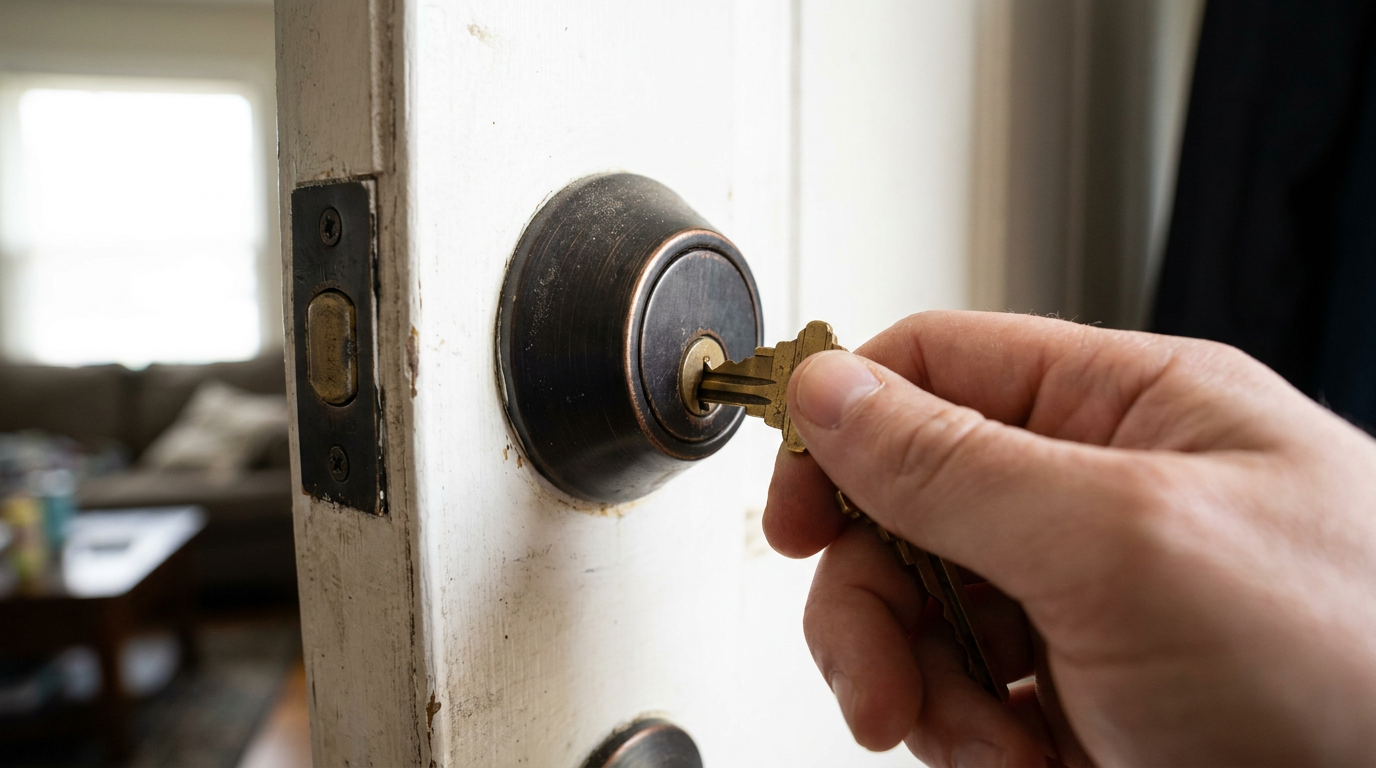
You come up to the door with your hands full, ready to get inside, and then the key just stops cold. Not hard to turn—won't even slide in. You wiggle it. You push a hair harder. Nothing. It's like there's an invisible wall sitting right there in the lock.
That's maddening. And if it's your front door, it can feel a little sketchy too. Is the lock shot? Wrong key? Somebody messing with it from the other side? Most times, no. It's usually something plain and boring: an old lock, a dirty keyway, or a key that's been abused enough to bend out of shape. I pulled a deadbolt in Frisco last month that had exactly this kind of hang-up, and the fix was about as glamorous as you'd expect—clean it, lube it, move on. Good news is, you can usually sort it out yourself in under 15 minutes with a couple basic tools.
How It Works
A standard pin-tumbler lock is pretty slick in its own no-nonsense way. Inside that little cylinder are tiny parts that have to line up just right. The "keyway" is the path your key slides through. As the key goes in, the cuts on the key lift a stack of little "pins" up and down. Those pins come in pairs: a lower "key pin" that rides on the key, and an upper "driver pin" held down by a spring.
When you insert the correct key, its ridges and valleys bump every pin pair to the right height. That lines up the gap between the key pins and driver pins with the "shear line"—the seam between the inner plug and the outer cylinder. Once everything's sitting at the shear line, the plug can spin. You turn the key, the plug turns, and the bolt pulls back. Easy.
But if the key won't even go in, the trouble is happening right at the front. Something's blocking the keyway, the key's shape is off, or the pins inside are stuck down and crowding the entrance. So this isn't a turning issue yet. The key can't even get far enough in to do its job. That's usually obstruction, wear, or lack of lubrication—not some mysterious lock failure.
Step-by-Step Fix
Here's how I handle a key that won't insert. Go in order. Don't skip around.
-
Stop Pushing & Inspect the Key — First thing: quit forcing it. You can bend the key more or mess up the lock, and then you're buying yourself a bigger headache. Pull the key out and look at it close. Is it the original, or some copy of a copy? Is it bent even a little? Lay it on a flat counter and see if it rocks. Check the grooves for nicks, burrs, or gunk. Wipe it off with a rag.
-
Try a Different Key — If you've got another key for that same lock, use it. If the spare slides in, well, there you go—the original key's the problem. It might be worn down, bent, or just a lousy duplicate. Toss the bad one and get a fresh copy made from the key that works. And don't copy a copy if you can avoid it; make it from the original key from the manufacturer if you've got it.
-
Check for Obvious Obstructions — Shine a flashlight right into the keyway. You're hunting for stuff that doesn't belong. Broken key pieces are a big one. I've seen toothpicks, superglue, and enough pocket lint to knit a sweater—people do weird things. If you can see something in there, try easing it out with needle-nose pliers or a stiff wire. Just don't shove it deeper. That'll turn a small problem into a real one.
-
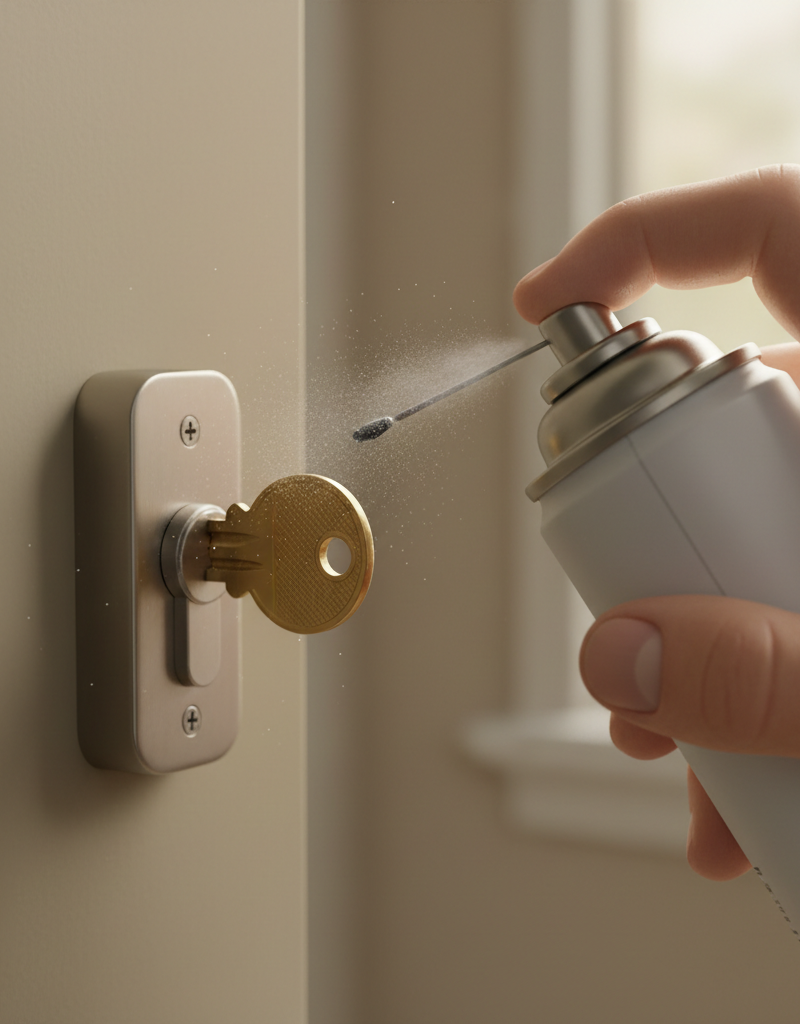
Blast It Out with Compressed Air — This is my first move for cleaning a dirty keyway. Grab a can of compressed air—the keyboard-cleaning kind—and stick the little straw right at the opening. Hit it with several short bursts. Dust, lint, and loose grit usually come right out. Quick and clean. No drama.
-
Apply Dry Lubricant — Now give it lube, but the right kind. CRITICAL: don't use a wet lubricant like WD-40 or oil in a lock. It'll seem fine for a minute, then it starts trapping dirt and turning into sticky crud that gums up the works. That thing's toast if you do that enough. Use a dry lubricant. Graphite lock lube is the classic choice; it usually comes in a little puffer bottle. Put the nozzle into the keyway and give it a couple quick puffs. PTFE-based dry lube spray is another solid pick.
-
Work the Lubricant In — After the graphite or PTFE goes in, try the key again. Easy does it. Don't jam it. Wiggle it up and down, side to side, while you push. You're trying to spread the lube around the pins. Sometimes you need to slide it in and out a dozen times before it loosens up. It ought to get smoother as the stuff works into the tight spots. Wipe the extra off the key so you don't track it all over your hands and jeans.
-
Check for Ice (in Freezing Weather) — If it's below freezing—pretty common here in North Texas during a cold snap—water inside the lock can freeze and block the key. A lock de-icer spray is the right fix. If you're in a pinch, you can warm the key with a lighter or dip it in a mug of hot water, then dry it off and try again. The heat can melt enough ice to get you through. Just don't scorch your hand or melt a plastic key head.
-
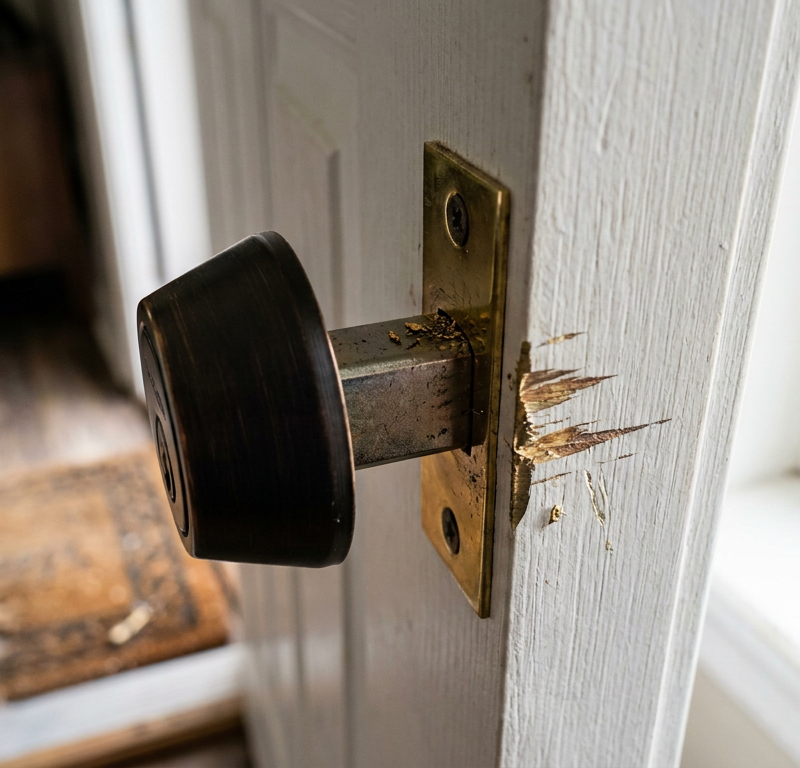
Inspect the Door and Frame Alignment — Sometimes the lock isn't the real problem. The door is. Clay soil in Texas makes foundations shift, and that can let a door sag or a frame move around. Then the deadbolt doesn't line up with the strike plate like it should. That usually makes the lock hard to turn, but bad enough misalignment can also stress the mechanism and keep the key from sliding in smooth. Shut the door and check the gap all the way around. Even gap? Good. Skewed gap? You may be dealing with a hinge issue or something bigger in the foundation.
Common Causes
- Poorly Cut Duplicate Key: This is probably the #1 reason. The copy machine at the hardware store wasn
Related Articles
Keep troubleshooting with these hand-picked guides from FixlyGuide:
- The $10 Fix for Hardwood Floor Gaps Plumbers Won't Tell You — Seasonal changes cause frustrating gaps in hardwood floors. Learn how to fix them yourself with simple tools and a clever, inexpensive tric…
- The Cupped Hardwood Secret: What Your Floor’s Really Telling You — Don't let cupped hardwood floors get you down. This guide tackles the real reasons your wood floor is warping and how to fix it like a pro.
- The 5-Minute Trick to Fix a Sagging Window (No New Parts Needed) — Discover the simple, often overlooked cause of a window that won't stay open and how to fix it in minutes using common household items.
- Why Your Hardwood Floors Have Gaps in Winter (And When to Worry) — Seeing gaps in your hardwood floors this winter? It's likely caused by low indoor humidity making the wood shrink. Learn what's normal, how…
- Your Door Won't Latch? The 5-Minute Fix Nobody Talks About — Tired of a door that swings open? Learn the secret 5-minute fix for a door that won't latch. This simple adjustment to your strike plate ca…
- That Weird Growth on Your Trees: The Quick Fix Most Homeowners Miss — Unsightly moss or lichen covering your trees and shrubs isn't usually dangerous, but it can signal underlying issues. Learn how to safely r…
Should you do this yourself?
Answer five quick questions before you start. Safety outranks savings every time.
Your experience with work like this
How high do you have to work?
Does the job involve any of these?
Will it need a permit?
Specialty tools
Free and instant. Educational guidance only — not a quote, inspection, or professional diagnosis.
What should this project cost?
Enter your project details for a realistic cost range before you call anyone.
Cost depends heavily on which system turns out to be the source.
- Regional adjustment
- National average
- Labor share (typical)
- ~$1,620
- Quotes to collect
- 3 written estimates
Educational estimate based on national averages — not a binding quote. Always confirm with written local estimates.
Get the print-ready PDF of this guide
A clean, ad-free, printable version you can keep on your phone or pin to the workshop wall. Free with a FixlyGuide account.
- Print-optimized layout
- Tools, materials & every step included
- Saved to your account
Recommended for DIYers & woodworkers
Sponsored
The Top 20 Tools for Workshops of Any Budget
No stationary machines or power tools required — plus 3 fundamental tools that can't be bought at any price.
Get the free guide
Ted's Woodworking — The #1 Woodworking Resource
Detailed instructions, dimensioned drawings, materials & cutting lists, and 3D schematics for every skill level.
See the plansSponsored: links above are affiliate links. FixlyGuide may earn a commission on qualifying purchases — at no extra cost to you.
Frequently asked questions
Can I use WD-40 to lubricate my lock?+
No, never use a wet lubricant like WD-40 in a lock. It will attract dust and dirt, creating a sticky sludge that will gum up the pins and eventually ruin the lock mechanism. Always use a dry lubricant like graphite or a PTFE-based spray.
Why does my key work in one lock but not another identical one?+
This usually means the lock that's rejecting the key is worn, dirty, or slightly damaged. Locks develop unique wear patterns over time. A small amount of wear in the key combined with wear in the lock can cause a failure, while the less-used lock still works fine.
What's the difference between a dry lubricant and a wet one?+
A dry lubricant, like graphite or PTFE, creates a slick surface without being oily or sticky. A wet lubricant like oil or silicone spray remains in a liquid state, which is great for some applications but terrible for locks as it attracts and holds onto grit.
My key goes in but won't turn. Is that the same problem?+
No, that's a different issue. If the key fully inserts but won't turn, it means the pins are not aligning correctly at the shear line. This could be due to a worn key, worn pins, or a problem with the lock's tailpiece or the bolt mechanism itself.
I think part of a key broke off in my lock. What should I do?+
If you can see the broken piece and grab it with needle-nose pliers, you can try to pull it straight out. If it's too deep, do not try to dig it out, as you'll likely damage the pins. This is a job for a locksmith; they have special tools for broken key extraction.
How often should I lubricate my door locks?+
It's good practice to lubricate your main entry door locks once a year as preventative maintenance. A quick puff of graphite lube before winter can prevent a lot of headaches. If you live in a dusty area or near the coast, you might do it every six months.
Why would my house key suddenly stop working?+
The most common reason for sudden failure is debris getting into the keyway—pocket lint is a major culprit. Another cause is the key getting slightly bent, which can happen just from being in your pocket. In cold weather, internal icing is also a strong possibility.
Is a key that's hard to insert a sign the lock is failing?+
It can be an early warning sign. Difficulty inserting a key often means the internal parts are getting worn or gummed up. Cleaning and lubricating it is the first step, but if the problem persists, the lock is likely nearing the end of its service life and should be replaced.

Discussion
Loading comments…