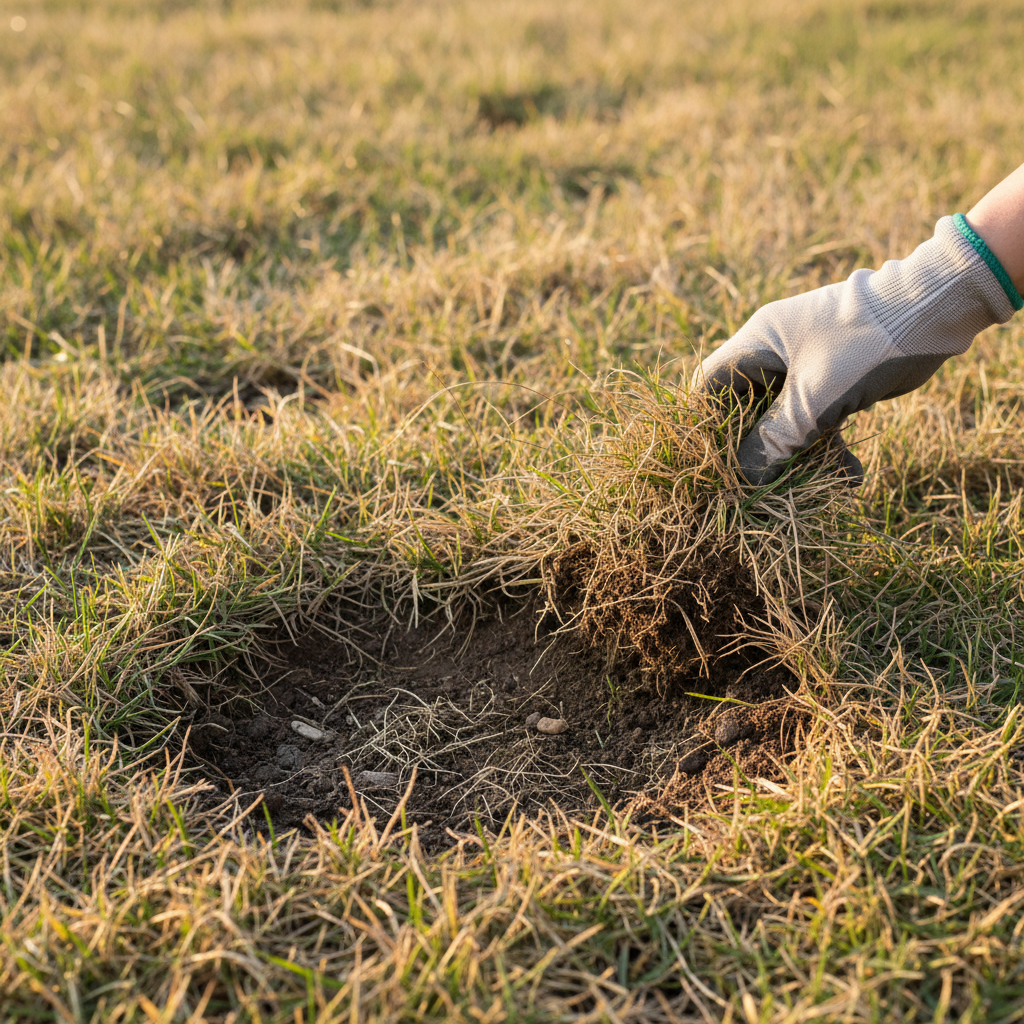
- Assess the Damage & Identify the Culprit — Your first step is always to play detective.
- Check for drought: Is the soil dry and crunchy? Do the blades look thin and curled? If you water it, does it bounce back in a day or two? That’s the easiest fix. Brown patches on slopes or near concrete usually point to dehydration.
- Look for patterns: Are the spots circular (dollar spot, brown patch)? Are they irregular? Do you see a distinct "smoke ring" around the edge of a patch (brown patch)?
- Examine the blades: Look close at individual blades. Are there lesions, spots, or a powdery/rusty coating? That points to fungus. You might need a magnifying glass for dollar spot, which leaves small tan lesions with reddish-brown borders.
- Sniff Test: Believe it or not, some fungal diseases like Pythium blight can give off a pretty nasty odor.
Landscaping · Deck or fence project
| Project category | Landscaping |
|---|---|
| Problem type | Deck or fence project |
| Trade required | Landscaping |
| Urgency | Planned project |
| Safety risk | Moderate safety risk |
| DIY suitability | DIY for experienced homeowners |
| Cost category | High cost |
| Typical timeline | Most builds 3–10 days depending on size |
| Contractor type | Landscaping contractor |
Repair option
Replace failed boards, posts, and hardware; reseal the surface.
Replacement option
Rebuild when framing or the ledger connection is unsafe.
Common causes
- Rot at posts and ledger
- Storm damage
- Adding outdoor living space
Relevant tools:home improvement material pricesproject cost estimator
Published August 29, 2026Last updated August 29, 2026
Tools & materials you'll need
Affiliate links- AmazonGarden trowel or small spadeFor digging up turf to check for grubs.
- AmazonEmpty tuna can or rain gaugeTo measure sprinkler output.
- AmazonGranular spreaderIf applying granular grub control or fungicide.
- AmazonHose-end sprayerIf applying liquid grub control or fungicide.
- AmazonWork glovesFor handling chemicals and protecting hands.
- AmazonGrub killer (carbaryl or trichlorfon for curative, chlorantraniliprole for preventative)Match product to infestation type and timing.
- AmazonLawn fungicide (azoxystrobin or propiconazole)Select based on specific fungal disease, if identified.
- AmazonGrass seed (matching your existing lawn type)For overseeding or patching after treatment.
- AmazonTopsoil or compostFor preparing seedbed if reseeding.
As an Amazon Associate FixlyGuide earns from qualifying purchases — at no extra cost to you. Prices and availability are accurate as of publication and subject to change.
Quick Answer
Those ugly brown patches in your lawn? They usually mean something’s gone sideways, and fast. Most of the time, it’s thirsty turf, a sneaky fungal problem, or a pest party happening under the surface. Figuring out which one it is is half the battle; the other half is hitting it with the right fix, whether that’s a better watering schedule, a dose of fungicide, or kicking some grubs to the curb.
The Problem
I’ve seen it a hundred times: a homeowner calls me up, voice full of panic, “My lawn looked great last week, and now it’s got these massive brown spots!” It’s like your green carpet got hit with a bad case of the measles. Frustrating, sure. Ugly, too. And these aren’t just dry spots, mind you. We’re talking about distinct areas, sometimes irregular, sometimes almost perfect circles, where the grass has just decided to give up the ghost. Leave them alone, and they’ll get bigger and meaner. You can’t ignore a glaring problem like this; your lawn’s telling you it’s sick, and you’ve gotta play doctor.
How It Works
Understanding why your lawn goes from lush to lousy helps a lot in figuring out the fix. Think of your lawn as a living thing — it needs water, nutrients, sunlight, and a decent environment to thrive. When something knocks that balance off, you start seeing symptoms, and brown patches are a big one.
-
Drought Stress: This is the easy one. Grass needs water. When it doesn’t get enough, the blades dry out, curl up, and turn brown. Usually, you’ll see it in sunny spots or on higher ground that dries out quicker. The plant’s just trying to stay alive.
-
Fungal Diseases: Fungi are microscopic troublemakers that love warm, humid weather. They hit the blades or crowns and mess with the plant’s ability to move water and nutrients. Brown patch, dollar spot, and rust are common culprits. They’ll leave different calling cards — rings, coin-sized spots, or a general thinning out. The fungus basically cuts the grass off at the knees.
-
Insect Infestations: Grubs are the big-name offender. These C-shaped beetle larvae — Japanese beetles, June bugs, and the like — live just under the soil and chew roots. No roots, no water or nutrients. Game over. I pulled a water heater in Frisco last month that had exactly this kind of “looks fine till you tug it” problem — same deal with lawns. If grubs are the issue, you can often lift dead turf like a rug. Other pests like chinch bugs or sod webworms chew the blades themselves and leave the lawn looking rough.
-
Nutrient Deficiencies: This one’s less likely to cause a sharp brown patch all by itself, but a bad lack of nitrogen or iron can weaken the grass enough to make it go downhill fast. Sometimes it starts yellow, then slides into browning.
-
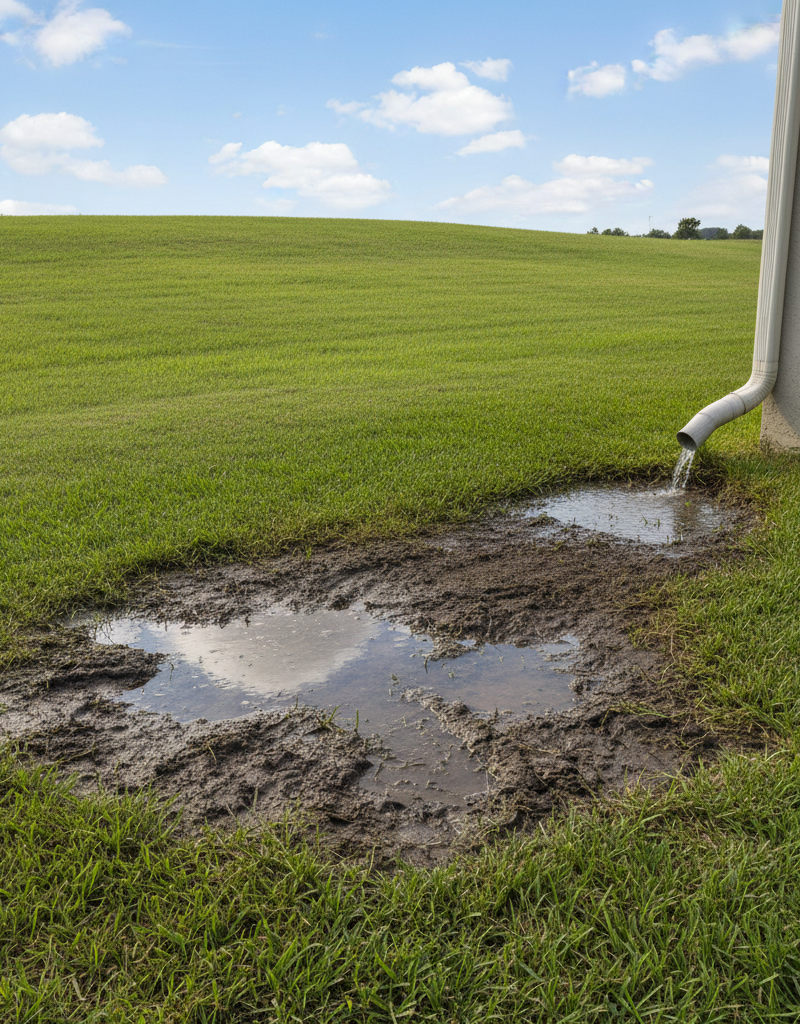
Soil Compaction/Poor Drainage: Roots need air. When soil gets packed tight — from heavy foot traffic, equipment, or just plain stubborn clay — water doesn’t drain right and oxygen can’t get down to the roots. That leaves you with shallow, stressed grass that browns out in high-traffic areas or low spots.
-
Chemical Spills/Burns: Too much fertilizer, gasoline, or even pet urine can burn the grass and leave localized brown spots. These usually have pretty sharp edges, which gives them away.
So when you see those brown spots, it’s not just dying grass; it’s your lawn waving a red flag about something deeper in the soil or the environment. Your job is to figure out which one’s doing the damage.
Step-by-Step Fix
Before you start dumping chemicals everywhere, you’ve gotta figure out what’s actually going on. Otherwise, you’re guessing, and that’s a good way to burn time, waste money, or make a mess of the whole yard. I’ve seen folks drown a lawn with water when it was clearly a fungus problem — just made the fungus happier. Remember the house in Fairhaven a few years back? Guy was convinced it was drought, kept watering, and the brown patch blew up overnight. We had to hit it with a strong fungicide after that.
-
Assess the Damage & Identify the Culprit — Your first step is always to play detective.
- Check for drought: Is the soil dry and crunchy? Do the blades look thin and curled? If you water it, does it bounce back in a day or two? That’s the easiest fix. Brown patches on slopes or near concrete usually point to dehydration.
- Look for patterns: Are the spots circular (dollar spot, brown patch)? Are they irregular? Do you see a distinct "smoke ring" around the edge of a patch (brown patch)?
- The Tug Test for Grubs: Grab a handful of brown grass and give it a tug. If it lifts up easy, like a piece of sod, and you find little C-shaped white worms (grubs) underneath, you’ve found your pest. They’re typically 1/2 to 1 inch long. Check a few spots, not just one.
- Examine the blades: Look close at individual blades. Are there lesions, spots, or a powdery/rusty coating? That points to fungus. You might need a magnifying glass for dollar spot, which leaves small tan lesions with reddish-brown borders.
- Sniff Test: Believe it or not, some fungal diseases like Pythium blight can give off a pretty nasty odor.
-
Adjust Watering Habits — Often, the simplest solution is the right one.
- If you suspect drought, water deeply and infrequently. Shoot for 1 inch of water per week, split into one or two sessions, not every day. That pushes roots deeper. I like to set out an empty tuna can to see what the sprinklers are really putting down. When it fills up, you’re there.
- Water in the early morning (before 10 AM) so the grass can dry before nightfall. That matters, because wet blades sitting around all evening are basically a welcome mat for fungus.
-
Treat for Grubs (If Confirmed) — Don’t guess here.
Related Articles
Keep troubleshooting with these hand-picked guides from FixlyGuide:
- The 3 Hidden Reasons Your Sprinkler Head Won't Pop Up (And How to Fix Them) — Frustrated by a sprinkler head that won't rise? Discover the top three culprits behind this common irrigation issue and how to resolve them…
- The #1 Mistake Turning Your Healthy Lawn Brown After Watering — Discover the hidden culprit behind brown spots appearing in your lawn immediately after watering and learn how to correct this common mista…
- The $5 Mistake Turning Your Summer Lawn Yellow (It Is NOT Dehydration) — Don't just blame the sun; a common, inexpensive mistake is likely stealing your lawn's green glow and leaving it parched despite your best…
- The #1 Mistake Turning Your Healthy Lawn Brown After Watering — Discover the crucial mistake many homeowners make that causes brown spots in their lawn right after watering, and how to fix it.
- The 3 Mosquito Breeding Secrets Hiding In Your Yard (Even If You Spray) — Discover the hidden breeding grounds in your yard that keep mosquitoes coming back, even after professional spraying, and learn how to elim…
- The 5 Hidden Culprits Behind Your Drafty Windows (and the $15 Fix) — Don't let drafty windows steal your home's warmth and inflate your energy bills; learn how to diagnose and seal common air leaks yourself.
Should you do this yourself?
Answer five quick questions before you start. Safety outranks savings every time.
Your experience with work like this
How high do you have to work?
Does the job involve any of these?
Will it need a permit?
Specialty tools
Free and instant. Educational guidance only — not a quote, inspection, or professional diagnosis.
What should this project cost?
Enter your project details for a realistic cost range before you call anyone.
Cost depends heavily on which system turns out to be the source.
- Regional adjustment
- National average
- Labor share (typical)
- ~$1,620
- Quotes to collect
- 3 written estimates
Educational estimate based on national averages — not a binding quote. Always confirm with written local estimates.
Get the print-ready PDF of this guide
A clean, ad-free, printable version you can keep on your phone or pin to the workshop wall. Free with a FixlyGuide account.
- Print-optimized layout
- Tools, materials & every step included
- Saved to your account
Frequently asked questions
How do I tell the difference between drought stress and a lawn disease?+
Drought-stressed grass usually has a uniform brown color, feels brittle, and will often green up again after a good, deep watering. Lawn diseases often show distinct patterns like circular spots or rings, or lesions on individual blades, and usually don't respond to just watering.
When is the best time to apply grub control?+
For preventative grub control, apply in late spring to early summer (May-July) to kill young grubs before they do major damage. If you have an active infestation with visible grubs and dying grass, apply a curative product in late summer or early fall (August-September) when grubs are actively feeding.
Can over-fertilizing cause brown spots?+
Absolutely. Applying too much fertilizer, especially granular products, can cause a chemical burn on the grass, leading to brown patches. Always follow the product label's recommended rates and spread evenly.
What's the 'tug test' for grubs?+
The tug test involves pulling on a patch of dead or browning grass. If it lifts up easily, like a piece of carpet, and you see C-shaped white grubs underneath, you likely have a grub infestation. This indicates the roots have been chewed away.
My brown spots are perfectly circular, what could it be?+
Perfectly circular brown spots often point to fungal diseases like dollar spot (small, silver-dollar sized) or brown patch (larger, up to several feet across, sometimes with a 'smoke ring' appearance). Pet urine can also cause distinct circular brown spots, often with a greener ring around the outside.
Should I reseed brown patches immediately?+
It's best to identify and treat the underlying problem first. Reseeding without addressing the cause (like grubs or fungus) will likely lead to the new grass dying as well. Once the problem is resolved, then you can overseed or reseed the affected areas, ideally in the fall or early spring.
How often should I water my lawn to prevent brown spots?+
Aim for deep, infrequent watering, about 1 inch of water per week, applied in one or two sessions. This encourages deep root growth, making the grass more resilient to drought. Watering in the early morning is best to allow the blades to dry, preventing fungal issues.
What kind of grass is most resistant to brown patches?+
Certain grass varieties are more naturally resistant to common diseases and stressors. For cool-season grasses, look for disease-resistant cultivars of Kentucky Bluegrass or Tall Fescue. For warm-season grasses, Zoysia and Bermuda grass are generally quite robust, though no grass is completely immune.

Discussion
Loading comments…