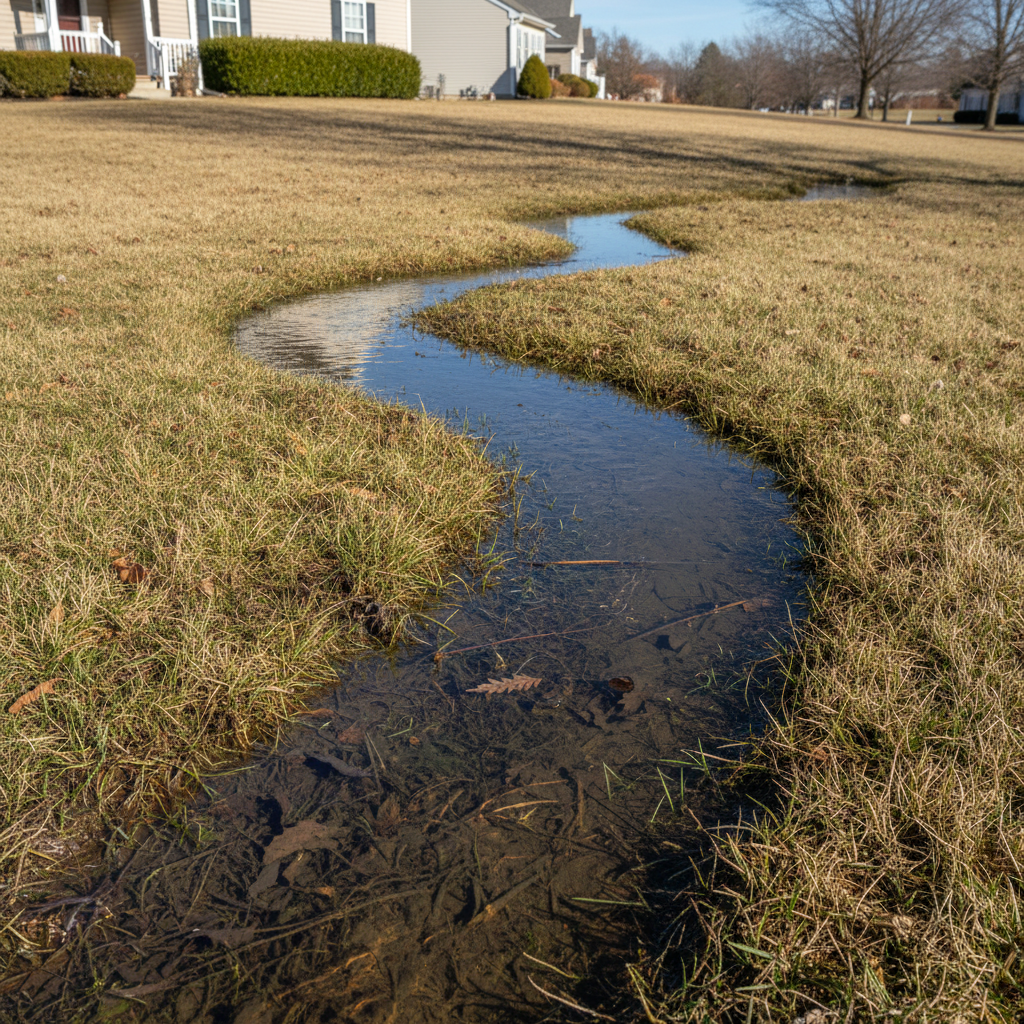
- The Water Beading Test — Identify hydrophobic soil
- Take a handful of dry soil from the bad area and drop it in a cup. Put a few drops of water on it. If the water beads up, sits there, and fights to soak in for several seconds or even a minute, you’re probably dealing with hydrophobic soil.
- Pro Tip: This one shows up a lot in dry, sandy yards. It can also show up right alongside compaction.
Landscaping · Deck or fence project
| Project category | Landscaping |
|---|---|
| Problem type | Deck or fence project |
| Trade required | Landscaping |
| Urgency | Planned project |
| Safety risk | Moderate safety risk |
| DIY suitability | DIY for experienced homeowners |
| Cost category | High cost |
| Typical timeline | Most builds 3–10 days depending on size |
| Contractor type | Landscaping contractor |
Repair option
Replace failed boards, posts, and hardware; reseal the surface.
Replacement option
Rebuild when framing or the ledger connection is unsafe.
Common causes
- Rot at posts and ledger
- Storm damage
- Adding outdoor living space
Relevant tools:home improvement material pricesproject cost estimator
Published September 7, 2026Last updated September 7, 2026
Tools & materials you'll need
Affiliate links- AmazonLong screwdriver or metal rodFor compaction test
- AmazonSmall hand trowel or spadeFor thatch test
- AmazonCupFor hydrophobic soil test
- AmazonCore aerator1 · Rent from a tool rental store
- AmazonPower dethatcher (verticutter)1 · Rent from a tool rental store
- AmazonGarden rake or heavy-duty leaf rakeFor cleanup or manual dethatching
- AmazonGarden gloves
- AmazonSafety glassesWhen operating power equipment
As an Amazon Associate FixlyGuide earns from qualifying purchases — at no extra cost to you. Prices and availability are accurate as of publication and subject to change.
Quick Answer
Ever stand there after a decent rain, look at your sad brown lawn, and think, “What the heck?” You’re not losing your mind. A lawn can look parched right after a shower because the water never made it down where it counts—at the roots. Compacted soil, a heavy thatch layer, or soil that’s gone hydrophobic are usually the usual suspects. The good news? There’s a fix for each one.
The Problem
I’ve seen this one a hundred times. Folks call me up irritated, saying, “My lawn looks dry, but it just rained!” or “I’ve been watering and it’s still brown!” And yeah, it’s baffling if you don’t know what’s happening under the surface. You’ll see puddles, feel damp ground, but the blades are still curled up, stressed out, and maybe shifting from green to that ugly yellow-brown. The lawn’s practically hollering for a drink, but the water’s not getting there. This isn’t just a cosmetic gripe, either. If turf stays thirsty long enough, even with water around, it weakens fast and starts inviting disease, pests, and eventually dead spots. We’ve gotta figure out why that water isn’t sinking in.
How It Works
Think of your lawn like a system, and water’s the lifeblood. Grass stays healthy when water soaks through the top layer of soil and gets to the root zone—usually the top 4 to 6 inches for most turf grasses. Capillary action does its little science trick, pulling moisture downward, and the roots take it from there and feed the blades. Simple cycle. Unless something gums it up.
First problem: soil compaction. Over time, foot traffic, heavy gear, even just plain old gravity can press soil particles tight together. Once that happens, those tiny air spaces that let water and nutrients move around get squeezed shut. Pouring water into compacted soil is like trying to soak a brick. No dice. It runs off or just sits there until it evaporates.
Then there’s thatch. That’s the layer of dead and living organic junk—clippings, roots, stems—that builds up between the green grass and the soil. A thin layer, around a half-inch, isn’t a bad thing. It can actually help a bit, like mulch. But once it gets thick, an inch or more, it starts acting like a sponge that hogs the water before it ever reaches the dirt. Roots can even grow up into that mess, which leaves them exposed and drying out fast.
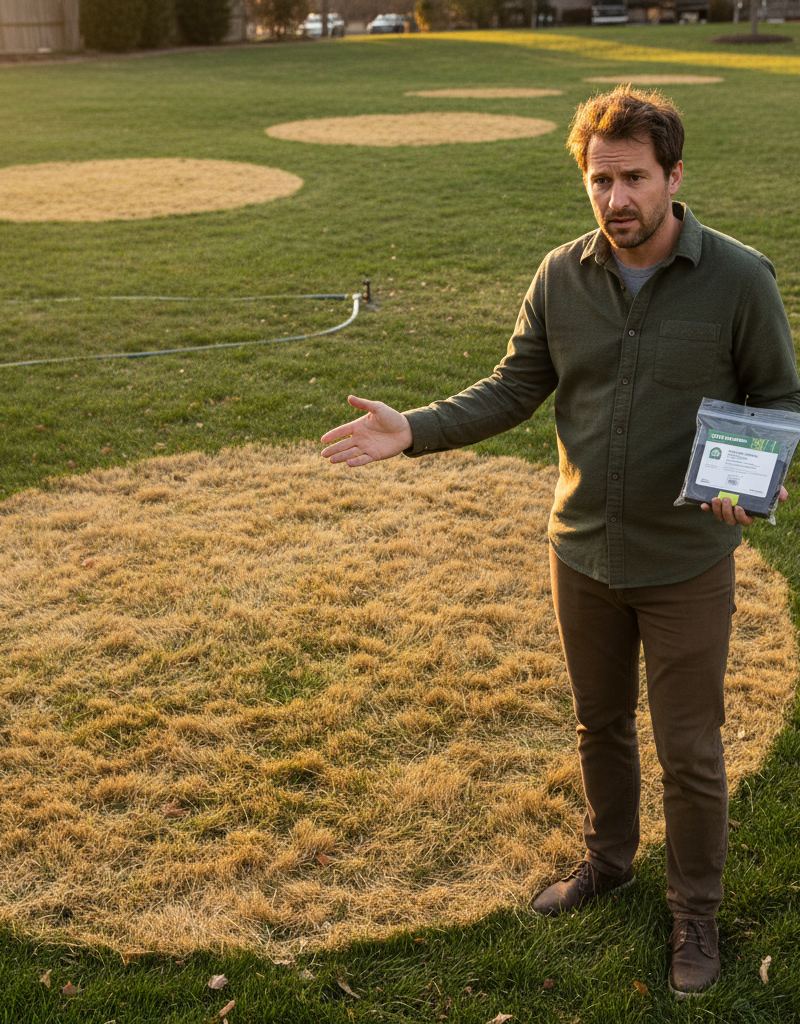
Last one: hydrophobic soil. Fancy term, simple meaning—“water-fearing.” Sometimes waxy coatings or organic compounds on the soil particles, especially in sandy ground or after a long dry spell, make the dirt repel water. It beads up and refuses to soak in. Hard to spot if you don’t know what you’re looking for, but I’ve run into it plenty. I pulled up to a place in Scottsdale last summer where the yard looked like a bake sale tray—watered it for an hour and still got almost nothing but runoff.
Step-by-Step Fix
Alright, let’s get after it. Figuring out why your lawn won’t absorb water is step one. Then we use the right fix instead of just throwing water at the problem and hoping for the best.
-
The Screwdriver Test — Check for compaction
- Grab a long screwdriver or a metal rod. After a good rain or watering, try pushing it into the lawn. If it slides in 6-8 inches with not much fuss, compaction probably isn’t the big issue. If you’re fighting to get past 2-3 inches, bingo. That’s compacted soil.
- Tip: Check a few spots. One part of the yard might be fine while another’s packed hard.
-
The Thatch Check — Look for a spongy layer
- Head to a stressed area and use a trowel or small hand spade to cut out a little pie-shaped wedge of turf, about 3-4 inches deep. Gently lift it and look at the side profile. See that brown, spongey layer between the blades and the soil? Measure it. If it’s thicker than about half an inch, thatch is part of your problem.
- Caution: Don’t slice into irrigation lines. Know where they’re buried before you start digging.
-
The Water Beading Test — Identify hydrophobic soil
- Take a handful of dry soil from the bad area and drop it in a cup. Put a few drops of water on it. If the water beads up, sits there, and fights to soak in for several seconds or even a minute, you’re probably dealing with hydrophobic soil.
- Pro Tip: This one shows up a lot in dry, sandy yards. It can also show up right alongside compaction.
-
Aerate the Living Daylights Out of It — Solve compaction
- If compaction’s the issue, core aeration is your best friend. The machine pulls little plugs of soil and leaves behind a pile of tiny channels for water, air, and nutrients to move through. You can rent one from most tool rental places—they’re heavy, sure, but you can handle it.
- Timing: Do it in spring or early fall when the grass is actively growing and can bounce back. Don’t do it in brutal heat or during drought.
- How To: Make two passes, crossing the first one, so you cover the yard well. Leave the plugs on top; they’ll break down and feed the soil.
-
Dethatch When Needed — Remove excess thatch
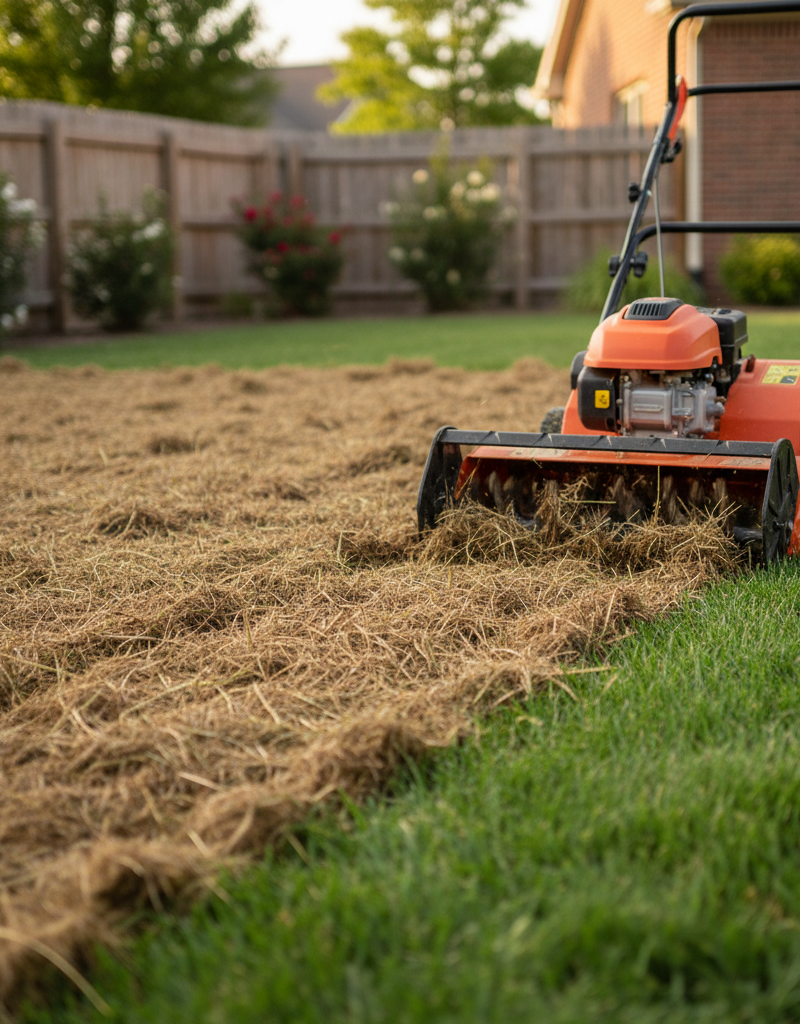
- If the thatch layer is over an inch thick, it’s time to dethatch. Rent a power dethatcher—some folks call it a verticutter—or use a stiff rake if you’re only dealing with a small area. You’re trying to tear out that matted dead stuff, plain and simple.
- Warning: Dethatching can beat up a lawn pretty good. Don’t go overboard, and follow up with watering and fertilizer so the grass can recover.
- Frequency: Only do it when you really need to, maybe every 1-3 years depending on grass type and how you maintain it.
-
Apply a Wetting Agent — Tackle hydrophobic soil
- For hydrophobic soil, a liquid soil wetting agent, also called a soil surfactant, can help. It lowers the water’s surface tension so it can soak in easier. Apply it the way the label says, usually with a hose-end sprayer.
- Follow-up: You’ll probably need to reapply now and then, especially in trouble spots, until the soil starts behaving.
-
Topdress with Organic Matter — Improve soil structure
- After aerating or dethatching, think about topdressing with a thin layer—about 1/4 to 1/2 inch—of good compost. Rake it out evenly. That adds organic matter and helps with soil structure, water retention, and microbial activity over time. Slow fix? Yep. Good fix? Absolutely.
- Material: Use fine screened compost. Skip the chunky stuff.
-
Adjust Your Watering Habits — Deep and infrequent
- Once you’ve handled the root problem, water the right way. Deep, infrequent watering pushes roots deeper, which makes the grass tougher. Aim for 1 inch of water per week, in one or two sessions, instead of little daily sprinkles. Use a rain gauge or even a tuna can to see what your sprinklers are actually putting out.
- Time of Day: Water early in the morning, between 4 AM and 8 AM, so you lose less to evaporation and the blades dry before nightfall. That helps cut down disease, too.
Common Causes
- Compacted Soil: Heavy foot traffic, kids running around, pets, parking cars on the lawn, or construction work can pack soil tight and squeeze out the air and water pockets. Clay soil is especially bad about this.
- Excessive Thatch Buildup: Leaving clippings behind in excess, over-fertilizing, or certain grass types like Bermuda or Zoysia can build a thick thatch layer that water can’t punch through.
- Hydrophobic Soil: You’ll see this a lot in sandy areas or spots that’ve been bone-dry for a long stretch. Organic compounds coat the soil particles and make them repel water.
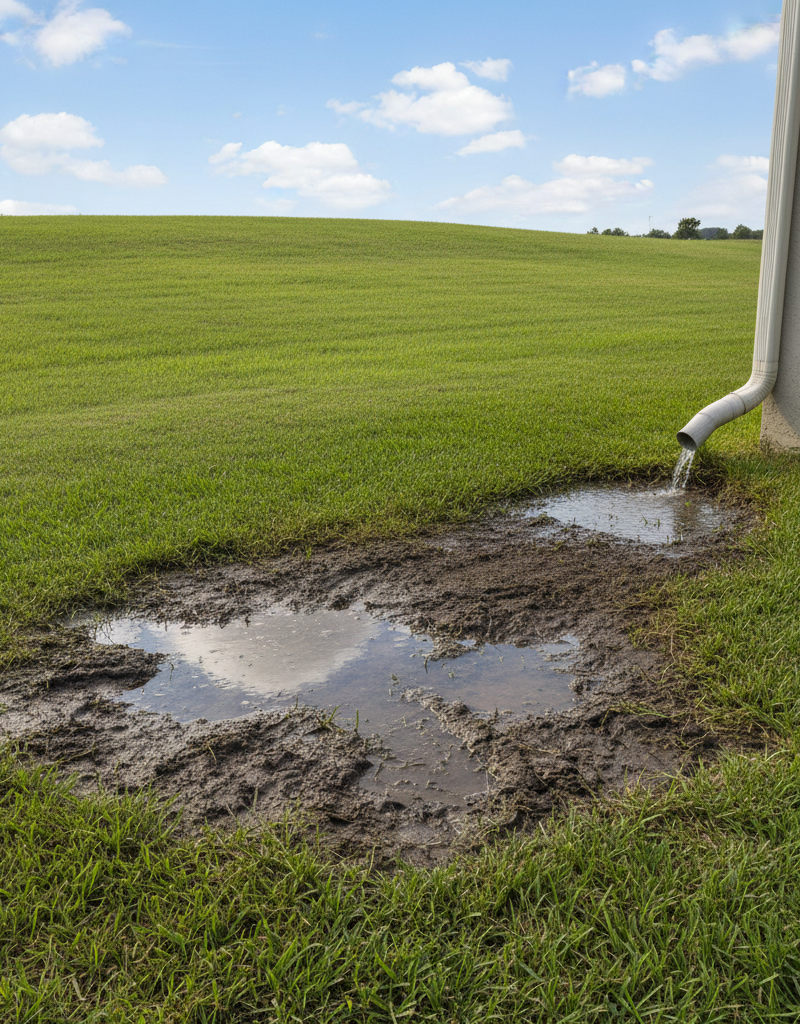
- Poor Grading/Drainage: This one’s not strictly a soil absorption issue, but bad grading can send water running off before it has a chance to soak in.
- Underlying Soil Type: Clay drains slow as molasses, while sandy soil drains too fast. Either one can leave you with drought-looking grass if you don’t manage it right.
Common Mistakes
- Watering More When the Lawn Looks Dry: Classic mistake. The grass looks thirsty, so you water more, but if the water isn’t getting in, you’re just wasting water and maybe feeding fungus on the surface. Fix the penetration issue first.
- Dethatching Too Aggressively or Too Often: A little thatch is fine. Ripping it all out every year just stresses the lawn for no good reason. Wait until it’s really a problem—over 1 inch thick.
- Aerating at the Wrong Time: If you aerate in peak summer heat or during winter dormancy, the grass may not recover well. Spring or fall is the safe bet.
- Ignoring the Screwdriver Test: Guessing at the problem without doing a simple test can send you down the wrong road and cost you time and money.
- Not Topdressing After Major Work: After aeration or dethatching, your lawn’s ready for amendments. Skipping compost is leaving money on the table.
- Assuming All Brown Spots Are the Same: Dry-looking grass can also be grubs, disease, or dog urine. Always do a little detective work before you start tearing things up. I had a guy in Frisco last month who was ready to rip out half his yard for compaction—turned out his lab had picked one favorite corner and nuked it every day.
Cost & Time Breakdown
Here
Related Articles
Keep troubleshooting with these hand-picked guides from FixlyGuide:
- Why Your Lawn's Still Yellow After Fertilizing (And What to Do Tonight) — If you've fed your lawn and it's still looking pale, you're likely dealing with a pH imbalance or compacted soil, preventing nutrient absor…
- The 3 Hidden Reasons Your Sprinkler Head Won't Pop Up (And How to Fix It FAST) — Discover the most common reasons your sprinkler head isn't popping up and follow our step-by-step guide to quickly diagnose and fix the iss…
- The #1 Mistake Killing Your Summer Lawn (And How to Fix It in a Weekend) — Overwatering is the silent killer behind many yellow summer lawns, often mistaken for drought. Learn how to diagnose and correct drainage i…
- The $5 Mistake Turning Your Summer Lawn Yellow (It Is NOT Dehydration) — Don't just blame the sun; a common, inexpensive mistake is likely stealing your lawn's green glow and leaving it parched despite your best…
- The #1 Summer Lawn Mistake Turning Your Grass Yellow (and How to Fix It) — Discover the most common summer lawn mistake that causes yellowing grass and learn the simple steps to revive your lawn.
- The Hidden Reason Your GFCI Won't Reset (And It's Not Always a Faulty Outlet) — Learn why your GFCI outlet won't reset and how to diagnose and fix the common underlying issues, keeping your home safe.
What should this project cost?
Enter your project details for a realistic cost range before you call anyone.
Cost depends heavily on which system turns out to be the source.
- Regional adjustment
- National average
- Labor share (typical)
- ~$1,620
- Quotes to collect
- 3 written estimates
Educational estimate based on national averages — not a binding quote. Always confirm with written local estimates.
Get the print-ready PDF of this guide
A clean, ad-free, printable version you can keep on your phone or pin to the workshop wall. Free with a FixlyGuide account.
- Print-optimized layout
- Tools, materials & every step included
- Saved to your account
Frequently asked questions
Why does my lawn look dry even after it rains?+
Your lawn might appear dry because rain isn't penetrating the soil due to compaction, a thick thatch layer, or hydrophobic soil. The water is either running off or evaporating before reaching the roots.
How can I tell if my soil is compacted?+
Try pushing a long screwdriver into your lawn after rain. If it's hard to push past 2-3 inches, your soil is likely compacted. Healthy soil allows easy penetration to 6-8 inches.
What is thatch and why is too much bad?+
Thatch is a layer of dead and living organic material between the grass and soil. While a thin layer is beneficial, a thick layer (over 1 inch) acts like a sponge, holding water and preventing it from reaching the soil, starving your grass roots.
What does 'hydrophobic soil' mean?+
Hydrophobic soil means 'water-fearing' soil. It's when soil particles repel water, causing it to bead up and run off instead of soaking in, often due to organic coatings or prolonged dryness.
When is the best time to aerate my lawn?+
The best times to aerate are during the peak growing seasons for your specific grass type—typically spring or early fall. This allows the grass to recover quickly from the process.
Can I fix compacted soil without renting an aerator?+
For small areas, you can use a manual core aerator tool, but for an entire lawn, renting a power core aerator is far more effective and less labor-intensive. Topdressing with compost can also help gradually.
How often should I dethatch my lawn?+
Dethatching isn't an annual chore. Only dethatch when your thatch layer exceeds 1 inch. This might be every 1 to 3 years, depending on your grass type and cultural practices.
What's the right way to water my lawn?+
Water deeply and infrequently. Aim for about 1 inch of water per week, delivered in one or two sessions. Early morning is the best time to water to minimize evaporation and reduce disease risk.
Will adding sand to my lawn help with drainage?+
Contrary to popular belief, adding sand to clay soil can actually make compaction worse, creating a concrete-like mixture. Instead, focus on aeration and incorporating organic matter like compost.
Should I remove the plugs after core aeration?+
No, leave the soil plugs on the lawn. They will naturally break down over a few weeks, returning valuable nutrients and microbes back into the soil.
Discussion
Loading comments…