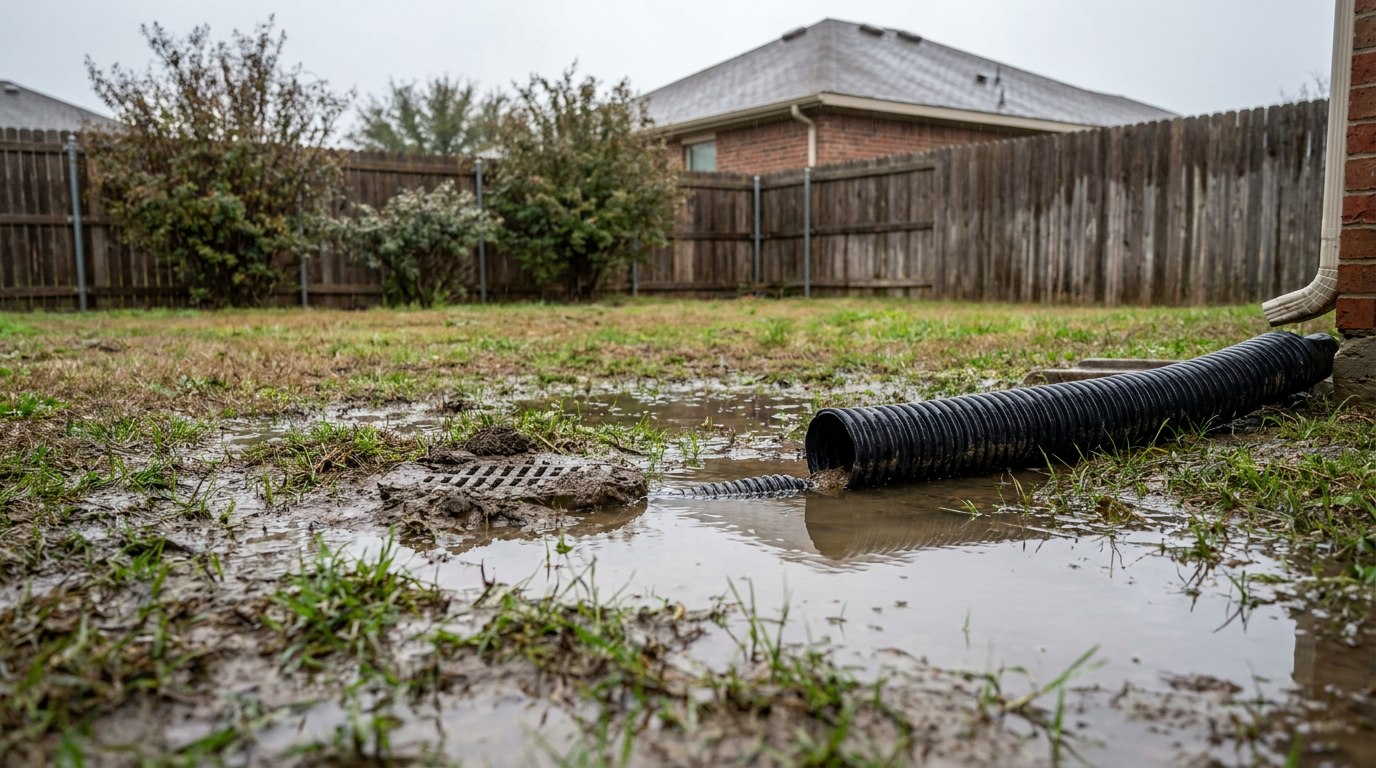
- Compacted Soil: Years of foot traffic, heavy mowers, and plain old settling—especially with clay soil—squeeze the air out of the ground, so it won’t absorb water well.
- Improper Grading: The yard’s either flat as a pancake or, worse, slants toward your foundation and traps water where it shouldn’t be.
- Gutter and Downspout Overload: Clogged gutters or downspouts that dump water right at the foundation are the 1 cause of basement moisture and soaked soil.
- Hardpan Layer: In some yards, there’s a layer of stubborn clay or rock just a foot or two below the surface, and it stops deep drainage cold.
- Increased Runoff: A new patio, a widened driveway, or even a neighbor’s new roof can change how water moves and dump more onto your property than it can handle.
Plumbing · Clog
| Project category | Plumbing |
|---|---|
| Problem type | Clog |
| Trade required | Plumbing |
| Urgency | Soon — within weeks |
| Safety risk | Low safety risk |
| DIY suitability | DIY friendly |
| Cost category | Low cost |
| Typical timeline | Same-day DIY attempt; pro visit within a day or two |
| Contractor type | Licensed plumber |
Repair option
Plunger, hand auger, or trap cleanout before chemicals.
Replacement option
Line replacement when clogs return in the same spot repeatedly.
Common causes
- Hair and soap buildup in the trap
- Grease cooling in the branch line
- Flushed wipes or foreign objects
Relevant tools:diy difficultydiy or hire a pro
Published October 16, 2026Last updated October 16, 2026
Tools & materials you'll need
Affiliate linksAs an Amazon Associate FixlyGuide earns from qualifying purchases — at no extra cost to you. Prices and availability are accurate as of publication and subject to change.
Quick Answer
If your yard floods after heavy rain, it’s usually one of three headaches: compacted soil that won’t soak up water, bad grading that traps water instead of moving it away, or runoff from hard surfaces like your roof and driveway overwhelming the lawn. I’d start with your gutters and downspouts, because that’s the most common and easiest fix when a yard suddenly turns into a mess.
The Problem
You get one of those classic Texas downpours—a real gully-washer—and then for the next three days your backyard’s a swampy, useless bog. The dog comes in with muddy paws, the kids can’t run around, and the mosquitoes seem to show up before the storm even quits. That standing water isn’t just annoying; it can drown your lawn, rot the roots on your pricey shrubs, and put pressure on your home’s foundation. If one corner of the yard turns into “the pond” every time it rains, you’ve got a drainage problem. And no, it doesn’t fix itself. Usually it gets worse, because the soil keeps compacting over time.
How It Works
Your yard is a system, and water’s supposed to move through it. Think of it like plumbing, just outside in the dirt. In a healthy, well-drained yard, rainwater does a couple things: some gets absorbed by the topsoil and roots, and the rest moves across the surface, following the slope—or “grade”—of the land toward a street, storm drain, or alley. A typical North Texas lawn with healthy, uncompacted soil can absorb about 1/2 to 1 inch of rain per hour. Trouble starts when that system gets choked off. Compacted clay soil, common around Dallas-Fort Worth, acts like a dinner plate—water just sits there. If the yard’s graded wrong, you’ve basically built a bowl that catches water right where you don’t want it, usually near the house. Then there’s runoff from all the hard stuff—your roof, driveway, patio. A 1,500-square-foot roof can shed over 900 gallons of water in a single 1-inch rainfall. If you don’t give that water somewhere to go, well, you’re asking for flooding.
Step-by-Step Fix
1. Watch and Wait (The Right Way)
- During the next heavy rain, grab your boots and an umbrella and watch what’s happening. Where’s the water coming from? Where’s it pooling? Snap pictures on your phone. You can’t fix what you haven’t actually seen. Is it a stream from your neighbor’s yard? Water pouring over the gutters? A low spot dead center in the lawn? That first round of observations is gold.
2. Check Your Gutters and Downspouts
- Tools: Ladder, gloves, trowel or gutter scoop.
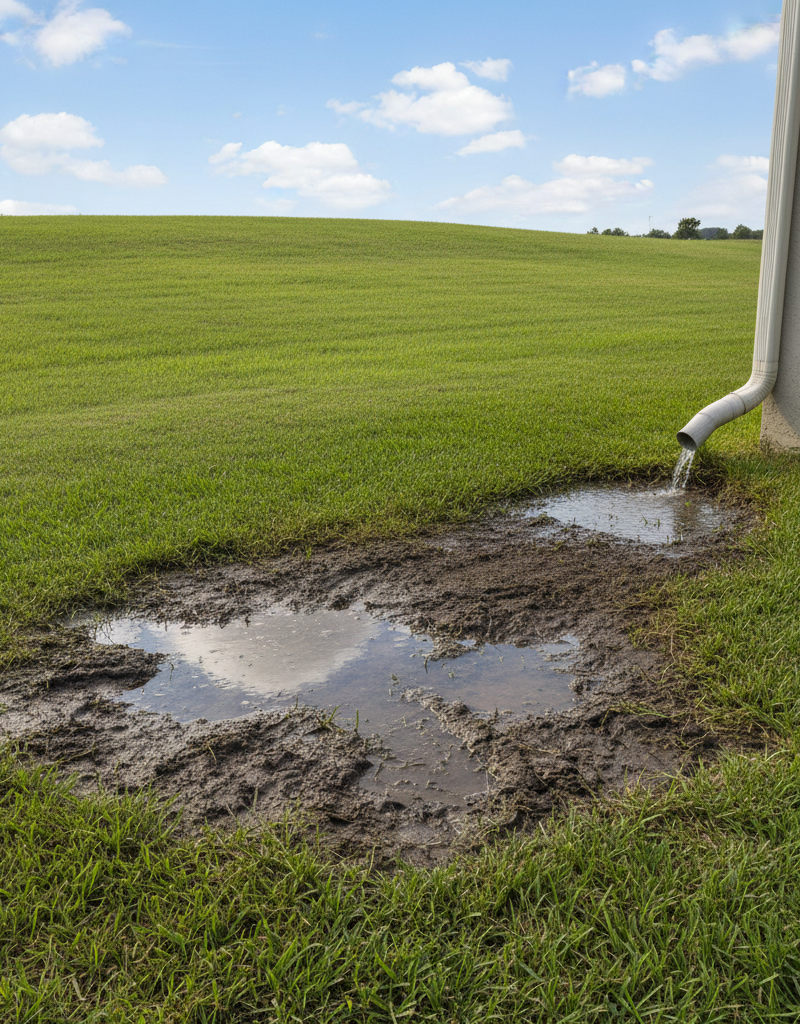
- Start here. This is ground zero. Clogged gutters send water spilling down the siding and soaking the dirt right next to your foundation. Clear out the leaves and junk. Then look at the downspouts. Where are they dumping? If they’re emptying into a flower bed a few feet from the house, that’s a big part of your problem. Cheap fix, too.
3. Extend Your Downspouts
- Tools: Downspout extenders (plastic or metal), hacksaw (maybe).
- Get that roof water away from the foundation. I like to see roof runoff discharged at least 10 feet away from the house. You can pick up corrugated plastic extenders at any home center for less than $20. If you want it cleaner, bury them in a shallow trench—just make sure the outlet stays open and doesn’t get blocked up.
4. Aerate Your Lawn
- Tools: Core aerator (rentable).
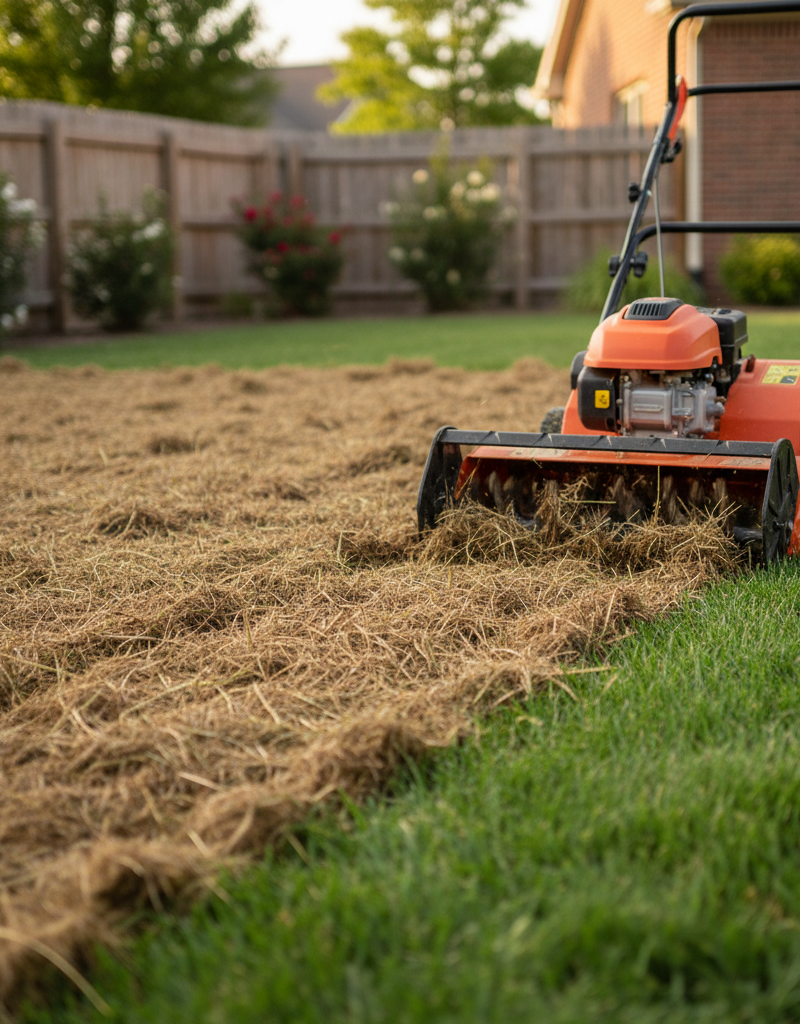
- If the whole yard pools, not just one spot, your soil is probably compacted. That’s especially true with clay. A core aerator pulls out little plugs of soil, which opens paths for air, water, and nutrients to get down where they belong. I tell folks to do this once a year in spring or fall. For a 2,000 sq. ft. lawn, expect to pay around $70–$90 to rent a core aerator for a half-day.
5. Topdress with Compost
- Tools: Wheelbarrow, rake.
- After aerating, spread a 1/4 to 1/2-inch layer of good compost over the lawn and rake it in. That compost helps loosen up clay, improves the soil structure, and feeds the good microbes. It works a lot like a sponge—helps the soil hold water in a healthy way instead of letting it sit on top like a puddle that never asked to be there.
6. Install a French Drain
- Tools: Shovel, trenching spade, level, landscape fabric, gravel, perforated pipe.
- This is the heavy-hitter for a bad drainage spot, like a soggy backyard corner that never dries out. It’s basically a gravel trench with a perforated pipe at the bottom. Water gets collected over a bigger area and moved away. You dig the trench, slope it about 1 inch for every 8 feet, line it with fabric, add gravel, lay the pipe (holes down), add more gravel, and cover it back up. It’s a lot of work, no question, but it’s very effective.
7. Create a Rain Garden
- Tools: Shovel, mulch, native plants.
- Sometimes the smartest move is to use the water instead of fighting it. A rain garden is a shallow dip planted with water-loving native plants. You send one of your downspouts to it, and the garden holds the water for 24-48 hours while it slowly soaks into the ground. It looks good, handles runoff, and beats staring at a muddy hole. I pulled up to a place in Frisco last month where the back corner stayed soggy no matter what—turned out the downspout was dumping straight into a low bed. Same story, different house.
8. Check the Grade
- Tools: Two stakes, string, line level.
- Your yard ought to slope away from the foundation. The rule of thumb is a 2-3% grade, which works out to about a 3-inch drop for every 10 feet. If the ground slopes toward the house, you may need to bring in topsoil and build it up around the foundation. That’s a bigger project, sure, but it’s one of the important ones.
9. Install a Dry Well
- Tools: Shovel, post-hole digger, gravel.
- If you’ve got a stubborn low spot and nowhere to send the water, a dry well can do the trick. It’s basically a big hole filled with gravel, or a prefab plastic basin, that collects water and lets it seep down into the subsoil. Think of it like an underground reservoir. You can tie a French drain or downspout into it, too.
Common Causes
- Compacted Soil: Years of foot traffic, heavy mowers, and plain old settling—especially with clay soil—squeeze the air out of the ground, so it won’t absorb water well.
- Improper Grading: The yard’s either flat as a pancake or, worse, slants toward your foundation and traps water where it shouldn’t be.
- Gutter and Downspout Overload: Clogged gutters or downspouts that dump water right at the foundation are the #1 cause of basement moisture and soaked soil.
- Hardpan Layer: In some yards, there’s a layer of stubborn clay or rock just a foot or two below the surface, and it stops deep drainage cold.
- Increased Runoff: A new patio, a widened driveway, or even a neighbor’s new roof can change how water moves and dump more onto your property than it can handle.
- High Water Table: In some low spots, the natural groundwater sits close to the surface already, especially after a rain.
Common Mistakes
- Ignoring Downspouts: Folks will drop thousands on a French drain when a $15 downspout extender would’ve solved 80% of the issue. Start simple.
- Grading the Wrong Way: Adding soil and accidentally building a dam or a new low spot. Use a line level every time so the slope goes away from structures.
- Using a "Spike" Aerator: Those spike sandals? Mostly junk. They can actually compact the soil more around the holes. You want a core or plug aerator that pulls material out.
- Building Un-Permitted Hardscapes: Throwing in a new patio or shed without thinking through where the water goes is a classic way to create a brand-new drainage headache.
- Planting the Wrong Plants in Soggy Areas: Putting a plant that hates “wet feet” into a low, wet spot is just money down the drain. It’ll die. Pick something that likes moist soil, or fix the drainage first.
Cost & Time Breakdown
| Task | DIY Cost | Pro Cost | Time |
|---|---|---|---|
| Clean Gutters & Extend Downspouts | $20–$50 | $250–$500 | 1–2 hours |
| Core Aeration (rental) | $70–$100 | $150–$250 | 2–4 hours |
| Create a Rain Garden (100 sq ft) | $150–$400 | $1,500–$4,000 | 1–2 weekends |
| Install a French Drain (per 10 ft) | $100–$200 | $1,000–$1,500 | A full weekend |
| Professional Grading | N/A | $2,000–$7,000+ | 2–5 days |
| Install a Dry Well | $250–$500 | $2,500–$5,000 | A full weekend |
Tips & Prevention
- Aerate Annually: Make core aeration part of your spring or fall routine. It’s one of the best things you can do for soil health and drainage.
- Mulch Your Beds: A 3-inch layer of organic mulch helps soak up rainfall, cut down on compaction, and reduce erosion.
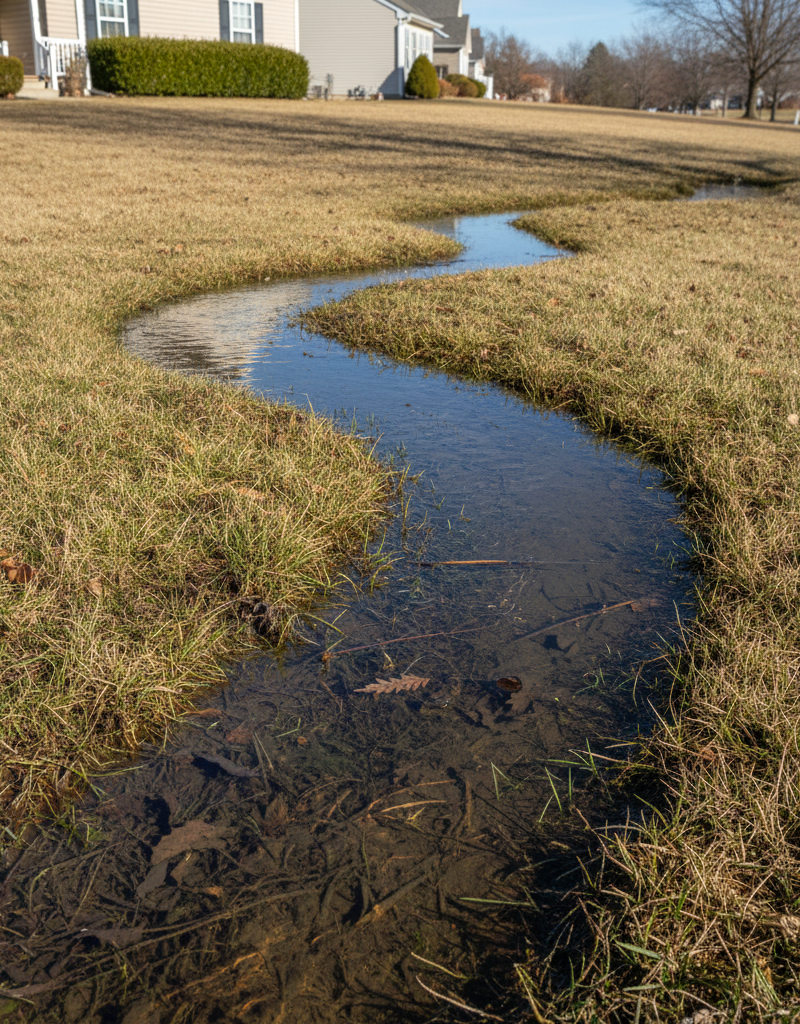
- Observe Your Property Line: Know how water comes in and leaves your yard. If your neighbor’s new landscaping is causing trouble, you may need a friendly conversation or a swale—a shallow grassy channel—to move the water along.
- Clean Gutters Twice a Year: Don’t wait until they’re spilling over. Clean them in late spring and late fall so they keep flowing.
- Stay Off the Lawn When It’s Saturated: Walking on a waterlogged lawn is one of the fastest ways to compact soil. Give it a chance to dry out first.
When to Call a Professional
If you see water pooling against your foundation for more than a few hours, or you’ve got water seeping into your basement or crawlspace, you’re past the DIY stage. Same goes if you’ve already tried the basics—extended downspouts, aeration, the whole bit—and the yard still floods. That’s when I’d call a landscape drainage specialist. They’ve got the gear and the experience to figure out your grade and soil, then recommend something stronger like a professionally installed French drain system or regrading the property. Those are big undertakings for a homeowner, no two ways about it.
Related Articles
Keep troubleshooting with these hand-picked guides from FixlyGuide:
- The One Soil Secret Killing Your Garden (It Ain't Fertilizer) — Poor drainage and compacted soil can suffocate plant roots, leading to stunted growth, disease, and nutrient deficiencies. I'll show you ho…
- Why Your Lawn's Still Yellow After Fertilizing (And What to Do Tonight) — If you've fed your lawn and it's still looking pale, you're likely dealing with a pH imbalance or compacted soil, preventing nutrient absor…
- The Mystery of the Soggy Spots: Why Your Yard Won't Drain (And How to Fix It) — Persistent soggy spots in your yard after rain can be a real headache, indicating poor drainage that impacts lawn health and even your home…
- The #1 Summer Lawn Mistake Turning Your Grass Yellow (and How to Fix It) — Discover the most common summer mistake that causes lawns to turn yellow and learn how to correct it for a greener, healthier yard.
- The Weird White Powder Killing Your Lawn (And How to Stop It Fast) — Battling mysterious white powder on your grass? It's likely powdery mildew or white mold. Learn how to identify, treat, and prevent this co…
- The Secret Reason Your Furnace Turns On and Off So Much (It's Not What You Think) — Short cycling strains your furnace and wastes energy. Learn the most common surprising causes and how to fix them to restore efficient heat…
Should you do this yourself?
Answer five quick questions before you start. Safety outranks savings every time.
Your experience with work like this
How high do you have to work?
Does the job involve any of these?
Will it need a permit?
Specialty tools
Free and instant. Educational guidance only — not a quote, inspection, or professional diagnosis.
What should this project cost?
Enter your project details for a realistic cost range before you call anyone.
Common repairs run $150–$650; repipes and water-heater replacements reach $1,500–$4,500.
- Regional adjustment
- National average
- Labor share (typical)
- ~$754
- Quotes to collect
- 3 written estimates
Educational estimate based on national averages — not a binding quote. Always confirm with written local estimates.
Fixly Project Decision Box
- DIY difficulty
- Moderate
- Estimated time
- 30 minutes – half a day
- Cost level
- Moderate
Main tools / materials
- Adjustable wrench
- Plunger or drain auger
- Bucket and towels
- Thread tape
When to stop and call a pro
- Water you cannot shut off at the fixture or main
- Sewage backing up into more than one fixture
- Water near electrical panels or outlets
- Gas water heater work beyond relighting a pilot
Need professional help?
Get a Licensed PlumberBefore you start
Check the difficulty, permits, and safety risk — then decide whether to call a pro.
- Estimate this projectGet a cost range for your scope and ZIP before you call anyone.Open
- Get local estimatesSend one request and compare written estimates from vetted pros.Open
Free, no signup required. Estimates are educational guidance, not a quote or an inspection.
Frequently asked questions
How long should it take for water to drain from my yard?+
Ideally, you shouldn't see any standing water 24 hours after a typical rainstorm. If you still have puddles or soggy spots after a full day of dry weather, you have a drainage issue that needs attention.
Can I just add more soil to the low spots?+
Sometimes, but be careful. Simply dumping topsoil in a low spot can act like a dam, redirecting the water somewhere else you don't want it, like your neighbor's yard or against your house. If you add soil, you must ensure you're creating a gentle slope away from structures and toward a safe drainage area.
Will a French drain solve any drainage problem?+
A French drain is extremely effective for collecting and redirecting subsurface water over a large area. However, it won't fix compacted soil across your entire lawn and it can be overkill if the issue is just a poorly placed downspout. Always diagnose the simplest cause first.
Is a soggy yard really that bad for my house?+
Yes, it can be very serious. Saturated soil puts hydrostatic pressure on your foundation walls, which can lead to cracks, leaks, and costly structural damage over time. Keeping the area around your foundation dry is one of the most important parts of home maintenance.
What's the difference between a French drain and a swale?+
A French drain is a buried, underground system using a perforated pipe and gravel to move water. A swale is a shallow, wide, grass-lined ditch on the surface that is designed to slow and direct surface runoff, giving it time to soak in.
How do I know if my soil is compacted?+
Try the screwdriver test. Take a regular screwdriver and try to push it into the lawn. If you can't easily push it in at least 4-6 inches, your soil is likely compacted and could benefit from core aeration.
Can planting trees help with yard flooding?+
Yes, over the long term, trees and large shrubs can help significantly. Their root systems create channels in the soil and they absorb a great deal of water. Thirsty species like willows or river birches are especially effective in damp areas.
My whole neighborhood has drainage problems. What can we do?+
This is common in older subdivisions or flat, low-lying areas. Sometimes the solution is bigger than one yard. Community solutions can include installing larger storm drains or creating neighborhood retention ponds, which would involve your local municipality or homeowner's association.
Discussion
Loading comments…