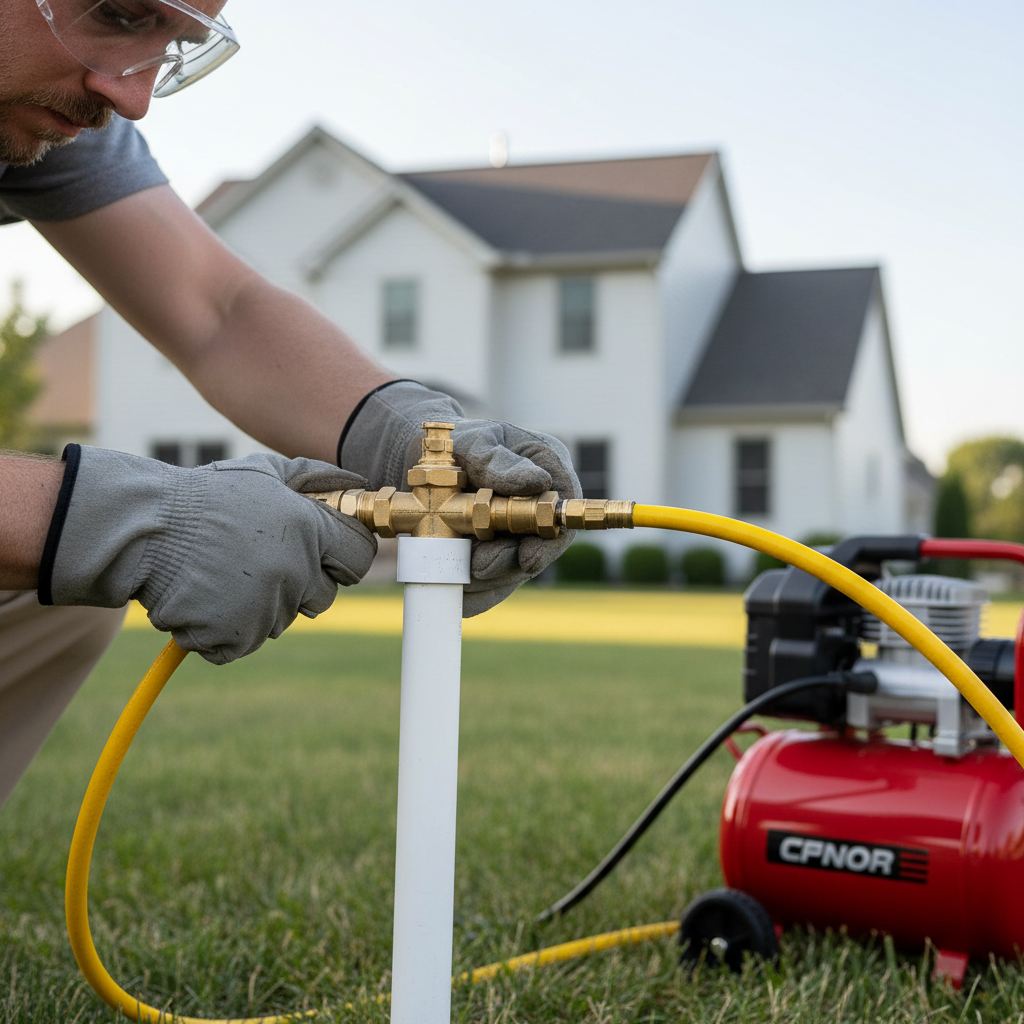
- Set your air compressor's regulator to no more than 50 PSI for PVC systems and 80 PSI for polyethylene (black flexible pipe) systems.
- Start with a lower pressure (around 30 PSI) and gradually increase if needed, always staying below the maximum recommended pressure for your pipe type. Too much pressure can cause internal damage to sprinkler heads and valves.
- Safety Note: Never exceed the manufacturer's recommended pressure for your irrigation components. Consult your system's manual if unsure.
Landscaping · Deck or fence project
| Project category | Landscaping |
|---|---|
| Problem type | Deck or fence project |
| Trade required | Landscaping |
| Urgency | Planned project |
| Safety risk | Moderate safety risk |
| DIY suitability | DIY for experienced homeowners |
| Cost category | High cost |
| Typical timeline | Most builds 3–10 days depending on size |
| Contractor type | Landscaping contractor |
Repair option
Replace failed boards, posts, and hardware; reseal the surface.
Replacement option
Rebuild when framing or the ledger connection is unsafe.
Common causes
- Rot at posts and ledger
- Storm damage
- Adding outdoor living space
Relevant tools:home improvement material pricesproject cost estimator
Published May 22, 2026Last updated August 18, 2026
Tools & materials you'll need
Affiliate linksAs an Amazon Associate FixlyGuide earns from qualifying purchases — at no extra cost to you. Prices and availability are accurate as of publication and subject to change.
Quick Answer
Many homeowners attempt to winterize their sprinkler systems by simply draining the lines, but the most critical step often overlooked or performed incorrectly is the 'blow-out.' This involves using an air compressor to forcefully remove every last drop of water from the irrigation pipes, valves, and sprinkler heads. Residual water, even a small amount, can freeze, expand, and crack components, leading to thousands of dollars in repairs come spring. The biggest mistake is either not using a compressor at all or using one that's too small or set to the wrong pressure, leaving water behind.
The Problem
As temperatures consistently drop below 32°F (0°C) for extended periods, any water left within your irrigation system is at risk of freezing. When water freezes, it expands by about 9%. This seemingly small expansion creates immense pressure (up to 25,000 PSI) within the rigid confines of your sprinkler pipes, valves, and sprinkler heads. The weakest points in the system—generally PVC pipes, plastic sprinkler heads, and the brass or plastic internal components of backflow preventers—will inevitably crack, burst, or become otherwise damaged. Come springtime, what appears to be a minor oversight transforms into a system-wide leak, requiring extensive and costly repairs, often impacting landscaping and creating water waste. The problem isn't just a slight inconvenience; it's a catastrophic failure that can cost as much as a new system if not properly addressed.
How It Works
An irrigation system, at its core, is a network of pipes, valves, and sprinkler heads designed to deliver water from your home's main supply to various zones in your yard. Water flows under pressure, controlled by an automatic timer and zone valves. When the system is in operation, it's completely filled with water. To prevent freeze damage, all this water must be evacuated. Simply shutting off the water supply and opening drain valves isn't enough because low points in the system, trapped pockets, and the intricacies of backflow preventers will retain water due to gravity and surface tension. This is where the 'blow-out' method becomes essential.
The blow-out method works by introducing compressed air into the irrigation system, typically through a dedicated blow-out port or a connection made at the backflow preventer. The air, under controlled pressure, pushes the water through the main lines, lateral lines, and out of the sprinkler heads, one zone at a time. The key is to use sufficient air volume to push all the water out, but not so much pressure that it damages the system components. The backflow preventer, a critical device that stops irrigation water from siphoning back into your potable water supply, is particularly vulnerable. Many backflow preventers have internal check valves and poppet assemblies that must be depressurized and drained manually, or with careful air purging, to prevent freezing and cracking.
Step-by-Step Fix
1. Gather Your Tools & Safety Gear — Prepare for the job by collecting all necessary equipment and prioritizing safety. * Safety First: Always wear appropriate eye protection (safety glasses or goggles) when working with compressed air. Flying debris from sprinkler heads can cause serious injury. * Compressor Choice: Use an air compressor capable of delivering 10-25 CFM (Cubic Feet per Minute) at 40-50 PSI. Smaller pancake compressors (3-6 CFM) often lack the volume to clear larger systems efficiently, leaving residual water. A rotary screw compressor or a larger piston compressor is ideal. For systems with more than four zones or very long runs, consider renting a commercial-grade compressor.
2. Shut Off the Main Water Supply — Prevent more water from entering the system. * Locate the main shut-off valve for your irrigation system, typically found near your main water meter or where the irrigation line branches off from your home's main water supply. Turn it completely off. * Open all manual drain valves (if your system has them) to allow an initial gravity drain, but remember this isn't sufficient.
3. Drain the Backflow Preventer — This is a common failure point if not handled correctly. * Locate your backflow preventer (often a brass device above ground). Close the two shut-off valves on each side of the backflow preventer that isolate it from the main water supply and the irrigation system. * Open the bleed valves (test cocks) on the backflow preventer. There are typically two or four small valves. Using a flathead screwdriver, turn them perpendicular to the pipe to drain any water trapped inside. Leave them open. Some backflow preventers may require the main ball valves to be partially open (45-degree angle) to fully drain the internal check valve mechanisms. * If this doesn't work: If water doesn't drain, ensure both isolation valves are completely closed and the bleed valves are fully open. Sometimes, sediment can clog the bleed valves; gently tap the body of the backflow preventer, but do not force anything.
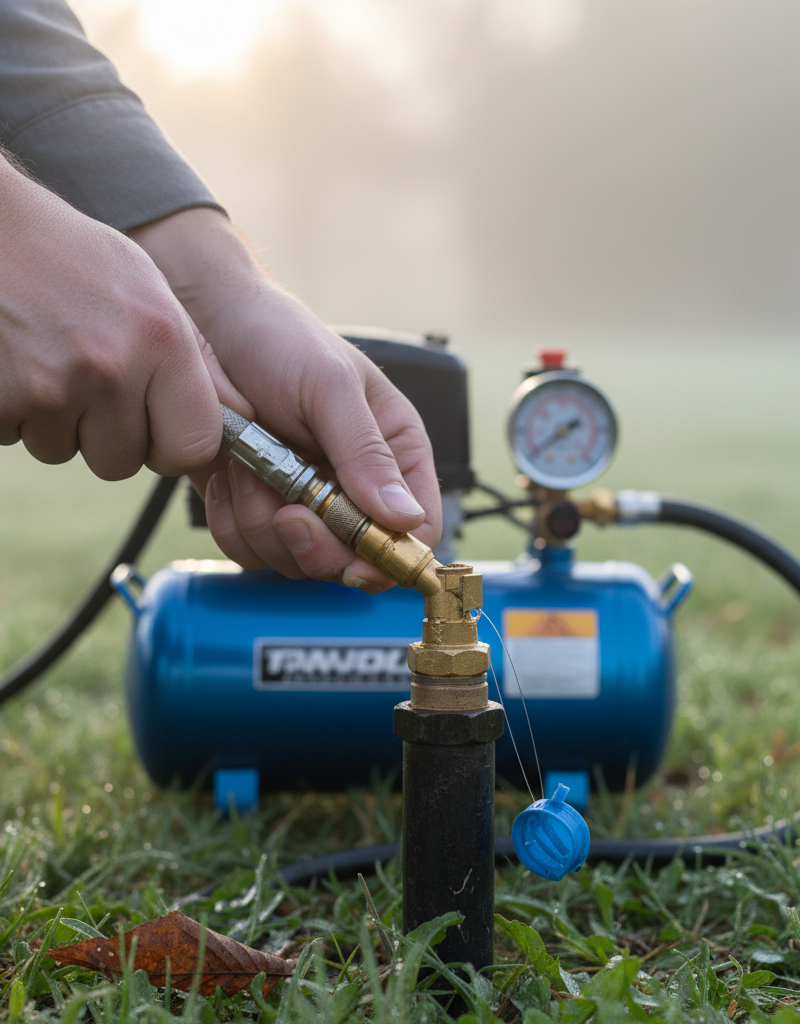
4. Connect the Air Compressor — Establish a secure connection for the blow-out. * Locate the blow-out port on your irrigation system, usually a threaded cap or valve near the backflow preventer or main shut-off valve. If you don't have a dedicated port, you may need an adapter to connect to a threaded hose bib or a temporary connection point. * Attach your air compressor hose to this port. Use plumber's tape on threaded connections to ensure a tight, leak-free seal. Ensure the compressor is turned off before connecting.
5. Set Compressor Pressure Safely — Avoid damaging your system with excessive pressure. * Set your air compressor's regulator to no more than 50 PSI for PVC systems and 80 PSI for polyethylene (black flexible pipe) systems. * Start with a lower pressure (around 30 PSI) and gradually increase if needed, always staying below the maximum recommended pressure for your pipe type. Too much pressure can cause internal damage to sprinkler heads and valves. * Safety Note: Never exceed the manufacturer's recommended pressure for your irrigation components. Consult your system's manual if unsure.
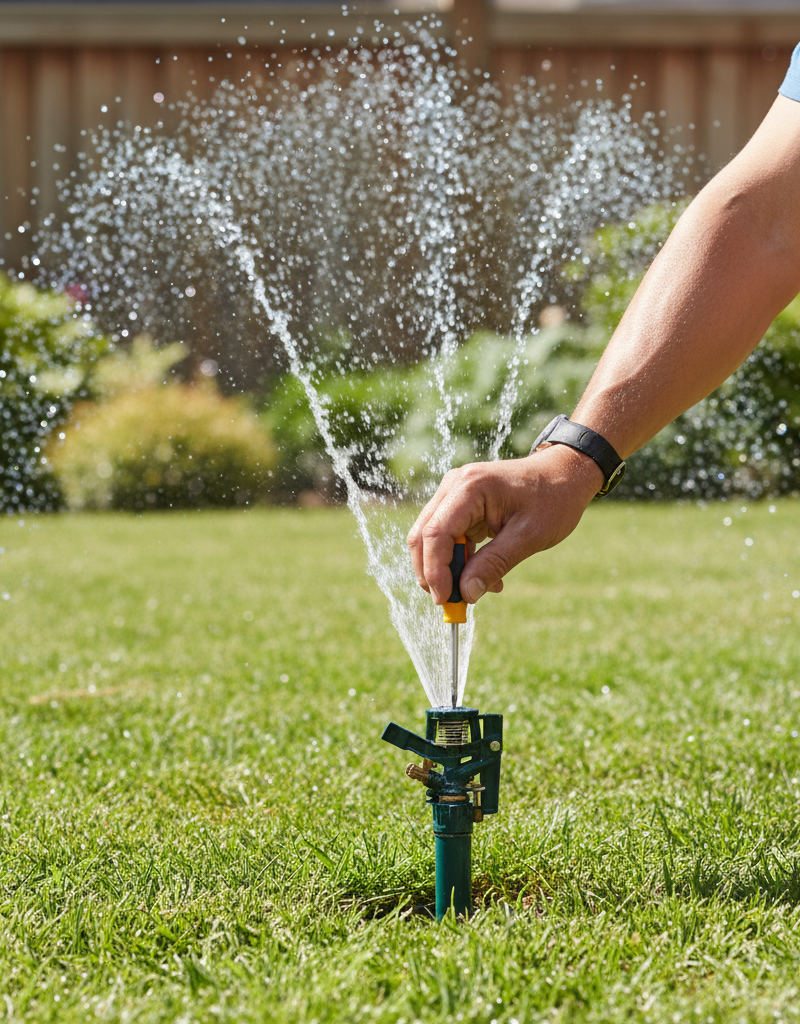
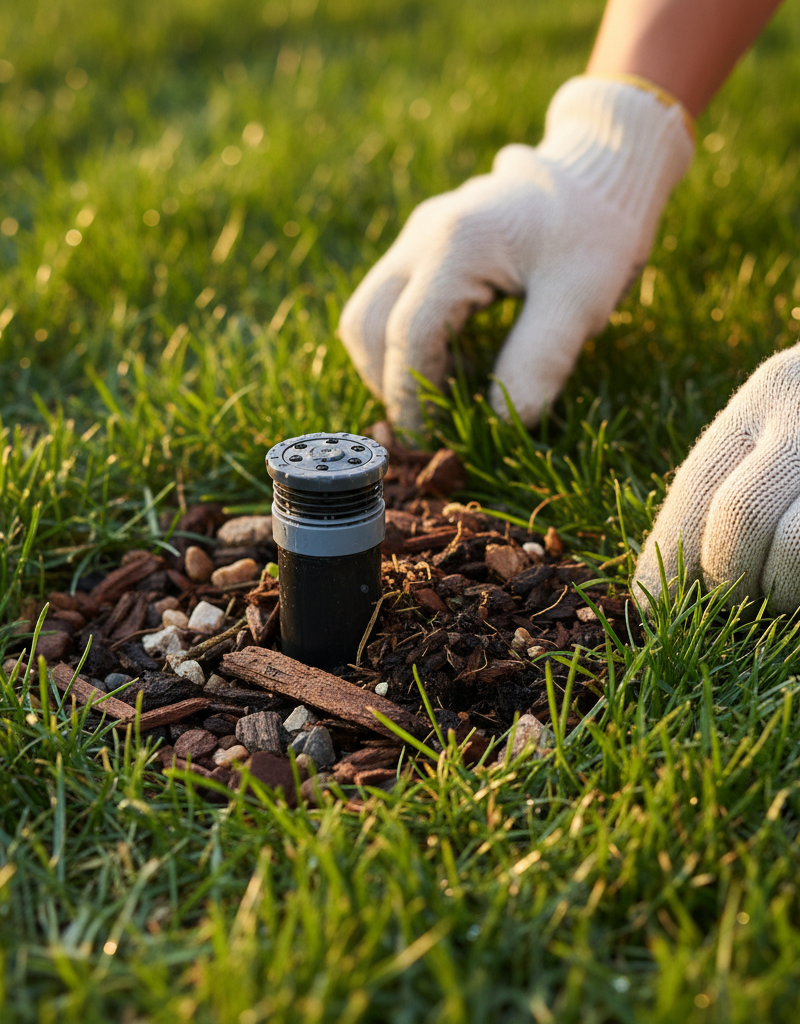
6. Purge Zone by Zone — The systematic blow-out process. * Turn on the nearest zone furthest from the compressor first via your sprinkler controller. Allow air to flow until only mist or air emerges from the sprinkler heads. * Only allow the compressor to run for 1-2 minutes per zone, or until no water is visible. Short, intermittent blasts of air (15-30 seconds) are better than continuously running it, as this prevents excessive heat buildup in the pipes and components. * Once a zone is clear, shut off that zone on the controller and move to the next. Continue this process for all zones, working your way back towards the compressor. * Crucial Step: Manually lift and jiggle rotary heads and pop-up spray heads to help release any trapped water. Some heads have internal check valves that can retain water. * If water persists: Let the system rest for a few minutes, then repeat the blow-out on that zone. Sometimes water can pool and need a second push. Ensure your compressor is maintaining adequate pressure.
7. Final Checks & Disconnection — Secure the system for winter. * After all zones have been purged, turn off the compressor. * Disconnect the air hose from the blow-out port. * Leave all drain valves and backflow preventer bleed valves open (or in the 45-degree position for ball valves) for the entire winter. This allows any condensation or minor leaks to escape instead of freezing. * Some homeowners also wrap their backflow preventer with insulation or an old blanket for added protection against extreme cold, especially if it's exposed.
8. Power Down the Controller — Complete the winterization. * Turn off your irrigation system's main controller. Many controllers have a dedicated 'off' or 'rain delay' setting that will prevent it from turning on during winter. Unplugging it entirely can also protect it from power surges.
Common Causes
- Inadequate Air Compressor: Using a small, low-CFM air compressor that cannot produce enough volume to push all the water out of the entire system, especially in larger yards with long pipe runs.
- Improper Backflow Preventer Drainage: Failing to correctly open the test cocks or orient the ball valves on the backflow preventer, leaving water trapped in its critical internal components. These are often the first parts to freeze and crack.
- Skipping Zones: Forgetting to purge one or more irrigation zones, leading to freeze damage in that specific section of the system.
- Excessive Air Pressure: Setting the air compressor to too high a PSI can damage delicate seals, diaphragms, and gears within sprinkler heads and valves, leading to leaks or malfunction in the spring.
- Relying on Gravity Drains Alone: Trusting that simply opening drain valves will completely clear the system. Gravity will remove most water, but low spots, irregular pipe runs, and internal device designs trap significant amounts that will freeze.
- Incorrect Blow-out Port Connection: Using an ill-fitting adapter or not sealing the connection properly, leading to air leaks and insufficient pressure being delivered to the system.
Common Mistakes
- Not wearing eye protection: Compressed air can dislodge debris at high speeds, leading to serious eye injury. Always wear safety glasses or goggles.
- Forgetting to open multiple zones: Only opening one zone and blasting it with air. This can put undue stress on that single zone and its components. Always open the zone furthest first, then cycle through all of them.
- Running the compressor continuously: Blasting air through one zone for several minutes can create friction and heat, potentially melting or deforming PVC pipes and internal components. Use short, intermittent bursts of air (15-30 seconds) per zone.
- Not clearing the backflow preventer: This complex device is extremely vulnerable to freeze damage. Ensure all bleed valves are open and, if applicable, ball valves are at 45-degrees to relieve pressure in the internal chambers.
- Exceeding maximum pressure: Too much pressure (over 50 PSI for PVC) can damage sprinkler heads, seals, and pipes. Always set your compressor's regulator to a safe PSI level for your system.
- Waiting too long to winterize: A sudden, unexpected hard freeze can catch homeowners off guard. Winterize well before sustained freezing temperatures are expected, ideally when daytime highs are consistently below 45°F (7°C).
Cost & Time Breakdown
| Task | DIY Cost | Pro Cost | Time |
|---|---|---|---|
| Rent Compressor (daily) | $50–$100 | Included | 2–4 hours (incl. pickup) |
| Parts (adapters, tape) | $10–$30 | Included | 15–30 minutes |
| DIY Winterization | $60–$130 | N/A | 1–2 hours |
| Professional Winterization | N/A | $75–$150 | 30–60 minutes |
| Sprinkler Head Replacement | $5–$25 per head | $50–$100 per head | 15–30 minutes per head |
| Backflow Preventer Repair/Replace | $100–$400 (parts) | $300–$800 | 2–4 hours |
Tips & Prevention
- Early Winterization: Don't wait for the first hard freeze. Aim to winterize your system when daytime temperatures are consistently below 45°F (7°C) but before overnight lows regularly dip below freezing. This gives you a buffer against unexpected cold snaps.
- Professional Service: Consider having a professional winterize your system every few years, even if you DIY, especially if you have a complex system or a history of freeze damage. They often have more powerful equipment and expertise.
- System Mapping: Keep a detailed map of your sprinkler zones and locate all shut-off valves and blow-out ports. This makes the winterization process much faster and ensures no zone is missed.
- Backflow Insulation: If your backflow preventer is above ground, ensure it's properly insulated with an approved cover or insulation blanket, even after blowing out the system. This provides an extra layer of protection.
- Regular Inspections: In the spring, before activating your system, thoroughly inspect all visible components for cracks or leaks. Turn on your system slowly and check each zone.
- Compressor Ownership: If you have a larger property or frequently use an air compressor for other tasks, investing in a good quality, higher CFM compressor can be cost-effective in the long run.
When to Call a Professional
While winterizing a sprinkler system can be a rewarding DIY task, there are specific situations where calling a licensed irrigation professional is not just recommended, but essential. If you don't own or have access to an air compressor capable of delivering sufficient volume (e.g., a small pancake compressor won't cut it for most systems), a professional will have the specialized equipment, typically a large commercial-grade air compressor, to ensure a thorough blow-out. Furthermore, if your system includes complex backflow prevention devices that require specific shut-off and draining procedures—or if you're unsure about the safe operating pressure for your system's components—it's best to defer to an expert. Improperly blowing out the system, or damaging the backflow preventer, can lead to costly repairs often exceeding the cost of professional winterization. If you're uncomfortable working with compressed air or diagnosing potential issues, a pro can provide peace of mind and prevent expensive springtime surprises.
Related Articles
Keep troubleshooting with these hand-picked guides from FixlyGuide:
- The #1 Sprinkler Winterization Mistake That Costs Homeowners Thousands — Discover the crucial mistake many homeowners make winterizing sprinklers and how to avoid costly freeze damage with proper blowout techniqu…
- The #1 Sprinkler Winterizing Mistake That Leads to $1,000s in Damage — Discover the crucial mistake homeowners make when winterizing sprinkler systems and how to avoid costly freeze damage with a simple, effect…
- The #1 Mistake Killing Your Thin Lawn (And How to Overseed Like a Pro) — Discover the crucial mistake homeowners make with thin lawns and how proper overseeding can transform your turf.
- The #1 Pruning Mistake Homeowners Make (It Harms Your Trees!) — Discover the most common pruning mistake homeowners make and how bad timing can permanently damage your trees. Learn the optimal windows fo…
- The #1 Mistake Homeowners Make Adjusting Sprinkler Heads (And How to Fix It) — Mistakes in adjusting sprinkler spray patterns can lead to uneven watering, brown spots, and wasted water. Learn how to accurately fine-tun…
- The #1 Mistake Homeowners Make With HVAC Filters (And How Often to Really Change Them) — Discover the crucial mistake most homeowners make with HVAC filters and the specific schedule you should follow to avoid costly HVAC issues…
Should you do this yourself?
Answer five quick questions before you start. Safety outranks savings every time.
Your experience with work like this
How high do you have to work?
Does the job involve any of these?
Will it need a permit?
Specialty tools
Free and instant. Educational guidance only — not a quote, inspection, or professional diagnosis.
Questions to ask before you sign
Ask every contractor the same questions and the cheapest bid stops looking cheapest. Check them off as you go — your progress is saved on this device.
Free, no signup. Bring this to every walkthrough so you compare bids on the same terms.
What should this project cost?
Enter your project details for a realistic cost range before you call anyone.
Common repairs run $150–$650; repipes and water-heater replacements reach $1,500–$4,500.
- Regional adjustment
- National average
- Labor share (typical)
- ~$754
- Quotes to collect
- 3 written estimates
Educational estimate based on national averages — not a binding quote. Always confirm with written local estimates.
Fixly Project Decision Box
- DIY difficulty
- Moderate
- Estimated time
- 30 minutes – half a day
- Cost level
- Moderate
Main tools / materials
- Adjustable wrench
- Plunger or drain auger
- Bucket and towels
- Thread tape
When to stop and call a pro
- Water you cannot shut off at the fixture or main
- Sewage backing up into more than one fixture
- Water near electrical panels or outlets
- Gas water heater work beyond relighting a pilot
Need professional help?
Get a Licensed PlumberHandle this before it gets worse
First steps that limit damage, then a way to reach a qualified pro.
- Emergency repair checklistThe first steps that limit damage before a pro arrives.Open
- Get local estimatesSend one request and compare written estimates from vetted pros.Open
- Estimate this projectGet a cost range for your scope and ZIP before you call anyone.Open
Free, no signup required. Estimates are educational guidance, not a quote or an inspection.
Frequently asked questions
What happens if you don't winterize your sprinkler system?+
If you don't properly winterize your sprinkler system, residual water in the pipes, valves, and sprinkler heads will freeze and expand during cold weather. This expansion can cause pipes to crack, sprinkler heads to burst, and critical components like the backflow preventer to suffer severe damage, leading to expensive repairs in the spring.
Can I winterize my sprinkler system without an air compressor?+
While small systems might gravity-drain some water, it's generally not recommended to winterize a sprinkler system without an air compressor. Gravity alone cannot remove all the water from low points, bends, and internal components, leaving your system vulnerable to freeze damage. The blow-out method with a compressor is the most effective and safest way.
What PSI should I use to blow out my sprinkler system?+
For most PVC pipe systems, set your air compressor to a maximum of 50 PSI. For systems made with polyethylene (black flexible pipe), you can go up to 80 PSI. It's best to start at a lower pressure (around 30 PSI) and gradually increase, ensuring you do not exceed the manufacturer's recommendations for your specific sprinkler components.
How do I make sure my backflow preventer doesn't freeze?+
To prevent your backflow preventer from freezing, first shut off the main water supply to your irrigation system. Then, close the isolation valves on either side of the backflow preventer and open all test cocks (bleed valves) on the device to drain any trapped water. Leave these valves open for the winter. You can also insulate the backflow preventer with a cover for added protection.
When is the best time to winterize sprinklers?+
The best time to winterize your sprinkler system is typically in the fall, after your last lawn watering but before the first hard freeze warning. Aim to do it when daytime temperatures are consistently below 45°F (7°C) but overnight lows haven't yet dropped below freezing for an extended period. This provides a buffer against unexpected cold weather.
Discussion
Loading comments…