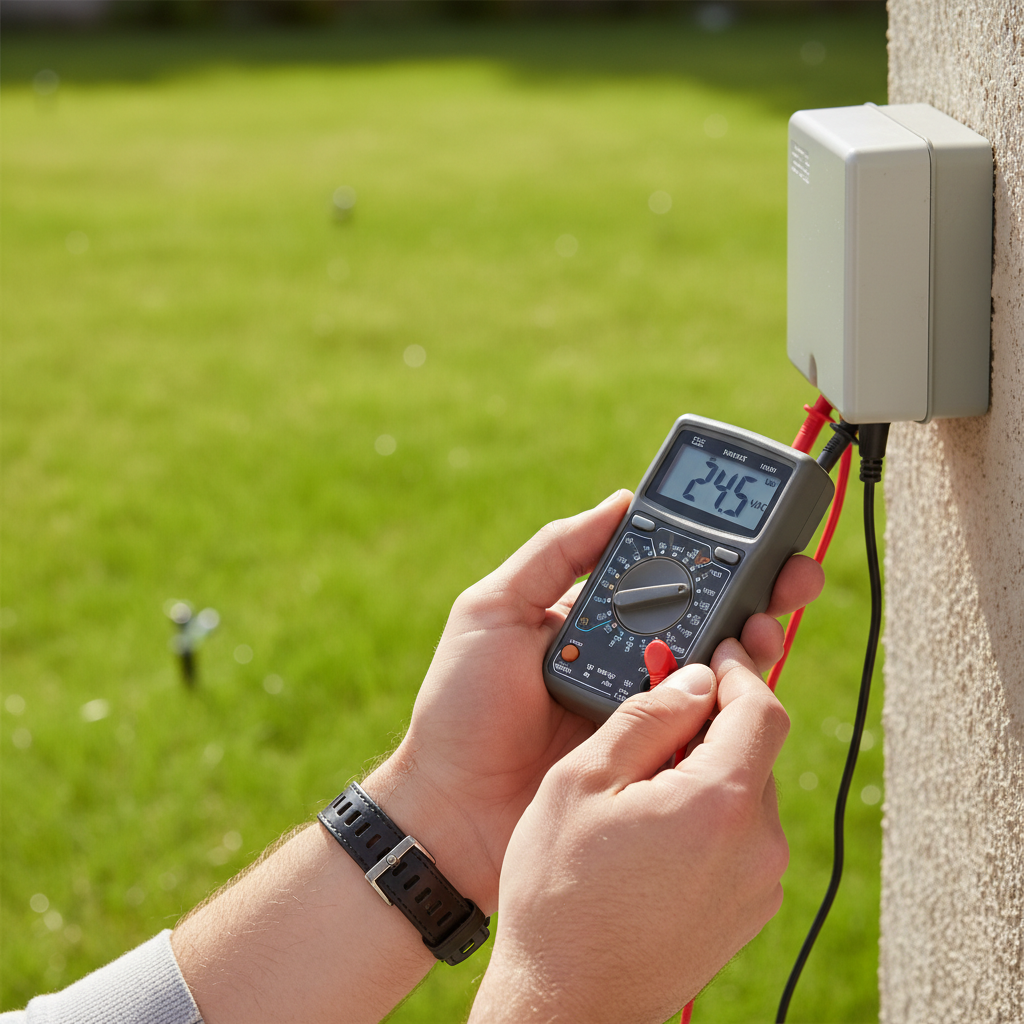
- Check Power to the Controller — The system is completely dead.
- Fix: Reset a tripped GFCI. If the transformer is faulty, replace it with a new one of the same voltage and VA rating. Ensure the power outlet is functioning by plugging in another appliance.
- Safety Note: Always unplug the transformer before working with its wiring. Avoid touching exposed wires while powered.
Landscaping · Deck or fence project
| Project category | Landscaping |
|---|---|
| Problem type | Deck or fence project |
| Trade required | Landscaping |
| Urgency | Planned project |
| Safety risk | Moderate safety risk |
| DIY suitability | DIY for experienced homeowners |
| Cost category | High cost |
| Typical timeline | Most builds 3–10 days depending on size |
| Contractor type | Landscaping contractor |
Repair option
Replace failed boards, posts, and hardware; reseal the surface.
Replacement option
Rebuild when framing or the ledger connection is unsafe.
Common causes
- Rot at posts and ledger
- Storm damage
- Adding outdoor living space
Relevant tools:home improvement material pricesproject cost estimator
Published May 31, 2026Last updated August 17, 2026
Tools & materials you'll need
Affiliate linksAs an Amazon Associate FixlyGuide earns from qualifying purchases — at no extra cost to you. Prices and availability are accurate as of publication and subject to change.
Quick Answer
If your sprinkler system isn't turning on, the most common issues involve power supply, controller programming, rain sensor activation, or a faulty solenoid valve. Start by checking the controller's power and program, then inspect the rain sensor for blockage or activation. If individual zones fail, a bad solenoid is often the cause, which you can often diagnose and replace with basic tools.
The Problem
You step outside on a scorching summer day, only to find your lawn wilting and your sprinkler system stubbornly silent. Whether it's the entire system, a single zone, or just a few heads, a malfunctioning sprinkler system is frustrating and can quickly lead to dead grass and stressed plants. The good news is that many common sprinkler problems don't require a professional and can be diagnosed and fixed with a little homeowner know-how. This article will guide you through the most frequent culprits behind a non-starting system, equipping you to troubleshoot and repair your irrigation with confidence.
How It Works
To understand why your sprinkler system isn't working, it helps to know how it should work. At the heart of most residential sprinkler systems is the controller, often called the timer. This is the "brain" that sends low-voltage electrical signals (typically 24 volts AC) to various components at pre-programmed times.
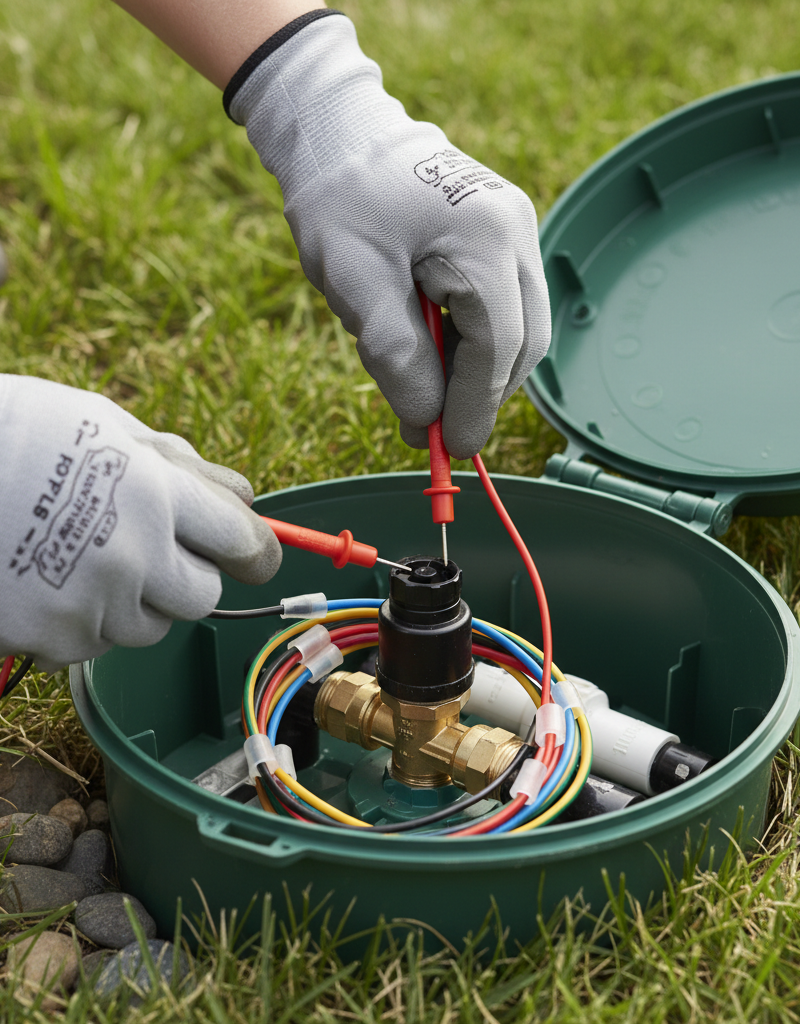
Connected to the controller are zone valves, usually located in valve boxes buried in your yard. Each zone valve controls a specific section of your landscaping. Inside each valve is a solenoid, a small electromagnetic device. When the controller sends a 24V signal to a specific zone's solenoid, it creates a magnetic field that lifts a small plunger, allowing water pressure to open the main diaphragm within the valve. Once the diaphragm opens, pressurized water flows through the pipes to the sprinkler heads in that zone.
Most systems also include a rain sensor, typically wired in series with the common wire or directly to a dedicated sensor input on the controller. When the rain sensor detects sufficient moisture, it "breaks" the circuit, preventing the controller from sending voltage to the solenoids, thus keeping the system off and conserving water. Some systems also have a master valve that controls water flow to all zones, acting as a main shut-off point.
When any part of this electrical or hydraulic chain is interrupted or malfunctions—be it a power issue to the controller, a programming error, a tripped rain sensor, or a faulty solenoid—the result is a sprinkler system that fails to turn on.
Step-by-Step Fix
Here are the common reasons your sprinkler might not be turning on, and how to fix them.
-
Check Power to the Controller — The system is completely dead.
- Diagnose: Look for a blank screen on the controller or no indicator lights. First, check if the controller is plugged into a working outlet. If it's plugged into a GFCI outlet, ensure the GFCI hasn't tripped. Next, locate the transformer (often a small black box plugged into the wall near the controller or wired directly into it). These can burn out. Use a multimeter set to AC volts and test the transformer's output; it should read around 24-28 volts AC. If not, the transformer is likely bad.
- Fix: Reset a tripped GFCI. If the transformer is faulty, replace it with a new one of the same voltage and VA rating. Ensure the power outlet is functioning by plugging in another appliance.
- Safety Note: Always unplug the transformer before working with its wiring. Avoid touching exposed wires while powered.
-
Inspect Controller Programming & Settings — The system has power but isn't running.
- Diagnose: A common overlooked issue. Check the controller for a "Rain Off," "System Off," or "Standby" setting that may have been activated accidentally. Verify the current time and date are correct. Ensure programs are enabled and scheduled run times haven't been cleared or set incorrectly (e.g., set for 3 AM instead of 3 PM, or conflicting start times). Run a "Manual" or "Test" program for a single zone to see if it activates.
- Fix: Adjust the programming. Turn off any "Rain Off" or "System Off" modes. Correct the time, date, and watering start times. Re-enter any lost schedules. If a manual run works, the issue is definitely programming-related.
-
Bypass or Troubleshoot the Rain Sensor — System won't run despite no rain.
- Diagnose: Rain sensors prevent watering during and after rainfall. Over time, they can malfunction, get blocked, or simply stick in the "off" position, even when dry. Look for a small plastic device, usually mounted on a gutter or fence. Most have an override switch on the sensor itself or on the controller. Temporarily bypass the sensor by activating the override or disconnecting its wires from the controller (check your controller manual for the correct terminals, usually labeled "SENSOR" or "P/C"). If the system runs normally after bypassing, the sensor is the problem.
- Fix: If bypassing works, try cleaning the sensor's collection cup or adjusting its sensitivity dial (if available). If it's old or damaged, replace it. Ensure wiring connections are secure.
-
Test and Replace a Faulty Solenoid — One or more zones don't turn on.
- Diagnose: If only one zone isn't working, the solenoid for that zone is a prime suspect.
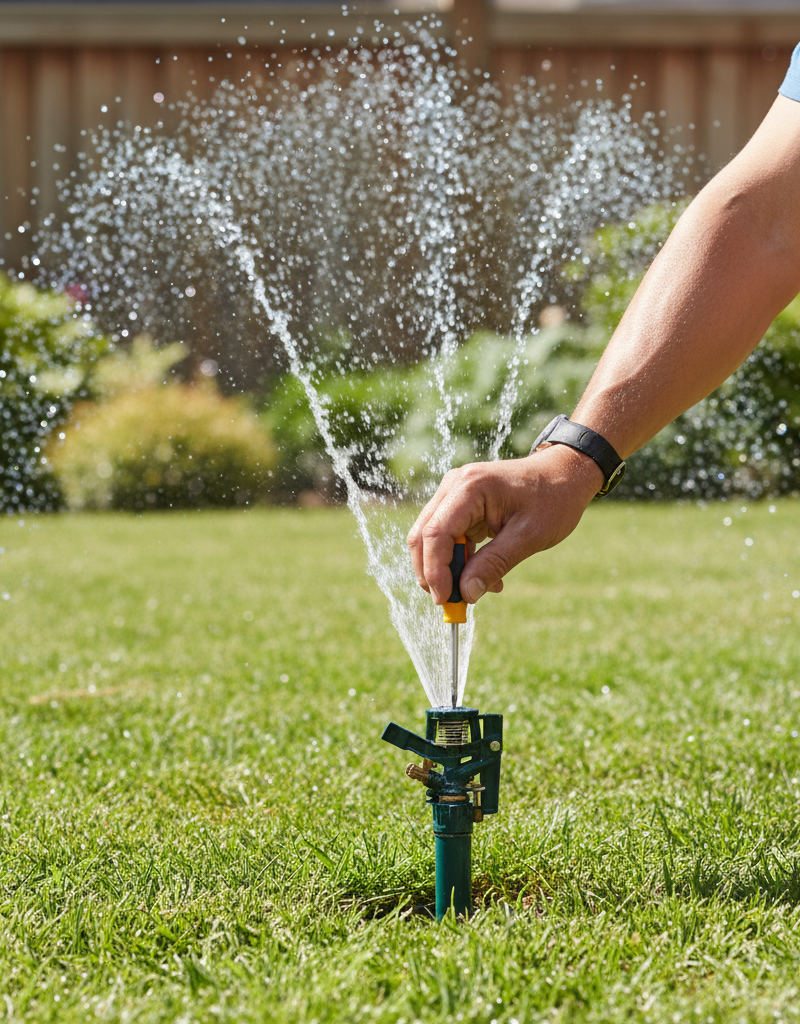
- Manual Activation: Locate the valve box for the non-working zone. Manually turn the solenoid (usually a quarter-turn counter-clockwise) to see if water flows to that zone. If it does, the mechanical part of the valve is fine, pointing to an electrical issue with the solenoid or its wiring.
- Electrical Test: With the controller running the non-working zone, use your multimeter (set to AC volts) to test the two wires leading to the solenoid. You should read approximately 24-28 volts AC. If you get a reading, the controller is sending power, and the solenoid is bad. If you get no reading, the problem is likely a broken wire leading to the solenoid or a bad connection at the controller.
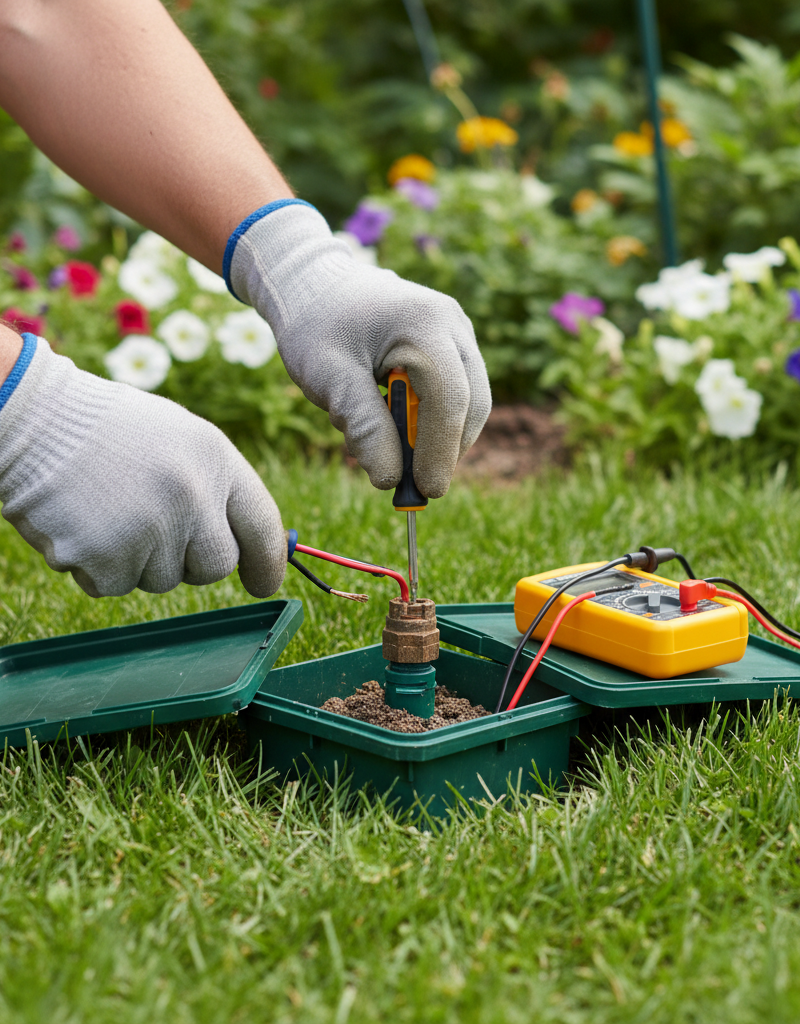
- Resistance Test: With the power off, disconnect the solenoid wires. Set your multimeter to ohms (Ω) and touch the probes to the two solenoid terminals. A working solenoid will typically show 20-60 ohms. An open circuit (infinite resistance) or a short circuit (near zero resistance) indicates a bad solenoid.
- Fix: If the solenoid fails electrical or resistance tests, replace it. Turn off the main water supply to the sprinklers. Unscrew the old solenoid (often hand-tight or with a wrench if stuck) and screw in the new one, being careful not to overtighten. Reconnect the wires, ensuring a waterproof connection (use grease caps or silicone-filled wire nuts). Turn the water back on and test.
- Safety Note: Always shut off the main water supply before removing a solenoid to prevent flooding. Use waterproof connectors for all outdoor wiring.
- Diagnose: If only one zone isn't working, the solenoid for that zone is a prime suspect.
-
Inspect Wiring and Connections — Intermittent issues or single-zone failure.
- Diagnose: Corroded, cut, or loose wires can prevent signals from reaching solenoids. Start at the controller and visually inspect the common wire (usually white) and the zone wire for the affected zone for any nicks or breaks. Check the connections at the controller terminals and inside the valve box. Dig carefully along the wire path if you suspect subterranean damage (e.g., from gardening tools or rodent activity). A fault locator tool can help pinpoint breaks in buried low-voltage wiring.
- Fix: Repair or replace damaged sections of wire. Use direct burial wire connectors (grease caps or silicone-filled wire nuts) for all outdoor splices to ensure they are waterproof. Securely re-attach any loose connections at the controller or solenoids.
- Pro Tip: Label wires at the controller and valve box before disconnecting anything to avoid confusion.
Common Causes
- Electrical Issues: Tripped GFCI outlets, faulty transformers, or internal controller malfunctions are common causes for a completely dead system. Low-voltage wires can be cut during landscaping or become corroded over time.
- Programming Errors: Incorrect start times, disabled programs, or an accidentally activated "system off" setting are surprisingly frequent issues.
- Rain Sensor Malfunctions: Sensors that are stuck, dirty, or damaged can prevent the system from running even on dry days.
- Faulty Solenoids: These little electromagnetic plungers wear out over time due to constant electrical cycling and exposure to water and debris, leading to individual zone failures.
- Water Supply Issues: While not directly preventing the system from turning on, a closed main shut-off valve, a faulty backflow preventer, or low water pressure will result in no water coming out even if the system does technically activate.
Common Mistakes
- Ignoring the Easy Stuff First: Jumping straight to replacing solenoids without first checking power, programming, or the rain sensor. Always start with the simplest diagnostics.
- Overlooking the Manual Override: Many valves can be opened manually by twisting the solenoid or a bleed screw. Not trying this first can lead to unnecessary electrical troubleshooting when the valve mechanism itself might be the problem, or proving the valve works manually quickly isolates an electrical issue.
- Improper Wire Connections: Using standard electrical tape or indoor wire nuts outdoors. These will fail over time, leading to corrosion and signal loss. Always use waterproof connectors designed for direct burial or outdoor use.
- Overtightening Solenoids: Screwing solenoids in too tightly can damage the threads on the valve body or the solenoid itself, leading to leaks or improper function.
- Not Shutting Off Main Water: Forgetting to turn off the main water supply to the irrigation system before working on valves or solenoids can result in a significant flood and wasted water.
- Misdiagnosing a System-Wide Issue as a Zone Issue: If no zones are working, the problem is almost certainly at the controller, power supply, or master valve/backflow, not with individual solenoids.
Cost & Time Breakdown
| Task | DIY Cost | Pro Cost | Time |
|---|---|---|---|
| Check Power & Programming | $0 | $75–$150 | 10–30 mins |
| Rain Sensor Troubleshooting | $0 | $75–$150 | 15–30 mins |
| Replace Rain Sensor | $20–$50 | $150–$250 | 30–60 mins |
| Replace Transformer | $15–$30 | $100–$180 | 15–30 mins |
| Replace Solenoid | $10–$25 | $120–$200 | 30–60 mins |
| Wire Repair | $5–$20 | $100–$250 | 30–90 mins |
Tips & Prevention
- Seasonal Checks: Before the irrigation season begins, manually run each zone to check for proper operation and identify any issues early. Check for proper drainage of the backflow preventer (if applicable).
- Controller Maintenance: Keep your controller in a protected location, out of direct sunlight and extreme weather. Learn how to use all its features, especially "Rain Off" and "Seasonal Adjust" functions.
- Rain Sensor Care: Periodically check your rain sensor for debris (leaves, spiderwebs) that might block its operation. If it's an older model, consider replacing it with a new, wireless sensor for better reliability.
- Protect Wiring: Be mindful of sprinkler wires when gardening, digging, or aerating your lawn. Mark valve box locations prominently.
- Winterization: Properly winterize your system each fall to prevent freeze damage to valves, pipes, and the backflow preventer. This often involves blowing out the lines with compressed air.
- Visual Inspection: Regularly walk your property while the system is running to identify broken heads, leaks, or areas not receiving water.
When to Call a Professional
While many common sprinkler issues are DIY-friendly, certain situations warrant calling a licensed irrigation professional. If you've thoroughly run through all the troubleshooting steps and the system still isn't working, or if you're uncomfortable working with electrical components or digging extensively, it's time to call a pro. Specifically, if you suspect extensive underground pipe damage, a malfunctioning backflow preventer (which can be a plumbing code issue), or if you're dealing with wiring issues that require specialized fault-locating equipment, a professional can diagnose and repair the problem efficiently and safely. They also have access to specialized tools and parts that may not be readily available to homeowners, and can ensure your system is operating at peak efficiency, saving you water and money in the long run.
Related Articles
Keep troubleshooting with these hand-picked guides from FixlyGuide:
- The 3 Hidden Reasons Your Sprinkler Head Won't Pop Up (And How to Fix Them) — Frustrated by a sprinkler head that won't rise? Discover the top three culprits behind this common irrigation issue and how to resolve them…
- The 3 Hidden Reasons Your Sprinkler Head Won't Pop Up (And How to Fix It FAST) — Discover the most common reasons your sprinkler head isn't popping up and follow our step-by-step guide to quickly diagnose and fix the iss…
- The Hidden Reason Your Sprinkler System Won't Start (And Why It's Not the Controller) — Before you blame the controller, learn this common, overlooked reason your sprinkler system isn't starting and how to fix it with basic too…
- The #1 Mistake Homeowners Make When a Lawn Mower Won't Start (And the Easy Fix) — Before you despair, discover the most common culprit behind a non-starting lawn mower and how to fix it in minutes.
- The 3 Hidden Reasons Your Tree Leaves Turn Brown (and the Easy Fixes) — Discover the often-overlooked environmental stressors and specific diseases that cause tree leaves to brown, and learn simple, actionable s…
- The 3 Hidden Reasons Your Gas Burner Won't Light (Beyond a Clog) — Before you call a technician, discover the most common culprits behind a gas stove burner that refuses to ignite and learn how to fix them…
What should this project cost?
Enter your project details for a realistic cost range before you call anyone.
Cost depends heavily on which system turns out to be the source.
- Regional adjustment
- National average
- Labor share (typical)
- ~$1,620
- Quotes to collect
- 3 written estimates
Educational estimate based on national averages — not a binding quote. Always confirm with written local estimates.
Get the print-ready PDF of this guide
A clean, ad-free, printable version you can keep on your phone or pin to the workshop wall. Free with a FixlyGuide account.
- Print-optimized layout
- Tools, materials & every step included
- Saved to your account
Frequently asked questions
Why is my entire sprinkler system not turning on?+
If your entire sprinkler system isn't turning on, first check the power supply to your controller (outlet, GFCI, transformer). Next, ensure the controller programming isn't set to 'off' or 'rain delay' and that the rain sensor isn't activated or faulty. These are the most common causes for a system-wide shutdown.
What if only one zone of my sprinkler system isn't working?+
If only one zone fails to turn on, the problem is most likely with the solenoid valve for that specific zone, or a broken wire leading to it. Test the solenoid by manually turning it on and checking for 24V AC power at its terminals with a multimeter. If the solenoid fails electrical tests, it likely needs replacement.
How do I bypass a rain sensor to test my sprinkler system?+
Most rain sensors have an override switch on the sensor unit itself or on the main controller. If not, you can usually bypass it by disconnecting the two sensor wires from the controller's 'Sensor' terminals and connecting a jumper wire (or ensuring the 'Sensor' terminals are shorted, consult your manual). This effectively tells the controller there's no rain. Remember to reconnect the sensor after testing.
Can I replace a sprinkler solenoid myself?+
Yes, replacing a sprinkler solenoid is a common DIY repair. First, turn off the main water supply to your irrigation system. Then, unscrew the old solenoid (it's often hand-tight) and screw in the new one. Finally, reconnect the wires using waterproof connectors. It's a straightforward process that typically takes 30-60 minutes.
How much does it cost to fix a sprinkler system that won't turn on?+
DIY repair costs for a sprinkler system that won't turn on typically range from $0 (for programming fixes) to $50 (for a new rain sensor or transformer) or $10-$25 (for a new solenoid). Professional services can range from $75-$250, depending on the diagnosis and parts replacement required.
Discussion
Loading comments…