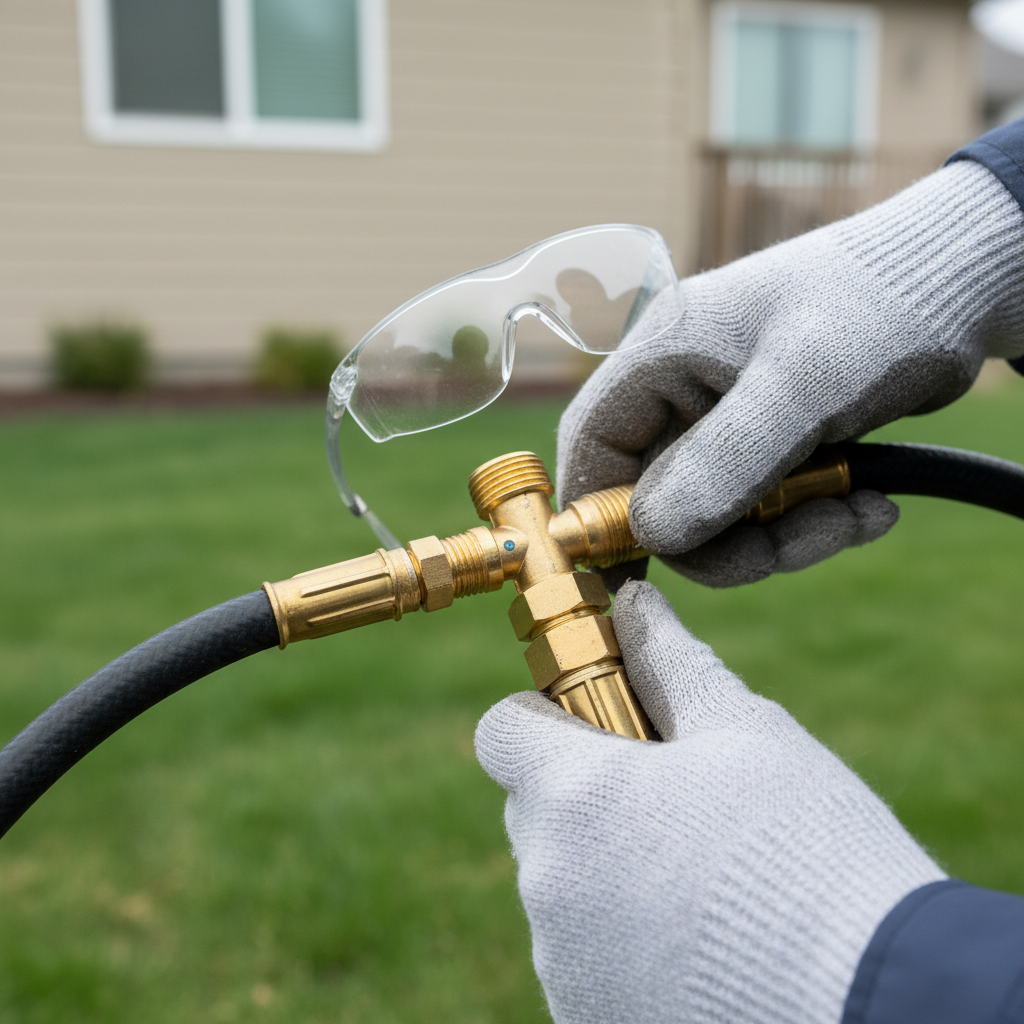
- Early Freeze: Unexpected early cold snaps catch homeowners unprepared, leading to systems not being winterized in time.
- Incomplete Water Removal: The primary cause of freeze damage. Simply turning off the water supply or relying on gravity drainage often isn't enough to remove all water, especially from backflow preventers and low-lying pipes.
- Incorrect Blow-Out Procedure: Using too high or too low air pressure, or not clearing each zone thoroughly, can leave water in the system.
- Damaged Backflow Preventer: Backflow preventers, due to their intricate design and above-ground exposure, are highly susceptible to freeze damage if not properly drained and insulated.
- Lack of System Knowledge: Homeowners unfamiliar with their system's layout, blow-out ports, or backflow preventer components may struggle with effective winterization.
Landscaping · Deck or fence project
| Project category | Landscaping |
|---|---|
| Problem type | Deck or fence project |
| Trade required | Landscaping |
| Urgency | Planned project |
| Safety risk | Moderate safety risk |
| DIY suitability | DIY for experienced homeowners |
| Cost category | High cost |
| Typical timeline | Most builds 3–10 days depending on size |
| Contractor type | Landscaping contractor |
Repair option
Replace failed boards, posts, and hardware; reseal the surface.
Replacement option
Rebuild when framing or the ledger connection is unsafe.
Common causes
- Rot at posts and ledger
- Storm damage
- Adding outdoor living space
Relevant tools:home improvement material pricesproject cost estimator
Published May 6, 2026Last updated August 17, 2026
Tools & materials you'll need
Affiliate links- AmazonAir Compressor1 · 5-10 CFM at 40-60 PSI is ideal for residential systems. Can be rented.
- AmazonAir Compressor Hose1
- AmazonSafety Glasses1 pair · Crucial for eye protection
- AmazonFlathead Screwdriver1 · For backflow preventer test cocks
- AmazonAdjustable Wrench (optional)1 · For stubborn fittings
As an Amazon Associate FixlyGuide earns from qualifying purchases — at no extra cost to you. Prices and availability are accurate as of publication and subject to change.
Quick Answer
The most common mistake when winterizing a sprinkler system is not completely removing all water, especially from the backflow preventer and critical low points in the system. This oversight can lead to frozen water expanding, cracking pipes, damaging sprinkler heads, and even shattering the backflow preventer, resulting in thousands of dollars in repairs come spring. The safest and most effective DIY method for homeowners involves using an air compressor to blow out the lines, ensuring every drop of water is expelled before freezing temperatures hit. This article will guide you through the process, helping you avoid this costly error.
The Problem
You wake up to a sudden cold snap. The news predicts temperatures plummeting below freezing tonight, and you realize you haven't winterized your sprinkler system. Panic sets in. Water left in sprinkler pipes, valves, and especially the backflow preventer can expand when it freezes, exerting immense pressure. This pressure can cause pipes to burst, fittings to crack, and internal components of the backflow preventer to shatter. The result? A non-functional irrigation system, significant water leaks, and a hefty repair bill in the spring, often requiring professional intervention for complete system replacement or extensive pipe repair. The problem isn't just about emptying the lines; it's about ensuring all water is gone, even from the seemingly insignificant nooks and crannies.
How It Works
An irrigation system, at its core, is a network of pipes, valves, and sprinkler heads designed to deliver water to your lawn and garden. Water is supplied from your main water line, often passing through a backflow preventer to protect your potable water supply from contamination. The backflow preventer is a critical component, typically located above ground, and is particularly vulnerable to freeze damage due to its intricate internal mechanisms and exposed position.
Before water reaches the sprinkler heads, it travels through various zones, each controlled by an electric solenoid valve. These valves open and close, directing water to specific areas. When the system is running, water is under pressure, allowing it to spray from the heads. When it's shut off, a significant amount of water remains in the lines, especially in the lowest points or any dips in the piping.
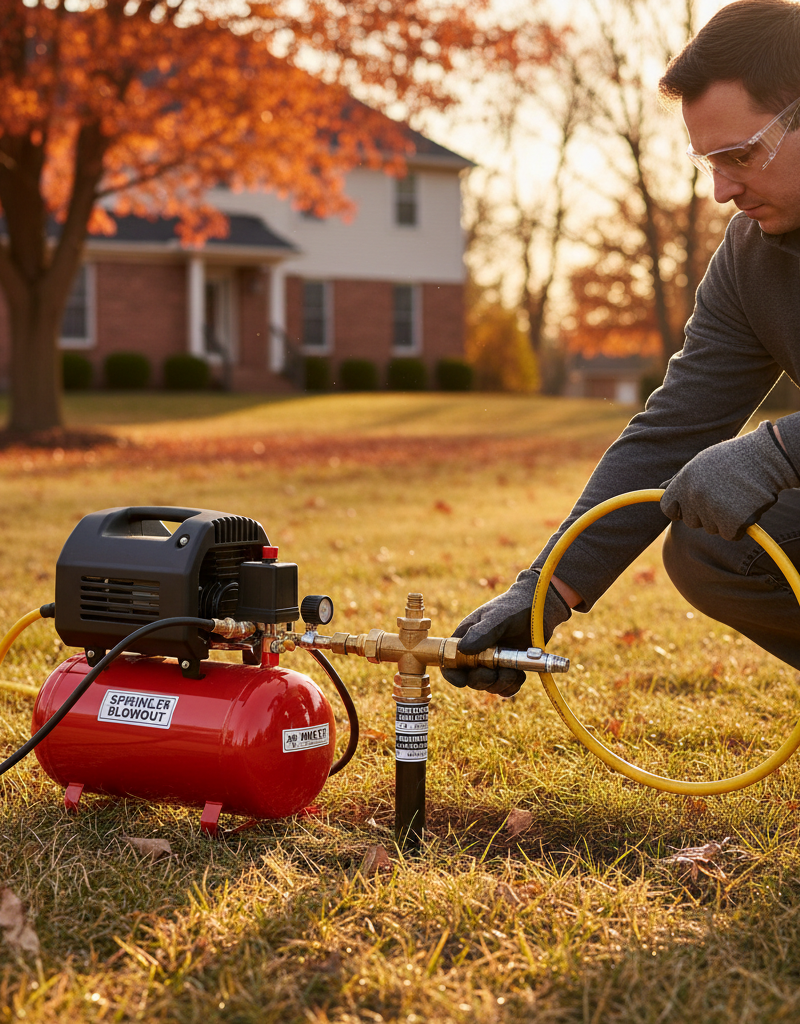
The principle of winterization, particularly the 'blow-out' method, relies on using compressed air to force this residual water out of the system. The air compressor connects to a designated 'blow-out' port or, in some cases, the backflow preventer. As compressed air enters the system, it pushes the water through the main lines, past the zone valves (which are opened one by one), and finally out through the sprinkler heads. This process must be done systematically, zone by zone, ensuring that the air pressure isn't too high (which can damage components) but sufficient to evacuate all water. The goal is to see a fine mist, not a gush of water, indicating that the line is mostly clear. The air 'dries' the internal surfaces, preventing ice formation. Without this complete removal, even small pockets of water can expand and cause catastrophic damage.
Step-by-Step Fix
Safety First: Always wear safety glasses when working with compressed air. Air pressure can propel debris or cause spray-back. Start with low pressure and gradually increase as needed.
1. Shut Off the Main Water Supply — *Locate and close the primary valve to your irrigation system.
Before anything else, find the main shut-off valve for your sprinkler system. This is typically near your water meter or where the irrigation line branches off from your home's main water supply. Turn it fully clockwise until it's closed. This prevents any new water from entering the system during the winterization process. Make sure the valve is completely sealed to avoid any accidental refills.
2. Drain the Backflow Preventer — *Loosen test cocks and open isolation valves.
Your backflow preventer is the most vulnerable component. First, locate the two test cocks on the device (small screws or valves). Using a flathead screwdriver or by hand, open these test cocks halfway. Next, open both the upstream and downstream isolation valves (the larger quarter-turn handles) to a 45-degree angle. This allows water to drain and provides an escape route for compressed air later. Leave them partly open for the winter to allow for expansion and condensation drainage. If your backflow preventer has handles, orient them at 45 degrees.
- If you have a drain plug: Some backflow preventers also have a drain plug on the underside. Remove this plug to allow additional water to escape. Keep track of any plugs or caps you remove.
- Consider insulation: While draining helps, consider wrapping your backflow preventer with insulation (like foam covers) or heat tape in extremely cold climates after draining.
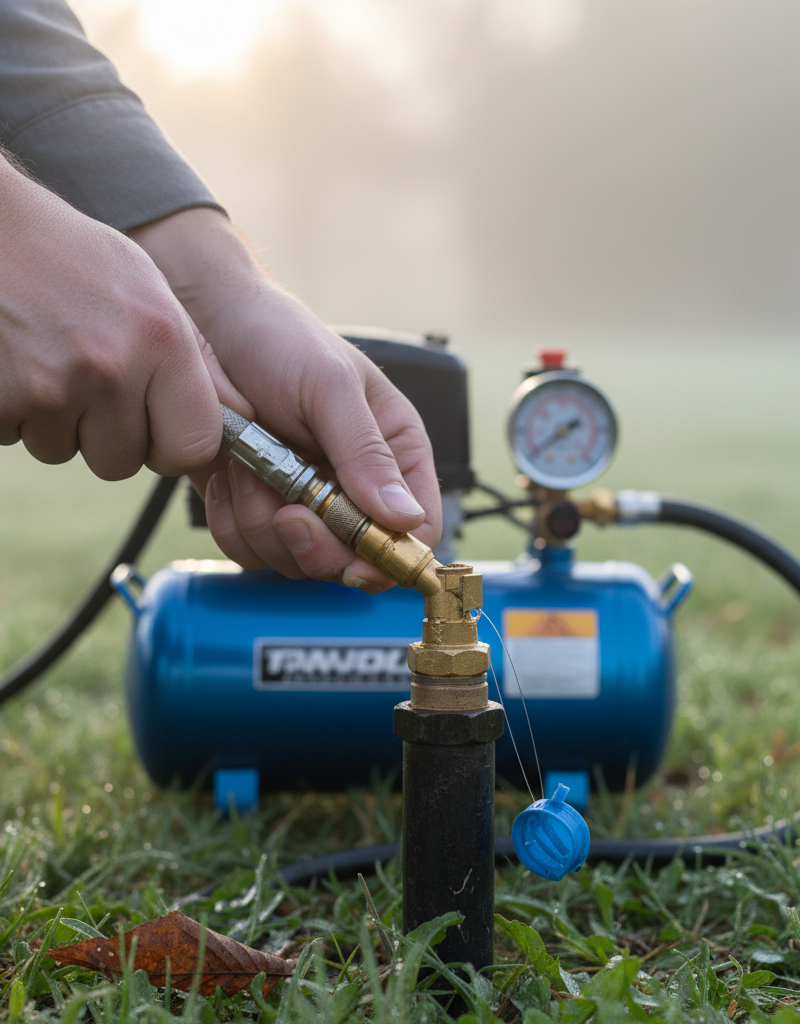
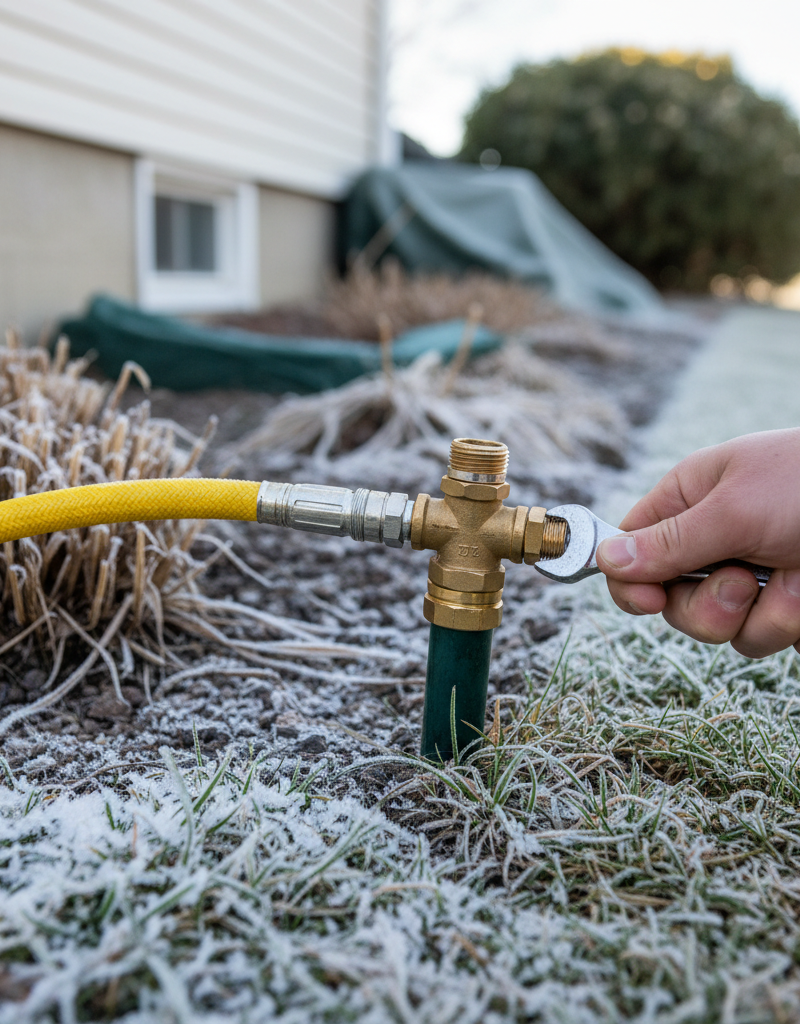
3. Connect the Air Compressor — *Attach the air hose to the blow-out port.
Locate the dedicated blow-out port on your sprinkler system. This is usually a threaded cap or valve, often near the main shut-off valve or manifold. Remove the cap and attach your air compressor hose connection securely. If you don't have a dedicated blow-out port, you might need to adapt by connecting to a hose bib or a specific point on the backflow preventer, but a dedicated port is ideal. Ensure your compressor is set to deliver between 40-80 PSI for residential systems. Never exceed 80 PSI, as this can damage PVC pipes, sprinkler heads, and other components.
- Compressor size: A compressor with an output of 5-10 CFM (cubic feet per minute) at 40-60 PSI is generally sufficient for most residential systems. Smaller pancake compressors (2-3 CFM) might work for very small systems but will take longer.
- Gauge monitoring: Keep a close eye on the pressure gauge as you operate the compressor. Sudden drops or spikes can indicate issues.
4. Open the Farthest Zone Valve — *Start with the zone furthest from the compressor.
Go to your sprinkler system's controller and manually activate the zone valve that is geographically furthest from where your air compressor is connected. This ensures that the air pushes water through the longest possible run, effectively clearing the entire line. Allow the compressed air to flow through this zone until only a fine mist, not a stream of water, emerges from the sprinkler heads. This indicates the line is mostly clear.
- Individual head inspection: Briefly inspect each head in the active zone to confirm air is flowing and water is being expelled. Some heads might take longer to clear than others.
5. Work Systematically Through Each Zone — *Progress through zones, opening one at a time.
Once the farthest zone is cleared, turn off that zone at the controller and move to the next furthest zone. Repeat the process: open the zone valve, let the compressed air push out the water until only mist appears, then close the valve. Continue this method for every zone in your irrigation system. This systematic approach ensures thorough clearing of all lateral lines.
- Patience is key: Don't rush this step. Allowing sufficient time for the air to clear each zone is crucial. If you see water still gushing, continue blowing air until it mists.
- Cycle if necessary: For stubborn zones, you can briefly close the zone valve and then reopen it (cycle it) a few times to help dislodge any remaining water.
6. Disconnect and Relieve Pressure — *Remove the compressor and open drain valves.
Once all zones have been cleared and only mist is visible from the sprinkler heads, turn off your air compressor. Disconnect the air hose from the blow-out port. It's good practice to briefly open a zone valve manually one last time with the compressor disconnected to relieve any residual air pressure in the main lines. Replace any caps or plugs you removed from the blow-out port and backflow preventer.
- Winterize controller: For electronic controllers, consider unplugging them or tripping their breaker to protect them from power surges during winter.
7. Drain Any Remaining Manual Drain Valves — *Open manual drains if your system has them.
Some older or custom systems may have manual drain valves at low points. If your system has these, open them fully to allow any last pockets of water to escape, then leave them open. Not all systems have these, but if yours does, they provide an extra layer of protection against freezing.
- Location: Manual drains are often located at the very end of main lines or in the deepest parts of the system's layout.
Common Causes
- Early Freeze: Unexpected early cold snaps catch homeowners unprepared, leading to systems not being winterized in time.
- Incomplete Water Removal: The primary cause of freeze damage. Simply turning off the water supply or relying on gravity drainage often isn't enough to remove all water, especially from backflow preventers and low-lying pipes.
- Incorrect Blow-Out Procedure: Using too high or too low air pressure, or not clearing each zone thoroughly, can leave water in the system.
- Damaged Backflow Preventer: Backflow preventers, due to their intricate design and above-ground exposure, are highly susceptible to freeze damage if not properly drained and insulated.
- Lack of System Knowledge: Homeowners unfamiliar with their system's layout, blow-out ports, or backflow preventer components may struggle with effective winterization.
- Neglecting Manual Drain Valves: For systems with manual drain valves, failing to open them allows water to pool and freeze.
Common Mistakes
- Turning Off Water But Not Draining: Thinking that simply shutting off the main water supply is enough. This traps significant amounts of water in the lines and components, leading to inevitable freeze damage.
- Using Too Much Air Pressure: Setting your air compressor above 80 PSI for residential systems can cause serious damage, including burst pipes, cracked fittings, and broken sprinkler heads. Always keep pressure within the recommended range (40-80 PSI).
- Not Draining the Backflow Preventer: The backflow preventer is the most vulnerable part of your system. Leaving water in its test cocks or isolation valves will almost guarantee a cracked unit, leading to costly replacement.
- Skipping Zones: Rushing through the process and neglecting to thoroughly clear every single zone can leave water in those specific lines, leading to isolated freeze damage.
- Starting with the Closest Zone: Beginning with the zone closest to your compressor will push water into the main lines, potentially trapping it further into the system. Always start with the zone furthest away.
- Ignoring a Fine Mist: Stopping the blow-out process as soon as water stops gushing. You need to continue until only a fine mist is visible from the sprinkler heads, indicating that the lines are truly clear of standing water.
Cost & Time Breakdown
| Task | DIY Cost | Pro Cost | Time |
|---|---|---|---|
| Air Compressor Rental (if needed) | $30–$60/day | Included | 30 min setup |
| Winterizing Fittings | $10–$25 | Included | 5 min attach |
| DIY Winterization | $0 (if owned) – $85 | $100–$200 | 1–2 hours |
| Backflow Preventer Replacement | $200–$600 | $400–$1,200 | 3–5 hours |
| Pipe Repair/Replacement | $50–$300+ | $300–$1,500+ | 2–8 hours |
Tips & Prevention
- Monitor Forecasts Early: Start watching your local weather forecast for overnight freezing temperatures as early as late September or October, depending on your climate zone. Proactive winterization prevents last-minute stress. Most systems need to be blown out when sustained temperatures drop to 32°F (0°C).
- Mark Your Valves: Use colored tags, weatherproof markers, or take photos to clearly label your main shut-off valve, blow-out port, and backflow preventer components. This saves time and confusion each year.
- Backflow Preventer Insulation: After adequately draining the backflow preventer, consider covering it with an insulating foam cover or an old towel secured with tape. This adds an extra layer of protection against unexpected deep freezes, but only after it's dry.
- Regular System Checks: In the spring, before activating your system, do a walk-through. Check for visible cracks in pipes, damaged sprinkler heads, or leaks around the backflow preventer. Early detection can prevent larger problems.
- Understand Your System: Take the time to learn the layout and specific components of your irrigation system. Knowing where your main lines, lateral lines, and low points are will make winterization more effective.
- Consider a Professional Audit: If you're new to your home or unsure about your system, consider hiring an irrigation professional for a one-time audit. They can identify vulnerabilities and show you the proper winterization steps for your specific setup.
When to Call a Professional
While DIY winterization is feasible for many, there are clear signs you should call a licensed irrigation professional. If your system lacks a dedicated blow-out port, modifying the system to accommodate an air compressor can be complex and should be handled by an expert to prevent damage. If you have an exceptionally large or complex system with multiple backflow preventers, high-pressure lines, or specialized components, a professional ensures all sections are thoroughly drained without risk. Furthermore, if you've already experienced freeze damage in previous years, or if you're uncomfortable working with compressed air and understanding your system's specific vulnerabilities, investing in professional winterization is a wise decision to prevent costly repairs and ensure system longevity. A pro also carries the right high-volume compressor for larger systems, which a homeowner might not have access to. They can also perform necessary repairs if damage has already occurred, ensuring proper function in the spring.
Related Articles
Keep troubleshooting with these hand-picked guides from FixlyGuide:
- The #1 Sprinkler Winterizing Mistake That Leads to $1,000s in Damage — Learn how to properly winterize your sprinkler system and avoid costly damage from freezing temperatures with this comprehensive guide.
- The #1 Sprinkler Winterization Mistake That Costs Homeowners Thousands — Discover the crucial mistake many homeowners make winterizing sprinklers and how to avoid costly freeze damage with proper blowout techniqu…
- The #1 Sprinkler Winterizing Mistake That Leads to $1,000+ in Spring Repairs — Discover the crucial mistake many homeowners make when winterizing sprinkler systems, leading to costly spring repairs, and learn the right…
- The #1 Lawn Aeration Mistake Most Homeowners Make (And When to REALLY Do It) — Discover the crucial mistake many homeowners make with lawn aeration and learn the optimal timing for a thriving, healthy lawn.
- The 3 Hidden Water Sources Breeding Mosquitoes in Your Yard (And How to Eliminate Them) — Naturally control mosquitoes in your backyard by targeting and eliminating hidden standing water sources where they breed, using simple, ec…
- The 4-Step Water Heater Flush That Adds Years to Its Life (and Cures 3 Common Problems) — Flushing your water heater annually is a quick DIY task that prevents sediment buildup, extends the unit's lifespan, and improves efficienc…
Should you do this yourself?
Answer five quick questions before you start. Safety outranks savings every time.
Your experience with work like this
How high do you have to work?
Does the job involve any of these?
Will it need a permit?
Specialty tools
Free and instant. Educational guidance only — not a quote, inspection, or professional diagnosis.
Questions to ask before you sign
Ask every contractor the same questions and the cheapest bid stops looking cheapest. Check them off as you go — your progress is saved on this device.
Free, no signup. Bring this to every walkthrough so you compare bids on the same terms.
What should this project cost?
Enter your project details for a realistic cost range before you call anyone.
Common repairs run $150–$650; repipes and water-heater replacements reach $1,500–$4,500.
- Regional adjustment
- National average
- Labor share (typical)
- ~$754
- Quotes to collect
- 3 written estimates
Educational estimate based on national averages — not a binding quote. Always confirm with written local estimates.
Fixly Project Decision Box
- DIY difficulty
- Moderate
- Estimated time
- 30 minutes – half a day
- Cost level
- Moderate
Main tools / materials
- Adjustable wrench
- Plunger or drain auger
- Bucket and towels
- Thread tape
When to stop and call a pro
- Water you cannot shut off at the fixture or main
- Sewage backing up into more than one fixture
- Water near electrical panels or outlets
- Gas water heater work beyond relighting a pilot
Need professional help?
Get a Licensed PlumberHandle this before it gets worse
First steps that limit damage, then a way to reach a qualified pro.
- Emergency repair checklistThe first steps that limit damage before a pro arrives.Open
- Get local estimatesSend one request and compare written estimates from vetted pros.Open
- Estimate this projectGet a cost range for your scope and ZIP before you call anyone.Open
Free, no signup required. Estimates are educational guidance, not a quote or an inspection.
Frequently asked questions
When should I winterize my sprinkler system?+
You should winterize your sprinkler system just before the first hard freeze (when temperatures are consistently below 32°F / 0°C overnight). This usually means late fall, but it's crucial to monitor local weather forecasts as early freezes can occur.
What happens if I don't winterize my sprinkler system?+
If you don't winterize your sprinkler system, any water remaining in the pipes, valves, and backflow preventer will freeze and expand. This expansion can crack or burst pipes, shatter the backflow preventer, and damage sprinkler heads, leading to expensive repairs in the spring.
Can I winterize my sprinkler system without an air compressor?+
Some systems are designed with manual drain valves at low points which can remove some water, but this method is often not sufficient for complete water removal, especially from the backflow preventer. For most modern systems, an air compressor blow-out is the most effective and recommended method to prevent freeze damage.
What PSI should I use to blow out my sprinkler system?+
For most residential sprinkler systems, you should use an air compressor set between 40-80 PSI (pounds per square inch). Never exceed 80 PSI, as higher pressures can damage the PVC pipes, sprinkler heads, and other delicate components of your irrigation system.
How do I know if all the water is out of my system?+
You'll know the water is mostly out when, after blowing out a zone, only a fine mist or vapor emerges from the sprinkler heads (instead of a stream or gush of water). Continue blowing for a minute or two after the mist appears to ensure thorough drying.
Discussion
Loading comments…