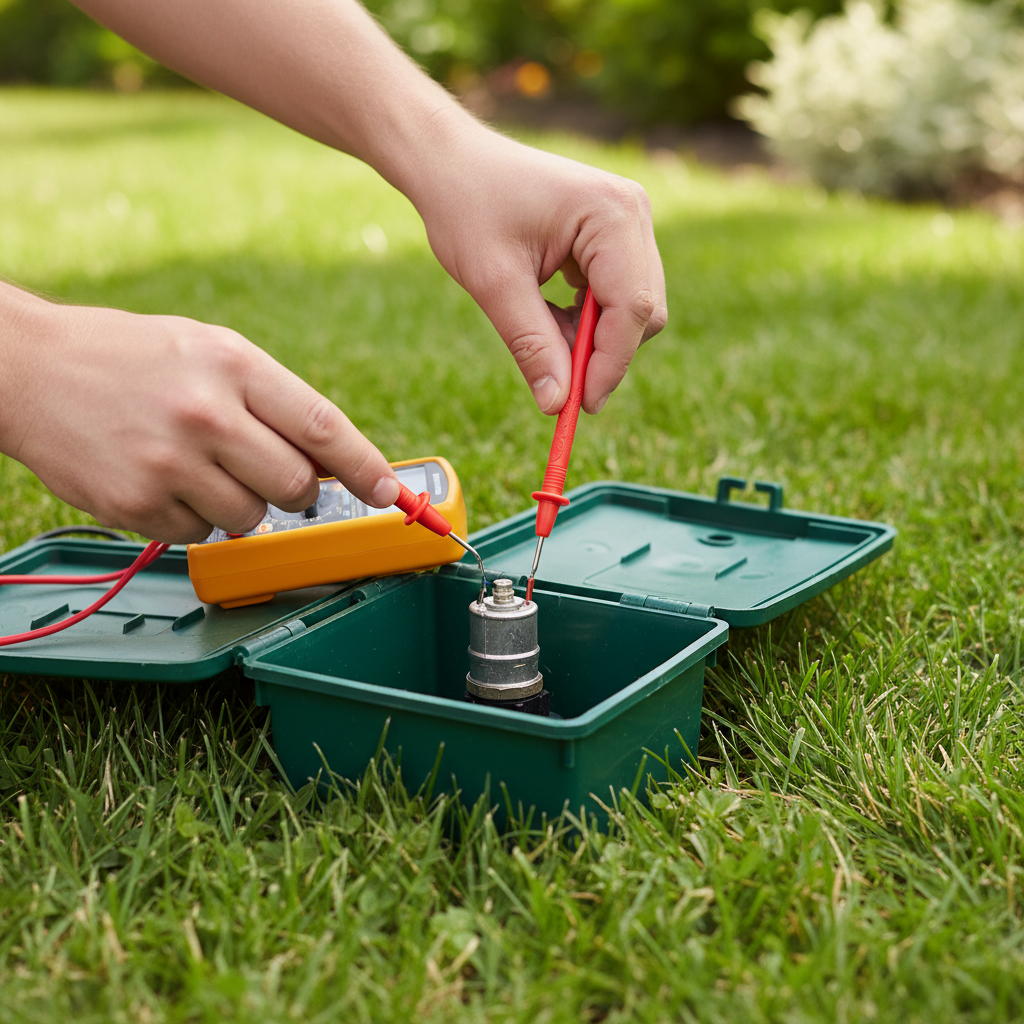
- Reconnect Wires: Reconnect the solenoid wires to the common and zone wires.
- Power On: Plug in your controller or switch on the power.
- Activate Zone: Manually activate the problematic zone from your controller.
Landscaping · Deck or fence project
| Project category | Landscaping |
|---|---|
| Problem type | Deck or fence project |
| Trade required | Landscaping |
| Urgency | Planned project |
| Safety risk | Moderate safety risk |
| DIY suitability | DIY for experienced homeowners |
| Cost category | High cost |
| Typical timeline | Most builds 3–10 days depending on size |
| Contractor type | Landscaping contractor |
Repair option
Replace failed boards, posts, and hardware; reseal the surface.
Replacement option
Rebuild when framing or the ledger connection is unsafe.
Common causes
- Rot at posts and ledger
- Storm damage
- Adding outdoor living space
Relevant tools:home improvement material pricesproject cost estimator
Published June 2, 2026Last updated August 17, 2026
Tools & materials you'll need
Affiliate linksAs an Amazon Associate FixlyGuide earns from qualifying purchases — at no extra cost to you. Prices and availability are accurate as of publication and subject to change.
Quick Answer
If your sprinkler system's zones are failing to activate, even when your controller appears to be functioning correctly, the most common issue lies with a faulty solenoid on the individual zone valve. The solenoid is an electromagnetic component responsible for opening and closing the valve, directly controlling water flow to that specific zone. Fortunately, diagnosing and replacing a failing solenoid is a relatively simple and inexpensive repair that most homeowners can tackle, often restoring your irrigation system within minutes.
The Problem
You've set your sprinkler schedule, or tried to manually activate a zone, but nothing happens. No water, no sound of the valve opening – just a dead zone. This is a frustrating problem, especially when other zones might be working perfectly, or your controller displays no error messages. Many homeowners immediately suspect the controller or a major plumbing issue. While these can be culprits, a non-responsive zone often points to a component failure at the valve itself, specifically the solenoid.
How It Works
To understand the fix, it helps to understand how a sprinkler zone operates. Your irrigation system is essentially a series of valves, each controlling a specific group of sprinkler heads – a "zone." Water from your main supply line, often at high pressure, flows into a manifold where these zone valves are connected. Each valve has a diaphragm that, when sealed, prevents water from flowing past it.
The magic happens with the solenoid. This small, cylindrical component is essentially an electromagnet. It has two wires that connect to your sprinkler controller. When the controller sends a low-voltage electrical signal (typically 24 volts AC) to the solenoid, it creates a magnetic field. This magnetic field pulls a small plunger inside the solenoid upwards. This plunger then allows a tiny amount of water pressure on top of the diaphragm to release, unbalancing the pressure and causing the diaphragm to lift, opening the main valve and allowing water to flow through to your sprinkler heads. When the controller cuts power, the magnetic field dissipates, the plunger drops, and water pressure equalizes, pushing the diaphragm back down to seal the valve shut. If the solenoid isn't receiving power, or if its internal coil is damaged, it can't create the magnetic field, and the valve remains stubbornly closed.
Step-by-Step Fix
1. Safety First — Before you begin any work, always unplug your sprinkler controller or switch off the main power to the controller. This prevents accidental activation and potential electrical shock. Do not work on live electrical components.
2. Identify the Problem Zone Valve — Locate the control valves for your sprinkler system. These are typically housed in green or black plastic boxes buried flush with your lawn, often near your main water line connection or in distinct clusters. Open the lid of the box containing the non-working zone's valve. If you have several boxes, follow the pipes from the non-working zone's sprinkler heads back to the main distribution manifold.
3. Manually Open the Valve — Most sprinkler valves have a manual bleed screw or a lever that allows you to open them without power. Turn the bleed screw counter-clockwise a quarter to half turn, or flip the lever. If the zone turns on, it confirms that water pressure is reaching the valve and the sprinkler heads and pipes are clear. This suggests the issue is electrical, likely the solenoid or wiring, rather than a blocked pipe. If water doesn't flow, the problem might be upstream (main shut-off, backflow preventer, or major clog) and requires further investigation or professional help.
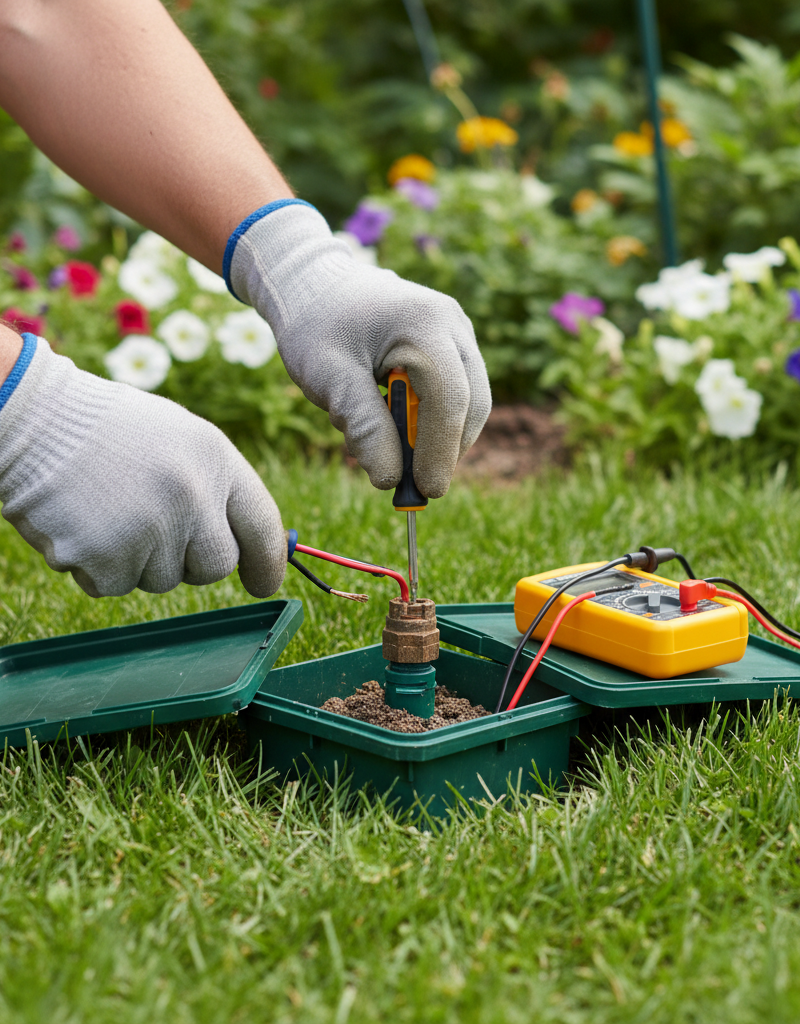
4. Test the Solenoid (Resistance) — With your multimeter set to measure resistance (Ohms, indicated by the Ω symbol), touch one probe to each of the two wires coming directly out of the solenoid itself (with the wires disconnected from the common and zone lines). A healthy solenoid typically reads between 20 and 60 Ohms. A reading of zero (short circuit) or infinity (open circuit) indicates a faulty solenoid that needs replacement. If you get a reading in the correct range, proceed to test for voltage.
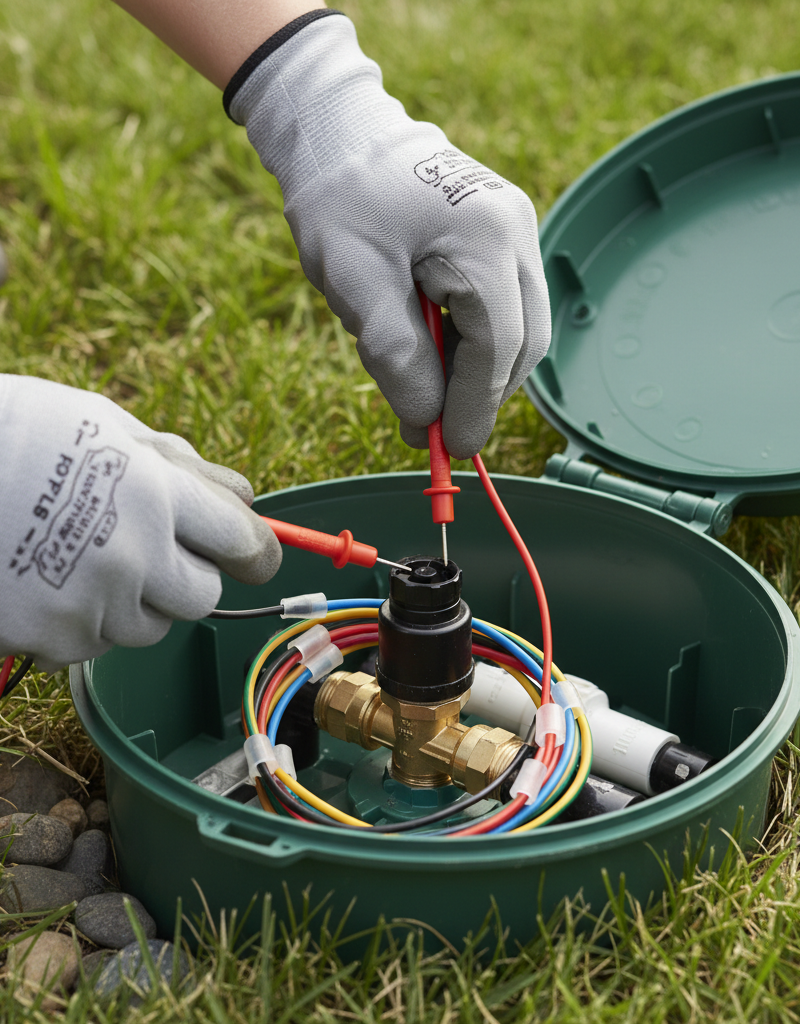
5. Test for Voltage (If Resistance is Good) —
*   **Reconnect Wires:** Reconnect the solenoid wires to the common and zone wires.
*   **Power On:** Plug in your controller or switch on the power.
*   **Activate Zone:** Manually activate the problematic zone from your controller.
*   **Multimeter Check:** With your multimeter set to measure AC voltage (VAC), carefully touch one probe to the common wire connection and the other to the zone wire connection *at the valve*. You should read approximately 24-28 volts AC. If you get a proper voltage reading, but the valve doesn't open (and the solenoid resistance was good), the solenoid is still likely faulty and isn't responding electrically, or the valve diaphragm is stuck. If you read no voltage, the problem is further back in the wiring or the controller output.

    *   **Safety Note:** Be extremely careful when working with live electrical current. Ensure your hands are dry and you are not standing in water. If unsure, call a professional.
6. Replace the Solenoid — If testing indicates a faulty solenoid:
*   **Power Off:** Unplug the controller again.
*   **Disconnect:** Disconnect the solenoid wires from the common and zone wires.
*   **Unscrew:** Unscrew the old solenoid from the valve body. It typically threads right out. Be careful not to lose any small springs or O-rings if they come loose, though most modern solenoids are self-contained.
*   **Install New Solenoid:** Thread the new solenoid into the valve body. Hand-tighten it until snug, then give it another quarter to half-turn with an adjustable wrench. Do not overtighten, as this can damage the valve body.

    *   **Important:** Ensure you purchase a replacement solenoid that is compatible with your specific valve brand and model. While many are similar, slight variations exist.
7. Reconnect and Test — Reconnect the new solenoid's wires to the corresponding common and zone wires (usually color-coded, but if not, it doesn't matter which solenoid wire goes to which field wire). Ensure connections are secure using waterproof wire connectors. Plug in your controller, then manually activate the zone. You should hear a click and observe water flowing to the sprinklers.
8. If Still Not Working (Valve Diaphragm/Internal Issues) — If the new solenoid doesn't solve the problem, and you're getting voltage to the valve, the issue might be a damaged or stuck diaphragm inside the valve or debris obstructing its operation. In this case, you'll need to disassemble the valve (usually by unscrewing the top) and inspect the diaphragm and internal components. This is a more involved step, and if you're uncomfortable, it's a good time to call a pro. Ensure the water supply to the entire irrigation system is OFF before attempting this.
Common Causes
- Electrical Failure (Solenoid): The coil inside the solenoid can burn out over time due to voltage spikes, manufacturing defects, or simply old age, preventing it from creating the magnetic field needed to open the valve.
- Wiring Issues: Loose, corroded, or damaged wiring between the controller and the valve can interrupt the 24V signal. Critters sometimes chew through wires.
- Controller Malfunction: The specific zone output on the controller might be faulty, failing to send power to the solenoid.
- Stuck/Damaged Diaphragm: The rubber diaphragm inside the valve can tear, become stiff, or get warped, preventing it from lifting properly even if the solenoid activates.
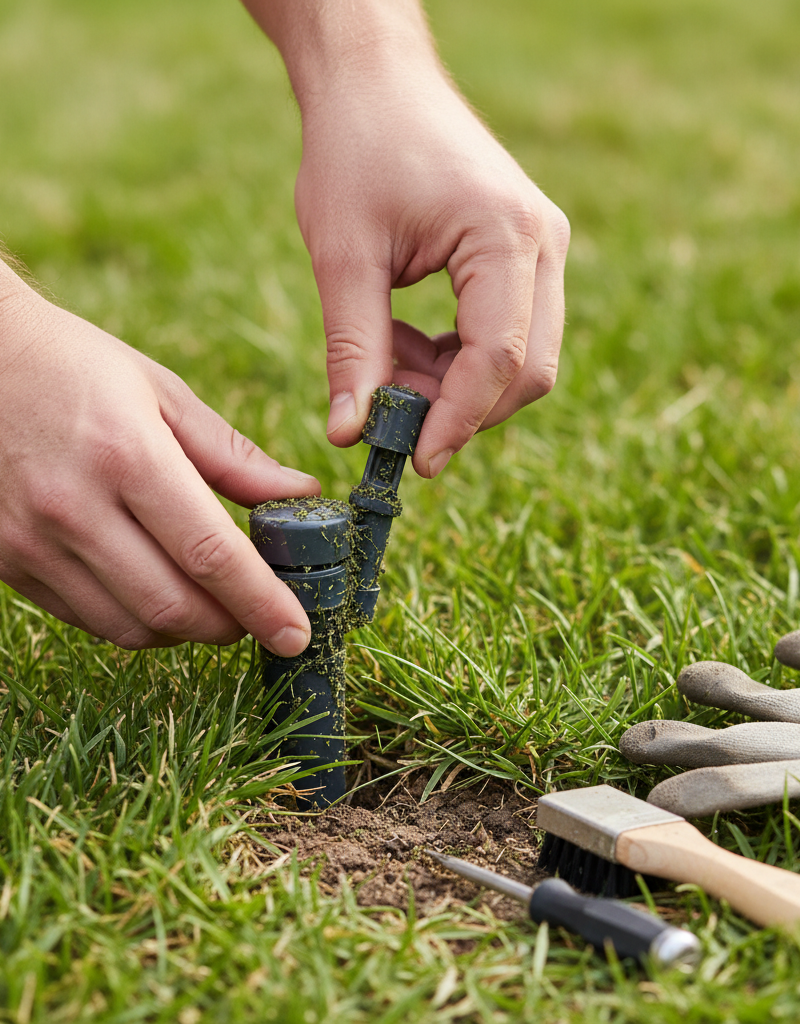
- Debris in Valve: Small rocks, dirt, or other sediment can get trapped in the valve, preventing the diaphragm from seating or lifting correctly.
- Water Hammer: Sudden pressure changes can sometimes damage internal valve components or lead to premature solenoid failure.
Common Mistakes
- Assuming the Controller is Bad: Many homeowners immediately think the controller is the problem when a single zone fails. Always troubleshoot at the valve first.
- Not Testing for Voltage: Simply replacing a solenoid without testing for 24V AC power at the valve can lead to repeat failures if the wiring or controller output is the real issue.
- Overtightening the Solenoid: Threading in a new solenoid too tightly can strip the plastic threads of the valve body, leading to leaks and requiring a full valve replacement.
- Using Non-Waterproof Connectors: Standard electrical tape or indoor wire nuts are insufficient for buried sprinkler wires. Water will cause corrosion and shorts. Always use waterproof wire connectors.
- Forgetting to Turn Off Power: Working on live electrical components in a wet environment is extremely dangerous. Always unplug the controller before disconnecting or reconnecting wires.
- Incorrect Solenoid Type: Not all solenoids are universal. Using a solenoid incompatible with your valve's brand and model can lead to leaks or continued malfunction.
Cost & Time Breakdown
| Task | DIY Cost | Pro Cost | Time (DIY) |
|---|---|---|---|
| Solenoid Diagnosis & Prep | $0 | $50–$100 | 15–30 minutes |
| Replacement Solenoid | $10–$30 | Included | 5–10 minutes |
| Full Valve Inspection/Repair | $0–$10 (parts) | $100–$250+ | 30–60 minutes |
| Basic Wiring Repair | $5–$15 | Included | 15–30 minutes |
| Full Valve Replacement | $20–$50 | $150–$350+ | 45–90 minutes |
Tips & Prevention
- Regular Visual Inspections: Periodically open your valve boxes and check for obvious signs of damage, corrosion, or critter activity on wiring. Keep the boxes free of dirt and debris.
- Proper Wire Connections: When making any wire splices, always use high-quality, waterproof connectors filled with silicone grease to prevent corrosion.
- Surge Protection: Consider adding a surge suppressor to your sprinkler controller, especially in areas prone to lightning, to protect electrical components.
- Winterization: In colder climates, properly winterize your system by blowing out the lines. Residual water can freeze and damage solenoids and valve bodies.
- Gentle Hand-Tightening: When installing or replacing solenoids, always hand-tighten until snug, then only use a wrench for a slight additional turn. Over-tightening is a common cause of damage.
- Troubleshoot Systematically: Approach problems methodically. Don't jump to conclusions. Start with the easiest and most common fixes before moving to more complex diagnostics.
When to Call a Professional
While solenoid replacement is generally a DIY-friendly task, there are specific situations where calling a licensed irrigation professional or electrician is highly advisable. If you've tested the solenoid, confirmed it's good, and are receiving proper 24V AC voltage at the valve but the zone still won't activate, the issue might be a more complex internal valve problem requiring disassembly, or a deeper electrical issue within your controller. If you're uncomfortable working with electrical testing, disassembling valve components, or if the problem persists across multiple zones, indicating a main line or controller fault, it's best to consult an expert. Additionally, if the issue involves a broken mainline pipe, persistent low water pressure, or affects your backflow prevention device, a pro has the specialized tools and experience to diagnose and repair these efficiently and correctly, ensuring your system operates optimally and in compliance with local regulations.
Related Articles
Keep troubleshooting with these hand-picked guides from FixlyGuide:
- The #1 Sprinkler Winterization Mistake That Leads to $1,000s in Damage — Discover the crucial mistake many homeowners make when winterizing sprinklers and how to properly blow out your system to prevent costly fr…
- Is One Drip Emitter Starving? The Secret Culprit (It's Not Clogging) — A single drip emitter refusing to hydrate your plants can be frustrating, but the fix is often simpler than you think and rarely a clog.
- The #1 Mowing Mistake That Leaves Your Lawn Brown and Patchy — Discover the most common mowing mistake homeowners make that leads to unhealthy, patchy grass and how to fix it for a vibrant lawn.
- The #1 Sprinkler Winterizing Mistake That Leads to $1,000s in Damage — Discover the crucial mistake homeowners make when winterizing sprinkler systems and how to avoid costly freeze damage with a simple, effect…
- The 3 Hidden Reasons Your Sprinkler Head Won't Pop Up (And How to Fix It Fast) — Uncovering why your sprinkler head isn't popping up often comes down to three common, easily fixable issues, helping you restore your lawn'…
- The #1 Hidden Culprit Behind Your Whole-House Low Water Pressure (It's Not Your City!) — Discover the most common, often overlooked cause of low water pressure throughout your entire home and how to fix it yourself.
Should you do this yourself?
Answer five quick questions before you start. Safety outranks savings every time.
Your experience with work like this
How high do you have to work?
Does the job involve any of these?
Will it need a permit?
Specialty tools
Free and instant. Educational guidance only — not a quote, inspection, or professional diagnosis.
Estimate your own project cost
National averages are a starting point. Enter your details for a range that fits your house.
HVAC replacement cost
- Equipment$2,200 – $3,800
- Installation labor$1,200 – $2,500
Always insist on a Manual J load calculation — sq-ft sizing is only a rough check. Federal heat-pump rebates may reduce cost significantly.
Educational estimate only — always confirm with written local bids.
What should this project cost?
Enter your project details for a realistic cost range before you call anyone.
Cost depends heavily on which system turns out to be the source.
- Regional adjustment
- National average
- Labor share (typical)
- ~$1,620
- Quotes to collect
- 3 written estimates
Educational estimate based on national averages — not a binding quote. Always confirm with written local estimates.
Fixly Project Decision Box
- DIY difficulty
- Advanced
- Estimated time
- Homeowner checks 20–30 minutes
- Cost level
- Moderate
Main tools / materials
- Clean air filter
- Garden hose for condenser coils
- Shop vac for the condensate line
When to stop and call a pro
- Burning smell, smoke, or a tripping breaker
- Refrigerant lines iced over or hissing
- Any work inside the sealed refrigerant circuit (EPA-licensed only)
- Gas smell near a furnace — leave and call the utility
Need professional help?
Find an HVAC Pro Near YouFrequently asked questions
How do I know if my sprinkler solenoid is bad?+
The easiest way to tell if your sprinkler solenoid is bad is by testing its resistance with a multimeter. A healthy solenoid typically reads between 20-60 Ohms. A reading of zero (shorted) or infinity (open) indicates a faulty solenoid. You can also manually open the valve; if water flows, but the solenoid doesn't activate with power, it's likely bad.
Can I replace a sprinkler solenoid myself?+
Yes, replacing a sprinkler solenoid is a relatively easy DIY task for most homeowners. It involves turning off the power, disconnecting two wires, unscrewing the old solenoid, threading in a new one, and reconnecting the wires. Just ensure you get a compatible replacement part.
Why would only one sprinkler zone not work?+
When only one sprinkler zone isn't working, the most common culprits are a faulty solenoid on that specific zone's valve, damaged wiring leading to that valve, or a problem with that particular zone's output on the sprinkler controller. Less commonly, debris could be clogging the valve or the diaphragm inside the valve could be damaged.
Do sprinkler solenoids go bad often?+
Sprinkler solenoids can go bad due to age, electrical surges, or manufacturing defects. They are one of the more common failure points in an irrigation system because they are electrical components exposed to outdoor conditions and constant cycling. Their lifespan varies but can range from several years to over a decade.
Discussion
Loading comments…