- Unbalanced Loads: Too many heavy items, like denim or blankets, shoved to one side of the drum. This is the big one.
- Uneven Machine: The washer isn’t sitting level on the floor, so it rocks and vibrates.
- Foreign Objects: Coins, keys, socks, or small toys getting into the gap between the tubs or into the pump.
- Worn Drum Bearings: The bearings that let the drum spin smoothly are worn out, which brings on a loud grinding or roaring sound.
- Failing Shock Absorbers/Suspension Springs: These parts are supposed to soak up vibration. Once they’re tired, the tub gets unstable.
HVAC · Strange noises
| Project category | HVAC |
|---|---|
| Problem type | Strange noises |
| Trade required | HVAC |
| Urgency | Soon — within weeks |
| Safety risk | Moderate safety risk |
| DIY suitability | Pro recommended |
| Cost category | Moderate cost |
| Typical timeline | Schedule within days — noises rarely resolve on their own |
| Contractor type | Licensed HVAC technician |
Repair option
Motor, bearing, or wheel replacement before it takes out other parts.
Replacement option
Replacement when the compressor or heat exchanger is the source.
Common causes
- Failing blower or fan motor bearings
- Loose blower wheel or debris in the cabinet
- Delayed gas ignition causing a boom on startup
Relevant tools:diy or hire a prorepair or replace
Published September 4, 2026Last updated September 4, 2026
Tools & materials you'll need
Affiliate linksAs an Amazon Associate FixlyGuide earns from qualifying purchases — at no extra cost to you. Prices and availability are accurate as of publication and subject to change.
Quick Answer
That awful racket coming from your washing machine during the spin cycle? It’s usually a pretty clear sign of a few common problems: an unbalanced load, the machine sitting crooked, or something lodged where it doesn’t belong. Sometimes it’s worse than that — bad drum bearings will make a washer sound like it’s coming apart — but a lot of the time, you can track it down and fix it yourself with basic tools and a little patience.
The Problem
I’ve had homeowners call me in a full-blown panic, convinced their washer was about to bounce right through the laundry room wall. They’ll describe a freight-train roar, or a thumping sound that comes and goes, usually right when the machine hits high-speed spin. That noise isn’t just irritating; it’s the machine waving a red flag. Ignore it, and you’re asking for bigger repairs later. Could be something dumb-simple, like a bad load of towels. Could be a worn-out part crying for help. Either way, you don’t just shrug it off — that thing’s telling you it’s unhappy, and you ought to listen.
How It Works
To make sense of the noise, you’ve got to know what’s going on inside during spin. Your washer has an inner drum that holds the clothes and an outer tub that keeps the water contained. In spin, that inner drum can rip around at anywhere from 600 to 1,600 revolutions per minute (RPMs) on some modern machines. That speed uses centrifugal force to pull water out of the laundry. To handle all that, the inner drum rides on a shaft, and that shaft usually runs on two main bearings, often mounted at the back of the outer tub. Those bearings are what keep things smooth and quiet. Then you’ve got shock absorbers or suspension springs holding the tub assembly in check, knocking down the vibration. A motor spins the shaft through a pulley system. If the load’s off balance, a bearing’s worn, the motor or pump has an issue, or something’s loose, that whole system gets thrown out of whack and you’ll hear grinding, banging, thumping, or a nasty vibration while the machine tries to finish the cycle.
Step-by-Step Fix
Alright, let’s crack it open and figure out where the racket’s coming from. Safety first, always. Unplug the machine before you start sticking your hands inside anything.
-
Check the Load First — The easiest fix.
- Open the lid or door and spread the clothes out again. A heavy, lopsided load — like a couple soaking wet towels all shoved to one side — is the most common reason a washer bangs and shakes. Make sure the clothes are distributed evenly in the drum. If it’s a tiny load, toss in a few more items so it can balance. Run a test spin. If the noise disappears, you’re done.
- If this doesn’t work: Move on to leveling the machine.
-
Level the Machine — Keep it steady.
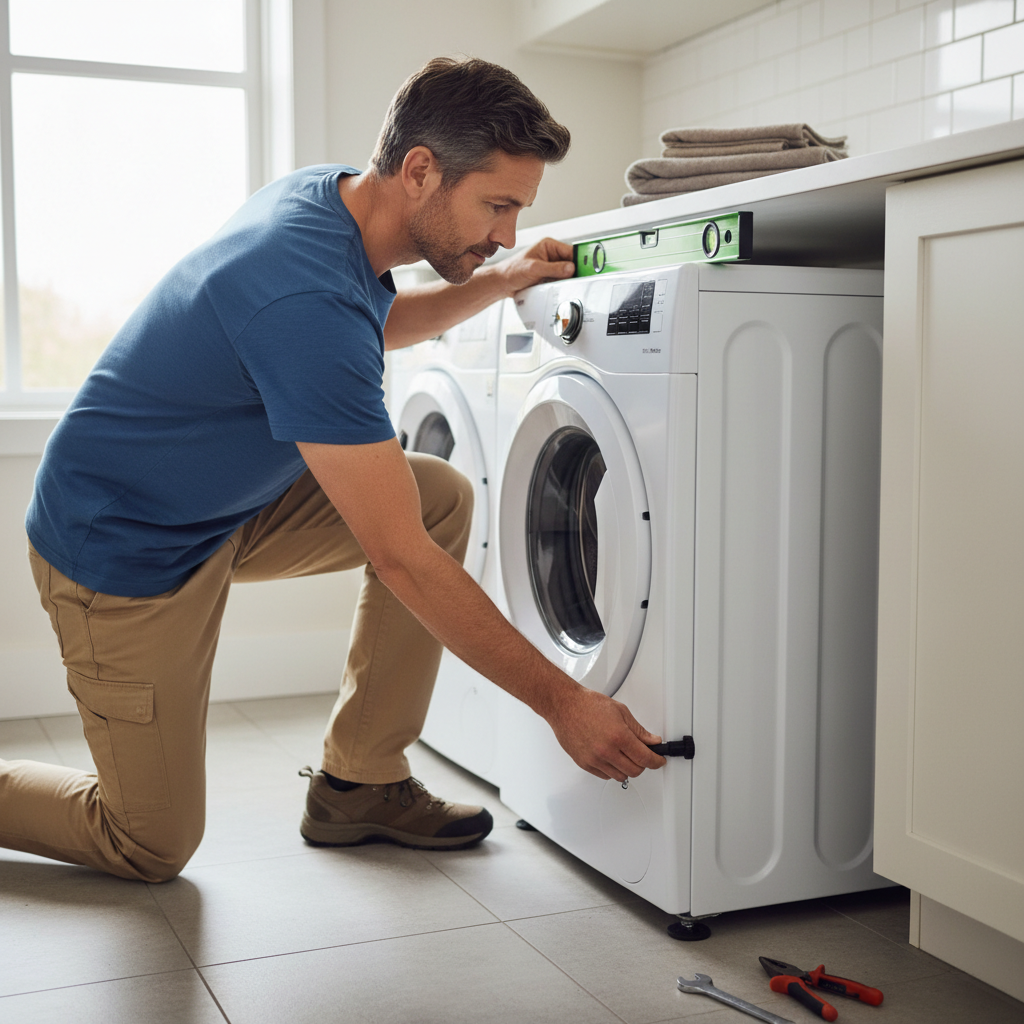
- Grab a spirit level (a 2-foot level works great for this) and set it on top of the washer, front-to-back and side-to-side. If the machine’s out of level, it’ll walk or shake itself silly. Most washers have adjustable feet in the front — clockwise lowers, counter-clockwise raises. On the back, some units have self-adjusting rear legs; sometimes you’ve got to tilt the machine forward so they drop, then ease it back down and let it settle. You want all four feet planted solidly on the floor. It shouldn’t rock around much at all.
- Tools: Spirit level, wrench (sometimes included with the washer, or an adjustable wrench).
-
Inspect for Foreign Objects — The mystery rattler.
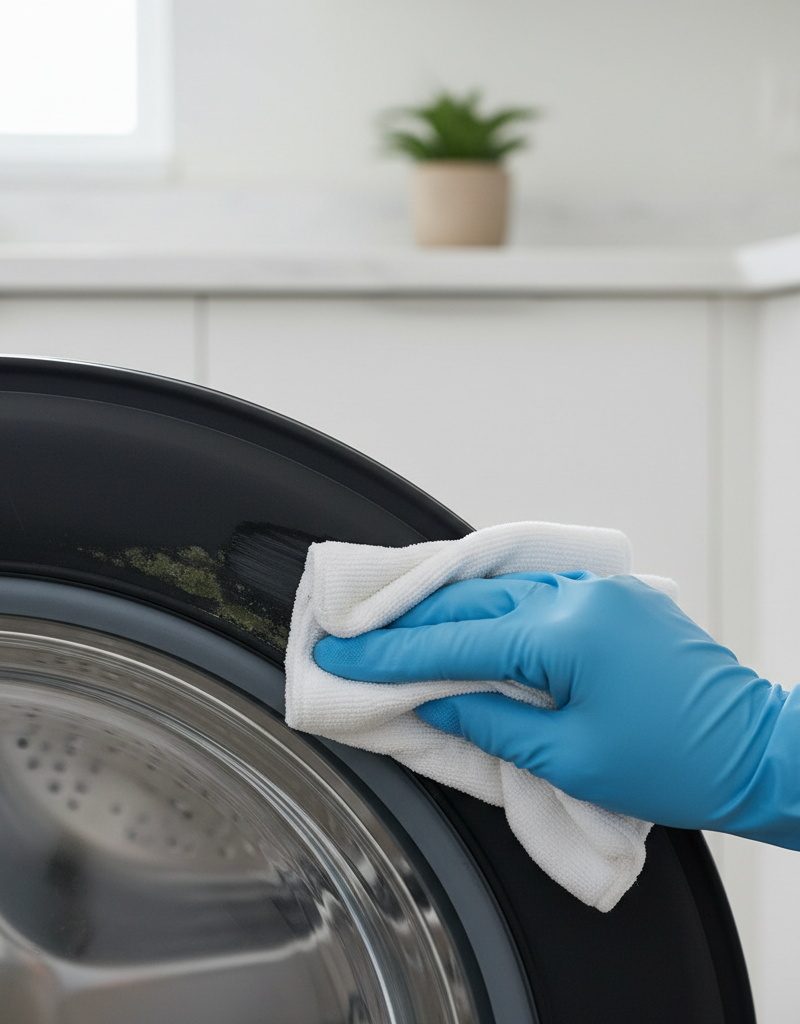
- Sometimes keys, coins, or even a bra underwire slips out of a pocket and ends up between the inner drum and outer tub, or down in the pump. With the machine unplugged, reach into the drum and feel around the agitator or under the wash plate. On front-loaders, check the rubber gasket (boot seal) around the door real careful. A flashlight helps. If you find something, pull it out. If the noise is more like grinding or a light clicking, the drain pump could be the culprit. Check the pump filter or coin trap, usually behind a small access panel at the bottom front of the machine. Keep a pan and towel handy, because some water’ll probably come out.
- Safety: Always unplug the machine! Watch out for sharp stuff.
-
Check the Drive Pulley and Belt — A common wear point.
- On a lot of top-loaders and some front-loaders, a belt links the motor to the transmission or drum pulley. If that belt is worn, loose, or damaged, it can slip and make squealing or thumping noises. Unplug the machine, then get to the rear or front panel, depending on your model. Look the belt over for cracks, fraying, or too much slack. If it looks rough, replace it. While you’re in there, check the pulley for wobble or damage.
- Tools: Screwdriver set, work gloves.
-
Examine the Motor Coupler — For direct-drive models.
- Some older Whirlpool/Kenmore direct-drive top-loaders use a motor coupler instead of a belt. This rubber-and-plastic piece connects the motor straight to the transmission. After a while, it wears out and starts making a loud grinding or knocking noise, especially during agitation or spin. You’ll need to tip the machine back and pull the motor to get at it. If the rubber’s shredded or the plastic ends are chewed up, it’s time for a replacement. It’s not a terrible job, but you do have to remove a few parts.
- Pro Tip: This is a classic diagnostic for a very specific type of thumping/grinding noise.
-
Assess the Shock Absorbers or Suspension Springs — When it gets bouncy.
- If the washer is shaking like crazy during spin, and you’ve already ruled out a bad load and level issues, the shock absorbers (front-loaders) or suspension springs (top-loaders) might be worn out. These parts keep the tub under control. With the machine unplugged and panels off, find them and inspect them. Shocks should resist when you compress them. Springs shouldn’t be broken or popped loose. A bad shock usually won’t rebound the way it should. You may have to pull the tub counterweights to see everything clearly. It’s a little more involved, but still doable if you’re patient.
- Tools: Screwdriver, possibly a socket wrench.
-
Inspect the Tub Bearings — The dreaded growl.
- This is often the reason behind a loud roaring or grinding noise that gets worse in spin. It sounds like a jet engine winding up. To check it, unplug the machine, open the door or lid, and try lifting the inner drum up and down, then side to side. There shouldn’t be much play. If you feel a lot of wobble or hear grinding, the tub bearings are probably shot. That’s an advanced DIY repair. You’re usually looking at special tools to press new bearings in, and the job often means tearing down a big chunk of the machine, outer tub and all. For plenty of folks, this is the point where you call a pro, or maybe start shopping for a new washer, because the repair bill can get ugly — often $300-$500 for parts and labor if you hire it out, or $150-$250 for parts if you tackle it yourself. I pulled a water heater in Frisco last month that had exactly this kind of “I’m done” failure pattern in another appliance setup, and the homeowner had already been down the rabbit hole of trying to force a worn part back into service. Same story, different machine. My cousin, Mark, tried this on his older Maytag in Naperville a few years back, spent a whole weekend on it, and still had to buy a new outer tub because he couldn’t get the old bearings out without wrecking the housing. Costly lesson.
- Difficulty: Advanced DIY. Seriously weigh the cost and the headache here.
-
Check the Drain Pump — Whining or grinding.
- If the noise is a high-pitched whine, grinding, or buzzing, especially during the drain cycle right before spin, the drain pump could be the problem. Get to the pump, usually at the bottom front or rear, and look for anything stuck in the pump or the hoses connected to it. Sometimes the impeller breaks and makes a racket while draining poorly. You might be able to clear a clog or swap in a new pump without too much fuss. A new pump usually runs $40-$100, and it’s often just a handful of screws and hose clamps to replace.
- Safety: Water present. Disconnect power.
Common Causes
- Unbalanced Loads: Too many heavy items, like denim or blankets, shoved to one side of the drum. This is the big one.
- Uneven Machine: The washer isn’t sitting level on the floor, so it rocks and vibrates.
- Foreign Objects: Coins, keys, socks, or small toys getting into the gap between the tubs or into the pump.
- Worn Drum Bearings: The bearings that let the drum spin smoothly are worn out, which brings on a loud grinding or roaring sound.
- Failing Shock Absorbers/Suspension Springs: These parts are supposed to soak up vibration. Once they’re tired, the tub gets unstable.
- Loose or Worn Drive Belt/Motor Coupler: The connection from the motor to the drum is slipping or damaged.
- Faulty Drain Pump: A pump with a damaged impeller or something jammed inside can make a whining or grinding noise.
Common Mistakes
- Ignoring the Noise: Calling it “just a noisy washer.” Small issues turn into expensive ones fast.
- Overloading the Machine: Stuffing in too many clothes, which almost guarantees an unbalanced load and extra stress on parts.
- Forgetting to Check Pockets: Letting coins, keys, and little junk cause havoc inside the drum or pump.
- Not Leveling the Machine Annually: Even if it was level on day one, houses settle and vibrations loosen the feet. Check it once a year or so.
- Attempting Complex Repairs Without Proper Tools/Knowledge: Tub bearing replacement is a bear without the right pullers or press. Know where the line is.
- Assuming the Worst Immediately: Jumping straight to “I need a new washer” before you’ve checked the simple stuff.
Cost & Time Breakdown
Here’s a rough idea of what you’re looking at for the most common noise fixes.
| Task | DIY Cost | Pro Cost (Labor + Parts) | Time (DIY) |
|---|---|---|---|
| Rebalance Load/Level Machine | $0 | $0–$50 (service call fee) | 5–15 minutes |
| Remove Foreign Object | $0 | $50–$150 | 10–30 minutes |
| Replace Drive Belt/Coupler | $20-$50 | $150-$250 | 30–60 minutes |
| Replace Drain Pump | $40-$100 | $175-$300 | 45–90 minutes |
| Replace Shock Absorbers/Springs | $50-$150 | $200-$400 | 1–3 hours |
| Replace Tub Bearings | $100-$250 (parts) | $350-$600+ | 4–8 hours (or more) |
Tips & Prevention
- Load Evenly: Spread clothes out as evenly as you can in the drum. Don’t wash one heavy item by itself; add a few smaller pieces to balance it.
- Check Pockets: Empty every pocket before laundry. That’s a big one for keeping foreign objects out of the washer.
- Level Annually: Pull out that spirit level once a year and make sure the machine’s still sitting right. Adjust the feet if it’s drifted.
- Don’t Overload: Stick close to the manufacturer’s load recommendations. Overloading beats up the motor, bearings, and suspension.
- Listen Up: Pay attention to any new noise. The sooner you catch it, the less likely it is to turn into a big repair.
- Regular Cleaning: Clean the pump filter/coin trap every few months so clogs don’t start causing pump noise.
When to Call a Professional
Look, I’m all for homeowners getting their hands dirty, but some jobs are just too much. If you’ve gone through the basic troubleshooting — checked the load, leveled the machine, looked for obvious obstructions — and the noise is still there, especially if it’s a steady grinding, roaring, or thumping, it might be time to bring in the cavalry. If you suspect bad tub bearings, that’s a serious job that usually calls for specialized tools and a lot of disassembly. Botch a bearing replacement and you can do more damage, including needing a new outer tub, which can push the repair cost close to what a new machine costs. If you’re also seeing water leaks, or if you’re not comfortable taking panels off your appliance, don’t gamble on it — a licensed appliance technician can sort it out safely and quickly. You don’t want to flood the laundry room or create an electrical mess trying to save a few bucks on a repair that’s out of your wheelhouse.
Related Articles
Keep troubleshooting with these hand-picked guides from FixlyGuide:
- That Mildew Smell in Your Washer? Here’s the Real Reason — Is a musty odor taking over your laundry room? That mildew smell from your washing machine isn't just unpleasant—it's a sign of a deeper pr…
- That Mildew Smell in Your Washer? Here's the Real Fix. — Tired of 'clean' laundry smelling musty? The problem isn't your detergent; it's trapped bacteria and mold inside your washing machine. We'l…
- The Silent Fire Hazard Lurking In Your Laundry Room — Don't let a clogged dryer vent become a silent fire starter. Learn why this common oversight is so dangerous, the clear warning signs to lo…
- Why Your Microwave Sparks and How to Prevent a Fire — A sparking microwave is alarming, but often an easy fix. Discover the common causes of microwave arcing, from forgotten forks to hidden dam…
- My Toaster Only Toasts One Side: The Hidden Thermostat Flaw — If your toaster only toasts one side, the cause is often an imbalanced internal thermostat or misaligned heating element, a specific flaw y…
- The Secret Culprit Behind Your Leaky Washer (It's Not Always the Hose!) — Don't panic about a puddle under your washing machine; often, the fix is simpler and cheaper than you think, especially when the leak origi…
What should this project cost?
Enter your project details for a realistic cost range before you call anyone.
Cost depends heavily on which system turns out to be the source.
- Regional adjustment
- National average
- Labor share (typical)
- ~$1,620
- Quotes to collect
- 3 written estimates
Educational estimate based on national averages — not a binding quote. Always confirm with written local estimates.
Get the print-ready PDF of this guide
A clean, ad-free, printable version you can keep on your phone or pin to the workshop wall. Free with a FixlyGuide account.
- Print-optimized layout
- Tools, materials & every step included
- Saved to your account
Frequently asked questions
Why does my top-load washer make a loud thumping noise during spin?+
A loud thumping in a top-loader is most often due to an unbalanced load of laundry. Large, heavy items like blankets or jeans tend to clump on one side, causing the inner tub to hit the outer tub. Redistribute the clothes evenly, and make sure the machine is level.
Can an uneven floor cause my washing machine to be noisy?+
Absolutely. If your washing machine isn't perfectly level, it will vibrate excessively, 'walk' across the floor, and make loud banging or thumping noises during the spin cycle. Use a spirit level to check it front-to-back and side-to-side, and adjust the leveling feet as needed.
What's that high-pitched whining or grinding sound from my washer?+
That type of sound, especially during the drain cycle before the spin, often points to an issue with the drain pump. It could be a foreign object lodged in the pump's impeller or the pump itself starting to fail. Check the pump filter first for obstructions.
My front-load washer makes a loud roaring noise during spin. What could it be?+
A loud roaring or jet-engine-like sound that gets worse during the spin cycle is a classic symptom of worn-out tub bearings. These bearings allow the inner drum to spin smoothly. Replacing them is an advanced DIY task, often best left to a pro.
Is it safe to keep using my washing machine if it's making a new loud noise?+
It's generally not recommended to ignore new, loud noises from your washer. While it might be a simple fix like an unbalanced load, continuous operation with a serious issue like failing bearings or suspension can lead to more extensive and costly damage, or even water leaks.
How do I check for foreign objects in my washing machine?+
First, unplug the machine. For top-loaders, feel around the agitator and underneath the wash plate. For front-loaders, carefully inspect the rubber gasket (boot seal) around the door for small items. You might also need to check the drain pump filter, usually behind a small access panel at the bottom front.
How often should I check if my washing machine is level?+
It's a good practice to check your washing machine's level at least once a year, or anytime you notice increased vibration or noise. Floors can settle, and the machine's own vibrations can cause the leveling feet to shift over time.
What tools do I need to level my washing machine?+
You'll primarily need a spirit level (a 2-foot level is ideal) to accurately check the machine's level. An adjustable wrench or the specific wrench that might have come with your washer (often stored behind the kick panel) is needed to turn and adjust the leveling feet.
Can I replace washing machine tub bearings myself?+
Replacing tub bearings is an advanced DIY project. It requires significant disassembly of the machine, often special tools like bearing pullers or presses, and a good understanding of mechanics. Many homeowners find the task too complex and opt to call a professional or consider a new appliance, as the repair cost can be high.
Discussion
Loading comments…