- Test the Lid Switch (Top-Loaders) – The safety interlock
- This is a super common failure on older top-loading machines. The lid switch is a small safety part that tells the washer the lid is closed. If it thinks the lid’s open, it won’t spin to keep somebody from getting hurt.
- Pro Tip: I’ve seen folks try to bypass these with electrical tape. Don’t do it. It’s a safety feature, and bypassing it is asking for trouble.
Plumbing · Leak
| Project category | Plumbing |
|---|---|
| Problem type | Leak |
| Trade required | Plumbing |
| Urgency | Emergency — act now |
| Safety risk | High safety risk |
| DIY suitability | DIY for experienced homeowners |
| Cost category | Low cost |
| Typical timeline | Shut water off now; repair usually same or next day |
| Contractor type | Licensed plumber |
Repair option
Isolate at the shutoff, replace the failed component, and dry the cavity fully.
Replacement option
Repipe the run or the branch when corrosion is widespread.
Common causes
- Failed supply line or shutoff valve
- Worn washers, cartridges, or P-trap connections
- Pinhole corrosion in older copper
Relevant tools:emergency checklistdiy or hire a pro
Published September 3, 2026Last updated September 3, 2026
Tools & materials you'll need
Affiliate linksAs an Amazon Associate FixlyGuide earns from qualifying purchases — at no extra cost to you. Prices and availability are accurate as of publication and subject to change.
Quick Answer
Ever pull laundry out of the washer expecting damp, ready-for-the-dryer clothes, only to find them sloshing wet? That’s a classic sign your washing machine isn’t spinning. Most times, it’s not a death sentence for your appliance. You’re probably dealing with an unbalanced load, a gunked-up drain pump filter, or a finicky lid switch. I’ve seen it hundreds of times. Give it a few quick checks, and you’ll often have the machine back in business without calling in the cavalry.
The Problem
You just finished a wash cycle, and when you open that washer door or lift the lid, your clothes are sitting there, absolutely saturated. No spin, no dampness—just a heavy, wet mess. That’s not just annoying; it means your dryer’s going to work overtime, if it can even handle the extra water, and that’s going to cost you more in energy bills. And don’t get me started on mildew if those clothes sit too long. It’s a common headache, but it usually has a pretty straightforward fix.
How It Works
To really get a handle on why your washer isn’t spinning, you’ve gotta understand a bit about how this whole dance works. Think of it like this: your washer doesn’t just slosh water around. It goes through distinct phases – wash, rinse, and spin. The spin cycle, that high-speed whirl, is designed to yank as much water as possible out of your clothes before they hit the dryer. That’s what keeps drying times sane.
Here’s the short version: once the wash and rinse cycles are done, the washer drains out the dirty water. Then the motor kicks into high gear and starts spinning the inner tub fast. That rapid rotation creates centrifugal force, which pushes water out of the clothes and through the tiny holes in the tub. The water gathers in the outer tub and gets pumped out through the drain hose. For all that to happen without drama, a few things have to line up. The load needs to be balanced – if it’s not, the machine protects itself from shaking itself apart by slowing down or stopping the spin. The drain pump has to be clear so the water can get out. And on most top-loaders, that lid switch has to confirm the lid is shut tight for safety; otherwise, that tub won’t spin at 1000 RPMs with the lid open. Front-loaders usually use a door lock that does the same job. Your washer’s control board is watching all this. If something looks off – a heavy load, a blocked drain, or an open lid – it’ll stop the spin or never start it at all, which saves the machine and keeps your fingers out of trouble. Once you understand those basic pieces, you can usually spot where things are going sideways.
Step-by-Step Fix
Alright, let’s get your washer spinning again. Before you touch a thing, always unplug the machine. I’ve heard too many stories about folks getting lit up because they skipped that one simple step. Safety first, always.
-
Check for an Unbalanced Load – The first suspect
- Pop open the washer lid or door. Are all your clothes bunched up on one side? That’s your most common culprit. A heavy, wet blanket or a few towels can throw the whole thing out of whack. The washer senses that, and to keep it from walking across the laundry room, it’ll slow the spin or stop it cold.
- Action: Spread the clothes out evenly around the agitator or drum. If you’ve only got one heavy item in there, toss in a few smaller items to balance the load. Close the lid/door and start the spin cycle again.
-
Inspect the Drain Pump Filter – The hidden clog
- This one saves a lot of headaches, and it still amazes me how many people don’t even know that filter exists. It catches all the junk that sneaks past your clothes: coins, lint, pet hair, even small socks. If it’s packed solid, the washer can’t drain right, and if it can’t drain, it won’t spin.
- Tools: Flathead screwdriver (for access panel), shallow pan or towels (for water), old toothbrush (for cleaning).
- Action: Find the drain pump filter. On front-loaders, it’s usually behind a little access panel at the bottom front of the machine. On top-loaders, it can be harder to track down, sometimes meaning you’ve gotta tilt the machine or pull a front panel. Check your owner’s manual if you’re not seeing it. Put towels or a shallow pan underneath, because you will get water. Slowly unscrew or unclip the filter and pull it out. Clean off every bit of lint, hair, and debris. I pulled a drain filter in Frisco last month that had enough gunk in it to start a small compost pile. Rinse it under the tap and put it back. Make sure it’s threaded tight.
-
Test the Lid Switch (Top-Loaders) – The safety interlock
- This is a super common failure on older top-loading machines. The lid switch is a small safety part that tells the washer the lid is closed. If it thinks the lid’s open, it won’t spin to keep somebody from getting hurt.
- Action: With the washer unplugged, find the lid switch. It’s usually a small plastic or metal prong or button under the lid, near the hinge. When you close the lid, this switch gets pressed down. Sometimes it gets stuck, bent, or just wears out. Gently press the switch by hand. Does it click? Does it spring back? If it feels loose, sticky, or doesn’t click, it may be bad. You can try cleaning around it or wiggling it a bit. If it’s broken, you’ll need a replacement.
- Pro Tip: I’ve seen folks try to bypass these with electrical tape. Don’t do it. It’s a safety feature, and bypassing it is asking for trouble.
-
Examine the Drive Belt – The silent slip
- This applies to a lot of machines, though some newer ones are direct drive. The drive belt links the motor to the transmission or tub, which is what makes it spin. If it’s worn, loose, or snapped, the tub won’t spin, or it’ll barely turn.
- Tools: Wrench set (for panel removal), flashlight.
- Action: This one’s a little more involved. You’ll need to pull the back or front panel off your washer (again, unplug it first). Once you’re inside, locate the motor and the big pulley for the tub. You should see a rubber belt connecting them. Look for cracks, fraying, or a complete break. If it’s loose, you might be able to adjust the motor position (if your model allows it) or you may need a replacement. If it’s broken, that’s a swap-out job. If you’re not comfortable with this, it’s time to call a pro.
-
Check the Motor Coupling (some Whirlpool/Kenmore models) – The plastic weak link
- Some direct-drive models, especially a lot of older Whirlpool and Kenmore top-loaders, use a plastic motor coupling to connect the motor to the transmission. It’s meant to fail before the motor or transmission does, kind of like a mechanical fuse.
- Tools: Screwdriver, nut driver, flashlight.
- Action: This means removing the washer’s outer cabinet. With the machine unplugged, carefully remove the control panel, then unclip and lift the main cabinet. The motor coupling sits between the motor and the transmission, usually down at the center bottom. If it’s gone bad, you’ll see two plastic pieces with rubber bits, and they’ll probably be cracked, shredded, or flat-out broken. Replacing it isn’t too hard, but it does involve some lifting and careful handling of heavy parts. Solid moderate-difficulty DIY work, but totally doable if you take your time.
-
Look for Drainage Issues – It can’t spin if it can’t drain
- This overlaps a little with the pump filter, but I like to check it separately. If water isn’t draining out, the washer won’t go into high-speed spin because it’s too heavy and it’ll hammer the machine.
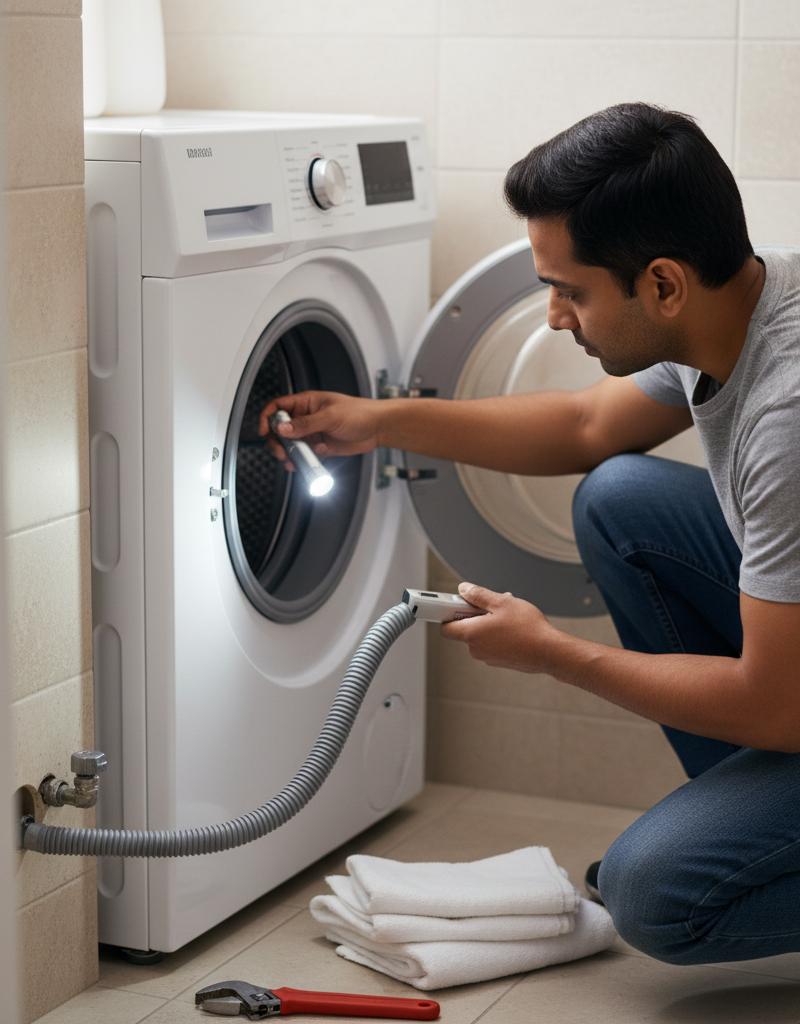
- Action: Check the drain hose. Is it kinked? Is it shoved too far down into the standpipe (which can create a siphon effect and mess with draining, or block it outright)? Pull it back a bit from the standpipe so there’s an air gap. Make sure it isn’t clogged. You may need to disconnect it from the back of the washer and check for blockage there, too.
Common Causes
I’ve seen just about every reason under the sun why a washer quits spinning. But most of ’em come back to a few regular offenders:
- Unbalanced Loads: This is probably 70% of the calls I get for
Related Articles
Keep troubleshooting with these hand-picked guides from FixlyGuide:
- That Mildew Smell in Your Washer? Here’s the Real Reason — Is a musty odor taking over your laundry room? That mildew smell from your washing machine isn't just unpleasant—it's a sign of a deeper pr…
- That Mildew Smell in Your Washer? Here's the Real Fix. — Tired of 'clean' laundry smelling musty? The problem isn't your detergent; it's trapped bacteria and mold inside your washing machine. We'l…
- Why Your Dishwasher Leaves Dishes Soaking Wet (And It's Not Your Rinse Aid) — Discover the real reasons your dishwasher isn't drying dishes and how to fix them, from blocked vents to faulty heating elements. Don't let…
- The $5 Part That Stops Your Fridge From Leaking (And Why It Fails) — A leaking refrigerator can lead to serious floor damage and appliance issues. Often, the culprit is a clogged defrost drain, a simple fix m…
- The Mystery of the Warm Fridge: Why Your Food Is Spoiling (and When to Call a Pro) — If your refrigerator isn't keeping food cold, it could be a simple fix or a serious problem requiring a professional. Learn what to check a…
- The Secret Culprit Behind Your Leaky Washer (It's Not Always the Hose!) — Don't panic about a puddle under your washing machine; often, the fix is simpler and cheaper than you think, especially when the leak origi…
Should you do this yourself?
Answer five quick questions before you start. Safety outranks savings every time.
Your experience with work like this
How high do you have to work?
Does the job involve any of these?
Will it need a permit?
Specialty tools
Free and instant. Educational guidance only — not a quote, inspection, or professional diagnosis.
What should this project cost?
Enter your project details for a realistic cost range before you call anyone.
Common repairs run $150–$650; repipes and water-heater replacements reach $1,500–$4,500.
- Regional adjustment
- National average
- Labor share (typical)
- ~$754
- Quotes to collect
- 3 written estimates
Educational estimate based on national averages — not a binding quote. Always confirm with written local estimates.
Fixly Project Decision Box
- DIY difficulty
- Moderate
- Estimated time
- 30 minutes – half a day
- Cost level
- Moderate
Main tools / materials
- Adjustable wrench
- Plunger or drain auger
- Bucket and towels
- Thread tape
When to stop and call a pro
- Water you cannot shut off at the fixture or main
- Sewage backing up into more than one fixture
- Water near electrical panels or outlets
- Gas water heater work beyond relighting a pilot
Need professional help?
Get a Licensed PlumberGet the print-ready PDF of this guide
A clean, ad-free, printable version you can keep on your phone or pin to the workshop wall. Free with a FixlyGuide account.
- Print-optimized layout
- Tools, materials & every step included
- Saved to your account
Frequently asked questions
Why does my washer stop spinning with wet clothes?+
Most often, it's an unbalanced load that triggers the machine's safety shut-off to prevent excessive vibration and damage. Other common reasons include a clogged drain pump filter or a faulty lid switch preventing the spin cycle from engaging.
Can an unbalanced load damage my washing machine?+
Yes, severely unbalanced loads can cause the tub to hit the sides of the machine excessively, leading to wear on suspension components, bearings, and even the motor. It's best to stop the cycle and redistribute the clothes to prevent long-term damage.
How do I check my washer's drain pump filter?+
The drain pump filter is typically behind a small access panel at the bottom front of a front-loading machine. For top-loaders, consult your manual. Place towels or a shallow pan underneath, then slowly unscrew the filter to clean out debris like coins, lint, and hair.
What does a bad lid switch do on a top-load washer?+
A faulty lid switch prevents the spin cycle from starting because the washer's safety mechanism thinks the lid is open. You'll often find clothes washed and rinsed, but still soaking wet, as the spin never engaged.
Should I try to fix a drive belt myself?+
Replacing a drive belt is a moderate DIY task that involves removing panels and accessing internal components. If you're comfortable with basic tools and following instructions, it's doable. If not, a professional can handle it quickly.
Why would my washer drain but not spin?+
If your washer drains but doesn't spin, the drain pump is likely working fine. The issue then points more towards an unbalanced load, a faulty lid switch (top-loader), a broken drive belt, or a motor coupling issue rather than a drainage blockage.
How much does it cost to replace a washer motor coupling?+
The part itself is usually quite inexpensive, often in the $15-$30 range. If you DIY, that's your only cost. If you hire a professional, expect to pay for parts plus 1-2 hours of labor, typically ranging from $150 to $300 depending on your area.
Is it normal for a washer to make a thumping noise during spin?+
A slight thumping can be normal with very heavy loads or certain fabrics. However, loud, violent thumping often indicates a severely unbalanced load. Stop the machine immediately and redistribute the contents to prevent damage to the washer and your floor.
What's the difference between a direct drive and belt drive washer?+
A direct drive washer has the motor directly connected to the agitator or drum, often using a motor coupling. A belt drive washer uses a rubber belt to transfer power from the motor to the transmission and tub. Direct drive models tend to have fewer parts, but both have their pros and cons.
How can I prevent my washer from going out of balance?+
To prevent unbalanced loads, avoid washing single, very heavy items like blankets by themselves. Try to mix large items with smaller ones, and avoid overfilling the machine. Distribute clothes evenly before starting the cycle, especially in top-loaders.
Discussion
Loading comments…