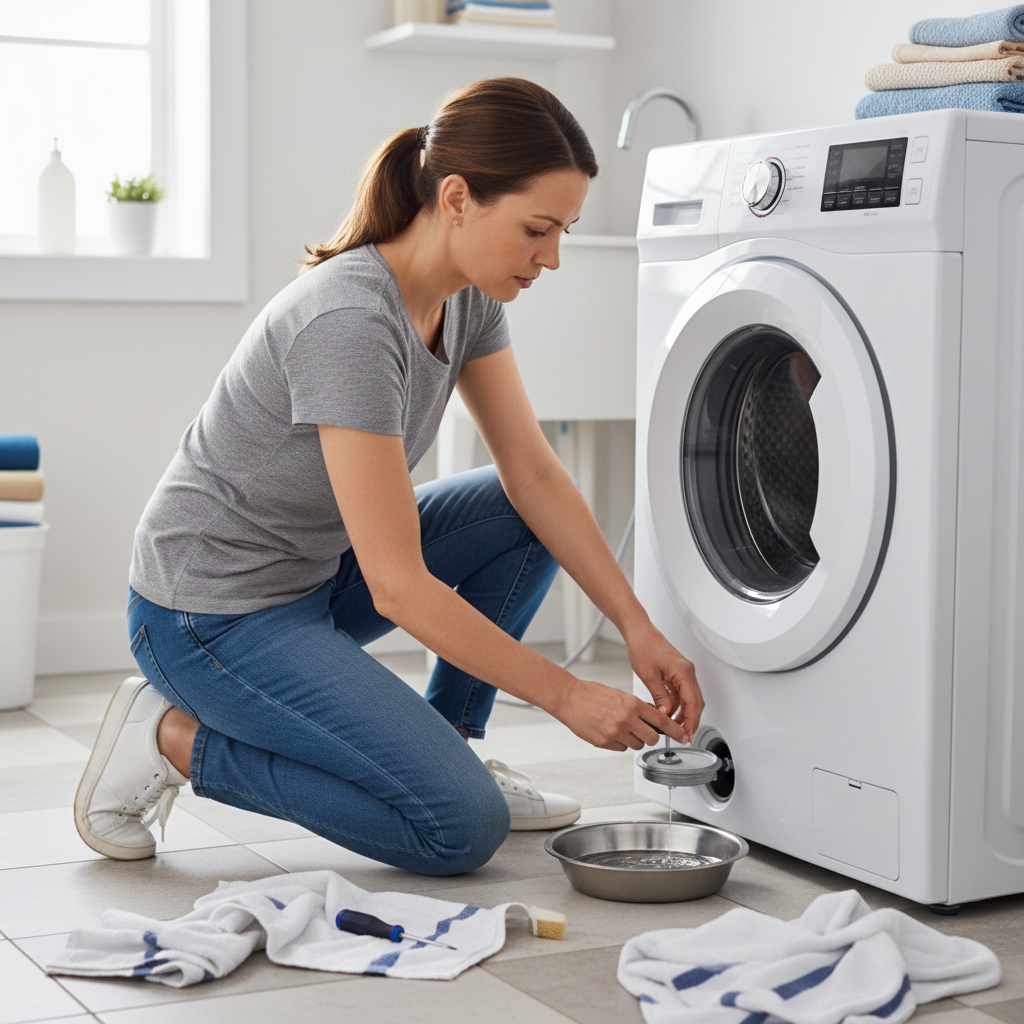
- Clear the Area and Prep for Water — Get some old towels, a shallow pan, and a bucket ready. You’re gonna deal with water, and maybe a lot of it, so don’t wing it.
- If it's clear: Move on. If it’s kinked, straighten it out, then run a drain/spin cycle and see if you’re back in business.
- Inspect and Clear the Drain Pump Filter/Coin Trap — This is the usual suspect, especially on front-loaders. These filters catch coins, buttons, lint, and whatever else got left in a pocket before it reaches the pump impeller.
- Location: On most front-loaders, you’ll find a small access panel down near the front bottom. On some top-loaders, it may be behind a service panel. Check your owner’s manual if you can’t find it.
- Resistance: If it feels stiff or won’t turn, you’ve likely found your clog. Carefully remove the obstruction. If it spins fine but you still get no drain, the pump motor may be bad, or it may not be getting power.
Plumbing · Clog
| Project category | Plumbing |
|---|---|
| Problem type | Clog |
| Trade required | Plumbing |
| Urgency | Soon — within weeks |
| Safety risk | Low safety risk |
| DIY suitability | DIY friendly |
| Cost category | Low cost |
| Typical timeline | Same-day DIY attempt; pro visit within a day or two |
| Contractor type | Licensed plumber |
Repair option
Plunger, hand auger, or trap cleanout before chemicals.
Replacement option
Line replacement when clogs return in the same spot repeatedly.
Common causes
- Hair and soap buildup in the trap
- Grease cooling in the branch line
- Flushed wipes or foreign objects
Relevant tools:diy difficultydiy or hire a pro
Published August 27, 2026Last updated August 27, 2026
Tools & materials you'll need
Affiliate links- AmazonScrewdriver setPhillips and flathead
- AmazonAdjustable pliers
- AmazonFlashlight
- AmazonShallow pan or baking sheetfor catching water
- AmazonBucketfor larger water volume
- AmazonOld toothbrush or small brushfor cleaning filter
- AmazonMultimeteroptional, for advanced electrical checks
- AmazonWork glovesoptional, for protection
- AmazonOld towelsseveral
As an Amazon Associate FixlyGuide earns from qualifying purchases — at no extra cost to you. Prices and availability are accurate as of publication and subject to change.
Quick Answer
If your washing machine's left your clothes swimming in a soupy mess, odds are you've got a drainage problem. Most of the time, it's a clogged drain hose or a choked-up pump filter. Other times, it’s a tired drain pump or a bad lid switch or pressure sensor telling the machine it’s not safe to spin. Don’t panic; a lot of these fixes are DIY-friendly, but knowing when to call in the cavalry can save you a pile of grief.
The Problem
There’s nothing quite like opening your washer after a cycle and finding your clothes sitting in a puddle of dirty water. It’s a gut punch, especially when you’ve got a whole basket of laundry waiting. When your washer won’t drain, the whole cycle gets hung up, and you’re stuck with soaking wet, unwrung-out clothes. Past the obvious annoyance, that standing water can start to stink, and if you leave it long enough, mold and mildew can set up shop inside the machine.
I’ve seen this mess hundreds of times over the years. Folks get worked up, thinking the washer’s dead as a doornail. And sure, sometimes it is. But more often than not, it’s something you can handle with a few basic tools and a little elbow grease. The trick is figuring out why it’s not draining. Is it a blockage? A mechanical failure? Or is the machine just plain mixed up because a sensor’s acting goofy? We’ll walk through the whole thing.
How It Works
To figure out why your washer isn’t draining, it helps to know how it ought to work. Think of the machine like a little water dance — in, out, then spin. Here’s the quick rundown:
- Filling: Water comes into the tub through fill valves, usually after the lid is closed and the cycle starts.
- Agitation/Tumbling: The agitator or impeller moves the clothes and water around, getting them clean.
- Draining: This is where our trouble starts. Once the wash or rinse cycle is done, the machine needs to dump the dirty water. That job falls mostly on the drain pump. The pump’s impeller makes suction, pulling water from the bottom of the tub through a filter (sometimes called a coin trap or lint filter) and then pushing it out through the drain hose, usually into a utility sink, a standpipe, or a floor drain.
- Spinning: After most of the water’s gone, the drum spins at high speed (often 800-1400 RPMs for front-loaders) to sling the rest of the water out of the clothes with centrifugal force. That spin cycle won’t even start if the machine thinks there’s still too much water in the tub, usually because of a pressure switch or water level sensor.
There are safety parts in the mix too. The lid switch on top-loaders, or the door lock mechanism on front-loaders, keeps the machine from draining or spinning if the lid or door isn’t shut and latched all the way. If that switch goes bad, the washer thinks the lid’s open and just sits there.
Bottom line: a good drain depends on clear plumbing, a working pump, and the right sensors telling the control board everything’s fine. If one link breaks, you’ve got a tub full of water and a problem on your hands.
Step-by-Step Fix
Alright, let’s get after it. Before you touch anything, always unplug your washing machine from the wall outlet. Don’t even think about poking around in there with the power on. Water and electricity are a nasty mix, plain and simple.
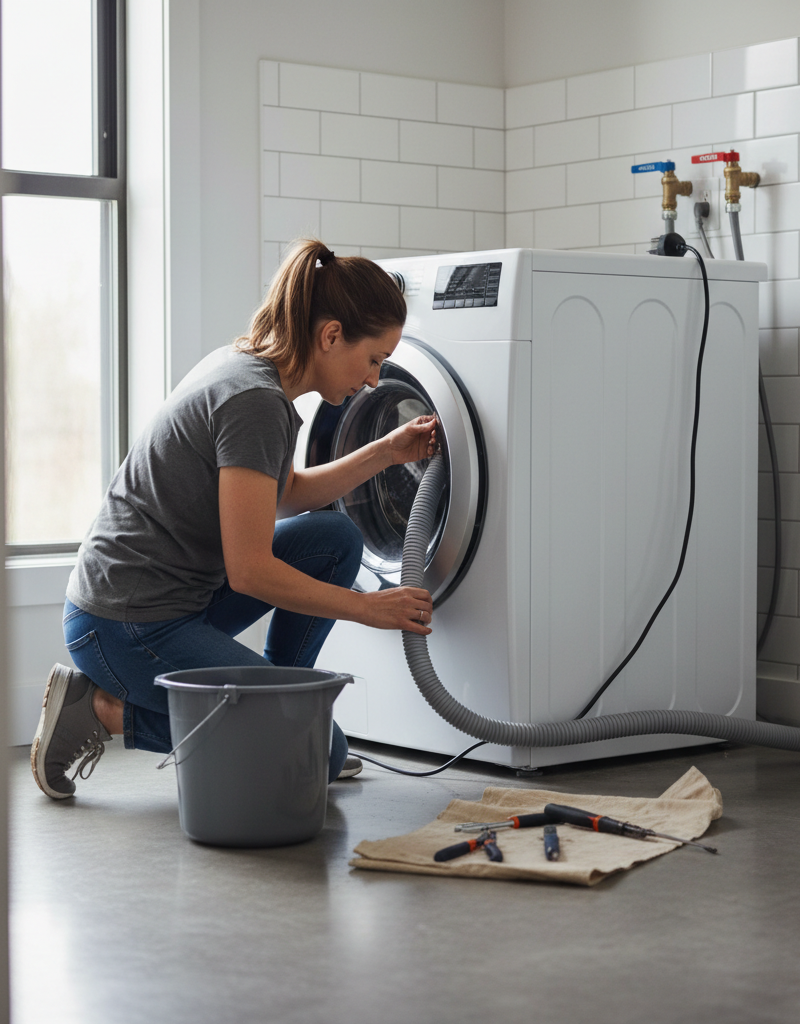
- Clear the Area and Prep for Water — Get some old towels, a shallow pan, and a bucket ready. You’re gonna deal with water, and maybe a lot of it, so don’t wing it.
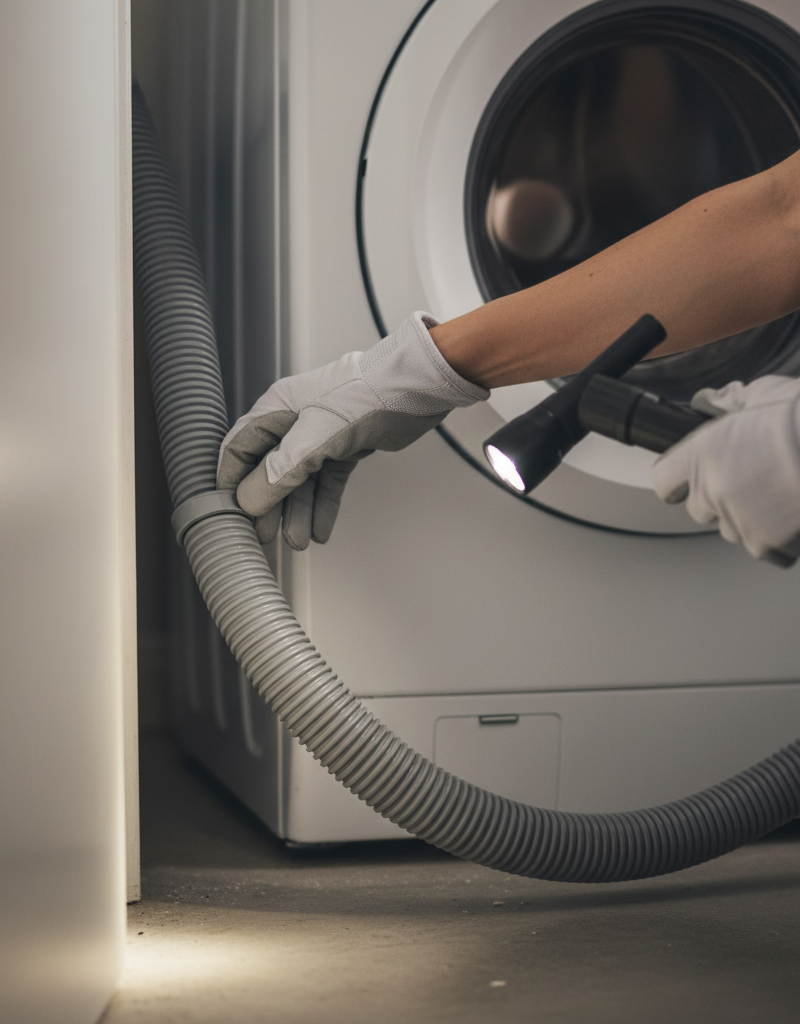
- Check the Drain Hose — Start here. It’s the easy win. Make sure the hose isn’t kinked or crushed behind the machine. Pull the washer out a bit and check the whole hose from end to end. It gets pinched behind the cabinet all the time, or twisted during a move.
- If it's clear: Move on. If it’s kinked, straighten it out, then run a drain/spin cycle and see if you’re back in business.
- Standpipe height: Is the drain hose going into a standpipe? Make sure that standpipe isn’t too high. If the standpipe opening is higher than 96 inches (8 feet) from the floor, or lower than 30 inches, the pump might struggle or you could get siphoning issues. Ideal range is typically 30-36 inches.
- Inspect and Clear the Drain Pump Filter/Coin Trap — This is the usual suspect, especially on front-loaders. These filters catch coins, buttons, lint, and whatever else got left in a pocket before it reaches the pump impeller.
- Location: On most front-loaders, you’ll find a small access panel down near the front bottom. On some top-loaders, it may be behind a service panel. Check your owner’s manual if you can’t find it.
- Process: Set your shallow pan under the access panel. Slowly unscrew the cap or pull out the filter. Water’s probably coming out. Be ready. I mean really ready. I pulled a water heater in Frisco last month that had exactly this kind of surprise — folks think a towel’ll catch it all, and next thing you know, the laundry room’s got a puddle you can skate on. Clean off any debris from the filter. An old toothbrush helps get into the little grooves. Shine a flashlight into the pump housing and look for anything jammed in the impeller.
- Test the Drain Pump — If the filter was clear, the pump itself may be the issue. You can often reach it from the rear or bottom of the machine once you pull the access panels. With the washer unplugged, check the pump impeller (those little fan-like blades) to see if it spins freely. Sometimes a bra wire, a sock, or a chunk of debris gets wrapped around it and locks the whole thing up.
- Resistance: If it feels stiff or won’t turn, you’ve likely found your clog. Carefully remove the obstruction. If it spins fine but you still get no drain, the pump motor may be bad, or it may not be getting power.
- Electrical check (Advanced): If you’re comfortable with a multimeter, you can check continuity in the pump motor windings. This is an advanced step and should only be performed if you know what you're doing with electrical components. For most homeowners, if the pump is clear and still dead, it’s time to replace it or call a pro.
- Check the Lid Switch/Door Lock — On top-loaders, the lid switch is usually under the main top, near the hinge. On front-loaders, it’s the door latch assembly. If this switch goes bad, the washer thinks the door’s open and won’t drain or spin for safety.
- Top-loader: With the machine unplugged, you can usually test continuity on the switch with a multimeter if you can get to the terminals. Sometimes the plastic lever that trips the switch breaks. If it’s a mechanical failure, you might actually see damage.
- Front-loader: The door lock setup is more complicated. Check the display for error codes. A lot of times, if the door isn’t latching right, you’ll see an "F" code or "dL" (door lock) code. Sometimes it’s just a loose wire. Replacing it often means pulling the front panel.
- Examine the Pressure Switch/Water Level Sensor — This sensor tells the control board how much water’s in the tub. If it’s bad, it might read no water when the tub’s full, or too much water when it’s actually empty. Either way, the cycle gets thrown off. On a lot of machines, it connects by a clear tube to the bottom of the tub.
- Hose Check: Pull the air hose off the pressure switch and blow through it. You should hear bubbles in the tub. If you don’t, that hose is probably clogged or kinked, and the sensor can’t read right.
- Switch Check (Advanced): A multimeter can check for continuity changes when you blow into the switch, but now we’re getting into deeper diagnostics. A common failure is a clogged or brittle hose leading to the sensor.
If It's Still Full of Water
If you’ve done all this and the tub’s still full, you’ve got a real issue. You’ll need to get the water out manually before you can do any bigger repair or move the machine. The easiest way is to lower the drain hose into a bucket on the floor. Gravity will do most of the work. If it still won’t drain, there’s a solid clog somewhere in the main drain line from the tub to the pump. That usually means pulling the back panel and disconnecting the big rubber hoses right off the tub.
Common Causes
- Clogged Drain Pump Filter: Big one. Coins, keys, lint, socks, you name it — they end up here.
- Kinked or Blocked Drain Hose: A simple kink can stop flow cold. A sock or other small item can get lodged inside too.
- Faulty Drain Pump: Pumps wear out. Impellers break, motors burn up. They’re built to move a lot of water.
- Lid Switch/Door Lock Malfunction: The machine won’t drain or spin if it thinks the lid or door isn’t secured.
- Pressure Switch/Water Level Sensor Failure: If the machine can’t read water levels right, it can throw the whole drain cycle off.
- Overloading the Machine: Too many clothes can mess with draining, especially if they throw the spin balance off.
Common Mistakes
- Ignoring the owner's manual: Your manual’s your best friend. It shows where the parts are and how your model wants to be handled.
- Not unplugging the machine: Seriously, folks, cut the power. Electrocution is no joke.
- Skipping the filter check: Lots of homeowners jump straight to a big breakdown diagnosis when a five-minute filter clean would fix it.
- Forcing the lid/door: If the lock mechanism is faulty, forcing it can wreck the plastic bits or the electrical connections.
- Using too much detergent: Excess suds can mess with draining and even throw error codes, especially on high-efficiency machines.
- Calling a pro before basic checks: Don’t pay a service call for a kinked hose or a clogged filter you could’ve fixed yourself for free.
Cost & Time Breakdown
| Task | DIY cost | Pro cost | Time |
|---|---|---|---|
| Unclog drain hose/filter | $0 (supplies) | $100–$250 | 15–30 minutes |
| Diagnose/Replace lid switch | $20–$50 | $150–$300 | 30–60 minutes |
| Diagnose/Replace pressure switch | $30–$70 | $175–$350 | 45–90 minutes |
| Replace drain pump | $50–$150 | $200–$400 | 60–120 minutes |
| Clear internal tub-to-pump clog | $0 (supplies) | $150–$300 | 45–90 minutes |
| Full diagnostic + minor repair | N/A | $100–$250 | 30–60 minutes |
Tips & Prevention
- Check pockets: Always, always, always check pockets before loading the washer. Coins, keys, pens — they’re pump filter killers.
- Don't overload: Give the clothes room to move. Overloading can stress the motor, throw the tub off balance, and make draining harder.
- Use the right detergent: For high-efficiency (HE) machines, use only HE detergent. Too many suds can keep it from draining right.
- Regular filter cleaning: Clean your drain pump filter every 3-6 months, especially if you’ve got pets or you do a ton of laundry. It’s simple upkeep that saves a headache.
- Level the machine: Make sure the washer’s perfectly level. An unbalanced machine can cause cycle and sensor problems, and too much vibration can shake hoses loose.
- Listen for unusual noises: A grinding or humming sound during the drain cycle can mean something’s caught in the pump or the pump is on its last legs.
When to Call a Professional
Look, I’m all for DIY, but there are times you just gotta call in a pro. If you’ve gone through these steps, checked the hoses, cleaned the filter, and even looked at the pump impeller, and the washer still won’t drain, it’s time. Same goes if you suspect a bad motor, a control board problem, or you’re dealing with serious water damage and can’t track down where it’s coming from. Don’t make it worse trying to guess. And if you’re not comfortable messing with electrical parts or disconnecting major plumbing, a licensed appliance repair tech has the tools and the know-how to sort it out safely and fast. Some jobs — the tricky electrical stuff, the big component swaps — really are best left to somebody who does this every day.
Related Articles
Keep troubleshooting with these hand-picked guides from FixlyGuide:
- The Secret Reason Your Ice Maker Stopped (It's Not Clogged!) — Discover the surprisingly common culprit behind a non-functioning refrigerator ice maker and how to fix it with simple steps.
- That Mildew Smell in Your Washer? Here’s the Real Reason — Is a musty odor taking over your laundry room? That mildew smell from your washing machine isn't just unpleasant—it's a sign of a deeper pr…
- That Mildew Smell in Your Washer? Here's the Real Fix. — Tired of 'clean' laundry smelling musty? The problem isn't your detergent; it's trapped bacteria and mold inside your washing machine. We'l…
- Why Your Microwave Sparks and How to Prevent a Fire — A sparking microwave is alarming, but often an easy fix. Discover the common causes of microwave arcing, from forgotten forks to hidden dam…
- The #1 Mistake Homeowners Make When Their Ice Maker Stops (And the Easy Fix) — Is your refrigerator ice maker on strike? Often, a simple oversight or minor clog is the culprit, easily fixable with basic tools.
- The Secret Culprit Behind Your Washing Machine's Spin & Drain Failure (It's Not Always Clogs) — Discover the most overlooked reasons why your washing machine refuses to spin or drain, and how to fix them with simple tools.
Should you do this yourself?
Answer five quick questions before you start. Safety outranks savings every time.
Your experience with work like this
How high do you have to work?
Does the job involve any of these?
Will it need a permit?
Specialty tools
Free and instant. Educational guidance only — not a quote, inspection, or professional diagnosis.
What should this project cost?
Enter your project details for a realistic cost range before you call anyone.
Common repairs run $150–$650; repipes and water-heater replacements reach $1,500–$4,500.
- Regional adjustment
- National average
- Labor share (typical)
- ~$754
- Quotes to collect
- 3 written estimates
Educational estimate based on national averages — not a binding quote. Always confirm with written local estimates.
Fixly Project Decision Box
- DIY difficulty
- Moderate
- Estimated time
- 30 minutes – half a day
- Cost level
- Moderate
Main tools / materials
- Adjustable wrench
- Plunger or drain auger
- Bucket and towels
- Thread tape
When to stop and call a pro
- Water you cannot shut off at the fixture or main
- Sewage backing up into more than one fixture
- Water near electrical panels or outlets
- Gas water heater work beyond relighting a pilot
Need professional help?
Get a Licensed PlumberBefore you start
Check the difficulty, permits, and safety risk — then decide whether to call a pro.
- Estimate this projectGet a cost range for your scope and ZIP before you call anyone.Open
- Get local estimatesSend one request and compare written estimates from vetted pros.Open
Free, no signup required. Estimates are educational guidance, not a quote or an inspection.
Get the print-ready PDF of this guide
A clean, ad-free, printable version you can keep on your phone or pin to the workshop wall. Free with a FixlyGuide account.
- Print-optimized layout
- Tools, materials & every step included
- Saved to your account
Frequently asked questions
Why is my washing machine not draining after a cycle?+
Most commonly, it's a clog in the drain pump filter or the drain hose itself. Small items like coins, lint, or socks often get trapped, preventing water from flowing out. It could also be a faulty drain pump or a malfunctioning lid switch.
How do I manually drain water from my washing machine?+
First, unplug the machine. For front-loaders, locate the drain pump filter access panel, place a shallow pan underneath, and slowly open the filter cap. For top-loaders, you can often lower the drain hose into a bucket on the floor to use gravity. Be prepared for a lot of water.
Where is the drain pump filter located on my washer?+
On most front-loading washing machines, the drain pump filter (sometimes called a coin trap) is located behind a small access panel at the bottom front of the machine. For some top-loaders, it might be behind a larger service panel at the rear or side. Check your owner's manual for the exact location.
Can a clogged drain hose cause a washer not to drain?+
Absolutely. A kinked, crimped, or blocked drain hose is a very common reason for drainage issues. Pull the machine away from the wall to inspect the hose for any obstructions or tight bends. Sometimes, debris can get lodged inside the hose too.
How do I know if my washer's drain pump is bad?+
If the drain pump filter is clean, the hoses are clear, and the machine is still not draining, the pump might be bad. You might hear a humming or grinding noise when it tries to drain but no water movement, or simply no sound at all. With the machine unplugged, check if the pump's impeller spins freely.
What is the lid switch and how does it affect draining?+
The lid switch (on top-loaders) or door lock mechanism (on front-loaders) is a safety device that prevents the machine from operating, including draining and spinning, if the lid or door isn't properly closed and latched. If it's faulty, the machine thinks the door is open and won't proceed with the drain cycle.
Should I use a plumber or an appliance repair technician for a washer drain issue?+
For most internal washing machine drainage issues, like a faulty pump, clogged filter, or sensor problem, an appliance repair technician is your best bet. If the problem is with your home's main drain line or plumbing outside of the washer itself (e.g., a clogged standpipe), then a plumber would be more appropriate.
How often should I clean my washing machine's drain pump filter?+
It's a good practice to clean your drain pump filter every 3 to 6 months, especially if you have pets that shed a lot or frequently wash items with small debris. Regular cleaning helps prevent clogs and ensures efficient drainage, extending the life of your pump.
Can too much detergent cause drainage problems?+
Yes, especially in high-efficiency (HE) washing machines. Using too much detergent, or non-HE detergent in an HE machine, can create an excessive amount of suds. These suds can sometimes interfere with the pressure sensor, leading the machine to believe there's still water in the tub, thus preventing it from draining or spinning properly.
My washer smells bad and has standing water; what should I do?+
First, manually drain the standing water as described earlier. Then, clean out your drain pump filter thoroughly. The bad smell likely comes from stagnant water and mold/mildew build-up. Once drained, run a cleaning cycle with a washing machine cleaner or a cup of white vinegar to sanitize the tub and hoses.
Discussion
Loading comments…