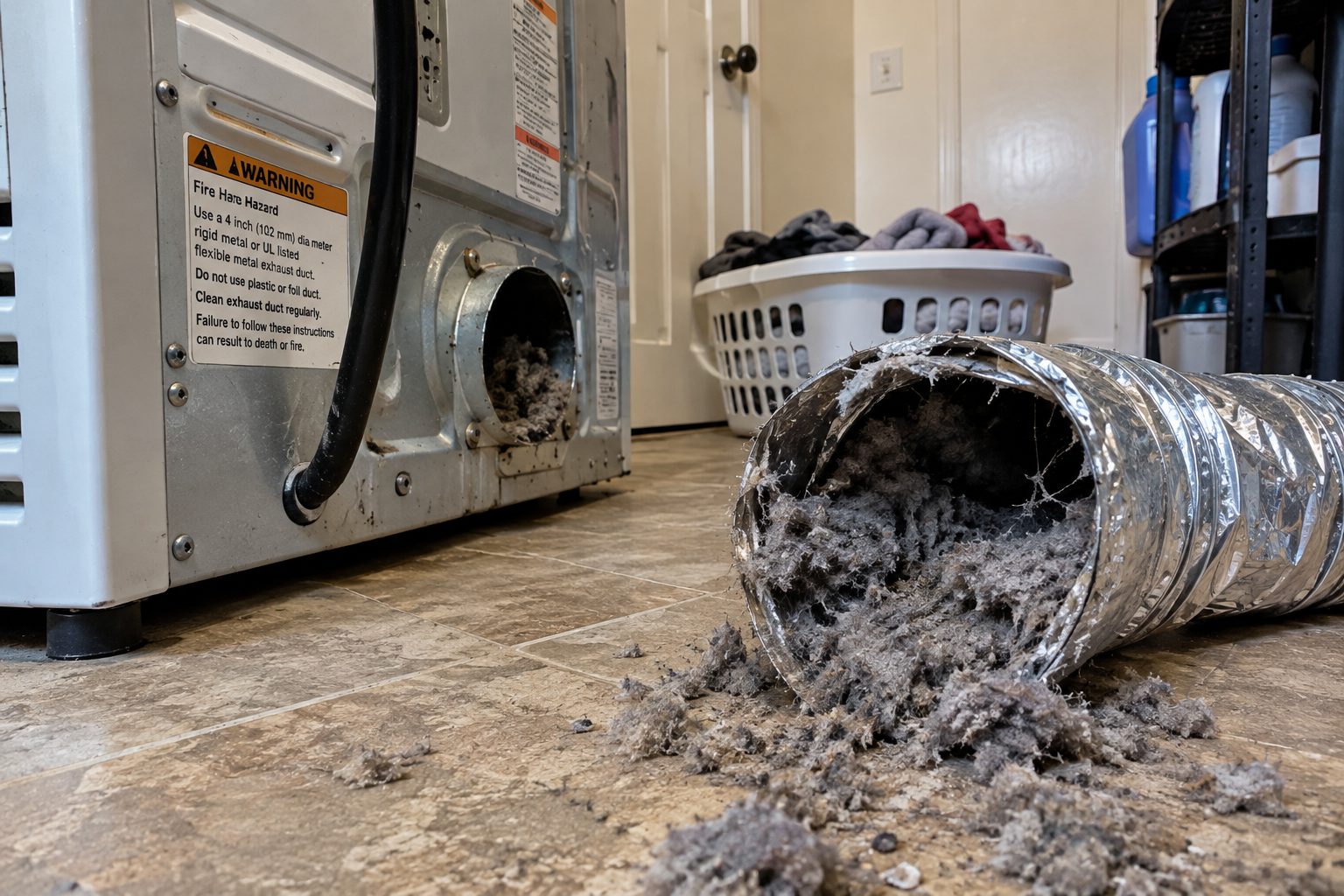
- Improvised vent materials.
- Opening electrical components.
- Forcing cleaning tools through complicated ductwork if you don''t know the layout.
- Operating a dryer that smells like it''s burning.
- Running major appliances from extension cords.
Plumbing · Clog
| Project category | Plumbing |
|---|---|
| Problem type | Clog |
| Trade required | Plumbing |
| Urgency | Soon — within weeks |
| Safety risk | Low safety risk |
| DIY suitability | DIY friendly |
| Cost category | Low cost |
| Typical timeline | Same-day DIY attempt; pro visit within a day or two |
| Contractor type | Licensed plumber |
Repair option
Plunger, hand auger, or trap cleanout before chemicals.
Replacement option
Line replacement when clogs return in the same spot repeatedly.
Common causes
- Hair and soap buildup in the trap
- Grease cooling in the branch line
- Flushed wipes or foreign objects
Relevant tools:diy difficultydiy or hire a pro
Published September 16, 2026Last updated September 16, 2026
Your Dryer Is Taking Too Long to Dry Clothes: 8 Warning Signs Your Dryer Vent May Be Clogged
Here''s a home problem that''s incredibly easy to ignore:
You put a load of towels in the dryer.
An hour later...
They''re still damp.
So you hit the button again.
Another cycle.
Problem solved, right?
Maybe not.
If clothes suddenly start taking much longer to dry, your dryer could be telling you that something has changed.
And one possibility deserves attention:
The dryer may not be exhausting air properly.
A dryer needs more than heat to dry clothes efficiently.
It needs airflow.
Hot, moisture-filled air has to travel from the dryer through the exhaust duct and safely outside your home.
When that path becomes restricted, disconnected, crushed or clogged with lint, drying performance can suffer.
More importantly, dryer-vent maintenance is also a home-safety issue.
The U.S. Fire Administration says failure to clean accounted for 31% of the factors contributing to ignition in home clothes-dryer fires during 2018–2020.
An older NFPA analysis of 2014–2018 data estimated local fire departments responded to an average of 13,820 home structure fires per year involving dryers, with failure to clean responsible for about one-third of them.
So if your dryer suddenly seems different, don''t automatically assume:
“It''s just getting old.”
Start with the question we ask over and over at Fixly Guide:
What changed?
This appliance check is also one of the quick safety reviews worth adding to a broader fall home maintenance checklist.
Here are eight warning signs worth investigating.
1. Clothes Are Taking Longer Than Normal to Dry
This is probably the symptom homeowners notice first.
Maybe a normal load used to finish in one cycle.
Now it needs two.
Or towels that used to come out completely dry are still damp.
There can be multiple causes, including the dryer itself, the load, settings and airflow.
But restricted exhaust airflow is one possibility you shouldn''t overlook.
NFPA safety guidance specifically notes that clothes remaining damp after a typical cycle—or drying taking longer than usual—can indicate a blocked lint screen or exhaust duct.
Pay attention to changes in normal performance.
One unusually heavy load isn''t necessarily meaningful.
A consistent pattern is.
2. The Dryer or Clothes Feel Unusually Hot
Dryers obviously create heat.
So warmth alone doesn''t mean something is wrong.
The question is whether the dryer suddenly seems much hotter than it normally does.
Restricted airflow can make it harder for heat and moisture to escape properly.
That can contribute to longer drying cycles and abnormal heat buildup.
If the appliance is becoming excessively hot, repeatedly shutting down, producing a burning smell or otherwise behaving abnormally, stop treating it as a minor inconvenience.
Have the cause identified.
3. You Notice a Burning or Overheated Smell
Don''t ignore this one.
A dryer should not regularly make your laundry room smell like something is burning.
If you notice:
- Burning odors
- Electrical smells
- Smoke
- Unusual overheating
stop using the appliance until the cause has been identified.
Lint is combustible.
And the dryer is producing heat.
That''s exactly why keeping lint and exhaust systems clean matters.
If there is an actual fire or smoke condition, get everyone to safety and call emergency services. NFPA guidance says not to open the dryer door to try to extinguish a fire inside because introducing oxygen could worsen it.
4. The Laundry Room Feels Hot or Humid
Here''s one homeowners may not connect with the dryer vent.
Run the dryer.
Then walk into the laundry room.
Does the room suddenly feel unusually:
- Hot?
- Humid?
- Clammy?
Do you notice lint collecting somewhere it didn''t before?
That may suggest some of the dryer''s exhaust isn''t making it outside.
A current report published September 15 notes that leaking or disconnected dryer vent sections can allow warm air, moisture and lint to escape into the laundry area instead of traveling through the intended exhaust path.
That doesn''t automatically tell you exactly where the problem is.
But it gives you something worth investigating.
5. There''s Very Little Air Coming From the Outside Dryer Vent
Most dryer exhaust systems terminate somewhere outside the house.
Depending on the home, that might be:
- Along an exterior wall.
- Higher on the wall.
- Or through another properly designed exterior termination.
When the dryer operates, the exhaust should have a clear path outside.
NFPA recommends periodically checking that the exterior vent flap opens while the dryer is operating and that the exhaust isn''t restricted.
If the dryer is running but airflow at the exterior termination appears dramatically weaker than normal, that may indicate a restriction somewhere in the system.
Don''t start dismantling inaccessible ductwork.
But do recognize that poor airflow is information.
6. Lint Is Appearing Where It Shouldn''t
Everyone expects lint in the lint screen.
You might also see a little lint around the laundry area.
But pay attention if you suddenly notice significant lint:
- Behind the dryer.
- Around duct connections.
- Near the exterior vent.
- Inside nearby spaces.
- Or accumulating somewhere you''ve never seen it before.
That can be a clue that the exhaust system isn''t sealed or operating as intended.
Interestingly, homeowners are discussing this exact problem right now. One recent home-maintenance post described discovering that a dryer exhaust connection had apparently been dumping lint into a wall cavity, while another reported a dryer exhausting hot, damp air and lint into a crawlspace instead of outside. Those anecdotes aren''t diagnostic evidence, but they illustrate why noticing where the exhaust is actually going matters.
7. The Vent Hose Behind the Dryer Is Crushed or Damaged
Pulling a dryer too close to the wall can create another problem:
The transition duct can become crushed or kinked.
Think of what happens when you bend a garden hose.
Water flow drops.
A dryer exhaust system isn''t identical, but the principle is similar:
Restrict the path and airflow suffers.
NFPA advises using appropriate metal venting materials because some unsuitable flexible materials can trap lint and are more vulnerable to kinking or crushing.
If you can safely see behind your dryer without moving or disconnecting equipment, look for obvious damage.
But don''t pull heavy appliances around if you can''t do it safely.
8. You Can''t Remember the Last Time the Vent Was Cleaned
Here''s the easiest warning sign of all:
Someone asks:
“When was your dryer vent last cleaned?”
And you answer:
“Uh...”
That''s worth addressing.
The U.S. Fire Administration recommends cleaning dryer vent ductwork every year, while NFPA also recommends annual vent-pipe cleaning and regular lint-filter cleaning.
Your specific system and manufacturer instructions matter, and some households may accumulate lint faster than others.
But the larger point is simple:
The lint screen is not the entire dryer exhaust system.
Cleaning the screen doesn''t mean the duct running through your house is automatically clear.
Wait—Isn''t Cleaning the Lint Trap Enough?
No.
And this is probably one of the biggest misunderstandings surrounding dryers.
Your lint screen is extremely important.
You should clean it regularly according to the appliance manufacturer''s instructions; fire-safety guidance recommends cleaning it before or after each load.
But the dryer also exhausts air through ductwork.
Lint can accumulate elsewhere in that system over time.
Think of it like this:
The lint trap is your first line of defense.
The exhaust duct is the highway out of the house.
You want both functioning properly.
Where Does Your Dryer Vent Actually Go?
This is a surprisingly good homeowner question.
Stand near your dryer and ask:
“Where does this air leave my house?”
Some homeowners have never thought about it.
Depending on the home''s design, the exhaust path could be relatively short.
Or it could travel through:
- A wall.
- A ceiling.
- A floor.
- A long duct run.
- Multiple bends.
- And eventually outside.
Longer or complicated runs can be harder for homeowners to inspect and clean completely.
If you can''t identify where the dryer terminates outside, that''s worth figuring out—just as every homeowner should know how to find and use the main water shutoff valve.
Your 5-Minute Dryer Safety Check
You don''t need to disassemble your dryer.
Do this instead.
- Clean the lint screen.
Make this routine.
- Look around the dryer.
Is lint accumulating unusually?
- Look at the visible transition duct.
Is it crushed, disconnected or obviously damaged?
- Find the exterior vent.
Confirm that you know where the dryer exhaust exits the home.
- Pay attention during the next load.
Does the dryer suddenly:
- Take longer?
- Run hotter?
- Smell unusual?
- Leave clothes damp?
- Make the room unusually humid?
Those observations can help you decide whether further inspection is needed.
What You Should NOT Do
Dryer maintenance can look deceptively simple.
But don''t turn a maintenance project into a damaged duct, electrical problem or gas problem.
Avoid:
- Improvised vent materials.
- Disconnecting gas lines.
- Opening electrical components.
- Forcing cleaning tools through complicated ductwork if you don''t know the layout.
- Operating a dryer that smells like it''s burning.
- Running major appliances from extension cords.
The U.S. Fire Administration specifically recommends plugging major appliances such as dryers directly into appropriate wall outlets rather than extension cords.
If you have a gas dryer, work involving the gas connection belongs with an appropriately qualified professional.
Could a Clogged Vent Increase Your Energy Bill?
Potentially.
Think about what''s happening.
If a load previously dried in 45 minutes but now requires 90 minutes, the dryer is operating considerably longer.
That means additional energy use.
So dryer-vent maintenance isn''t only about fire prevention.
It''s also about helping the appliance operate as intended.
A dryer that suddenly requires multiple cycles is giving you a reason to investigate.
Does a Long Drying Time Mean the Vent Is Definitely Clogged?
No.
This is important.
A symptom is not a diagnosis.
Long drying times could involve:
- The exhaust system.
- The lint screen.
- Dryer components.
- Load size.
- Dryer settings.
- Moisture level.
- Installation issues.
- Or other equipment problems.
That''s why Fixly Guide doesn''t recommend jumping from:
“My clothes aren''t drying.”
to:
“I need a new dryer.”
Instead:
Diagnose first. Spend second.
You might discover the appliance needs repair.
You might discover the exhaust needs cleaning.
You might discover damaged ductwork.
Or you might discover something much simpler.
Find the cause before buying the solution.
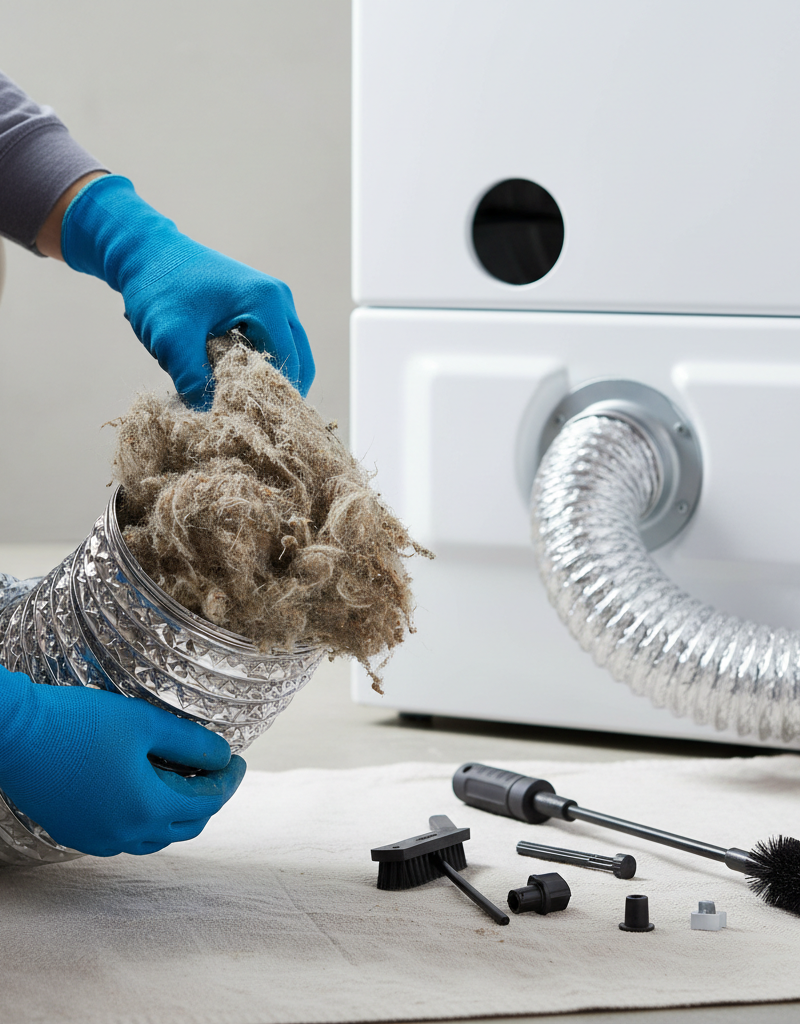
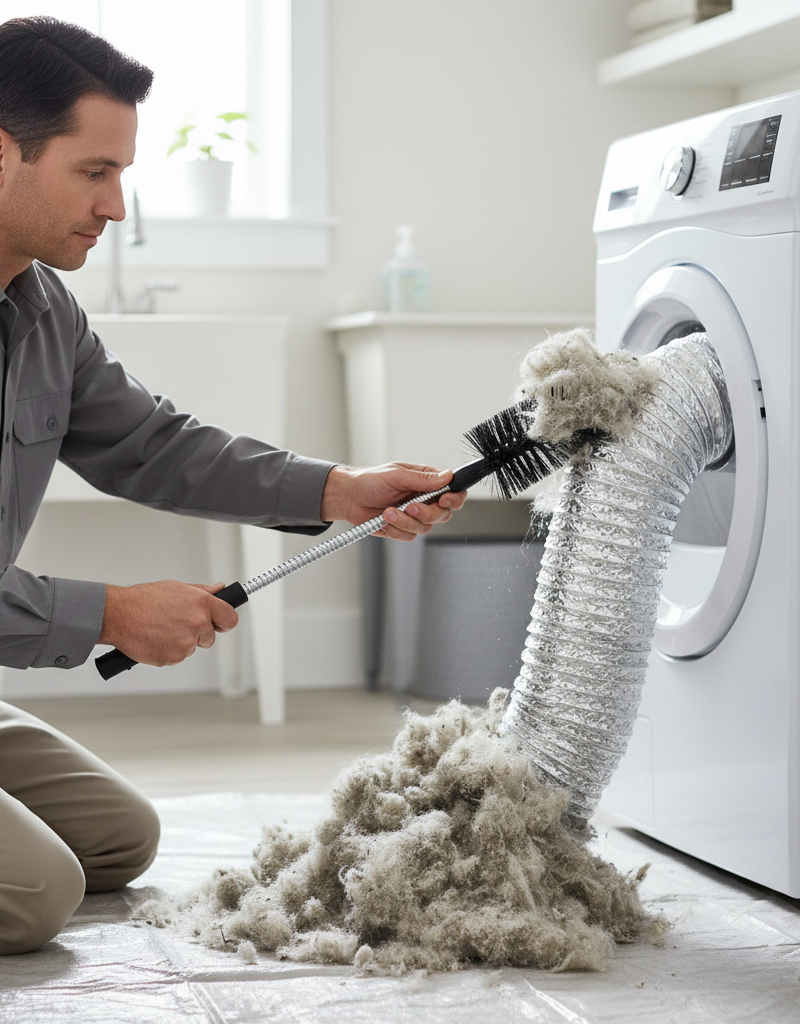
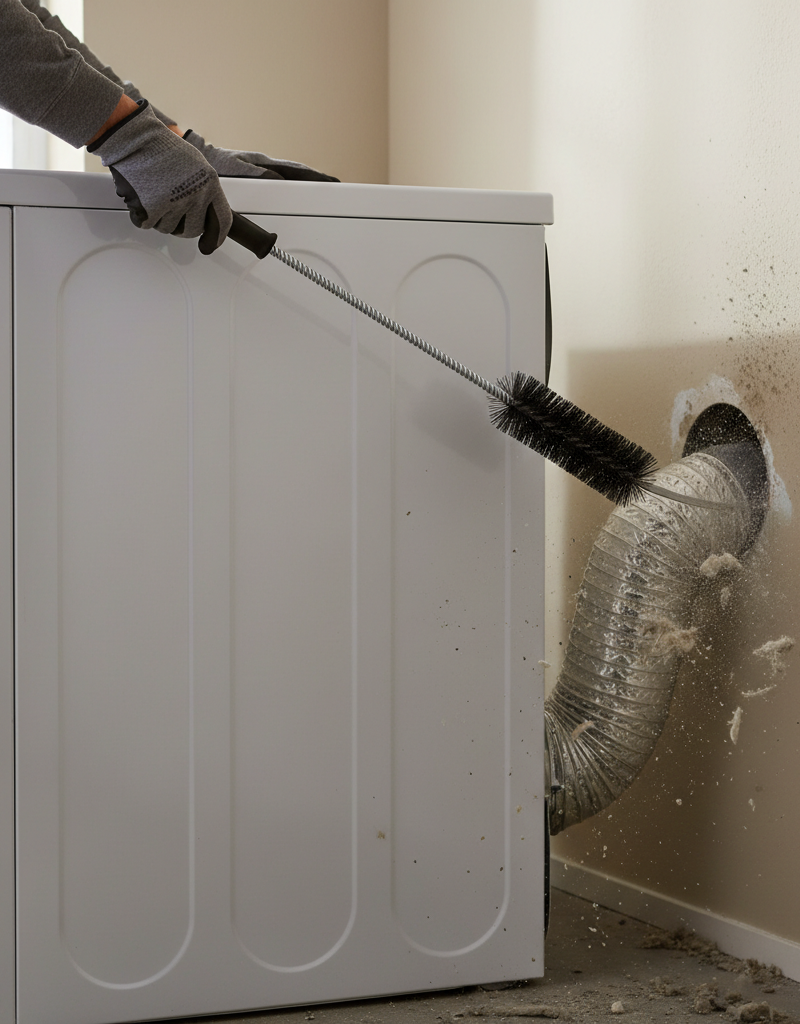
Should You Clean a Dryer Vent Yourself?
That depends on the system.
A short, accessible vent may be relatively straightforward for a capable homeowner to maintain using appropriate equipment and the manufacturer''s instructions.
But dryer vents can also run:
- Inside walls.
- Through floors.
- Through ceilings.
- Across long distances.
- Through several bends.
- To difficult exterior locations.
If you don''t know the duct layout, can''t access it safely, suspect damage, have a gas dryer that must be moved, or continue having airflow problems after basic maintenance, professional inspection may make more sense.
And if the dryer has been operating abnormally, don''t assume cleaning alone fixes every possible problem.
6 Questions to Ask a Dryer-Vent Professional
If you''re hiring someone, ask:
- Will you inspect the entire vent path?
Not just the first few feet.
- Will you confirm airflow afterward?
You want to know the exhaust path is actually functioning.
- Will you inspect for damaged or disconnected ductwork?
Cleaning and repairing are different jobs.
- Where does my dryer vent terminate?
You should know this.
- Are there excessive bends or restrictions in the system?
Ask them to explain what they find.
- Is the existing vent material appropriate for this installation?
If they recommend changes, ask why.
Don''t Forget Behind the Dryer
There''s another simple maintenance habit:
Keep the area around the dryer clear.
Don''t surround it with:
- Cardboard boxes.
- Laundry piles.
- Cleaning supplies.
- Paper products.
- Other combustible clutter.
USFA recommends keeping combustible materials away from heat-generating equipment and cleaning the lint filter every time the dryer is used.
The laundry room doesn''t need to be spotless.
But it shouldn''t become a storage closet wrapped around a heat-producing appliance.
When Should You Stop Using the Dryer?
Stop and investigate if you experience things such as:
- Smoke
- A persistent burning smell
- Visible sparking
- Severe overheating
- Damaged electrical connections
- Evidence of an active fire
- Other obvious unsafe conditions
If there''s a fire, get out and contact emergency services.
Don''t stand there trying to diagnose it.
Your house is more important than the laundry.
Frequently Asked Questions
How often should I clean my dryer vent?
USFA recommends cleaning dryer vent ductwork annually. Follow your dryer manufacturer''s instructions as well, and systems with heavier use or unusual vent configurations may need attention sooner.
Why does my dryer take two cycles to dry clothes?
There are several possibilities, including airflow restrictions, load characteristics, settings and appliance problems. A blocked exhaust duct is one possibility worth checking.
Should air come out of the dryer vent outside?
A properly operating vent should exhaust dryer air outside. NFPA recommends periodically checking that the exterior vent flap opens and the exhaust isn''t restricted while the dryer operates.
Can dryer lint really cause a fire?
Yes. NFPA''s analysis found dust, fiber or lint was the first material ignited in 27% of the dryer fires it studied.
Should I replace my dryer if it suddenly takes longer to dry?
Not automatically. Determine why drying performance changed before assuming the appliance needs replacement.
The Fixly Guide Bottom Line
Most homeowners pay attention to the dryer when it stops working.
Start paying attention before that happens.
If your dryer suddenly:
- Takes two cycles.
- Feels unusually hot.
- Leaves clothes damp.
- Makes the laundry room humid.
- Produces strange smells.
- Has weak exhaust airflow.
- Or starts leaving lint where it shouldn''t...
don''t just keep pressing START.
Ask:
“What changed?”
The dryer might need service.
The vent might need cleaning.
The duct could be damaged.
Or something else may be happening.
But there''s a bigger lesson here:
Your house often gives you warnings before a problem becomes obvious.
Learn to notice them.
Diagnose first. Spend second.
And add this one to your home-maintenance calendar:
Check the dryer vent.
If you discover damaged ductwork, poor airflow, appliance problems or another issue you don''t want to tackle yourself, Fixly Guide is building a network of qualified professionals throughout Dallas–Fort Worth to help homeowners find local help.
DFW home-service professionals: Fixly Guide is currently building its DFW Founding Contractor Program, and we plan to heavily promote Fixly Guide throughout DFW as the network grows.
Homeowners: how many of you clean the lint screen every load—but have NEVER cleaned the actual dryer vent? 👇
🏠 Follow Fixly Guide for more home tips, DIY advice, repair costs, contractor insights, and simple maintenance tips that can help you catch problems before they become expensive.
What should this project cost?
Enter your project details for a realistic cost range before you call anyone.
Cost depends heavily on which system turns out to be the source.
- Regional adjustment
- National average
- Labor share (typical)
- ~$1,620
- Quotes to collect
- 3 written estimates
Educational estimate based on national averages — not a binding quote. Always confirm with written local estimates.
Frequently asked questions
How often should I clean my dryer vent?+
USFA recommends cleaning dryer vent ductwork annually. Follow your dryer manufacturer's instructions as well, and systems with heavier use or unusual vent configurations may need attention sooner.
Why does my dryer take two cycles to dry clothes?+
There are several possibilities, including airflow restrictions, load characteristics, settings and appliance problems. A blocked exhaust duct is one possibility worth checking.
Should air come out of the dryer vent outside?+
A properly operating vent should exhaust dryer air outside. NFPA recommends periodically checking that the exterior vent flap opens and the exhaust isn't restricted while the dryer operates.
Can dryer lint really cause a fire?+
Yes. NFPA's analysis found dust, fiber or lint was the first material ignited in 27% of the dryer fires it studied.
Should I replace my dryer if it suddenly takes longer to dry?+
Not automatically. Determine why drying performance changed before assuming the appliance needs replacement.
Discussion
Loading comments…