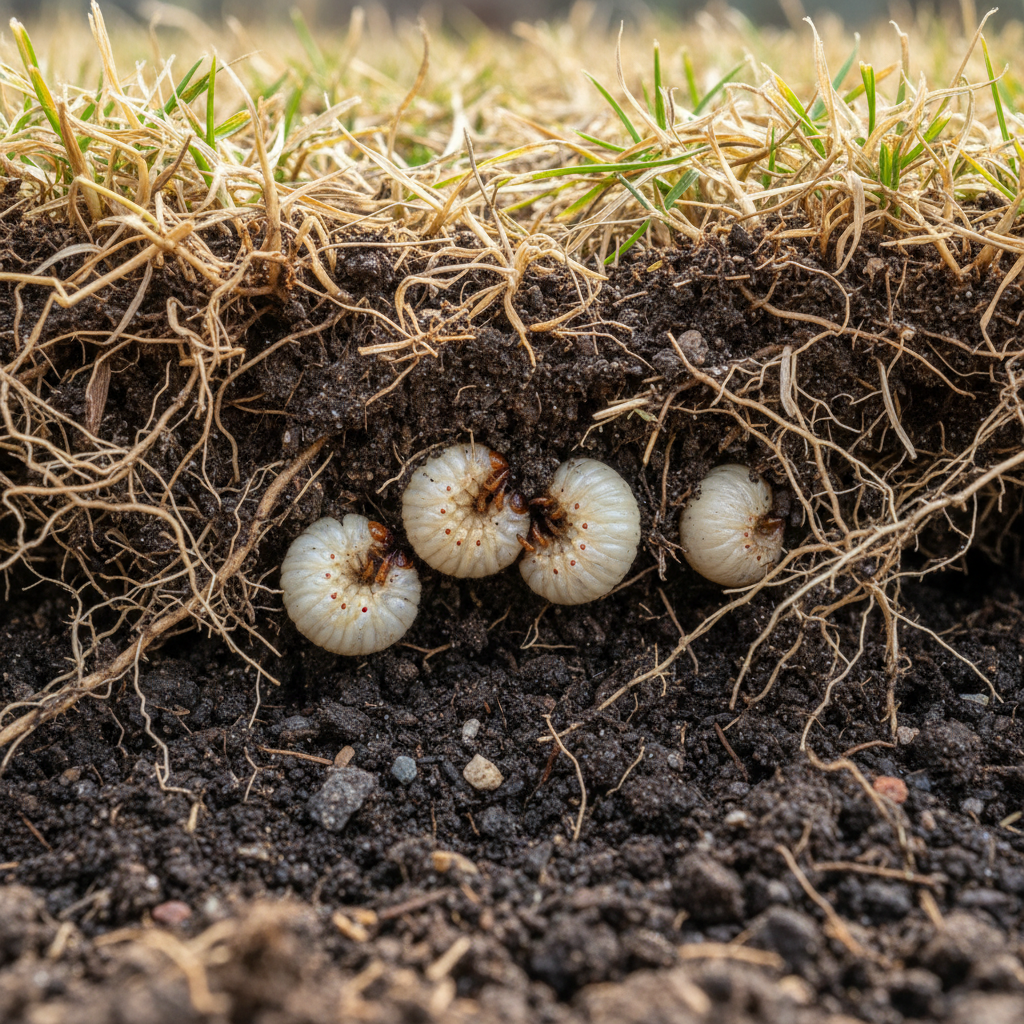
- Perform a Grub Check — Peel back a section of sod.
- Tool Tip: A sharp garden trowel works great for this.
- Safety First: Wear gloves when handling soil, just to be safe.
Landscaping · Deck or fence project
| Project category | Landscaping |
|---|---|
| Problem type | Deck or fence project |
| Trade required | Landscaping |
| Urgency | Planned project |
| Safety risk | Moderate safety risk |
| DIY suitability | DIY for experienced homeowners |
| Cost category | High cost |
| Typical timeline | Most builds 3–10 days depending on size |
| Contractor type | Landscaping contractor |
Repair option
Replace failed boards, posts, and hardware; reseal the surface.
Replacement option
Rebuild when framing or the ledger connection is unsafe.
Common causes
- Rot at posts and ledger
- Storm damage
- Adding outdoor living space
Relevant tools:home improvement material pricesproject cost estimator
Published September 27, 2026Last updated September 27, 2026
Tools & materials you'll need
Affiliate linksAs an Amazon Associate FixlyGuide earns from qualifying purchases — at no extra cost to you. Prices and availability are accurate as of publication and subject to change.
Quick Answer
If you've just laid down beautiful new sod and it's starting to look like a checkerboard of dead spots, or you can literally roll it back like a rug, you've got grubs. Those little C-shaped pests live right under the surface, chewing on your grass roots and turning a nice green lawn into a brown mess. The fix ain't rocket science, but timing and product choice matter a lot. You'll need to confirm what's going on first, then use the right grub killer or a natural option to protect what you just paid for.
The Problem
So you shelled out good money, probably wore yourself out laying that fresh sod, and you were picturing a perfect green carpet. Then the thing starts going shabby, brown in patches, or worse — you step on it and it squishes under your boot like a soaked sponge, or you can lift it up with almost no fight at all. That's not just thirsty grass or bad luck. That's grub damage, plain and simple. These pests aren't just annoying; they're root eaters, and they can wreck healthy lawn grass, let alone tender new sod, in a matter of weeks. I've seen it over and over. Folks swear they're watering right, fertilizing, doing everything by the book, but the lawn keeps sliding downhill. Once you peel back that dead patch and find a dozen or more fat white larvae wriggling around, you'll know exactly what I'm talking about.
How It Works
Alright, let's talk about how these little root-munchers operate. White grubs are the larvae of several different beetles — Japanese beetles, June bugs, chafers, you name it. The adult beetles lay eggs in the soil, usually in mid-summer (think late June to early August, depending on where you live). Those eggs hatch, and out come the grubs. They're hungry from the start. They spend late summer and fall tearing into the tender roots of your grass, and new sod is like a buffet to them because those roots haven't had time to get deep and tough yet.
As they feed, they cut the grass off from its roots. No roots, no water, no nutrients. Simple as that. That's why you get brown patches that look like drought stress, but the grass pulls up easy. Peak feeding usually hits August through October, when they're growing fast. When winter rolls in, they go deeper in the soil to avoid the cold. In spring, they move back up, feed for a bit, then pupate and turn into adult beetles that kick off the whole cycle again in early summer. The trick is hitting them while they're small and active, before they've done real damage.
Step-by-Step Fix
Before you spray anything, you've got to confirm it's grubs. No sense treating the wrong problem, right?
-
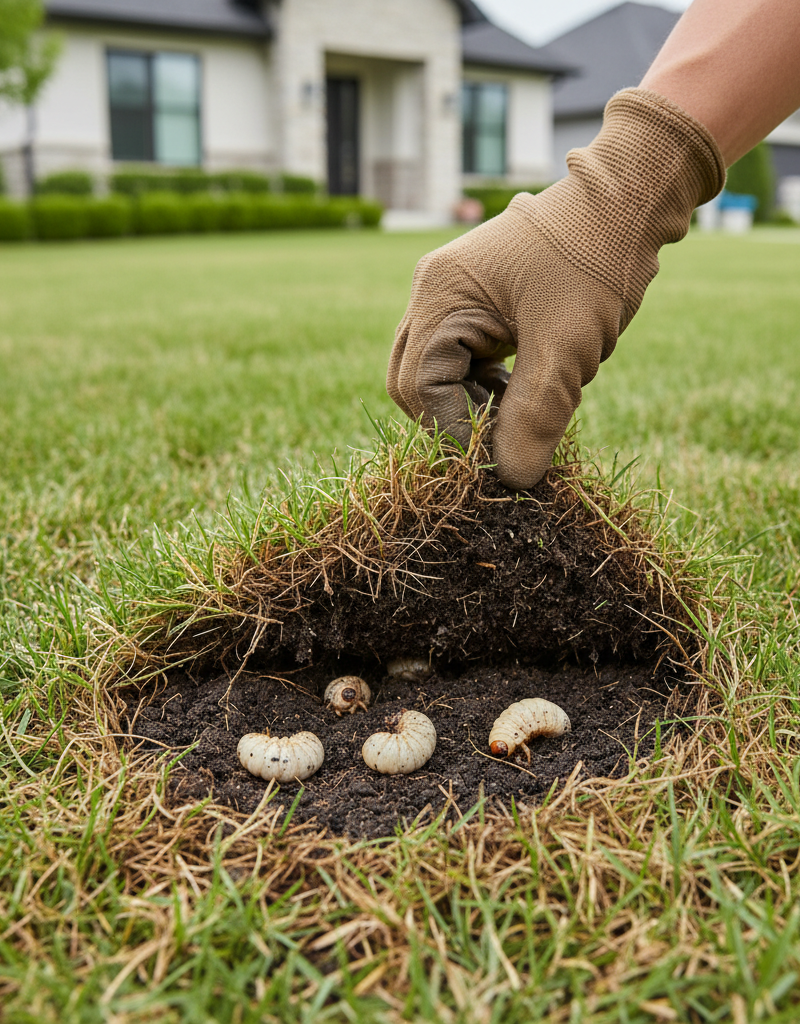
Diagnose the Damage — Look for irregular brown patches. Walk the lawn, especially the new sod. If you see brown or dead areas that don't perk up after watering, that's your first clue. Give the grass a gentle tug in those spots. If it lifts like a loose carpet, you're onto something. Birds, raccoons, and skunks tearing up the yard are another dead giveaway — they love a grub snack.
-
Perform a Grub Check — Peel back a section of sod. In a damaged spot, use a shovel or spade and cut a 1-foot by 1-foot square into the sod. Peel it back slow, like you're opening a lid on a box you don't want to break. Check the soil right under the roots. Count any milky-white, C-shaped larvae you find. If you've got 6-10 or more grubs per square foot, you've got a real problem on your hands. Less than that, and the issue might be something else, or it's just not bad enough to treat with chemicals.
- Tool Tip: A sharp garden trowel works great for this.
- Safety First: Wear gloves when handling soil, just to be safe.
-
Choose Your Weapon (Treatment) — Decide between chemical or biological options. You've got two main routes: chemical insecticides or biological controls like beneficial nematodes. If the infestation's serious in new sod, chemical can get quicker results. If you want a greener approach or the problem's lighter, nematodes are a solid move. Always read the label — yeah, I know, nobody loves label reading — to make sure the product hits white grubs and is safe for your turf type.
-
Time Your Application Right — Timing is critical for success. This is the big one. Most grub killers work best when the grubs are young and feeding near the surface. That's usually late summer to early fall (August to early October) for preventative treatments, or mid-spring (late April to May) for curative treatments when they move back up. Hit it too early or too late and the grubs might be too deep, too big, or just not there. No dice. For curative treatment on new sod, spring or fall is your best window.
-
Prepare the Lawn — Mow and water before applying. Mow the grass to its normal height. Then water the area well the day before you apply the treatment. Moist soil helps the product work down into the root zone where the grubs are feeding. Don't drown it, but you do want the top couple inches damp.
-
Apply the Treatment Evenly — Use a spreader for granular products. If you're using a granular product, a good spreader isn't optional. Don't just fling it by hand — you'll get piles in one spot and nothing in another. Set the spreader the way the label says. Walk steady, overlap a little, and cover the whole area. For liquid products, a hose-end sprayer usually does the trick. Again, follow the label exactly for mixing and application rates. I pulled a sod job in Cedar Hill last month where the homeowner swore he'd treated for grubs, but the lawn was still a train wreck. Turns out he just tossed it around by hand, missed half the yard, and basically gave the grubs a buffet.
-
Water it In — Activate the treatment. Right after you apply it, water the lawn again. That gets the insecticide or nematodes down into the soil where the grubs are feeding. For granular products, you're aiming for about 0.5 to 1 inch of water. For nematodes, keep the soil moist for at least a week after application so they’ve got a fighting chance to settle in.
-
Monitor and Reassess — Check for results in a few weeks. Give it a few weeks. Watch those brown patches. If the grass starts greening back up and you can't pull it up anymore, you're making progress. If not, check again for grubs. Sometimes you need a second treatment, or you may need a different product if the first one didn't get it done.
- If This Doesn't Work: Consider calling a licensed lawn care professional. They have access to stronger, restricted-use products and can correctly identify the grub species, which can influence treatment.
Common Causes
- New Sod Vulnerability: Fresh sod has shallow roots, so grubs can tear through it fast. It's basically a pre-cut meal for them.
- Late Summer Egg Laying: Adult beetles lay eggs in the soil from late June through early August. If your sod went down around then, or just after, you've basically rolled out the welcome mat.
- Moist Soil: Grubs love consistently moist soil, which is exactly what new sod usually needs to get established. That makes a perfect feeding ground.
- Previous Infestation: If the yard had a beetle problem before, or the sod farm had grubs, you could be bringing home someone else's headache.
- Ignoring Preventative Measures: Skip the preventive treatment in late spring/early summer, and you're leaving the door wide open later on.
Common Mistakes
- Misdiagnosing the Problem: A lot of folks blame brown patches on lack of water or disease. Check for grubs before you treat. Otherwise you're just burning time and money.
- Improper Timing of Application: Grub killer in mid-summer, when the grubs are tiny, or in late fall, when they're deep and sluggish, won't do much. Timing is everything.
- Not Watering In: Plenty of granular products need water right after application to work. Skip that step and the product just sits on top doing absolutely nothing.
- Under- or Over-Applying Product: If you don't follow the label rates, you'll either miss too many grubs or risk hurting the lawn or the environment. Grab a spreader and set it up right.
- Ignoring the Grub Life Cycle: If you don't know when grubs are most vulnerable, you're fighting uphill. You want them young and feeding.
- Planting Susceptible Grass Types: Some grasses, like Kentucky Bluegrass and Perennial Ryegrass, are more attractive to grubs than others. If this keeps happening, look at tougher varieties.
Cost & Time Breakdown
| Task | DIY Cost | Pro Cost | Time |
|---|---|---|---|
| Grub Killer Product | $25–$60 per bag | Included in svc | 15–30 minutes |
| Nematodes (Biological) | $20–$40 per pack | N/A | 15–30 minutes |
| Spreader (if needed) | $30–$100 | Included in svc | One-time purchase |
| Application Labor | Free | $150–$300 | 30–60 minutes |
| Diagnosing / Grub Check | Free | $50–$100 (consult) | 10–15 minutes |
| Watering In | Cost of water | Included in svc | 30–60 minutes |
Tips & Prevention
- Water Wisely: Go with deep, infrequent watering. That pushes roots down deeper and makes the lawn tougher against grub damage. Plus, soggy topsoil can attract beetles looking to lay eggs.
- Mow High: Keep the grass a little taller — around 3 inches. Taller grass shades the soil, makes it less attractive for egg laying, and helps roots stay stronger.
- Consider Preventative Treatment: If grubs have been a recurring problem, a preventive insecticide in late spring (May-June) can stop them before they get rolling. Look for active ingredients like chlorantraniliprole.
- Introduce Beneficial Nematodes: These tiny worms are natural grub killers. Apply them in late summer/early fall when the grubs are small and active. Make sure the soil stays moist before and after.
- Attract Natural Predators: Birds, toads, and other grub-eating critters can help out. Free pest control — can't beat that.
- Aerate Annually: Aerating helps drainage and cuts down compaction, which makes life harder for grubs and better for roots.
- Overseed with Resistant Varieties: If grub damage keeps coming back, try overseeding with tougher grasses like fine fescues or perennial ryegrass with endophytes.
When to Call a Professional
Look, I'm all for DIY, but sometimes you've got to know when to wave the white flag and call in the cavalry. If you've tried a couple rounds of grub killer, followed the directions, and your sod still looks like the moon, it's time to bring in a pro. Same goes if the infestation is big and spread out, or if you're not comfortable handling chemicals. A licensed lawn care specialist can use commercial-grade products homeowners can't get, and they can identify the exact grub species — which can change the best treatment. If you're unsure about product choice, application rates, or the grubs keep coming back no matter what you do, don't let the yard get trashed. A good pro can figure it out, put together a targeted plan, and protect the money you've got in that landscaping.
Related Articles
Keep troubleshooting with these hand-picked guides from FixlyGuide:
- Why Your Lawn's Still Yellow After Fertilizing (And What to Do Tonight) — If you've fed your lawn and it's still looking pale, you're likely dealing with a pH imbalance or compacted soil, preventing nutrient absor…
- The $5 Mistake Turning Your Summer Lawn Yellow (It Is NOT Dehydration) — Don't just blame the sun; a common, inexpensive mistake is likely stealing your lawn's green glow and leaving it parched despite your best…
- The One Weed Killer Mistake That Makes Your Weeds Grow Back Stronger — You've sprayed and pulled, but those persistent weeds keep popping up. The real problem isn't the weed itself; it's a common mistake in how…
- The Weird White Powder Killing Your Lawn (And How to Stop It Fast) — Battling mysterious white powder on your grass? It's likely powdery mildew or white mold. Learn how to identify, treat, and prevent this co…
- Why Your Weed Killer Isn't Working (And the 3 Hidden Reasons Why) — Ever wonder why you spray weed killer only for those stubborn invaders to pop right back up? I've seen it countless times, and usually, it…
- The 30-Second Toilet Fix Plumbers Don't Want You to Know — A continuously running toilet wastes significant water and money, but can often be fixed in under a minute with a simple adjustment of the…
What should this project cost?
Enter your project details for a realistic cost range before you call anyone.
Cost depends heavily on which system turns out to be the source.
- Regional adjustment
- National average
- Labor share (typical)
- ~$1,620
- Quotes to collect
- 3 written estimates
Educational estimate based on national averages — not a binding quote. Always confirm with written local estimates.
Fixly Project Decision Box
- DIY difficulty
- Moderate
- Estimated time
- 30 minutes – half a day
- Cost level
- Moderate
Main tools / materials
- Adjustable wrench
- Plunger or drain auger
- Bucket and towels
- Thread tape
When to stop and call a pro
- Water you cannot shut off at the fixture or main
- Sewage backing up into more than one fixture
- Water near electrical panels or outlets
- Gas water heater work beyond relighting a pilot
Need professional help?
Get a Licensed PlumberGet the print-ready PDF of this guide
A clean, ad-free, printable version you can keep on your phone or pin to the workshop wall. Free with a FixlyGuide account.
- Print-optimized layout
- Tools, materials & every step included
- Saved to your account
Frequently asked questions
How do I know if I have grubs?+
The most common signs are irregular brown patches that don't respond to watering, and grass that pulls up easily like a loose carpet. You can confirm by peeling back a 1-foot square of sod in a damaged area and counting the C-shaped white larvae in the soil.
When is the best time to treat for grubs?+
For preventative treatment, late spring (May-June) is ideal. For active infestations, late summer to early fall (August-October) when grubs are small and feeding, or mid-spring (late April-May) when they move closer to the surface, are the most effective times.
Can new sod come with grubs already in it?+
Yes, it's possible. If the sod farm had a grub problem, or if adult beetles laid eggs in the sod after it was harvested but before installation, you could unknowingly bring grubs into your yard.
Are grub killers safe for new sod?+
Many grub killers are safe for new sod, but you must always read the product label carefully. Look for products specifically labeled for use on new or established lawns and follow application instructions precisely to avoid damage.
What's the difference between preventative and curative grub treatment?+
Preventative treatments are applied before grubs hatch (late spring) to stop them from establishing. Curative treatments are applied when you already have an active infestation (late summer/early fall or mid-spring) to kill existing grubs.
Can I use natural methods to get rid of grubs?+
Yes, beneficial nematodes (microscopic worms) are a popular biological control. They target and kill grubs without harming other beneficial insects or pets. They require moist soil conditions for effectiveness.
How long does it take for grub treatment to work?+
Most grub killers will start to show results within a few weeks, especially if applied at the right time. Biological treatments like nematodes might take a bit longer to establish and become fully effective.
Will my sod recover after grub damage?+
If the damage isn't too severe and you treat the grubs promptly, your sod can often recover, especially with proper watering and fertilization. However, heavily damaged areas might need reseeding or patching with new sod.
Do grubs attract other animals to my yard?+
Absolutely. Grubs are a favorite food source for many animals, including birds, raccoons, skunks, and even moles. Increased digging activity in your lawn is often a strong indicator of a grub infestation.
Discussion
Loading comments…