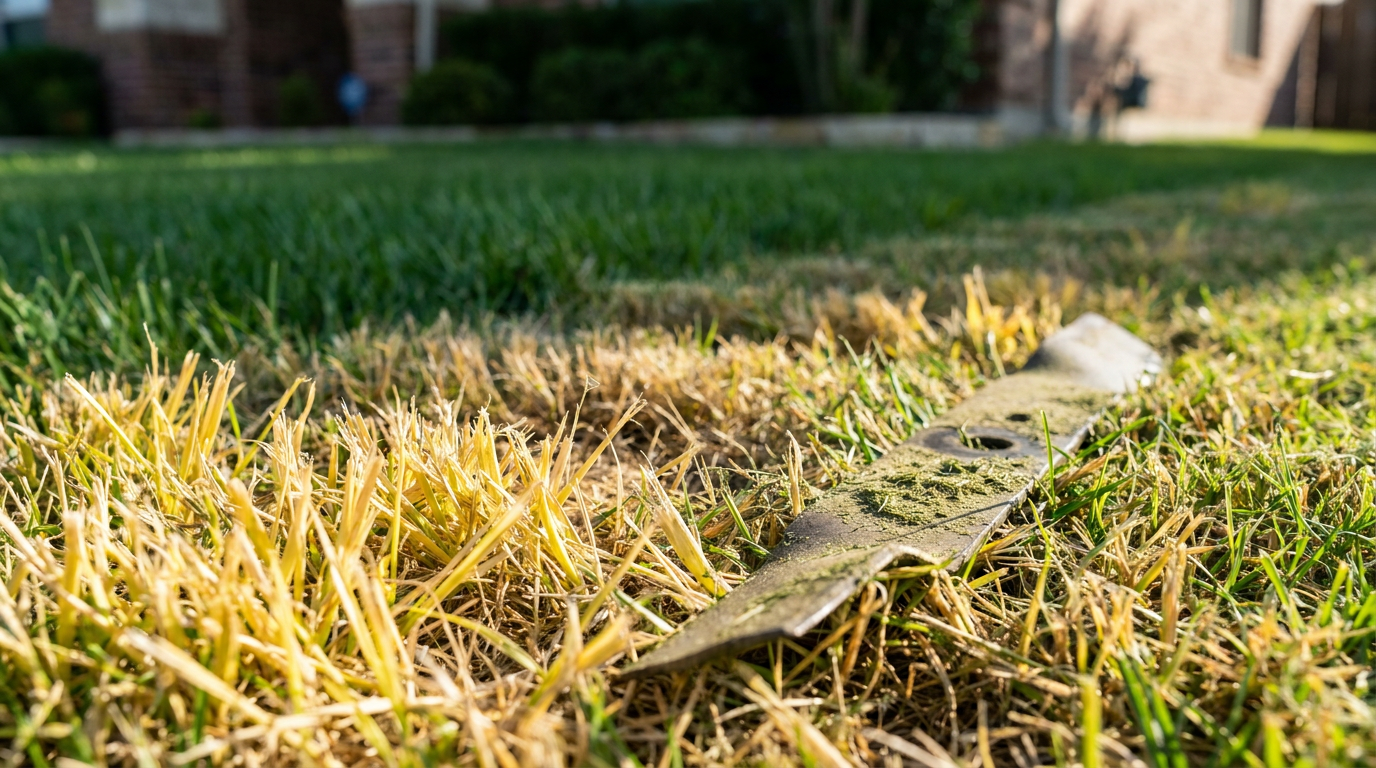
- Raise your mower deck to its top two settings — Set your mower wheels so the blade sits at 3.5 to 4 inches for cool-season lawns (Kentucky bluegrass, fescue) or 2.5 to 3 inches for warm-season lawns (Bermuda, St. Augustine, Zoysia).
- Tool needed: Tape measure placed on a flat driveway from the pavement to the bottom cutting edge of the mower blade.
- Don’t trust the numbers stamped on the mower deck adjustment lever; measure the actual blade height yourself.
Landscaping · Deck or fence project
| Project category | Landscaping |
|---|---|
| Problem type | Deck or fence project |
| Trade required | Landscaping |
| Urgency | Planned project |
| Safety risk | Moderate safety risk |
| DIY suitability | DIY for experienced homeowners |
| Cost category | High cost |
| Typical timeline | Most builds 3–10 days depending on size |
| Contractor type | Landscaping contractor |
Repair option
Replace failed boards, posts, and hardware; reseal the surface.
Replacement option
Rebuild when framing or the ledger connection is unsafe.
Common causes
- Rot at posts and ledger
- Storm damage
- Adding outdoor living space
Relevant tools:home improvement material pricesproject cost estimator
Published October 26, 2026Last updated October 26, 2026
Tools & materials you'll need
Affiliate links- Amazon10-inch mill bastard file or angle grinder1 · to sharpen dull mower blade
- AmazonSocket wrench set1 · 5/8-inch or 15/16-inch socket to remove mower blade bolt
- AmazonHeavy leather work gloves1 pair · for hand protection when handling mower blades
- AmazonTape measure1 · to verify true blade cutting deck height
- AmazonManual core aerator1 · to relieve localized soil compaction
- AmazonPump garden sprayer1 · for applying foliar liquid iron
- AmazonTuna can or rain gauge1 · to measure 1-inch sprinkler application
- AmazonChelated liquid iron1 quart · to restore deep green color without burning roots
As an Amazon Associate FixlyGuide earns from qualifying purchases — at no extra cost to you. Prices and availability are accurate as of publication and subject to change.
Quick Answer
If your grass turns pale yellow or straw-colored in irregular patches right after your first warm-weather cut, you probably took off more than one-third of the blade height, your mower blades were dull and tore the tissue instead of slicing it, or you’ve got dormant turf pushing up through compacted soil. Raise your cutting deck to 3 to 4 inches, sharpen your mower blades to an edge like a butter knife, and water deeply with 1 inch of water early in the morning. Do that, and you’ll usually see it bounce back within 10 to 14 days.
The Problem
Spring or early summer rolls around, the grass shoots up after a warm rain, and you roll the mower out to clean things up. Two days later, that once-good-looking lawn suddenly looks like a scorched checkerboard. You’ll see pale yellow patches, bleached-out tips, or full-on straw-colored zones spreading across the turf.
Most homeowners jump to one of two guesses: disease moved in overnight, or the lawn needs a big shot of fertilizer. Both are usually wrong.
If you dump nitrogen on stressed, freshly scalped turf, you can burn the tender crowns. And if you spray fungicide at a problem that’s really mechanical, you’re just spending money for no reason. What you’re actually looking at is mower scalping, shredded leaf tips from dull steel, or a hardpan layer underneath that’s starving the crowns of moisture. When you lop off the green photosynthesizing canopy all at once, the pale lower sheaths get blasted by the sun. Grass hates that. It goes into shock, shuts down chlorophyll production, and fries.
How It Works
A blade of grass isn’t just a green ribbon. It’s a little hydraulic solar panel. The top two-thirds carry most of the chlorophyll, which catches sunlight and turns it into carbohydrates that feed root growth. Down below, you’ve got the stem sheath and the crown—the part right at ground level that’s got to stay shaded and cool if the plant’s gonna survive.
Turfgrasses live by the one-third rule. Cut more than 33% of the total blade height in one pass, and the plant freaks out. You just stripped away a big chunk of its food-making surface. The roots respond by slowing down, and sometimes they slough off and stop taking up moisture and micronutrients like iron and nitrogen.
Dull mower blades make the whole mess worse. A sharp blade shears cleanly at roughly 3,000 RPM, with blade tip speed exceeding 15,000 feet per minute. A dull blade doesn’t slice. It smashes, rips, and shreds the tips into frayed strings. Those ragged ends dry out within 48 hours and turn bright white or bleached tan across the top of the yard. In hot regions—especially where heavy clay soil bakes hard under the sun—that exposed soil heats up fast, loses surface moisture, and cooks the crowns. I pulled a mower off a lawn in Frisco last month that had exactly this look after the first big spring cut. No mystery. The grass had been scalped and then baked for two straight afternoons.
Step-by-Step Fix
Follow this order if you want to stop the browning, protect the damaged crowns, and get the turf moving back toward deep green within two weeks.
-
Diagnose the tip damage with a hand lens or close inspection — Walk the yard and get down on your knees to look at the yellow blades up close. If the very top 1/8 to 1/4 inch of each blade looks frayed, ragged, and white like split ends on hair, your mower blade caused the browning by whipping instead of slicing.
- If the blades are cleanly cut but yellow throughout the lower stalk, your deck was set too low and you scalped the green canopy off.
- If the grass pulls up like loose carpet with no roots, stop here: you’ve got grubs, not mowing shock.
-
Raise your mower deck to its top two settings — Set your mower wheels so the blade sits at 3.5 to 4 inches for cool-season lawns (Kentucky bluegrass, fescue) or 2.5 to 3 inches for warm-season lawns (Bermuda, St. Augustine, Zoysia).
- Tool needed: Tape measure placed on a flat driveway from the pavement to the bottom cutting edge of the mower blade.
- Don’t trust the numbers stamped on the mower deck adjustment lever; measure the actual blade height yourself.
-
Pull and inspect your mower blade — Disconnect the spark plug boot first so the engine can’t accidentally kick over while you turn the blade by hand. Tip the mower on its side with the air filter facing up to keep motor oil from flooding the carburetor.
- Safety: Wear heavy leather work gloves.
- Use a 5/8-inch or 15/16-inch socket wrench (depending on your mower make) to break loose the center retaining bolt. Turn counterclockwise. Wedge a scrap 2x4 block of wood between the blade and deck to keep it from spinning while you crank.
-
Grind a clean 30-degree bevel on the cutting edge — Clamp the blade into a bench vise. Run a 10-inch mill bastard file or an angle grinder fitted with a 60-grit flap disc smoothly along the factory bevel angle (roughly 30 degrees).
- Don’t sharpen the blade to a razor edge; an edge as sharp as a butter knife resists nicks and holds up far longer against tough grass stalks.
- Balance the blade on a wall nail or cone balancer. If one side dips, grind metal off the back edge of that side until it hangs dead level.
-
Apply a rescue deep-soak watering cycle — Give the injured turf 1 inch of water right away to refill the root zone and knock the crown temperature down.
- Place an empty tuna can or shallow measuring container in the middle of the yellow zone.
- Run your sprinklers between 4:00 AM and 8:00 AM until the water reaches 1 inch deep in the can (usually 45 to 60 minutes with typical rotary heads). Deep, early watering cools the crowns before the midday sun hits without leaving grass wet overnight to breed fungus.
-
Apply chelated liquid iron instead of nitrogen — Do not put granular high-nitrogen fertilizer on scalped or heat-stressed grass; nitrogen forces top growth the weakened roots can’t support. Instead, apply liquid iron (iron chelate) at the label rate (usually 2 to 4 ounces per 1,000 square feet) using a pump sprayer.
- Iron jump-starts deep green chlorophyll production within 48 to 72 hours without burning crowns or forcing explosive, tender leaf growth.
- Rinse overspray off concrete patios and sidewalks instantly with a hose; iron leaves permanent rust stains on masonry.
-
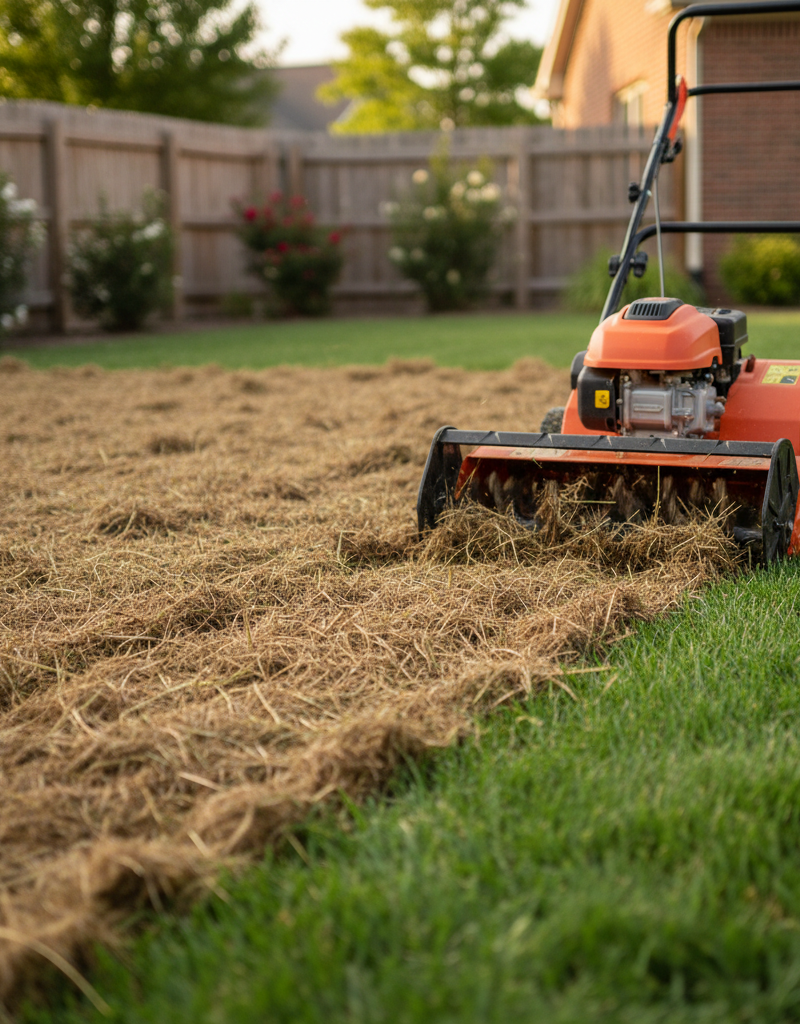
Aerate localized hardpan spots with a hand corer — Take a screwdriver and push it straight into the soil in the yellowed zones. If you can’t push a 6-inch screwdriver past the 2-inch mark with hand pressure, the roots are suffocating in compacted dirt.
- Use a manual two-prong core aerator to pull 3-inch plugs across the stubborn yellow patches.
- Leave the soil plugs on the surface to break down naturally.
-
Shift to the "frequent trim" schedule — For the next three weeks, mow every 4 to 5 days instead of waiting 7 to 10 days.
- Never take off more than 1/2 inch to 3/4 inch of leaf blade in any single session.
- Keeping the mower moving frequently stimulates horizontal tillering (thickening) while preserving the shaded protective canopy.
Common Causes
- Dull Mower Blades: The usual suspect. A dull blade tears cell walls, leaves shredded tips, and those tips dry out fast and go paper-white within 48 hours.
- Cutting Below the Green Line (Scalping): If the grass shot up to 5 inches during rainy weather and you suddenly whacked it back to 2 inches, you left behind only the brown, woody sheath stems.
- Uneven Lawn Contours: The mower wheel drops into a rut or low spot, then the deck bottoms out on a high spot and shaves the turf right down to bare dirt.
- Compacted Clay Base: In heavy clay, turf roots often don’t get much deeper than 1.5 inches. Put that under full sun after a close cut, and those shallow roots heat up past 85°F and stop taking water.
- Mowing Wet Turf: Wet grass clumps under the deck, drags the blades down, and gets torn instead of cleanly cut, leaving dull, bruised patches that yellow in the sun.
Common Mistakes
- Dumping fast-release nitrogen on the yellow spots: Homeowners see yellow and grab a bag of 30-0-4 fertilizer. On scalped or torn grass, high synthetic nitrogen pulls water out of stressed roots and burns the tender crowns, and then you’ve got dead patches instead of a quick fix.
- Watering every afternoon for 10 minutes: Sprinkling the lawn daily during peak heat keeps water in the top quarter-inch of soil where it evaporates instantly. It also turns the crown zone into a sauna. Water deeply once or twice a week at dawn instead.
- Sharpening mower blades to a razor-sharp edge: A razor edge rolls over, chips, and dulls against dirt or twigs within ten minutes of mowing. Keep a 1/32-inch flat edge—similar to a butter knife—for durability and clean shearing.
- Scalping the yard to delay the next mow: Cutting your lawn down to the dirt so you don’t have to mow next weekend is a guaranteed way to invite crabgrass, spurge, and scorched turf.
- Ignoring mower wheel height adjustments: Plenty of folks adjust the front wheels and forget the back wheels, which leaves the deck pitched backward or violently forward. Keep the deck level or pitched slightly down at the front (about 1/8 to 1/4 inch lower than the rear).
Cost & Time Breakdown
| Task | DIY Cost | Pro Cost | Time |
|---|---|---|---|
| Mower Blade Sharpening | $0–$12 (file or flap disc) | $15–$25 (bench drop-off) | 30 minutes |
| Mower Blade Replacement | $18–$35 (new blade) | $45–$65 (shop install) | 20 minutes |
| Liquid Iron Application | $20–$35 (bottle covers 10k sq ft) | $60–$95 (lawn service) | 45 minutes |
| Spot Core Aeration | $30 (manual core tool) | $120–$190 (machine service) | 1 hour |
| Deck Height Reset & Leveling | $0 | $50–$80 (mower shop tune-up) | 15 minutes |
Tips & Prevention
- Sharpen your blades every 25 mowing hours: For an average quarter-acre suburban yard, that usually means twice a season—once before the first spring cut and once in mid-summer.
- Follow the "One-Third Rule" without exception: If your target grass height is 3 inches, don’t let the grass exceed 4.5 inches before you mow. If heavy rain sends it up to 6 inches, drop the deck in two separate mowings spaced three days apart.
- Alternate your mowing pattern every cut: Mowing the exact same tracks packs soil down under the wheels and pushes grass over in one direction. Switch weekly between north-south, east-west, and diagonal patterns.
- Check tire pressure on riding mowers: A single rear tire down by 4 PSI tilts your mower deck by nearly half an inch, gouging trenches and scalping strips every pass you make.
- Feel the cut tips after mowing: Walk the lawn right after finishing and run a few grass tips between your fingers. If they feel jagged or look split, pull the blade and sharpen it before the next round.
When to Call a Professional
If you’ve raised your mower deck, sharpened the blade, and watered deeply for two full weeks with zero green recovery, you’re not dealing with mowing shock anymore. Call an ISA-certified arborist or a licensed turf agronomist if you notice expanding dead rings bordered by orange or purple margins, which points to severe fungal activity like take-all root rot or large patch.
You should also bring in an irrigation specialist if a "catch-can" test shows major coverage gaps across your sprinkler zones, or if your backflow preventer chatters and leaks when it’s running. And if half your lawn lifts up cleanly from the soil like a loose rug, call an exterminator or lawn professional immediately to treat an active white grub infestation before skunks and raccoons tear up what’s left.
Frequently Asked Questions
Why does my grass turn yellow two days after mowing instead of immediately?
Torn leaf tips and cut sheaths take 24 to 48 hours to dry out and oxidize. When a dull blade tears plant cells, the damaged tissue slowly leaks sap and desiccates in the sun, shifting from pale green to bleached straw color over two days.
Will scalped yellow grass grow back on its own?
Yes, as long as the crown at the base of the plant hasn’t been cooked or sliced through. Healthy turf stores energy in the crown and root mass; with enough water and rest, new green shoots usually push through the yellow stubble within 10 to 14 days.
How can I tell if the yellowing is from a dull blade or lawn disease?
Look at the tip of the leaf. A dull blade leaves a ragged, white, frayed edge like shredded string across nearly every blade in the yard. Fungal diseases like dollar spot or brown patch show distinct lesions, hourglass-shaped spots, or dark margins along the leaf edges, often with cobweb-like mycelium in the morning dew.
Can I spray weed killer on grass that turned yellow after mowing?
No. Don’t apply post-emergent herbicides to stressed, scalped, or bruised turf. The grass can’t metabolize herbicide chemicals properly when it’s wounded, which means selective weed killers can hit the struggling turfgrass just as hard as the weeds. Wait until the yard is fully green and has been mowed twice without issues.
Should I rake out the yellow dead-looking grass?
Only if you left behind thick piles of wet grass clippings that are actively smothering the turf underneath. If the yellow color is just the standing grass stalks, leave them alone. Aggressive raking will yank loose weak crowns and tear out shallow roots, which just slows recovery down.
Is it better to leave clippings or bag them while the lawn recovers?
Leave them, as long as you mow often enough that clippings don’t clump. Finely mulched clippings are 80% water and carry natural nitrogen that breaks down quickly to shade the exposed soil and help damaged crowns hang onto moisture. Bag only if the grass was way too tall and leaves heavy mats that block sunlight.
What is the ideal mower blade angle when sharpening?
Aim for a 30-degree bevel. Sharpening steeper than 30 degrees creates a thin, delicate edge that dulls on the first twig or pinecone it hits. Sharpening flatter than 45 degrees leaves a blunt edge that batters and tears the grass tips rather than shearing them.
Why do yellow stripes match my mower's wheel tracks?
Tires roll grass flat, especially on hot afternoons or when the soil’s damp. If your mower deck is low, the wheels mash the turf down while the center of the deck scalps the grass, or the tires compress dry turf so hard that it breaks the brittle leaf tissue, leaving brown wheel tracks 48 hours later.
Does cutting grass lower in early spring help it green up faster?
A single low cut in late winter or early spring before green-up can help clear out dead winter debris and warm the soil faster for warm-season grasses like Bermuda. But once the turf starts pushing active green blades, dropping the deck too low strips off the leaf area the plant needs, shocks the root system, and causes fast yellowing.
Related Articles
Keep troubleshooting with these hand-picked guides from FixlyGuide:
- The #1 Mowing Mistake That Leaves Your Lawn Brown and Patchy — Discover the most common mowing mistake homeowners make that leads to unhealthy, patchy grass and how to fix it for a vibrant lawn.
- The 3 Lawn Mowing Mistakes Killing Your Grass (and How to Fix Them) — Discover the three most common lawn mowing mistakes homeowners make that damage their grass, and learn simple, actionable steps to correct…
- The #1 Mistake Killing Your Lawn's Crabgrass Defense (And the Easy Fix) — Discover why common crabgrass removal methods fail and how to naturally eliminate this stubborn weed for a healthier lawn.
- The #1 Mistake Killing Your Thin Lawn (And How to Fix It in a Weekend) — Overseeding your lawn can transform it from thin and patchy to lush, but many homeowners make a crucial mistake that hinders success. Learn…
- The #1 Summer Lawn Mistake Turning Your Grass Yellow (It's Not Overwatering) — Discover the most common, often overlooked reason your summer lawn is turning yellow despite your best efforts, and learn how to fix it.
- Deck Screws Pulling Out? 5 Causes and the Step-by-Step Fix — Stop tripping on loose deck screws. Here is why fasteners pop out of deck boards, how to test for joist rot, and the step-by-step fix to an…
Should you do this yourself?
Answer five quick questions before you start. Safety outranks savings every time.
Your experience with work like this
How high do you have to work?
Does the job involve any of these?
Will it need a permit?
Specialty tools
Free and instant. Educational guidance only — not a quote, inspection, or professional diagnosis.
What should this project cost?
Enter your project details for a realistic cost range before you call anyone.
Cost depends heavily on which system turns out to be the source.
- Regional adjustment
- National average
- Labor share (typical)
- ~$1,620
- Quotes to collect
- 3 written estimates
Educational estimate based on national averages — not a binding quote. Always confirm with written local estimates.
Before you start
Check the difficulty, permits, and safety risk — then decide whether to call a pro.
- Estimate this projectGet a cost range for your scope and ZIP before you call anyone.Open
- Get local estimatesSend one request and compare written estimates from vetted pros.Open
Free, no signup required. Estimates are educational guidance, not a quote or an inspection.
Get the print-ready PDF of this guide
A clean, ad-free, printable version you can keep on your phone or pin to the workshop wall. Free with a FixlyGuide account.
- Print-optimized layout
- Tools, materials & every step included
- Saved to your account
Frequently asked questions
Why does my grass turn yellow two days after mowing instead of immediately?+
Torn leaf tips and cut sheaths take 24 to 48 hours to dehydrate and oxidize. When a dull blade tears plant cells, the wounded tissue slowly bleeds sap and desiccates under sunlight, turning from pale green to bleached straw color over two days.
Will scalped yellow grass grow back on its own?+
Yes, as long as the crown at the base of the plant hasn't been cooked or sliced through. Healthy turf stores energy reserves in its crown and root mass; with adequate water and rest, new green shoots typically push through the yellow stubble within 10 to 14 days.
How can I tell if the yellowing is from a dull blade or lawn disease?+
Look at the tip of the leaf. A dull blade leaves a ragged, white, frayed edge like shredded string across nearly every blade in the yard. Fungal diseases like dollar spot or brown patch show distinct lesions, hourglass-shaped spots, or dark margins along the leaf margins, often accompanied by cobweb-like mycelium in the morning dew.
Can I spray weed killer on grass that turned yellow after mowing?+
No. Never apply post-emergent herbicides to stressed, scalped, or bruised turf. The grass cannot metabolize herbicide chemicals properly when wounded, meaning selective weed killers will severely damage or kill the struggling turfgrass along with the weeds. Wait until the yard is fully green and has been mowed twice without issues.
Should I rake out the yellow dead-looking grass?+
Only if you left behind thick piles of wet grass clippings that are actively smothering the turf underneath. If the yellow color is simply the standing grass stalks, leave them alone. Aggressive raking will dislodge weak crowns and tear out shallow roots, delaying recovery.
Is it better to leave clippings or bag them while the lawn recovers?+
Leave them, as long as you mow frequently enough that clippings don't clump. Finely mulched clippings are 80% water and contain natural nitrogen that breaks down quickly to shade the exposed soil and replenish moisture in damaged crowns. Bag only if the grass was excessively tall and leaves heavy mats that block sunlight.
What is the ideal mower blade angle when sharpening?+
Aim for a 30-degree bevel. Sharpening steeper than 30 degrees creates a thin, delicate edge that dulls on the first twig or pinecone it hits. Sharpening flatter than 45 degrees leaves a blunt edge that batters and tears the grass tips rather than shearing them.
Why do yellow stripes match my mower's wheel tracks?+
Tires roll grass flat, especially on hot afternoons or when soil is moist. If your mower deck is low, the wheels mash the turf down while the center of the deck scalps the grass, or the tires compress dry turf so severely that it breaks the brittle leaf tissue, leaves brown wheel tracks 48 hours later.
Does cutting grass lower in early spring help it green up faster?+
A single low cut in late winter or early spring before green-up can help remove dead winter debris and warm the soil faster for warm-season grasses like Bermuda. However, once the turf begins actively growing green blades, dropping the deck too low removes vital leaf area, shocking the root system and causing rapid yellowing.
Discussion
Loading comments…