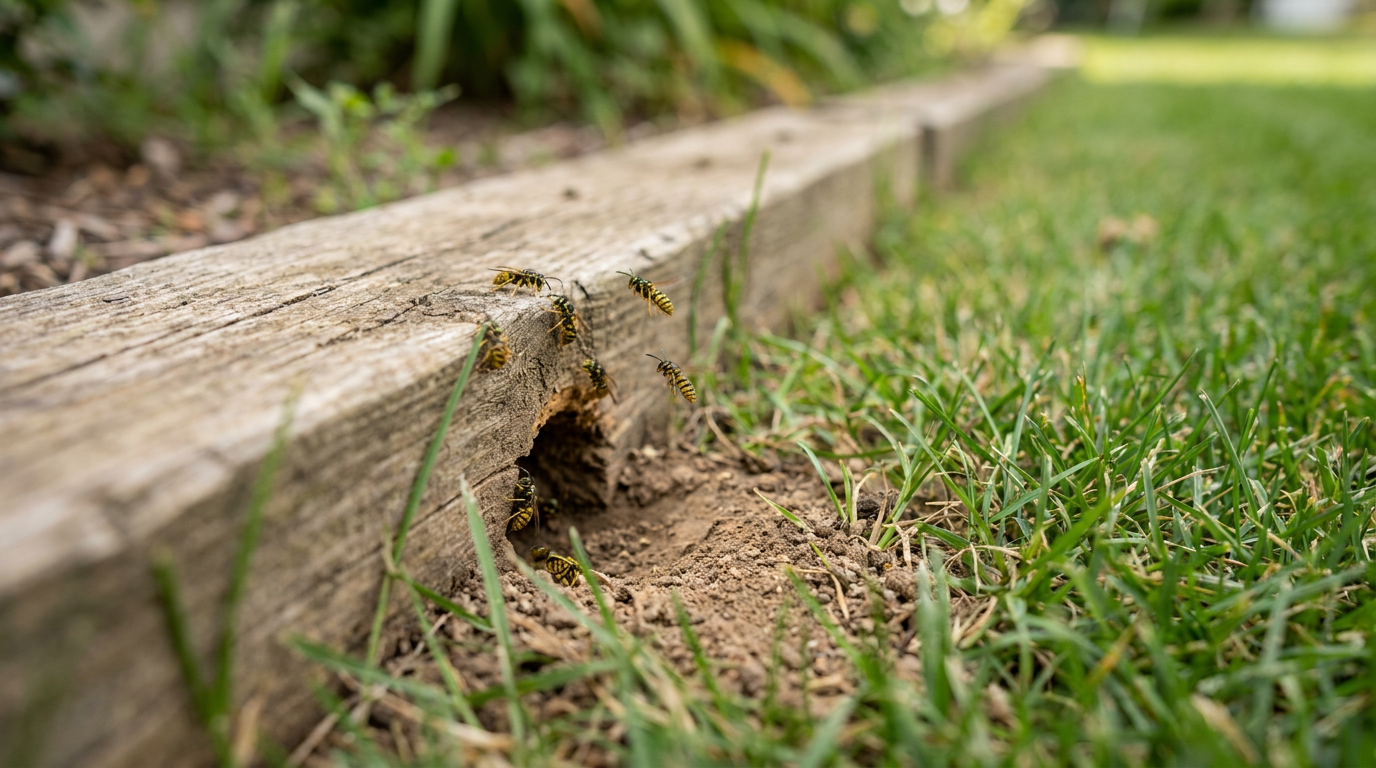
- Abandoned rodent burrows — The number-one cause nationwide. Old moles, voles, chipmunks, and pocket gophers leave smooth, pre-dug, insulated underground tunnels that save the queen weeks of digging labor.
- Rotting tree roots and subterranean voids — When a tree gets cut down or a big bush gets removed, underground taproots rot away over three to five seasons, leaving hollow woody cylinders under the lawn turf.
- Landscape timber decay and drystack wall gaps — Soil settles behind timber retaining walls and unmortared stone terraces, forming shaded, protected pockets with easy access to warm, south-facing sun.
- Abundant summer food sources nearby — Open garbage bins, dirty outdoor barbecue grills, hummingbird feeders dripping high-fructose syrup, or fallen fruit from apple, pear, and fig trees will keep a colony fed and growing fast.
Landscaping · Deck or fence project
| Project category | Landscaping |
|---|---|
| Problem type | Deck or fence project |
| Trade required | Landscaping |
| Urgency | Planned project |
| Safety risk | Moderate safety risk |
| DIY suitability | DIY for experienced homeowners |
| Cost category | High cost |
| Typical timeline | Most builds 3–10 days depending on size |
| Contractor type | Landscaping contractor |
Repair option
Replace failed boards, posts, and hardware; reseal the surface.
Replacement option
Rebuild when framing or the ledger connection is unsafe.
Common causes
- Rot at posts and ledger
- Storm damage
- Adding outdoor living space
Relevant tools:home improvement material pricesproject cost estimator
Published November 20, 2026Last updated November 20, 2026
Tools & materials you'll need
Affiliate linksAs an Amazon Associate FixlyGuide earns from qualifying purchases — at no extra cost to you. Prices and availability are accurate as of publication and subject to change.
Quick Answer
To get rid of ground-nesting yellowjackets, wait until 10:00 PM when all foragers are back in the burrow and pretty much dead still. Dust the entrance with an insecticidal powder containing 0.05% deltamethrin using a handheld bulb duster, and leave that opening wide open. The wasps haul the dust through the underground galleries on their bodies, and that wipes out the whole colony — queen included — within 24 to 48 hours. That’s the cleanest kill I’ve found, and I’ve been dealing with these mean little buzzards for a long time.
The Problem
You’re mowing the lawn on a Saturday afternoon, cross over a plain-looking patch of turf near a retaining wall or shrub bed, and all of a sudden your shins are on fire. Ground-nesting yellowjackets (predominantly Vespula maculifrons and Vespula vulgaris) don’t build those hanging paper nests on your fascia boards. They hijack old rodent burrows, rotted tree root cavities, and voids under landscaping timbers.
By late summer and early fall, a single underground nest can blow up from one queen to an ugly little fortress with 1,500 to 5,000 workers. Unlike honeybees, yellowjackets have lance-like stingers with tiny barbs that don’t pull back out after they sting. One angry insect can tag you five or six times in ten seconds while it lets off an alarm pheromone — basically a chemical scream that tells the rest of the nest to jump on the same target. Trying to drown them with a garden hose or dumping gasoline down the hole won’t work, wrecks your soil, and usually gets you a trip to urgent care. No dice.
How It Works
Ground nests are more complicated than they look. You only see a small, 1-inch entrance hole, but underneath that turf is a multi-level setup hidden from view. When a fertile queen comes out of winter hibernation in April or May, she starts shopping around for an existing underground void. She chews weathered wood into cellulose pulp and builds horizontal combs held up by delicate paper pillars inside the soil cavity. As the colony grows, the workers dig out soil to make the chamber bigger, often going 6 to 18 inches down and spreading over a foot across.
The burrow usually has a narrow entry tunnel that angles down, bends, and then reaches the main nesting chamber from below or off to the side. That crooked layout is exactly why aerosol cans fall flat. When you blast a can of wasp freeze into the hole from four feet away, the spray hits the first dirt bend and pools up there. It never makes it to the brood combs.
Insecticidal dust works on a totally different principle: passive transfer. Wasps coming and going have to squeeze through the dust barrier. The tiny particles cling by static to the fine hairs on their legs, thorax, and abdominal cuticles. As workers groom themselves and feed the larvae through trophallaxis (that’s mouth-to-mouth liquid food transfer), they carry the toxicant right into the heart of the brood comb and deliver a fatal dose to the queen.
Step-by-Step Fix
Follow this field-tested eradication protocol to get rid of a ground nest without getting tagged.
-
Locate and mark the entrance during full daylight — Stand back at least 15 to 20 feet in mid-afternoon, when flight activity is at its peak. Watch the incoming wasps; they’ll fly in a straight, high-speed "bee line" straight into the turf opening. Drop a bright survey flag, orange cone, or even a long stick 3 to 4 feet away from the hole so you can find it later.
- Safety Note: Don’t stand right over the entrance to check it. The vibration from your boots can kick off a defensive swarm in a hurry.
-
Wait until late night for treatment — Yellowjackets are daytime insects with lousy night vision. Wait until at least 10:00 PM, or better yet 11:00 PM, when outdoor temperatures drop below 65°F. At that hour, just about every forager has come back home, and their metabolism slows way down, which cuts their reaction speed.
- If night temps stay above 75°F: Wait until 4:30 AM right before dawn, when the nest is at its coldest and slowest.
-
Gear up with thick protective clothing — Yellowjacket stingers can punch right through thin cotton T-shirts and regular denim. Put on two layers: heavy canvas work pants over long underwear, a hooded canvas work jacket, heavy leather work gloves taped at the wrists with duct tape, and tall rubber muck boots with pants tucked inside. Throw a mosquito head net over a wide-brimmed hat and make sure there’s no bare skin at the neck or ankles.
- Essential tool: Heavy-duty duct tape to seal ankle and wrist cuffs.
-
Prepare red-filtered illumination — Yellowjackets, like most stinging insects, can’t see red light wavelengths. Take a standard tactical flashlight and cover the lens with two layers of red cellophane secured with a rubber band, or use a headlamp with a dedicated red LED mode.
- Safety Warning: Don’t shine a raw white beam straight into the hole. Bright white light acts like a road sign, and upset wasps will fly right up that beam toward your face.
-
Load your bulb duster — Take a standard handheld bulb duster and fill it halfway with an insecticidal dust containing deltamethrin (0.05%) or pyrethrins mixed with amorphous silica gel. Don’t cram it full; you need air space inside so it throws a fine, rolling dust cloud instead of spitting out chunky clumps. Drop two small steel ball bearings or 1/4-inch hex nuts into the bulb to shake the powder loose when you squeeze it.
- Required gear: Wear an N95 respirator mask and safety goggles while loading and applying dust.
-
Quietly approach the nest opening — Walk slow, light, and flat-footed toward your daytime marker flag. Ground vibration is the yellowjacket’s first warning system underground. Hold your red light low so you can confirm the exact mouth of the burrow.
-
Inject the insecticidal dust deep into the tunnel — Insert the extension nozzle of the bulb duster 1 to 2 inches directly into the entrance hole. Give it 8 to 12 sharp, hard squeezes to push a dense fog of dust down into the throat of the tunnel. Shake the bulb firmly between squeezes so the dust stays suspended in the air chamber.
- If the hole is blocked by leaves or loose mulch: Clear it gently with a long dowel rod or stick, not your gloved fingers, right before you insert the nozzle.
-
Leave the entrance hole completely open — Back away steadily and walk off. Don’t run, and don’t cover the hole with a rock, brick, inverted glass bowl, or shovel full of dirt.
- Why this matters: If you plug the hole, trapped wasps will start carving secondary exits through soft topsoil or grass roots, spreading the colony’s escape points across a 4-foot radius or maybe finding their way into your foundation weep screeds. They’ve got to crawl through your chemical dust barrier to get contaminated.
-
Monitor activity over the next 48 hours — Over the next two days, you’ll see confused, erratic wasps stumbling out of the entrance covered in white powder. By hour 36 to 48, the activity ought to grind to a dead stop.
- If flight continues after 48 hours: Reapply the dust on night three using the exact same night protocol; big colonies may need a second round to reach the lowest brood tiers.
-
Excavate or seal the void permanently — Once 72 hours have passed with zero activity during peak midday sun, use a long spade to dig out the entrance tunnel and collapse the abandoned cavity. Backfill the void with a 50/50 mix of coarse gravel and packed clay soil, tamp it firm with your boot heel, and re-seed the turf. That keeps skunks from digging up the dead combs and stops new queens from taking over the void next spring.
Common Causes
Why’d your lawn turn into prime real estate for an underground fortress? A few yard conditions pull them in every summer:
- Abandoned rodent burrows — The number-one cause nationwide. Old moles, voles, chipmunks, and pocket gophers leave smooth, pre-dug, insulated underground tunnels that save the queen weeks of digging labor.
- Rotting tree roots and subterranean voids — When a tree gets cut down or a big bush gets removed, underground taproots rot away over three to five seasons, leaving hollow woody cylinders under the lawn turf.
- Landscape timber decay and drystack wall gaps — Soil settles behind timber retaining walls and unmortared stone terraces, forming shaded, protected pockets with easy access to warm, south-facing sun.
- Abundant summer food sources nearby — Open garbage bins, dirty outdoor barbecue grills, hummingbird feeders dripping high-fructose syrup, or fallen fruit from apple, pear, and fig trees will keep a colony fed and growing fast.
Common Mistakes
- Pouring gasoline or diesel down the hole — That’s a dangerous old folk remedy, and it’s a bad one. Gasoline kills turfgrass for years, leaks hydrocarbons straight into municipal groundwater, and leaves you with an explosive vapor pocket that can light off from static electricity or a nearby air conditioning compressor clutch.
- Treating during mid-day — Hitting a nest in full daylight means up to 60% of the adult workforce is out foraging. When they come back 20 minutes later with caterpillar meat and nectar, they find the place trashed, swarm the area in a frenzy, and go after anybody within 50 feet.
- Sealing the entrance with a patio paver or dirt — Plugging the hole triggers emergency digging behavior. Wasps will chew through lawn roots and open three or four new exits overnight, turning one 1-inch target into a spread-out minefield across your yard.
- Relying solely on foaming aerosol sprays — Foaming wasp sprays expand fast at the mouth of the burrow, seal off the entrance, and keep the chemical from getting down the twisty 12-inch drop to the brood combs. The queen stays protected and keeps turning out replacement workers.
- Using a bare white flashlight at night — Wasps can’t see daylight well at night, but they track direct white light fast. If you hold a bright white flashlight near your chest, agitated sentry wasps will fly straight toward the bulb and sting your hands, chest, and neck.
Cost & Time Breakdown
| Task | DIY Cost | Pro Cost | Time |
|---|---|---|---|
| Daytime scouting and marking | $0 | N/A | 15 mins |
| Chemical dust & bulb duster purchase | $25–$45 | N/A | 30 mins |
| Nighttime treatment application | $0 | $175–$350 | 10 mins |
| Secondary inspection (48 hrs) | $0 | Included above | 10 mins |
| Post-kill void collapse and soil tamping | $5–$15 | $75–$150 | 25 mins |
Tips & Prevention
- Walk your perimeter in early June — Check fence lines, retaining walls, and rock borders every two weeks in late spring. Catching a new yellowjacket colony when it’s the size of a golf ball with twelve workers is a whole lot easier than fighting an August mega-nest with thousands of defenders.
- Eliminate burrowing rodents early — Knock down voles, moles, and ground squirrels in early spring using snap traps or repellents. If your soil doesn’t have rodent tunnels, yellowjacket queens will usually move on to easier digging somewhere else.
- Seal structural gaps along retaining walls — Inspect stone retaining walls and landscape timber joints every March. Pack structural voids with mortar, expanding foam, or packed stone dust before nesting queens start scouting territory.
- Clean fallen tree fruit and outdoor trash cans weekly — Pick up fermenting plums, apples, and fallen figs right away. Wash exterior trash and recycling containers with a 10% bleach solution once a month to break down sugary soda and grease residues that pull foraging yellowjackets from half a mile away.
When to Call a Professional
If you know or even suspect you’ve got a systemic allergy to insect venoms, don’t try this DIY fix under any circumstance. One accidental sting can trigger anaphylaxis in minutes. Call an exterminator right away.
Beyond allergies, call a licensed pest pro if the entrance hole sits right up against your home’s foundation slab, under a concrete walkway, or beneath an attached wooden deck where you can’t get a clear, open exit path in the dark. If you pump dust into an opening and hear buzzing echoing inside your home’s crawlspace, basement rim joist, or interior drywall, stop right there. That means the nest is using a structural void inside your building envelope. A pro’ll use industrial gas-powered dusters or specialized non-repellent transfer insecticides without driving thousands of angry insects through your living room baseboards. I pulled a water heater in Frisco last month that had exactly this kind of hidden void chewing trouble behind it — ugly job, and it can go sideways fast.
Frequently Asked Questions
Can I drown a ground-nesting yellowjacket nest with a garden hose?
No, running a hose into the hole almost never works and it often backfires in a nasty way. Ground nests are built inside tricky, air-trapping chambers that shed water pretty easily, and heavy soil soaks up normal water flow before the cavity ever fills. Pumping water into the burrow just erodes the topsoil, kicks off an emergency swarm of defensive workers, and turns the surrounding turf into a slick mud pit that makes your escape harder.
How long does it take for deltamethrin dust to wipe out the colony?
Deltamethrin dust usually wipes out the whole underground colony within 24 to 48 hours. The dust works on contact as an axonic exciter of the wasp’s nervous system, but the real magic is transfer. As contaminated foragers track the powder across the combs, down to the nursery larvae, and onto the queen, the whole colony collapses as the toxicant gets shared during grooming.
Will ground yellowjackets return to the same hole next year?
No, yellowjacket colonies naturally die off in late autumn after hard freezes (temperatures below 28°F), leaving only newly mated queens to spread out and hibernate under loose tree bark or leaf litter. The old nest breaks down underground and doesn’t get reoccupied by a new queen. Still, if you leave the void and rodent tunnel open, a new queen scouting your yard next spring might pick that exact same cavity and start a brand-new colony from scratch.
What should I do if yellowjackets chase me during treatment?
If the nest blows up while you’re treating it, walk briskly in a straight line toward shelter, like an enclosed car, garage, or your home. Don’t flail your arms, swat at the air, or stop to turn around, since hard movement and swatting crushes wasps and immediately releases alarm pheromones that pull more stingers to that exact spot. Run through low-hanging tree branches or brush if you can — it messes with their flight path — and get behind a sealed door as fast as you can.
Can I pour boiling water down the nest hole instead of chemicals?
Boiling water can kill wasps on direct contact, but it rarely does the job on underground colonies and it brings a real burn risk. A multi-tier ground nest can sit 12 to 18 inches below the surface and stretch a foot wide. Hauling multiple gallons of boiling water across uneven turf in the dark is dangerous, and the water cools fast the second it hits cold soil, so it won’t reach the queen anyway.
Why are ground yellowjackets so much more aggressive in August and September?
In late summer, the colony hits its peak population of several thousand workers, while natural food sources like floral nectar and garden caterpillars start drying up. At the same time, the queen stops laying worker eggs and starts producing new reproductive queens and males, leaving the tired worker force with less to do and a strong urge to protect the winter brood. That mix of starvation, crowding, and colony defense makes late-summer nests downright explosive.
Can I use a shop vac to suck up the yellowjackets?
Using a shop vac is a slow, half-baked gimmick that leaves the underground brood untouched. Even if you catch returning foragers during the day, you’re still leaving thousands of pupating larvae and the reproductive queen deep underground. A few days later, hundreds of fresh wasps take their place, and dumping out a vacuum drum full of thousands of furious, vibrating yellowjackets is asking for trouble.
How can I tell the difference between yellowjackets and ground-nesting solitary bees?
Watch the entrance hole for 60 seconds during daylight. Yellowjackets are hairless, bright yellow and black, move in sudden jerky darts, and show nonstop traffic with dozens of insects coming and going every minute. Native ground-nesting bees (like mining or digger bees) are usually fuzzy, smaller, hover gently, and work alone. Solitary bees make individual dime-sized mounds with one female resident and basically no sting risk to people or pets.
Related Articles
Keep troubleshooting with these hand-picked guides from FixlyGuide:
- Nutsedge Taking Over Your Lawn? 10 Steps to Kill It at the Root — Stop pulling nutsedge by hand. Learn how to identify yellow and purple sedge, select the right selective herbicide, and destroy tubers with…
- Lawn Covered in Bleached Spots After Snow Melts? How to Fix Snow Mold in 10 Steps — Discover why snow mold leaves ugly bleached circles on your spring lawn, how to tell gray from pink mold, and the step-by-step fix to resto…
- Lawn Full of Tunnels? How to Tell Moles from Voles and Stop the Damage — Stop lawn tunnels for good. Learn how to tell moles from voles, locate active runs, set effective traps, and protect your yard from destruc…
- Lawn Turning Brown in Summer? 6 Causes and the Exact Fix for Each — Lawn turning brown in the summer heat? Use this pro diagnostic checklist to tell dormancy from grub damage and revive your turf without was…
- Mulch Washing Away on a Slope? 10 Ways to Keep It in Place — Stop mulch from washing down your sloped landscape beds with proper grading, shredded bark selection, jute mesh anchoring, and runoff diver…
- Bathroom Faucet Handle Stuck? 12 Steps to Free It Without Breaking the Stem — Stuck bathroom faucet handle won't budge? Learn how to safely dissolve hard water scale, use a handle puller, and rebuild the valve cartrid…
What should this project cost?
Enter your project details for a realistic cost range before you call anyone.
Cost depends heavily on which system turns out to be the source.
- Regional adjustment
- National average
- Labor share (typical)
- ~$1,620
- Quotes to collect
- 3 written estimates
Educational estimate based on national averages — not a binding quote. Always confirm with written local estimates.
Get the print-ready PDF of this guide
A clean, ad-free, printable version you can keep on your phone or pin to the workshop wall. Free with a FixlyGuide account.
- Print-optimized layout
- Tools, materials & every step included
- Saved to your account
Frequently asked questions
Can I drown a ground-nesting yellowjacket nest with a garden hose?+
No, running a hose into the hole almost never works and often backfires dangerously. Ground nests are built inside intricate, air-trapping chambers that slough water off naturally, and heavy soil quickly absorbs standard water flow before the cavity fills. Pumping water into the burrow merely erodes the topsoil, triggers an emergency swarm of defensive workers, and turns the surrounding turf into an impassable mud slick that hinders your escape.
How long does it take for deltamethrin dust to wipe out the colony?+
Deltamethrin dust typically eradicates the entire underground colony within 24 to 48 hours. The dust works on contact as an axonic exciter of the wasp's nervous system, but its primary strength lies in its transfer properties. As contaminated foragers track the powder across the combs, down to the nursery larvae, and onto the queen, the entire colony collapses as the toxicant is systematically shared during grooming.
Will ground yellowjackets return to the same hole next year?+
No, yellowjacket colonies naturally die off in late autumn following hard freezes (temperatures below 28°F), leaving only newly mated queens to disperse and hibernate under loose tree bark or leaf litter. The old nest decomposes underground and is never reoccupied by a new queen. However, if you leave the physical void and rodent tunnel open, a new queen scouting your yard next spring may choose that exact same cavity to start an entirely new colony from scratch.
What should I do if yellowjackets chase me during treatment?+
If the nest erupts while you are treating it, walk briskly in a straight line toward shelter, such as an enclosed car, garage, or your home. Do not flail your arms, swat at the air, or stop to turn around, as violent movement and swatting crushes wasps, instantly releasing alarm pheromones that draw more stingers to that precise spot. Run through low-hanging tree branches or brush if available, which physically disrupts their flight trajectory, and get behind a sealed door as fast as possible.
Can I pour boiling water down the nest hole instead of chemicals?+
While boiling water can kill wasps on direct contact, it is rarely effective for underground colonies and presents significant burn risks. A multi-tier ground nest can sit 12 to 18 inches below the surface and span across a foot wide. Transporting multiple gallons of boiling water across uneven turf in the dark is a severe hazard, and the water cools dramatically the instant it hits cold subterranean soil, failing to reach the queen.
Why are ground yellowjackets so much more aggressive in August and September?+
In late summer, the colony reaches its peak population of several thousand workers, while natural food sources like floral nectar and garden caterpillars begin drying up. Simultaneously, the queen stops laying worker eggs and shifts to producing new reproductive queens and males, leaving the aging worker force with fewer domestic tasks and a fierce territorial imperative to protect the developing winter brood. This combination of starvation, high population, and colony defense makes late-summer nests explosive.
Can I use a shop vac to suck up the yellowjackets?+
Using a shop vac is a slow, incomplete gimmick that leaves the subterranean brood intact. While placing a vacuum hose over the entrance catches returning foragers during the day, it leaves thousands of pupating larvae and the reproductive queen completely untouched deep underground. Within several days, hundreds of freshly emerged wasps will take their place, and emptying a vacuum drum filled with thousands of furious, vibrating yellowjackets poses an extreme stinging hazard.
How can I tell the difference between yellowjackets and ground-nesting solitary bees?+
Observe the entrance hole for 60 seconds during daylight. Yellowjackets are hairless, bright yellow and black, move with sudden, jerky darts, and will display continuous traffic with dozens of insects exiting and entering every single minute. Native ground-nesting bees (such as mining or digger bees) are typically fuzzy, smaller, exhibit gentle hovering behaviors, and work alone. Solitary bees produce individual dime-sized mounds with a single female resident and pose virtually zero sting hazard to humans or pets.
Discussion
Loading comments…