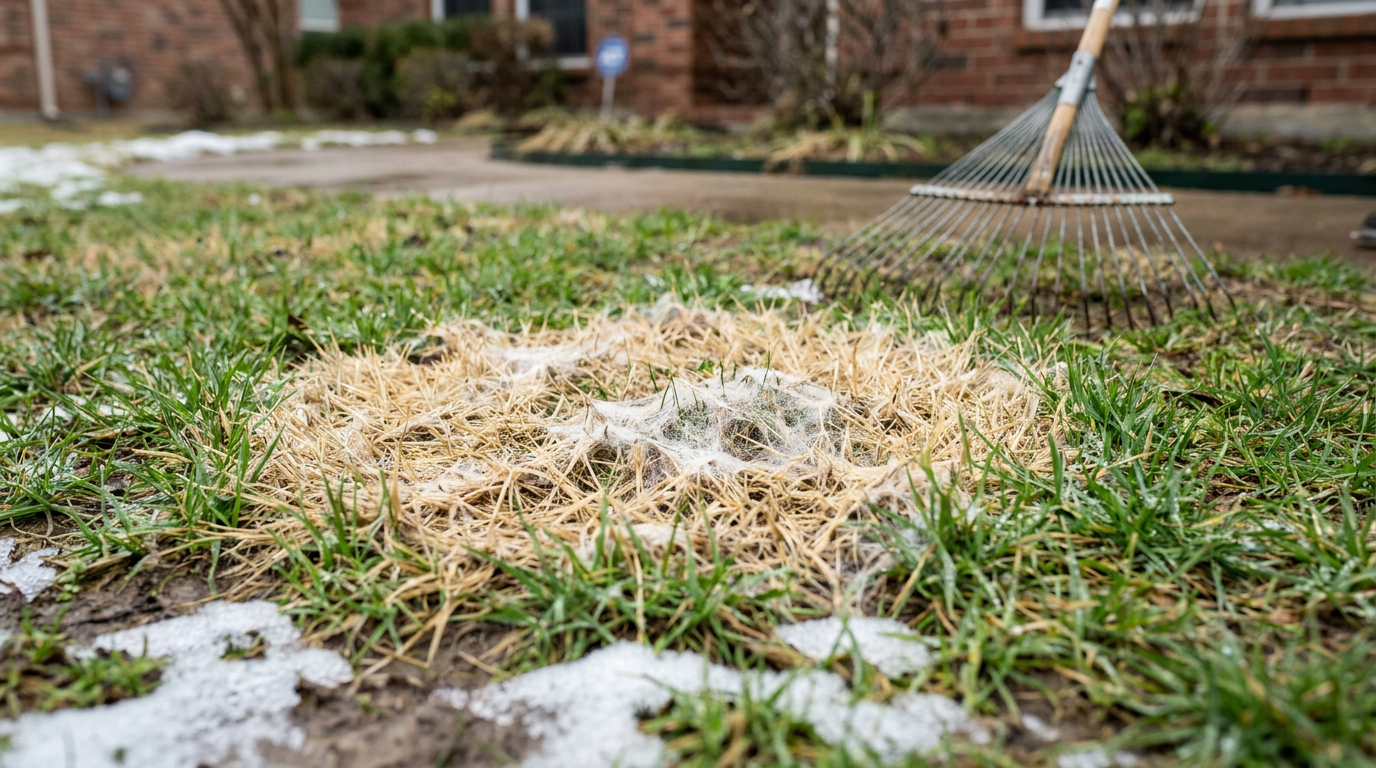
- De-crust Stubborn Mats by Hand — If wet slush or heavy snowplow piles packed the turf into a leathery skin, the rake might just skim over the top. Use your gloved fingers to crack it open and tease the bound blades apart.
- Safety note: Wear leather or coated nitrile work gloves; mold spores can light up allergies or cause contact dermatitis.
- If that crust won’t budge, wait for a dry, breezy afternoon when the tissue gets brittle and breaks up easier.
Landscaping · Deck or fence project
| Project category | Landscaping |
|---|---|
| Problem type | Deck or fence project |
| Trade required | Landscaping |
| Urgency | Planned project |
| Safety risk | Moderate safety risk |
| DIY suitability | DIY for experienced homeowners |
| Cost category | High cost |
| Typical timeline | Most builds 3–10 days depending on size |
| Contractor type | Landscaping contractor |
Repair option
Replace failed boards, posts, and hardware; reseal the surface.
Replacement option
Rebuild when framing or the ledger connection is unsafe.
Common causes
- Rot at posts and ledger
- Storm damage
- Adding outdoor living space
Relevant tools:home improvement material pricesproject cost estimator
Published November 12, 2026Last updated November 12, 2026
Tools & materials you'll need
Affiliate links- AmazonFlexible wire spring-tine leaf rakeAvoid rigid steel bow rakes which tear out dormant crowns
- AmazonCoated work glovesProtects hands from skin allergens and fungal spores
- AmazonN95 dust maskEssential when raking dry mold crusts to avoid inhaling spores
- AmazonPump garden sprayer1-2 gallon
- AmazonLawn mower with collection bagUsed at maximum height setting to pick up loose chaff
- AmazonLiquid humic acid concentrate1 quart · Encourages root microbial activity without forcing soft top growth
- AmazonSystemic turf fungicide (propiconazole or azoxystrobin)1 bottle · Only required if treating persistent, active pink snow mold
- AmazonCool-season grass seed blend3-5 lbs · For patches where crowns have completely died off
As an Amazon Associate FixlyGuide earns from qualifying purchases — at no extra cost to you. Prices and availability are accurate as of publication and subject to change.
Quick Answer
To fix lawn snow mold, wait until your turf dries out all the way, then rake the matted, crusty blades hard with a stiff wire leaf rake so you lift the canopy and get some air moving through it. Don’t throw nitrogen at it in early spring — that fresh, tender growth just gives the fungus a bigger bite. If you’re seeing pink spore masses or the crowns still look thin after raking, spray a recovery treatment of liquid humic acid or compost tea to wake up the soil biology, and save chemical fungicides for the stubborn pink snow mold cases that are actually chewing into the turf’s root crowns.
The Problem
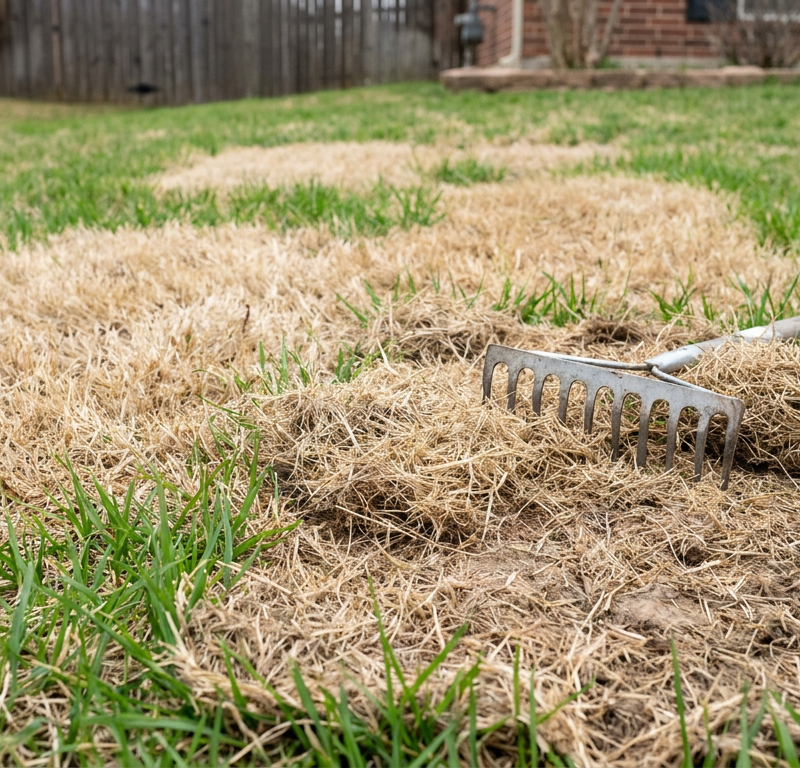
Winter starts backing off, the snow piles melt, and instead of clean green growth, your yard’s covered with bleached, straw-colored circles that look like somebody slapped dead parchment paper right onto the soil. In some spots you’ll get a fine white cobwebby fuzz; in others, the edge comes in with a salmon-pink halo. Ugly stuff.
That’s snow mold — usually gray snow mold (Typhula incarnata) or pink snow mold (Microdochia nivale). When heavy snow sits on unfrozen ground for 60 to 90 days, or thick autumn leaves get mashed down by wet winter slush, you end up with a dark, clammy little terrarium sitting right at temperatures between 32°F and 40°F. The fungus loves that setup. It feeds on the grass blades while the turf’s asleep and defenseless. If you leave it alone, those matted patches bake in the early spring sun and turn into a hard, crusty thatch layer that blocks new shoots and can kill the crowns underneath. I pulled up to a place in Frisco last month where the north side of the lawn looked exactly like this — one sloppy snowbank by the driveway, and boom, a mess.
       [ Melting Snow Layer: 32°F - 40°F Microclimate ]
---------------------------------------------------------------
   ~~~~~ Wet, Matted Grass Leaves (Fungal Mycelium Feeds Here) ~~~~~
---------------------------------------------------------------
   XXXXX Bleached Crust Layer (Blocks Sunlight & Air to Soil) XXXXX
---------------------------------------------------------------
   ||||| Grass Crowns & Roots (Dormant or Dying from Suffocation)
===============================================================
                       Soil Bed
How It Works
Cool-season grasses — Kentucky bluegrass, perennial ryegrass, fine fescues — stash carbohydrates down in their root crowns in late fall so they can ride out freezing weather. Warm-season grasses like Bermuda or Zoysia go completely dormant. Then the snow sits, moisture stays pinned against the soil surface, and psychrophilic (cold-tolerant) fungal spores that already live in your soil wake up.
Gray snow mold hits only the leaf tissue. Once the sun comes out, humidity drops, and air temps get above 45°F to 50°F, it pretty much slams on the brakes. The crowns are usually still fine; the lawn just looks rough. Pink snow mold’s a different animal. It doesn’t need snow cover to do damage — cold, wet 35°F drizzle is enough — and it doesn’t stop at the blade. It moves right into the crown and root system and tears up the plant’s vascular tissue.
If those matted blades stay glued to the soil, sunlight can’t reach the crown, carbon dioxide gets trapped at ground level, and the moisture can’t evaporate. The lawn basically suffocates under its own junk. You’ve got to break that surface seal, stand the leaves back up, and get oxygen moving through the turf boundary layer. No magic trick. Just grunt work.
Step-by-Step Fix
Follow these steps as soon as the snow melts and the soil dries out enough to walk on without leaving deep footprint depressions.
-
Stay Off Wet, Waterlogged Turf — Don’t go tromping out there while the ground’s still squishing under your boots. Walking on saturated early-spring soil compacts clay and crushes dormant crowns into cold mud, and that turns surface fungus damage into real root death.
- Wait until the top 1 to 2 inches of soil feel firm underfoot before you head into the yard.
- If your boot leaves a muddy dent deeper than 1/4 inch, give it another 48 to 72 hours of sun.
-
Map the Patches and Identify the Fungal Type — Get down on your hands and knees and inspect the damaged spots so you can tell whether you’re dealing with gray or pink snow mold. Gray snow mold usually shows silvery-white or bleached straw patches, often with tiny hard brown specks (sclerotia) the size of mustard seeds tucked into the blades. Pink snow mold shows a faint reddish, pink, or copper tint around the edge of the dead circle when the morning light hits it.
- Tools: 10x magnifying glass or pocket knife to scrape leaf margins.
- If you spot sclerotia, that’s a good sign it’s gray snow mold and the crowns are probably still alive.
-
Gently Fluff the Matted Crust with a Wire Rake — Use a flexible wire spring-tine leaf rake and lightly pull it across the matted spots in crisscross passes. You’re not trying to tear the lawn up. You’re trying to stand those dead, glued-down blades back up so air can circulate around the crown.
- Tool: 24-inch spring-steel flexible leaf rake.
- Skip the rigid steel garden bow rakes; those stiff tines will snag healthy crowns and yank them clean out of loose spring soil.
-
De-crust Stubborn Mats by Hand — If wet slush or heavy snowplow piles packed the turf into a leathery skin, the rake might just skim over the top. Use your gloved fingers to crack it open and tease the bound blades apart.
- Safety note: Wear leather or coated nitrile work gloves; mold spores can light up allergies or cause contact dermatitis.
- If that crust won’t budge, wait for a dry, breezy afternoon when the tissue gets brittle and breaks up easier.
-
Vacuum or Bag Loose, Decayed Debris — Once you’ve fluffed the circles and cracked the fungal crust, get the loose rotting leaf tissue off the lawn. If you leave thick mats of mold-covered dead leaves on the recovery area, they hold humidity in place during cool spring nights and feed secondary fungal problems like leaf spot.
- Use a lawn sweeper or run your push mower with a collection bag set at its highest wheel setting (3.5 to 4 inches) to gently vacuum loose chaff.
- Don’t toss these diseased clippings into your home compost pile; hot composting almost never reaches the 140°F internal threshold needed to kill sclerotia spores.
-
Perform the Crown Survival Tug-Test — Grab a small pinch of bleached grass stems in the middle of the patch and give them a gentle upward tug. If they hold and stay anchored, the crown’s alive, hydrated, and ready to push new blades.
- If the whole clump pulls out with no fight at all, sliding free with a mushy brown base, the crown’s dead.
- Dead crowns need patch reseeding; living crowns will usually come back once soil temps hit 50°F to 55°F.
-
Hold Off on Early Spring Nitrogen Fertilizer — Leave the spreader alone. Dumping quick-release, high-nitrogen fertilizer on snow mold patches forces the grass to push fast, watery leaf growth before the roots have recovered from winter.
- Tender, nitrogen-rich growth acts like premium fuel for pink snow mold and other spring fungi.
- Wait until the lawn’s fully greened up on its own and you’ve already done at least two regular mows before you apply a balanced, slow-release spring fertilizer (e.g., 16-4-8 or 24-0-11 at a rate of 0.5 lbs N per 1,000 sq ft).
-
Apply a Soil Biology Booster — Instead of synthetic chemicals, spray the fluffed patches with liquid humic acid mixed with sea kelp extract or aerated compost tea. Those inputs bring in helpful microbes that crowd out lingering pathogens while nudging root-zone cell division without forcing weak top growth.
- Material: Liquid humic acid concentrate diluted at 3 fl oz per gallon of water per 1,000 sq ft.
- Apply it with a clean pump sprayer on a calm morning when rain isn’t coming for 24 hours.
-
Apply a Fungicide (Pink Snow Mold Only) — If you confirmed pink snow mold and the patches keep growing after three straight dry, warm days, the crown’s under active fungal attack. Spot-treat the edge and center of the damaged zones with a systemic fungicide containing azoxystrobin or propiconazole.
- Don’t blanket-spray the whole yard; hit only the active, spreading rings plus a 12-inch buffer border.
- Gray snow mold never needs a spring fungicide application because rising temps kill the pathogen on their own.
-
Aerate and Overseed Bare Soil Voids — Once daytime soil temperatures stay around 52°F to 55°F, check the spots where crowns failed the tug test. Use a manual hand-coring tool or a garden cultivator to poke holes 1 to 2 inches deep into the bare areas and rough up the surface.
- Sow a high-quality, endophyte-enhanced seed blend matched to your existing turf (such as a 70/30 Kentucky bluegrass/perennial ryegrass mix) at 4 to 6 seeds per square inch.
- Dust with a 1/8-inch layer of clean peat moss or aged compost to hold moisture, then keep the patch damp with light, daily waterings for 14 to 21 days.
Common Causes
Snow mold isn’t just bad luck; it’s what happens when moisture, temperature, and a few bad lawn habits all pile up in late autumn. Here’s what usually drives it:
- Leaving Grass Too Tall Before Winter — Keeping cool-season grass at 3.5 or 4 inches going into winter sounds nice, but it’s a setup for trouble. Heavy snow folds those long, floppy blades over, mats them against the soil, and builds a dense, oxygen-starved blanket that invites mold.
- Excessive Late-Fall Nitrogen — A heavy dose of quick-release nitrogen in late October or November keeps the turf lush, dark green, and soft right up to the first freeze. That tender, unhardened tissue is basically a buffet for winter fungi.
- Neglected Autumn Leaves — Letting a wet layer of oak or maple leaves sit under the winter snowpack presses dead organic matter against the grass and traps ground moisture for months.
- Massive Snowplow Drift Piles — Pushing feet of dense snow from driveways and walkways onto the same corner of the lawn makes deep drifts that take forever to melt in spring. That long snow cover keeps soil temps parked in the fungus’s favorite 32°F to 38°F range.
- Compacted Clay and Poor Surface Drainage — Soil that holds standing meltwater keeps the turf canopy wet long after the snow’s gone.
Common Mistakes
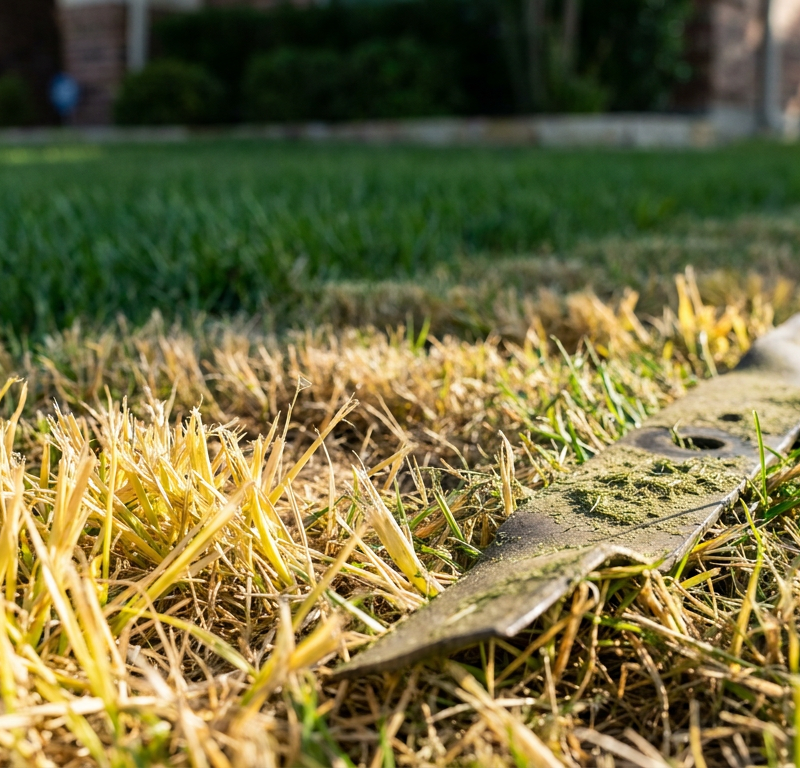
- Scalping the Lawn with a Mower While Turf Is Wet — A lot of homeowners think mowing it down to the dirt will “cut off” the mold. It won’t. Dragging a heavy 60-pound mower across waterlogged spring soil tears weak roots out and leaves deep tire ruts that just hold more water.
- Raking with a Heavy Bow Rake — A stiff, rigid steel garden rake will pull live dormant crowns right out of loose ground. Stick with a light, springy wire leaf rake and just whisk the tops of the blades.
- Drenching with Fungicide for Gray Snow Mold — Running out to buy expensive chemical fungicides for gray snow mold in April is a waste of cash. The pathogen shuts down on its own as soon as temps hit 50°F; the grass just needs sunlight and oxygen.
- Rushing to Throw Seed on Saturated Mud — Tossing grass seed onto un-raked, crusty mold patches usually fails. The seed sits on top of the fungal barrier, dries out, or rots in cold spring muck. Wait until the soil warms and always get seed-to-soil contact.
- Heavy Spring Dethatching — Running a motorized power rake or vertical mower across the whole lawn in early spring shocks turf that hasn’t rebuilt its winter carbohydrate reserves. Spot-treat patches by hand instead.
Cost & Time Breakdown
| Task | DIY Cost | Pro Cost | Time |
|---|---|---|---|
| Fluffing & Raking Patches | $0 (existing wire rake) | $75–$150 | 30–60 minutes |
| Vacuuming / Bagging Debris | $0 (existing mower/sweeper) | $50–$100 | 20–30 minutes |
| Microbial / Humic Soil Spray | $25–$45 (concentrate) | $80–$140 | 30 minutes |
| Fungicide Spot Treatment (Pink Mold) | $30–$60 (propiconazole/azoxystrobin) | $120–$225 | 20 minutes |
| Spot Aeration & Overseeding | $20–$40 (seed + peat moss) | $150–$300 | 45–90 minutes |
Tips & Prevention
- Step Down Your Mower Height in Autumn — For the last two cuts of the fall season, drop your mower deck down a little at a time. If you usually cut at 3.5 inches, bring it to 3.0 inches, then finish the year at 2.0 to 2.5 inches. That keeps blades upright without scalping and helps prevent winter mats.
- Time Your Final Fertilizer Correctly — If you’re putting down a late-season “winterizer,” use a low-nitrogen, slow-release or potassium-rich formula (like a 10-0-20), and get it down at least 3 to 4 weeks before the ground freezes so the lawn hardens off naturally.
- Scatter Heavy Snowbanks — Near the end of winter, grab a shovel and break up oversized snow piles along driveway and sidewalk edges. Spreading that snow out over a wider area speeds up melting and cuts down on those long, cold pockets.
- Mulch or Bag Every Last Fall Leaf — Keep mulching until the leaves are chopped into dime-sized flakes that fall through to the soil, or bag and haul them off before the first lasting snowfall.
- Plant Mold-Resistant Turf Cultivars — If you live where winter snowpack hangs around for a while — Minnesota, Wisconsin, Upstate New York, or high-elevation zones — overseed in fall with turf-type tall fescues or hard fescues, which hold up a lot better against Typhula and Microdochia species than perennial ryegrass.
When to Call a Professional
Snow mold is usually a fix-you-can-handle DIY job, but there are times you should bring in an insured lawn-care pro or agronomist.
If more than 40% of your whole yard is covered in dead, mushy pink snow mold circles and the crowns pull away like wet felt across the whole lawn, the fungus has wiped out the turf’s vascular system. That’s not a simple patch job; that’s full turf loss, and it calls for professional slit-seeding or total soil renovation.
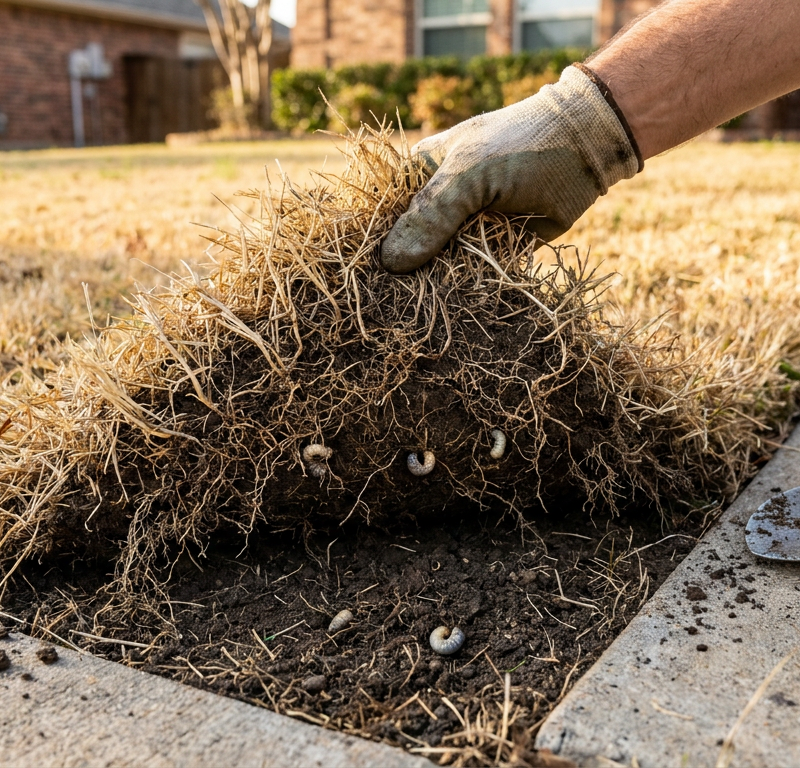
Call a pro too if deep meltwater pools across your yard for more than four consecutive days after the snow melts. That usually points to a grading problem, hardpan clay deep under the surface, or a busted perimeter drainage system that surface raking isn’t going to fix. And if you think grubs or a secondary root-rot pathogen (Pythium) is hammering the weakened turf at the same time, an expert can pull soil cores, check the pathogen under a microscope, and set up commercial-grade treatments the right way.
Frequently Asked Questions
Does snow mold hurt dogs or humans?
Snow mold itself doesn’t infect human skin or animals, but the airborne spores can trigger rough allergies, asthma attacks, sneezing fits, and contact dermatitis. Wear a standard N95 mask and gloves when you’re raking dry, dusty patches, and keep pets off the lawn until the fluffed grass has aired out and dried for a day.
How long does it take for grass to recover from snow mold?
If the grass crowns are still intact — which is true for about 90% of gray snow mold cases — the lawn usually greens up and hides the damage within 2 to 4 weeks once soil temps stay above 50°F. Pink snow mold takes longer, around 4 to 8 weeks, because the plant has to rebuild damaged crown tissue or sprout from surviving edge tillers.
Can I just mow over snow mold to get rid of it?
Nope. Mowing right over flat, matted snow mold doesn’t lift the sealed leaf crust, and running a mower over soggy spring turf just leaves ruts and tears weak roots. You’ve got to mechanically fluff the mats with a wire leaf rake first so the grass can dry before you do your first regular seasonal mow.
Should I apply lime to my snow mold patches?
Don’t apply lime unless a recent soil test shows your pH is critically low (below 6.0). If you add lime without data, you’ll raise surface soil pH, and research shows alkaline soils (pH 7.0 and above) can actually help certain snow mold fungi while tying up iron and phosphorus.
Will pink snow mold spread to my flower beds and shrubs?
Microdochia nivale mainly hits grass — cool-season turfgrasses, winter wheat, and cereal grains. It won’t spread to or infect woody shrubs, perennials, or common garden flowers, though wet, decaying leaves around the borders can kick up separate botrytis molds.
Why is snow mold worse along my driveway and sidewalks?
Driveway edges get slammed with compacted, dense snow thrown by shovels and snowblowers. Those piles take up to two weeks longer to melt than the rest of the lawn, which keeps the grass underneath dark, damp, and cold way longer than it should be — perfect breeding ground for fungal mycelium.
Can I seed right after raking snow mold?
Yes, but only if the soil’s dry enough to work and soil temps are getting close to 50°F. Clear out all rotting fungal debris, scratch the soil surface 1/2-inch deep with a hand cultivator so you’ve got a clean seedbed, and make sure you get firm seed-to-soil contact.
Does snow mold return every single year?
Not always. Snow mold spores are always hanging around in the soil, but they only show up as visible disease when the weather lines up with poor late-season lawn care. If you mow shorter before winter, skip the late-fall quick-release nitrogen, and keep the leaves cleaned up, you can head it off even in snowy winters.
Related Articles
Keep troubleshooting with these hand-picked guides from FixlyGuide:
- Water Pooling in Landscape Beds? 10 Steps to Stop Foundation Flooding — Fix standing water and poor drainage in landscape beds around your foundation with pro-tested regrading, downspout extensions, and sub-surf…
- The #1 Mistake Killing Your Lawn's Crabgrass Defense (And the Easy Fix) — Discover why common crabgrass removal methods fail and how to naturally eliminate this stubborn weed for a healthier lawn.
- Grass Turning Yellow After Mowing? 5 Causes and How to Fix It — Grass turning pale or yellow after mowing? Discover the causes of mower scalping and torn blades, and learn the step-by-step fix to restore…
- The #1 Mistake Killing Your Lawn's Grass (and How to Fix Patchy Spots) — Discover the most common reason for patchy grass and learn how to revive your lawn with targeted, easy-to-follow steps.
- Nutsedge Taking Over Your Lawn? 10 Steps to Kill It at the Root — Stop pulling nutsedge by hand. Learn how to identify yellow and purple sedge, select the right selective herbicide, and destroy tubers with…
- Driveway Expansion Joint Cracking? 11 Steps to Reseal It for Good — Stop weeds, water erosion, and winter frost heave by replacing failed concrete expansion joints with commercial-grade polyurethane and clos…
Your seasonal maintenance checklist
The small jobs that prevent the expensive repairs. Tick them off — progress saves on this device.
Free, no signup. Skip anything that requires roof access or working near live electrical.
What should this project cost?
Enter your project details for a realistic cost range before you call anyone.
Cost depends heavily on which system turns out to be the source.
- Regional adjustment
- National average
- Labor share (typical)
- ~$1,620
- Quotes to collect
- 3 written estimates
Educational estimate based on national averages — not a binding quote. Always confirm with written local estimates.
Before you start
Check the difficulty, permits, and safety risk — then decide whether to call a pro.
- Is this a safe DIY job?Check permits, tools, and risk before you start the steps below.Open
- Estimate this projectGet a cost range for your scope and ZIP before you call anyone.Open
- Get local estimatesSend one request and compare written estimates from vetted pros.Open
Free, no signup required. Estimates are educational guidance, not a quote or an inspection.
Get the print-ready PDF of this guide
A clean, ad-free, printable version you can keep on your phone or pin to the workshop wall. Free with a FixlyGuide account.
- Print-optimized layout
- Tools, materials & every step included
- Saved to your account
Frequently asked questions
Is snow mold toxic to pets or humans?+
Snow mold spores don't infect human skin or pets, but they are potent seasonal allergens. Raking dry patches can launch clouds of spores that trigger asthma attacks, coughing fits, and skin irritation. Wear an N95 dust mask and work gloves during cleanup, and keep pets off the fluffed turf until it dries out.
How long does it take for grass to recover from snow mold?+
For gray snow mold with living crowns, expect full recovery in 2 to 4 weeks once daytime soil temperatures reach 50°F to 55°F. Pink snow mold can take 4 to 8 weeks, as it often damages the crown and vascular tissue, requiring the plant to push brand-new tillers or requiring you to overseed bare soil spots.
Can I just mow over snow mold to fix it?+
No. Running a mower over wet, crusty mats will not break the fungal seal and can ruin waterlogged soil by creating wheel ruts. Mower blades simply skate over flat, matted grass. You need to fluff the canopy with a light wire rake first so air can penetrate and dry the turf crowns.
Should I put lime on snow mold spots?+
Never apply lime without a lab soil test. Raising soil pH makes it more alkaline, which research shows can actually accelerate certain strains of snow mold. Lime does not kill fungal spores and should only be applied if your soil pH has dropped below 6.0.
Will snow mold kill my flower beds or bushes?+
Pink snow mold specifically targets cool-season turfgrasses and small grains. It will not infect woody landscape shrubs, conifers, or perennial root systems, though wet leaf packs in your beds can harvest different decay molds if left uncleaned.
Why do I get snow mold mostly along my driveway?+
Those areas endure deep, dense snow piles dumped by plows and snowblowers. These mounds take days or weeks longer to melt in early spring, creating an extended 32°F to 38°F microclimate under zero sunlight that lets snow mold pathogens thrive unchecked.
Can I seed grass directly into a snow mold spot?+
You can, provided the soil has dried out and temperatures are warm enough for germination (soil around 50°F to 55°F). You must scrape away all dead, rotting leaf chaff first and scratch the soil surface 1/2-inch deep to ensure direct seed-to-soil contact.
Does snow mold come back every single winter?+
Not if you manage your late-autumn lawn chores properly. Fungal spores stay in the soil permanently, but they need long-lasting moisture and trapped air to germinate. Dropping your cutting height before winter, eliminating late nitrogen fertilizer, and clearing fall leaves will keep the mold at bay.
Discussion
Loading comments…