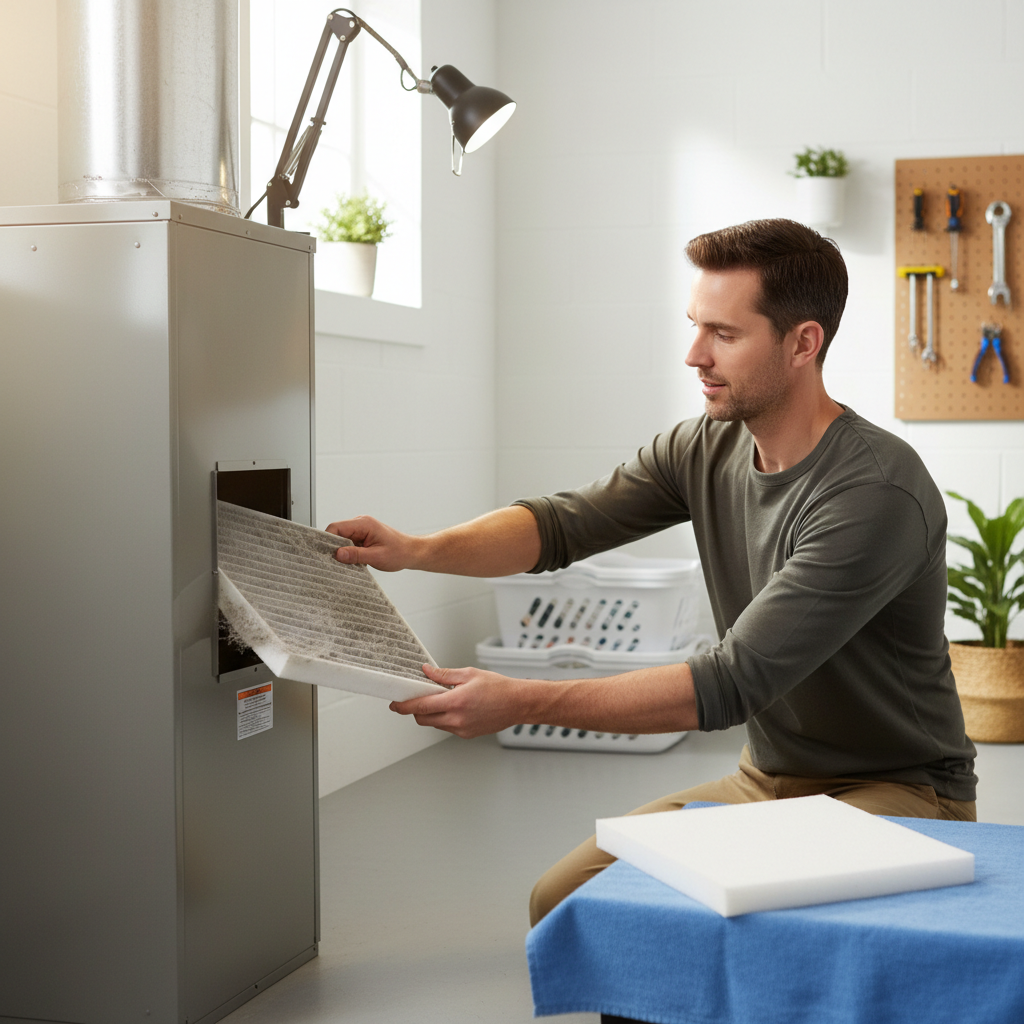
- Locate the filter: Your furnace filter is typically found in a slot at the return air duct, often at the base or side of the furnace unit. Some systems have a filter grille in the wall or ceiling.
- Inspect the filter: Pull out the filter and hold it up to a light source. If you can't see light passing through it, or if it's visibly caked with dust, pet hair, and debris, it's dirty and needs replacement.
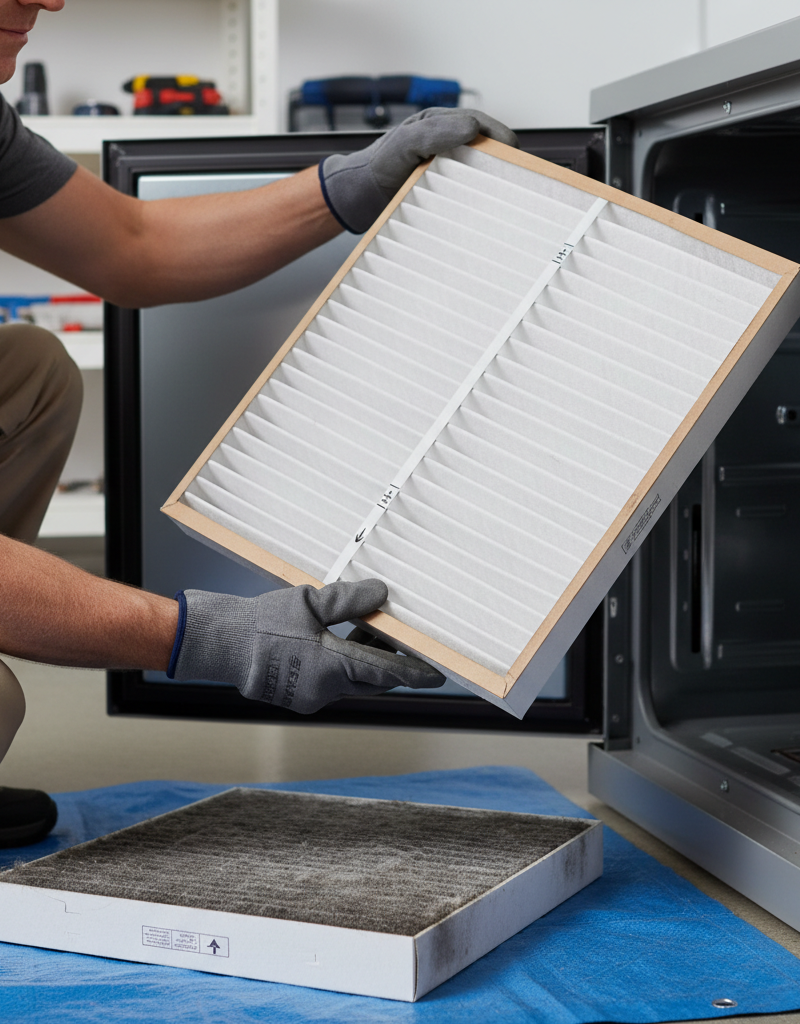
- Install correctly: Make sure the arrow on the new filter points in the direction of airflow, usually towards the furnace. Dispose of the old filter.
HVAC · High energy usage
| Project category | HVAC |
|---|---|
| Problem type | High energy usage |
| Trade required | HVAC |
| Urgency | Planned project |
| Safety risk | Low safety risk |
| DIY suitability | DIY for experienced homeowners |
| Cost category | High cost |
| Typical timeline | Assessment within weeks; replacement planned off-season |
| Contractor type | Licensed HVAC technician |
Repair option
Duct sealing, insulation, and a tune-up before touching the equipment.
Replacement option
High-efficiency replacement sized by a load calculation, not a rule of thumb.
Common causes
- Aging, low-efficiency equipment
- Leaking ducts losing conditioned air
- Insufficient attic insulation
- Oversized system short-cycling
Relevant tools:project cost estimatorrepair or replace
Published June 27, 2026Last updated August 17, 2026
Tools & materials you'll need
Affiliate links- AmazonEmory Board or Fine-Grit Sandpaper1 · For cleaning the flame sensor (approximately 220-grit)
- AmazonNut Driver Set or Small Wrench1 set · To remove flame sensor mounting screw
- AmazonScrewdriver SetFor accessing furnace panels, if needed
- AmazonHeadlamp or FlashlightFor visibility inside the furnace cabinet
- AmazonSafety Glasses1 pair · Always protect your eyes when working in dusty or confined spaces
As an Amazon Associate FixlyGuide earns from qualifying purchases — at no extra cost to you. Prices and availability are accurate as of publication and subject to change.
Quick Answer
Furnace short cycling, the frustrating behavior of your heating system turning on and off too frequently, is a common issue with several potential causes. Often, the culprit is something as simple as a clogged air filter or a dirty flame sensor, both of which are easy for a homeowner to address. Other times, it might point to a more complex problem like an improperly sized furnace or a faulty thermostat. Understanding the underlying mechanisms and following a systematic diagnostic process can help you identify and fix the problem, saving you money on energy bills and extending the life of your unit.
The Problem
You're bundled up on the couch, enjoying a warm evening, but your furnace seems to have a mind of its own. It kicks on with a roar, runs for a few minutes, then clicks off, only to repeat the cycle again and again within a short timeframe. This isn't just annoying; it's a phenomenon known as short cycling, and it's a red flag for your heating system. Instead of completing a full heating cycle, where it brings your home to the set temperature gradually, a short-cycling furnace struggles to maintain comfort and wastes a significant amount of energy. Each start-up and shut-down puts stress on internal components, accelerating wear and tear, and potentially leading to costly breakdowns down the line. Beyond the energy waste and component stress, short cycling often results in uneven heating throughout your home, leaving some rooms chilly while others are too warm. Recognizing this behavior early and taking investigative steps can prevent minor issues from escalating into major repairs.
How It Works
To understand why a furnace short cycles, it helps to grasp the basic principles of how a furnace operates. When your thermostat calls for heat, it sends a low-voltage signal to the furnace's control board. This initiates a sequence of events: first, the inducer motor starts, creating a draft to vent combustion gases. Next, the igniter (either a hot surface igniter or a pilot light) glows or lights, followed by the opening of the gas valve, allowing gas to flow into the burners. The flame sensor, a small rod positioned in the flame path, then verifies the presence of a flame. If the flame is detected, the main blower motor activates, pushing heated air through your ductwork and into your living spaces. Once the thermostat's set temperature is reached, the thermostat signals the furnace to shut down, reversing the sequence of events. The gas valve closes, the blower motor continues to run briefly to cool the heat exchanger, and then the inducer motor powers down.
Short cycling interrupts this carefully orchestrated process. The furnace might start, ignite, and even begin blowing warm air, but then shut off prematurely before reaching the set temperature or completing a full heating cycle. This premature cut-off can be triggered by various safety mechanisms or system inefficiencies. For example, if the heat exchanger gets too hot too quickly (often due to restricted airflow), a limit switch will trip, shutting down the burners to prevent overheating. Similarly, if the flame sensor is dirty, it might fail to detect the flame reliably, causing the gas valve to close as a safety measure. An oversized furnace, one that is too powerful for your home's heating needs, can also cause short cycling because it heats the space too rapidly, satisfying the thermostat before the system has had a chance to run for an adequate duration to dehumidify and evenly distribute heat.
Step-by-Step Fix
Here's how to diagnose and address the most common causes of furnace short cycling.
1. Check and Replace Your Air Filter – The most common culprit for restricted airflow.
- Locate the filter: Your furnace filter is typically found in a slot at the return air duct, often at the base or side of the furnace unit. Some systems have a filter grille in the wall or ceiling.
- Inspect the filter: Pull out the filter and hold it up to a light source. If you can't see light passing through it, or if it's visibly caked with dust, pet hair, and debris, it's dirty and needs replacement.
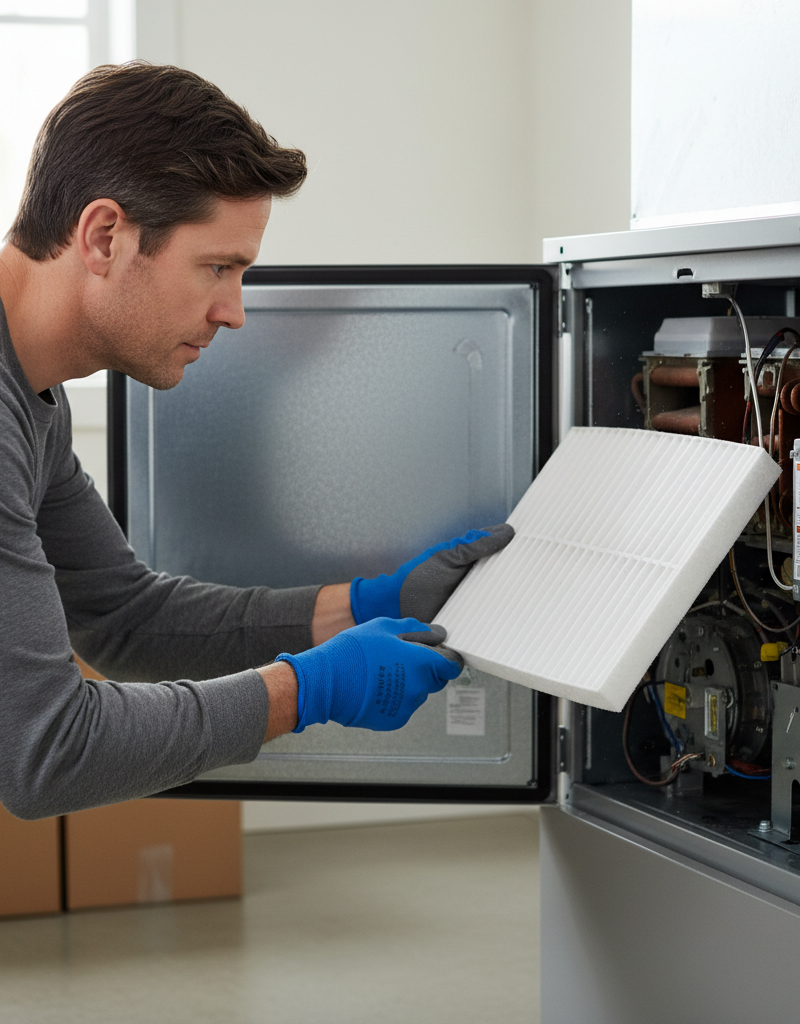
- Replace with the correct size: Note the dimensions printed on the side of your old filter (e.g., 20x25x1). Purchase a new filter with the same dimensions. Consider a MERV rating between 8 and 11 for good air quality without overly restricting airflow for most residential furnaces.
- Install correctly: Make sure the arrow on the new filter points in the direction of airflow, usually towards the furnace. Dispose of the old filter.
2. Clean the Flame Sensor – A dirty sensor can misread the flame, causing premature shutdown.
- Safety first: Before doing anything, turn off the power to your furnace at the thermostat and the dedicated breaker in your electrical panel. NEVER work on your furnace with power on.
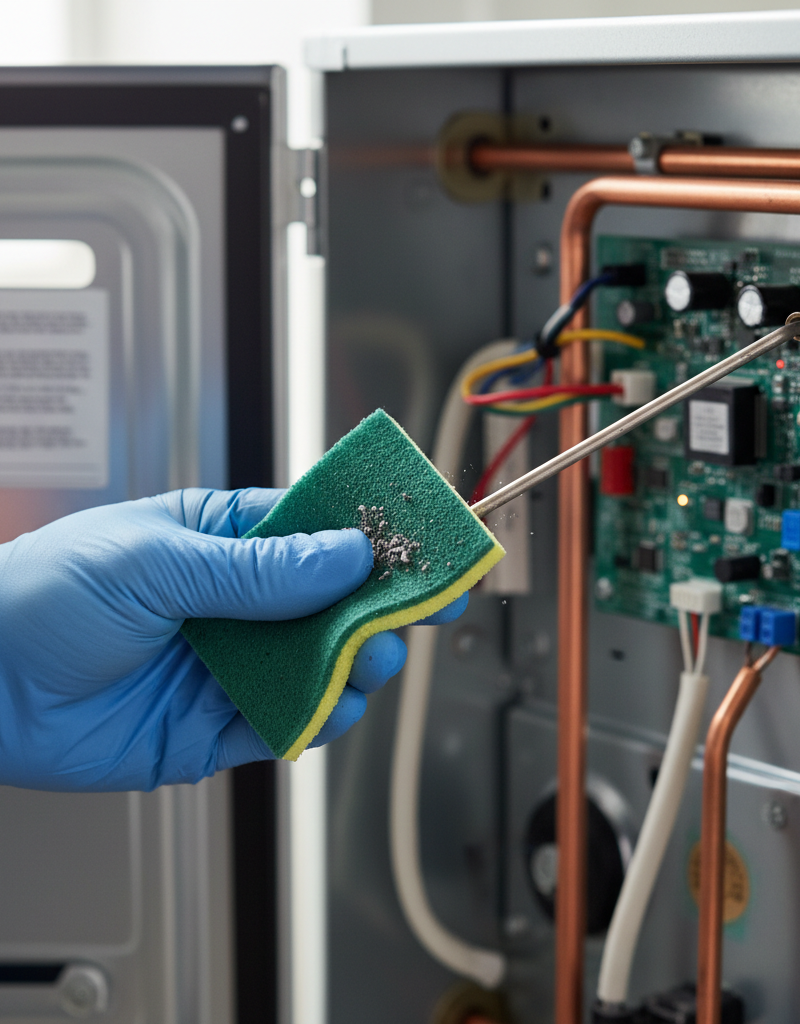
- Locate the flame sensor: The flame sensor is a thin metal rod, usually 2-3 inches long, with a single wire connected to it. It's positioned directly in the path of the burner flames, typically on the opposite side of the igniter.
- Remove the sensor: Using a nut driver or small wrench, carefully unscrew the single mounting screw that holds the sensor in place. Disconnect the wire.
- Clean the sensor: Gently rub the metal rod with a fine-grit Emory board, fine-grade sandpaper (around 220-grit), or a clean steel wool pad. The goal is to remove the microscopic layer of oxidation and carbon buildup without damaging the rod. Do NOT bend the rod. Avoid using harsh chemicals.
- Reinstall: Attach the wire and secure the sensor with its mounting screw. Ensure it's positioned correctly in the flame path. Restore power and test the furnace.
3. Inspect the Exhaust Vent and Intake – Blockages can cause pressure switch errors and short cycling.
- Examine the exterior: Go outside and locate the furnace's exhaust and intake vents. These are typically PVC pipes protruding from a side wall or the roof. Ensure they are clear of snow, ice, leaves, bird nests, or other debris.
- Check interior condensate lines: If you have a high-efficiency condensing furnace (which will have a PVC exhaust pipe), inspect the condensate drain line for clogs. This is usually a small PVC or flexible hose running from the furnace to a floor drain or condensate pump. If it's clogged, water can back up, triggering a safety switch. Carefully clear any visible blockages or flush with a mild bleach solution if permitted by your furnace manual.
4. Adjust Thermostat Settings and Location – Incorrect settings or poor placement can confuse the furnace.
- Battery check: If your thermostat is battery-powered, replace the batteries, even if it seems to be working. Low batteries can cause erratic behavior.
- Relocate if needed: If the thermostat is in direct sunlight, near a heat vent, or close to a drafty window, it can provide inaccurate readings. Consider relocating it to a more central, undisturbed interior wall. (This is a professional job if it involves rewiring.)
- Programming review: Ensure your thermostat schedule isn't set to rapidly change temperatures throughout the day, which can induce short cycling. Set a consistent temperature or allow for reasonable temperature swings.
- Verify calibration: On some smart thermostats, you can check temperature calibration. If your thermostat consistently reads several degrees off from an independent thermometer, it might need recalibration or replacement.
5. Check for a Faulty Limit Switch – A safety feature that can mistakenly trip.
- Locate the limit switch: This component is typically found inside the furnace cabinet, usually near the heat exchanger. It's often a small disc or rectangular box with wires connected to it.
- Look for manual reset: Some older limit switches are manual reset. Look for a small red button on the switch. If pressed in, the switch was tripped. Reset it by pushing the button. Note: If the limit switch is tripping repeatedly, there's an underlying airflow or overheating issue that needs professional diagnosis, not just a reset.
- Visual inspection of ductwork: While you're in the furnace area, visually inspect your return and supply ductwork for obvious large leaks, disconnections, or significant damage that could compromise airflow. Ensure all registers and grilles are open and unobstructed.
Common Causes
- Dirty Air Filter: The most frequent cause. A blocked filter restricts airflow, causing the heat exchanger to overheat and trip the furnace's limit switch, leading to a premature shutdown.
- Dirty Flame Sensor: Carbon buildup on the flame sensor prevents it from reliably detecting the burner flame, tricking the furnace into thinking there's no flame and shutting off the gas valve for safety.
- Oversized Furnace: A furnace that is too powerful for the home's square footage or inadequate insulation will heat the space too quickly. It satisfies the thermostat's call for heat before completing a full heating cycle, leading to frequent on/off cycles.
- Faulty Thermostat: A miscalibrated, improperly located, or failing thermostat can send erroneous temperature readings or calls for heat, causing the furnace to short cycle.
- Blocked Exhaust or Intake Vents: High-efficiency furnaces rely on clear PVC vents for combustion air and exhaust. Blockages (snow, ice, debris) can cause pressure switches to trip, shutting down the furnace.
- Condensate Line Clog (High-Efficiency Furnaces): Condensing furnaces produce water, which drains through a condensate line. A clog can cause water to back up, tripping a float switch and shutting down the furnace.
- Malfunctioning Limit Switch: While often tripped by a dirty filter or airflow issue, the limit switch itself can fail, leading to improper shutdowns even when there's no overheating.
- Low Refrigerant (Heat Pumps in Heating Mode): If you have a heat pump operating in heating mode and it's short cycling, low refrigerant can reduce its heating capacity and cause the compressor to cycle on and off frequently.
Common Mistakes
- Ignoring the Air Filter: Many homeowners neglect regular filter changes, leading to the most common cause of short cycling and potentially more serious furnace damage. Check and change filters monthly during peak heating season.
- Over-cleaning the Flame Sensor: Using abrasive materials like very coarse sandpaper or scratching the flame sensor too aggressively can damage its delicate surface, making the problem worse or requiring a replacement.
- Assuming a Thermostat is Fine: Just because a digital display is on doesn't mean the thermostat is functioning correctly. Faulty wiring, dead batteries, or poor placement are easy checks often overlooked.
- Not Checking Outside Vents: For high-efficiency furnaces, forgetting to clear snow, ice, or debris from exterior exhaust/intake vents during winter is a common oversight that triggers safety shutdowns.
- Ignoring Persistent Issues: Repeated short cycling, even after basic troubleshooting, indicates a deeper problem. Ignoring it can lead to accelerated wear on expensive components like the heat exchanger or blower motor.
- DIYing Electrical Components: Attempting to troubleshoot or replace electrical components beyond simple sensor cleaning without proper knowledge can be dangerous and lead to further damage or electric shock. Stick to basic, low-voltage checks.
Cost & Time Breakdown
| Task | DIY cost | Pro cost | Time |
|---|---|---|---|
| Air Filter Replacement | $10–$35 | $0 (part of tune-up) | 5–10 min |
| Flame Sensor Cleaning | $0–$10 (for Emory board) | $150–$250 | 15–30 min |
| Exhaust Vent/Condensate Line Clearing | $0 | $150–$300 | 10–20 min |
| Thermostat Battery Replacement | $5–$10 | $0 (part of tune-up) | 2–5 min |
| Professional Diagnostic/Repair | N/A | $150–$500+ | 1–3 hours |
Tips & Prevention
- Regular Filter Changes: Make it a habit to check your furnace filter monthly and replace it every 1–3 months, especially during peak heating season or if you have pets. This is the single most effective way to prevent many airflow-related issues.
- Annual Professional Maintenance: Schedule a professional HVAC tune-up every fall before the heating season begins. A technician will clean vital components, inspect safety controls, and identify potential issues before they cause breakdowns.
- Keep Vents Clear: Ensure all supply and return air vents inside your home are unobstructed by furniture, rugs, or drapes. Periodically check exterior exhaust and intake vents for snow, ice, or debris.
- Proper Thermostat Placement: If possible, locate your thermostat on an interior wall away from direct sunlight, drafts, fireplaces, or heat-generating appliances to ensure accurate temperature readings.
- Monitor System Behavior: Pay attention to unusual sounds, smells, or operational patterns from your furnace. Catching short cycling early can prevent more significant problems.
- Consider a Smart Thermostat: Many smart thermostats offer advanced diagnostics, energy usage tracking, and remote control, helping you optimize your heating schedule and identify issues.
When to Call a Professional
While many short cycling issues can be resolved with simple DIY steps, knowing when to call a licensed HVAC professional is crucial for safety and effective repair. If your furnace continues to short cycle after you've thoroughly cleaned the flame sensor, replaced the air filter, checked exterior vents, and addressed thermostat concerns, it's time to call in an expert. Persistent short cycling can indicate more serious problems such as a failing heat exchanger, significant ductwork leaks, a malfunctioning control board, or an incorrectly sized furnace. Additionally, any issues involving gas lines, persistent error codes on your furnace, unusual burning smells, or if you're not comfortable working inside your furnace cabinet warrant professional intervention. An HVAC technician has specialized diagnostic tools and the expertise to safely identify and rectify complex internal issues, ensuring your system operates efficiently and safely.
Related Articles
Keep troubleshooting with these hand-picked guides from FixlyGuide:
- The 3 Hidden Reasons Your Furnace Short Cycles (and What to Do) — Furnace short cycling wastes energy and causes uneven heating. Learn the hidden reasons behind this common problem and how to fix it yourse…
- The #1 Mistake Homeowners Make When Heat Pumps Stop Heating in Winter — Discover the crucial mistake most homeowners make when their heat pump struggles in cold weather and how to fix it, potentially saving hund…
- The Secret Reason Your AC Isn't Drying Your Air (And What to Check First) — Your AC should cool and dehumidify, but if your house feels muggy, there's a specific, often overlooked culprit preventing it from doing it…
- The #1 Mistake Homeowners Make When Their AC Won't Turn On (And the Easy Fix) — Learn the most common oversight homeowners make when their AC won't turn on and how to troubleshoot basic issues to restore cooling.
- The #1 Reason Your AC Blows Warm Air (And It's Not What You Think) — A dirty air filter is often the overlooked culprit behind an air conditioner blowing warm air, hindering its ability to cool your home effi…
- The Hidden Reason Your AC Isn't Cooling (And Why Most Homeowners Get It Wrong) — Is your central AC blowing warm air or struggling to cool your home? The culprit is often a silent but serious issue many homeowners overlo…
What should this project cost?
Enter your project details for a realistic cost range before you call anyone.
Service calls and common repairs run $150–$900; full system replacement typically $6,000–$12,000.
- Regional adjustment
- National average
- Labor share (typical)
- ~$1,935
- Quotes to collect
- 3 written estimates
Educational estimate based on national averages — not a binding quote. Always confirm with written local estimates.
Fixly Project Decision Box
- DIY difficulty
- Advanced
- Estimated time
- Homeowner checks 20–30 minutes
- Cost level
- Moderate
Main tools / materials
- Clean air filter
- Garden hose for condenser coils
- Shop vac for the condensate line
When to stop and call a pro
- Burning smell, smoke, or a tripping breaker
- Refrigerant lines iced over or hissing
- Any work inside the sealed refrigerant circuit (EPA-licensed only)
- Gas smell near a furnace — leave and call the utility
Need professional help?
Find an HVAC Pro Near YouFrequently asked questions
How long should a furnace run per cycle?+
A properly sized and functioning furnace typically runs for 10-20 minutes per heating cycle in moderate weather conditions to adequately heat a home. In colder weather, cycles may be longer, but they should still be consistent and not excessively short or frequent.
Can a dirty filter cause short cycling?+
Yes, a dirty air filter is one of the most common causes of furnace short cycling. It restricts airflow, causing the furnace's heat exchanger to overheat rapidly. When the heat exchanger gets too hot, a safety device called the limit switch trips, shutting off the burners prematurely to prevent damage.
How do you reset a short-cycling furnace?+
To reset a short-cycling furnace, first turn off power to the furnace at the thermostat and the electrical breaker. Inspect and address common issues like a dirty air filter or flame sensor. Wait a few minutes, then restore power. If the furnace continues to short cycle, a professional diagnosis is needed.
Can a bad thermostat cause short cycling?+
Absolutely. A faulty or improperly located thermostat can send incorrect temperature signals to your furnace, causing it to turn on and off too frequently. Issues can include dead batteries, miscalibration, or placement in direct sunlight or near a heat source/draft.
Is short cycling bad for a furnace?+
Yes, short cycling is detrimental to your furnace. Each start-up and shut-down puts significant stress on the system's components, leading to accelerated wear and tear. It can shorten the lifespan of the furnace, increase energy consumption, and may indicate a more serious underlying problem that needs attention.
Discussion
Loading comments…