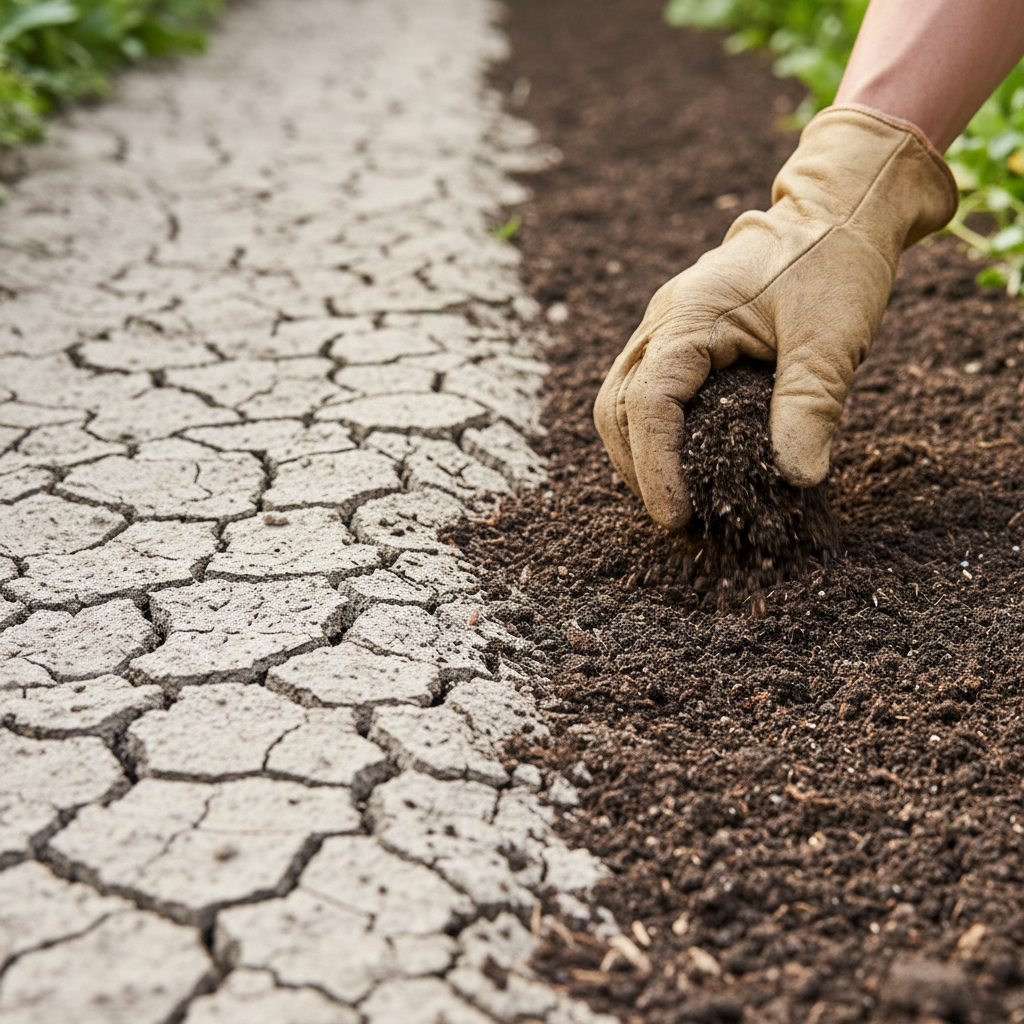
- Add Organic Matter – This is the part that changes everything. Organic matter acts like fluff for the soil; it helps bind particles into stable aggregates and opens up those air and water channels.
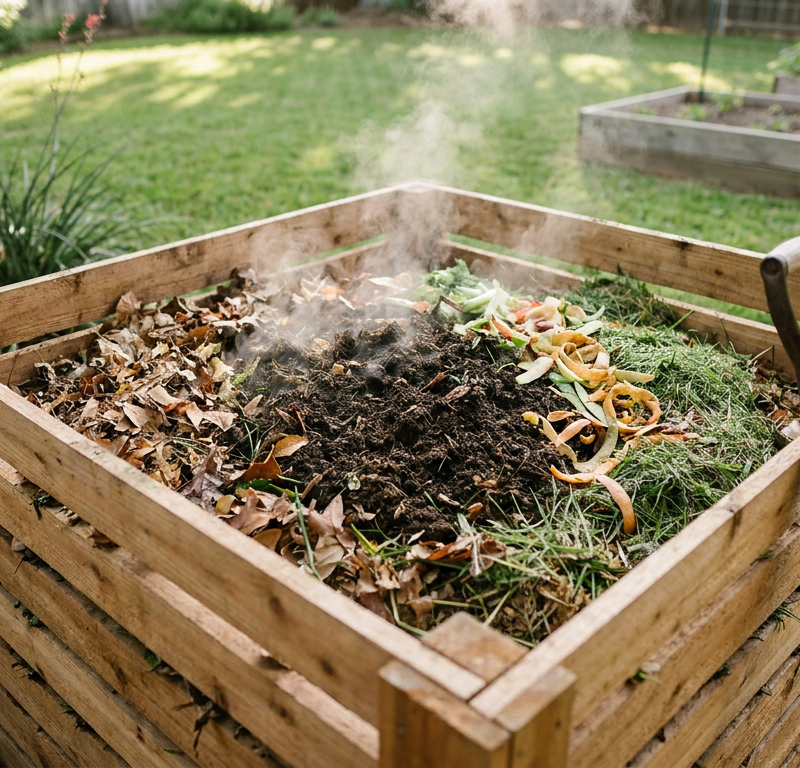
- What to use: Well-rotted compost, aged manure, leaf mold, or finely shredded bark. I like compost best because it’s balanced and it improves structure without making a mess of things. You’ll want a good 2-4 inch layer over the surface.
- How much: For a typical 100 sq ft garden, you’re looking at about 20-40 cubic feet of compost for that initial overhaul.
Landscaping · Deck or fence project
| Project category | Landscaping |
|---|---|
| Problem type | Deck or fence project |
| Trade required | Landscaping |
| Urgency | Planned project |
| Safety risk | Moderate safety risk |
| DIY suitability | DIY for experienced homeowners |
| Cost category | High cost |
| Typical timeline | Most builds 3–10 days depending on size |
| Contractor type | Landscaping contractor |
Repair option
Replace failed boards, posts, and hardware; reseal the surface.
Replacement option
Rebuild when framing or the ledger connection is unsafe.
Common causes
- Rot at posts and ledger
- Storm damage
- Adding outdoor living space
Relevant tools:home improvement material pricesproject cost estimator
Published September 10, 2026Last updated September 10, 2026
Tools & materials you'll need
Affiliate linksAs an Amazon Associate FixlyGuide earns from qualifying purchases — at no extra cost to you. Prices and availability are accurate as of publication and subject to change.
Quick Answer
That rock-hard garden soil that feels like somebody paved it over? Nine times out of ten, you’re looking at compaction. Usually it’s high clay, too much foot traffic, or somebody trying to garden when the ground’s still waterlogged. That dense mess keeps roots from breathing and stops water and nutrients from getting where they need to go. The fix isn’t fancy. Keep working in plenty of organic material like compost, use a no-dig approach where you can, and wait until the soil’s dried out some before you start tearing into it. Do that, and you’ll turn that brick into crumbly loam before long.
The Problem
Walk into a garden where the soil’s hard as a rock, and you know it right off. It’s not a little stiff. It’s the kind of stuff you could almost lay block on. I’ve spent 25+ years fixing things people thought were “just the way it is,” and hard-packed soil is one of those jobs that makes folks throw up their hands. You can’t dig. You can’t plant. Anything you do manage to get in there just sits there looking miserable. That’s not just frustrating — it’s hurting the plants.
Roots need room. They need air. They need water moving through the soil, not sitting on top of it or bouncing right off. When the ground’s compacted, it’s like trying to run a marathon with a pillow over your face. No dice.
I remember a job out in Willow Creek where a nice older couple had built a raised bed from scratch. They’d mixed in good amendments, too. Then came a wet spring, plus a few enthusiastic grandkids stomping around the bed, and the whole thing locked up. They called me thinking they had some big drainage failure. Nope. Just plain old compaction. Water was puddling, plants were stunted, and the wife was sure she had a black thumb. She didn’t. Her soil was just smothered.
This kind of soil either holds water too long and sets you up for root rot, or it sheds water like a duck’s back and leaves plants starving even after a rain. Nutrients get tied up. The beneficial microbes — the tiny workers doing the real heavy lifting underground — can’t keep up. Left alone, it turns a decent garden into a constant headache.
How It Works
To get why soil goes hard, you’ve got to understand what soil really is. It ain’t just dirt. It’s a living system. You’ve got mineral particles — sand, silt, clay — along with organic matter, microbes, bugs, water, and air all packed together in there. Healthy soil has a decent balance, with about 25% water and 25% air in the spaces between the solid bits. Those spaces, or pores, matter a whole lot.
When soil gets compacted, those pores get squeezed shut. Think of fluffy cotton getting mashed into a tight ball. Air gets pushed out, water can’t move through, and roots start struggling fast. Clay is especially bad for this because the particles are tiny — less than 0.002mm in diameter, compared to sand which is 0.05 to 2mm. Clay swells when it’s wet and turns dense when it dries, so it can go from sticky soup to something that feels like fired brick. Heavy foot traffic, machinery, and even a rototiller used the wrong way can mash the structure down and destroy those air pockets.
Roots need oxygen to work. Without it, they can’t absorb water and nutrients worth a darn. The beneficial microorganisms that break down organic matter and make nutrients available also need air. When they start dying off, decomposition slows way down, and soil fertility drops with it. What you’re left with is a tight, dead-feeling mass where nothing wants to grow and whatever does grow just limps along.
The goal is to build a crumb structure — soil particles clumping together in a stable way, with good pores left open for air and water. That’s where organic matter earns its keep.
Step-by-Step Fix
Alright, let’s get that soil breathing again. Here’s how I handle compacted, brick-like ground when I’m trying to get a yard back in shape.
-
Assess Your Soil – First thing I do is figure out what I’m dealing with. Dig down about 6-8 inches with a trowel. Can you even get a trowel in there? Grab a handful of damp soil and squeeze it. If it holds into a tight ball and won’t break apart, you’ve probably got compaction and a lot of clay. If it crumbles easy, then the problem’s different. Don’t skip this step — it tells you how much muscle this job’s gonna take.
-
Wait for the Right Moisture Level – This part matters more than folks think. Trying to work wet clay-heavy soil is like trying to shape wet concrete; you’ll just make bigger clods and seal it up worse. You want it moist, not soaked. Quick test: squeeze a handful. If water drips out, it’s too wet. If it forms a ball that breaks apart when you poke it, that’s your window. Bone dry soil’s no fun either, so give it a little water first if needed.
-
Loosen the Top Layer (Carefully) – For lightly compacted spots, a broadfork or digging fork is my go-to.
- Tools: Digging fork or broadfork (if available).
- Technique: Push the tines straight down, rock them a bit to open things up, then pull them out. Don’t flip the soil over. You’re making channels, not remixing the whole profile like a bad batch of concrete. Aim for about 8-10 inches deep, and work across the area every 6-12 inches. If it’s really stubborn, you may need a pickaxe, but keep an eye out for underground utilities — that’s not the day you want surprises.
-
Add Organic Matter – This is the part that changes everything. Organic matter acts like fluff for the soil; it helps bind particles into stable aggregates and opens up those air and water channels.
- What to use: Well-rotted compost, aged manure, leaf mold, or finely shredded bark. I like compost best because it’s balanced and it improves structure without making a mess of things. You’ll want a good 2-4 inch layer over the surface.
- How much: For a typical 100 sq ft garden, you’re looking at about 20-40 cubic feet of compost for that initial overhaul.
-
Work in the Organic Matter – Now you’ve got two decent paths, depending on how bad things are and how fast you need to plant.
- No-Dig Method: This is my favorite for long-term results. Just spread that 2-4 inch layer of compost right on top and let the worms, bugs, and microbes pull it down for you. It builds structure the right way and doesn’t beat up the existing soil life. You’ll start seeing the payoff within a season or two.
- Light Incorporation: If the compaction’s severe or you’re planting sooner rather than later, you can gently fork the compost into the top 6-8 inches of loosened soil. Don’t go pulverizing it. You’re mixing, not turning it into powder. A digging fork beats a rototiller here, since tillers can break down soil structure over time and leave you with more compaction later.
-
Mulch, Mulch, Mulch – Once the soil’s amended and planted, put down a 2-3 inch layer of organic mulch.
- Benefits: Mulch shields the soil from pounding rain, which can crust over and compact the surface. It helps hold soil temperature steady, knocks back weeds, and as it breaks down it adds more organic matter. Wood chips, straw, or shredded leaves all work. Just keep it a few inches away from plant stems.
-
Avoid Compaction Going Forward – Prevention’s the name of the game. Stay off your garden beds as much as you can.
- Solution: Put in stepping stones, narrow paths, or use a walk board — a piece of plywood — when you need to reach plants. Never work the soil when it’s wet. If you’ve got a rototiller, use it sparingly, once a year at most, and only when you really need it.
-
Regular Soil Amendments – This isn’t a one-and-done fix. Make it a habit to add a fresh 1-2 inch layer of compost to your beds every spring or fall. That steady feed keeps the soil healthy and helps stop future compaction, so it stays loose and productive for years. Your plants will notice. So will you.
Common Causes
Here’s why your garden might be turning into a rock quarry:
- High Clay Content: Clay particles are super fine. Packed tight, they leave almost no air space. Wet clay turns into a sticky mess; dry clay turns into concrete. That’s just the deal.
- Heavy Foot Traffic: Every time you step in the bed, you push the soil particles closer together and squeeze out air and water. Think of a worn path through a park — nothing grows there because the soil’s been mashed down.
- Working Wet Soil: This one gets people a lot. Digging, tilling, or even walking on soil when it’s waterlogged smears the aggregates — those nice clumps of soil particles — into a dense, airless mass.
- Lack of Organic Matter: Organic material is what helps build healthy structure and adds the “fluff” that keeps soil aerated. If your soil is short on compost, leaves, or other decaying plant matter, it
Related Articles
Keep troubleshooting with these hand-picked guides from FixlyGuide:
- The 3 Hidden Reasons Your Sprinkler Head Won't Pop Up (And How to Fix It FAST) — Discover the most common reasons your sprinkler head isn't popping up and follow our step-by-step guide to quickly diagnose and fix the iss…
- The #1 Mistake Killing Your Garden (And 5 Permanent Weed Fixes) — Discover the secret to truly permanent weed removal and stop making the common mistake that allows weeds to relentlessly return, reclaiming…
- The #1 Mistake Homeowners Make with Dandelions (and How to Fix It) — Most homeowners battle dandelions all wrong, making the problem worse instead of getting rid of those stubborn yellow invaders for good.
- The #1 Summer Lawn Mistake Turning Your Grass Yellow (and How to Fix It) — Discover the most common summer lawn mistake that causes yellowing grass and learn the simple steps to revive your lawn.
- That Weird Growth on Your Trees: The Quick Fix Most Homeowners Miss — Unsightly moss or lichen covering your trees and shrubs isn't usually dangerous, but it can signal underlying issues. Learn how to safely r…
- The 4 Hidden Reasons Your Lawn Stays Yellow (And How to Fix It FAST) — Uncover the surprising culprits behind a yellow lawn and learn the quick, effective fixes to restore vibrant green growth.
Should you do this yourself?
Answer five quick questions before you start. Safety outranks savings every time.
Your experience with work like this
How high do you have to work?
Does the job involve any of these?
Will it need a permit?
Specialty tools
Free and instant. Educational guidance only — not a quote, inspection, or professional diagnosis.
What should this project cost?
Enter your project details for a realistic cost range before you call anyone.
Common repairs run $150–$650; repipes and water-heater replacements reach $1,500–$4,500.
- Regional adjustment
- National average
- Labor share (typical)
- ~$754
- Quotes to collect
- 3 written estimates
Educational estimate based on national averages — not a binding quote. Always confirm with written local estimates.
Fixly Project Decision Box
- DIY difficulty
- Moderate
- Estimated time
- 30 minutes – half a day
- Cost level
- Moderate
Main tools / materials
- Adjustable wrench
- Plunger or drain auger
- Bucket and towels
- Thread tape
When to stop and call a pro
- Water you cannot shut off at the fixture or main
- Sewage backing up into more than one fixture
- Water near electrical panels or outlets
- Gas water heater work beyond relighting a pilot
Need professional help?
Get a Licensed PlumberBefore you start
Check the difficulty, permits, and safety risk — then decide whether to call a pro.
- Estimate this projectGet a cost range for your scope and ZIP before you call anyone.Open
- Get local estimatesSend one request and compare written estimates from vetted pros.Open
Free, no signup required. Estimates are educational guidance, not a quote or an inspection.
Get the print-ready PDF of this guide
A clean, ad-free, printable version you can keep on your phone or pin to the workshop wall. Free with a FixlyGuide account.
- Print-optimized layout
- Tools, materials & every step included
- Saved to your account
Frequently asked questions
How do I know if my soil is compacted?+
Dig down 6-8 inches. If it's tough to get your trowel in, or if a squeezed ball of damp soil doesn't crumble easily when poked, you've got compaction. You might also see standing water after rain or stunted plants.
Can I use sand to loosen clay soil?+
Nope, that's a common mistake! Adding sand to clay soil usually just makes it worse, creating something closer to concrete. Stick to organic matter like compost; it's the real solution for improving clay soil structure.
How much compost should I add?+
For a major overhaul, aim for a 2-4 inch layer spread across the surface of your garden beds. For ongoing maintenance, a 1-2 inch layer every spring or fall will keep your soil happy and healthy.
Is tilling good for compacted soil?+
It's a double-edged sword. While it can temporarily break up compaction, repeated tilling actually destroys soil structure over time, leading to more compaction. I recommend a digging fork or broadfork for aeration, and then a no-dig approach with compost.
How long does it take to fix compacted soil?+
You can see some improvement in a few weeks with initial aeration and compost application. Significant, lasting change to soil structure, especially in heavy clay, can take a full growing season or even a couple of years of consistent organic matter additions.
What is a broadfork?+
A broadfork is a heavy-duty tool with long tines and two handles, designed to aerate soil deeply without inverting the layers. It's a great, less disruptive alternative to tilling for breaking up compaction.
Can earthworms help compacted soil?+
Absolutely! Earthworms are nature's tiny tillers. Their tunneling creates pathways for air and water, and their castings add valuable organic matter. Healthy soil with plenty of organic material attracts and sustains a thriving worm population.
What's the best organic matter for my soil?+
Well-rotted compost is king. It's balanced, improves structure, and adds nutrients. Aged manure and leaf mold are also excellent choices. Avoid fresh wood chips or uncomposted materials directly mixed into soil, as they can temporarily tie up nitrogen.
Discussion
Loading comments…