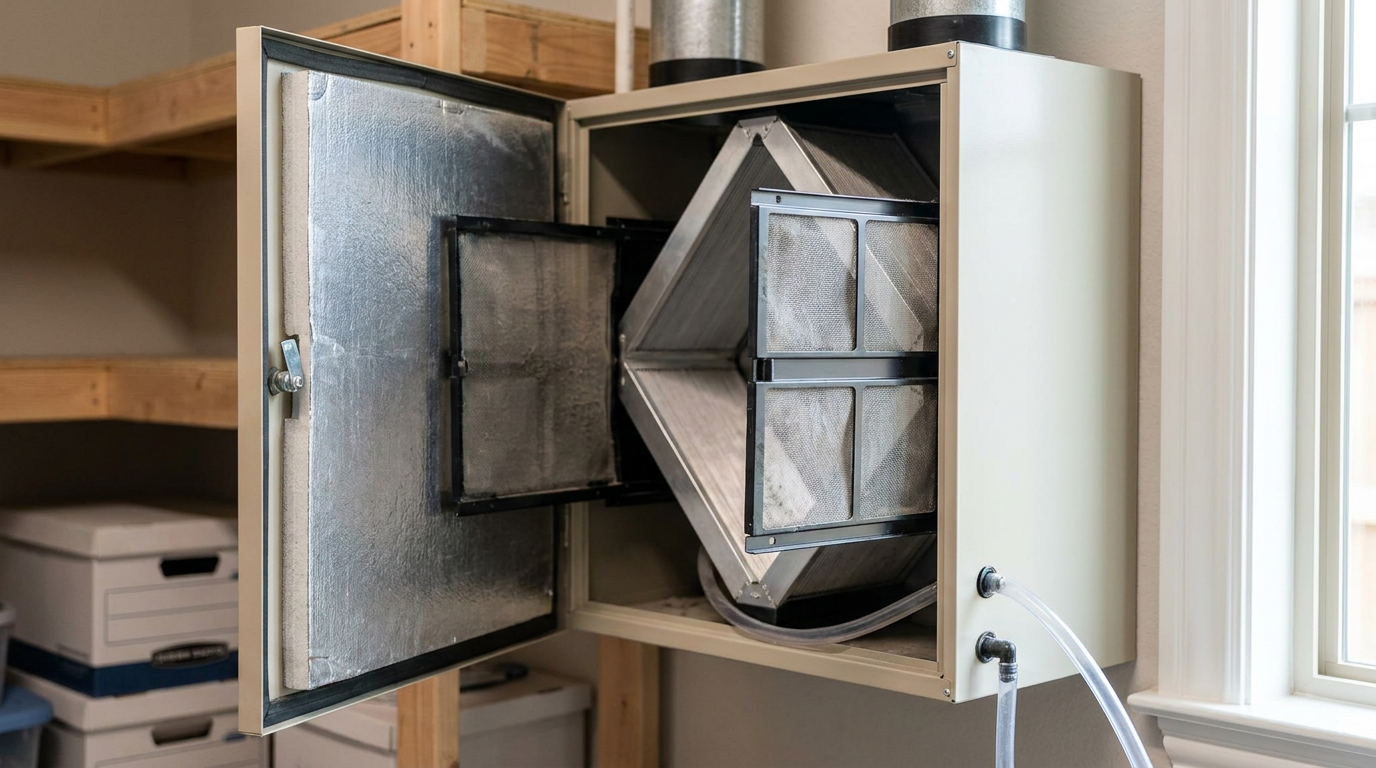
- Isolate High-Voltage Power — Turn the master wall switch next to the ventilator to "OFF", then shut off the dedicated 15-amp breaker in your main panel.
- Make sure the power's dead by checking that the LED status indicator on the bottom or side of the unit chassis has gone dark.
- Safety note: Don't reach into a live unit; internal ECM blowers can kick on without warning from remote dehumidistat calls or preset duty cycles.
HVAC · High energy usage
| Project category | HVAC |
|---|---|
| Problem type | High energy usage |
| Trade required | HVAC |
| Urgency | Planned project |
| Safety risk | Low safety risk |
| DIY suitability | DIY for experienced homeowners |
| Cost category | High cost |
| Typical timeline | Assessment within weeks; replacement planned off-season |
| Contractor type | Licensed HVAC technician |
Repair option
Duct sealing, insulation, and a tune-up before touching the equipment.
Replacement option
High-efficiency replacement sized by a load calculation, not a rule of thumb.
Common causes
- Aging, low-efficiency equipment
- Leaking ducts losing conditioned air
- Insufficient attic insulation
- Oversized system short-cycling
Relevant tools:project cost estimatorrepair or replace
Published November 1, 2026Last updated November 1, 2026
Tools & materials you'll need
Affiliate linksAs an Amazon Associate FixlyGuide earns from qualifying purchases — at no extra cost to you. Prices and availability are accurate as of publication and subject to change.
Quick Answer
To fix an Energy Recovery Ventilator (ERV) or Heat Recovery Ventilator (HRV) that's blowing stale, humid, or dusty air, kill power at the dedicated breaker and take a hard look at the core and filters. I’d vacuum or rinse the recovery core, swap out soggy MERV-rated pre-filters, clear the exterior dual-hood screens of trash and leaves, and flush the 1/2-inch condensate drain line. Then check the flex duct for torn inner liners and reset the humidistat or wall control so it matches the outdoor dew point for the season.
The Problem
Whole-house balanced ventilation units—either an HRV or an ERV—are built to run in the background, moving stale indoor air out and fresh outdoor air in without blowing your heating and cooling bills through the roof. But once one of these things starts acting up, your indoor air goes sideways fast. You’ll see window condensation on cold mornings, cooking odors that hang around for days, humidity creeping past 60%, or dust settling on everything like somebody shook a dirty rug upstairs.
On neglected systems, the supply diffusers can even push warm, musty air into bedrooms instead of clean, tempered outside air. That thing’s toast at that point. Left alone, a tired recovery ventilator turns into a pollutant distributor, cycling dust, pollen, mold spores, and stale air through the ductwork while beating up your compressor and air handler.
How It Works
Modern homes are tight. That’s great for energy loss, sure, but it also traps carbon dioxide, VOCs, and extra moisture inside. An HRV or ERV handles that with two separate counter-flow fans running at the same time. One fan pulls stale, moist air from bathrooms, kitchens, and laundry closets and sends it outside. The other brings fresh outdoor air into the living space.
The real action happens in the heat-exchange core. In an HRV, the outgoing indoor air and incoming outdoor air pass through alternating microscopic polypropylene or aluminum channels without mixing. Heat moves through the plates, so in winter the warm exhaust stream preheats the cold incoming air before it ever reaches the living room. Nice little setup when it’s working right.
An ERV goes a step farther with a permeable membrane core made from treated polymer resin or engineered cellulose. That lets it transfer both sensible heat and latent heat—water vapor, plain and simple. In a muggy summer, some of that incoming moisture gets swapped to the exhaust stream, which takes a load off your AC. If the filters load up, the bypass damper hangs open, or the outside hood gets packed with cottonwood fluff, the pressure drops fast. Then air exchange stalls, cross-contamination jumps, and the whole unit turns into an expensive whistling draft machine.
Step-by-Step Fix
Follow this sequence to clean, service, and rebalance a struggling HRV or ERV.
-
Isolate High-Voltage Power — Turn the master wall switch next to the ventilator to "OFF", then shut off the dedicated 15-amp breaker in your main panel.
- Make sure the power's dead by checking that the LED status indicator on the bottom or side of the unit chassis has gone dark.
- Safety note: Don't reach into a live unit; internal ECM blowers can kick on without warning from remote dehumidistat calls or preset duty cycles.
-
Drop the Front Service Access Panel — Release the two heavy-duty latches or back out the 1/4-inch hex screws holding the insulated front door on the cabinet.
- Set the insulated metal door on a blanket so you don't chew up the rubber perimeter gasket.
- Check the closed-cell foam on the inside of the door; if it’s got black mildew or crushed spots, make a note to clean it and seal it back up before you reassemble.
-
Slide Out the Pre-Filters and Core — Pull out the washable or disposable intake and exhaust pre-filters, then grab the molded extraction straps on the center core and slide it straight out of the aluminum tracks.
- Keep both hands on it. An ERV core loaded with moisture can weigh 12 to 18 pounds.
- If it sticks in the tracks, don't jam a screwdriver in there. Rock the core gently up and down until it clears the cabinet lip.
-
Clean the Heat/Energy Recovery Core Correctly — Vacuum the entry and exit faces of the core with a soft-bristle brush attachment to pull dry debris out of the flute channels.
- For an HRV polypropylene or aluminum core: Soak it in a utility tub with warm water (under 120°F) and mild dish soap for 20 minutes, flush it with low-pressure tap water, and let it drain fully.
- For an ERV enthalpy resin/paper membrane core: Do NOT soak in water unless the manufacturer manual says you’ve got a washable resin membrane like dPoint/Core cores. On standard ERV cores, vacuum only; water will wreck the salt-impregnated desiccant layer and kill the core.
-
Wash or Replace Intake and Exhaust Filters — Check the twin filters that protect the core faces; if your unit uses reusable polyurethane foam or aluminum mesh screens, wash them in warm soapy water, rinse them, and let them dry all the way.
- Replace disposable polyester or pleated MERV 8 to MERV 13 filters if they look gray, stained, or bowed under fan pressure.
- If the filters are torn, stop right there and replace them. Running an ERV/HRV without pre-filters lets dust weld itself into the tiny air passages of the core, and that’s trouble you don’t want.
-
Flush the Condensate Pan and Drain Trap — Pour 16 ounces of warm water mixed with 2 tablespoons of distilled white vinegar into the sloped drain pan under the core to confirm clear flow through the 1/2-inch or 3/4-inch clear vinyl drain tubing.
- Look for water pooling or backing up in the pan. That usually means a plugged P-trap or a dry water seal.
- If the drain line’s clogged with algae, pull the tubing off the barbed drain fitting, blow it out with compressed air or suck it clean with a wet/dry shop vacuum, and refill the P-trap with 8 ounces of fresh water so sewer gas or outside air doesn't get pulled backward into the negative-pressure cabinet.
-
Inspect and Clear the Exterior Intake and Exhaust Hoods — Head outside to the wall termination hoods—usually two 6-inch or 8-inch louvered hoods set at least 6 feet apart—and pull out the 1/4-inch rodent screen inserts.
- Brush off leaves, spiderwebs, dryer lint drift, and insect junk that choke incoming air.
- Make sure the gravity backdraft damper inside the exhaust hood swings open freely and doesn't hang up in the housing.
-
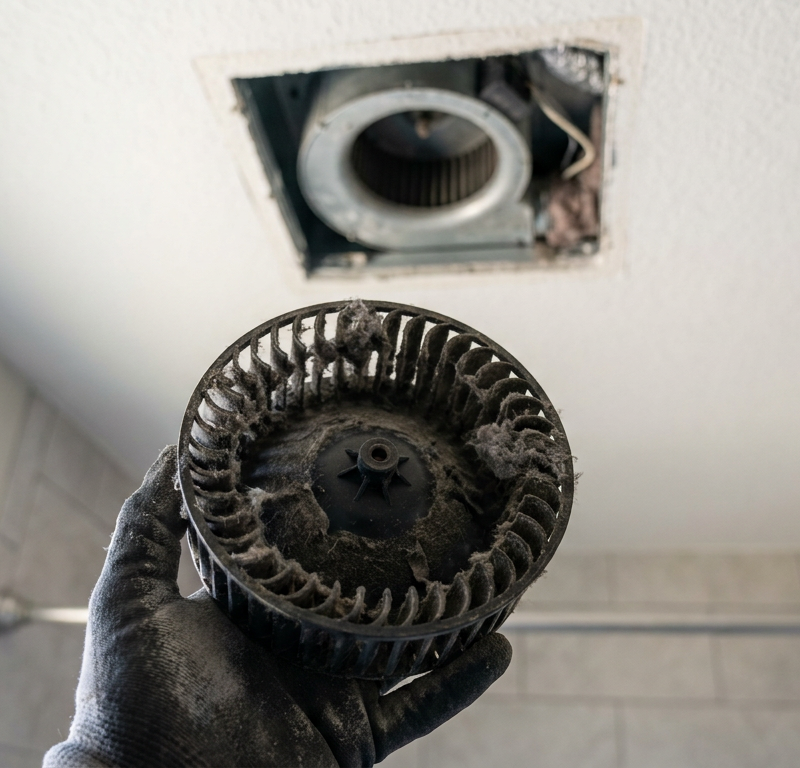
Clean the Blower Wheels and Cabinet Interior — Vacuum loose debris inside the metal cabinet and use a damp microfiber cloth to wipe down both squirrel-cage blower wheels, supply and exhaust.
- Don't knock off the tiny metal balance clips clipped to the blower wheel blades.
- Spin each wheel by hand; the bearings ought to turn smooth, no grinding, wobble, or scraping against the scroll housings.
-
Check and Tape Loose Duct Collars — Inspect the four flexible or rigid duct runs where they hook to the unit's 6-inch or 8-inch spigots (Fresh Air to Inside, Stale Air from Inside, Fresh Air from Outside, Stale Air to Outside).
- Pull back the fiberglass insulation sleeve and make sure the heavy-duty plastic inner duct liner is clamped tight with a worm-drive gear clamp or nylon tension tie.
- Seal the vapor barrier seam with genuine UL 181A-P or 181B-FX rated foil tape; regular gray cloth duct tape dries out and falls off in unconditioned attics or mechanical rooms within 18 months.
-
Reinstall Core, Seal Cabinet, and Restore Power — Slide the clean, completely dry exchange core back into the internal cabinet guide rails, following the airflow arrows stamped on the casing.
- Put the filters back in their correct supply and return slots.
- Latch the front door tight, making sure the rubber gasket compresses evenly without gaps, then switch on the 15-amp breaker and the local wall toggle switch.
-
Balance Supply and Exhaust Airflows — Set your digital wall controller to continuous high-speed mode, get to the balancing dampers (or internal blower potentiometers), and measure airflow across both streams.
- Use a magnehelic differential pressure gauge hooked to the unit's pressure ports, or read CFM at the diffusers with an airflow capture hood.
- Adjust the manual balancing dampers until the supply CFM and exhaust CFM are within 10% of each other. In severe winter climates, I like a slight (5%) positive pressure bias indoors so you don't suck freezing air through exterior wall penetrations.
Common Causes
A failing or ineffective fresh-air ventilator usually comes down to one of these core system failures:
- Matted Outdoor Intake Screens: The outdoor fresh-air hood pulls in bugs, pollen, grass clippings, and road dust 24 hours a day. Once that screen plugs up, the supply fan gets starved, the house loses fresh air, and the exhaust side keeps pulling the place into a deep negative pressure.
- Fouled Exchange Core: Neglected pre-filters let fine pet dander and outdoor soot coat the narrow thermal flutes. Air volume drops, and heat transfer efficiency can fall by 40% or more.
- Dry Condensate Traps: HRVs pull sensible moisture that drains through a small hose. If the water seal in the P-trap dries out in the dry months, the negative pressure from the exhaust fan can draw dirty air or sewer gases backward through the drain tube.
- Frozen Cores in Winter: HRVs running in sub-zero weather pull in air cold enough to freeze condensation on the exhaust plates. If the defrost damper or thermistor quits, the whole core can freeze solid and block ventilation.
- Damaged or Crushed Flex Duct: Ducts in tight attics or crawlspaces get pinched by storage boxes, stepped on by trades, or crushed under sagging trusses, and airflow gets choked off hard.
- Seasonal Wall Control Misconfiguration: Homeowners leave the wall control on "continuous exchange" during muggy summer months on an HRV, which can't reject moisture, and then wonder why humidity climbs.
Common Mistakes
- Washing a Paper-Membrane ERV Core: Soaking a standard cellulose-membrane ERV core in water dissolves the microscopic salts and destroys the enthalpy transfer plate assembly. Always check the manual; unless it's specifically labeled as a water-washable polymeric resin, stick with a brush vacuum.
- Using Cloth Duct Tape on Sleeves: Standard cloth duct tape dries out and falls off within two seasons. Use mastic paste or UL 181-certified aluminum foil tape clamped over rigid sheet-metal boots to keep conditioned air from leaking into hot attics.
- Ignoring the Exterior Hood Separation: Moving an intake hood too close to an exhaust hood, or closer than 10 feet to a high-efficiency furnace exhaust, plumbing vent stack, or dryer vent, can make the ERV suck in nasty exhaust gases and dump them into bedrooms. Keep intake and exhaust hoods separated by at least 6 linear feet.
- Leaving Systems Unbalanced After Service: Cleaning parts changes the static pressure drops through the system. If you change filter media or tweak damper positions without checking airflow again, you can end up pulling moist air into wall cavities or creating unconditioned drafts.
- Running an HRV in Extreme Summer Humidity: HRVs transfer temperature, not moisture. Run one on maximum exchange during an 85°F dew-point heatwave and you'll overwhelm the AC evaporator coil and push indoor relative humidity well past 65%.
Cost & Time Breakdown
| Task | DIY Cost | Pro Cost | Time |
|---|---|---|---|
| Core & Pre-Filter Service Cleaning | $0–$15 | $150–$250 | 45–60 mins |
| Filter Replacement (Foam & Pleated Set) | $25–$65 | $90–$160 | 15 mins |
| Condensate Trap Flush & Hose Replacement | $10–$20 | $120–$180 | 30 mins |
| Exterior Intake & Exhaust Hood Clearing | $0–$10 | $100–$175 | 30–45 mins |
| Complete Airflow Balancing (Magnehelic/Hood) | $60–$120 (gauge purchase) | $250–$450 | 1–2 hours |
| Replacement Blower Motor / ECM Module | $150–$320 | $400–$750 | 1–2 hours |
Tips & Prevention
- Set a Seasonal Maintenance Calendar: Clean or swap the pre-filters every 90 days. In high-pollen areas or homes with multiple pets, check them every 60 days.
- Clean the Exchange Core Annually: Make late autumn your yearly baseline for pulling and cleaning the core before heavy winter heating starts.
- Prime the Condensate Trap Every Autumn: Pour a cup of water and a splash of vinegar into the drain pan before heating season starts so the P-trap seal stays intact and doesn't suck air backward.
- Inspect the Outdoor Hoods Monthly: Walk the perimeter of your home and check the exterior grilles. Clear off cobwebs, hornets' nests, snowdrifts, and leaves that restrict airflow.
- Watch Your Relative Humidity (RH): Keep indoor relative humidity between 35% and 50%. If winter window glass keeps sweating or frosting along the bottom edge, bump the ventilation control up by 5% to purge extra indoor moisture.
When to Call a Professional
While routine cleaning, filter changes, and duct inspections are straightforward DIY work, some recovery ventilator problems need specialized HVAC tools and credentials. Call a licensed HVAC technician if you smell electrical burning from the ventilator cabinet, or if the internal multi-speed ECM blower motors won't spin even though they're getting full 120-volt line power.
You'll also want a pro if the internal motorized defrost damper motor has stripped its plastic gear train and left the ventilator stuck in a continuous bypass or freeze loop during sub-freezing weather. And honestly, properly measuring static pressure across non-standard duct networks takes specialized digital manometers and flow hoods. If balancing the dampers still doesn't knock down high indoor humidity or ugly pressure differences, bring in an HVAC technician certified in residential air balancing.
Frequently Asked Questions
What is the primary difference between an HRV and an ERV?
An HRV (Heat Recovery Ventilator) transfers only sensible heat—thermal energy—between outbound and inbound air streams, which makes it a good fit for cold, dry winter climates. An ERV (Energy Recovery Ventilator) transfers both sensible heat and latent heat (moisture), which helps keep outdoor humidity outside during hot summers and hold indoor humidity during dry winters.
Why does my HRV make a loud humming or vibrating noise?
Loud hums or vibrations usually come from dirt and lint collecting unevenly on the blower wheel blades, which throws the high-speed fan out of balance. Shut off the unit's power, open the cabinet, and inspect the blower impellers. Clean the blades with an old toothbrush and vacuum, and make sure the small metal balancing clips attached to the blades haven't fallen off.
Can I wash my ERV core with a garden hose?
Usually not. Most residential ERV cores use an engineered cellulose or resin-treated salt matrix that’ll dissolve or delaminate if soaked in water. Vacuum the core faces with a soft brush attachment unless your owner's manual clearly says you've got a 100% washable polymeric membrane core.
How often do I need to clean the exterior vent hoods?
Inspect exterior hoods monthly, and clear them thoroughly at least twice a year. The outdoor fresh-air intake hood is especially prone to clogging from cottonwood seeds, fall leaves, cobwebs, and wasps, which starves the recovery unit of outdoor air.
Why are my windows sweating even though my ventilation system is running?
If your windows are sweating in winter while your HRV/ERV is on, your ventilation rate is probably set too low, your outdoor intake hood is clogged, or the recovery core is packed with dust. That keeps dry outdoor air from pushing out the moisture made inside by showers, cooking, and people. Turn up the runtime on your wall control and check the filters.
Where does the water in an HRV condensate line come from?
When warm, moisture-laden exhaust air from bathrooms and the kitchen passes over the cold heat-exchange core during winter, the air temperature drops below its dew point. Moisture condenses on the core plates, runs into the sloped bottom drain pan, and exits through the condensate line.
Should I turn my ERV or HRV off during the summer?
In hot, humid climates, you shouldn’t run an HRV in continuous high-speed mode because it’ll pull unconditioned humidity straight into the house. An ERV, though, can run year-round because its membrane strips a good chunk of moisture from the incoming air before it reaches the living areas. Most systems ought to be set to intermittent or low-speed mode during brutal summer heat.
How do I know if my unit's airflow is balanced?
You can check airflow balance by measuring the differential static pressure across the supply and exhaust test ports with a digital manometer or magnehelic gauge, then comparing those readings against the CFM calibration chart printed inside the service door. If a home is out of balance, you may notice exterior doors that are hard to push open or drafty electrical outlets.
Related Articles
Keep troubleshooting with these hand-picked guides from FixlyGuide:
- The #1 Reason Your AC Blows Warm Air (And It's Not What You Think) — A dirty air filter is often the overlooked culprit behind an air conditioner blowing warm air, hindering its ability to cool your home effi…
- AC Smells Like Dirty Socks? 5 Causes and the Step-by-Step Fix — Stop the sour, musty locker-room stench coming from your AC vents. Here is how to clean your evaporator coil, flush the pan, and end season…
- The Dryer Vent Fire Trap: 3 Hidden Signs Your Home Is at Risk — Learn the critical signs your dryer vent is clogged and how to safely clean it to prevent a dangerous house fire.
- Thermostat Won't Turn Off? 5 Causes and How to Shut It Down — Thermostat won't turn off your heat or AC? Follow this trade-tested isolation guide to diagnose stuck contactors, shorted low-voltage wires…
- The #1 Mistake Homeowners Make With Their AC (and the $50 Fix) — Discover the most common and costly mistake homeowners make with their AC system and how a simple, affordable fix can prevent expensive rep…
- Dishwasher Won't Fill With Water? 5 Causes and the Step-by-Step Fix — Dishwasher running dry? Learn how to diagnose a stuck float switch, unclog a water inlet valve, and test solenoid continuity with step-by-s…
Should you do this yourself?
Answer five quick questions before you start. Safety outranks savings every time.
Your experience with work like this
How high do you have to work?
Does the job involve any of these?
Will it need a permit?
Specialty tools
Free and instant. Educational guidance only — not a quote, inspection, or professional diagnosis.
What should this project cost?
Enter your project details for a realistic cost range before you call anyone.
Service calls and common repairs run $150–$900; full system replacement typically $6,000–$12,000.
- Regional adjustment
- National average
- Labor share (typical)
- ~$1,935
- Quotes to collect
- 3 written estimates
Educational estimate based on national averages — not a binding quote. Always confirm with written local estimates.
Before you start
Check the difficulty, permits, and safety risk — then decide whether to call a pro.
- Estimate this projectGet a cost range for your scope and ZIP before you call anyone.Open
- Get local estimatesSend one request and compare written estimates from vetted pros.Open
Free, no signup required. Estimates are educational guidance, not a quote or an inspection.
Get the print-ready PDF of this guide
A clean, ad-free, printable version you can keep on your phone or pin to the workshop wall. Free with a FixlyGuide account.
- Print-optimized layout
- Tools, materials & every step included
- Saved to your account
Frequently asked questions
What is the primary difference between an HRV and an ERV?+
An HRV transfers only sensible heat (temperature) between air streams, making it ideal for cold winter regions. An ERV transfers both sensible heat and latent heat (moisture), making it better for climates that experience humid summers or dry, arid winters.
Why does my HRV make a loud humming or vibrating noise?+
Vibration and humming usually point to an accumulation of dust, lint, or pet hair stuck unevenly to the blades of the squirrel-cage blower wheels. Vacuuming the blower blades and confirming the wheel balance clips are intact usually eliminates the vibration.
Can I wash my ERV core with a garden hose?+
For most ERVs, no. Standard enthalpy cores feature moisture-permeable paper or resin-treated membranes that degrade or dissolve when soaked. Clean them using a soft-bristle brush and vacuum only, unless the manufacturer explicitly designates the core as water-washable.
How often do I need to clean the exterior vent hoods?+
Check exterior vent hoods every 30 to 60 days. Leaves, spiderwebs, pollen, and blowing dryer lint can quickly bridge across the 1/4-inch bird screen, cutting off fresh outdoor supply air and pulling your home into negative pressure.
Why are my windows sweating even though my ventilation system is running?+
Window condensation occurs when indoor relative humidity is too high compared to outdoor glass temperatures. If your unit is running but condensation persists, the pre-filters may be clogged, the intake hood may be blocked, or the wall control is set to an insufficient exchange rate.
Where does the water in an HRV condensate line come from?+
During cold weather, warm indoor air leaving your home carries water vapor. When that air hits the cold plates inside the heat recovery core, it cools past its dew point, condensing into liquid water that collects in the sloped pan and drains via the clear hose.
Should I turn my ERV or HRV off during the summer?+
An ERV is designed to run year-round because it removes incoming moisture from the fresh air stream. However, an HRV should typically be set to low speed or an intermittent cycle during humid summer heatwaves, as it cannot reject latent moisture and will transfer humidity indoors.
How do I know if my unit's airflow is balanced?+
Connect a digital manometer to the factory-installed test ports on the ventilator door or collar spigots to read static pressure drops across the core, then compare those numbers against the unit's airflow chart. Both supply and exhaust CFM should read within 10% of each other.
Discussion
Loading comments…