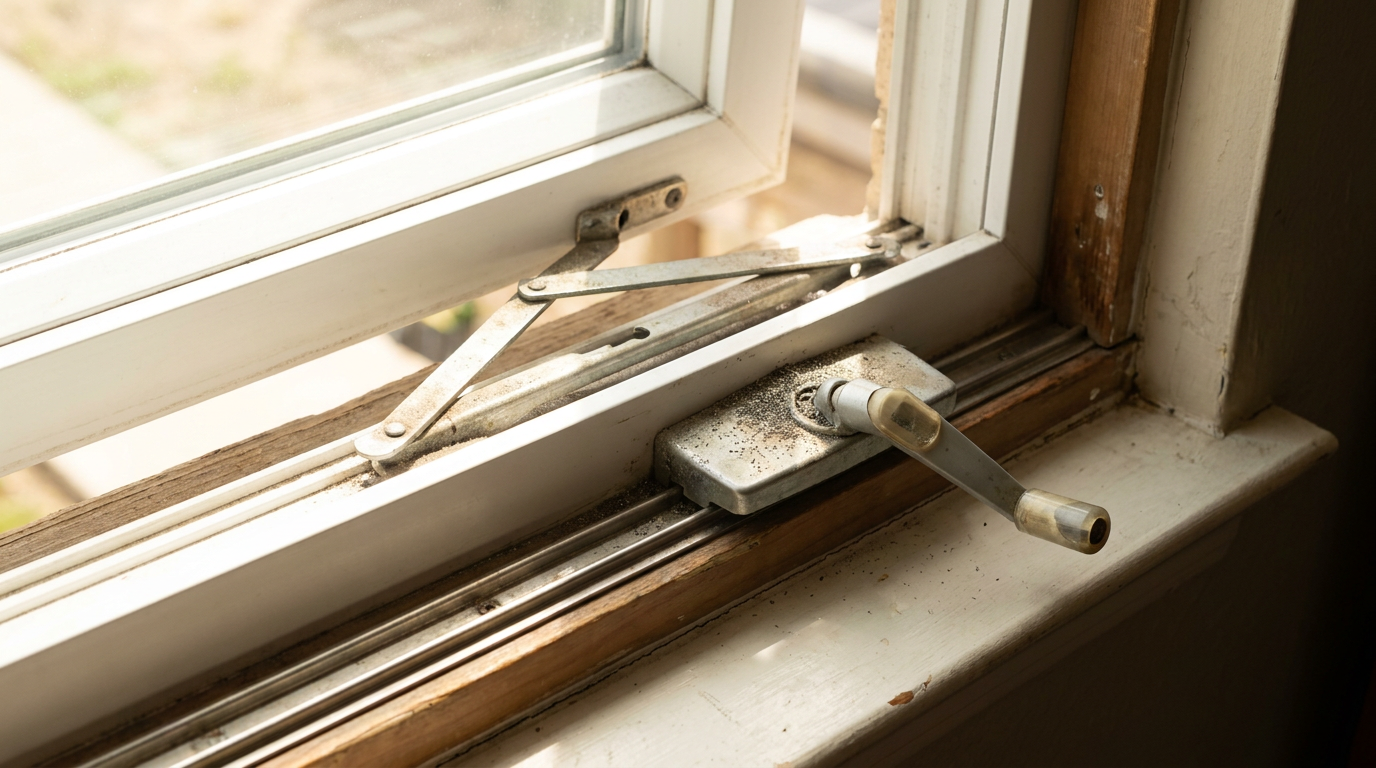
- Clean and lube tracks every spring and fall. Hit the stainless hinge tracks and operator pivot rivets with dry PTFE spray twice a year. Cycle the window open and shut three times to spread the film around.
- Never leave casements cranked wide open during storm watches. If winds exceed 25 mph, crank them fully shut and throw the multi-point lock. Wind catch is the biggest reason scissor arms get bent for good.
- Check lock cam engagement every season. Watch the strike plates on the sash frame while closing. The cam pins ought to slide dead center into the brass or steel keepers without dragging across the plastic frame.
- Wipe down weatherstripping with a silicone cloth. Clean, supple EPDM bulb seals compress with 40% less effort than dry, dirty seals, and that takes a lot of strain off your operator's drive gears.
General remodeling · Renovation planning
| Project category | General remodeling |
|---|---|
| Problem type | Renovation planning |
| Trade required | General contracting |
| Urgency | Planned project |
| Safety risk | Low safety risk |
| DIY suitability | Pro recommended |
| Cost category | Major investment |
| Typical timeline | Design and permitting often 2–4 months before work starts |
| Contractor type | General contractor |
Repair option
Phase the work and fix the building envelope first.
Replacement option
Full renovation with permits, design, and a general contractor.
Common causes
- Space no longer fits how the household lives
- Resale preparation
- Deferred maintenance stacking up
Relevant tools:project cost estimatorcompare quoteshome improvement material prices
Published October 30, 2026Last updated October 30, 2026
Tools & materials you'll need
Affiliate linksAs an Amazon Associate FixlyGuide earns from qualifying purchases — at no extra cost to you. Prices and availability are accurate as of publication and subject to change.
Quick Answer
A crank window (casement or awning) that won't close flush almost always has one of three headaches: a stripped crank operator gear, bent scissor arms, or junk packed into the lower hinge track. Open the sash all the way, back out the operator cover screws, and look at the worm drive inside. If the handle just clicks and clicks without drawing the sash tight, that thing's toast. Swap the crank assembly for $20 to $50, and you're usually done in about 30 minutes.
The Problem
You crank the handle on a casement window expecting that nice solid thunk when the sash pulls tight to the frame, and instead it just stops. Now you've got a half-inch gap up top or down low, and the wind's sneaking right into the room. Sometimes the handle spins easy but gritty, like it's chewing gravel. Sometimes it binds hard with three inches of daylight still showing, and if you push on the glass from outside, it feels like you're one bad move away from cracking something expensive.
Leaving a casement window cracked open isn't just wasting energy and running up the bill—it lets wind-driven rain beat on the jamb, soak the drywall, and mess with the security of the house. And if you muscle the crank, you're not fixing it. You're just stripping the last good teeth off the gears or yanking the mounting screws out of vinyl or wood. I've seen both plenty of times.
How It Works
Casement windows don't run on sash weights, spiral balances, or the usual friction track setup you see on double-hungs. They use a little mechanical system with real leverage: the manual operator, the pivot hinges, and a perimeter multi-point lock. Three parts. All of them have to do their job.
       [Top Sash Pivot & Track]
                 |
                 v
   +-----------------------------+
   |                             |
   |         WINDOW SASH         |
   |                             |=== [Multi-Point Lock Bar]
   |                             |
   +-----------------------------+
          ^               ^
          |               |
 [Operator Arm]    [Guide Track Slider]
          \               /
           [Worm Gear Box] <--- [Crank Handle]
When you turn the crank handle, you're spinning a steel worm drive inside a die-cast zinc housing down at the sill. That worm meshes with a spur gear hooked to either a single arm or a pair of scissor arms. As those arms extend or pull back, a nylon shoe at the end rides along a stainless steel track screwed to the underside of the sash. At the same time, the sash swings out on heavy-duty hinges at the top and bottom corners.
Once the operator gets the sash to within roughly 1/4 inch of the jamb, the cam pins on the side of the sash line up with the keepers in the frame. Flip the lock handle, and a vertical tie bar pulls those pins in, squeezing the weatherstripping by about 1/8 inch so you get an airtight seal. If the gears strip, if the hinge track fills up with grit, or if the scissor arms get bent from a good hard gust, the whole chain falls apart right there.
Step-by-Step Fix
Before you spend a dime on replacement hardware, work through these checks and repairs so you can pin down exactly where it's failing.
-
Clear the bottom hinge track and sill — Open the window as far as it'll safely go and vacuum out all the dead bugs, windblown dirt, and dry leaves jammed into the bottom channel. Wipe the stainless steel hinge track clean with a damp rag and look over the nylon slider shoes for flat spots or cracks.
- Tools needed: Shop vac or narrow crevice tool, microfiber cloth, warm water.
- Safety tip: Don't lean your upper body through an upper-story window opening while scrubbing the outer sill. No dice.
-
Check the multi-point lock alignment — Crank the window open a few inches and flip your wall-mounted lock lever up and down. Watch the vertical tie bar inside the side jamb and make sure the locking cams move smooth without catching on stray screws or weatherstripping.
- What to look for: If the lock is engaged or half-thrown while you're cranking, the sash will slam into the metal keepers and stop dead 1/2 inch before closing.
-
Inspect the sash sag and diagonal square — Measure diagonally from the top-left corner to the bottom-right corner of the sash, then check the other diagonal. If the measurements are off by more than 1/8 inch, the sash has racked, and that bottom rail may be hitting the sill before the top pulls in.
- If this doesn't work: A lot of modern casement hinges (like Truth Hardware or Andersen Perma-Shield) have an eccentric hex adjustment screw on the lower hinge arm. Turn it 1/8 turn clockwise and it'll kick the sash heel upward.
-
Detach the operator arm from the sash track — Disconnect the crank arm from the window so you can tell whether the bind is in the sash or the gearbox. Wind the sash open until the nylon roller lines up with the cutout notch in the underside track, then pop the roller free with your fingers.
- Testing: Push and pull the sash by hand. If it swings easy and seats flush in the frame, the hinges are fine and the crank operator is the bad actor.
-
Remove the crank handle and decorative cover — Loosen the small set screw on the base of the crank handle with a 3/32-inch Allen wrench or a small slotted screwdriver, then pull the handle off the splined shaft. Snap or unscrew the plastic or powder-coated metal cover off the sill to expose the gear box.
- Watch out: Don't strip the tiny set screw. If it's painted over, scrape the head clean with a utility knife first.
-
Diagnose stripped internal gears — Slide the handle back onto the bare splined spindle and turn it back and forth while watching the worm gear inside the cast housing. If the spindle turns but the long arm jerks, skips, or shudders with no load on it, the zinc spur teeth are chewed up and the unit has to go.
- Signs of gear failure: Fine silvery or gray metal shavings under the operator mean the gear teeth have already fallen apart.
-
Unbolt the old operator assembly — Back out the four to six mounting screws holding the operator housing to the window sill with a #2 Phillips or square-drive bit. Lift the whole mechanism free from the sill notch, and don't gouge the finished wood or vinyl around it.
- Pro tip: Keep those screws organized. Factory screws often have specific thread pitches for vinyl reinforcement bars or timber liners.
-
Identify and source the matching replacement — Check the underside of the removed operator casing for a stamped manufacturer mark and casting number (common brands include Truth Hardware, AmesburyTruth, Andersen, Pella, and Wright). Measure the arm length from the center of the gear housing to the center of the nylon roller shoe down to the 1/16 inch.
- Critical detail: Don't ignore the handing. If the hinge is on your left when you're looking from inside, you generally need a left-hand operator, but verify that against the manufacturer's handing chart before you order anything.
-
Install the new operator mechanism — Set the new operator into the sill cut-out and start all the mounting screws by hand so you don't cross-thread them. Snug them down firm with a hand screwdriver until they sit flush; don't hit them with an impact driver, or you'll crack the vinyl frame or strip out wood pilot holes.
- Torque guidance: Aim for roughly 15 to 20 in-lbs of torque—just firm hand-tightness.
-
Re-engage the guide track and adjust travel — Coat the sash track with a dry PTFE lubricant or silicone spray (never sticky grease), slide the operator arm's nylon roller into the track insertion notch, and crank the window closed.
- Verification: Make sure the sash pulls in evenly along both the top and bottom rails without binding before you put the decorative plastic trim cover and handle back on.
-
Reset and lock the handle position — Reinstall the trim cover, push the handle onto the splined spindle in a folded-away position that won't block blinds or hit the sill when the sash is closed, and tighten the set screw firmly.
- Final check: Flip your lock lever. It should pull the sash in that final 1/16 to 1/8 inch with smooth, firm resistance.
Common Causes
Casement hardware is a little machine, and it takes a beating. Here's what usually kills it:
- Stripped zinc worm drive gears — Most budget and mid-tier operators use soft die-cast zinc alloy gears. If somebody tries to crank the window shut while the sash lock is still engaged, the hardened steel worm gear strips the softer zinc spur teeth in seconds.
- Wind-whipped hinge arms — A sudden 35-mph crosswind catching an open casement sash acts like a sail. That leverage bends the long scissor arms or warps the hinge tracks and throws the sash out of parallel with the frame.
- Debris and caked dirt in the slider channels — Road dust, pollen, and junk settle into the lower horizontal track. Mix in moisture and you've got an abrasive paste that jams the nylon guide shoe and makes the operator arm bend under cranking pressure.
- House settling and frame racking — Seasonal soil movement, especially in drought-and-deluge clay zones like North Texas, can shove the rough opening out of square. When the frame twists by just 3/16 inch, the weatherstripping pinches unevenly and the sash stops short.
- Hardened or misapplied lubricant — Spraying WD-40 or packing automotive axle grease into the hinge tracks attracts grit and dust like a magnet. Over time, it dries into a gummy mess that blocks the hinge arm's travel.
Common Mistakes
- Forcing the handle when it meets resistance. If the crank stops half an inch before the frame, two-handed brute force won't close it. It'll snap the splines off or strip the drive gear. Stop there, back it off, and find out what's physically blocking the sash.
- Using oil-based spray lubricants like standard WD-40. Petroleum-based lubricants pull in airborne grit, mess with neoprene weather seals, and wash away in the first rainstorm. Stick to pure silicone spray or dry PTFE (Teflon) spray on window tracks and hinges.
- Buying an operator based on looks alone. A left-hand and right-hand operator can look almost identical in photos, but the internal gear spirals run opposite directions. Always confirm the handing and measure the arm length from pivot to roller so you don't end up with the wrong part.
- Ignoring the top hinge. Folks focus on the bottom track because that's where the crank lives. But if the top hinge arm is loose, rusted, or missing its track clip, the top of the sash will sag out and wedge the bottom rail diagonally into the sill.
- Driving installation screws with a heavy-duty impact driver. Impact drivers hammer out violent bursts of torque that can strip hollow vinyl screw bosses or split old pine jambs. Use hand tools to thread and tighten casement mounting hardware.
Cost & Time Breakdown
| Task | DIY Cost | Pro Cost | Time |
|---|---|---|---|
| Track cleaning & dry PTFE lubrication | $8–$12 | $90–$150 | 20 mins |
| Hinge realignment / shoe adjustment | $0 | $120–$180 | 30 mins |
| Crank operator replacement (standard) | $25–$55 | $175–$275 | 45 mins |
| Specialty/vintage operator (Andersen/Pella) | $60–$110 | $220–$350 | 45 mins |
| Complete hinge track & arm replacement | $35–$70 | $200–$320 | 60 mins |
| Window sash re-squaring / glass de-glazing | $20–$40 | $300–$450 | 2–3 hours |
Tips & Prevention
- Clean and lube tracks every spring and fall. Hit the stainless hinge tracks and operator pivot rivets with dry PTFE spray twice a year. Cycle the window open and shut three times to spread the film around.
- Never leave casements cranked wide open during storm watches. If winds exceed 25 mph, crank them fully shut and throw the multi-point lock. Wind catch is the biggest reason scissor arms get bent for good.
- Check lock cam engagement every season. Watch the strike plates on the sash frame while closing. The cam pins ought to slide dead center into the brass or steel keepers without dragging across the plastic frame.
- Inspect the operator mounting screws annually. Cranking over and over slowly pulls mounting screws out of soft wood and vinyl. If you feel the operator housing rock or lift when you crank, tighten those base screws before the threads give out completely.
- Wipe down weatherstripping with a silicone cloth. Clean, supple EPDM bulb seals compress with 40% less effort than dry, dirty seals, and that takes a lot of strain off your operator's drive gears.
When to Call a Professional
Swapping an operator or vacuuming out hinge channels is squarely in normal DIY territory. But you should step back and call a certified window specialist if you see visible wood rot softening the sill under the operator, because new screws won't hold in bad timber.
Same story if the frame itself has racked from serious foundation movement and the opening is way out of square on the diagonals. A new crank won't fix that bind; the whole unit may need to be pulled, re-shimmed, or replaced. And if you've got multi-story windows where getting to the exterior hinge tracks means working off an extension ladder over uneven ground, let an insured glazier handle it.
Frequently Asked Questions
Can I just push the window closed from the outside and lock it?
You can do that as a temporary emergency move before a storm, but don't make it a habit. If the operator arms or hinges are bent, forcing the window shut and clamping the lock lever puts a ton of tension on the lock tie bar, and that can snap the internal latch pins or bow the frame for good.
How do I know if I need a left-hand or right-hand operator?
For most major manufacturers, stand inside the room and look out at the window. If the hinges are on the left side of the frame, you've got a left-handed window and usually need a left-hand operator. Still, check the manufacturer's spec sheet, because some older brands handed their hardware based on which side the lock handle was mounted.
Why does my window crank spin freely without moving the sash at all?
Free spinning almost always means stripped drive teeth inside the gear housing or a stripped spline socket on the handle itself. Pull the handle off and look at the tiny ridges on the brass or zinc shaft. If those ridges are worn smooth or the handle socket is rounded out, you only need a new handle. If the shaft turns but the long arm doesn't move, the internal worm gear is stripped.
What is the best lubricant to use on casement window tracks?
Use a dry PTFE (polytetrafluoroethylene) spray or a high-grade 100% silicone spray lubricant. Stay away from standard WD-40, white lithium grease, or engine oil; those wet, sticky lubricants grab sand, dust, and pollen and turn into a thick abrasive paste that chews up hinge parts and jams the sliding shoes.
Can I repair stripped gears inside the crank box, or do I have to buy a new one?
You have to replace the whole operator unit. The gearboxes on modern casement operators are sealed with pressed steel rivets or die-cast zinc housings that aren't meant to be torn apart and serviced. And since full replacement operators cost only $25 to $60, rebuilding the little internal gears just isn't worth the time.
Why won't my window lock handle engage even when the crank is turned all the way in?
The sash is probably sitting just 1/16 to 1/8 inch too far out, or it's sagged a bit and the cam pins are missing their frame keepers. Start by checking that the bottom hinge track is clear of dirt. Then look at the hinge adjustment screw to see if the sash needs to come up slightly so the lock pins line up cleanly with the tie bar slots.
How tight should the crank handle set screw be?
Snug it down firmly with finger pressure using the right-size Allen key or flathead screwdriver, but don't reef on it with pliers or other high-leverage tools. Overtightening the steel set screw will strip the soft zinc or aluminum threads inside the crank handle base and make the handle wobble loose.
Why does my casement window stick only in the hot summer months?
Vinyl and wood sashes expand a fair bit in direct hot afternoon sun. If the window was installed with tight clearances, thermal expansion can make the sash edges drag on the frame or bind up the weatherstripping. Cleaning and spraying the weather seals with dry silicone spray usually takes care of the summer drag.
Related Articles
Keep troubleshooting with these hand-picked guides from FixlyGuide:
- Vinyl Plank Flooring Gaps? 5 Reasons Seams Separate—and the Quick DIY Fix — Fix separated vinyl plank floor seams in 15 minutes without pulling baseboards using the simple traction block method and rubber mallet.
- Bouncy Floating Floors? 5 Causes and How to Fix Hollow Spots — Eliminate hollow sounds and bounce in floating vinyl or laminate floors by relieving pinched wall gaps or injecting subfloor voids with spe…
- The 5-Minute Trick to Fix a Window That Won't Stay Open (No Tools Needed!) — Discover the surprisingly simple reasons why your window keeps sliding shut and how to fix it in minutes, often without any tools.
- The 3 Hidden Reasons Your Window Won't Stay Up (And the Easy Fixes) — Before you call a repairman, learn the three most common reasons your double-hung window won't stay open and how to fix them yourself.
- The Grimy Secret Why Your Window Sticks (And The 15-Minute Fix) — Don't let a stubborn window ruin your day; often, the culprit is simple dirt or dried paint that you can easily fix in under an hour.
- Bathroom Faucet Handle Stuck? 12 Steps to Free It Without Breaking the Stem — Stuck bathroom faucet handle won't budge? Learn how to safely dissolve hard water scale, use a handle puller, and rebuild the valve cartrid…
Should you do this yourself?
Answer five quick questions before you start. Safety outranks savings every time.
Your experience with work like this
How high do you have to work?
Does the job involve any of these?
Will it need a permit?
Specialty tools
Free and instant. Educational guidance only — not a quote, inspection, or professional diagnosis.
What should this project cost?
Enter your project details for a realistic cost range before you call anyone.
Cost depends heavily on which system turns out to be the source.
- Regional adjustment
- National average
- Labor share (typical)
- ~$1,620
- Quotes to collect
- 3 written estimates
Educational estimate based on national averages — not a binding quote. Always confirm with written local estimates.
Before you start
Check the difficulty, permits, and safety risk — then decide whether to call a pro.
- Estimate this projectGet a cost range for your scope and ZIP before you call anyone.Open
- Get local estimatesSend one request and compare written estimates from vetted pros.Open
Free, no signup required. Estimates are educational guidance, not a quote or an inspection.
Get the print-ready PDF of this guide
A clean, ad-free, printable version you can keep on your phone or pin to the workshop wall. Free with a FixlyGuide account.
- Print-optimized layout
- Tools, materials & every step included
- Saved to your account
Recommended for DIYers & woodworkers
Sponsored
The Top 20 Tools for Workshops of Any Budget
No stationary machines or power tools required — plus 3 fundamental tools that can't be bought at any price.
Get the free guide
Ted's Woodworking — The #1 Woodworking Resource
Detailed instructions, dimensioned drawings, materials & cutting lists, and 3D schematics for every skill level.
See the plansSponsored: links above are affiliate links. FixlyGuide may earn a commission on qualifying purchases — at no extra cost to you.
Frequently asked questions
Can I just push the window closed from the outside and lock it?+
You can do this as a temporary emergency measure before a storm, but don't make it a habit. If the operator arms or hinges are bent, forcing the window shut and clamping the lock lever puts massive tension on the lock tie bar, which can snap the internal latch pins or bow your frame permanently.
How do I know if I need a left-hand or right-hand operator?+
For most major manufacturers, stand on the inside of the room looking out at the window. If the hinges are on the left side of the frame, you have a left-handed window and typically need a left-hand operator. However, verify with the manufacturer's spec sheet, as some older brands handed their hardware based on which side the lock handle was mounted.
Why does my window crank spin freely without moving the sash at all?+
Free spinning almost always points to stripped drive teeth inside the gear housing or a stripped spline socket on the handle itself. Take the handle off and check the tiny ridges on the brass or zinc shaft; if the shaft's ridges are ground smooth or the handle socket is rounded out, you just need a new handle. If the shaft turns but the long arm stays motionless, the internal worm gear is stripped.
What is the best lubricant to use on casement window tracks?+
Use a dry PTFE (polytetrafluoroethylene) spray or a high-grade 100% silicone spray lubricant. Avoid standard WD-40, white lithium grease, or engine oil; these wet, tacky lubricants attract sand, dust, and pollen, transforming into a thick abrasive paste that accelerates hinge wear and jams the sliding shoes.
Can I repair stripped gears inside the crank box, or do I have to buy a new one?+
You have to replace the entire operator unit. The gearboxes on modern casement operators are sealed with pressed steel rivets or die-cast zinc housings that cannot be disassembled and serviced. Because complete replacement operators cost only $25 to $60, rebuilding individual internal gears isn't cost-effective or practical.
Why won't my window lock handle engage even when the crank is turned all the way in?+
The sash is likely sitting just 1/16 to 1/8 inch too far out, or the sash has sagged slightly, causing the cam pins to miss their matching frame keepers. First, check that the bottom hinge track is free of dirt. Next, inspect the hinge adjustment screw to see if the sash needs to be raised slightly so the lock pins line up cleanly with the tie bar slots.
How tight should the crank handle set screw be?+
Snug it down firmly with finger pressure using the correct size Allen key or flathead screwdriver, but don't reef on it with pliers or high-leverage tools. Overtightening the steel set screw will strip out the soft zinc or aluminum threads inside the crank handle base, causing the handle to wobble loose.
Why does my casement window stick only in the hot summer months?+
Vinyl and wood window sashes expand significantly when exposed to direct, hot afternoon sun. If your window opening was installed with tight clearances, thermal expansion can cause the sash edges to drag hard against the frame or bind the rubber weatherstripping. Cleaning and spraying the weather seals with dry silicone spray usually eliminates the summer drag.

Discussion
Loading comments…