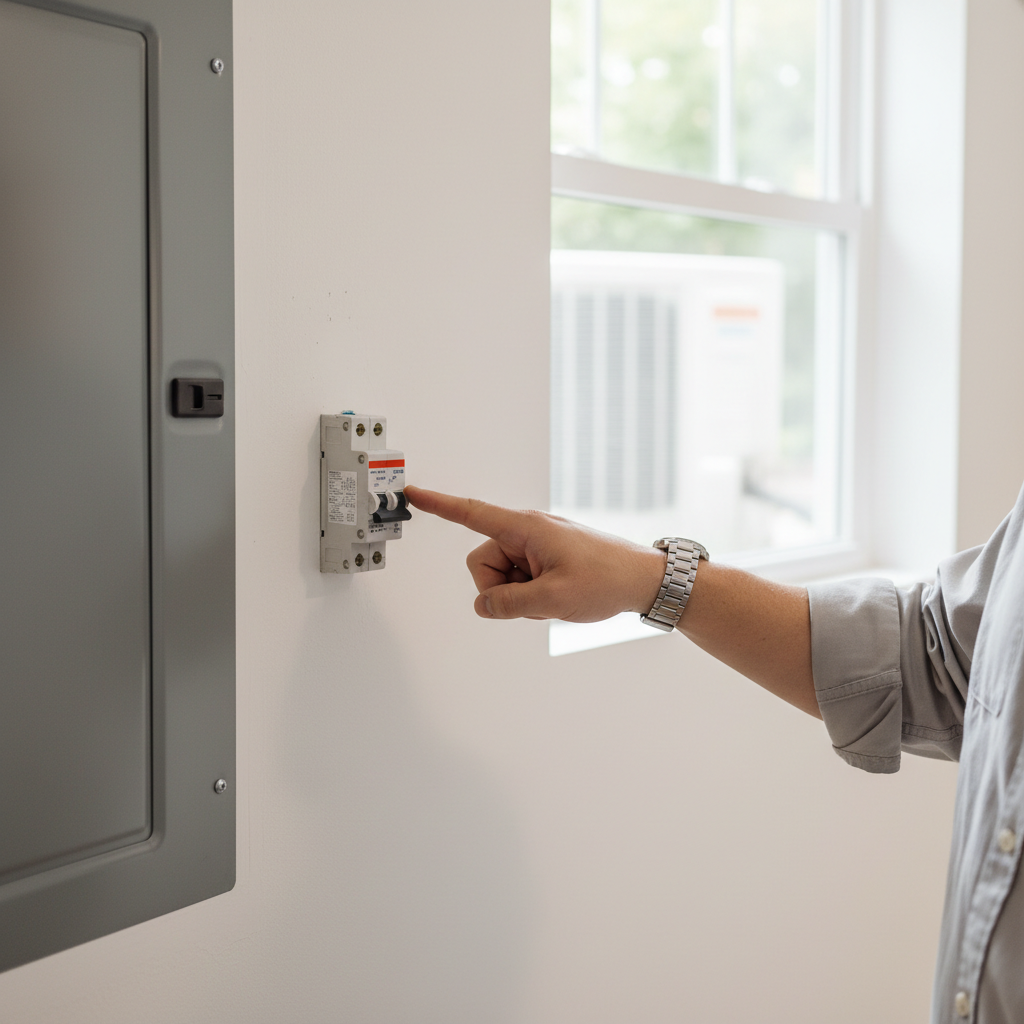
- Tripped Circuit Breaker: The most common electrical issue, often due to an overloaded circuit or a minor electrical surge. It's designed to protect your home's wiring and the AC unit.
- Incorrect Thermostat Settings: Many homeowners accidentally switch their thermostat to heat, off, or a temperature setting above ambient, preventing the AC from receiving the 'call for cool' signal.
- Clogged Air Filter: A dirty filter severely restricts airflow, reducing efficiency and potentially causing the evaporator coil to freeze or the system to shut down as a protective measure.
- Clogged Condensate Drain Line: Algae or debris can block the drain, causing the pan to fill and tripping a safety float switch, which prevents the system from running to avoid water damage.
- Blown Fuse in Outdoor Disconnect: The outdoor disconnect box sometimes contains fuses that can blow, cutting power to the condenser unit. These need to be replaced with fuses of the correct amperage.
HVAC · High energy usage
| Project category | HVAC |
|---|---|
| Problem type | High energy usage |
| Trade required | HVAC |
| Urgency | Planned project |
| Safety risk | Low safety risk |
| DIY suitability | DIY for experienced homeowners |
| Cost category | High cost |
| Typical timeline | Assessment within weeks; replacement planned off-season |
| Contractor type | Licensed HVAC technician |
Repair option
Duct sealing, insulation, and a tune-up before touching the equipment.
Replacement option
High-efficiency replacement sized by a load calculation, not a rule of thumb.
Common causes
- Aging, low-efficiency equipment
- Leaking ducts losing conditioned air
- Insufficient attic insulation
- Oversized system short-cycling
Relevant tools:project cost estimatorrepair or replace
Published July 8, 2026Last updated August 17, 2026
Tools & materials you'll need
Affiliate linksAs an Amazon Associate FixlyGuide earns from qualifying purchases — at no extra cost to you. Prices and availability are accurate as of publication and subject to change.
Quick Answer
Many homeowners immediately fear a major AC breakdown when the unit fails to turn on. However, the most frequent culprits are surprisingly simple: a flipped circuit breaker, an improperly configured thermostat, or a severely neglected air filter. Addressing these three points in a systematic way can often restore your cooling in minutes, saving you the expense and wait time of a service call.
The Problem
You walk into a warm house, head to the thermostat, and turn it down, expecting that familiar hum and cool breeze. Instead, silence. Your air conditioner isn't kicking on at all. This frustrating scenario is incredibly common, especially during peak cooling seasons. While it's easy to jump to conclusions about a burnt-out compressor or a refrigerant leak, the reality is that many 'no-start' situations stem from basic electrical or operational issues that homeowners can diagnose and fix themselves with a little know-how.
How It Works
To understand why your AC might not be turning on, it helps to know the basic operational sequence. When you set your thermostat to 'cool' and a temperature below the ambient room temperature, it sends a low-voltage signal to the control board in your indoor air handler. This signal acts as a trigger. First, the blower fan inside the air handler should activate, circulating air through your ductwork. Then, typically after a short delay (a protective measure to prevent rapid cycling), a signal is sent to the outdoor condenser unit. This signal powers the compressor and the condenser fan, which are responsible for cooling the refrigerant and expelling heat outside. The entire system relies on a continuous flow of electricity, both high-voltage (240V for the outdoor unit, 120V for the indoor unit) and low-voltage (24V for the control circuit). If any part of this electrical chain is interrupted—be it at the breaker box, the thermostat, or within the unit itself—the AC will fail to start. Furthermore, safety switches, such as those that detect a clogged condensate drain, can also interrupt this sequence, preventing damage from overflowing water by shutting the system down.
Step-by-Step Fix
1. Check the Thermostat Settings – Ensure your thermostat is correctly configured for cooling.
First, confirm your thermostat's settings. Many service calls are made prematurely due to a thermostat simply being off or set incorrectly. Ensure the system switch is set to 'Cool' and not 'Heat' or 'Off'. Next, check the fan setting; it should be on 'Auto' for normal operation or 'On' to run continuously (though this won't necessarily activate the compressor if cooling isn't called for). Crucially, set the desired temperature at least 5-10 degrees Fahrenheit below the current room temperature to ensure it's actively calling for cooling. Wait 5 minutes after adjusting, as some thermostats have a built-in delay.
- If this doesn't work: Consider replacing the batteries in battery-powered thermostats. For smart thermostats, check the app or online portal for error messages or connectivity issues.
2. Inspect the Circuit Breaker – Reset any tripped breakers associated with your HVAC system.
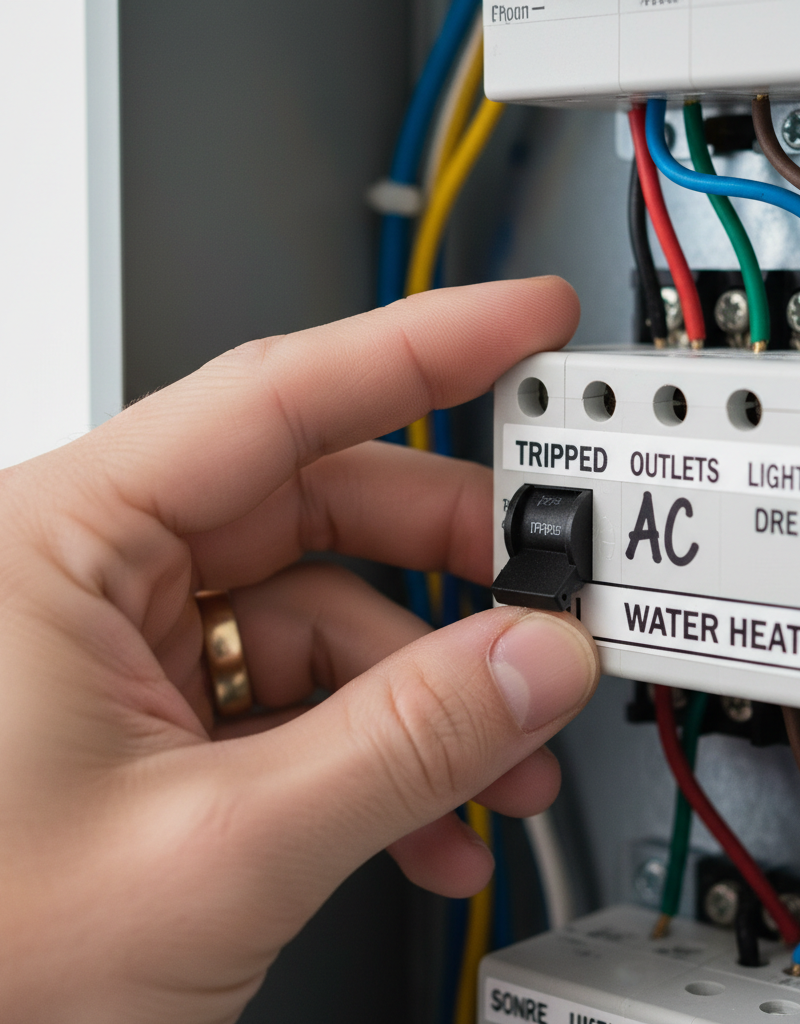
Head to your electrical service panel (breaker box). Locate the breakers labeled for your furnace/air handler and your outdoor AC unit (often a 240V double-pole breaker). A tripped breaker will usually be in the 'middle' position, not fully 'on' or 'off'. To reset it, firmly push the breaker all the way to the 'off' position, then push it back to the 'on' position. If the breaker immediately trips again, there's an electrical short, and you need professional help. Safety Note: Always use caution around your electrical panel. If you're unsure, consult an electrician.
- If this doesn't work: While at the breaker panel, check if any other breakers for general household circuits are tripped, as a larger power outage could affect the AC indirectly.
3. Examine the Outdoor Disconnect – Verify the power switch near the outdoor unit is on.
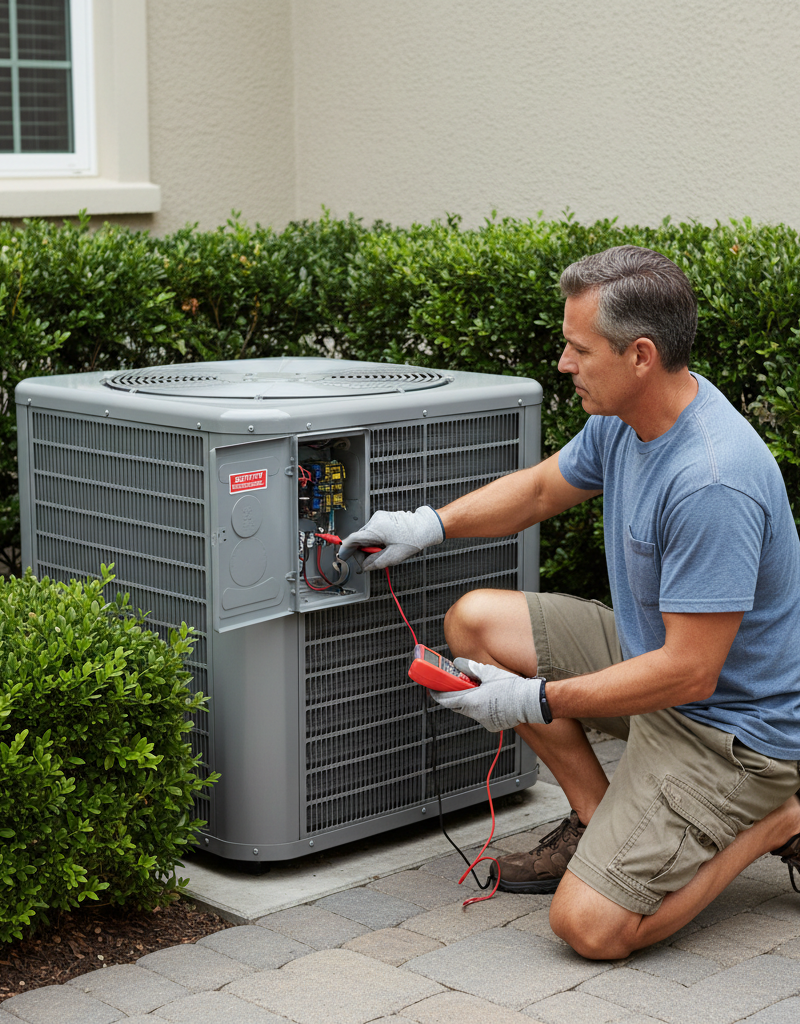
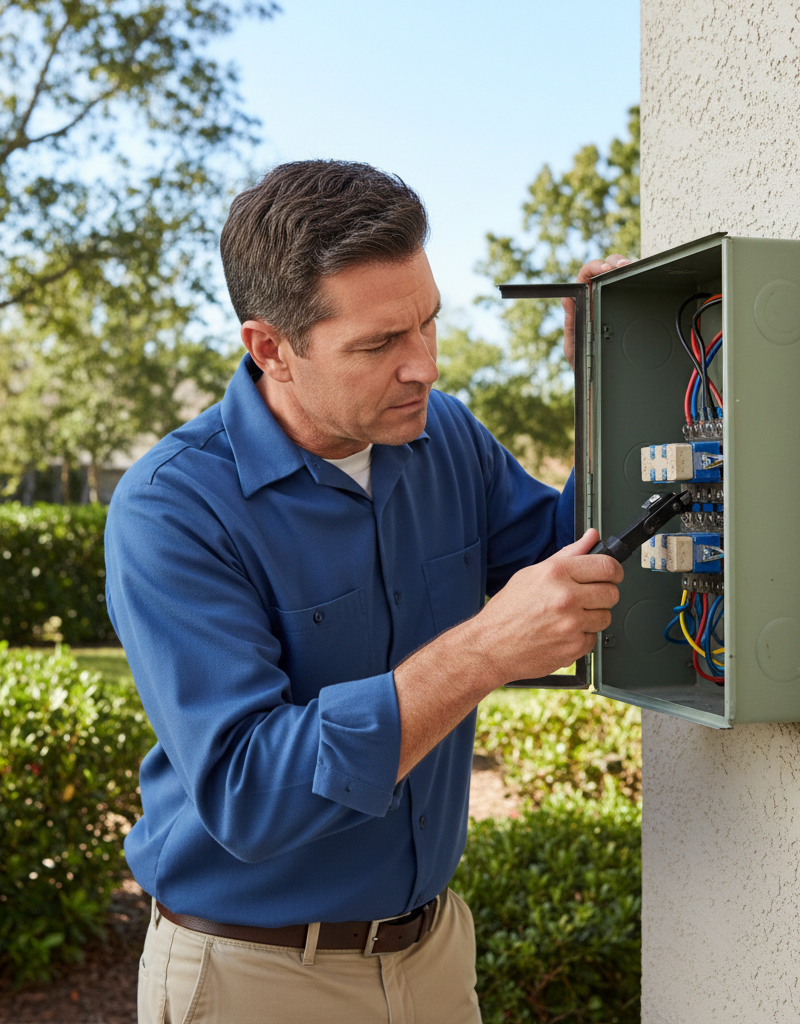
Walk to your outdoor AC condenser unit. Near it, usually mounted on the wall, there's a small metal box—the AC disconnect. Open the cover. Inside, you'll find a pull-out handle or a simple 'on/off' switch. Ensure this switch is in the 'On' position or the pull-out handle is fully inserted. Sometimes, this gets accidentally switched off during yard work or other maintenance. If it's a pull-out, ensure it's seated firmly and correctly.
4. Check the Condensate Drain Pan and Float Switch – Clear clogs and reset the safety switch if necessary.
Your indoor air handler has a condensate drain line that removes water produced during the cooling process. If this line clogs, the drain pan can fill, which then triggers a safety float switch to shut down the AC to prevent water damage. Locate the drain pan beneath your air handler. If it's full of water, the float switch has likely tripped. Carefully clear any visible clogs from the drain line (often a PVC pipe) using a wet/dry vac or a stiff brush if accessible. Once cleared and the water drains, the float switch should reset, allowing the AC to turn on. Add a cup of distilled vinegar to the drain line periodically to prevent algae growth.
- Tools: Wet/dry vacuum, distilled white vinegar.
5. Replace Clogged Air Filter – Install a clean air filter for proper airflow.
A severely clogged air filter can restrict airflow so much that it can cause the evaporator coil to freeze (reducing cooling capacity) or, in some systems, restrict airflow to the point where safety mechanisms prevent the system from starting altogether. Locate your air filter (usually in the return air duct or within the air handler itself). If it's dirty and dark, replace it immediately. A clean filter ensures proper airflow and system operation. Aim to replace filters every 1-3 months depending on usage and household conditions.
- Tools: New air filter (check size on old filter: e.g., 20x25x1).
6. Briefly Reset the Entire System – Cycle power to the indoor and outdoor units.
If you've checked everything above and the AC still won't start, a complete system reset might help clear minor electronic glitches. Go to your electrical panel and turn OFF both the indoor unit (furnace/air handler) breaker and the outdoor AC unit breaker. Leave them off for at least 30 minutes. This allows any residual charge to dissipate and the control boards to fully reset. After 30 minutes, turn the indoor unit breaker ON first, wait 1-2 minutes, then turn the outdoor unit breaker ON. Go to your thermostat and set it to 'Cool' and a low temperature. Listen for the system to engage.
Common Causes
- Tripped Circuit Breaker: The most common electrical issue, often due to an overloaded circuit or a minor electrical surge. It's designed to protect your home's wiring and the AC unit.
- Incorrect Thermostat Settings: Many homeowners accidentally switch their thermostat to heat, off, or a temperature setting above ambient, preventing the AC from receiving the 'call for cool' signal.
- Clogged Air Filter: A dirty filter severely restricts airflow, reducing efficiency and potentially causing the evaporator coil to freeze or the system to shut down as a protective measure.
- Clogged Condensate Drain Line: Algae or debris can block the drain, causing the pan to fill and tripping a safety float switch, which prevents the system from running to avoid water damage.
- Blown Fuse in Outdoor Disconnect: The outdoor disconnect box sometimes contains fuses that can blow, cutting power to the condenser unit. These need to be replaced with fuses of the correct amperage.
- Compressor Overload: If the compressor tries to start repeatedly but fails, it might be due to low refrigerant, a faulty start capacitor, or simply overheating. Most compressors have an internal overload switch that will trip, requiring a cool-down period before attempting to restart.
Common Mistakes
- Assuming the Worst Immediately: Don't assume your AC is dead and call for an expensive repair without checking the simple, common culprits first. Many issues are quick fixes.
- Not Changing the Air Filter Regularly: A dirty air filter is a leading cause of AC inefficiency and breakdowns. Neglecting it stresses the entire system.
- Ignoring the Outdoor Disconnect Switch: This often-overlooked switch can be accidentally flipped off, leading to a perfectly functional unit that simply has no power.
- Failing to Check Condensate Drain: Overlooking a clogged drain can lead to water damage in your home and an AC that refuses to run as a safety measure.
- Flipping a Tripped Breaker Back On Without Investigation: If a breaker immediately trips again after resetting, there's an underlying electrical issue. Continuously resetting it can be dangerous and cause further damage. Call an electrician or HVAC professional.
- Setting the Thermostat Too Low: While troubleshooting, setting your thermostat to an extreme low temperature doesn't help more than setting it 5-10 degrees below ambient and can potentially overstress the system if it does come on.
Cost & Time Breakdown
| Task | DIY cost | Pro cost | Time |
|---|---|---|---|
| Thermostat Check/Reset | $0 | $75–$150 | 5–10 minutes |
| Circuit Breaker Reset | $0 | $75–$150 | 5 minutes |
| Outdoor Disconnect Check | $0 | $75–$150 | 5 minutes |
| Condensate Drain Clear | $0–$10 | $150–$300 | 15–30 minutes |
| Air Filter Replacement | $10–$30 | $75–$150 | 5 minutes |
| System Reset (Breaker Off/On) | $0 | $75–$150 | 30–60 minutes |
Tips & Prevention
- Regular Filter Changes: Replace your air filter every 1-3 months (more often if you have pets or allergies) to ensure optimal airflow and prevent system strain.
- Annual Professional Tune-Ups: Schedule a professional HVAC inspection and tune-up every spring. This can catch minor issues before they become major problems and ensures efficiency.
- Keep Outdoor Unit Clear: Maintain a 2-foot clearance around your outdoor condenser unit. Trim shrubs, remove leaves, and clear any debris that can obstruct airflow.
- Pour Vinegar Down Condensate Drain: Periodically (quarterly) pour a cup of undiluted distilled white vinegar down your condensate drain line to prevent algae buildup.
- Monitor Thermostat Batteries: Replace thermostat batteries annually, even if they seem fine, to prevent unexpected power loss.
- Use Programmable Thermostat Wisely: Utilize energy-saving schedules, but avoid constantly adjusting settings by large increments, which can put stress on the system.
When to Call a Professional
If you've gone through all the troubleshooting steps—checked your thermostat, reset the circuit breaker and outdoor disconnect, cleared the condensate drain, and replaced your air filter—and your AC still refuses to turn on, it's time to call a licensed HVAC professional. Issues like a faulty capacitor, a failing compressor, refrigerant leaks, electrical wiring problems beyond the breaker, or a malfunctioning control board require specialized tools, diagnostic expertise, and often, permits for Freon handling. Attempting complex electrical repairs or refrigerant work yourself can be dangerous, lead to further system damage, and even void your warranty. A professional can quickly and safely diagnose the root cause and ensure proper, lasting repairs. If you notice strange noises (grinding, hissing), burning smells, or water pooling around your indoor unit, shut down the system immediately and call a pro.
Related Articles
Keep troubleshooting with these hand-picked guides from FixlyGuide:
- The #1 Mistake Homeowners Make When Heat Pumps Stop Heating in Winter — Discover the crucial mistake most homeowners make when their heat pump struggles in cold weather and how to fix it, potentially saving hund…
- The #1 Mistake Homeowners Make When Their AC Won't Turn On (And the Easy Fix) — Learn the most common oversight homeowners make when their AC won't turn on and how to troubleshoot basic issues to restore cooling.
- The #1 Mistake Homeowners Make When Their AC Won't Turn On (And the Easy Fix) — Learn the most common reason your air conditioner won't turn on and how to diagnose and fix it with simple steps.
- The #1 Reason Your AC Blows Warm Air (And It's Not What You Think) — A dirty air filter is often the overlooked culprit behind an air conditioner blowing warm air, hindering its ability to cool your home effi…
- The Secret Reason Your AC Isn't Drying Your Air (And What to Check First) — Your AC should cool and dehumidify, but if your house feels muggy, there's a specific, often overlooked culprit preventing it from doing it…
- The Hidden Reason Your AC Isn't Cooling (And Why Most Homeowners Get It Wrong) — Is your central AC blowing warm air or struggling to cool your home? The culprit is often a silent but serious issue many homeowners overlo…
Should you do this yourself?
Answer five quick questions before you start. Safety outranks savings every time.
Your experience with work like this
How high do you have to work?
Does the job involve any of these?
Will it need a permit?
Specialty tools
Free and instant. Educational guidance only — not a quote, inspection, or professional diagnosis.
Estimate your own project cost
National averages are a starting point. Enter your details for a range that fits your house.
HVAC replacement cost
- Equipment$2,200 – $3,800
- Installation labor$1,200 – $2,500
Always insist on a Manual J load calculation — sq-ft sizing is only a rough check. Federal heat-pump rebates may reduce cost significantly.
Educational estimate only — always confirm with written local bids.
What should this project cost?
Enter your project details for a realistic cost range before you call anyone.
Service calls and common repairs run $150–$900; full system replacement typically $6,000–$12,000.
- Regional adjustment
- National average
- Labor share (typical)
- ~$1,935
- Quotes to collect
- 3 written estimates
Educational estimate based on national averages — not a binding quote. Always confirm with written local estimates.
Fixly Project Decision Box
- DIY difficulty
- Advanced
- Estimated time
- Homeowner checks 20–30 minutes
- Cost level
- Moderate
Main tools / materials
- Clean air filter
- Garden hose for condenser coils
- Shop vac for the condensate line
When to stop and call a pro
- Burning smell, smoke, or a tripping breaker
- Refrigerant lines iced over or hissing
- Any work inside the sealed refrigerant circuit (EPA-licensed only)
- Gas smell near a furnace — leave and call the utility
Need professional help?
Find an HVAC Pro Near YouFrequently asked questions
Why would my AC suddenly stop turning on?+
The most common reasons an AC suddenly stops turning on are a tripped circuit breaker, incorrect thermostat settings (e.g., set to 'off' or 'heat'), a clogged air filter severely restricting airflow, or a full condensate drain pan triggering a safety shut-off switch. Electrical issues like a blown fuse in the outdoor disconnect or a faulty capacitor can also be culprits.
Discussion
Loading comments…